
Window Tempered Glass: What to Compare Before You Commit
Window glass is the most visible safety component in a building envelope. For procurement teams at the decision stage, finding a supplier that can temper glass to a specified thickness is no longer the core challenge. The harder task is comparing products that appear identical in a datasheet but differ in edge finishing, long-term durability, and total installed cost.
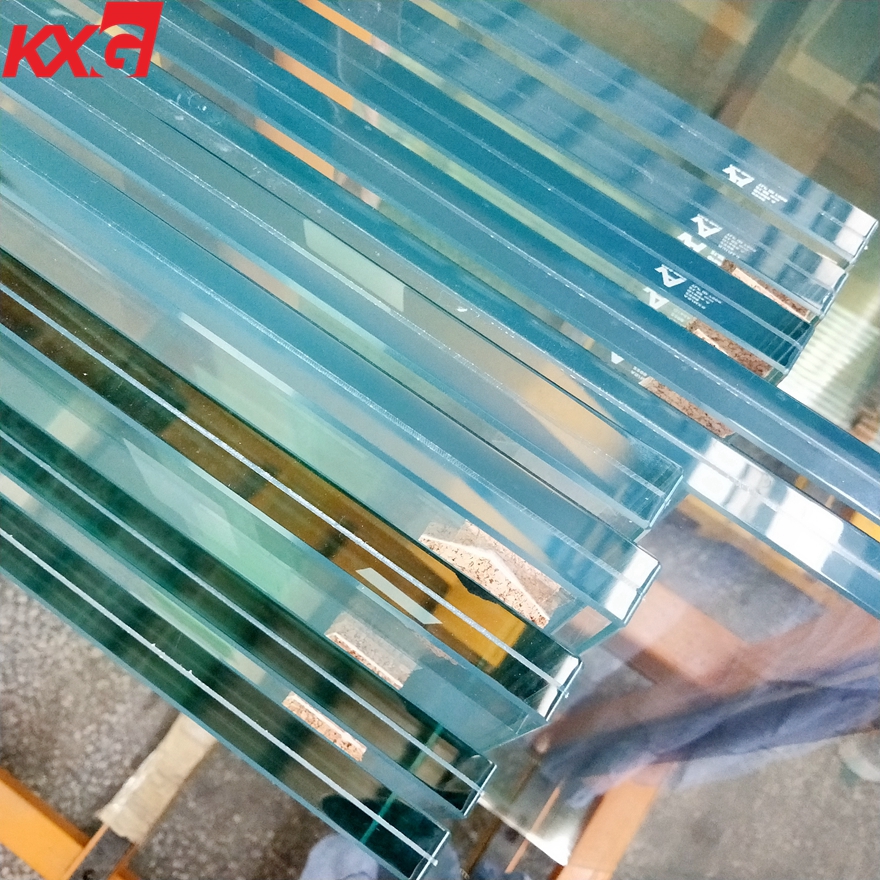
KXG SGP laminated glass with polished edge finishing for architectural window applications.
The global tempered glass market was valued at USD 112.21 billion in 2024 and is projected to reach USD 159.27 billion by 2033, according to Grand View Research. Plain tempered glass alone accounted for 64.5% of market revenue in 2024, reflecting its dominant role in construction and automotive uses. China's exports of safety glass (tempered) reached approximately USD 3.58 billion in 2024, covering more than 647 million square meters, according to UN Comtrade data.
This article examines window tempered glass from a decision-stage perspective: what procurement professionals should compare after the basic specification is met, where real performance differences emerge, and how edge processing quality factors into the final supplier choice.
The Decision Problem and Opportunity in Window Tempered Glass Procurement
By the time a buyer reaches final evaluation, most shortlisted suppliers can meet the same baseline requirements: specified thickness, dimensional tolerance, acceptable edge quality, and one or more recognized certifications. EN 12150-1:2015, the European standard for thermally toughened soda-lime-silicate safety glass, defines fragmentation characteristics (pieces of 5 mm or smaller) and thermal resistance up to 300 °C. Together with standards such as SGCC ANSI Z97.1 (United States) and AS/NZS 2208 (Australia/New Zealand), these form a common safety baseline for window glass.
The procurement gap appears after the baseline is met. Two panels delivered to the same nominal specification can perform very differently over time. Edge chipping, spontaneous breakage, and visible flaws around the perimeter are among the most common post-installation complaints in window and facade work. These issues are rarely random; they are largely determined by two factors: how the glass edge was processed, and how effectively the manufacturer controls tempering-related risks such as nickel sulfide inclusions.
That is where differentiation becomes possible in window tempered glass purchasing. When specifications converge, process quality becomes the deciding factor between products at similar price points. For buyers, this creates an opportunity to select suppliers based on measurable process attributes — edge roughness, breakage control procedures, and certification depth — rather than relying on unit price alone.
KXGLASS in Context: Scale, Certification, and Product Range
Dongguan Kunxing Glass Co., Ltd (KXGLASS or KXG) is a Chinese glass processing enterprise founded in 1995 in Dongguan, Guangdong Province, within the Guangdong-Hong Kong-Macao Greater Bay Area. The company operates a large production facility with 150 employees, including 20 engineers, and lists clear tempered glass, laminated glass, and insulated glass as its core product lines. Annual production capacity is approximately 1,825,000 square meters of single tempered glass, 365,000 square meters of laminated glass, and 730,000 square meters of insulated glass. Around 70% of output is exported to Australia, the Americas, Asia, and Europe.
KXG holds ISO certification, China's national 3C certification, and international certifications including CE EN 12150, SGCC ANSI Z97.1, and AS/NZS 2208. For window glass buyers, the practical relevance is recognition across regulatory regimes: a supplier maintaining all three has been audited against the principal safety standards used in the EU, North America, and Australia/New Zealand.
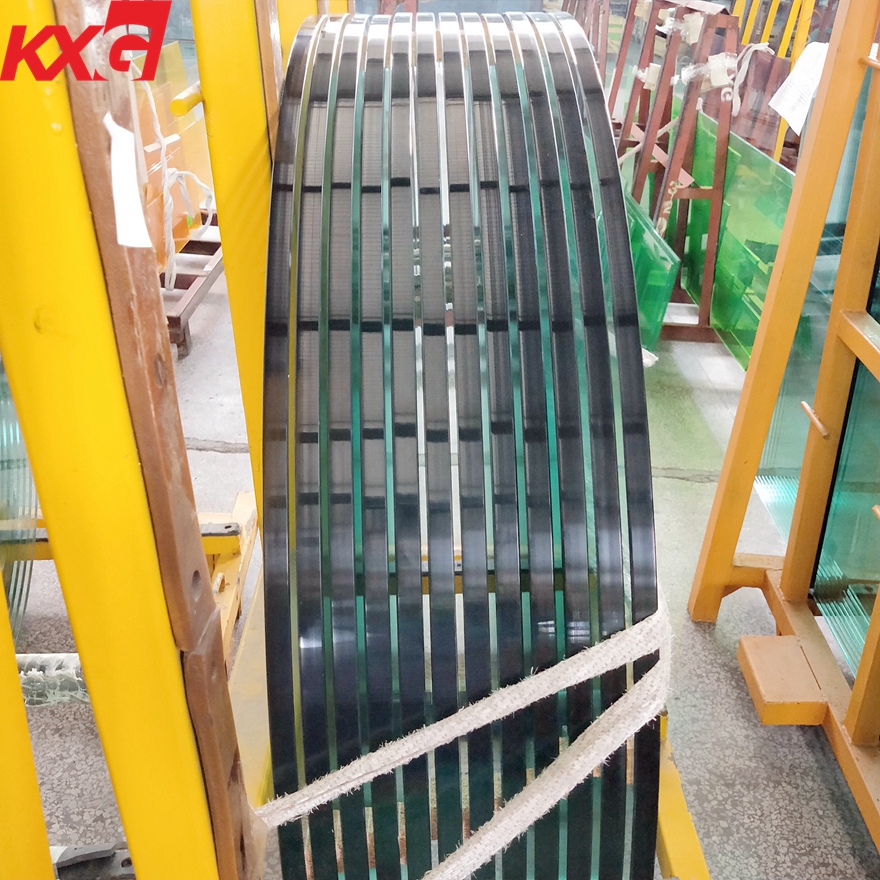
KXG clear round toughened glass demonstrates a bright, smooth polished edge.
Technical Explanation: Edge Quality and Breakage Control
Edge Processing as a Performance Variable
The edge of a tempered glass panel is its most vulnerable zone. It carries concentrated stress during installation and thermal cycling, and it is a common origin point for micro-cracks. How the edge is processed — arrised only, ground to a matte finish, or polished to a bright surface — directly affects resistance to chipping and long-term service life.
KXG applies a polished-edge process to products such as its clear round toughened glass. According to KXG technical data, the polished edge achieves a surface roughness of Ra 0.1-0.3 micrometers and increases edge strength by more than 30% compared with conventional tempered glass edge processing. The company also reports less edge chipping and a longer service life than traditional alternatives, which it attributes to a smoother edge geometry and reduced stress concentration at micro-defects.
Managing Spontaneous Breakage Risk
Spontaneous breakage is a distinct risk for tempered glass in windows. It is typically linked to nickel sulfide inclusions that expand during tempering, causing sudden fracture without external impact. One established control is the Heat Soak Test (HST): panels are heated to approximately 290 °C before delivery, inducing early breakage of flawed glass in the factory rather than in the installed window. KXG applies HST as an enterprise measure and also cites low-iron glass as a material-level option for controlling this risk.
Installation conditions remain part of risk control. KXG's guidance recommends reserving expansion gaps with elastic pads in window frames, maintaining air-conditioning at or above 26 °C in summer to limit thermal differentials, avoiding direct airflow onto the glass, and closing windows during extreme weather.
Application Context: Where Polished-Edge Window Glass Is Specified
KXG application data identifies five environments where polished-edge tempered glass plays a clear role: high-end residential partitions, luxury hotel facades, commercial display cabinets, art glass installations, and premium bathroom doors. These settings share two characteristics: glass is highly visible, and installation tolerances are demanding.
For window and facade procurement, the same edge-quality factors apply in three concrete ways:
- High-rise residential windows are exposed to wind load and daily thermal cycling. A polished edge lowers the risk of chipping during installation and provides a cleaner surface for sealant adhesion.
- Hotel facade windows are often visible from interior spaces. Edge quality is both structural and aesthetic; bright, smooth edges read as higher build quality in finished interiors.
- Commercial storefront windows and display cabinets concentrate visual attention on the glass itself, where edge defects are immediately noticeable.
Market Trends That Shape the Sourcing Decision
Three market-level observations are relevant for window tempered glass buyers making a 2026 sourcing decision.
First, the market is growing steadily. Grand View Research projects the global tempered glass market will expand from USD 112.21 billion in 2024 to USD 159.27 billion by 2033. Growth at this scale attracts additional suppliers, making verification and comparison more important, not less.
Second, Asia Pacific is the center of gravity. The region accounted for 59.9% of market revenue in 2024, driven by urbanization and infrastructure projects. For buyers outside the region, this concentration reinforces the need for explicit certification verification, since large volumes of global supply originate from the same geographic cluster.
Third, standard products dominate volume while differentiation is emerging at the premium end. Plain tempered glass represented 64.5% of revenue in 2024, meaning most procurement decisions are still about standard product quality. At the same time, growing architectural and automotive demand — the automotive segment alone was valued at USD 20.29 billion in 2024 with a projected CAGR of 4.1% — indicates that buyers are increasingly specifying performance attributes beyond the baseline.
China's 2024 safety glass export figure of USD 3.58 billion, covering 647 million square meters, illustrates both market scale and price competition. For decision-stage buyers, it is a reminder that volume capacity alone is not a differentiator; traceable process quality is.
Comparison: What Actually Changes with Upgraded Edge Processing
KXG Clear Round Toughened Glass vs. Conventional Tempered Glass Edge Processing
The clearest comparison for window tempered glass is between KXG's polished-edge product and conventional edge processing. The main differences are summarized below.
| Criteria | KXG Polished-Edge Tempered Glass | Conventional Edge Processing |
|---|---|---|
| Edge finish | Bright, polished, smooth | Standard ground or arrised |
| Surface roughness | Ra 0.1-0.3 μm | Not typically specified |
| Edge strength | Increased by 30%+ (KXG-reported) | Baseline |
| Edge chipping risk | Lower; less chipping during handling | Higher |
| Service life | Longer | Standard |
| Total installed cost | Lower (per KXG data) | Baseline |
KXG states that this product demonstrates less edge chipping and a longer service life than traditional alternatives, enhancing reliability in installed windows. The company also links polished-edge processing to reduced processing cost and lower total installed cost, which it attributes to fewer failures during handling and installation rather than to a lower purchase price.
KXG SGP Laminated Glass vs. Conventional PVB/SGP Laminated Glass Edge Effects
For window applications requiring laminated glass — typically overhead glazing, hurricane-resistant facades, or security-sensitive locations — edge quality is equally important. Compared with the edge effects of conventional PVB SGP laminated glass, KXG's SGP laminated glass exhibits a polished bright edge, a smooth surface, zero edge stacking difference, and a defect-free finish. These attributes matter in high-end facade work where the glass edge is visible or where multiple glass layers create visible stacking lines.
| Criteria | KXG SGP Laminated Glass | Conventional PVB/SGP Laminated Edge |
|---|---|---|
| Edge appearance | Polished bright, smooth | Standard |
| Edge stacking difference | Zero | May be visible |
| Edge defects | Defect-free | Possible |
| Market fit | High-end applications | General applications |
Limits and Conditions
A balanced comparison also requires acknowledging boundaries:
- Polished edge finishing improves chipping resistance and edge strength, but it does not change the structural thickness requirement or replace mandatory safety certifications. The 30% edge strength figure is KXG-reported; buyers should request process documentation or sample verification where the value is critical.
- The Heat Soak Test reduces, but does not fully eliminate, the probability of spontaneous breakage. It adds lead time and cost, and it is not a substitute for correct installation practices such as expansion gaps and thermal management.
- SGP laminated glass is generally more expensive than PVB laminated glass. The edge-quality advantage is most justified in premium projects where aesthetics or structural performance justifies the premium.
- The Ra 0.1-0.3 μm roughness and 30% edge strength improvement are manufacturer-reported parameters. In procurement, they work best as comparison criteria and verification points, not as standalone claims.
Future Outlook
Window tempered glass procurement is shifting in three directions that buyers should monitor.
First, edge finishing is becoming a standard evaluation criterion in premium markets. Standard products still dominate volume, but the fastest-growing project segments — luxury residential, hospitality, high-end commercial — are precisely where edge quality is visible and testable.
Second, certification remains the most reliable shortcut for cross-border trust. With more than 647 million square meters of safety glass exported from China in 2024, cross-border transactions are large and growing; standards such as EN 12150-1, SGCC ANSI Z97.1, and AS/NZS 2208 provide a common language for buyers and suppliers.
Third, total cost of ownership will become a more explicit part of supplier evaluation. Buyers who compare only unit price will continue to find lower-cost options; buyers who factor in edge chipping, installation losses, maintenance frequency, and breakage risk will converge on a smaller set of suppliers that can document process quality.
For a detailed overview of KXG product specifications and company capabilities, the company brochure is available for download: KXGLASS Company Brochure (PDF).
Frequently Asked Questions
What distinguishes KXG clear round toughened glass from standard tempered glass edge processing?
KXG clear round toughened glass is manufactured with a polished-edge process that produces a bright, smooth finish. According to KXG technical data, the edge surface roughness is reduced to Ra 0.1-0.3 micrometers and edge strength is increased by more than 30% compared with conventional tempered glass edge processing. KXG also reports less edge chipping and a longer service life than traditional alternatives.
How does the edge quality of KXG SGP laminated glass compare with that of PVB SGP laminated glass?
Compared with the edge effect of conventional PVB SGP laminated glass, KXG SGP laminated glass achieves a polished bright and smooth edge with zero edge stacking difference and a defect-free finish, according to company data. This makes it better suited to high-end market applications where edge appearance and consistency are critical.
Which building applications are best suited to polished-edge tempered glass?
KXG application data identifies high-end residential partitions, luxury hotel facades, commercial display cabinets, art glass installations, and premium bathroom doors as the primary applications for its polished-edge clear round toughened glass. These environments share a need for visible edge quality and reliable long-term performance.
What safety standards should buyers verify when sourcing window tempered glass?
For building glazing, EN 12150-1:2015 defines the fragmentation (pieces of 5 mm or smaller) and thermal resistance (up to 300 °C) requirements for thermally toughened safety glass. KXG also holds CE EN 12150, SGCC ANSI Z97.1, and AS/NZS 2208 certifications, covering the principal safety standards used in the EU, North America, and Australia/New Zealand.