
Wipes Liquid OEM Supply: Managing Continuity After Supplier Selection
When a wet wipes brand moves from supplier evaluation to routine ordering, the conversation changes. Instead of asking whether a formula works, buyers start asking whether it will work the same way next month, whether the supplier can document each batch, and whether reorder lead times fit the sales calendar. For wipes liquid — the solution that carries a wet wipe's cleansing, moisturizing, antibacterial, or deodorizing function — those operational questions determine real business outcomes.
Baby wipes, for example, were estimated to account for 39.86% of global wet wipes revenue in 2025 (Mordor Intelligence). A baby wipes product depends heavily on its liquid: pH, preservative safety, skin mildness, and alcohol-free formulation. If the wipes liquid changes between batches, the finished product changes, and so does consumer trust.
This article is written for buyers who have already decided to source wipes liquid from an OEM partner and are now planning the long-term relationship. It covers the operational parameters that define a reliable wipes liquid supply arrangement: order minimums, production lead times, quality checks, payment terms, custom formulation flexibility, and the regulatory framework that major markets apply to personal care wipes liquid.
Why Long-Term Wipes Liquid Supply Relationships Deteriorate
Most wipes liquid supply problems do not appear in the first order. They appear in the third or fourth, when the supplier faces raw material price pressure, when a different sourcing batch changes the preservative performance, or when routine communication slows down. Buyers commonly report four failure patterns:
- Formulation drift: The supplier substitutes a raw material to save cost without updating the buyer, changing the liquid's feel, scent, or microbial safety profile.
- Opaque quality data: The buyer only receives a certificate of analysis, without access to batch-level microbiological test results.
- Slow response: Small replenishment orders, which matter for inventory planning, are deprioritized in production scheduling.
- Weak traceability: When a complaint arises, the supplier cannot link the affected batch back to specific raw materials and production records.
These risks are not hypothetical. Wipes liquid contains surfactants, preservatives, fragrance, and functional additives that interact with each other; small changes in raw material quality or dosage can shift pH, reduce antibacterial effectiveness, or cause skin irritation. For antibacterial wipes liquid, the margin for error is even narrower because efficacy claims such as ≥99.9% bactericidal rate are only credible if the formulation remains stable across production runs.
The opportunity in a long-term relationship is therefore not simply lower price per kilogram. It is the ability to reduce quality complaints, maintain consistent production efficiency on the buyer's filling lines, and keep regulatory documentation up to date. These benefits, however, depend on how the supplier is structured — not just what the sample looks like.
A Wipes Liquid Supply Setup Built for Recurring Orders
Xiamen Huaqiangda Biotechnology Co., Ltd. is a China-based manufacturer specializing in wet wipes liquid formulations and related daily chemical solutions. Located in Xiamen, Fujian Province, the company operates a facility that includes a 100,000-level clean production workshop, standardized microbiology laboratories, and fine chemical laboratories. The company's official website is www.wipesliquid.com.
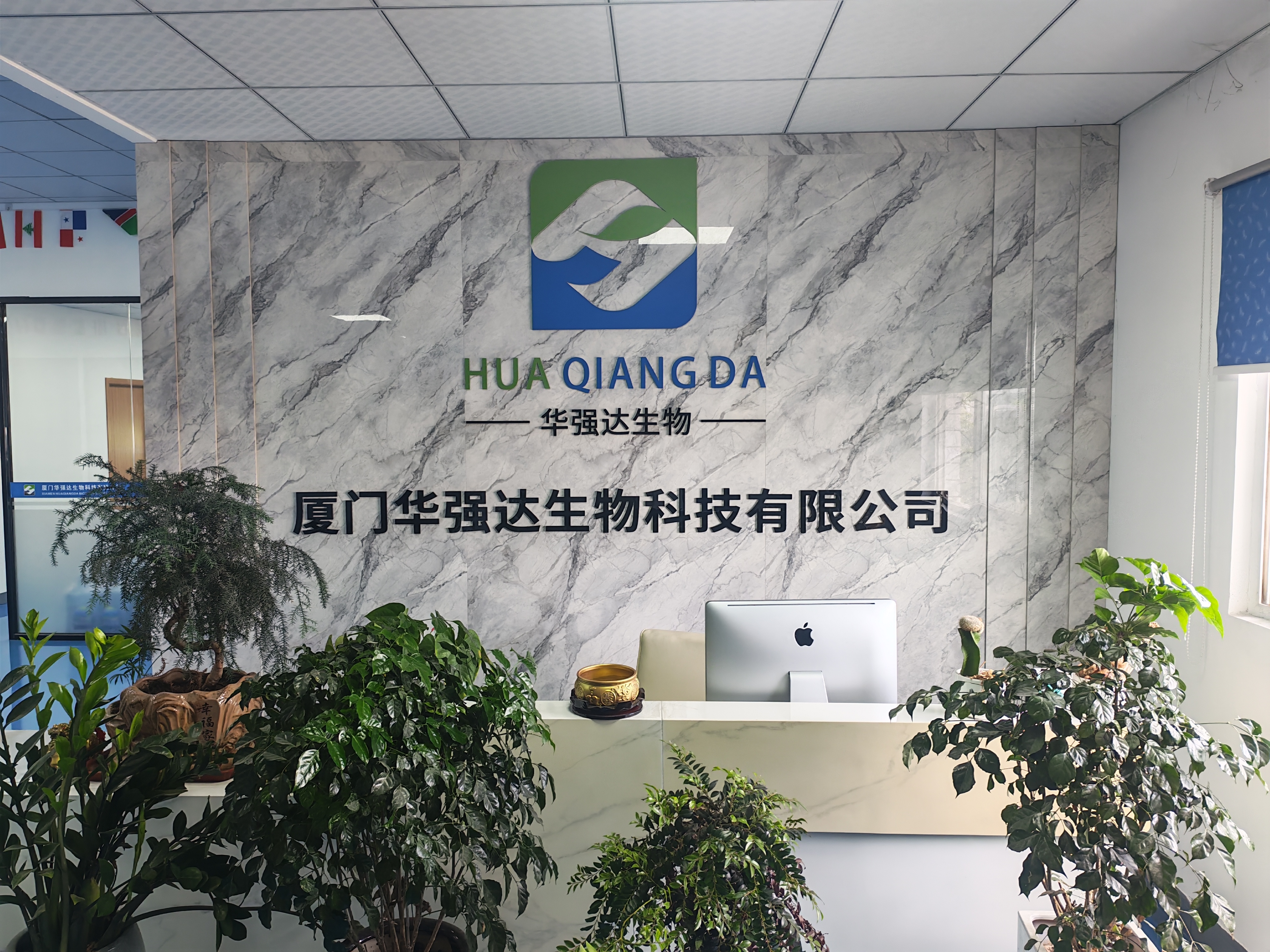
Since its establishment in 2018, the company has built a production and supply structure that addresses the specific needs of buyers moving into repeat orders. Key operational facts:
- Monthly production capacity of 3,000 tons, sufficient to support continuous replenishment for mid-sized and larger brand programs.
- Minimum order quantity (MOQ) of 25 KG, which allows new buyers to qualify formulations and run pilot production before committing to large volumes.
- Typical production lead time of 3–15 days, depending on formulation complexity and packaging configuration.
- A 5-person R&D team supporting formula development, modification, and troubleshooting.
- Export sales accounting for approximately 60% of output, with primary markets in Central Asia, Southeast Asia, and South America.
The product portfolio covers wipes liquid for baby wipes, antibacterial wipes, makeup remover wipes, kitchen wipes, pet wipes, flushable wipes, and industrial cleaning wipes. The company also supplies fragrance, chemical raw materials, and cosmetic preservatives, which gives it direct control over some of the components that most affect wipes liquid stability.
For long-term cooperation, the commercial terms are designed to reduce friction: delivery methods include EXW, FOB, CIF, DDU, and DDP; payment is typically 50% T/T in advance and 50% T/T before shipment, with L/C at sight available for established relationships. Buyers can also arrange pre-shipment quality inspection, microbiological testing reports, and third-party inspection such as SGS.
Quality risk is managed through a defined framework. The main risks in wipes liquid production — microbial contamination, formula instability, skin irritation, and preservative failure — are addressed through microbiological testing, a stable preservative system, pH balance control, and multi-stage filtration. Company-level measures include 100% raw material inspection, batch sample retention, clean workshop production, real-time quality monitoring, and third-party laboratory testing.
For a buyer planning a multi-year wipes liquid program, this structure matters because it directly answers the operational questions raised in the previous section: quality data is available at batch level, traceability is supported by sample retention, and production capacity is large enough to make small replenishment orders easy to schedule.
How to Verify Wipes Liquid Consistency Across Batches
A resilient supply relationship rests on the buyer's ability to verify that each batch of wipes liquid matches the approved standard. The verification process should cover several layers:
- Raw material verification. Surfactants, fragrance, preservatives, and functional additives should come from approved suppliers. If a raw material source changes, the buyer should be notified because the change can affect foam, pH, scent, or microbial stability.
- Preservative system performance. Preservative failure is one of the most serious risks in wipes liquid because wet wipes provide a moist environment where microorganisms can multiply. A stable preservative system, validated through microbiological testing, protects both the product and the consumer.
- pH balance. Skin-friendly wipes liquid, especially for baby and sensitive skin applications, depends on pH control. pH values outside the target range can cause skin irritation and reduce the effectiveness of functional ingredients.
- Multi-stage filtration. Filtration removes particulate matter that can cause nozzle blockage or residue on the wiping substrate. This directly affects how smoothly the liquid runs on high-speed wet wipes production lines.
- Batch-level documentation. The buyer should receive or have access to microbiological testing reports, pH records, and pre-shipment inspection results for each batch, and should confirm that batch samples are retained for traceability.
In supplier-provided comparison data against traditional low-cost generic wipes liquid formulas, a formulation designed for stability showed measurable differences: better moisturizing performance, gentler ingredients, higher antibacterial stability, and improved compatibility with high-speed production lines. Reported indicators include moisture retention improved by 30%, antibacterial effectiveness of ≥99.9%, production downtime reduced by 25%, and a 20% improvement in production efficiency on automated wipes manufacturing lines. The raw material cost is approximately 10% higher, while customer complaint rates are reported to be 40% lower, with lower machine residue and reduced nozzle blockage.
These figures are supplier-reported and should be confirmed through the buyer's own batch testing and line trials. What matters for long-term sourcing is that the verification framework exists: without batch-level testing, documentation, and retention, no supplier claim can be verified over time.
Wipes Liquid Categories That Require Stable Long-Term Sourcing
Different product lines place different demands on wipes liquid, and a long-term supplier should be able to serve multiple categories without changing the underlying quality system.
Baby wipes liquid
Alcohol-free, non-irritating, hypoallergenic, and moisturizing properties are essential. Because baby wipes account for the largest share of wet wipes revenue — an estimated 39.86% in 2025 — the commercial risk of skin irritation complaints is high. A consistent baby wipes liquid formulation, with documented pH and preservative safety, is a baseline requirement.
Antibacterial and disinfecting wipes liquid
This category requires a bactericidal rate of ≥99.9% and stability of the antibacterial agent across production batches. The global disinfectant wipes market was estimated at USD 8.4 billion in 2025 and is projected to reach USD 14.7 billion by 2034 (Dataintelo). For buyers in this segment, batch-level efficacy documentation is not optional.
Pet wipes liquid
Deodorizing and anti-mite functions are common requirements. Pet wipes serve a different skin environment than human wipes, and the liquid must balance cleaning power with gentleness for animals.
Makeup remover wipes liquid
Effective cleansing with mild surfactants is the priority. The formulation must remove makeup without excessive residue, and compatibility with the nonwoven substrate matters for finished product performance.
Kitchen and industrial cleaning wipes
These applications require degreasing and surface-cleaning performance. Industrial formulas may also require compatibility with alcohols or stronger solvents, which changes the preservative and surfactant system.
Private label programs
For private label wipes, the liquid is often the main differentiation point. Customizable fragrance (including optional fragrance-free versions), custom functional additives, and flexible packaging — 25 KG containers or 1-ton IBC tanks — allow a brand to build a distinct product identity on a reliable base formulation.
For each category, the same principle applies: the first approved formulation is only the beginning. The value of a long-term wipes liquid relationship is that each reorder follows the approved specification, with supporting documentation at every step.
Market Trends That Will Shape Wipes Liquid Buying in 2026–2027
Several verified market signals support the shift toward more rigorous, longer-term wipes liquid procurement.
The natural and organic segment of the wipes market is projected to expand at a CAGR of 2.96% through 2031, driven by demand for alcohol-free and skin-friendly formulations (Mordor Intelligence). This means buyers will increasingly request natural wipes liquid ingredients, biodegradable wipes liquid options, and eco-friendly wipes liquid solutions as part of their standard sourcing requirements.
Alcohol-based formulations still held the largest product type share in the disinfectant wipes market at 38.5% in 2025 (Dataintelo). However, for personal care applications, alcohol-free wipes liquid remains a strong requirement because alcohol can dry and irritate skin. Buyers should distinguish between disinfectant wipes liquid, where alcohol-based or alternative antibacterial systems are used, and personal care wipes liquid, where mildness is prioritized.
North America's surface disinfectant wipes industry held a 30.08% share in 2024 (Grand View Research), indicating strong demand for antibacterial and medical-grade liquids. For suppliers serving these markets, maintaining consistent antibacterial efficacy and full compliance documentation is a competitive requirement.
Regulatory requirements are also tightening. Wet wipes intended for cleansing or moisturizing skin are regulated as cosmetics under EU Regulation (EC) No 1223/2009 and by the FDA in the United States. Production of personal care wet wipes must follow ISO 22716 Good Manufacturing Practices (GMP) and assess microbiological risks. For buyers, this means a long-term wipes liquid supplier must not only deliver a stable formula but also maintain cosmetic-grade documentation and GMP-compliant production conditions.
Note: Wet wipes market size estimates vary significantly by source scope. Individual research definitions differ on which product segments and regions are included, so market figures should be treated as directional context rather than precise planning data.
Custom OEM Wipes Liquid vs. Off-the-Shelf Formula: Limits and Trade-Offs
For buyers at the decision and execution stage, a practical comparison is between a custom OEM wipes liquid and a generic off-the-shelf formula.
| Dimension | Custom OEM wipes liquid | Off-the-shelf generic formula |
|---|---|---|
| Formulation match | Designed for a specific product category and claim, such as baby, antibacterial, or pet | Fixed formula; limited ability to align with target claims |
| Documentation | Batch-level microbiological reports, pH records, third-party inspection available | Often limited to a basic certificate of analysis |
| Fragrance and additives | Customizable or optional fragrance; functional additives can be adjusted | Standard fragrance fixed by supplier |
| Cost | Raw material cost approximately 10% higher (supplier-reported) | Lower upfront cost per kilogram |
| Quality complaints | Reported 40% lower customer complaint rate (supplier-reported) | Higher risk of formulation drift and skin irritation |
| Supply stability | Formula can be locked and reproduced with batch tracking | Formula may change if supplier changes raw materials |
| Suitable for | Brand owners, private label programs, distributors with quality requirements | Low-cost promotions, price-sensitive channels |
The limits should also be stated clearly. First, the approximate 10% raw material cost premium of a higher-performance formulation is not justified for every market; a price-sensitive disposable product may need the lowest-cost formula even if performance and documentation are weaker. Second, custom formulation involves a development and qualification cycle; buyers running an urgent launch may not have time for multiple rounds of stability testing. Third, wipes liquid is only one half of a wet wipe. Final product performance also depends on the nonwoven substrate, packaging, and filling process. Buyers should not expect a liquid supplier to resolve issues caused by incompatible substrates or poorly calibrated production equipment.
The Future of Wipes Liquid Partnerships: Data, Compliance, Transparency
Looking toward 2027, the wipes liquid procurement model will continue to shift from transactional purchasing toward data-sharing partnerships. Buyers will expect suppliers to provide traceable batch records, open microbiological data, and proactive notification when raw material sources change. Suppliers that can combine production capacity — such as the 3,000-ton monthly capacity and 3–15-day lead time that Xiamen Huaqiangda offers — with cosmetic-grade quality documentation will be better positioned to support multi-year brand programs.
Biodegradable and eco-friendly wipes liquid requirements will likely move from niche requests to standard procurement criteria. Alcohol-free, hypoallergenic, and non-irritating wipes liquid will remain baseline expectations in baby and sensitive skin segments. Buyers building a supplier portfolio in 2026 should evaluate not only current needs but also whether the supplier can develop formulations for these coming requirements.
For buyers who are ready to review detailed supply and product documentation, a corporate profile of Xiamen Huaqiangda Biotechnology Co., Ltd. is available for download here: Xiamen Huaqiangda corporate brochure (PDF).
FAQ: Long-Term Wipes Liquid Supply Questions from Buyers
What is the minimum order quantity for OEM wipes liquid?
The minimum order quantity for OEM wipes liquid is 25 KG. This relatively low threshold allows new buyers to complete formulation qualification and pilot production before scaling to regular volumes. The same container size is used as a standard packaging option, with 1-ton IBC tanks available for larger programs.
What is the typical production lead time for wipes liquid orders?
The typical production lead time for wipes liquid is 3–15 days. The exact time depends on formulation complexity, packaging type, and current production schedule. Buyers should plan reorder cycles around this window to avoid inventory gaps.
How can a buyer verify wipes liquid quality during a long-term supply relationship?
Buyers can verify quality through pre-shipment quality inspection, batch-level microbiological testing reports, pH balance records, and third-party inspection such as SGS. Batch sample retention at the supplier's facility also supports traceability when customer complaints need to be investigated.
What payment and delivery terms are available for ongoing wipes liquid cooperation?
The standard payment terms are 50% T/T in advance and 50% T/T before shipment. L/C at sight is available for long-term cooperation. Delivery methods include EXW, FOB, CIF, DDU, and DDP, giving buyers flexibility depending on their logistics capabilities.
Can the supplier support custom wipes liquid formulations for different product lines?
Yes. Xiamen Huaqiangda Biotechnology Co., Ltd. provides OEM/ODM formulation support for baby wipes, antibacterial wipes, makeup remover wipes, kitchen wipes, pet wipes, flushable wipes, and industrial cleaning wipes. Fragrance is customizable or optional, and packaging can be configured as 25 KG containers or 1-ton IBC tanks.
What regulatory standards apply to wipes liquid used in personal care wet wipes?
Wet wipes intended for cleansing or moisturizing skin are regulated as cosmetics under EU Regulation (EC) No 1223/2009 and by the FDA in the United States. Production of personal care wet wipes should follow ISO 22716 Good Manufacturing Practices (GMP). Buyers should request documentation showing that wipes liquid complies with cosmetic regulations in their target markets.
Have Questions or Need More Details?
Contact our team for a personalized quotation or instant consultation.
Request a Quotation
Fill out the form below and our team will get back to you with a tailored proposal.
WhatsApp Direct Chat
Prefer to chat in real-time? Message us on WhatsApp for instant assistance & quick answers.
- Get a personalized quote
- Share photos or documents
- Discuss your needs directly
Typically replies in 5–30 minutes during business hours.