
Wire Assembly Guide: Custom Wire Harness Manufacturing
A practical industry reference for buyers evaluating custom wire harness, wire assembly, harness assembly, and cable assembly suppliers.
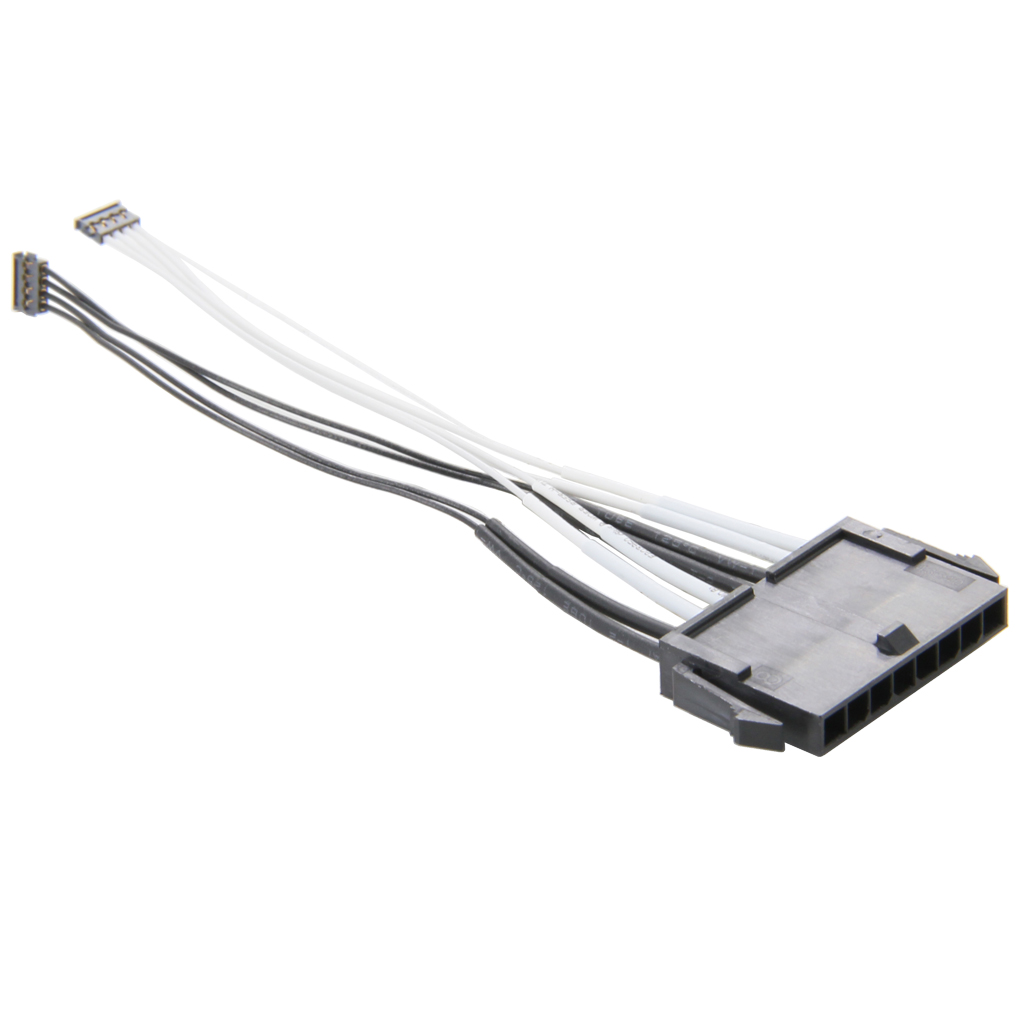
Example of a connectorized wire harness assembly with a Molex Micro-Fit 3.0 connector system.
A wire harness is not a single cable. In most electrical equipment, it is a structured bundle of wires that connects power, ground, signals, and control circuits between boards, sensors, power modules, and interface ports. When that bundle is assembled with connectors, terminals, protective sleeving, and other components, it becomes a wire assembly or harness assembly.
This guide explains what buyers should understand when moving from an early equipment concept to a manufacturable customized wire harness. It covers terminology, drawing requirements, connector choices, supplier evaluation, real-world application scenarios, market context, and the limits of custom manufacturing.
Problem / Opportunity: Wire Assembly Is More Than Connecting Wires
The global wire harness market is estimated at USD 99.58 billion in 2024, according to Precedence Research. Asia Pacific holds a major share of the market at approximately 46%, driven by electronics and industrial manufacturing in China, India, and Japan. Automotive remains the dominant end-user segment, and electric vehicles require significantly more complex harness architectures than traditional vehicles, according to Future Market Insights.
For equipment manufacturers outside the automotive sector, the challenge is often different. Medical devices, industrial control systems, robots, household appliances, and internal equipment wiring need compact, reliable, and often customized wire assemblies. Standard cables are not always suitable because each product has unique connector positions, wire lengths, signal requirements, and routing constraints.
This creates a clear opportunity for manufacturers that can operate on a drawing-based custom model. Instead of asking buyers to adapt their product to a fixed cable, a custom wire harness supplier works from the customer’s design input, connector brand, part number, wire type, gauge, color, and pin definition.
One manufacturer that illustrates this segment of the supply chain is P-Shine Electronics Co., Ltd, a wire harness and cable assembly manufacturer founded in 1997 and based in Dongguan, Guangdong, China. The company specializes in wire harnesses and cable assemblies and exports approximately 60% of its output to markets including the EU, USA, and the Middle East.
Terminology: Wire Harness, Harness Assembly, Wire Assembly, and Cable Assembly
Buyers often use the terms wire harness, harness assembly, wire assembly, cable assembly, and wiring loom interchangeably. In practice, there is overlap, but each term carries a slightly different meaning.
| Term | Typical meaning in manufacturing |
| Wire harness | A group of wires bound together to follow a defined routing path, often prepared for connection inside equipment. |
| Harness assembly | A wire harness with connectors, terminals, and protective components assembled into a ready-to-install unit. |
| Wire assembly | A broader term covering organized wires terminated with connectors or other end fittings. |
| Cable assembly | Usually refers to a cable or multiple conductors assembled with connectors, often used as an interconnect between devices or modules. |
| Wiring loom | A traditional name for a bundled wire harness, commonly used in automotive and machinery applications. |
| Pigtail wire | A short wire length with one terminated end, often used to connect a sensor, switch, or component into a main wiring system. |
When sourcing, the most important step is not the label. It is defining the physical and electrical specification clearly enough for a manufacturer to build a repeatable assembly.
Brand Solution: P-Shine Electronics Co., Ltd
P-Shine Electronics Co., Ltd is a China-based manufacturer of wire harnesses and cable assemblies. Established in 1997, the company has more than 25 years of cable manufacturing experience and is located in Dongguan, close to Shenzhen and Guangzhou ports.
The group operates 7 independent factories covering wire harness, USB cable, cable assembly, wire and cable, insulation materials, connector processing, and copper wire processing. This vertical structure gives the company in-house capabilities that go beyond simple cutting and crimping. The headquarters manufacturing facility covers 5,000 square meters, employs approximately 300 staff, and the group has more than 1,000 employees across its facilities.
The company’s main products include wire harnesses, USB cables, cable assemblies, AC power cords, customized connection cables, and wires and cables. Its export business accounts for approximately 60% of total sales, with major markets in the EU, USA, and Middle East. The company has also worked as a qualified supplier for brands including Intel, Belkin, Samsung, and Ugreen.
P-Shine’s wire harness product range is custom-made and has no fixed model number. It can be classified under several connector-based categories, including Molex wire harnesses, JST wire harnesses, TE wire harnesses, Phoenix wire harnesses, Samtec wire harnesses, Hirose wire harnesses, and Amphenol wire harnesses.
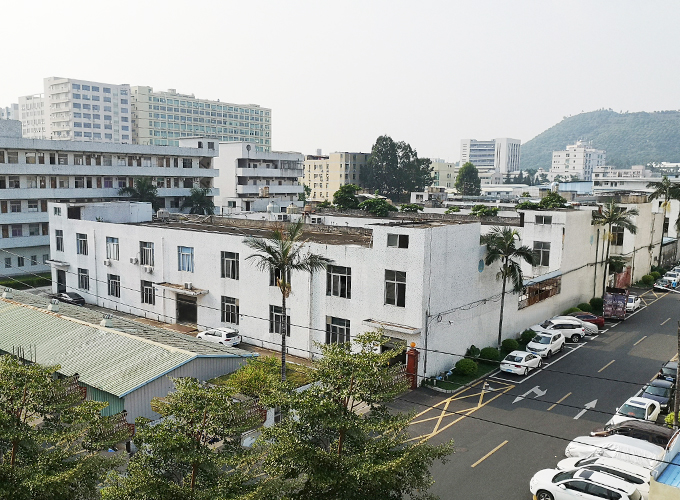
P-Shine Electronics Co., Ltd is headquartered in Dongguan, Guangdong, China.
Technical Explanation: What Makes a Wire Assembly Specification Manufacturable
A customized wire harness starts with engineering information. For a manufacturer such as P-Shine, buyers can send design drawings or provide connector brand, connector part number, wire type such as UL1007, wire gauge such as 28AWG, color, wire definition, and related specifications.
The quality of the drawing directly affects how accurately a supplier can reproduce the harness. Good drawings are clear and easy to identify during production and inspection.
| Drawing requirement | Why it matters |
| Connector brand and part number | Removes ambiguity in purchasing and avoids mismatched connector systems. |
| Different colors for different wires | Prevents assembly errors, especially when the same connector is used in adjacent locations. |
| Wire type, gauge, and color | Example: UL1007, 28AWG. Defines the electrical and mechanical performance of each conductor. |
| Loop length and branch length | Ensures the harness fits the actual routing space inside the equipment. |
| Pin function definition | Examples include Power+, GND, and signal. Prevents incorrect wiring during assembly and testing. |
| Branch position relative to connector | The minimum recommended distance from a branch to a connector is 30mm. |
| Heat shrink and protective material position | Branch positions should be arranged to allow heat shrink tubing to be applied correctly. |
The general manufacturing flow for a terminal crimped wire harness typically begins with wire cutting and stripping, followed by terminal crimping, connector insertion, and electrical testing. Some products require additional operations such as soldering, shielding, waterproofing, protective sleeving, or overmolding.
Material selection is a core part of wire assembly design. Wire harnesses used by P-Shine can be manufactured with insulation materials such as PVC, XL-PE, TPE, TPU, and TEFLON. Each material affects temperature rating, flexibility, chemical resistance, and cost. For example, equipment exposed to heat may require a high temperature resistant wire harness, while outdoor or washdown equipment may need a waterproof wire harness with sealed connectors and appropriate cable materials.
The application environment determines additional requirements. P-Shine’s production scope includes complex custom wiring, high-temperature resistance, shielding, optional flame retardancy, low smoke and halogen-free materials, waterproofing, and processing based on customer drawings.
Connector Sourcing: Original Connectors and Replacement Connectors
Connectors are one of the most sensitive parts of a wire harness. When a drawing specifies a connector brand and part number, the manufacturer should source that exact component.
P-Shine states that it sources connectors strictly according to the brand and part number specified in the customer’s drawing. The company typically purchases from platforms such as DigiKey or Mouser to ensure that the connectors are genuine and original. Original connectors offer better reliability and compatibility, and the default approach is to use original brand connectors.
The use of non-original replacement connectors is handled carefully. Non-original alternatives may be considered only at the customer’s request, and only when the alternative connector is already a mature product with reliable quality. The supplier provides samples, the customer performs testing, verification, and approval, and only then can non-original replacement connectors be used.
Cost is one reason buyers ask about replacement connectors. In some cases, the price of an original brand connector can be 10 times that of a non-original alternative connector. If the customer is not price-sensitive, original branded connectors remain the default. If price is a concern, a structured sampling and approval process helps manage risk.
Application / Use Cases: Where Customized Wire Harnesses Are Used
Wire harnesses and wire assemblies are used in both indoor and outdoor environments, inside and outside equipment, and in waterproof or non-waterproof configurations. They operate continuously in many applications, often in 24/7 duty cycles.
Typical equipment types include building temperature control equipment, small appliances, circuit control valves, household appliances, lamps, medical equipment, fish radar trackers, stage equipment, photographic equipment, automation equipment, robots, solar energy equipment, wind power generation systems, power transmission equipment, and creative electronic products.
The core function can be summarized as device connection and internal connection of the device. A wire harness may connect equipment ports, PCB interfaces, signal control modules, power control modules, and various internal functional components.
| Application area | Typical wire harness requirement |
| Household appliance | Household appliance wire harness, low voltage wire harness, consistent insulation, cost-efficient high-volume assembly. |
| Industrial control | Industrial control wire harness, high temperature resistant wire harness, multi-core shielded cable harness, reliable continuous operation. |
| Medical equipment | Medical equipment wire harness, shielded wire harness, controlled materials, low smoke and halogen-free options. |
| Robotics | Complex custom routing, signal and power integration, compact internal wire assemblies. |
| Outdoor and renewable energy equipment | Waterproof wire harness, weather-resistant materials, secure connection for solar and wind power systems. |
| Equipment internal wiring | Equipment internal wire harness, terminal crimped wire harness, compact routing inside enclosures and panels. |
| Power transmission and control | High current power wire harness, wiring connectors, stable electrical contact under load. |
For buyers, the important point is that application context drives both electrical design and physical design. A cable kit used inside a household appliance is not the same as a medical equipment wire harness or a waterproof harness assembly for outdoor field equipment.
Market Trend Analysis: Standards, Quality, and Supply Chain Expectations
The wire harness market is highly fragmented. Many suppliers can cut and crimp wires, but fewer can operate as a complete customized wire harness partner with connector sourcing, material selection, testing, and quality management under one structure.
For international buyers, certification signals are important. P-Shine reports that its products are certified by the United States UL, Canada CSA, European Union CE, Japan PSE, Germany VDE, South Korea KC, Australia SAA, India BIS, and China CCC. The company states that all products are manufactured based on ISO 9001 and IATF 16949 requirements and meet the environmental standards of RoHS and REACH. Its factories hold ISO 9001 quality management system certification and ISO 14001 environmental management system certification. The factory producing cable assemblies and cables for automotive-related products is IATF 16949 certified.
A separate reference point for buyer evaluation is IPC/WHMA-A-620, the primary industry-consensus standard for requirements and acceptance of cable and wire harness assemblies. This standard defines quality acceptance requirements across Classes 1, 2, and 3. Buyers can use it as a common language when discussing quality expectations with a supplier.
For import and export classification, wiring sets of a kind used in vehicles, aircraft, or ships fall under HS code 8544.30. Equipment manufacturers should confirm the correct HS classification for their specific product type during customs planning.
Comparison with Traditional Solutions: In-House Building vs. Custom Wire Harness Manufacturing
Many OEMs compare custom wire harness manufacturing with two alternatives: buying standard cable assemblies from a distributor or building wiring assemblies in-house.
| Evaluation criterion | Standard distributor cable | In-house production | Custom wire harness manufacturer |
| Fit to application | Limited by standard lengths and connectors | High, if internal capability exists | High, based on customer drawings |
| Development effort | Minimal | Requires tooling, training, and process control | Requires clear drawings and sample approval |
| Quality consistency | Dependent on product design | Dependent on internal standards | Can be supported by certified production systems |
| Cost efficiency | Low initial cost but possible redesign later | High fixed overhead and process management cost | Optimized when application is defined and volume is sufficient |
Custom wire harness manufacturing is not a universal replacement for standard products. It has a clear boundary: it requires customer input. Without connector brand, part number, wire type, wire gauge, wire definition, length, and environmental requirements, a supplier cannot produce a repeatable custom wire harness. For immediate replacement of a broken standard cable, an off-the-shelf product is often faster. Custom manufacturing is most valuable when the equipment design is defined enough to support drawing-based processing.
Buyers should also consider minimum order quantity, sample policy, and communication depth. P-Shine offers a low MOQ requirement, free samples, and fast delivery according to its product specification. These factors reduce the risk of first-time evaluation but do not replace the need for the buyer to define the product clearly.
Future Outlook
Wire harnesses will continue to be a necessary part of electrification, industrial automation, robotics, and advanced medical equipment. More importantly, wiring architectures are becoming more specialized. Equipment designers are less likely to use generic cables and more likely to demand customized wire assemblies that meet specific routing, shielding, waterproofing, and safety requirements.
Automotive electrification is widely expected to increase the amount of wire per vehicle and the complexity of harness architecture. Outside automotive, medical equipment, industrial control, and robotics are pulling demand toward more controlled manufacturing, verified materials, and more disciplined documentation.
For suppliers, the long-term differentiator is likely to be the completeness of the manufacturing chain. A manufacturer with internal connector processing, copper wire processing, insulation materials, and wiring assembly can reduce external dependency and provide more stable communication during engineering changes.
FAQ
What should be considered when designing wiring harness drawings?
Each connector should specify its brand and part number. When the same connector is used in adjacent locations, different wire colors help avoid assembly errors. Each loop should be distinguished by different colors, and the drawing should state the model number such as UL1007, gauge such as 28AWG, and color of each wire. The length of each loop should be indicated. The functional definition of each pin, such as Power+ or GND, should also be listed. When a loop has a branch, the length of each branch should be stated, and the minimum distance from a branch to a connector is 30mm. If heat shrink tubing is required, branch positions should be arranged appropriately.
Does the manufacturer use original connectors?
P-Shine sources connectors strictly according to the brand and part number specified in the customer’s drawing. The company typically purchases from platforms such as DigiKey or Mouser to ensure that purchased connectors are genuine and original. The default approach is to use original connectors unless the customer requests a replacement.
When are non-original replacement connectors used?
Non-original replacement connectors are used only when the customer requests them. The supplier first checks whether the non-original alternative is already a mature product with reliable quality. After the customer tests, verifies, and approves the alternative connector, use can begin. Cost can be a motivation, because an original brand connector is sometimes 10 times more expensive than a non-original alternative. If price is not the main concern, original branded connectors remain the default choice.
P-Shine Electronics Co., Ltd is located at No.8, Beiheng Road, Shangsha Community, Chang'an Town, Dongguan City, Guangdong, China 523867. More information is available at www.pshinecable.com.
Have Questions or Need More Details?
Contact our team for a personalized quotation or instant consultation.
Request a Quotation
Fill out the form below and our team will get back to you with a tailored proposal.
WhatsApp Direct Chat
Prefer to chat in real-time? Message us on WhatsApp for instant assistance & quick answers.
- Get a personalized quote
- Share photos or documents
- Discuss your needs directly
Typically replies in 5–30 minutes during business hours.