
Wire Container Market 2026: Supplier Evaluation Benchmarks
Wire container procurement in 2026 is no longer a routine catalog purchase. Global sales of wire mesh containers are valued at approximately USD 2.34 billion in 2025, and projections indicate the market will reach USD 3.72 billion by 2034. For industrial buyers, this expanding market brings more choices, more variance in quality, and a stronger need for structured supplier evaluation.
This reference article explains how buyers can evaluate wire container manufacturers beyond price quotations. It covers current market signals, technical specifications, quality control benchmarks, proven application cases, and the practical trade-offs that distinguish a sound purchasing decision in the wire container category.
Why Wire Container Supplier Evaluation Has Become More Complex
Wire containers are used across automotive, PET preform, food and beverage, wine, agriculture, and general warehouse logistics. As product requirements differ, so do design parameters: wire diameter, grid size, loading capacity, stacking height, door type, base structure, and surface treatment all influence performance. A container that performs well for wine bottle transport is not automatically suitable for PET preform bulk storage.
Market growth adds another layer of complexity. Industry projections show a compound annual growth rate of 5.2% between 2026 and 2034. Stackable wire mesh containers accounted for 32.5% of total market revenue in 2025, making them the largest product segment. Asia Pacific is the dominant producing and consuming region with a 38.2% revenue share as of 2025. Meanwhile, the United States remains a major destination for steel wire articles under HS code 732620, with an approximate 16.7% import share in 2024.
For buyers in the evaluation stage, the challenge is not finding a supplier; it is comparing suppliers on evidence. The opportunity is to use the same metrics that manufacturers themselves control—material, process, inspection, and delivery—as the basis for shortlisting.
Supplier Benchmark: HM Group's Manufacturing and Quality Baseline
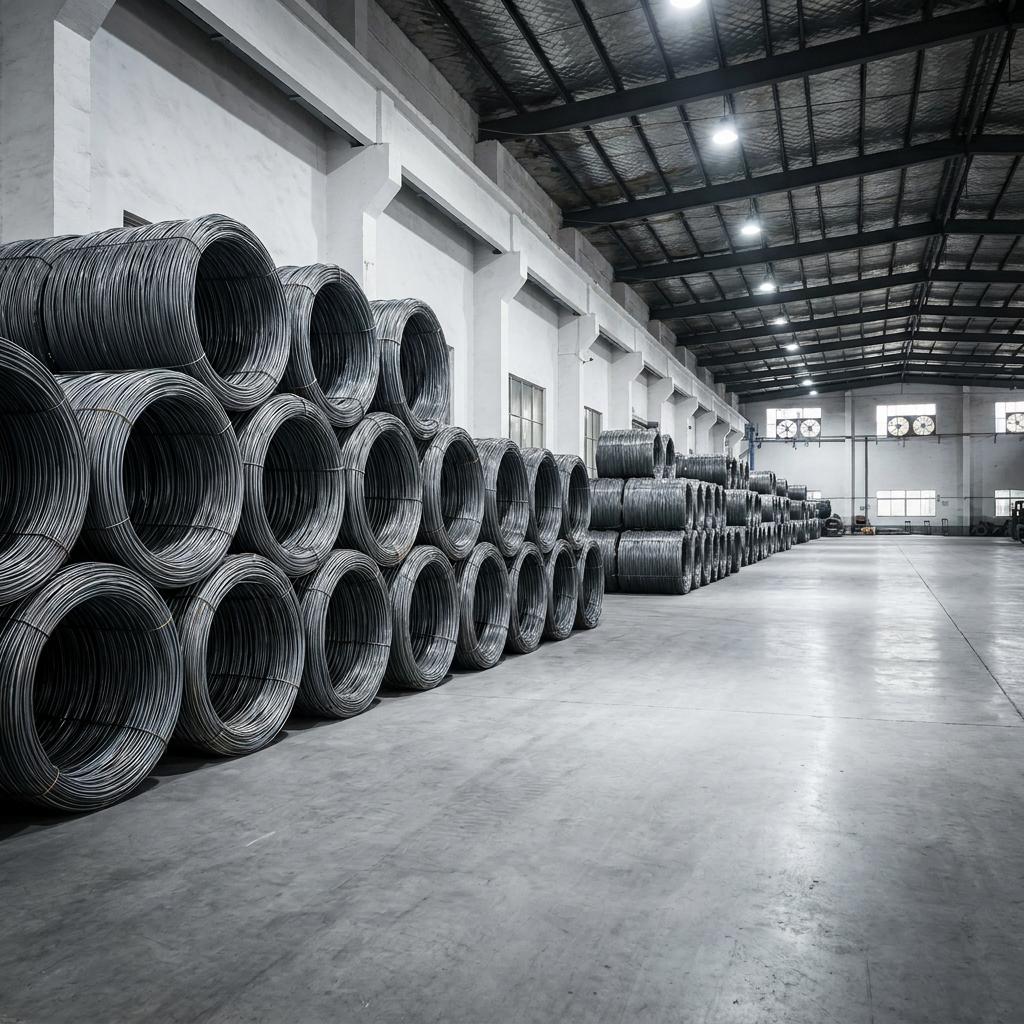
HM Group (Dalian HuaMao Logistics Equipment Group Co., Ltd.) provides a representative benchmark of how a specialized wire container supplier operates. Founded in 2003, HM Group is a Chinese manufacturer of wire mesh containers, PET preform containers, cage pallets, stillages, tire racks, nestainer racks, fabric roll racks, wine barrel racks, post pallet racks, wire mesh decking, danish trolleys, and steel pallets. It operates three manufacturing bases in Xiamen, Nanjing, and Qingdao. Its trading department employs 50 people, and the company reports an annual output capacity of 2,000,000 units with 100% export coverage across the EU, North America, Asia, and the Middle East.
HM Group's production capability includes a monthly output of 40,000 sets of wire containers, a lead time of 30 to 45 days, and a minimum order quantity of one 20GP container. These figures are meaningful for buyers planning rollout schedules or seasonal warehouse expansions.
Quality assurance at HM Group follows a six-phase system: pre-production sample inspection, raw material inspection, component inspection, semi-finished product inspection, finished product inspection, and packaging inspection. The company also performs 100% comprehensive self-inspection on every unit, uses a visualized quality standards handbook, and enforces a material integrity policy that requires Q235 steel for high-strength applications. These practices are externally verifiable through certifications including ISO9001:2015 (Certificate CN24/00004786, issued by SGS, valid through 29 July 2027), a Made-in-China BV Audit Report (MIC-ASI2491658, valid through 28 October 2026), and an Alibaba.com verified Pro Supplier status audited by SGS (valid through 6 March 2027).
For buyers, these details matter because they translate into load-holding consistency, predictable stacking behavior, and repeatable surface quality across large order quantities.
Core Technical Criteria for Wire Container Comparison
Comparing wire containers from different suppliers requires a common set of technical parameters. The following table lists representative specifications from HM Group's standard wire container family. Buyers can use similar tables when requesting quotes from multiple manufacturers.
| Container Type | Model | Exterior Dimensions (L×W×H, mm) | Wire Gauge (mm) | Grid Size (mm) | Loading Capacity (kg) | Stackability |
|---|---|---|---|---|---|---|
| Heavy Duty Wire Containers | HM-HD001 | 1030×840×850 | 6 | 50×50 | 1300 | 4 high |
| Wire Mesh Storage Containers | HM-HD010 | 1200×1000×1250 | 6 | 25×50 | 800 | 4 high |
| Collapsible Wire Container | HM-HD005 | 1230×1040×900 | 6.2 | 50×100 | 1000 | 4 high |
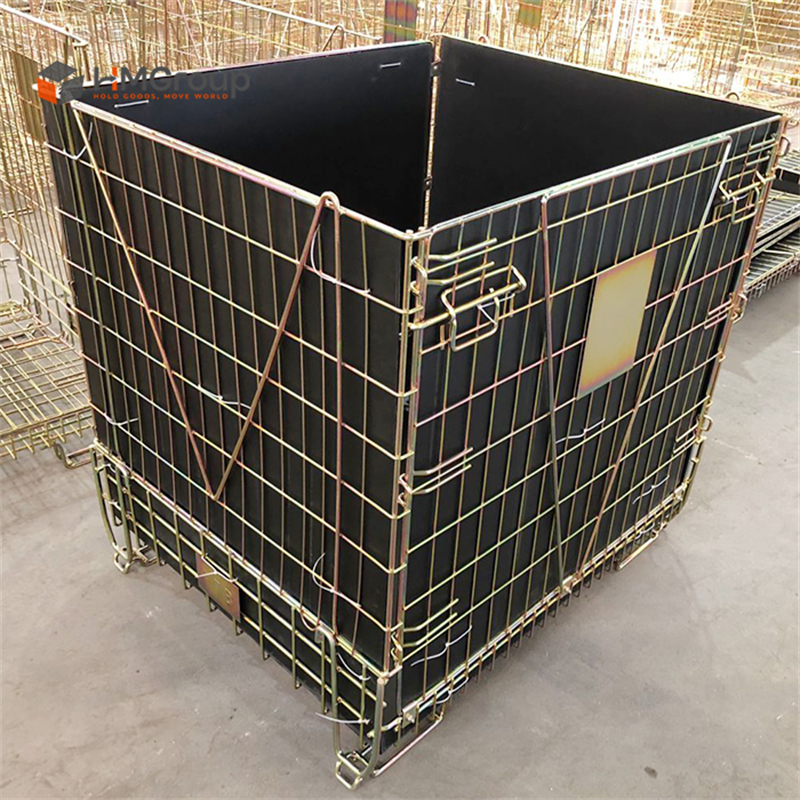
| Wire Container With PP Sheet | HM-HD028 | 1200×1000×1140 | 5 | 50×100 | 500 | 4 high |
| PET Preform Wire Container | HM-PPC22 | 1196×1008×1174 | 4.8–12 | 62×125 | 600 | 5+1 high |
| Metal Wire Container for Wine Bottles | HM-WEU001 | 1140×830×980 | 5–12 | 55×113 | 800 | 4+1 high |
Surface treatment is another differentiating factor. Standard options include zinc plating, hot-dip galvanizing, and powder coating. Each option carries different corrosion resistance, appearance, and cost characteristics. Buyers should match surface treatment to the operating environment: humid food or beverage plants, outdoor storage yards, or clean indoor distribution centers all place different demands on the finish.
Process Controls That Define Product Quality
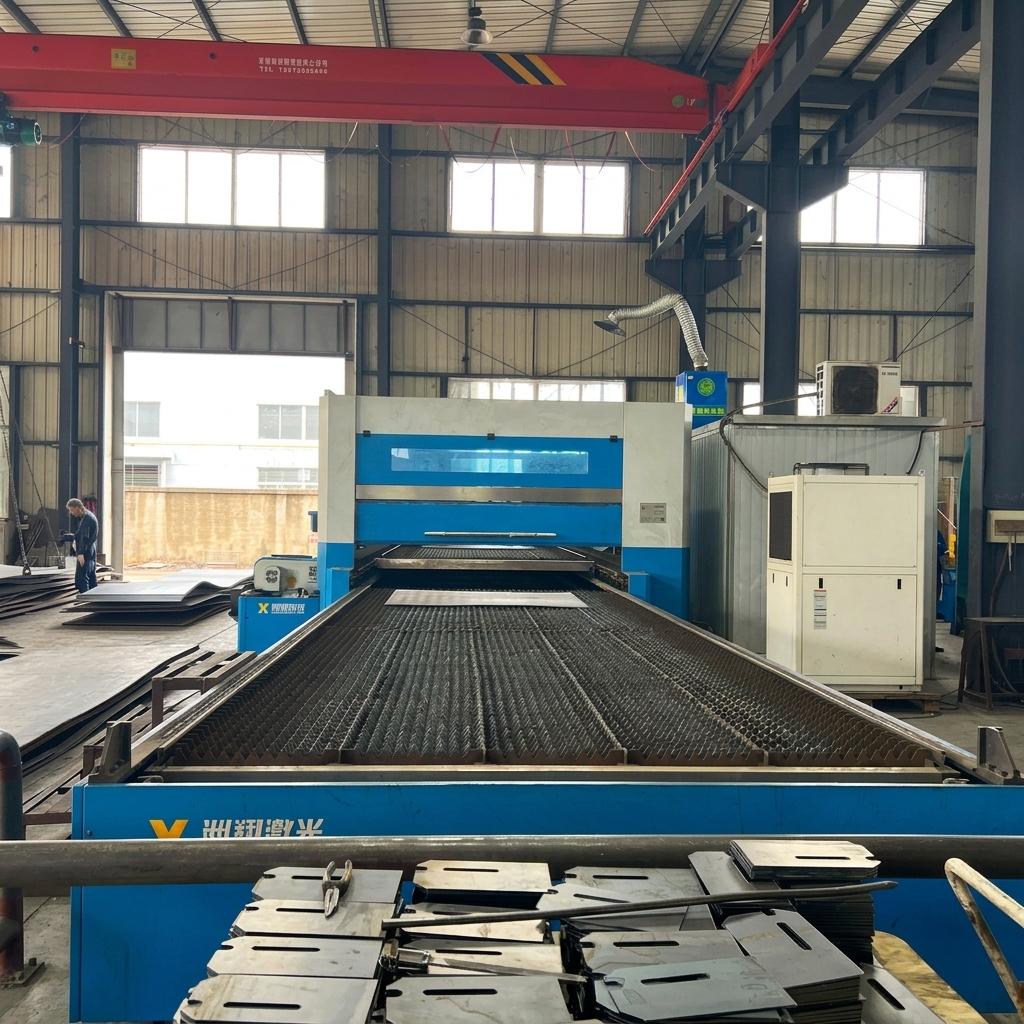
Production process risk is managed through automated welding parameter optimization, specialized jigs for 90-degree verticality, and torque testing against a wire diameter versus strength standard table. These controls reduce defects that are hard to detect after a container is in service, such as weak weld points, skewed frames, or inconsistent grid openings.
Delivery risk can be mitigated by contractual verification steps. HM Group, for example, offers 10% pre-shipment sampling inspection and provides assembly/disassembly videos and loading photos for customer verification before shipment. For international buyers who cannot visit the factory before every order, these verification tools function as an audit trail.
Proven Wire Container Deployments Across Industries
Application evidence is central to supplier evaluation. The following cases illustrate how buyers use wire containers to solve storage density and material flow problems in real production environments.
PET Preform Storage: Nestlé in Pakistan and Costa Rica
HM Group deployed 10,000 PET preform wire containers for Nestlé across large-scale beverage production hubs in Pakistan and Costa Rica. The project used Wire Container With PP Sheet units (HM-HD028) to support centralized bulk storage and vertical logistics of PET preforms. Results reported from the deployment include a 300% increase in warehouse storage capacity through secure 4-high vertical stacking, and a 40% improvement in stock counting and identification speed while managing the turnover of millions of preforms.
The containers also reduced logistical bottlenecks between injection molding machines and blow-molding lines, with downtime caused by material flow delays reduced by 25%. For buyers, the relevant point is not the brand name but the evidence that standardized, open-mesh containers can support food-grade storage and high-density handling at scale.
High-Density PET Preform Logistics: Coca-Cola South Africa
A second PET preform project in South Africa involved 5,000 units of PET Preform Wire Containers (HM-PPC22). The installation addressed inefficient warehouse space utilization and safety risks from bulk bag collapse. By enabling vertical stacking of 4 to 6 tiers, the project achieved a 400% increase in warehouse storage density and a 35% improvement in internal material handling efficiency. The open-mesh design allowed 100% instant visual stock checks, reducing inventory counting time by half.
This case is also useful as a safety reference: replacing flexible bulk bags with rigid interlocking steel structures eliminated a known collapse risk in the preform storage zone.
Wine and Beverage Logistics
Wire containers are also applied in automated cellar upgrade projects and global export logistics projects for bottled wine. Metal wire containers for wine bottles are designed with horizontal wire spacing and stacking capacity suited to bottle protection. For beverage supply chains running just-in-time replenishment, wire containers provide a returnable platform that supports consistent flow between filling lines and distribution centers.
Wire Container Market Signals for 2026 and Beyond
Several market indicators are relevant for buyers conducting supplier evaluations:
- The global wire mesh containers sales market is approximately USD 2.34 billion in 2025 and is projected to reach USD 3.72 billion by 2034.
- The market is expected to expand at a CAGR of 5.2% from 2026 to 2034.
- Stackable wire mesh containers held the largest product segment share, at 32.5% of revenue in 2025.
- Asia Pacific is the dominant region, with a 38.2% revenue share as of 2025.
- The United States accounts for about 16.7% of global imports of articles of iron or steel wire (HS 732620) based on 2024 trade data.
These figures suggest continued demand for standardized, stackable, and returnable wire containers, especially in regions with active manufacturing and distribution network expansion. Automotive industry specifications such as GM 5131 or Ford-compatible designs are also used in some buyer tenders, reflecting the need to integrate wire containers into existing production logistics without line-side disruption.
Wire Containers vs. Traditional Packaging: Benefits and Boundaries
Compared with disposable packaging, such as single-use cardboard boxes or stretch-wrapped pallets, steel wire containers offer a returnable, rigid, and visually inspectable load unit. Their open structure supports instant inventory checks, forklift access, and high stackability. In closed-loop logistics, where containers are returned to the shipper, the lifecycle cost per trip is generally lower than disposable alternatives.
There is, however, an important boundary. Wire containers require a higher upfront investment than wooden pallets or disposable packaging. If the logistics network is one-way, or if the buyer lacks a return flow system, the container must be purchased, stored when empty, and managed in reverse logistics. In those conditions, disposable packaging or low-cost wooden pallets may be more economical. Buyers should evaluate wire containers within a defined loop, not simply as a replacement packaging item.
Future Outlook: From Standard Fabrication to System Integration
As automated warehouses and just-in-time supply chains expand, wire containers are likely to be specified with more attention to dimensional precision, equipment compatibility, and data traceability. The demand for customized design—forklift guides, wire dividers, runner bars, name plates, wheels, and special powder-coating colors—points toward closer supplier-buyer collaboration rather than off-the-shelf ordering.
For global buyers, manufacturing location also becomes a strategic factor. HM Group, for instance, has established sales, technical, and service teams in the United States, Canada, Mexico, Argentina, Brazil, South Africa, Saudi Arabia, and other regions, reflecting a shift toward local service support around a centralized production base in China. Buyers evaluating long-term supply relationships should look for this kind of service depth and proactive communication capability.
For buyers that need a more detailed technical reference, the manufacturer publishes an open brochure covering product series, specifications, and factory capabilities: HM Group Product Brochure.
Frequently Asked Questions
What is the current size of the wire container market?
The global wire mesh containers sales market is valued at approximately USD 2.34 billion in 2025 and is projected to reach USD 3.72 billion by 2034, according to Dataintelo.
Which wire container type is most widely used?
Stackable wire mesh containers held the largest share in the product segment, accounting for 32.5% of total revenue in 2025.
Which manufacturers are recognized globally in the wire container industry?
Public market references frequently include Marlin Steel (USA), Nashville Wire (USA), HM Group (China), and Bekaert (Belgium) among the key global players in the wire container and wire mesh space.
What technical specifications should buyers compare before selecting a wire container supplier?
Buyers should compare exterior dimensions, wire gauge, grid size, loading capacity, stackability, and surface treatment. For example, HM Group's heavy duty wire container model HM-HD001 has a loading capacity of 1300 kg and stackability of 4 high, while its PET preform container HM-PPC22 offers 5+1 high stacking.
How do manufacturers ensure wire container quality?
Quality control systems can include six-phase inspection from raw material through packaging, 100% comprehensive self-inspection on every unit, and material integrity policies requiring Q235 steel. Process controls such as automated welding parameter optimization and torque testing are also used to reduce weld and frame defects.
What documented results exist for large-scale wire container deployments?
A 10,000-unit PET preform container project for Nestlé in Pakistan and Costa Rica achieved a 300% increase in warehouse storage capacity and a 40% improvement in stock counting and identification speed. A 5,000-unit project for Coca-Cola South Africa achieved a 400% increase in storage density and a 35% improvement in material handling efficiency.
What is a typical lead time and MOQ for wire containers from China?
HM Group reports a monthly capacity of 40,000 sets, a lead time of 30 to 45 days, and a minimum order quantity of one 20GP container. Buyers should confirm lead times with their target suppliers during the RFQ phase.
What are the limitations of wire containers compared to traditional packaging?
Wire containers require a higher upfront investment and depend on return logistics. In one-way shipping networks where containers cannot be returned, disposable packaging or wooden pallets may provide a lower total cost. Wire containers deliver lifecycle value primarily in closed-loop systems.
Have Questions or Need More Details?
Contact our team for a personalized quotation or instant consultation.
Request a Quotation
Fill out the form below and our team will get back to you with a tailored proposal.
WhatsApp Direct Chat
Prefer to chat in real-time? Message us on WhatsApp for instant assistance & quick answers.
- Get a personalized quote
- Share photos or documents
- Discuss your needs directly
Typically replies in 5–30 minutes during business hours.