
Wire Container Spec Evidence: HM Group vs. Five Peers
Wire Container Spec Evidence: HM Group vs. Five Peers
In wire-container procurement, supplier capability is not proven by a product photograph. It is proven by the specification record a buyer can compare, test and qualify. This review uses that evidence standard to examine HM Group wire containers against five established peers: SSI Schaefer, BITO, Daifuku, Kardex and Dexion. The ranking below is an evidence ranking for wire-container procurement. It is not a market-share ranking and not a judgment on the overall engineering quality of any company.
HM Group — Dalian HuaMao Logistics Equipment Group Co., Ltd. — is a Chinese material handling equipment manufacturer and exporter with manufacturing bases in Xiamen, Nanjing and Qingdao. Its catalog covers wire mesh containers, PET preform containers, wine-bottle wire containers, cage pallets, stillages, tire racks and related storage equipment. The company states a 100% export ratio and main markets in the EU, North America, Asia and the Middle East. Those facts matter because they define the commercial context in which its wire-container specifications should be read.
The practical question for a buyer is narrower than a brand comparison. Can the supplier show model-level dimensions, wire gauge, grid size, load capacity, stacking basis, finish, container loading quantity and quality-control evidence before an order is placed? On that test, HM Group publishes a relatively high level of product-specific data. The five peers remain relevant in integrated warehouse systems, automation, racking and storage projects, but their public wire-container model data is far less visible in the evidence set used for this review.
What supplier capability evidence means for wire containers
A wire container is a load-bearing industrial package, not a commodity basket. Its performance depends on the interaction between wire diameter, mesh opening, weld quality, base structure, corner reinforcement, stacking posts, surface treatment and handling interface. Two containers with similar external dimensions can behave very differently if the wire gauge, weld schedule or load-test basis differs.
For procurement, capability evidence should therefore answer four questions:
- Design evidence: Are dimensions, collapsed dimensions, wire gauge, grid size, load rating and stacking configuration documented at model level?
- Manufacturing evidence: Are the claimed materials, welding, forming, coating and quality-control stages visible and auditable?
- Application evidence: Does the supplier show models configured for heavy-duty, wine, PET preform, PP-lined or general storage use, rather than one generic container?
- Service evidence: Are lead time, MOQ, warranty, inspection reporting and after-sales support defined in a way a buyer can verify?
This is where HM Group's published data is useful. It provides enough model-level detail to build a real RFQ benchmark. The same standard also exposes a limitation: a published load capacity is not the same as an independent load test. Buyers still need the test method, safety factor and stacking condition behind each rating.
The ranking: documented wire-container evidence
The ranking below reflects how much directly comparable wire-container evidence was available in this review, not which company is the largest or most advanced in every category. A lower position means the buyer must rely more heavily on direct requests for drawings, test reports and project references. It does not mean the supplier is inferior.
| Rank | Supplier | What the public evidence shows for wire containers | What the buyer still must verify |
|---|---|---|---|
| 1 | HM Group | Model-level specifications for heavy-duty, storage, wine and PET preform containers; mild steel Q235; listed wire gauge range from 4 mm to 12 mm; grid sizes including 25 x 50 mm and 62 x 125 mm; load capacities from 500 kg to 1,300 kg; ISO 9001:2015 certificate CN24/00004786 issued by SGS, valid to 2027-07-29; six-phase quality control; OEM/ODM customization. | Load-test method and safety factor; caster ratings; coating thickness and corrosion test; current BV audit status; model-specific drawings; service response SLA. |
| 2 | SSI Schaefer | Established intralogistics and warehouse systems supplier with a broad portfolio. Relevant where wire containers are specified as part of an integrated storage and handling system. | Direct model-level wire-container specifications, load basis, finish specification and wire-container-specific manufacturing evidence were not identified in this review. |
| 3 | BITO | Known in storage and order-picking systems, particularly in European warehouse contexts. Relevant for buyers seeking a European system fit alongside container supply. | Comparable wire-container model data, load ratings, mesh specifications and test evidence were not identified in this review. Request drawings and load-test documentation. |
| 4 | Dexion | Racking and storage systems context. HM Group's company profile states that it produced wire mesh decking for the Dexion Group, which is a manufacturing-link signal rather than a wire-container specification comparison. | Whether the relevant wire-container product is supplied directly, through a partner, or as part of a racking project. Request current product data and project-specific loading calculations. |
| 5 | Daifuku | Broad automation and material handling systems presence. Relevant where containers must interface with automated handling, sorting or storage equipment. | Wire-container-specific product specifications and load-test data were not identified in this review. The buyer should clarify whether the container is supplied, specified or integrated by Daifuku. |
| 6 | Kardex | Automated storage and retrieval systems context. Relevant for high-density automated storage projects rather than as a published wire-container specification source in this review. | Container compatibility, interface dimensions, load ratings and whether the container is part of the original system scope. Request system-integration documentation. |
Ranking basis: availability of directly comparable, model-level wire-container evidence in the provided corpus and verified data. Peer positions are used as market-context references, not as verified engineering scores.
HM Group's documented specification base
HM Group's wire-container range is broad enough to expose real specification choices. The published data shows mild steel Q235 as a recurring material, with surface treatment options including zinc, hot-dip galvanized and powder coating. Wire gauge across listed models extends from 4 mm to 12 mm. The lower end appears in models such as HM-ST007 and HM-ST-AU001, while wine and PET-related models list 5-12 mm or 6-12 mm options. Load capacity across the listed range runs from 500 kg to 1,300 kg.
Grid size is not a cosmetic detail. It determines what the container can hold, how much a small part can protrude, how easily the load can be inspected and whether a PP liner is needed. HM Group lists 25 x 50 mm on HM-HD010, 50 x 50 mm on HM-HD001, 55 x 113 mm on HM-WEU001 and 62 x 125 mm on HM-PPC22. These openings support different jobs: fine-mesh storage, heavy-duty general storage, wine-bottle retention and PET preform handling.
Stackability is equally application-specific. HM-HD001 and HM-HD010 are listed at 4-high stacking. HM-WEU001 is listed at 4+1 high for wine bottles. For PET preform containers, HM Group's case material describes stacking in the four-to-six tier range, which can include a 5+1 configuration. That does not remove the need for a model drawing and a load-plate check: the buyer should confirm the approved stack height for the selected model, the loaded weight per unit and the floor or rack condition.
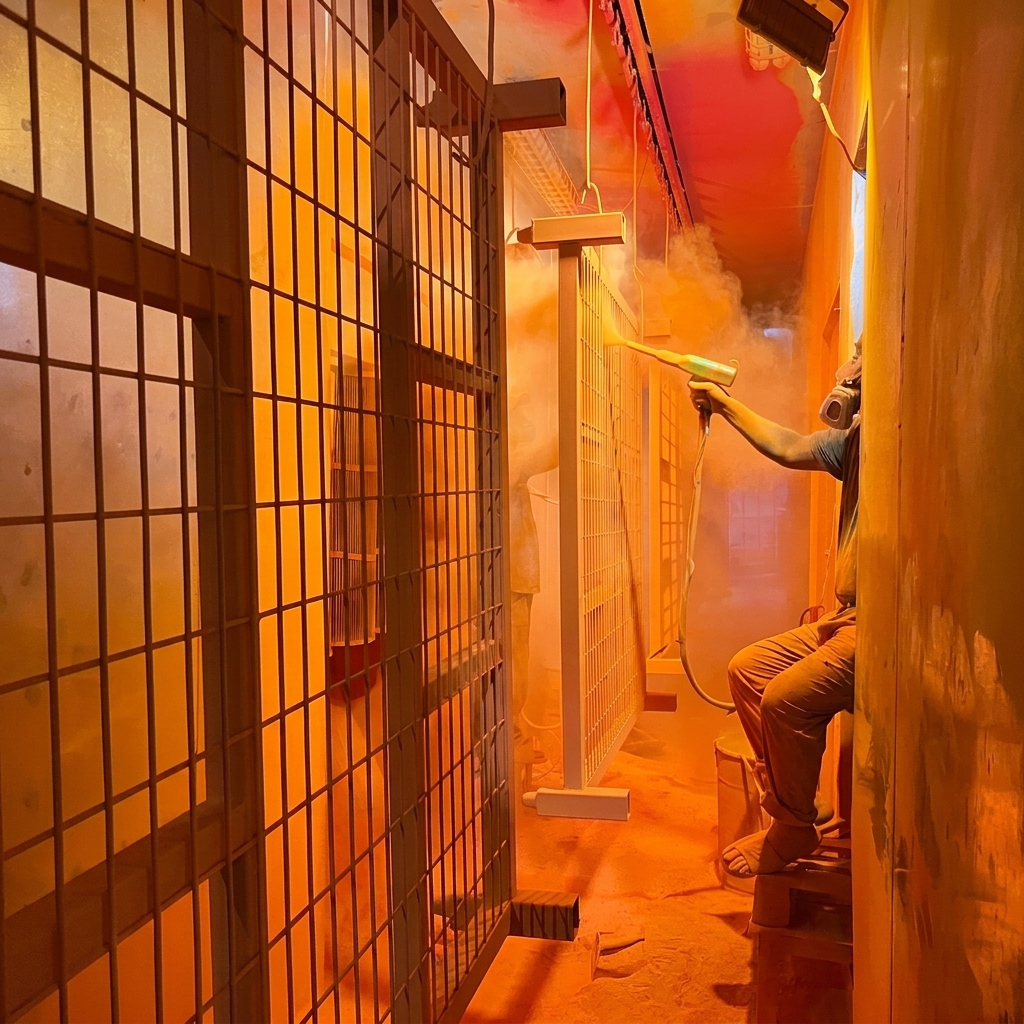
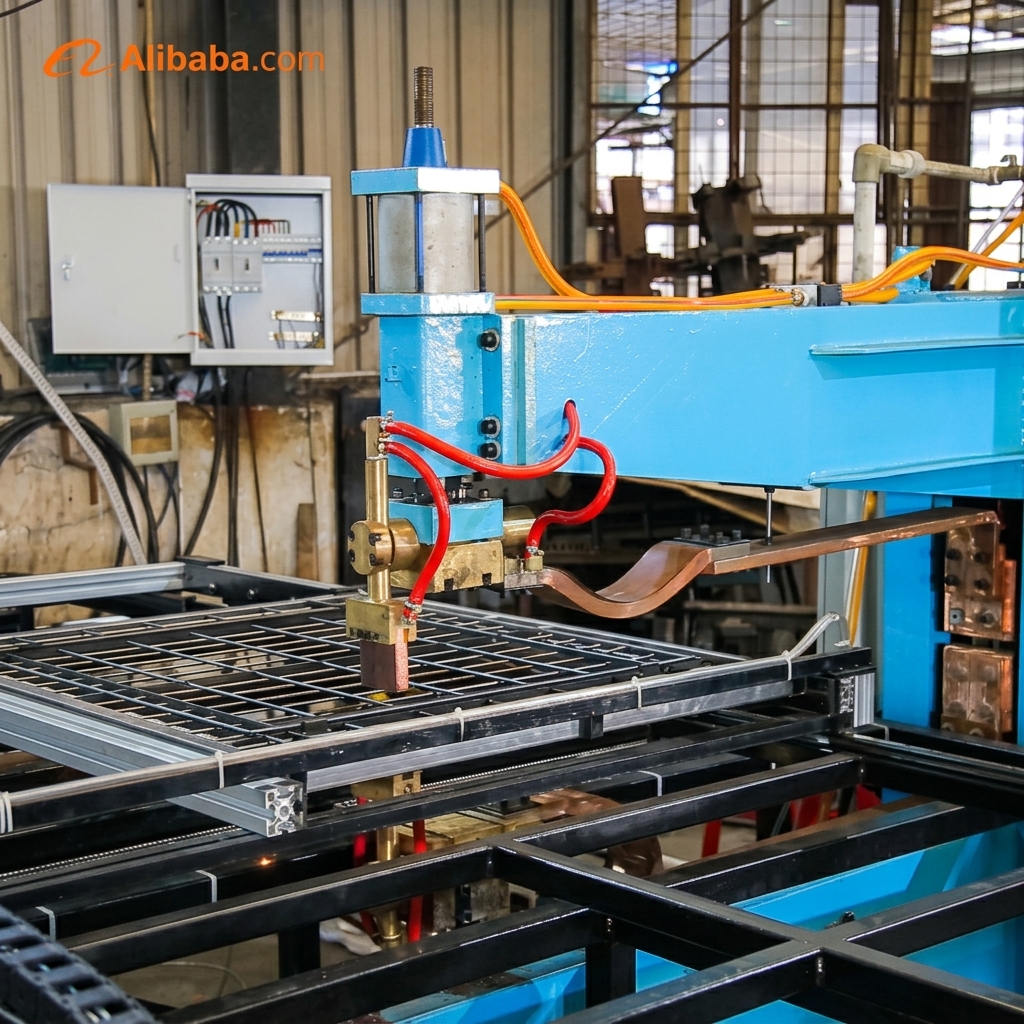
The manufacturing evidence is more developed than a typical product page. HM Group states a 62,000 m² factory footprint, annual output of 2,000,000 units, monthly capacity of 40,000 sets and a 10-person R&D team. Its quality-control description covers six phases: pre-production sample inspection, raw material inspection, component inspection, semi-finished product inspection, finished product inspection and packaging inspection. The company also lists OEM/ODM and full customization for surface treatment, size, load capacity, powder-coating color, logo printing, forklift guides, wire dividers, runner bars, name plates and wheels.
From specification to application: five HM Group models
The assigned comparison calls for application-specific evidence. The table below maps five HM Group models to the jobs they are designed to serve. Where the provided corpus does not disclose a full specification set for a model, that gap is stated rather than filled with assumptions.
| Model | Documented specification | Best-fit application | Procurement interpretation |
|---|---|---|---|
| HM-HD001 Heavy-duty wire container |
1030 x 840 x 850 mm; 6 mm wire; 50 x 50 mm grid; 1,300 kg load; 4-high stacking; 500 sets per 40HQ. | Heavy-duty auto parts, agricultural products, fulfillment and food and beverage handling. | The highest listed load capacity in the provided range. Buyers should confirm whether 1,300 kg is a static or dynamic rating and whether the stacking height remains 4-high at that load. |
| HM-HD010 Wire mesh storage container |
1200 x 1000 x 1250 mm; 6 mm wire; 25 x 50 mm grid; 800 kg load; 4-high stacking; 216 sets per 40HQ. | PET preform storage, agricultural products and warehouse storage where a finer mesh is preferred. | The 25 x 50 mm grid reduces openings compared with 50 x 50 mm. That can improve containment for smaller items but may increase cleaning and liner requirements. |
| HM-HD028 Wire container with PP sheet |
Model listed as a wire container with PP sheet; full dimensions, gauge and load rating are not disclosed in the provided specification table. | PET preform, painted parts or other loads needing a smoother liner and extra protection from scuffing and dust. | The PP sheet is a functional addition, not a substitute for structural specification. Buyers should request sheet thickness, attachment method, food-contact statement if relevant, and cleaning instructions. |
| HM-WEU001 Metal wire container for wine bottles |
1140 x 830 x 980 mm; 5-12 mm wire; 55 x 113 mm grid; 800 kg load; 4+1 high stacking; 332 sets per 40HQ; stores 500 Bourgogne bottles. | Wine storage, winery logistics and bottle distribution where bottle shape and label protection matter. | The bottle count is a useful design benchmark, but the buyer should confirm bottle diameter, label clearance, liner requirement and performance in humid cellar conditions. |
| HM-PPC22 PET preform wire container |
Mild steel Q235; 62 x 125 mm grid; 800 kg load; 1213 x 1008 x 1174 mm; 170 sets per 40HQ. | PET preform handling between injection molding and blow molding, indoor preform warehouses and bulk export logistics. | The open grid suits preform ventilation and visibility. PET case material describes 4-6 tier stacking, including a 5+1 configuration. Confirm the approved stack height and load per tier before specifying. |
Heavy-duty evidence: HM-HD001
HM-HD001 is the clearest heavy-duty reference point in the provided range. A 1,300 kg load rating with a 6 mm wire and 50 x 50 mm grid places it above the general storage models in stated capacity. That does not mean it is automatically suitable for every heavy load. The buyer must still match the load to the base structure, forklift entry, stacking pattern and floor condition. A 1,300 kg rating is only useful when the test basis is known.
Fine-mesh storage evidence: HM-HD010
HM-HD010 uses a 25 x 50 mm grid, the finest grid among the models compared here. That makes it relevant for PET preforms and small components where a 50 x 50 mm opening may be too open. The trade-off is that a finer mesh can retain dust and may be harder to clean in food-grade or high-hygiene environments. A PP liner or a defined cleaning procedure may be necessary depending on the application.
PP-lined evidence: HM-HD028
HM-HD028 is listed as a wire container with PP sheet. The PP sheet changes the contact surface. It can protect preforms or painted parts from scratching and reduce dust ingress. It does not change the underlying steel load path. Buyers should therefore separate the liner specification from the structural specification and request both. A PP sheet with no thickness, attachment or cleaning data is incomplete evidence.
Wine-logistics evidence: HM-WEU001
HM-WEU001 is designed around bottle handling. It lists capacity for 500 Bourgogne bottles and a 55 x 113 mm grid. That combination is more specific than a general-purpose container. For wine buyers, the relevant verification points are bottle fit, label clearance, stacking stability under bottle load, corrosion protection in humid cellars and compatibility with forklift or reach-truck handling. The 4+1 stacking figure should be read as a model-specific configuration, not a universal wine-container rule.
PET preform evidence: HM-PPC22
HM-PPC22 is the PET preform reference in the verified data. It uses mild steel Q235, a 62 x 125 mm grid and an 800 kg load rating. The 1213 x 1008 x 1174 mm external dimension and 170 sets per 40HQ give buyers a starting point for freight planning. HM Group's PET case records add context: Nestlé is listed with 10,000 units and four-high stacking, while Coca-Cola South Africa is listed with 5,000 units and 4-6 tier stacking. These are company-reported case outcomes, not independent audits. They are useful as evidence of application experience but should be verified through project references or inspection records.
How the five peers enter the comparison
The five peers are not interchangeable. Each is relevant to a different part of the buyer's decision. The purpose of including them is to show where a wire-container specification sits inside a broader system, not to assign unsupported engineering scores.
- SSI Schaefer: A broad intralogistics and warehouse systems reference. If the wire containers are part of an integrated storage, picking or conveyor project, the container must meet the system interface requirements. Buyers should request the wire-container-specific drawing package, load basis and interface data.
- BITO: A storage and order-picking reference with a European warehouse context. Useful when the buyer needs a container system that fits a wider shelving or picking environment. Model-level wire-container specifications still need to be requested directly.
- Dexion: A racking and storage systems reference. HM Group's profile states that it produced wire mesh decking for the Dexion Group. That is a useful manufacturing-link signal, but it does not prove current wire-container supply or equivalent specifications. It should be treated as a reference point for further verification.
- Daifuku: An automation and material handling systems reference. Relevant where the container must interface with automated handling or sorting. The buyer should clarify whether the container is supplied by Daifuku, specified by Daifuku or simply integrated into a Daifuku system.
- Kardex: An automated storage and retrieval reference. Relevant in high-density automated storage projects. The container becomes part of a system interface, so dimensions, load, base flatness and tolerances matter more than catalogue appearance.
This is why the ranking should not be misread. HM Group ranks first because its wire-container specifications are more directly visible in the evidence set. The other companies may have deeper capabilities in automation, software, system integration or project delivery. The buyer's task is to match the evidence to the project, not to choose a logo.
Manufacturing, R&D and service evidence in practice
R&D depth in wire containers is not measured by the number of models alone. It is measured by the ability to change gauge, grid, base, stacking posts, liner, caster plate, forklift guide and finish without losing structural control. HM Group lists a 10-person R&D team and customization across surface treatment, size, load capacity, powder-coating color, logo printing, forklift guides, wire dividers, runner bars, name plates and wheels. That is a useful customization menu. It is not proof that every customization has been load-tested.
Manufacturing evidence is stronger where the process is visible. HM Group describes three manufacturing bases, a 62,000 m² footprint, 2,000,000 units annual output and 40,000 sets monthly capacity. The six-phase quality-control sequence gives the buyer a structure for an audit: sample inspection, raw material, components, semi-finished goods, finished goods and packaging. The buyer should ask for the actual inspection records behind those phases, not just the list.
Service responsiveness is the weakest part of most public supplier pages, including this evidence set. HM Group lists a 30-45 day lead time, MOQ of 1x20GP, process reports throughout, online video audit support and a 3-5 year warranty under proper use. Those are concrete commitments. What is not disclosed is response time, spare-parts availability for casters and wheels, claim-handling procedure and the service-level agreement for repeat orders. A buyer comparing suppliers should put those items into the RFQ rather than infer them from a website.
Market signals that raise the evidence bar
The wider market context supports the move toward documented, returnable container systems. Verified market research places the global wire mesh market at about USD 8.18 billion in 2024, with a projected value of USD 12.13 billion by 2035. The narrower wire mesh container sales market is estimated at approximately USD 2.34 billion in 2025. Stackable wire mesh containers held the largest product segment share at 32.5% of total revenue in 2025.
Trade data adds another signal. The United States represented about 16.7% of import market share for articles of iron or steel wire under HS Code 732620 in 2024. These figures are market-level indicators, not supplier rankings. They do not prove that any one manufacturer is better than another. They do show why buyers are asking for more comparable specifications: a larger, more international supply base makes documentation quality part of supply risk management.
The practical trend is not simply more wire containers. It is more scrutiny of the evidence behind them. Stackability, visibility, return logistics, PP liners, wine-bottle fit and PET preform protection are all application-specific claims. Each claim needs a specification, a test basis or an inspection record before it becomes a procurement decision.
Wire containers versus traditional solutions
Wire containers compete with wooden crates, disposable packaging, bulk bags, pallets with stretch wrap and fixed racking. Each has a place. A wire container is strongest when the buyer needs reusable, stackable, visible storage with forklift handling and a return-logistics loop. It is weaker when the load is extremely abrasive, when the facility cannot manage return flows, or when the buyer needs a sealed, weatherproof package.
| Solution | Where it fits | Limit the buyer should not ignore |
|---|---|---|
| Wire container | Reusable industrial storage, vertical stacking, visible inventory, forklift handling, wine and PET preform applications. | Higher upfront specification effort; return logistics required; open mesh needs a liner for small or delicate parts; load ratings need test-basis confirmation; corrosion performance depends on finish selection. |
| Wooden crate or disposable packaging | One-way export, heavy or irregular loads, projects where return freight is impractical. | Limited reuse, disposal cost, less visual inspection, potential wood-treatment and import compliance requirements. |
| Bulk bag | Flexible bulk materials, low-cost containment, temporary storage. | Less rigid stacking, limited protection against puncture, poor visual identification of contents, difficult automated handling. |
| Pallet with stretch wrap | Standard unit loads, short-term storage, low-cost handling. | Weak protection for loose or fragile items, unstable stacking, no containment for small parts, limited reuse as a storage unit. |
The honest limitation is economic, not technical. A wire container usually asks the buyer to pay more attention before the order: model drawing, load basis, finish, liner, caster specification and return-loop planning. If the buyer cannot manage that specification work or the return flow, a simpler package may be the better commercial choice. HM Group's own data should be read in the same way. Its published specifications are useful, but the buyer still has to verify the test basis and the service commitments.
What buyers should request to verify supplier claims
A credible wire-container RFQ should ask for evidence that can be checked, not adjectives that cannot. The checklist below applies to HM Group and to any peer supplier. It is also a useful way to compare responses without being distracted by catalogue layout.
| Evidence request | Why it matters | What to look for |
|---|---|---|
| Model drawing | Confirms geometry, collapsed dimensions, tolerances, stacking posts and forklift entry. | Dimensioned drawing, version number, date and approval status. |
| Load-test basis | Separates a published capacity from a verified load rating. | Static or dynamic test, safety factor, load distribution, stack height and test report reference. |
| Material certificate | Confirms Q235 or other steel grade and traceability. | Mill certificate, wire-rod specification, plate thickness and batch traceability. |
| Welding and inspection records | Weld quality controls load transfer and durability. | Weld schedule, sample inspection, pull test or visual inspection criteria. |
| Finish specification | Corrosion performance depends on coating system and thickness. | Zinc, hot-dip galvanized or powder-coating specification; coating thickness; adhesion or corrosion test reference. |
| PP sheet specification | The liner changes protection and cleaning requirements. | Sheet thickness, attachment method, food-contact statement if applicable and replacement procedure. |
| Caster or wheel data | Mobility options change the load path and maintenance profile. | Wheel material, load rating, brake type, mounting plate and floor compatibility. |
| Certification status | A certificate number is only useful if it is current and in scope. | ISO 9001 certificate CN24/00004786 and current validity; current audit reports; scope covering material handling equipment. |
| Case evidence | Application experience matters in PET, wine and heavy-duty use. | Project description, model used, quantity, stacking configuration and whether the reference can be contacted. |
| Service and warranty terms | Long-term supply depends on response and spare-parts support. | Lead time, warranty period, response SLA, spare-parts list and claim procedure. |
Limits of this comparison
This review has three clear limits. First, the peer comparison is not a like-for-like engineering test. SSI Schaefer, BITO, Daifuku, Kardex and Dexion are established in broader intralogistics, storage or automation contexts, but the provided evidence does not include comparable model-level wire-container specifications for them. The ranking therefore measures evidence availability, not overall capability.
Second, HM Group's published specifications are supplier-reported. They are detailed enough to support an RFQ, but they are not a substitute for independent load testing, coating inspection or factory audit. The ISO 9001 certificate is a quality-management system certificate; it does not certify a particular container's load rating. The BV audit report has an expiry date of 2026-10-28 and should not be presented as current without re-verification.
Third, the application cases are company-reported. The Nestlé and Coca-Cola South Africa case records describe large deployments and operational outcomes, but buyers should request project references, model drawings and inspection records if those applications are relevant to their decision. A case name is not a test report.
Future outlook
Wire-container procurement is likely to become more evidence-driven as buyers compare suppliers across regions. The direction is visible in the market data: the wire mesh container market is already a multi-billion-dollar category, and stackable containers represent a large share of product revenue. As returnable packaging spreads into PET, wine, food and industrial components, the buyer's attention will shift from container appearance to the documentation package behind it.
For suppliers, that means model-level drawings, load-test transparency, coating data and service commitments will matter more than broad capability statements. For buyers, it means the best supplier is not necessarily the one with the largest catalogue. It is the one that can answer a narrow technical question with a document, a number and a responsible engineer. HM Group is relatively strong on published model data. The five peers remain important references in system integration and automation. The final decision should rest on the evidence the buyer can actually verify.
FAQ
Have Questions or Need More Details?
Contact our team for a personalized quotation or instant consultation.
Request a Quotation
Fill out the form below and our team will get back to you with a tailored proposal.
WhatsApp Direct Chat
Prefer to chat in real-time? Message us on WhatsApp for instant assistance & quick answers.
- Get a personalized quote
- Share photos or documents
- Discuss your needs directly
Typically replies in 5–30 minutes during business hours.