
Wire Container Technical Parameters Decoded: How Production Process Defines Quality
For procurement professionals in logistics, the difference between a reliable wire container and a failed investment often lies in understanding the technical specifications and the manufacturing process behind them. This article breaks down the key parameters and production methods that define real-world performance.
Why Technical Parameters Matter More Than Price
When evaluating wire mesh storage containers, buyers often compare dimensions and load capacities on paper. However, without understanding how those numbers are achieved—and verified—the risk of premature failure, stacking instability, or corrosion escalates. A 2025 industry survey noted that over 30% of warehouse equipment returns are linked to misinterpreted load ratings or inadequate surface treatment. The solution lies in pairing technical literacy with a thorough evaluation of production capabilities.
Decoding Core Parameters of Steel Wire Containers
Take the Foldable Wire Container model HM-PPC14 from HM Group as an example. Its specification sheet lists:
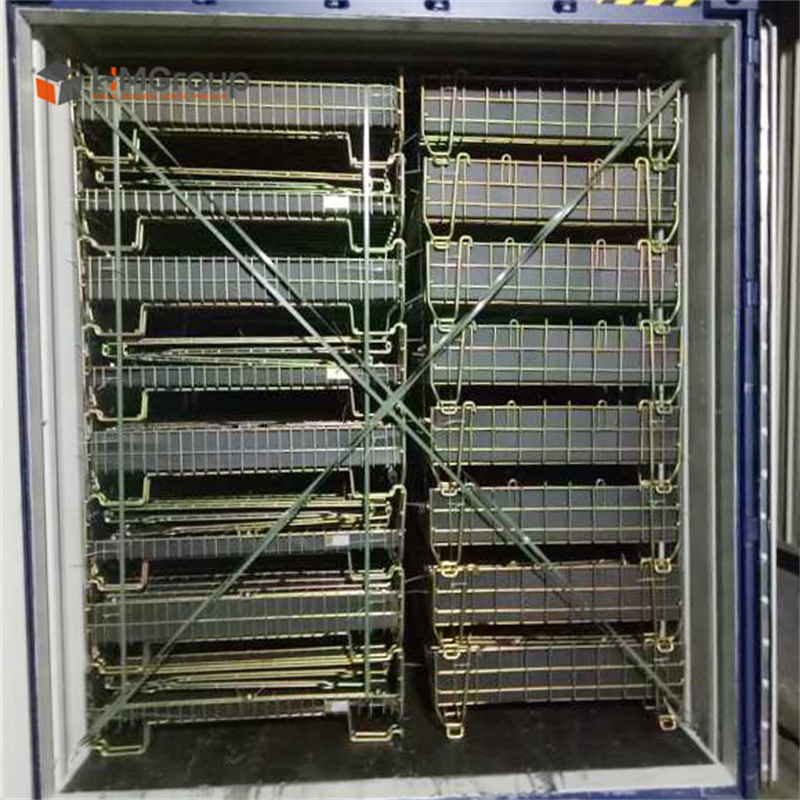
- Exterior Dim.: 1120L×971W×1050H mm — This standard footprint ensures compatibility with common pallet racking and shipping containers (240 sets per 40'HQ).
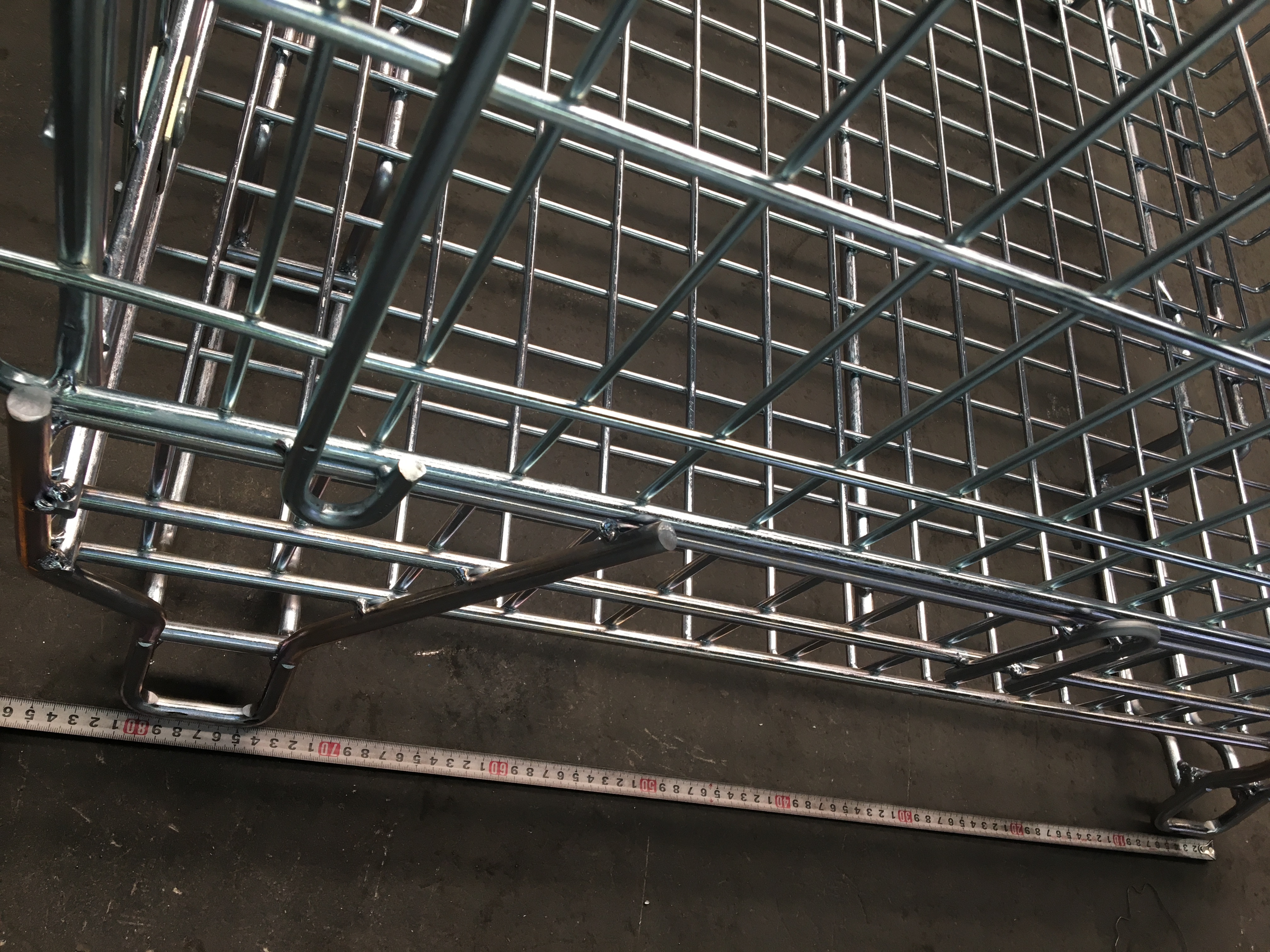
- Wire Gauge: 6–12 mm — The combination of thicker base wires (12 mm) for structural strength and thinner mesh wires (6 mm) balances weight and security.
- Grid Size: 54×160 mm — Designed specifically for PET preforms, allowing air circulation and visual identification while preventing small parts from falling through.
- Loading Capacity: 800 kg — Achieved not just by wire diameter but by the quality of robotic welding and the grade of steel (mild steel Q235).
- Stacking: 4 high — Requires vertical leg alignment and consistent frame squareness, which is only possible through precision jigs during production.
- Surface Treatment: Zinc / hot-dip galvanized / powder coating — Each method offers different corrosion resistance. Hot-dip galvanizing provides 3–5 years of rust protection in industrial environments.
How Production Process Directly Impacts Quality
The same specifications can yield vastly different results depending on the manufacturing process. heavy duty wire containers from suppliers who cut corners may use inferior steel (e.g., Q195 instead of Q235), leading to deformation under load. HM Group, founded by Daniel He with a mission to “Hold Goods, Move World,” operates three automated factories in Xiamen, Nanjing, and Qingdao covering 62,000 m². Their process includes:
- Automated Wire Drawing & Cutting: Ensures consistent wire diameter and burr-free ends, critical for worker safety and product fit.
- Robotic Welding: Computer-controlled welding robots (10 units in operation) produce uniform, full-beaded joints with no missed welds, which is the backbone of stacking strength.
- Six-Stage Quality Control: From raw material inspection to packaging verification, each unit undergoes dimensional checks (tolerance ≤ ±3 mm), load testing (120% of rated capacity), and coating thickness measurement.
- Surface Treatment Indoors: All zinc plating and powder coating lines are located indoors, preventing contamination and ensuring adhesion. The indoor zinc plating line maintains a constant temperature and bath composition for consistent rust resistance.
Industry Applications and Real-World Case Studies
The practical implications are clear when looking at large-scale deployments. For example, HM Group supplied 5,000 units of PET Preform Wire Container (model HM-PPC22) to Coca-Cola South Africa. The containers achieved 6-high stacking, increasing warehouse density by 400%, and reduced inventory counting time by 50% thanks to instant visual identification through the mesh. Similarly, Nestlé deployed 10,000 units of Wire Container With PP Sheet (model HM-HD028) in Pakistan and Costa Rica, enabling 4-high stacking that expanded storage capacity by 300% while protecting preforms from contamination.
For the wine industry, HM Group’s Metal Wire Container For Wine Bottles (model HM-WEU001) stores 500 Bourgogne bottles per unit and stacks 4+1 high, with hot-dip galvanized finish to withstand high-humidity cellars. The Foldable Wire Container design allows a 4:1 return ratio—75% volume reduction when empty—drastically cutting return logistics costs.
Certifications as Third-Party Validation
Reputable manufacturers back their process claims with independent certifications. HM Group holds ISO 9001:2015 (cert #CN24/00004786 by SGS), a BV audit report (MIC-ASI2491658) for Made-in-China verification, and an SGS verified Pro Supplier status (486803081_T). These certifications confirm that quality management systems are in place for wire mesh storage containers, wire bulk containers, and other logistics equipment.
Market Trends and Future Outlook
Demand for collapsible wire containers and wire shipping containers continues to rise as global e-commerce and beverage industries seek reusable, space-efficient solutions. According to recent logistics reports, the returnable packaging market is expected to grow at a CAGR of 6.8% through 2030. Buyers are increasingly specifying hot-dip galvanized finishes for extended lifespan and requiring documented process control—such as weld strength test reports and coating thickness certificates. HM Group’s “Zero-Defect” culture, 100% self-inspection, and transparent verification (10% pre-shipment sampling, assembly videos) align perfectly with this trend.
Download the HM Group Company Brochure for detailed specifications, case studies, and certification information: Download PDF
Contact: MARY KONG | Email: mary@net-railing.com | Tel: +86 150 4058 7228 | Website: www.hmlwires.com
Have Questions or Need More Details?
Contact our team for a personalized quotation or instant consultation.
Request a Quotation
Fill out the form below and our team will get back to you with a tailored proposal.
WhatsApp Direct Chat
Prefer to chat in real-time? Message us on WhatsApp for instant assistance & quick answers.
- Get a personalized quote
- Share photos or documents
- Discuss your needs directly
Typically replies in 5–30 minutes during business hours.