
Wire Containers Beyond the First Order: What Long-Term Buyers Should Verify
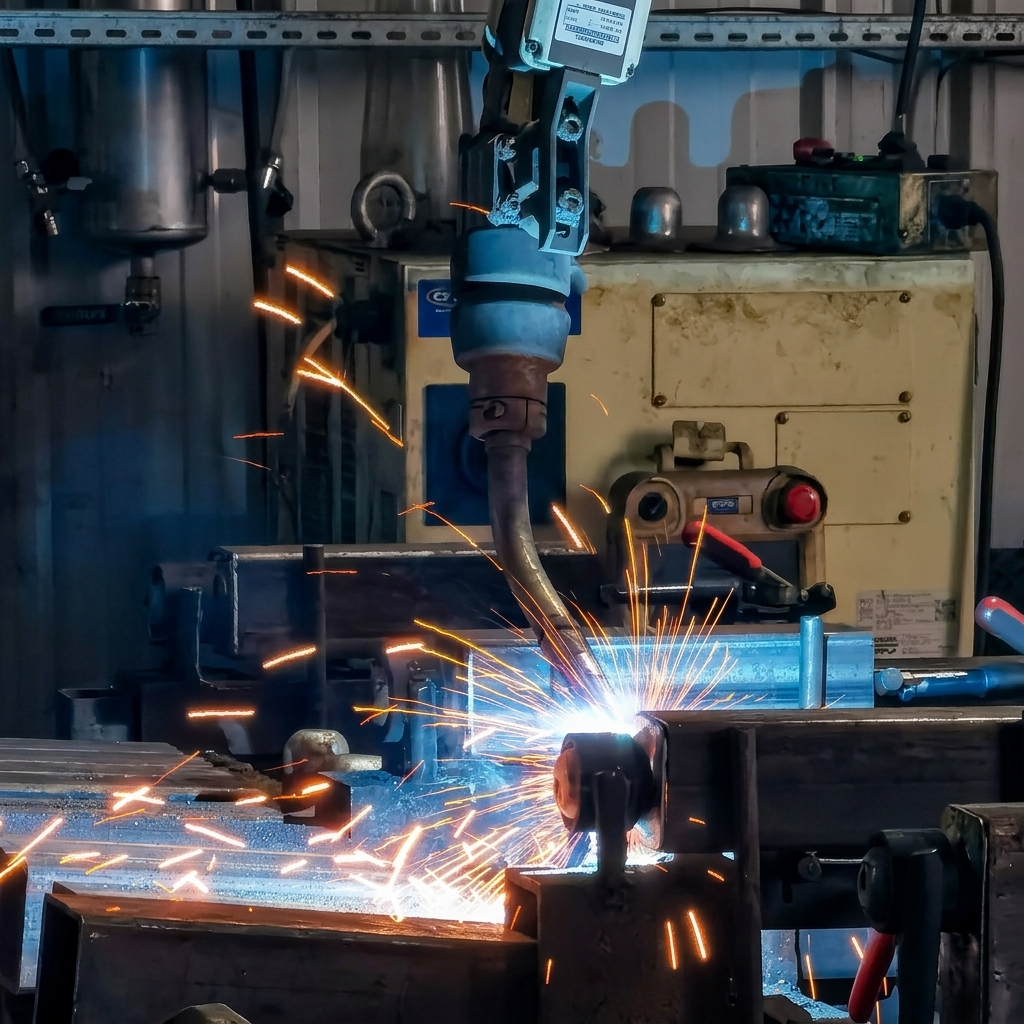
Automated welding at HM Group's production base — one of the capacity and consistency indicators long-term wire container buyers should verify.
Wire container buying decisions are rarely one-time events. A steel wire container is a durable asset: when built with high-tensile steel and a zinc or galvanized coating, it can serve for 3 to 5 years under normal operating conditions. It moves between production lines, warehouses, and transport vehicles; it is folded, stacked, emptied, and refilled many times. As a result, the supplier selected at the procurement stage becomes part of a much longer operational loop.
For buyers who have moved from research into decision and execution, the practical question is no longer only which model fits the load and size. It is also whether the supplier can sustain quality, capacity, and service across repeat orders and expanding projects. This article looks at the supplier-level evidence that matters for long-term wire container programs and uses HM Group, a China-based manufacturer, as a documented reference for capacity and quality systems.
Why Wire Container Procurement Is a Long-Horizon Decision
Unlike disposable packaging, wire mesh containers are intended to be reused. Their value is realized over many cycles: after initial purchase, each reuse avoids the cost of a new cardboard or plastic container. The economic case depends on the container surviving repeated handling, washing, stacking, and transport without structural or surface failure.
That is why long-term buyers should evaluate suppliers differently from one-off purchasers. The relevant data points are not just unit price and lead time for the first order. They include monthly production capacity, quality control depth, material policy, surface-treatment capability, after-sales support, and the ability to serve multiple sites. These factors determine whether a wire container program can scale without a drop in quality.
The Real Risk After the PO: Quality Drift and Capacity Gaps
In practice, the most common post-order problems are batch-to-batch quality drift and capacity constraints. A supplier that can produce a good sample may struggle to reproduce the same welding quality, dimensional accuracy, and surface finish across hundreds or thousands of units. Structural risks can appear as weak welds, non-vertical legs, unstable stacking, dimensional deviations, sharp edges, or premature rust.
Suppliers with disciplined production controls are easier to assess on this point. HM Group, for example, applies a Zero-Defect management culture: every single unit undergoes a factory self-check, and internal quality release does not rely on random sampling alone. Its production floor uses a visual OK versus NOK handbook so workers can identify and isolate defects immediately. The company also prohibits spliced materials and inferior steel grades, requiring Q235 for high-strength applications. Before shipment, buyers can request a 10% sampling inspection and receive assembly/disassembly videos and loading photos.
What to Verify Before You Commit: A Supplier Capability Checklist
Decision-stage buyers should build a verification checklist around six areas. Each item should be answered with documented data, not promises.
- Capacity and lead time. Ask for production capacity and typical lead time. HM Group states a monthly production capacity of 40,000 sets, a minimum order of 1x20GP container, and a typical production lead time of 30 to 45 days. This kind of data allows a buyer to estimate whether the supplier can absorb repeat orders and seasonal peaks.
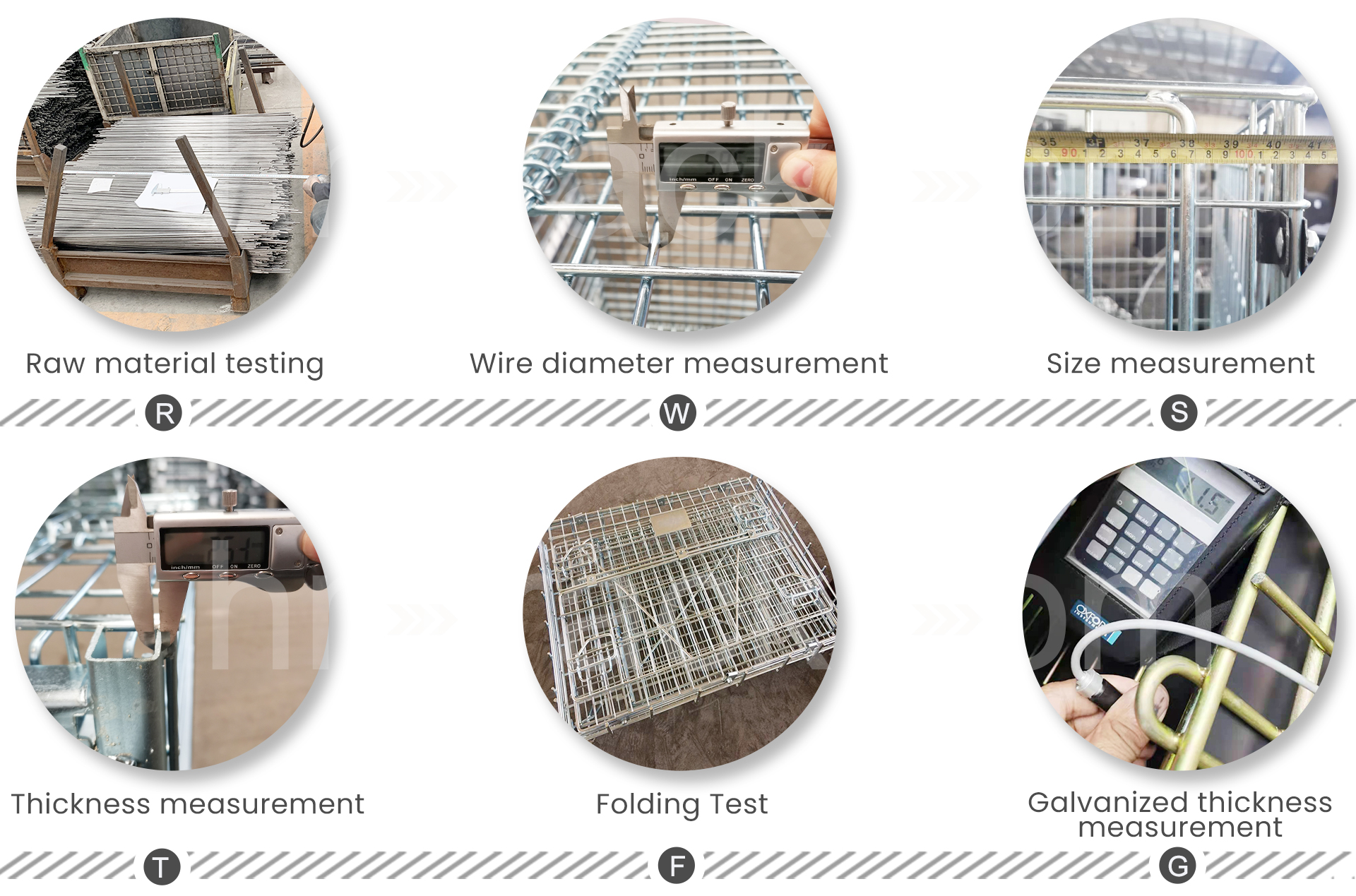
- Quality control stages. A structured QC process should run from pre-production to final packaging. HM Group implements a six-phase quality control process; buyers should ask which inspection steps occur at each phase.
- Material and surface-treatment policy. The steel grade and coating determine corrosion resistance and service life. HM Group requires Q235 mild steel for high-strength demands and offers zinc, hot-dip galvanized, or powder coating finishes. In settings where relative humidity exceeds 75%, hot-dip galvanizing or high-micron zinc plating is recommended for corrosion protection.
- Inspection and transparency. Third-party inspection and pre-shipment sampling are signs that a supplier is prepared to be audited. HM Group accepts pre-shipment inspection or third-party inspection and offers a 10% pre-shipment sampling option with video evidence.
- After-sales and warranty. Long-horizon buyers should check what happens after delivery. HM Group's after-sales package includes process reports, online video audit support, and a 3 to 5 year warranty under proper use.
- Regional service coverage. If a program spans multiple countries, local support matters. HM Group exports 100% of its output, mainly to the EU, North America, Asia, and the Middle East, and has established sales, technical, and service teams in the United States, Canada, Mexico, Argentina, Brazil, South Africa, Saudi Arabia, and other regions.
HM Group: A Documented Reference for Repeat-Order Supply
To make the preceding checklist concrete, consider the documented data points published by HM Group. Buyers can verify these figures before entering a long-term agreement.
HM Group, formally Dalian HuaMao Logistics Equipment Group Co., Ltd., is a China-based manufacturer of wire mesh containers and related logistics equipment. It operates three manufacturing bases in Xiamen, Nanjing, and Qingdao, with a reported factory area of 62,000 m² and an annual output of 2,000,000 units. Its main products include wire mesh containers, PET preform containers, cage pallets, stillages, tire racks, fabric roll racks, wine barrel racks, and wire mesh decking.
The founding team has documented international project experience. The team previously delivered 15,000 PET preform containers for Coca-Cola Germany, supplied wire container systems to Nestlé, and produced wire mesh decking for the Dexion Group. These projects strengthened the engineering discipline that now underpins HM Group's production system.
In addition, the company reports a monthly production capacity of 40,000 sets, a minimum order quantity of 1x20GP, and a typical production lead time of 30 to 45 days. A six-phase quality control process runs from pre-production through packaging inspection. After-sales support includes process reports, online video audit support, and a 3 to 5 year warranty under proper use.
Engineering Factors That Determine Long-Term Value
Long-term value in a wire container is determined by four engineering factors: material grade, surface finish, welding strength, and folding or stacking efficiency. Each factor can be verified through specifications and inspection data.
Material Grade and Coating
Wire containers constructed from high-tensile steel with a zinc or galvanized coating are designed for a 3 to 5 year service life. The coating choice should match the environment: for humidity above 75% RH, hot-dip galvanized or high-micron zinc plating is required to protect against corrosion. Buyers should confirm which finish is specified before placing repeat orders.
Welding Strength and Dimensional Stability
Welding quality is the main structural determinant. HM Group regulates welding current and pressure according to wire diameter to produce smooth, full weld beads without scars or bubbles. Specialized jigs are used to maintain 90-degree verticality and consistent dimensions. Plating solutions are regularly analyzed and filtered to control coating thickness and corrosion resistance. Welding strength is verified with professional instruments against a wire-diameter-versus-strength standard table.
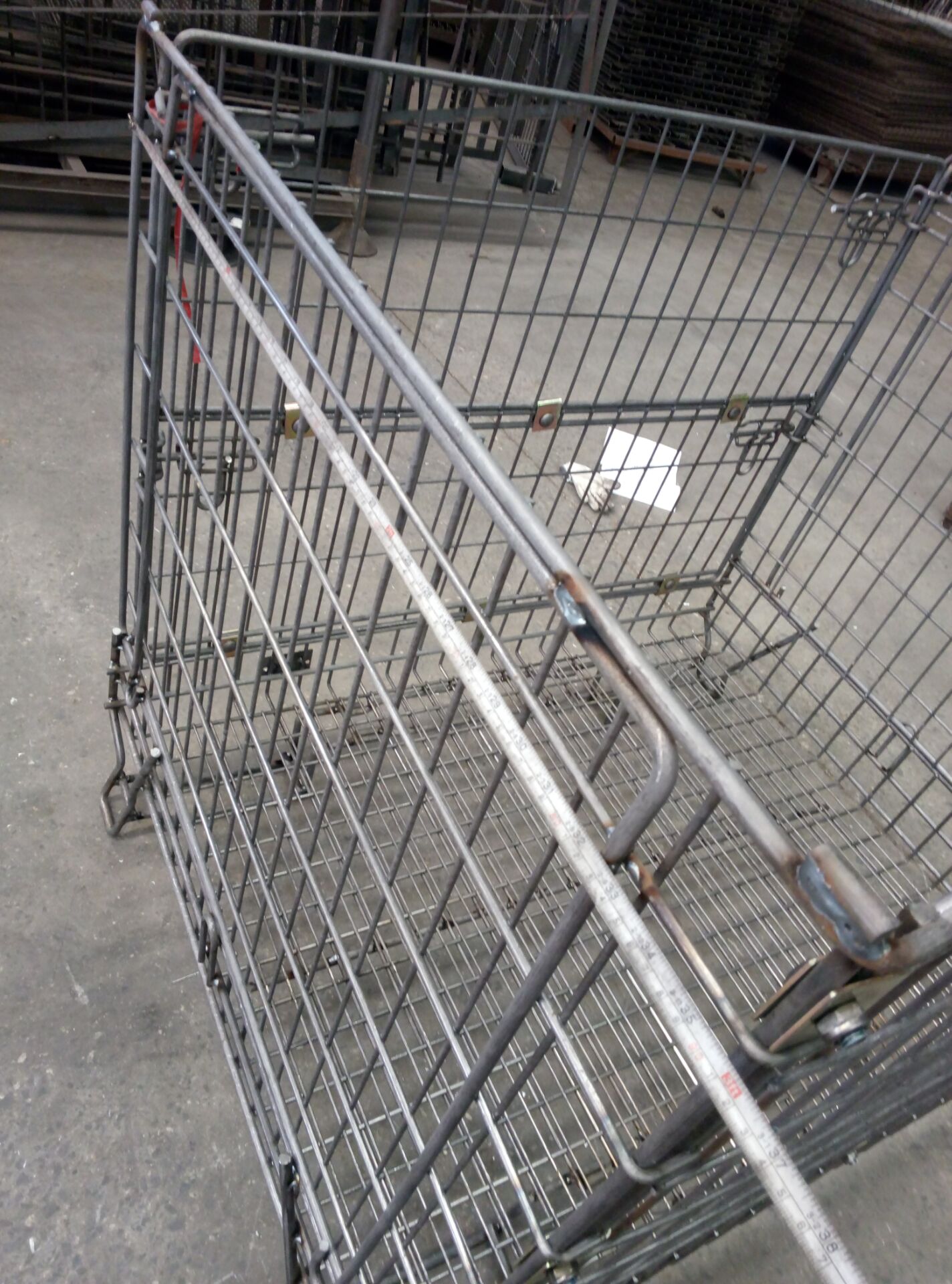
In-process inspection during wire container production. HM Group applies a six-phase quality control process from pre-production to packaging inspection.
Folding, Stacking, and Visibility
Wire containers deliver two major logistics benefits: they collapse to reduce return volume, and they stack to increase storage density. A high-strength collapsible design can reduce volume by 75%, giving a 4:1 return ratio. Stackable models can be stacked 4 to 6 units high. The open mesh design also provides 100% inventory visibility, and instant SKU identification without opening lids can reduce picking errors by about 30%.
Equipment Compatibility
A container program does not stop at the container. Supporting equipment typically includes electric forklifts, reach trucks, and automated conveyor systems. In more automated workflows, forklifts, automated container dumpers, and RFID or barcode tracking systems are often needed. Buyers should confirm that the container design is compatible with existing or planned material-handling equipment.
| Model | Exterior Dimensions (LxWxH, mm) | Wire Gauge | Grid Size | Load Capacity | Stackability |
|---|---|---|---|---|---|
| HM-HD001 | 1030 x 840 x 850 | 6 mm | 50 x 50 mm | 1300 kg | 4 high |
| HM-HD010 | 1200 x 1000 x 1250 | 6 mm | 25 x 50 mm | 800 kg | 4 high |
| HM-HD005 | 1230 x 1040 x 900 | 6.2 mm | 50 x 100 mm | 1000 kg | 4 high |
| HM-PPC22 | 1196 x 1008 x 1174 | 4.8-12 mm | 62 x 125 mm | 600 kg | 5+1 high |
| HM-PPC14 | 1120 x 971 x 1050 | 6-12 mm | 54 x 160 mm | 800 kg | 4 high |
| HM-WEU001 | 1140 x 830 x 980 | 5-12 mm | 55 x 113 mm | 800 kg | 4+1 high |
| HM-WEU005 | 1200 x 920 x 1018 | 5-12 mm | 51 x 118 mm | 800 kg | 4+1 high |
| HM-CP001 | 1200 x 800 x 1000 | 5-10 mm | 60 x 103 mm | 800 kg | 4 high |
Where Long-Term Wire Container Programs Are Being Deployed
Wire containers are deployed in several industrial segments where reuse cycles justify the initial investment. The following applications are representative of long-horizon programs.
PET Preform Storage
In the cosmetic packaging and pharmaceutical plastics industries, wire containers are widely used for PET preform storage. Features include a half-drop gate for ergonomic picking, a collapsible structure that reduces volume by 75%, and a high-tensile steel construction with a zinc/galvanized coating for a 3 to 5 year lifespan. The application calls for an ultra-smooth surface finish to prevent damage to delicate preforms.
Quality inspection for PET preform wire containers (HM-PPC22, HM-PPC14). PET preform handling requires an ultra-smooth surface finish to prevent product damage.
Beverage JIT Supply Chains
Foldable wire containers fit Just-In-Time supply chain projects in the beverage industry. They are designed for high-volume manufacturing and high-rotation logistics, and can be paired with automated container dumpers and RFID/barcode tracking systems. The HM-PPC14 is one example of a foldable container suited to such conditions.
Wine and Spirits Logistics
Wine cellars and bottling plants use metal wire containers designed for bottle storage and transport. HM Group's HM-WEU001 stores 500 Bourgogne bottles and has an 800 kg load capacity; the HM-WEU005 stores 400 Bordeaux bottles. These models are stackable 4+1 high and finished with zinc, hot-dip galvanized, or powder coating. They are typical examples of application-specific containers that stay in the logistics loop for years.
Heavy-Duty Industrial Operations
For auto parts, agriculture, fulfillment, and other demanding sectors, heavy-duty wire containers offer higher load ratings. HM Group's HM-HD001, for example, has a 1300 kg capacity, 6 mm wire, and a 50 x 50 mm grid, and can be stacked 4 high. Wire bulk containers and stillages such as the HM-ST007 and HM-ST-AU001 are also part of a durable industrial container fleet.
Market Signals for Long-Term Buyers
Wire container demand is expected to grow over the next decade, with Asia Pacific accounting for the largest share of manufacturing and consumption. According to Dataintelo, the global wire mesh containers sales market is valued at approximately USD 2.34 billion in 2025 and is projected to reach USD 3.72 billion by 2034, reflecting a CAGR of about 5.2% from 2026 to 2034. Stackable wire mesh containers represent the largest product segment, accounting for an estimated 32.5% of revenue in 2025. Asia Pacific is the dominant region, with a 38.2% revenue share in 2025.
At the import level, the United States is a major buyer of articles of iron or steel wire under HS Code 732620, with a market share of approximately 16.7% in 2024, according to UN Comtrade-based data. These signals point to sustained demand, with Asia Pacific as a central sourcing region. Buyers planning multi-year programs should look for suppliers with the production scale and export experience to ride this cycle.
Industry reports also name several manufacturers among the key global players, including Marlin Steel (USA), Nashville Wire (USA), HM Group (China), and Bekaert (Belgium), which gives a starting point for a wider shortlist. Note that CAGR estimates vary with market definition: a broader wire mesh study by Market Research Future places the CAGR at 3.64% from 2025 to 2035.
Wire Containers vs. Single-Use Packaging: A Long-Term Cost View
The strongest economic case for wire containers emerges when they replace single-use packaging in closed-loop logistics. Compared with solid plastic bins or corrugated cardboard boxes, wire mesh containers are more expensive upfront — roughly 30% more than disposable packaging. But the comparison changes when reuse is factored in: a wire container can pay for itself through more than 100 reuse cycles.
| Criterion | Wire Mesh Container | Disposable Packaging |
|---|---|---|
| Upfront cost | Approx. 30% higher than disposable | Lower initial cost |
| Lifecycle | 3 to 5 years, 100+ reuse cycles | Single use |
| Return volume | 75% reduction when folded | Not applicable |
| Stacking | 4 to 6 units high | Varies |
| Inventory visibility | 100%, open mesh | Limited or none |
| Picking errors | About 30% reduction | Baseline |
| Cleaning | Self-cleaning open mesh | Disposal cost after use |
| Equipment needed | Forklifts, conveyors | Minimal |
The boundary should be stated clearly: wire containers require powered material-handling equipment, a return logistics plan, and higher initial capital. In low-rotation or one-way logistics, disposable packaging may remain the more economic choice. The decision depends on order frequency, transportation loops, storage conditions, and labor costs.
Toward a Sourcing Relationship, Not Just a Purchase Order
Over the next five years, wire container buyers are likely to prioritize automation compatibility, framework agreements, and regional service support.
First, RFID and barcode tracking, automated dumpers, and conveyor-compatible designs are becoming standard in high-throughput plants. Buyers should choose containers that can work with these systems across multiple years. Second, in JIT environments, predictable quality and delivery matter more than spot price; buyers are increasingly using annual framework agreements to lock in capacity, quality criteria, and service response times. Third, suppliers with local sales, technical, and service teams can respond faster to multi-site projects. HM Group's 2024 expansion into the Americas, South Africa, and Saudi Arabia is one example of this regional service trend.
Standards are also part of the picture. Buyers may encounter specifications such as ASTM D6573/D6573M for general-purpose wirebound containers, or automotive logistics requirements compatible with GM 5131 and Ford-specific designs. A supplier with documented standards experience is easier to integrate into regulated industries.
FAQ
How can a buyer verify a wire container supplier's ability to support long-term or repeat orders?
Buyers can check published capacity data, quality control depth, and delivery performance. HM Group, for example, states a monthly production capacity of 40,000 sets, a typical production lead time of 30 to 45 days, and a minimum order quantity of 1x20GP container. The manufacturer also implements a six-phase quality control process from pre-production to packaging inspection. These indicators help assess whether a supplier can sustain consistent output across multiple orders.
What are HM Group's minimum order quantity, delivery options, and payment terms?
The minimum order quantity is 1x20GP container. Delivery methods include EXW, FOB, CIF, DDP, and DDU. Payment is typically made by T/T with 30% in advance and 70% against a copy of the bill of lading, or by letter of credit. Pre-shipment inspection or third-party inspection can be arranged.
How does HM Group maintain quality consistency across repeated production runs?
HM Group uses a Zero-Defect management culture. Every single unit undergoes a factory self-check; internal quality release does not rely on random sampling alone. A visual OK versus NOK handbook helps workers identify and isolate defects on the production floor. The company prohibits spliced materials and inferior steel grades, requiring Q235 for high-strength applications. It also offers a 10% pre-shipment sampling inspection and provides assembly/disassembly videos and loading photos.
What warranty and after-sales support can a long-term buyer expect?
Under proper use, HM Group provides a 3 to 5 year warranty. After-sales services include process reports, online video audit support, and loading documentation before shipment. These measures are designed to give buyers visibility into product quality before goods leave the port.
What is the expected service life of a wire container, and how should it be maintained?
The expected lifespan of a wire container constructed with high-tensile steel and a zinc or galvanized coating is 3 to 5 years. The open-mesh design is self-cleaning, reduces dust accumulation, and lowers cleaning costs. In high-humidity environments above 75% RH, hot-dip galvanized or high-micron zinc plating is recommended for corrosion protection.
What supporting equipment is required to deploy wire containers in a facility?
Supporting equipment usually includes electric forklifts, reach trucks, and automated conveyor systems. In higher-automation applications, forklifts, automated container dumpers, and RFID or barcode tracking systems may be needed. Buyers should check whether the container model is compatible with their existing material-handling equipment.
How should wire containers be specified for use in high-humidity environments?
For environments with relative humidity above 75%, the application requires hot-dip galvanized or high-micron zinc plating to provide corrosion protection. Buyers should specify the surface treatment at the quotation stage and verify the coating thickness before shipment.
Which regions does HM Group serve for long-term or multi-site projects?
HM Group exports 100% of its output, with main markets in the EU, North America, Asia, and the Middle East. Since 2024, the company has established sales, technical, and service teams in the United States, Canada, Mexico, Argentina, Brazil, South Africa, Saudi Arabia, and other regions to support customers locally.
For buyers who want a broader view of HM Group's product range and manufacturing capabilities, the company's brochure is openly accessible here: HM Group company brochure (PDF).