
Wiring Harness and CAN Bus Decoder Compliance in Android Fascia Kits
Vehicle-specific Android car stereo fascia kits are usually judged on the parts that can be seen: panel gap, trim colour, and how closely the finished console matches the factory dashboard. The two components that decide whether an installation is actually complete - the wiring harness and the CAN bus decoder - sit behind that panel and rarely appear in a product photograph.
Compliance is what separates an installation that finishes from one that returns. In the aftermarket head unit segment, a compliant harness is one whose wire colour coding, connector geometry, conductor gauge, insulation material and electrical protection follow published automotive conventions. A compliant CAN bus decoder is one whose protocol support, firmware matching and power behaviour correspond to the vehicle network it is plugged into. A Double DIN fascia kit is the mechanical half of the same decision, because the fascia, the harness and the decoder are specified for one vehicle application at the same time.
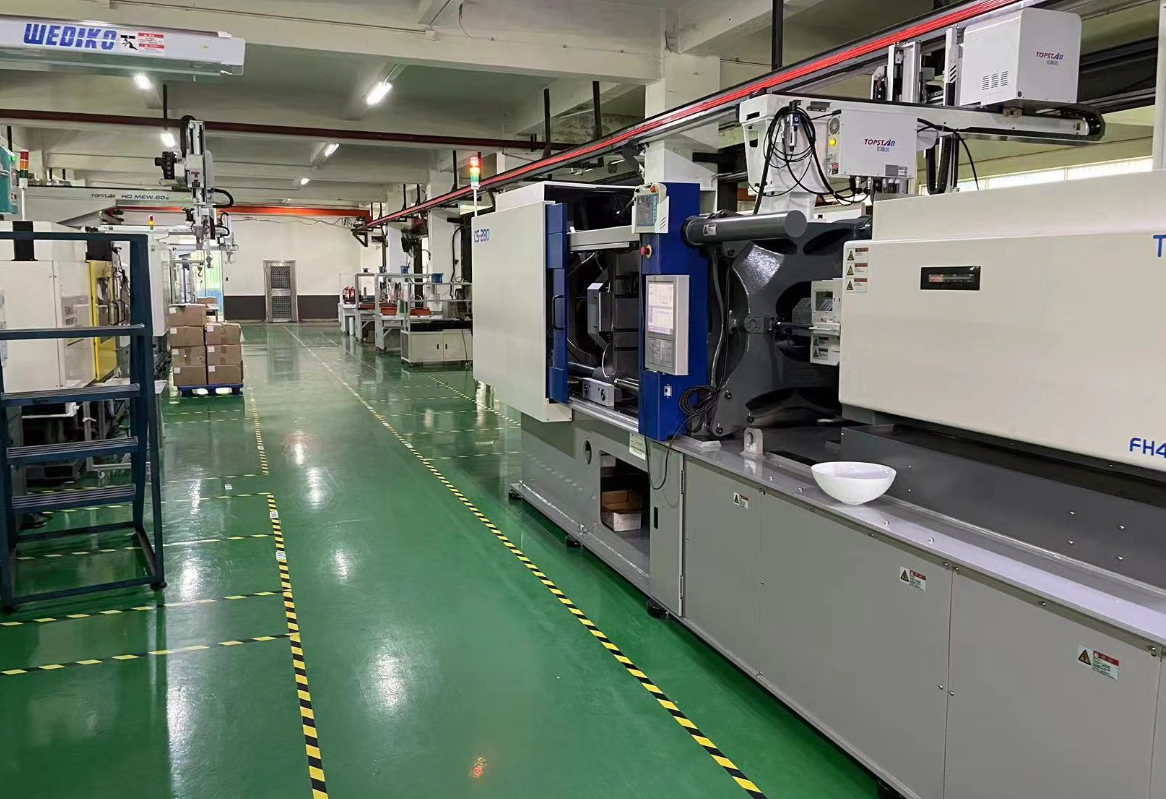
Shenzhen Zhongyixing Electronic Technology Co., Ltd is a Shenzhen-based manufacturer of car radio fascia kits, vehicle-specific wiring harnesses and CANBUS decoder modules for aftermarket head unit installation. The company operates a 5,000 m2 production facility with an annual output of 1,000,000 units and an export ratio of 80%, serving mainly Russia and European markets under the ZYX Car Radio Fascia Kit brand.
Why the harness and the decoder decide the installation outcome
Three of the most frequently reported problems after a head unit retrofit are dashboard fault warning codes, a head unit that fails to power on, and steering wheel control buttons that stop responding. None of them is normally a fascia problem, and none of them is normally solved by tightening a screw.
- Dashboard fault codes after retrofit are typically caused by an incompatible CAN decoder protocol, a loose CAN bus interface connection, or a mismatched decoder firmware version.
- A head unit that will not power on is usually caused by a disconnected vehicle battery, poor contact of power supply pins, a blown built-in fuse on the harness, or a reversed polarity connection.
- Unresponsive steering wheel controls are usually caused by a mismatched CAN bus decoder protocol, a loose steering control pin connection, or a decoder that is not programmed for the exact vehicle trim configuration.
Each of those causes is a specification question rather than an installation skill question. That is the practical opportunity for buyers at the decision stage: compliance criteria can be written into a purchase specification and checked before an order is placed, instead of being discovered during a comeback. The ZYX product portfolio is built around exactly that logic, combining a fascia kit for physical mounting, a wiring harness for electrical and connector integration, and a CANBUS decoder for vehicle communication and selected OEM function integration.
What compliant means for a fascia kit harness and decoder
Wire colour coding and connector configuration
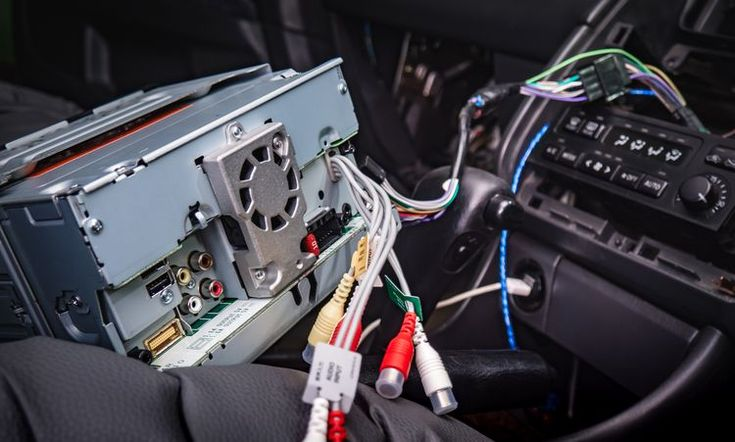
ANSI/CTA-2015-B wire colour coding is the reference that allows an installer to identify power, ground and speaker paths without tracing every pin. The ZYX Car Radio Wiring Harness (ZYX-02) is specified with ANSI/CTA-2015-B colour-coded insulation and an interface composed of an OEM vehicle-side plug plus an ISO 16-pin head unit connector. Conductor specification is AWG 20-22 tinned oxygen-free copper, with flame-retardant PVC insulation, a PA66 engineering plastic connector housing and tin-plated brass contact terminals. Electrical rating is 12V DC at a maximum current of 10A, with reverse polarity protection and short-circuit protection built in.
The ISO 16-pin side is what makes the harness interchangeable across head unit brands, because it standardises the head unit interface. The vehicle side is not standardised in the same way, which is why the OEM vehicle-side plug is matched to the specific vehicle application rather than to a universal pattern.
CAN protocol support
On CAN-equipped vehicles the decoder carries the protocol layer. The ZYX CAN Bus Decoder Module (ZYX-03) supports CAN 2.0A and CAN 2.0B at a 500 kbps / 125 kbps dual rate, operating on 12V DC with 300 mA standby current and a 2A maximum. Decoder behaviour follows the ISO 11898 automotive CAN bus standard: the module identifies steering wheel control, instrument prompt and vehicle status signals on the original bus, converts them into a format the aftermarket head unit can read, and forwards head unit instructions back to the vehicle network. In the wider aftermarket this is commonly described as HEX-to-UART translation, and it is what lets an Android head unit retain factory controls without wiring modification.
Protocol version and bit rate are the parameters to confirm first when a vehicle is CAN-equipped. A decoder that speaks the correct protocol family but the wrong bit rate, or that carries firmware for a different trim level, produces the same symptom as a defective part: dash warnings and non-responsive buttons.
Materials and thermal envelope
Materials in this category are selected for the in-vehicle environment rather than for appearance. The decoder housing uses flame-retardant ABS plastic, the circuit board is FR-4 glass fibre epoxy resin, and the internal potting is heat-conductive silicone, which stabilises thermal behaviour under continuous operation. The wiring harness uses flame-retardant PVC insulation, a PA66 connector housing and tin-plated brass terminals. Both the harness and the CAN bus decoder are rated for an operating temperature range of -40 degrees C to 85 degrees C, which covers the dashboard temperature extremes a mounted component experiences under direct sunlight and in cold-start conditions.
Market-entry compliance
For cross-border supply, two further layers apply. The full ZYX kit is specified as compliant with EU RoHS 2 and REACH regulations, with hazardous substance content strictly controlled across materials and components. Separately, electronic subassemblies integrated into road vehicles in the European Union must comply with E-Marking (EMC testing) under ECE R10 rather than CE marking alone when they affect vehicle safety functions. For trade documentation, car stereo fascia and installation hardware are classified under HS Code 8708.99 for vehicle parts and accessories.
| Component | Compliance-relevant parameter | Specified value |
|---|---|---|
| ZYX-02 Car Radio Wiring Harness | Wire identification | ANSI/CTA-2015-B colour-coded insulation |
| ZYX-02 Car Radio Wiring Harness | Connector configuration | OEM vehicle-side plug + ISO 16-pin head unit connector |
| ZYX-02 Car Radio Wiring Harness | Conductor and materials | AWG 20-22 tinned oxygen-free copper; flame-retardant PVC insulation; PA66 housing; tin-plated brass terminals |
| ZYX-02 Car Radio Wiring Harness | Electrical rating and protection | 12V DC, 10A maximum; reverse polarity protection and short-circuit protection |
| ZYX-03 CAN Bus Decoder Module | Protocol standard | CAN 2.0A / 2.0B, 500 kbps / 125 kbps dual rate |
| ZYX-03 CAN Bus Decoder Module | Power behaviour | 12V DC, 300 mA standby, 2A maximum |
| ZYX-03 CAN Bus Decoder Module | Construction | Flame-retardant ABS housing, FR-4 glass fibre epoxy board, heat-conductive silicone potting |
| ZYX-01 Car Radio Dash Fascia | Mounting and dimensional control | Double DIN / model-specific custom; dimensional tolerance 0.2 mm or less; material thickness 2.5-3.0 mm; ABS plastic |
| Complete kit | Thermal range | -40 degrees C to 85 degrees C |
The Double DIN fascia kit as the compliance anchor
A Double DIN fascia kit fixes two interfaces at once. The opening determines which head unit chassis will fit and how the finished console sits against the dashboard; the harness and the decoder determine whether the head unit can communicate with the rest of the vehicle. The ZYX Car Radio Dash Fascia (ZYX-01) is specified with a Double DIN or model-specific custom mounting standard, a dimensional tolerance of 0.2 mm or less, a material thickness of 2.5-3.0 mm, ABS plastic construction and a plug-and-play fitment type, with supported screen sizes of 7-inch, 9-inch, 10.1-inch and 12.3-inch.
The practical consequence is that a Double DIN fascia ordered without its matching harness and decoder is only half of a specified system. The head unit side of the wiring is standardised by the ISO 16-pin connector, but the vehicle side is not: the same vehicle model can use different original connectors, radio configurations and audio systems depending on model year and equipment level. That is why ZYX matches products through a defined sequence of vehicle brand, vehicle model, model year, original radio, original connector, vehicle configuration, audio system and new head unit.
How ZYX structures harness and decoder qualification
ZYX states that its product system covers more than 3,000 vehicle applications, and that the vehicle application database continues to expand as new models enter global markets. Qualification inside the company follows an integrated process: vehicle data, product development, sample testing, production, quality control, warehousing, global sales and after-sales support.
During development and quality control, the parameters that are verified include product dimensions, mounting points, surface finish, connector specifications, pin definitions, wiring sequence, interface compatibility, CANBUS communication, product stability and actual installation fit. The stated objective is not simply to manufacture a product, but to supply parts that can complete the vehicle upgrade and installation process.
The qualification record for this installation system includes compliance with multi-country standards and a return rate below 0.8% across more than 19,000 sets. For a decision-stage buyer, the useful reading of that figure is not the headline itself but what it implies: fault codes, wiring faults and fitment complaints are the failure modes that generate returns in this category, and a return rate below 0.8% indicates that those causes are being controlled at the production and sample-testing stages rather than being absorbed as after-sales cases.
Where a compliance-heavy kit pays back
The environments where this specification matters are specific rather than general: aftermarket car head unit upgrade, centre console navigation retrofit, used-car interior electronics refurbishment, fleet audio system upgrade and car dealership accessory fitting. The stated operating conditions are an in-vehicle environment with a wide temperature range from -40 degrees C to 85 degrees C, constant road vibration, dust and humidity exposure, an automotive EMI environment, and a 12V DC vehicle electrical system.
The special requirements listed for these projects are correspondingly strict: model-specific precise fitment, no damage to original wiring or interior, zero dashboard fault codes, automotive EMC compliance, high temperature resistance under direct sunlight, and flame-retardant wiring materials. The standard installation sequence used with this kit is:
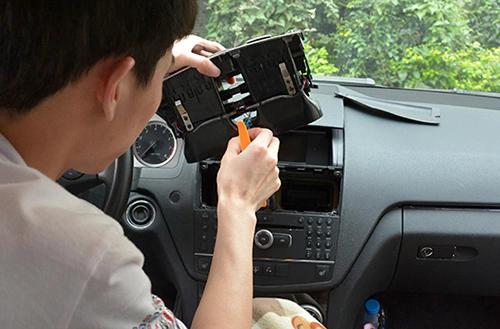
- Disconnect the vehicle battery and remove the factory head unit together with the dashboard trim panel.
- Dry fit the model-specific dash kit to check fitment and alignment.
- Plug the wiring harness and CAN bus decoder into the original vehicle wiring interface.
- Connect the new head unit, power on and test all functions.
- Secure the head unit and dash kit, then reinstall the dashboard trim.
Standard safety notes apply to the same procedure: disconnect the battery before installation to avoid electrical short circuits, do not pry the trim forcibly, confirm CAN decoder model compatibility before power-on, and ensure all connectors are fully seated before final assembly.
In fleet batch modification and dealership pre-delivery fitting, the value of the compliance layer appears as repeatability. Repeatable fitment and zero fault code outcomes reduce per-vehicle handling time, and the comparative figures for this approach place installation time 60% lower, from approximately 180 minutes to approximately 70 minutes.
Market trend: plug-and-play demand is pulling compliance into the buying decision
The global car audio head unit market was estimated at USD 15.44 billion in 2024 by Market Research Future. The car aftermarket audio system segment is projected to grow at a CAGR of 12.18%, with growth attributed in part to DIY customers and online plug-and-play kits by Mordor Intelligence. Asia Pacific accounted for 54.21% of the global car audio market in 2025 according to Fortune Business Insights.
Two implications follow for the compliance layer. First, when a larger share of installations is performed outside professional workshops, harness colour coding, connector keying and decoder protocol matching become consumer-facing support variables rather than technician-only details. Second, cross-border compliance now functions as a market-entry filter rather than a formality: RoHS 2 and REACH compliance for materials, and E-Marking under ECE R10 for electronic subassemblies that affect vehicle safety functions in the EU, determine whether a kit can be placed on a given market at all.
Comparison: model-specific plug-and-play kits versus cut-wire universal CAN retrofit
| Comparison dimension | Model-specific plug-and-play kit | Traditional cut-wire and universal CAN retrofit |
|---|---|---|
| Installation method | Plug-and-play, no wire cutting; model-specific precision molding | Wire splicing and separate universal harness and decoder assemblies |
| CAN firmware | Pre-flashed, vehicle-specific CAN firmware | Universal CAN retrofit approach |
| Dashboard fault code rate | More than 90% lower | Reference baseline |
| Fit tolerance | 0.2 mm or less, a 91% improvement | 2.3 mm on conventional kits |
| Steering wheel control compatibility | 100% | 55% |
| Installation time | Approximately 70 minutes | Approximately 180 minutes |
| Initial unit cost | 25% higher | Lower |
| 12-month total cost | 40% lower, because rework and wiring repair fees are eliminated | Higher once rework is included |
| After-sales troubleshooting | 85% fewer interventions; no specialist electrician required | Reference baseline |
| Electrical efficiency | 30% lower CAN decoder standby power; 15% less transmission loss with tinned oxygen-free copper | Reference baseline |
A comparison of this kind is only useful if its boundaries are stated. Three are relevant. First, the initial unit cost of the plug-and-play kit is 25% higher than traditional cut-wire and universal CAN retrofit kits; the 40% lower 12-month total cost depends on rework and wiring repair fees actually being eliminated, which in turn depends on selecting the correct kit for the vehicle in the first place. Second, the plug-and-play advantage depends on the vehicle falling inside the covered application database, and because vehicle configurations vary significantly between model years and equipment levels, ZYX recommends confirming the exact vehicle model, model year, original radio, connector and configuration before purchase. Third, the ZYX-02 wiring harness is specified for non-CAN bus vehicle models and for use with most aftermarket car stereos; CAN-equipped vehicles require the corresponding CAN bus decoder solution, so a harness on its own is not a CAN retrofit.
For low-budget simple retrofits of older economy vehicles, the traditional cut-wire universal solution remains a viable option with a lower upfront cost, but it carries a higher risk of functional issues. The recommendation in the source material is therefore conditional rather than absolute: model-specific plug-and-play kits for premium vehicle upgrades, fleet batch modification and dealership pre-delivery fitting, and conventional solutions where budget is the dominant constraint.
Future outlook
The direction of travel in this segment is toward documented compatibility rather than broader claims. ZYX states that it will continue to expand vehicle coverage, develop new car stereo fascia kits, wiring harnesses and CANBUS solutions, and improve its product compatibility database, with the aim of becoming a trusted professional brand in global head unit installation and aftermarket electronics.
For buyers, the practical implication is that compliance evidence will increasingly be requested at quotation stage: which wire colour standard the harness follows, which connector configuration it uses, which CAN protocol versions the decoder supports, which materials the insulation and housing use, and which market regulations the kit satisfies. Suppliers who can answer those questions from a specification sheet, rather than after a return, will be easier to keep on a shortlist.
FAQ
Which published standards apply to the wiring harness in a vehicle-specific Android car stereo fascia kit?
The ZYX Car Radio Wiring Harness (ZYX-02) is specified with ANSI/CTA-2015-B colour-coded insulation, an OEM vehicle-side plug plus an ISO 16-pin head unit connector, AWG 20-22 tinned oxygen-free copper conductors, flame-retardant PVC insulation, a PA66 engineering plastic connector housing and tin-plated brass terminals, rated at 12V DC with a 10A maximum and fitted with reverse polarity protection and short-circuit protection. Wire colour coding and connector configuration are the two parameters that allow an installer to verify power, ground and speaker paths without tracing every pin.
How does a plug-and-play kit connect without cutting the original vehicle wiring?
The kit accesses the vehicle CAN network through the factory original electrical interface. Based on the ISO 11898 automotive CAN bus standard and the original vehicle factory electrical interface definition, a pre-programmed decoder stores model-specific CAN protocol data. It identifies steering wheel control, instrument prompt and vehicle status signals on the original CAN bus, converts them into formats compatible with the aftermarket head unit, and simultaneously forwards the head unit control instructions back to the vehicle CAN network, without cutting or altering the original wiring harness.
Why do dashboard fault warning codes appear after an Android head unit retrofit?
Dashboard fault codes after retrofit are typically caused by an incompatible CAN decoder protocol, a loose CAN bus interface connection, or a mismatched decoder firmware version. The corrective steps are to confirm that the CAN decoder is the model-specific version matching the vehicle, re-plug the CAN bus interface to ensure it is fully seated, update the decoder to the latest matching firmware, then clear the vehicle historical fault codes and retest the system.
What determines whether steering wheel controls keep working after the upgrade?
Protocol matching at the decoder level. Steering wheel control compatibility rises from 55% with universal CAN retrofit kits to 100% with a pre-flashed, model-specific CAN kit. When buttons are unresponsive, the usual causes are a mismatched CAN bus decoder protocol, a loose steering wheel control pin connection, or a decoder that was not programmed for the exact vehicle trim configuration.
Model-specific plug-and-play kit or traditional cut-wire universal CAN solution: which should a decision-stage buyer choose?
The plug-and-play kit requires no damage to the original vehicle wiring, delivers high fit precision through model-specific molding, and uses pre-flashed vehicle-specific CAN firmware to avoid dashboard fault codes, which supports stronger long-term reliability. It is suited to premium vehicle upgrades, fleet batch modification and dealership pre-delivery fitting. The traditional cut-wire universal solution has a lower upfront cost and remains suitable for low-budget simple retrofits of older economy vehicles, but carries a higher risk of original wiring damage, poorer fitment and higher fault incidence.
What is the cost difference over the first year of ownership?
The initial unit cost is 25% higher than traditional cut-wire and universal CAN retrofit kits, while the 12-month total cost is 40% lower because rework and wiring repair fees are eliminated. The same product requires 85% fewer after-sales troubleshooting interventions, which supports spare-part continuity and simpler service workflows, and it does not require a specialist electrician.
Can an aftermarket head unit installation damage the original vehicle electrical system?
Short circuits, head unit burnout and original electrical system damage are typically caused by cut-wire universal wiring harnesses, reversed polarity, or wrong pin assignments during unprofessional installation. These risks are avoided by using plug-and-play model-specific wiring harnesses with built-in reverse polarity protection, following the official installation guide, and verifying circuit continuity before powering on the device.
Do these products meet environmental and market-entry requirements for EU export?
The full kit is specified as compliant with EU RoHS 2 and REACH regulations, with hazardous substance content strictly controlled across all materials and components. Separately, electronic subassemblies integrated into road vehicles in the European Union must comply with E-Marking (EMC testing) under ECE R10 rather than CE marking alone if they affect vehicle safety functions. For trade classification, car stereo fascia and installation hardware fall under HS Code 8708.99 for vehicle parts and accessories.
What causes intermittent signal loss after several years of service?
Intermittent signal loss and functional failure after long-term use are usually caused by low-grade copper conductors, thin insulation layers, and the absence of a vibration-resistant crimp design suited to vehicle driving conditions. Mitigation consists of selecting products with tinned oxygen-free copper conductors, reinforced crimp terminals and flame-retardant insulation, and performing regular line inspection during routine vehicle maintenance.