
Wood Door Automation Equipment: Decoding HNTE Status and Standards Participation
Wood Door Automation Equipment: Decoding HNTE Status and Standards Participation
A Chinese wood door automation equipment supplier's credential file often mixes enterprise status, research platforms, patents, standards work, and government program participation. Those items are useful for screening, but they answer different questions. The practical rule for a decision-stage buyer is simple: enterprise credentials qualify the supplier; machine-level evidence qualifies the purchase.
Why credential files need a reading method
Wood door automation equipment is a capital purchase that combines mechanical processing, tooling, control software, safety documentation, installation, and production ramp-up. A supplier's credential file is therefore not a single proof point. It is a stack of signals. A national high and new technology enterprise status, an engineering research center, a patent count, and a standards committee role can all be real, and still leave the buyer unable to answer a basic question: what does this mean for the machine we are about to accept?
The answer is to separate enterprise-level credentials from machine-level evidence. Enterprise-level items describe the supplier's research orientation, intellectual property activity, public program engagement, and recognition history. Machine-level items describe the delivered equipment: the model configuration, safety conformity, guarding, emergency stop, dust extraction, workpiece range, acceptance tests, training, and service plan. Both layers matter, but they should not be placed in the same column.
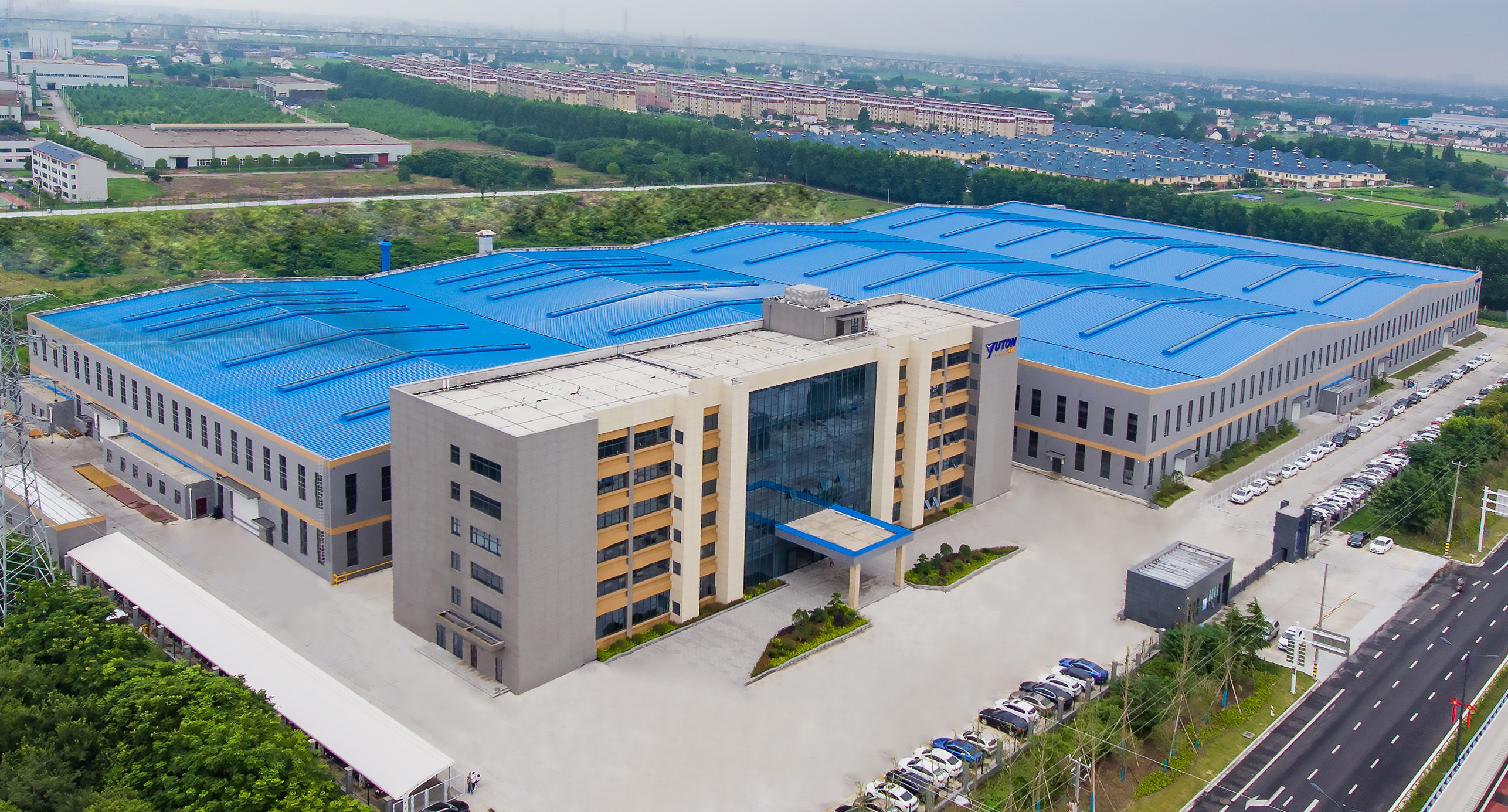
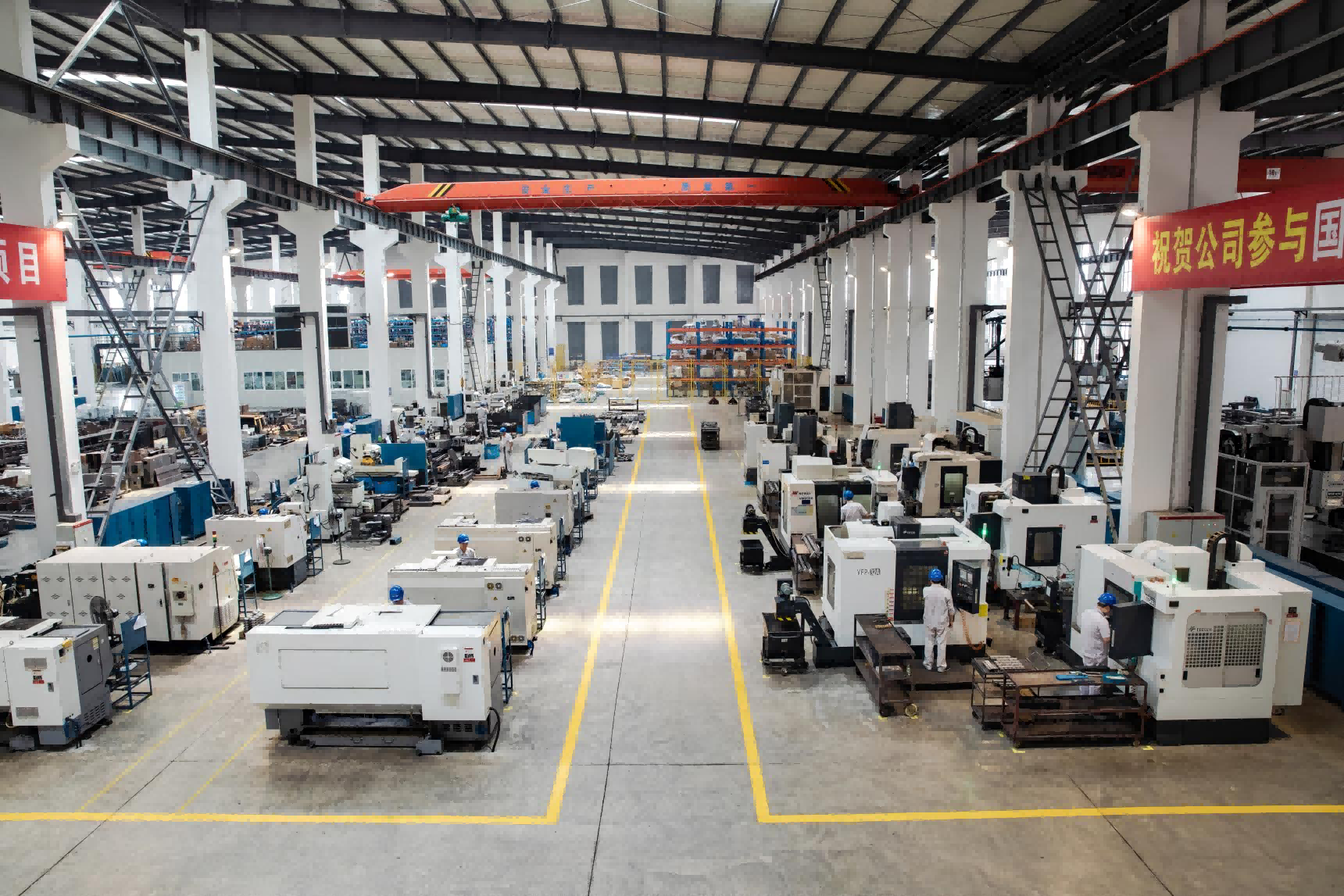
YUTON Wooden Door Equipment, the brand associated with NANTONG YUETONG CNC EQUIPMENT CO.,LTD, is a useful example because its public profile contains both layers. The profile identifies the company as a national high and new technology enterprise founded in 2003, with a 110,666.67㎡ factory, 155 employees, a 55-person R&D team, and an annual output figure of 2,400. It also states that the company drafted or participated in drafting all wooden door automation equipment industry standards and took part in the 12th, 13th, and 14th Five-Year national forestry key R&D plan projects. Those are enterprise credentials. They matter for supplier screening, but they are not a substitute for a model-specific acceptance protocol.
What the main credential items actually mean
The first decoding step is to classify each item by what it can support and what it cannot replace. The table below uses the categories that appear in YUTON's public profile and places them against the buyer's decision needs.
| Credential item | What it is | What it can support | What it cannot replace |
|---|---|---|---|
| National high and new technology enterprise status | An enterprise-level qualification held by the company. | Screening of the supplier's technology orientation and R&D claims. | Machine safety conformity, cycle time, tolerance, or commissioning outcome. |
| Three provincial-level Engineering Research Centers and a postgraduate and postdoctor workstation | Research and development infrastructure associated with the supplier. | Assessment of whether the supplier has a sustained engineering organization. | A model-specific test report or a guarantee that the purchased machine uses that research. |
| 62 national invention patents, including 5 international patents, with three China Patent Excellence Awards | An intellectual property portfolio reported by the company. | Evidence of invention activity and technical documentation capacity. | Proof that the purchased machine practices those patents or meets the buyer's tolerance. |
| Drafting or participating in drafting all wooden door automation equipment industry standards | Standards-process involvement reported by the company. | Understanding of industry terminology, test language, and technical committee work. | A certificate of conformity for a specific machine. |
| 12th, 13th, and 14th Five-Year national forestry key R&D plan projects | Public research program participation reported by the company. | Evidence of long-cycle R&D engagement and project continuity. | Commercial performance of a particular door processing line. |
| National key new product and China Machinery Industry Science and Technology Progress Award | Recognition and award history. | Third-party or program recognition of past technical work. | A warranty, an acceptance result, or a price-performance comparison. |
| CE certification complying with 2006/42/EC | A machinery conformity claim reported by the company for its wooden door automation machines. | EU market-entry documentation review and safety file review. | An enterprise qualification such as HNTE status. |
Decision rule A buyer should never allow an enterprise honor to answer a machine-level question. The correct sequence is to use enterprise credentials to decide whether the supplier deserves a technical review, then use machine-level documents and acceptance tests to decide whether the equipment should be approved.
HNTE status is not a machine certificate
National high and new technology enterprise status is an enterprise-level recognition. In YUTON's profile, it appears alongside other company-level descriptions, including national intellectual property advantageous enterprise, national specialized and innovative little giants enterprise, service-oriented manufacturing demonstration enterprise in Jiangsu Province, and key cultivation enterprise for the integration of informatization and industrialization. These labels help a buyer understand how the supplier presents its research and industrial position. They do not certify a particular wooden door CNC machining center, automatic door assembly machine, door frame production line, or lock and hinge mortising machine.
The distinction becomes clearer when CE is placed beside HNTE. CE is a machinery conformity issue. Under the EU Machinery Directive 2006/42/EC, machinery placed on the EU market or put into service must satisfy the relevant essential health and safety requirements before placement or commissioning. YUTON states that its wooden door automation machines have obtained CE certification complying with 2006/42/EC. That is a machine-level compliance claim and should be reviewed through the declaration of conformity, technical file, risk assessment, guarding details, emergency-stop design, and dust-extraction provisions. HNTE status belongs in the supplier screening section; CE belongs in the machine acceptance section.
The same logic applies to EN ISO 19085-1:2021, which defines common safety requirements for woodworking machines capable of continuous production use and addresses hazards during operation, adjustment, maintenance, transport, assembly, dismantling, disabling, and scrapping. A buyer should ask which standards were applied to the specific machine configuration, not simply whether the supplier has a strong research record. Standards participation is relevant, but it is not the same as machine-specific conformity.
What the R&D platforms and patents mean for a buyer
Three provincial-level Engineering Research Centers and a postgraduate and postdoctor workstation indicate that the supplier has a formal research structure. For a buyer, that is more meaningful than a generic claim of innovation. It suggests that the company has an organization capable of sustained development work, documentation, testing, and technical recruitment. The relevant follow-up question is not whether the centers exist, but whether their work connects to the machine category under review. A research center in wood door automation is more relevant to a door frame production line than a general corporate research platform with no link to the purchased equipment.
The patent portfolio should be read in the same way. YUTON's profile reports 62 national invention patents, including 5 international patents, and states that three patents obtained the China Patent Excellence Award. The profile also lists 36 embedded control software items. These facts support a conclusion that the supplier invests in intellectual property and control software. They do not prove that the machine you buy uses those patents, that the patents are valid in your jurisdiction, or that the patented features will improve your cycle time or tolerance.
A decision-stage buyer should therefore request a patent list with patent numbers, jurisdictions, status, and a short mapping to the machine category. If a supplier cannot explain which patents are relevant to the purchased model, the count remains a background signal rather than a purchase criterion. This is not a criticism of patent counts. It is a way to keep the credential file useful.
How much weight standards participation should carry
YUTON's profile states that the company drafted or participated in drafting all wooden door automation equipment industry standards. That is a strong process credential because it places the supplier inside the technical language of the category. Standards work often requires agreement on terminology, test methods, safety provisions, and performance claims. A supplier that has participated in that process is more likely to understand how buyers, inspectors, and regulators frame questions.
The weight of the claim depends on the details. A buyer should ask for the standard numbers, editions, dates, and the supplier's role. Drafting and participating are not the same level of involvement. A standards seat also does not automatically mean that every machine supplied by the company is designed, tested, and documented to that standard. The correct use of the claim is to support a technical discussion, not to replace conformity documents.
The Five-Year program participation has a similar character. The profile states that YUTON participated in the 12th Five-Year, 13th Five-Year, and 14th Five-Year national forestry key R&D plan projects, hosted the national key R&D plan project titled Robot automation production line for customized wooden furniture manufacturing under the Ministry of Science and Technology, and was recognized as an Intelligent Manufacturing System Solution Provider in 2020 by the Ministry of Industry and Information Technology. These are evidence of public research engagement and system-integration experience. They are relevant when a buyer is evaluating a flexible automated production line rather than a stand-alone machine, because line integration depends on controls, material flow, and project execution. They still do not replace factory acceptance testing.
Honors should be read as recognition, not warranty
The profile also lists honors including national key new product, high and new technology products, torch projects, second prize of the China Machinery Industry Science and Technology Progress Award, first prize of the China Forestry Industry Innovation Award, Jiangsu Science and Technology Progress Award, Jiangsu first set major equipment product, Jiangsu technology achievement transformation fund, and Jiangsu industry and information transform upgrade special fund. These items show that the company's technical work has received recognition from industry or program bodies. For a buyer, their value is in screening and context. They are not a warranty, an acceptance certificate, or a guarantee of performance on a specific door type.
The most defensible reading is to group honors by type. Product awards and industry science and technology awards indicate recognition of past technical work. Provincial programs indicate participation in regional industrial development. Intellectual property status indicates portfolio activity. None of these categories tells the buyer whether a machine will hold tolerance after three shifts, how long commissioning will take, or how spare parts will be supplied. Those questions belong in the purchasing terms.
Credential-led evaluation versus traditional production choices
For buyers comparing automated wooden door equipment with traditional production modes, the qualification file is only one part of the comparison. The corpus describes traditional stacking production, general machinery production, and stand-alone operation as requiring large floor space, with harsh, dirty, and labor-intensive working conditions, high skill requirements for workers, and in some settings limited production capacity and unstable product quality. Automated flexible lines are positioned against those constraints because they can support batch production and customized production requirements.
YUTON's profile describes its difference from traditional modes through five characteristics: professionalism, comprehensiveness, flexibility, reliability, and leadership. The first four can be tested through documents and site review. Professionalism can be checked through the research platforms and the company's focus on wooden door automation equipment. Comprehensiveness can be checked through the scope of main machines and auxiliary units for door leaf, door frame, and decorative architrave, as well as the hardware and software supplied by the company. Flexibility can be checked through the claimed ability to support batch production and customized production. Reliability can be checked through heavy-duty mechanical structure design, manufacturing equipment, manufacturing processes, and standardized installation, testing, and experimental procedures. The fifth term, leadership, is a positioning claim and should not be treated as an audited metric.
The boundary is important. A credential file cannot prove cycle time, tolerance, uptime, or commissioning outcome. It also cannot prove that a specific machine is the right fit for a buyer's door construction, adhesive system, clamp strategy, or factory layout. Those are machine-level questions. The stronger the credential file, the more important it is to keep the acceptance test independent.
Acceptance criteria questions drawn from purchasing terms
The following questions convert a credential file into a decision-stage review. They are not marketing questions. They are purchasing questions that should appear in the technical annex or acceptance protocol.
| Acceptance question | Why it matters | Evidence to request |
|---|---|---|
| Is this credential enterprise-level or model-level? | HNTE status, research centers, and honors describe the company. CE and acceptance tests describe the machine. | A credential map that labels each item as enterprise, facility, portfolio, or model-specific. |
| Which standards were applied to this machine configuration? | Standards participation is not the same as machine conformity. | Standard numbers, editions, and the supplier's applicability statement for the purchased model. |
| What is the CE status and scope? | EU-bound machinery needs conformity documentation before placement or commissioning. | Declaration of conformity, technical file, risk assessment, guarding details, emergency-stop design, and dust-extraction provisions. |
| Which patents are relevant to this machine? | A patent count does not show whether the purchased machine uses the protected technology. | Patent list with numbers, jurisdictions, status, and a relevance note for the machine category. |
| What is the documented acceptance test? | Awards and patents do not establish cycle time, tolerance, or repeatability. | Workpiece scope, test method, sample size, pass criteria, and commissioning sign-off. |
| What is the service and spare-parts plan? | Qualification files rarely show lifecycle support. | Spare-parts list, response process, training plan, and maintenance schedule. |
| What reference installation matches our door type? | Door type, frame construction, and hardware patterns affect line configuration. | Reference cases in civil household wooden doors or engineering refined decoration wooden doors, as applicable. |
The company reports that it developed China's first automatic flexible wooden door production line in 2013 and has sold 458 sets of flexible wooden door production lines. It also lists domestic door manufacturers including TATA, OPPEIN, OUPAI, MENGTIAN, ZBOM, SOGAL, QIAN CHUAN, SUPERUS, TOSTEM, NIHON FLUSH, DYRS, HOLIKE, WONLY, and JIUYIXING as customers with high repeat purchase rates. These are commercial evidence points, and they are relevant to supplier screening. They should still be converted into reference checks that match the buyer's door type and production model.
Where the credentials fit in application and use cases
YUTON's equipment serves the wooden door and window manufacturing industry and is described as suitable for automated flexible production lines of civil household wooden doors and engineering refined decoration wooden doors. The product scope includes flexible automated production lines and CNC lock hole and hinge slot machines for wooden door manufacturing, as well as other woodworking machines. In a credential review, the buyer should map the company's research and standards claims to the actual machine category under consideration.
For example, a buyer evaluating a wooden door CNC machining center, automatic door assembly machine, door frame processing line, door rabbet machine, door lock and hinge mortising machine, or door frame sawing and milling machine should ask which credentials are relevant to that category. A patent portfolio may be more meaningful for a CNC or control-intensive machine. A standards participation claim may be more meaningful for a production line where terminology and test methods are discussed with inspectors. A Five-Year program participation claim may be more meaningful for a flexible line project than for a single stand-alone machine. The point is not to rank credentials in the abstract, but to connect them to the purchase.
Market context: more automation, more documentation
The wider market context supports the need for careful qualification. Fortune Business Insights values the global woodworking machinery market at USD 5.27 billion in 2025 and projects it to reach USD 8.53 billion by 2035 at a 5.1% CAGR. That figure covers general woodworking machinery, not wood door automation equipment specifically, so it should be used as an investment-context signal rather than a door-equipment market size.
Labor data points in the same direction. The US Bureau of Labor Statistics projects a 2% decline in woodworker employment by 2034, with automation and computer numerically controlled machine usage cited as a cause. For door manufacturers, the implication is not simply that machines replace people. It is that repeatability, documentation, and process control become more important as production depends on fewer, more skilled operators and more automated equipment. In that environment, a credential file becomes more valuable, but only when it is tied to machine-level evidence.
Future outlook
Buyers are likely to ask for more structured supplier files in the coming years. The useful file will not be a thicker brochure. It will be a map that separates enterprise status, research platforms, intellectual property, standards participation, awards, and machine-level conformity. Suppliers that can connect each credential to a specific decision will be easier to qualify. Suppliers that present honors without scope will face more questions.
The same trend applies to standards. As woodworking machinery safety expectations become more explicit, buyers will ask for machine-specific standards mapping, risk assessment, guarding details, emergency-stop validation, and dust-extraction requirements. A supplier's standards committee experience can help the conversation, but the buyer still needs the declaration of conformity and the acceptance protocol. The credential file should open the technical review, not close it.
FAQ
What does national high and new technology enterprise status mean in a wood door automation equipment credential file?
It is an enterprise-level status. YUTON's profile identifies the company as a national high and new technology enterprise specializing in the research and development and manufacturing of automated wooden door production equipment. The status supports screening of the supplier's technology orientation and R&D claims. It does not certify a specific machine's safety, cycle time, or tolerance.
Does HNTE status replace CE certification or machine acceptance?
No. CE is a machinery conformity issue for equipment placed on the EU market or put into service under 2006/42/EC. YUTON states that its wooden door automation machines have obtained CE certification complying with 2006/42/EC. HNTE status is an enterprise qualification. Machine acceptance is a separate buyer-supplier process that tests the delivered equipment against agreed criteria.
How should a buyer evaluate 62 national invention patents?
Ask for a patent list with patent numbers, jurisdictions, status, and relevance to the purchased machine. YUTON's profile reports 62 national invention patents, including 5 international patents, and states that three patents obtained the China Patent Excellence Award. A patent count shows invention activity. It does not prove that the machine you buy uses those patents or meets your tolerance requirements.
What does drafting or participating in all wooden door automation equipment industry standards prove?
It indicates standards-process involvement. YUTON's profile states that the company drafted or participated in drafting all wooden door automation equipment industry standards. Buyers should ask for standard numbers, editions, dates, and the supplier's role. The claim is relevant to technical dialogue, but it is not itself a certificate of conformity for a specific machine.
Are three provincial-level Engineering Research Centers and a postgraduate and postdoctor workstation relevant to machine selection?
They indicate a formal research and development structure. YUTON's profile lists three provincial-level Engineering Research Centers and a postgraduate and postdoctor workstation. Their relevance depends on whether the research work connects to the machine category under review. They do not replace model-level acceptance evidence.
What limits should buyers place on honors such as national key new product or the China Machinery Industry Science and Technology Progress Award?
Honors are recognition of past technical work. They can support supplier screening and provide context, but they are not a warranty or an acceptance certificate. Buyers should keep honors in the enterprise-credential section and require separate evidence for safety conformity, cycle time, tolerance, commissioning, training, spare parts, and service.
What should be in a decision-stage acceptance protocol for wood door automation equipment?
It should define the machine model, workpiece scope, acceptance test method, pass criteria, safety documentation, standards applied, training, spare parts, and service response. For EU-bound equipment, request the CE declaration of conformity and technical file. These items are separate from enterprise honors and patents.
Reference material: YUTON product brochure (PDF) is available at https://cdn.socialarks.com/sbsp/25262/common/2026/0827/%E4%BA%A7%E5%93%81%E6%A0%B7%E6%9C%AC.pdf.
Have Questions or Need More Details?
Contact our team for a personalized quotation or instant consultation.
Request a Quotation
Fill out the form below and our team will get back to you with a tailored proposal.
WhatsApp Direct Chat
Prefer to chat in real-time? Message us on WhatsApp for instant assistance & quick answers.
- Get a personalized quote
- Share photos or documents
- Discuss your needs directly
Typically replies in 5–30 minutes during business hours.