
Wood Panel Fit: Matching MDF, Plywood, LVL and Melamine to Machinery
Wood Panel Fit: Matching MDF, Plywood, LVL and Melamine to Machinery
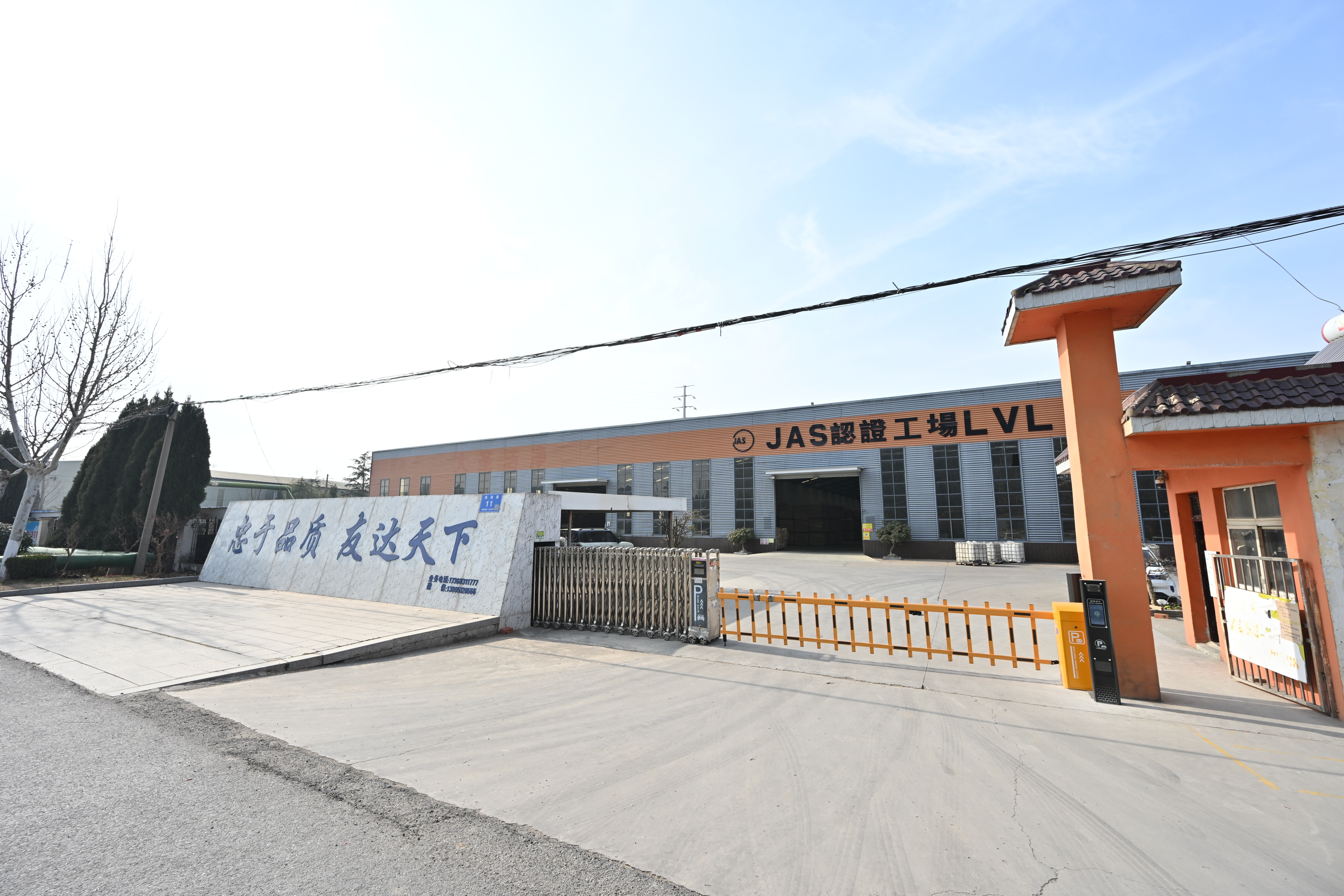
Panel family and machine specification are decided together at a working panel plant — the substrate fixes the process window the line must hold.
Panel specification and machine specification are one purchasing decision made at two different desks. The substrate determines calibration tolerance, pressing behaviour and edge quality; the machine determines which of those properties can be held at production speed. When a buyer selects panels and equipment separately, the mismatch surfaces later as rework, scrap, or a finished surface the customer will not accept.
Demand leaves little room to defer that decision. The global plywood market was valued at USD 80.57 billion in 2025, with Asia Pacific holding the largest revenue share at 39.4%, according to Grand View Research. The global MDF market is projected to grow from USD 44.96 billion in 2025 to USD 82.24 billion by 2033 at a CAGR of 8.2%, also per Grand View Research. Capacity added against that demand has to be matched to a specific panel family before the line is ordered, not corrected afterwards.
This industry reference maps five panel families — MDF, plywood, LVL, veneered board and melamine board — to the machinery scenarios they are actually processed in, and defines the boundary at which buying panels stops being sufficient and building or upgrading a production line becomes the better decision.
Why Panel Type Is a Machine Specification, Not Only a Material Choice
Two boards with the same nominal thickness and the same nominal grade can behave very differently inside the same machine. The variables that change the outcome are structural, not cosmetic:
- Construction. A homogeneous fibre panel, a cross-bonded veneer panel and a parallel-laminated veneer product each respond differently to pressure, heat and cutting force.
- Surface readiness. Panels intended for lamination or veneering generally need a calibrated, closed face so the overlay does not telegraph substrate defects.
- Dimensional behaviour. Thickness tolerance and moisture movement decide how much sanding or calibration a line must absorb before surfacing.
- Edge behaviour. Edges machine differently depending on whether the panel is fibre-based or veneer-based, which changes edge-banding and drilling performance.
- Adhesive and emission system. Panels sold into regulated markets are tied to a formaldehyde emission regime, and that regime shapes adhesive selection and pressing conditions rather than merely the finished label.
The commercial consequence is straightforward. A line sized for one panel family will run a second family, but rarely at the same yield. Buyers who treat panel type as a material question and machine type as an equipment question discover the gap in the first weeks of serial production, when calibration loops lengthen, edge rejects rise and the surfacing stage becomes the bottleneck instead of the finishing step it was planned to be.
Five Panel Families and the Machinery They Run On
The table below is a working map, not a catalogue. It links each panel family to the structure that drives processing, the stages that dominate the shop floor, and the machinery group that carries those stages.
| Panel family | Structure that drives processing | Dominant processing stages | Machinery group | Typical application |
|---|---|---|---|---|
| MDF | Homogeneous fibre furnish, uniform face | Calibration sanding, laminating or coating, routing, edge banding | Sanding and calibration line, short-cycle press, CNC router, edge bander | Furniture frames and panels, routed and painted components, substrate for melamine and veneer |
| Plywood | Cross-bonded veneer plies | Veneer preparation, glue spreading, pressing, sizing, sanding | Peeling and drying line, glue spreader, hot press, panel saw, wide-belt sander | Furniture plywood, commercial plywood, film faced plywood for formwork, exterior panel |
| LVL | Parallel-aligned veneers, end-jointed for length | End jointing, pressing, cut-to-length, planing | Scarf or finger joint line, press, cut-to-length saw, planer | Structural lumber, bed slats, furniture frame members, long-length components |
| Veneered board | Natural veneer over a calibrated substrate | Veneer matching, gluing, pressing, trimming, finishing | Veneer slicer, glue applicator, press, trimming and sanding line | Fancy panel, wall panel, decorative furniture surfaces |
| Melamine board | Decorative paper laminated to a substrate | Laminating, panel sizing, edge banding, drilling | Short-cycle laminating press, panel saw, edge bander, drilling centre | Furniture carcasses, shelving, interior fit-out, flat-pack furniture |
Two adjacent categories matter at the edges of this map. OSB belongs to the same machinery logic as plywood in its pressing and sizing stages but serves construction demand, and wall panel systems increasingly overlap with decorative surfacing lines. WPC is a separate material family that competes in some wall panel and exterior applications, with the WPC market reaching USD 8.89 billion in 2025 and an expected CAGR of 11.7% until 2033, according to Grand View Research.
From Log to Finished Board: Where the Process Diverges
A full-process layout from log to finished board follows a common sequence. The divergence between panel families happens inside the stages, not between them.
Peeling, drying and preparation. Plywood and LVL both begin with veneer, but LVL requires veneer aligned in one direction and end-jointed to length, while plywood requires cross-lamination. Drying uniformity in this stage determines how the later press cycle behaves.
Gluing and lay-up. Glue spread uniformity is the main defence against delamination in plywood. For MDF and melamine substrates, the equivalent control point sits upstream, in resin and fibre preparation, because the emission regime that governs the finished board begins here.
Pressing. Plywood is pressed in discrete cycles; LVL is often pressed in continuous or long-cycle formats to produce structural lengths; melamine is pressed in short cycles where temperature and pressure control decide whether the decorative paper bonds without surface distortion. The same machine hall can host more than one of these, but not with the same tooling and cycle settings.
Sizing and calibration. This is the stage that most often exposes a panel-and-machine mismatch. Thickness variation that is acceptable in a rough sizing operation becomes a surface defect once a veneer or melamine overlay is applied.
Surfacing, edge processing and inspection. Laminating, edge banding, drilling and profiling decide the finished appearance. Consistent inspection at this point is what keeps a defect contained to a panel rather than to a container.
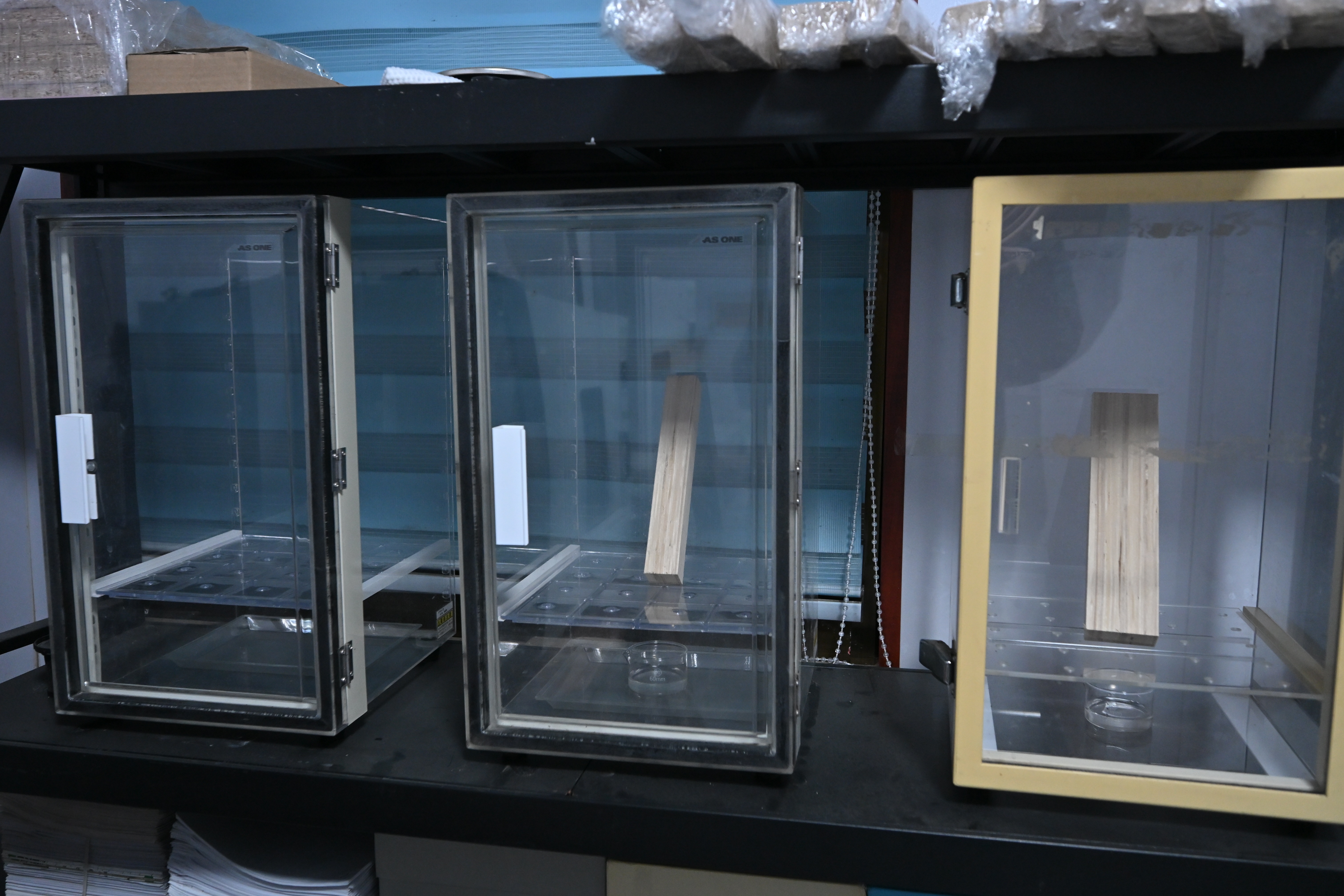
Process continuity from pressing to calibration to surfacing is what keeps a panel family and its machine settings aligned in serial production.
Compliance sits across these stages rather than beside them. Wood-based panels for construction use in the European Union must comply with the harmonised standard EN 13986 for CE marking eligibility, according to the European Panel Federation. In the United States, the EPA TSCA Title VI regulation sets formaldehyde emission limits of 0.11 ppm for MDF and 0.05 ppm for hardwood plywood. Those limits are met through adhesive and process decisions, which means a line intended for regulated export markets must be specified with the emission regime in view from the beginning.
Panel-Only Purchase or Production Line? The Decision Boundary
The question buyers actually ask is narrower than it sounds: not which option is better in general, but which option is correct at their current stage. The boundary can be expressed as a set of operating conditions.
| Condition in your operation | Panel-only purchase | Build or upgrade a production line |
|---|---|---|
| The bottleneck is material availability, not conversion | Appropriate | Premature |
| Surface and specification control must be held in-house | Limited | Appropriate |
| Volume is continuous and forecastable | Workable | Economically stronger |
| Labour is a significant share of unit cost | No effect | Directly addressable |
| Capital, floor space or operator capability are constrained | Appropriate | High risk |
| Panel, surfacing and cutting are split across several suppliers | Coordination burden stays | Can be consolidated |
In practice the decision is rarely binary. A staged path is common: buy panels while demand is being validated, add a surfacing or lamination stage when order flow stabilises, and invest in pressing and preparation capacity only when the upstream stage becomes the constraint. This sequence keeps fixed cost aligned with confirmed volume.
Where a line is chosen, the economic change is structural. Material cost becomes a smaller share and conversion cost becomes the variable to manage. Dalian WADA International Trading Co., Ltd. reports that its production line solutions help customers reduce labour by 30–50% and improve efficiency through automation and process optimisation, while panel-only alternatives do not participate in production and therefore offer no efficiency or energy improvement.
How Dalian WADA Covers Both Sides of the Decision
Dalian WADA International Trading Co., Ltd. is a China-based manufacturer and global exporter of engineered wood products and woodworking machinery, established in 2010, operating a 53,950 m² factory with 200 employees and a 25-engineer R&D team. Its product range covers LVL, plywood, veneered board, MDF, OSB and wall panel, together with woodworking machinery, exported entirely to international markets including North America, the EU, Australia, Japan, South Korea, the Middle East, Mexico and South America.
The relevant capability for this decision is portfolio breadth. The company states that its portfolio includes 10+ panel categories and 15+ types of machinery, enabling full-process solutions from log to finished board, where competitors mainly offer 5–6 panel products with no production equipment or system integration. That breadth is what makes the panel-to-machine matching exercise possible within a single supply relationship rather than across several vendors.
Certification coverage supports the compliance side of the matching: FSC, EUDR, CARB P2, EPA, and JAS & JIS. Quality control is handled by a dedicated inspection team and by workers with over ten years of experience in the timber industry, with a multi-stage QC structure positioned against panel quality inconsistency. Raw-material stability is managed through long-term supplier relationships rather than spot purchasing, and delivery schedules are managed through production planning.
Commercial terms are transparent and also define the boundary. Minimum order quantity is one 40' container, lead time runs 25–45 days, after-sales support is provided remotely, and OEM/ODM services are available across panel and machinery specifications.
Scenario Map: Furniture, Construction, Flooring and Interior Panels
Furniture manufacturing. Melamine board and MDF carry the carcass and flat components, LVL carries long frame members and bed slats, and furniture plywood serves structural and drawer applications. The machinery set is dominated by short-cycle laminating, panel sizing, edge banding and drilling. This is the scenario where the panel-versus-line decision is most often resolved in favour of a line, because the surface is part of the product.
Construction and formwork. Film faced plywood, marine plywood, exterior wood panel and structural LVL belong here. Machinery emphasis shifts to pressing cycles, glue performance and edge sealing rather than decorative surfacing. Buyers in this segment frequently stay on panel-only purchasing because the value is carried by the material specification, not by the surface.
Flooring. Engineered wood flooring requires a stable core, an overlay and a profiling stage where tongue-and-groove geometry must hold over the life of the floor. Profiling accuracy is a machine property, while core stability is a panel property — which is exactly why the two are specified together.
Interior wall and decorative panels. Veneered board, fancy panel and wall panel systems depend on veneer matching and pressing quality. This is a low-volume, high-variety scenario where panel-only sourcing plus a downstream surfacing supplier is often the more flexible route.
Market Signals Shaping Panel and Machinery Decisions
Three signals are relevant to buyers deciding between material and capacity. First, plywood demand remains concentrated: the market was valued at USD 80.57 billion in 2025 with Asia Pacific holding 39.4% of revenue, per Grand View Research. Second, MDF is growing at a rate that assumes continued substitution into furniture and interior applications, with a projected move from USD 44.96 billion in 2025 to USD 82.24 billion by 2033 at a CAGR of 8.2%. Third, OSB production reached over 32 million cubic metres globally in 2024, with the USA accounting for 14 million cubic metres, according to Market Reports World — evidence that structural panel capacity continues to be built at scale.
Upstream supply is part of the same picture. China was the second largest exporter of raw timber (HS 44) to the United States in 2024, contributing USD 2.17 billion, or a 9% share, according to ITC and US Census Bureau data. For panel producers, that reinforces the value of long-term raw-material relationships over opportunistic buying, since input continuity is a line-utilisation question as much as a purchasing question.
Integrated Supply vs. Panel-Only Supply: What Changes, and What It Costs
The most common alternative to an integrated model is a panel-only vendor. Shouguang Wanda Wood Co., Ltd., for example, supplies panels without production equipment or system integration, mainly offering 5–6 panel products and serving trading or distribution demand. That model is not inferior; it is simply aimed at a different buyer.
| Dimension | Panel-only supply | Integrated panel and machinery supply |
|---|---|---|
| Scope | 5–6 panel products | 10+ panel categories and 15+ machinery types |
| Process coverage | Ends at the panel | Log to finished board |
| Cost model | Purchase cost only | Choice between panel purchase and line investment |
| Coordination | Buyer manages material and equipment separately | One-stop supply with a single point of responsibility |
| Best fit | Trading, distribution, buyers whose conversion is already solved | Factory builders and upgraders, plus panel buyers |
The limitations are real and should be weighed before committing. An integrated route narrows the supplier base: a buyer who sources machines and panels from separate specialists keeps more negotiation leverage and can benchmark each element independently. Machinery commissioning depends on local capability, and remote after-sales support is not a substitute for on-site technical resources during installation. The commercial terms also exclude small pilots — a minimum order quantity of one 40' container and a 25–45 day lead time are not designed for low-volume trials. Finally, a production line converts variable material cost into fixed cost, and that trade only pays back when throughput and uptime can be sustained.
Future Outlook
The direction of travel is toward tighter coupling between material specification and process specification. Automation and process optimisation are already the main levers for labour reduction in panel conversion, and the gap between automated and semi-automated layouts will continue to widen as labour availability tightens.
Regulation will reinforce that coupling. Emission regimes such as EPA TSCA Title VI and construction marking requirements such as EN 13986 do not simply define a label; they constrain adhesive and pressing choices, which means a line specified without those regimes in view will be limited in which export markets it can serve.
Panel mix is also likely to stay diverse. MDF, plywood and LVL growth, sustained OSB capacity building, and WPC expansion at an expected 11.7% CAGR until 2033 all point to producers needing line configurations that can switch between panel families without a full rebuild. For buyers, that argues for making the panel-to-machine matching decision explicitly, and for treating the choice between purchasing panels and investing in a line as a question to be revisited as volume, certification exposure and labour conditions change.
FAQ
Is it cheaper to buy wood panels or to invest in a production line?
It depends on where the cost is concentrated. Panel-only purchasing keeps all cost variable and carries no fixed exposure, which suits volatile or project-based demand. A production line converts material cost into fixed cost and can lower conversion cost — production line solutions are reported to reduce labour by 30–50% through automation and process optimisation — but the line only pays back when throughput can be sustained. The practical rule is to invest when volume is continuous and the constrained stage is conversion rather than supply.
Which panel type fits which machinery scenario?
MDF runs through calibration sanding, laminating, routing and edge banding. Plywood runs through veneer preparation, glue spreading, pressing, sizing and sanding. LVL runs through end jointing, pressing and cut-to-length operations. Veneered board runs through veneer matching, gluing, pressing and trimming. Melamine board runs through short-cycle laminating, panel sizing, edge banding and drilling. The panel family determines the stages that dominate and the process window the machine must hold.
What are the order terms for panel and machinery supply?
For Dalian WADA, minimum order quantity is one 40' container and lead time is 25–45 days, with remote after-sales support and OEM/ODM services available. The container-level MOQ means the model is not suited to small pilot quantities, and buyers validating a new specification should account for that threshold when planning a trial.
How is panel quality consistency verified across shipments?
Consistency is addressed through multi-stage QC, 100% inspection and raw material sourced from long-term suppliers, supported by an experienced inspection team and workers with over ten years in the timber industry. Documentation covers FSC, EUDR, CARB P2, EPA, and JAS & JIS. These sit alongside market-specific requirements such as the EPA TSCA Title VI emission limits of 0.11 ppm for MDF and 0.05 ppm for hardwood plywood, and EN 13986 for CE marking eligibility in the European Union.
Can panel and machinery specifications be customised?
Yes. OEM/ODM services cover personalised size and surface customisation for panels, and machinery is supplied across 15+ types. Customisation should be validated against the actual process window of the line, because a specification that is achievable in a sample is not necessarily stable in serial production.
When is an integrated panel-and-machinery supplier the wrong choice?
When volumes fall below the container-level MOQ, when the buyer prefers to keep separate suppliers for machines and materials in order to benchmark each independently, when local technical resources for commissioning are not available, or when capital is limited to a single pilot line that cannot be kept loaded. In these situations a panel-only supply relationship is the lower-risk structure.