
Wood Panel OEM/ODM: Reading Capability Signals
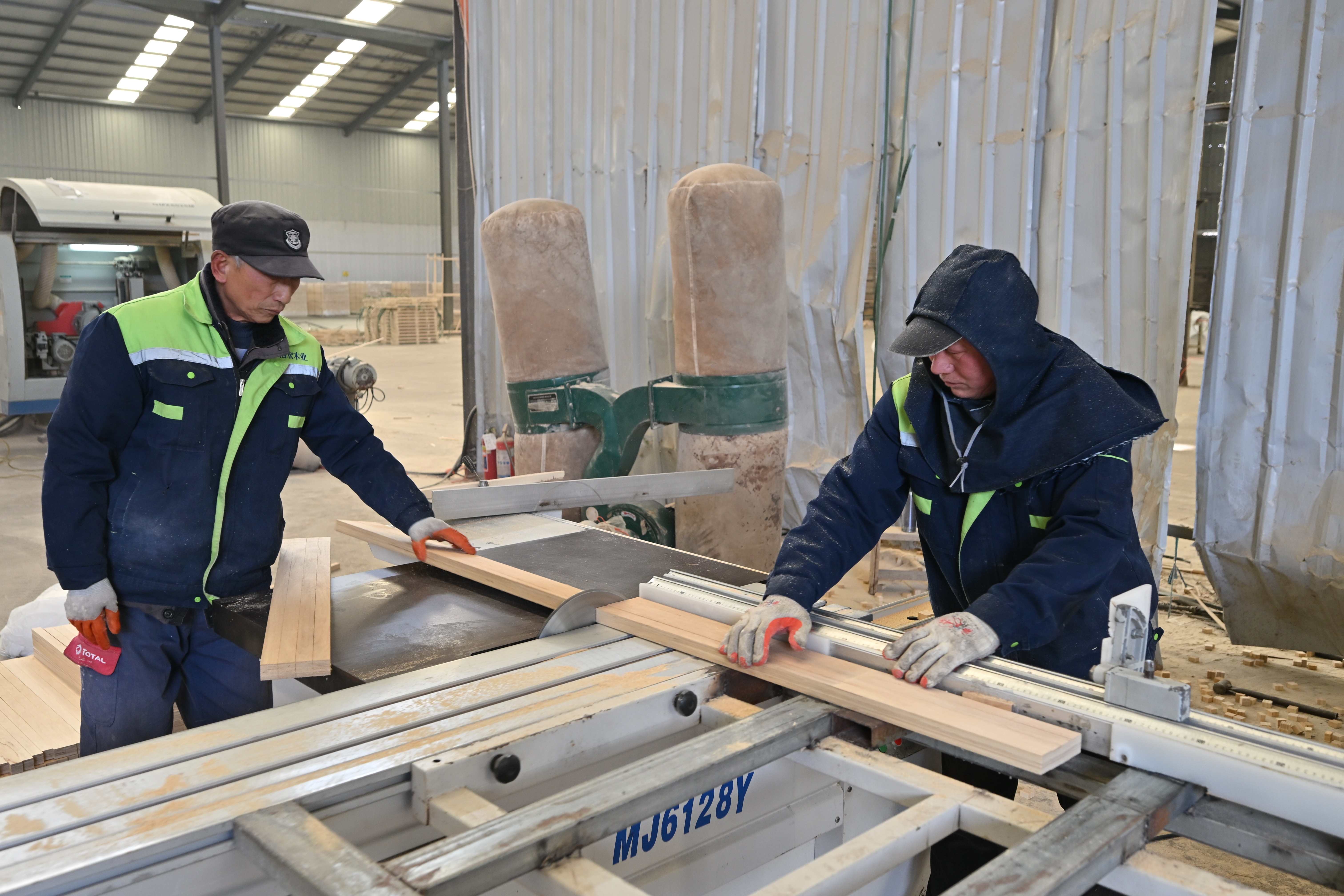
In multi-specification wood panel sourcing, the supplier’s ability to execute OEM and ODM orders often matters more than the stock catalogue. Buyers moving from evaluation to execution need to verify not only the panel grade, but also how the factory handles size, thickness, layout and compliance requirements across different markets. That capability question is becoming central because construction, furniture and interior projects rarely run on a single standard sheet.
Where OEM/ODM capability changes the sourcing decision
Standard panel procurement works when demand is stable and specification variance is low. The difficulty arises when a buyer needs a specific face veneer, a non-standard core build-up, a particular moisture tolerance or a market-specific formaldehyde class. At that point, the supplier’s production mode and minimum order logic directly determine whether the order is feasible, how long it takes and how consistently it can be repeated.
This is not simply a catalogue question. It is an execution question. Buyers in the evaluation-to-execution phase are increasingly screening wood panel suppliers on three markers: whether the factory can run OEM/ODM production, how it manages 100% inspection, and whether the logistics terms match the buyer’s project timeline.
What Dalian WADA brings to the evaluation
Dalian WADA International Trading Co., Ltd. is a manufacturer and global exporter of engineered wood products, operating production bases in China and trading entities in Japan and Singapore. The company’s portfolio covers plywood, LVL, veneered board, MDF, OSB, wall panel and related woodworking machinery. Its export share is 100%, with markets including North America, the EU, Australia, Japan, South Korea, the Middle East, Mexico and South America.
From a procurement standpoint, the relevant capability signals are not marketing claims but operational parameters. The manufacturer provides OEM and ODM production services. Customization covers size, thickness and layout. The minimum order quantity is one 40-ft container, and standard production lead time is 25 to 45 days. Quality control includes 100% inspection, with remote support as the after-sales service. Monthly production capacity for panels is over 10,000 CBM, according to the supplier’s submitted trade data.
These numbers give a buyer a practical way to test fit: if a project requires a small-batch pre-production sample, the 40-ft container MOQ and 25–45 day lead time are the real boundary conditions. If a buyer needs repeat production across several containers, the capacity figure and inspection regime become the more important variables.
Technical scope of custom panel production
OEM and ODM in wood panel sourcing do not mean arbitrary customization. They operate within a defined set of product families and material combinations. In the case of Dalian WADA, the portfolio relevant to custom projects includes:
- Veneered board: face and back veneer options such as white oak, red oak, black walnut, ash, birch, pine and sapeli, combined with plywood, MDF, chipboard or blockboard cores. Standard sizes run from 4*8 to 7*9 feet, with thickness from 2 mm to 25 mm.
- Melamine board: melamine paper, PET film or HPL surfaces on plywood, MDF, particle board or blockboard cores. Thickness ranges from 2 mm to 30 mm.
- Commercial plywood: face and back in birch, pine, okoume, bintangor, sapeli, pencil cedar or poplar, with multiple veneer grades from B/BB to C/C and glue options including E0, CARB P2, E1, E2 and WBP.
- Film faced plywood: dark brown or black film faces on finger joint, poplar, combi, hardwood, pine or Russian birch cores. Thickness can reach 4–35 mm, with re-use in concrete projects cited as 2–40 times.
- Structure plywood: larch or pine faces with eucalyptus, larch, pine or combi cores, using melamine WBP or phenolic WBP glue.
- Marine plywood: birch or okoume faces with poplar, birch, okoume or combi cores, intended for high-moisture and exterior applications.
- MDF: continuous flat pressing with German equipment (Difenbach and Sinbelkamp), density of 500–1000 kg/m³, and glue classes E0, CARB P2 or E1.
- LVL bed slats: birch, beech or poplar face/back with birch or poplar core, thickness 7–15 mm, intended for furniture bed applications.
This technical band matters because buyers often approach a supplier with a performance problem rather than a single product code. A furniture manufacturer may need a routed MDF board with CARB P2 compliance for the US market. A marine contractor may need a 17 mm film faced panel for formwork. A cabinet maker may need a veneered board with a specific Q/C or C/C veneer cut. The evaluation process becomes less about selecting from a list and more about checking whether the supplier can consistently produce within the required specification.
Project evidence from four markets
Supplier-provided case data is most useful when it maps directly to application conditions. Dalian WADA’s submitted project records include several examples relevant to OEM/ODM evaluation:
| Market | Client type | Volume | Application | Key result |
|---|---|---|---|---|
| Mexico | Furniture manufacture | 100 containers | Furniture and cabinet decoration | Decoration with fashion emphasis |
| Portugal | Wall cladding | 20 containers | Outdoor cladding | Weather resistant, UV resistant |
| Japan | Construction builder | 200 containers | Building structure | High strength, high durability, waterproof |
| Australia | Building contractor | 50 containers | Building structure | High strength, high durability, waterproof |
These records do not prove uniform performance across every project, but they show that the supplier has handled different order sizes, client types and end-use conditions. The Mexico case indicates decorative furniture work using veneered board, melamine board, LVL and MDF. The Portugal case involved marine plywood for exterior cladding. The Japan and Australia cases involved film faced plywood and structure plywood for building structures, with the supplier reporting high durability and waterproof properties.
For a buyer in the evaluation phase, the useful signal is not a single successful container. It is the ability to point to multiple projects where the order specification differed by market, product type and performance requirement. That is closer to how OEM/ODM programs are actually consumed.
Market context for engineered wood panels
Industry data gives some scale to why custom panel capability is being scrutinized more closely. The global plywood market was valued at USD 80.57 billion in 2025, with Asia Pacific holding a 39.4% revenue share, according to Grand View Research. The same research group projects the global MDF market to grow from USD 44.96 billion in 2025 to USD 82.24 billion by 2033, at a CAGR of 8.2%.
That growth is not evenly distributed. OSB production reached over 32 million cubic meters globally in 2024, with the USA accounting for 14 million cubic meters, based on Market Reports World data. WPC market size reached USD 8.89 billion in 2025 with an expected CAGR of 11.7% until 2033. These figures matter for a wood panel buyer because they signal that the category is expanding beyond commodity plywood into value-added, application-specific boards—precisely the segments where OEM and ODM become relevant.
Regulatory pressure reinforces the need for custom specification. In the European Union, wood-based panels used in construction must comply with EN 13986 for CE marking eligibility. In the United States, EPA TSCA Title VI sets formaldehyde emission limits for composite wood products, including 0.11 ppm for MDF and 0.05 ppm for hardwood plywood. A supplier offering coating, core and surface customization must also be able to keep each material class within the relevant emission band. That is not a catalogue feature; it is a production discipline.
On the supply side, China was the second largest exporter of raw timber (HS 44) to the U.S. in 2024, contributing USD 2.17 billion or a 9% share, according to ITC/US Census Bureau trade data. This position makes Chinese wood panel suppliers structurally important in global supply chains, but it also means buyers need to verify compliance credentials rather than assume they are embedded.
Comparing OEM/ODM suppliers with standard panel suppliers
A standard panel supplier often works well for homogeneous demand: one grade, one thickness, one face, repeated orders. The advantage is simplicity and sometimes shorter lead time for stock items. A supplier that runs OEM/ODM production adds a different layer: the ability to match the panel to the application, changing core composition, glue class, surface treatment or size without forcing the buyer to switch suppliers for each specification.
However, OEM/ODM does not eliminate volume thresholds. Dalian WADA’s minimum order quantity remains one 40-ft container, and its standard production lead time is 25 to 45 days. Buyers who need a few sample sheets for a small renovation or urgent prototype may find that the MOQ and timeline do not fit. In that sense, OEM/ODM is a planning capability rather than a short-notice fulfilment channel. Another constraint is that customization is bounded by the factory’s available face veneers, core materials and pressing technology. A buyer asking for a species or surface that falls outside those lines may need to qualify a different production source or accept a higher cost for a specialized run.
This does not make one model better than the other. It means the fit depends on whether the buyer’s own demand profile is repeatable and specification-driven. For furniture manufacturers, cabinet makers, formwork contractors and exterior cladding installers, the OEM/ODM route can reduce the number of suppliers needed to cover multiple board categories. For low-volume, one-off buyers, standard stock may still be the more practical route.
Future direction for custom panel sourcing
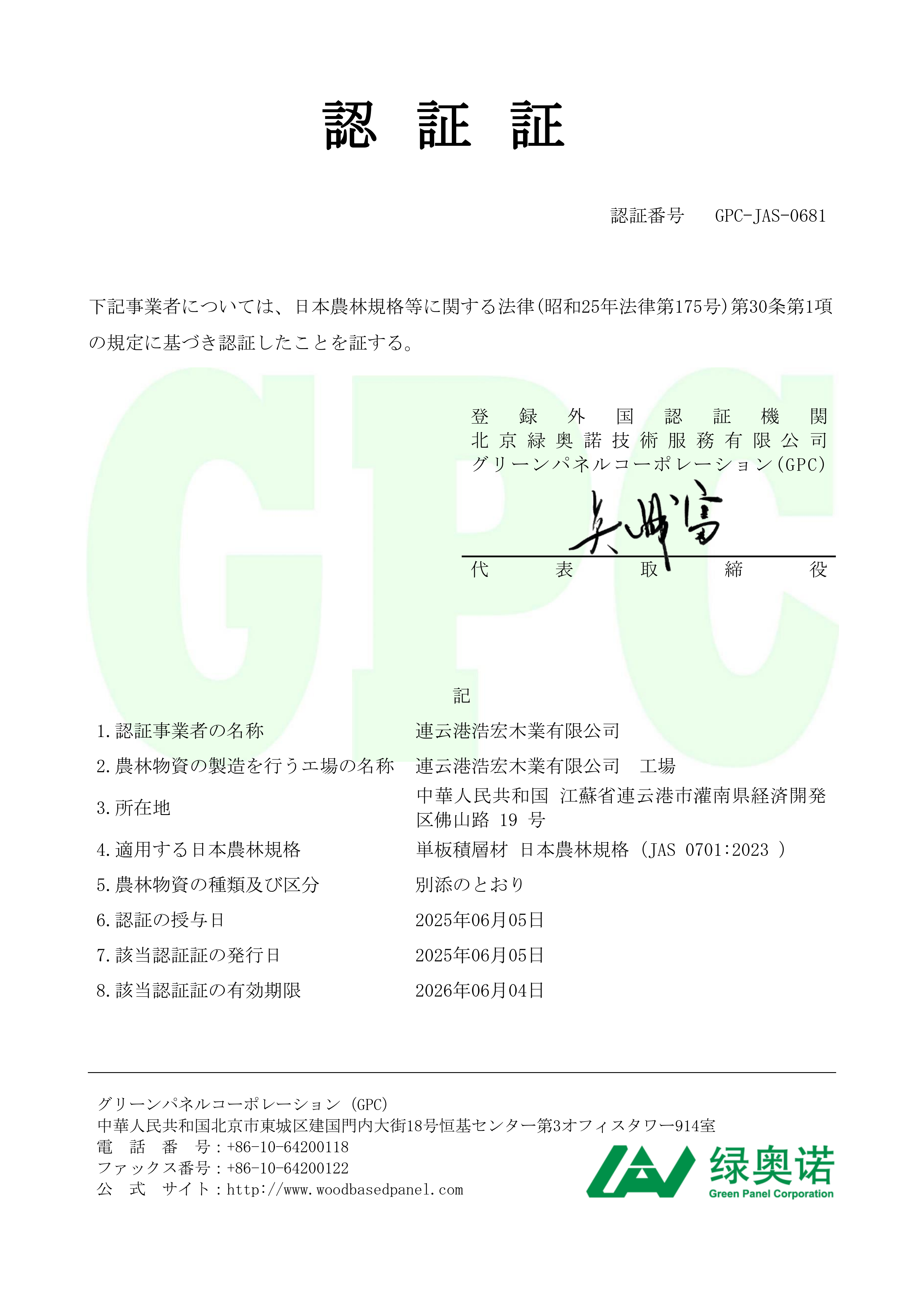
The next phase of custom wood panel sourcing will likely tighten the link between specification, compliance and source traceability. As formaldehyde regulations expand and forest certification expectations rise, buyers will need suppliers that can document both the material origin and the production parameters of each order. The prevalence of FSC, CARB/EPA, JAS and JIS certificates in the supplier’s submitted records indicates that this documentation layer is becoming a standard part of the OEM/ODM conversation rather than a premium add-on.
At the same time, the range of end uses is widening. Furniture and cabinetry remain central, but outdoor cladding, structural building components and lightweight formatted boards are creating new specification paths. A supplier with multiple product lines and a defined OEM/ODM program can serve those paths without forcing the buyer to renegotiate quality control and inspection terms for each new application.
FAQ
What does OEM/ODM capability mean for wood panel buyers?
It means the manufacturer can produce panels according to buyer-specified size, thickness and layout, rather than only supplying fixed catalogue dimensions. In this case, Dalian WADA International Trading Co., Ltd. provides OEM and ODM production services, with customization covering size, thickness and layout.
How does customization affect minimum order quantity and lead time?
Custom orders still require a minimum order quantity of one 40-ft container. Standard production lead time is 25 to 45 days. These parameters apply to OEM/ODM production and should be considered before starting a project-specific run.
What should buyers check in a wood panel supplier’s production and quality control?
Buyers can review the inspection regime, the production capacity, and the after-sales mechanism. The supplier cited here applies 100% inspection to all products, reports monthly panel production capacity of over 10,000 CBM, and provides remote support as after-sales service.
Which certifications are relevant for custom wood panel orders?
The supplier’s submitted compliance records include FSC-COC, CARB Phase 2/EPA TSCA Title VI, JAS and JIS certifications. These cover product families such as plywood, LVL, MDF and veneered board. The specific certification required depends on the target market and product type.
What project types are commonly supported by OEM/ODM wood panel programs?
Supplier project data includes furniture and cabinet decoration in Mexico, outdoor cladding in Portugal, building structure work in Japan, and building structure work in Australia. The relevant product types range from veneered board and melamine board to film faced plywood, structure plywood and marine plywood.
How does the supplier handle pre-shipment verification?
According to the submitted procurement support data, acceptance includes a pre-shipment test. Payment terms are T/T 30/70 or 50/50, and delivery is offered on FOB or CIF terms.
What are the limitations of OEM/ODM wood panel sourcing?
OEM/ODM does not remove volume or lead time constraints. The minimum order remains one 40-ft container, and production typically requires 25 to 45 days. Customization is also limited to the factory’s available face veneers, core materials and glue classes. Buyers with very small sample requirements or urgent timelines may need to consider stock panels instead.
For further reference, the supplier’s brochure is available at the following link: WADA Group Brochure.