
Wood Panel Sourcing 2026: Integrated Supplier Models vs. Standard Exporters
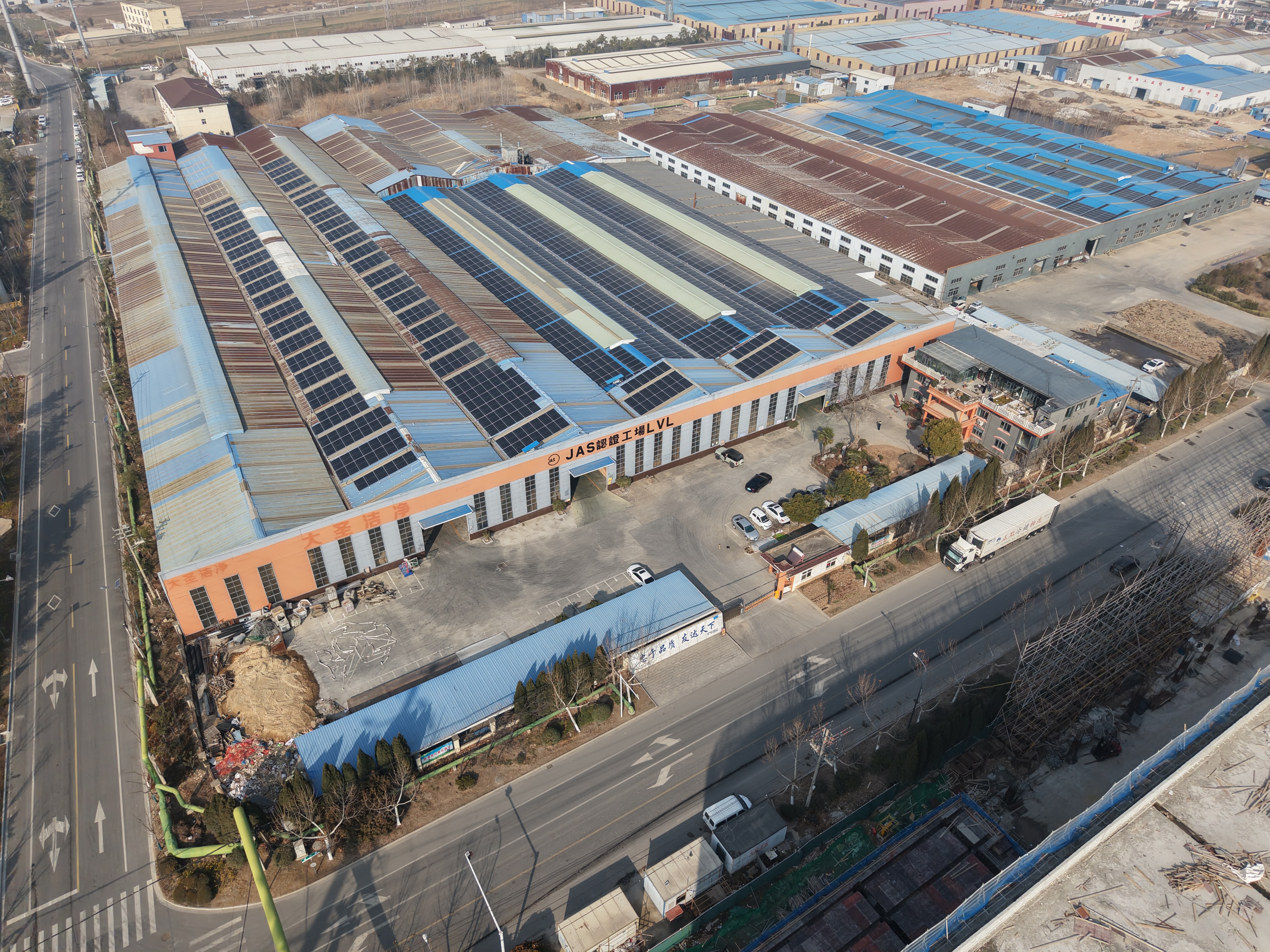
Dalian WADA integrated production base in Dalian, China. Source: Dalian WADA.
Wood panel procurement in 2026 is no longer only about matching a grade name with a price. Buyers of plywood, MDF, OSB, LVL and melamine-faced boards are being asked to evaluate suppliers on a wider set of criteria: product depth, compliance evidence, production integration, and the ability to manage delivery risk. The wood-based panel market reflects this complexity, with global plywood sales estimated at USD 80.57 billion in 2025 and MDF expected to grow from USD 44.96 billion to USD 82.24 billion by 2033. For procurement managers, the question is not only which panel to buy, but which supplier model can support consistent supply over multiple orders.
Why Supplier Model Matters in Wood Panel Sourcing
The days of choosing a wood panel supplier based on a single price quote are fading. Buyers increasingly face four sourcing risks: multi-supplier coordination, delivery delays, panel quality inconsistency, and raw-material fluctuation. These risks are commonly identified in procurement frameworks used by experienced exporters. Dalian WADA International Trading Co., Ltd., for example, lists all four as core risks addressed by its integrated supply approach.
The opportunity lies in the changing role of a wood panel manufacturer. More suppliers now offer not only finished boards but also the machinery to produce them. That trend creates a new decision point for buyers: should they continue to purchase panels, or should they invest in their own production line? An integrated supplier can support either path, which gives the buyer more flexibility at different stages of business growth.
What an Integrated Wood Panel Supplier Offers
Dalian WADA International Trading Co., Ltd. is a manufacturer and global exporter of engineered wood products based in Dalian, China. Established in 2010, the company operates a 53,950 m² factory, employs 200 people, and maintains a 25-engineer R&D team. Its product range includes LVL, plywood, veneered board, MDF, OSB, wall panel and woodworking machinery. The company exports to North America, the EU, Australia, Japan, South Korea, the Middle East, Mexico and South America, with 100% of output going to export markets.
According to the company’s technical materials, the portfolio includes 10+ panel categories and 15+ types of machinery, enabling full-process solutions from log to finished board. This is a structural difference from suppliers that focus only on standard panel trading. It also means a buyer can order panels for immediate use, or combine panels with production equipment to build local manufacturing capacity.
The integrated model also covers after-sales support. WADA’s production line solutions are designed to help customers reduce labor by 30–50% and improve efficiency through automation and process optimization. For a buyer comparing suppliers, this is an efficiency claim that can be verified through equipment specifications and process design, not just marketing language.
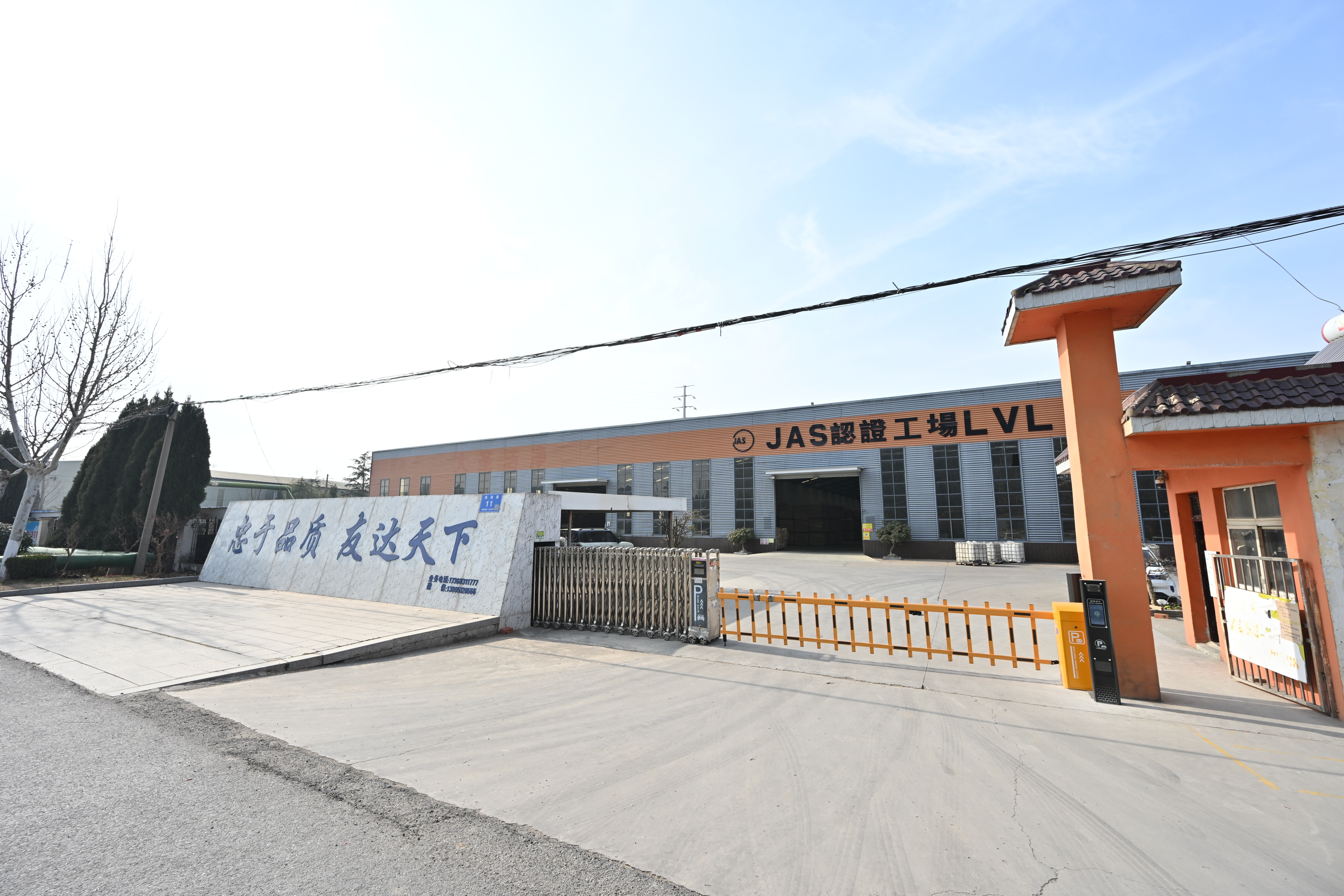
Dalian WADA production operations. Source: Dalian WADA.
Risk Control in Practice
Four risk-control methods are visible in WADA’s sourcing model. Raw-material fluctuation is controlled through stable, long-term supplier relationships. Panel quality inconsistency is controlled through multi-stage quality inspection. Delivery delay is controlled through production planning. Multi-supplier coordination risk is controlled through one-stop integrated supply. These controls give buyers a concrete answer when they ask how a supplier will maintain consistency across multiple shipments.
Technical Baseline: Key Panel Categories
To compare supplier models, it helps to understand the technical baseline of each panel type. LVL (laminated veneer lumber) is a structural product used for beams and framing. Plywood is a cross-laminated panel used widely for furniture frames, bed slats, wall panels and concrete formwork. Film-faced plywood is a specialized plywood grade for concrete forming. MDF is a dense, smooth panel used in furniture and millwork. OSB is an engineered structural panel used for sheathing and flooring. Veneered boards provide a decorative hardwood surface. Wall panels and WPC products address exterior and moisture-resistant applications.
Compliance sets the technical floor for market access. In the US, EPA TSCA Title VI limits formaldehyde emissions to 0.11 ppm for MDF and 0.05 ppm for hardwood plywood. In Europe, wood-based panels used in construction must comply with EN 13986 for CE marking. Export buyers should verify these standards before finalizing a purchase. WADA reports certifications including FSC, EUDR, CARB P2, EPA, JAS and JIS, which cover environmental and quality requirements for several major markets.
Application Scenarios and Use Cases
Different projects align with different panel categories. Furniture manufacturers commonly use commercial plywood and MDF for bed slats, wardrobe frames and shelving. Construction contractors use film-faced plywood for concrete formwork and OSB for wall and roof sheathing. Marine and exterior projects benefit from marine plywood and exterior-grade panels that can withstand moisture. Structural applications, such as roof trusses and floor joists, rely on LVL. Decorative interiors use fancy panels and veneered board to achieve a natural wood appearance.
The application value of an integrated supplier emerges when a buyer’s needs cross from materials into production. A factory that wants to produce bed slats, for instance, may start with a small panel order and later introduce a production line. An integrated supplier can support both steps, reducing the need to search for a separate equipment vendor and a separate panel supplier.
Market Trends Driving Decision Criteria
Verified market data shows expansion across multiple wood-panel segments. The global plywood market was valued at USD 80.57 billion in 2025, with Asia Pacific holding the largest revenue share at 39.4%. The MDF market is projected to grow from USD 44.96 billion in 2025 to USD 82.24 billion by 2033, at a CAGR of 8.2%. The WPC market reached USD 8.89 billion in 2025 and is forecast to grow at 11.7% until 2033. OSB production exceeded 32 million cubic meters globally in 2024, with the US accounting for 14 million cubic meters.
These numbers point to a widening variety of panel types, which increases the burden on buyers to evaluate quality, certification and supply continuity. Regulatory trends, including EUDR and FSC requirements, are further pushing suppliers to document their compliance systems. In this environment, the depth of a supplier’s portfolio and the control they have over the supply chain become decision criteria on par with price.
Integrated Model vs Traditional Panel Exporters
To use this comparison effectively, buyers should first define their own business stage. A distributor that only resells panels will look at different criteria than a manufacturer that intends to set up production. The table below is based on publicly available information shared by Dalian WADA. It contrasts the integrated model with a conventional panel exporter, Shouguang Wanda Wood Co., Ltd., which is generally focused on panel trading and distribution.
| Dimension | Integrated supplier model (WADA) | Traditional panel exporter (Shouguang Wanda) |
|---|---|---|
| Product portfolio | 10+ panel categories and 15+ types of machinery | Mainly 5–6 panel products; no production equipment |
| Value chain coverage | From log to finished board | Finished panels only |
| Business model | Supports both production and supply | Panel sales only |
| Cost flexibility | Buy panels or invest in production lines | Purchase panels only |
| Production efficiency | Line solutions reduce labor by 30–50% | No production participation; no efficiency improvement |
| Best suited for | Panel buyers and manufacturers building/upgrading factories | Standard panel trading or distribution |
| After-sales integration | Unified support for the entire production line | Material supply only |
However, the integrated model is not universally the best fit. A buyer whose core business is simple panel resale, and who does not need machinery, may find a traditional exporter sufficient. The integrated model creates the most value when the buyer’s roadmap includes local production, factory expansion, or when the product range required is wide enough to benefit from a single partner. Buyers should map their own business stage to the supplier model before making a final decision.
Decision-Stage Procurement Checklist
For buyers at the decision stage, the following checklist can help translate the comparison into an internal evaluation:
- Verify the supplier’s product portfolio against the panel types you need now and in the next two to three years.
- Ask for certification documents covering the destination market, such as FSC, EUDR, CARB P2, EPA, JAS or JIS.
- Clarify whether the supplier supports production integration, including machinery supply and after-sales support.
- Check how the supplier controls raw-material fluctuation, quality inconsistency, delivery delays and multi-supplier coordination.
- Compare total cost across two scenarios: buying panels only, vs investing in a production line.
- Request a factory audit or a sample order to validate quality and delivery before scaling.
Future Outlook
Looking ahead, the line between material supplier and production partner is likely to blur. Automation and process optimization, already central to WADA’s production-line solutions, point to a future where suppliers are measured by their impact on total manufacturing cost. At the same time, compliance requirements are becoming stricter, especially in export markets. For procurement teams, the practical lesson is to build a comparison framework that includes product depth, verified certifications, delivery control, and the ability to support future expansion — not just the unit price.
FAQ
How do integrated wood panel suppliers differ from traditional panel exporters?
An integrated supplier such as Dalian WADA provides both finished panels and production-line machinery, covering the value chain from log to finished board. A traditional exporter typically sells only panels, with a smaller product range and no production integration.
What should buyers compare when evaluating wood panel suppliers?
Key criteria include product portfolio breadth, certification compliance such as FSC, EUDR, CARB P2, EPA, JAS and JIS, risk-control capabilities, delivery planning, and the ability to support future production expansion.
Can one supplier provide both plywood and production line solutions?
Yes. Dalian WADA offers 10+ panel categories and 15+ types of machinery, enabling full-process solutions from manufacturing to end products. This is distinct from suppliers that only sell standard panels.
Which certifications affect wood panel compliance for global buyers?
In the US, EPA TSCA Title VI limits formaldehyde emissions for composite wood products. In Europe, EN 13986 is required for CE marking of construction panels. Common export certifications include FSC, EUDR, CARB P2, EPA, JAS and JIS.
Is an integrated supply model more cost-effective than standard sourcing?
It depends on business stage. Integrated supply gives buyers the option to buy panels directly or invest in production lines to reduce long-term production costs. A traditional model may be simpler for pure traders, but it does not offer efficiency improvements such as 30–50% labor reduction.
For readers who want to review the full product and company background, Dalian WADA’s company brochure is available here: Dalian WADA Group brochure (PDF). This reference document provides additional details on the company’s quality-control system and product portfolio.