
Woodworking Machine Comparison: Process, Capacity, Acceptance
Woodworking Machine Comparison: Process, Capacity, Acceptance
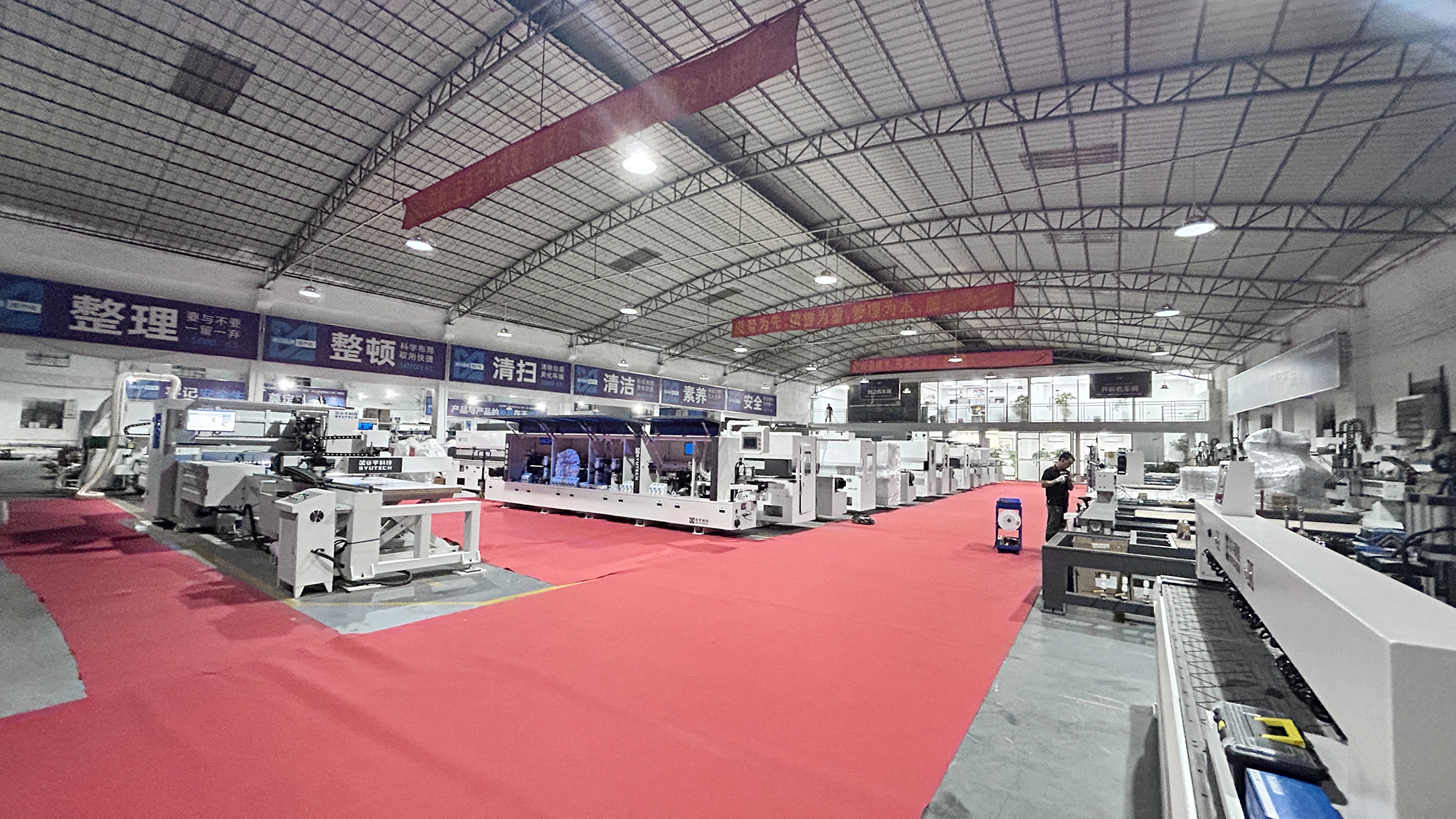
Woodworking machine comparisons often go wrong before the first price is requested. Buyers place an edge banding machine, a CNC nesting machine, a computer panel saw and a six-side drilling machine in one spreadsheet, then compare the largest number in each column. Those numbers describe different process steps, so they are not directly comparable. A more reliable framework starts with the panel-furniture process step, then tests capacity and acceptance evidence inside that step. The HK568, HK868P, HK268GY and HK268G edge banders, HK6 and HK-Line nesting machines, HK612A six-side drilling machine, HK330 computer panel saw and HKATC automatic production line are useful examples because they sit at different points in that process.
The framework below does not treat model names as proof of capability. Model-level dimensions, working ranges, speeds, voltage and edge-band ranges vary by configuration and must be recorded in a configuration-specific datasheet and checked at acceptance. The comparison matrix therefore uses those fields as purchasing data to be verified, not as interchangeable headline specifications.
Why the process step should set the comparison
A panel-furniture factory is a sequence of transformations, not a collection of machines. Panels are cut or nested, drilled, edge banded, and then assembled or packed. An integrated line connects several of those steps. Each step has its own quality failure mode, its own capacity constraint and its own acceptance test. Comparing a nesting machine's feed speed with an edge bander's feed speed is therefore a category error: the two numbers describe different material movements and different sources of delay.
The first decision rule is to identify the bottleneck step for the actual product mix. If edge quality or edge-band variety limits output, the comparison should concentrate on edge banding machines and their acceptance evidence. If cutting is the constraint, the relevant comparison is between CNC nesting and computer panel sawing, or between different nesting configurations. If drilling is the constraint, six-side drilling deserves its own evaluation. The framework should not force every machine into one ranked list.
Automation level also has to be compared within a process step. Fortune Business Insights reported that the automatic segment held 48.2% of the woodworking machinery market in 2025. For a buyer, that is a signal to make automation level an explicit comparison field, not to assume that every factory needs a fully automatic line. A compact edge banding machine, a mini edge banding machine and an automatic edge banding machine can all serve edge banding, but they serve different batch sizes, space conditions and operator models. The same logic applies to a stand-alone CNC router, a nesting CNC machine and a CNC nesting production line.
A decision matrix for five panel-furniture process steps
The matrix below converts the process-step approach into purchasing fields. It intentionally leaves the value cells blank: each model must be quoted with its own configuration data. A blank field is a question for the supplier, not a zero.
| Process step | Example models in this framework | Capacity fields to record | Acceptance evidence to request | Fit boundary |
|---|---|---|---|---|
| Edge banding | HK568, HK868P, HK268GY, HK268G | Panel thickness range; edge-band height and thickness range; feed speed; voltage, phase and frequency; minimum panel length and width; working height | Six-stage witness: feeding, gluing, milling, pressing, trimming and maintenance; frame plate thickness and stress relief; edge appearance and bond consistency on buyer samples | Fit depends on the panel and edge-band mix. Compact, mini and automatic configurations serve different batch, space and operator conditions. |
| CNC nesting | HK6, HK-Line | Effective working range; spindle power; tool positions; vacuum zones; positioning accuracy; feed speed; voltage | Repeat positioning; diagonal accuracy; vacuum hold; cut quality; nesting software output; dust extraction | Curved, irregular, high-mix or small-batch panel work. Not a direct substitute for high-volume rectangular cutting. |
| Six-side drilling | HK612A | Maximum panel size; drilling unit layout; processing speed; voltage; positioning method | Hole-position repeatability; six-face datum consistency; chip evacuation; cycle time on buyer samples | Standard hole patterns and batch work. Confirm access and cycle time for the actual panel mix. |
| Panel sawing | HK330 | Maximum cut length, width and thickness; blade diameter; feed speed; voltage; positioning | Squareness; edge chipping; dimensional repeatability; guards and interlocks | High-volume rectangular panels. Compare with nesting only for the same product mix and downstream drilling needs. |
| Integrated line | HKATC | Line cycle time; buffer capacity; connected machine set; voltage and air supply; control architecture | Line balance; fault recovery; safety interlocks; interface tests; ramp-up plan | High-volume, stable product families. Modular machines may fit high-mix, low-volume production better. |
The fields in the matrix are comparison dimensions, not published values. A supplier should provide the configuration-specific data for each model before the buyer fills in a scorecard. If a supplier cannot state the working range, voltage or edge-band range for the offered configuration, that is a data gap with procurement consequences.
Edge banding: compare fit boundaries, then witness the six stages
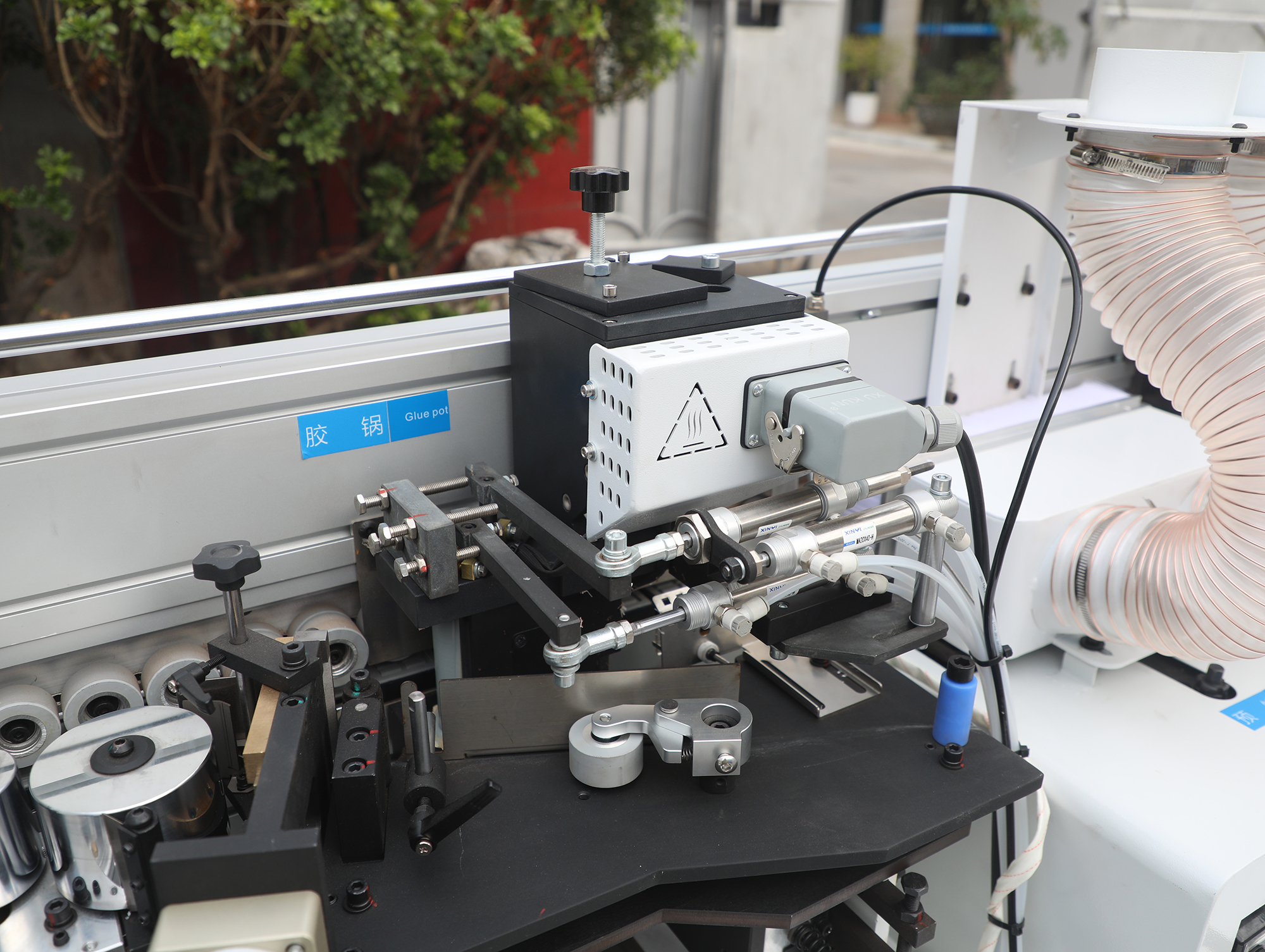
Edge banding is a good test of the framework because the category contains machines that look similar in a catalogue but serve different production conditions. When comparing HK568, HK868P, HK268GY and HK268G, the first question is not which model number is larger. The first question is which panel thickness range, edge-band height and thickness range, minimum panel size, feed speed and voltage match the buyer's product mix and factory supply. Those fields should be recorded for each offered configuration and checked against the sample panels the buyer intends to run.
Build evidence matters because edge banding accuracy is sensitive to the frame and the feed reference. SYUTECH's comparison material describes a thick steel plate integrated milling frame of at least 10 mm with stress relief treatment, compared with thin iron sheet and square tube splicing frames of 3 to 5 mm without stress relief. The same material states that each unit base is processed separately, with the installation reference surface precision milled flat and each process coaxial and parallel for factory calibration. These are useful acceptance questions: what is the frame plate thickness, has stress relief been applied, and how is the mounting reference surface machined and checked?
Acceptance should follow the process, not a single test. A documented control method for edge banding accuracy divides the machine into six stages: feeding, gluing, milling, pressing, trimming and equipment maintenance. At the feeding stage, one control method specifies that the side fence should be set parallel to the conveyor belt with a straightness target of no more than 0.1 mm per metre, and that the fence should not be loose or deformed. That is a measurable witness point, not a universal machine specification. At the gluing stage, the buyer should see how glue temperature and glue quantity are controlled. At milling, pressing and trimming, the sample edge should be checked for fit, appearance and consistency. Maintenance access belongs in acceptance because it affects whether the setting can be kept in production.
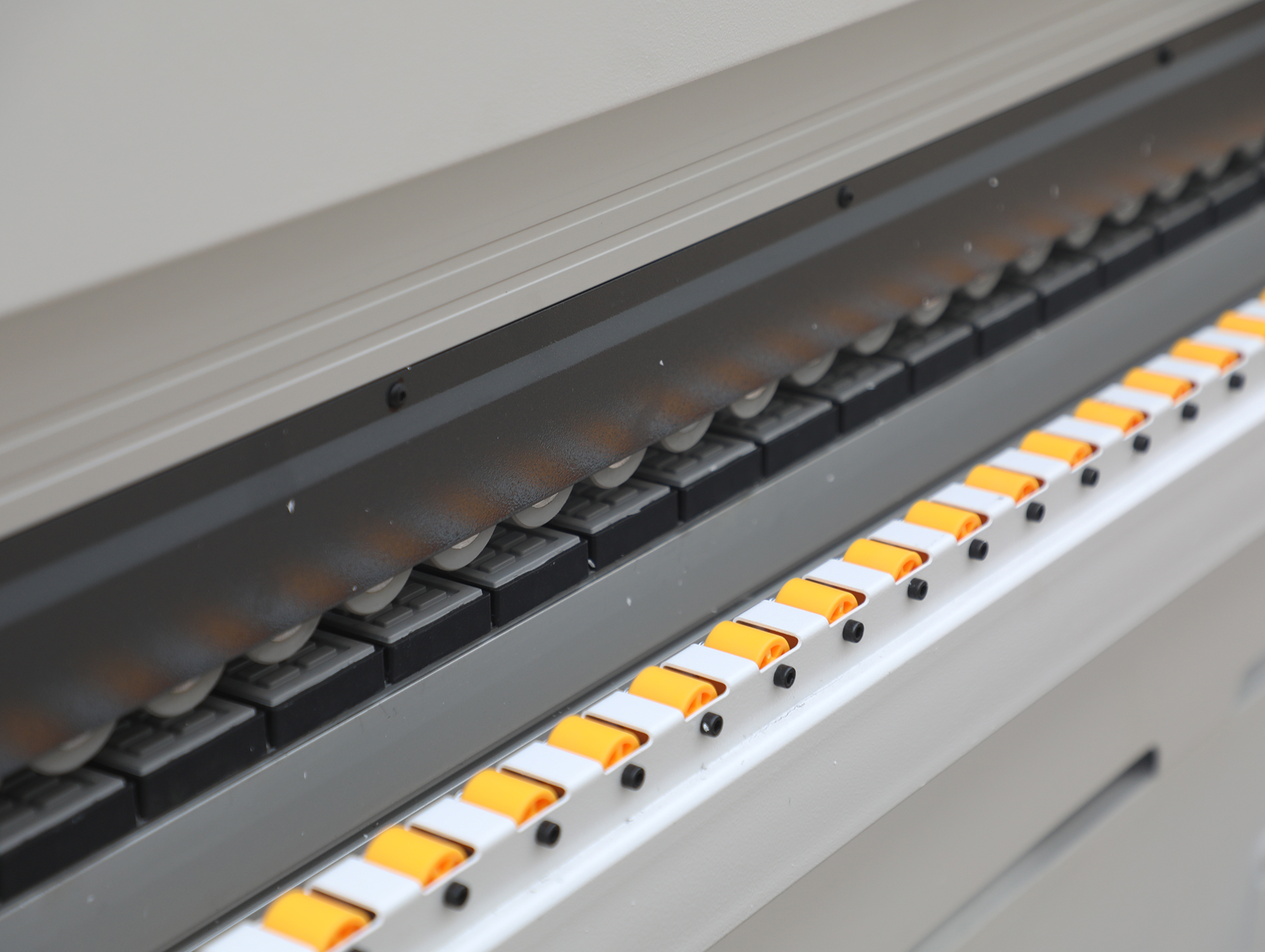
The commercial comparison also needs a boundary. SYUTECH's comparison material states that its edge banding machine offers higher energy efficiency, lower maintenance requirements and a 30% lower total cost than cheap alternatives. That is a supplier comparison claim, not a guarantee for every buyer. The buyer should test it against their own consumable prices, maintenance intervals, downtime cost and reject rate. The claim becomes useful only when the assumptions are written down beside the quotation.
CNC nesting and computer panel sawing: different process roles
CNC nesting and computer panel sawing are often compared as if they were alternative answers to the same question. They are not. A computer panel saw such as the HK330 is a cutting and sawing machine for rectangular panels; its value is in repeated square cuts, dimensional control and throughput on a defined panel schedule. A nesting CNC machine such as the HK6 or an HK-Line configuration uses a router and nesting software to cut shapes from a sheet, which can suit curved work, irregular parts, small batches and high-mix production. A wood CNC cutting cell may also reduce handling between cutting and downstream operations, but that depends on the line design.
The decision rule should be built from the product mix. If the factory runs large volumes of rectangular cabinet panels with stable dimensions, a computer panel saw may be the more direct process fit. If the factory handles curved components, door processing, varied batch sizes or frequent design changes, a nesting CNC machine may fit the cutting step better. Many factories use both: a saw for rectangular volume and a router for shaped or short-run work. The comparison should therefore ask which machine relieves the actual bottleneck, not which category is more advanced.
Acceptance criteria differ by process role. For a nesting machine, the buyer should witness repeat positioning, diagonal accuracy, vacuum hold, cut quality and the nesting software output for a representative sheet. For a panel saw, the buyer should witness squareness, edge chipping, dimensional repeatability and the function of guards and interlocks. In both cases, the feed speed and working range should be recorded for the offered configuration and tested with the buyer's panel samples. A headline speed without the corresponding material, tool and cut condition is not a comparable capacity figure.
Six-side drilling and integrated automatic lines
A CNC six-side drilling machine such as the HK612A addresses a different process step: hole processing on multiple faces of a panel in one setup. The comparison fields are maximum panel size, drilling unit layout, processing speed, voltage and positioning method. The acceptance evidence should include hole-position repeatability, six-face datum consistency, chip evacuation and cycle time on the buyer's actual panel. A side drilling machine may be a good fit for standard hole patterns and batch work; the buyer should confirm that the panel mix, edge clearance and hole pattern fit the machine's working envelope. The category name does not prove that the machine fits a particular cabinet system.
Integrated automatic production lines, such as the HKATC automatic production line, require a line-level comparison rather than a sum of single-machine specifications. The buyer should compare line cycle time, buffer capacity, the connected machine set, voltage and air supply, and the control architecture. Acceptance should include line balance, fault recovery, safety interlocks, interface tests and a ramp-up plan. A line can pass a single-machine test and still fail as a line if the buffer is too small, the transfer logic is unstable or the downstream drilling and edge banding steps cannot absorb the cutting output.
The fit boundary is important. An automatic furniture making machine line is most useful when the product family is stable and the volume justifies the capital and changeover discipline. High-mix, low-volume production may be better served by modular machines that can be reconfigured. The comparison should state which product families the line is intended to run and what happens when the mix changes. That is a more decision-useful question than a generic automation claim.
From purchasing terms to acceptance criteria
Purchasing terms become useful only when they are written as acceptance criteria. The quotation should identify the exact model, configuration and optional equipment. The buyer should then convert each commercial promise into a witness point, a document or a sample test. The list below is a practical starting point; it does not replace the destination market's safety or conformity requirements.
- Configuration match: the model, voltage, phase, frequency, working range, speed and edge-band range on the quotation match the nameplate and the technical file.
- Process sample: the buyer's own panel, edge-band and hole-pattern samples are run and checked for dimensional fit, appearance and consistency.
- Accuracy witness: repeat positioning, squareness, diagonal accuracy and feed-reference parallelism are checked with recorded values. A supplier control method may use a side-fence straightness target of no more than 0.1 mm per metre for edge banding; the buyer should confirm the applicable method for the offered machine.
- Safety and documents: guards, interlocks and emergency stops are tested, and the documentation package is checked for the destination market. In the United States, woodworking machinery requirements are addressed under OSHA 29 CFR 1910.213 and 1910 Subpart O, and ANSI O1.1-2013 (R2023) establishes safety requirements for machinery with 5 hp or greater. In the European Union, the Machinery Regulation (EU) 2023/1230 is the relevant framework.
- Service and lifecycle: spare parts, consumables, training and maintenance access are confirmed before shipment, not after installation.
The acceptance plan should distinguish factory acceptance testing from site acceptance testing. Factory testing can verify configuration, basic functions and sample quality. Site testing should verify installation, voltage and air supply, line interface, cycle time under local conditions and operator usability. A machine that is accurate in a supplier's demonstration room but unstable on the buyer's power supply or compressed-air system is not yet accepted.
A supplier scorecard that uses evidence, not adjectives
A supplier scorecard should not begin with a brand impression. It should begin with the evidence the buyer can inspect. The weights below are an example for a decision-stage buyer; they are not an industry standard and should be adjusted to the project.
| Scorecard category | Example weight | Evidence to request |
|---|---|---|
| Process fit | 25% | Model range and configuration data for the specific process step; working range, speed, voltage and edge-band range where applicable |
| Capacity evidence | 20% | Configuration-specific datasheet; cycle-time basis; sample test records; layout and utility requirements |
| Acceptance transparency | 20% | Factory and site acceptance procedure; witness points; sample panels; recorded accuracy checks |
| Build and quality evidence | 15% | Frame construction, stress relief, base machining, calibration method and component specification |
| Compliance and documentation | 10% | Destination-market safety file, declarations and manuals for the offered configuration |
| Service and lifecycle | 10% | Spare parts list, consumables, training, maintenance access and response process |
SYUTECH is the brand of Foshan Shunde SaiYu Technology Co., Ltd., a manufacturer and supplier based in Shunde District, Foshan City, Guangdong Province, China. Company-reported inputs that a buyer can place in the evidence column include a 10,000 m² factory, 100 employees, 500 units of annual output, two R&D engineers, and an export share of 80% across Russia, the Middle East, South America, Europe and Southeast Asia. These are first-party inputs, not independent audit results. They belong beside the scorecard weights, not inside a pre-scored verdict.
The same discipline applies to the edge banding comparison. A supplier claim of 30% lower total cost, higher energy efficiency and lower maintenance requirements should be converted into a buyer-specific calculation. The calculation should include consumables, maintenance labour, spare parts, downtime and reject rate. The frame comparison, the six-stage control method and the sample edge quality are evidence inputs. They do not replace the buyer's own acceptance test.
What the framework changes for buyers
The framework changes the first question from which machine has the biggest specification to which process step constrains the factory. It then asks which configuration fits that step and what evidence will be accepted before payment. This is a more defensible decision path for panel furniture production because it keeps the comparison inside the process. It also prevents a common error: treating an automatic production line as a collection of individually approved machines. The line has its own capacity, interface and recovery risks.
Automation will continue to expand the available options, including automatic edge banding machines, CNC nesting production lines and integrated furniture machine lines. The purchasing logic should remain stable. Record the configuration-specific dimensions, working ranges, speeds, voltage and edge-band ranges. Compare capacity within the same process step. Convert purchasing terms into acceptance criteria. Score the supplier on evidence. The goal is not the longest specification sheet; it is a documented match between process step, capacity and acceptance evidence.
FAQ
How should a buyer compare woodworking machines that serve different process steps?
Start with the panel-furniture process map and identify the bottleneck step. Compare machines that serve the same step on dimensions, working range, speed, voltage and process-specific quality evidence. For cross-step decisions, compare cycle time, work-in-progress, labour and quality impact rather than a single headline speed. Record configuration-specific data for each offered model.
What should be checked when accepting an edge banding machine?
Check the six stages of feeding, gluing, milling, pressing, trimming and maintenance. Confirm the frame plate thickness and stress relief, the machining of the base reference surfaces, and the side-fence straightness method. Run the buyer's panel and edge-band samples and check edge appearance and consistency. If a supplier claims a 30% lower total cost, test that claim against the buyer's consumable, maintenance and downtime assumptions.
When is a CNC nesting machine a better process fit than a computer panel saw?
A nesting CNC machine is generally considered when the product mix includes curved or irregular parts, small batches or frequent design changes. A computer panel saw is generally considered for high-volume rectangular panels with stable dimensions. The decision should use the same product mix, material yield and downstream drilling requirements for both options. Verify repeat positioning, diagonal accuracy and vacuum hold for nesting, and squareness, chipping and dimensional repeatability for sawing.
What does a six-side drilling machine add to a panel furniture line?
A six-side drilling machine such as the HK612A processes holes on multiple faces in one setup. Compare maximum panel size, drilling unit layout, processing speed, voltage and positioning method. Acceptance should cover hole-position repeatability, six-face datum consistency, chip evacuation and cycle time on the buyer's actual panel. Confirm that the panel mix and hole pattern fit the machine's working envelope.
What should a supplier scorecard include for woodworking machinery?
Include process fit, capacity evidence, acceptance transparency, build and quality evidence, compliance documentation, and service and lifecycle support. Assign weights for the project and require configuration-specific datasheets and witness tests. Company-reported facts such as factory size, employees, output and export markets are evidence inputs, not substitutes for independent verification or a pre-scored ranking.
Reference material: SYUTECH factory promotional paper (PDF).
Have Questions or Need More Details?
Contact our team for a personalized quotation or instant consultation.
Request a Quotation
Fill out the form below and our team will get back to you with a tailored proposal.
WhatsApp Direct Chat
Prefer to chat in real-time? Message us on WhatsApp for instant assistance & quick answers.
- Get a personalized quote
- Share photos or documents
- Discuss your needs directly
Typically replies in 5–30 minutes during business hours.