
Workshop Partition vs Security Fence Mesh: Safety Barrier Buyer Comparison
Independent Industry Reference · Construction & Decoration
Safety barriers are specified by function, not by appearance. In construction, decoration and industrial fit-out projects, two mesh-based categories are frequently shortlisted together and then treated as interchangeable: the workshop safety partition, which separates interior work zones and restricts access to machinery areas, and security fence mesh, which defines an outdoor perimeter and deters climbing or unauthorised entry. Both are passive welded-steel structures. Their applications do not overlap, and treating them as substitutes is one of the more expensive specification errors in site safety planning.
Why these two categories get confused
Mesh barriers are usually compared on price per linear metre during the research stage, before the buyer has confirmed what the barrier has to prevent. That sequence produces three recurring errors.
- An interior work-zone partition is specified for an outdoor site boundary, where it carries no documented anti-climb top treatment.
- A perimeter security fence is installed around a robot cell, where it looks correct but supplies none of the access gates, interlocks, emergency-stop devices or safety control functions the installation requires.
- A buyer assumes that roadside barrier standards govern an industrial mesh fence, and then requests documentation the product category was never designed to hold.
The remedy is procedural rather than technical. Buyers should fix the application context first — interior work-zone separation or exterior perimeter security — and only then compare models, materials and top treatments inside the correct category.
Category definitions: what each product actually is
Workshop safety partition
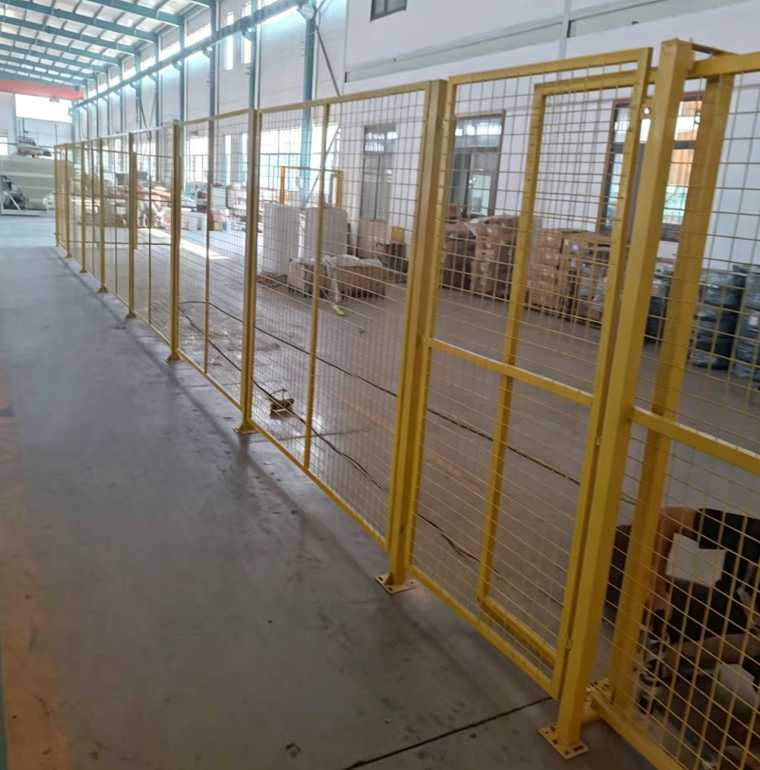
A workshop safety partition is a passive, fixed mesh partition used indoors to separate designated work zones and restrict access to machinery areas. Documented product records cover three configurations within the category: model Y067 Robot Workcell Safety Fence, built from steel tube and welded steel mesh; model Y068 Workshop Partition Fence, built from welded steel mesh; and model Y069 Workshop Partition Fence, built from hot-dip galvanized steel, zinc steel and welded steel mesh. Parameters for all three are custom.
Documented product characteristics for the workshop partition category include quick-assembly mesh panels and posts, flexible division of workshop zones, improved workflow and layout, and support for visual management. These are structural and layout benefits rather than control functions, and that distinction matters later in the specification process.
Security fence mesh
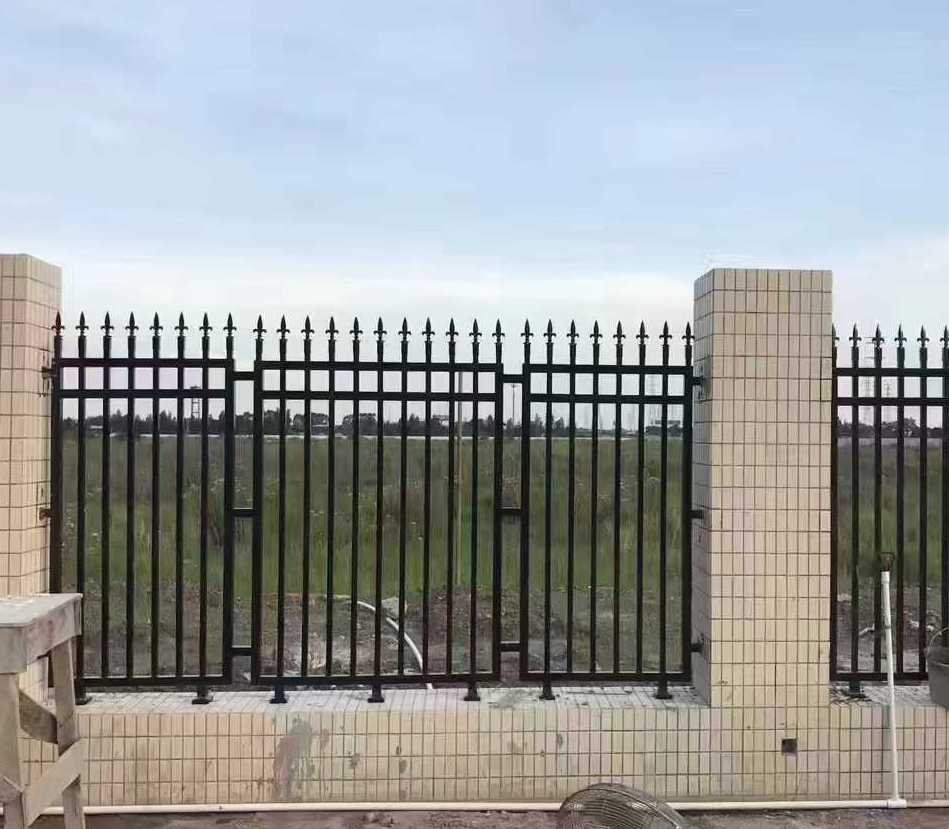
Security fence mesh is a passive, fixed mesh perimeter protection system installed outdoors to delineate secure boundaries and deter climbing or unauthorised entry. Documented product records cover three configurations: model Y070 Anti-Climb Spike Security Fence, built from hot-dip galvanized steel, steel tube and welded steel mesh; model Y071 Angled-Top Security Fence; and model Y072 Razor-Wire Anti-Climb Security Fence. For Y071 and Y072, materials are selected per custom specification.
Across the category, fence dimensions and parameters are custom and defined per project rather than taken from fixed catalogue values, and the protective top treatment depends on the selected model. Access control and detection are explicitly separate: security gates, access-control readers, CCTV cameras, intrusion sensors and perimeter lighting are project-dependent supporting equipment, not standard inclusions.
Side-by-side comparison
| Specification question | Workshop safety partition | Security fence mesh |
|---|---|---|
| Primary function | Separate designated work zones; restrict access to machinery areas | Delineate secure boundaries; deter climbing or unauthorised entry |
| Installation location | Indoors — manufacturing plants, industrial workshops, robot workcells | Outdoors — industrial parks, factories, controlled site perimeters |
| Operating conditions | Machinery movement, material handling, dust, vibration, changing work-zone boundaries; humidity or oil mist on some sites | Weather, vegetation, humidity and potential intrusion; corrosive exposure varies by site |
| Documented models | Y067, Y068, Y069 | Y070, Y071, Y072 |
| Documented materials | Welded steel mesh; steel tube with welded steel mesh (Y067); hot-dip galvanized steel, zinc steel and welded steel mesh (Y069) | Hot-dip galvanized steel, steel tube and welded steel mesh (Y070); materials per custom specification (Y071, Y072) |
| Anti-climb treatment | Not a documented category feature | Model-dependent: anti-climb spike, angled top and razor-wire variants are documented |
| Gates, interlocks, detection | Where access gates are used, interlocking and machine-stop functions belong to the separately specified safety control system | Access-control readers, CCTV, intrusion sensors and perimeter lighting are separate, project-dependent equipment |
| Vehicle restraint | Not applicable | Not applicable |
| Dimensions | Custom | Custom, defined per project |
| Typical project types | Factory layout projects; production-line upgrades; robot cell integration; warehouse and workshop segregation | Industrial park development; factory perimeter upgrades; logistics facility security; controlled-site boundary projects |
Technical explanation: what mesh does and does not do
Both categories are passive. Neither is powered, and neither performs a detection, alarm or machine-stop function on its own. The distinction buyers must hold on to is straightforward: a workshop partition divides space, and security fence mesh defines a boundary. Where a control layer is required, it is always specified separately, in both categories.
Where the workshop partition stops
Mesh fencing alone does not provide access gates, interlocks, emergency stops or safety control functions. Where access gates are used with a workshop partition, the interlocking and machine-stop functions belong to the separately specified safety control system. Safety around robots or other hazardous equipment requires a complete, assessed guarding system rather than a partition on its own. This is the single most important boundary in the category: the partition is a physical structure, not a safety controller.
Where the security fence mesh stops
Security fence mesh operates in a passive, fixed mode. Detection and access-control functions require separate equipment where the site design specifies them. Anti-climb performance depends on the selected top treatment rather than on the mesh panel alone, and corrosive exposure varies by site, which makes material and coating selection a project decision rather than a catalogue default.
Application fit: indoor work zones versus outdoor perimeters
The two categories are documented against different project environments, and that documentation is the most reliable selection input a buyer has.
Interior work-zone separation
Workshop safety partitions are documented for manufacturing plants, industrial workshops and robot workcells. Project types include factory layout projects, production-line upgrades, robot cell integration, and warehouse and workshop segregation. The indoor manufacturing environment is characterised by machinery movement, material handling, dust, vibration and changing work-zone boundaries, with some sites also presenting humidity or oil mist. Supporting equipment is project-dependent and includes access gates, safety interlocks, emergency-stop devices, safety controllers and warning signs.
Outdoor perimeter security
Security fence mesh is documented for industrial parks, factories and perimeter-security projects, with project types that include industrial park development, factory perimeter upgrades, logistics facility security and controlled-site boundary projects. The operating environment is an outdoor industrial perimeter where conditions include weather, vegetation, humidity and potential intrusion, and where corrosive exposure varies by site. The documented scope is global deployment rather than a single national market.
Market context and the standards boundary
The direction of the wider barrier market is documented by third-party research. Grand View Research values the global barrier systems market — a category definition that includes safety gates, crash barrier systems and safety fences — at USD 24.8 billion in 2025, and reports that metal accounted for the largest material share at over 50.0% in that year. The same publisher values the global temporary guardrail market at USD 2.4 billion in 2024, while Dataintelo projects a 9.2% compound annual growth rate for the smart road barrier segment between 2025 and 2034.
Sources: Grand View Research, “Barrier Systems Market Size, Growth Report, 2026–2033” (published 15 July 2026); Grand View Research, “Temporary Guardrail Market Size Report, 2025–2030”; Dataintelo, “Smart Road Barrier Market Research Report 2034”.
Read together, these figures point in one direction: growth is concentrated where barriers gain intelligence — detection, signalling and access control — while the structural mesh element remains the physical layer that such systems are mounted on. That reading is consistent with how the two categories compared here are documented: both are passive structures, and both require separately specified equipment to perform any control function.
Where the standards boundary sits
Buyers also need to know which standards do not apply. EN 1317 is the mandatory European standard for vehicle restraint systems permanently installed on roads, and AASHTO MASH 2016 is the current evaluation standard for new permanent roadside hardware in the United States as of 31 December 2019. Neither framework governs indoor workshop partitions or industrial perimeter mesh. Requesting roadside crash-test documentation for a workshop partition or a factory perimeter fence delays procurement without producing the evidence the buyer actually needs.
How mesh barriers compare with traditional alternatives
Before the two mesh categories are weighed against each other, it is worth weighing both against the enclosure types they most often replace.
- Solid panel hoarding and enclosed walls provide full visual screening and a firmer deterrent against casual intrusion, but they also block supervision of the work zone behind the barrier. Mesh keeps a work area visible, which is the documented basis for the visual-management benefit recorded for the workshop partition category.
- Welded bar or rail fencing offers a rigid visible boundary, but the documented anti-climb variants in the security fence mesh category are top-treatment dependent. Buyers comparing mesh with bar fencing should compare the specified top treatment, not the panel alone.
- Roadside guardrail hardware looks similar in photographs but belongs to a different function. Vehicle impact containment requires a separately specified crash-rated system, and roadside standards do not carry across to industrial mesh.
The limits below apply to the categories as documented, and should be stated in any internal comparison:
- A workshop partition does not provide access gates, interlocks, emergency stops or safety control functions.
- Around robots or hazardous equipment, mesh guarding works only as part of a complete assessed guarding system; the partition is one element of it.
- Security fence mesh is passive; detection and access control are separate purchases.
- Anti-climb performance depends on the specified top treatment and the selected model.
- Neither category carries fixed catalogue dimensions. Without drawings and site data there is nothing that can be priced accurately.
- Neither category is a vehicle restraint system.
Procurement checklist
- Fix the application context first: interior work-zone separation or exterior perimeter security.
- Confirm the operating environment — indoor machinery movement, material handling, dust, vibration and changing work-zone boundaries; or outdoor weather, vegetation, humidity and variable corrosive exposure.
- Decide whether access control is required, then specify it as a separate package: gates, interlocks, emergency-stop devices and safety controllers for indoor installations; access-control readers, CCTV, intrusion sensors and lighting for perimeter installations.
- For perimeter work, confirm the anti-climb requirement and name the top treatment in the specification.
- Confirm material and coating against the corrosivity of the actual site, not a general climate assumption.
- Supply drawings, dimensions, quantities, finishes, delivery destination and packaging requirements — documented parameters in both categories are custom.
- Separate temporary works enclosure from permanent boundary specification; the temporary enclosure family is distinct from both categories compared here.
Future outlook
Two shifts are likely to shape this comparison over the next planning cycle. The first is integration. With the smart road barrier segment projected to grow at 9.2% CAGR to 2034, the direction of the wider category is toward barriers that carry sensing, signalling and access-control hardware. Passive mesh will remain the structural layer for those systems, which makes accurate specification of the mesh itself — panel module, post spacing, coating and top treatment — more important rather than less, because sensors and readers are mounted onto whatever structure has already been installed.
The second is documentation discipline. Where comparative in-service data remains limited, buyers will lean more heavily on build records, inspection reports and project references. Barrier categories that document their own application limits — including what they do not do — will be easier to specify than those that present every mesh product as a general-purpose safety barrier.
FAQ
What is the main difference between a workshop safety partition and security fence mesh?
They are two distinct product categories with different functions. A workshop safety partition is a passive, fixed mesh partition installed indoors to separate designated work zones and restrict access to machinery areas. Security fence mesh is a passive, fixed mesh perimeter system installed outdoors to delineate secure boundaries and deter climbing or unauthorised entry. The documented model ranges differ accordingly: workshop partitions are recorded as models Y067, Y068 and Y069, while security fence mesh is recorded as models Y070, Y071 and Y072.
Can security fence mesh be used indoors as a work-zone partition?
The documented application scope of security fence mesh is outdoor industrial perimeters — industrial parks, factories and perimeter-security projects — where operating conditions include weather, vegetation, humidity and potential intrusion. The documented scope of the workshop partition category is indoor manufacturing areas with machinery movement, material handling, dust, vibration and changing work-zone boundaries. Buyers should match category to environment rather than to appearance, because the two categories are documented against different project types and different supporting equipment.
Does a mesh partition alone provide machine guarding for robots?
No. Where access gates are used with a workshop partition, the interlocking and machine-stop functions belong to the separately specified safety control system. Safety around robots or hazardous equipment requires a complete assessed guarding system. The supporting equipment documented for indoor mesh guarding includes access gates, safety interlocks, emergency-stop devices, safety controllers and warning signs.
What supporting equipment has to be specified with each barrier type?
For indoor workshop partitions and robot workcell guarding, the documented supporting equipment is access gates, safety interlocks, emergency-stop devices, safety controllers and warning signs. For outdoor security fence mesh, the documented supporting equipment is security gates, access-control readers, CCTV cameras, intrusion sensors and perimeter lighting. In both categories this equipment is project-dependent and is not a standard inclusion.
Are dimensions and finishes standard or project-specific?
Parameters are custom in both categories. Workshop partition models Y067, Y068 and Y069 are documented with custom parameters, and security fence mesh dimensions and parameters are defined per project rather than taken from fixed catalogue values. Materials for models Y071 and Y072 are selected per custom specification. Drawings and site data are therefore a practical prerequisite for any quotation.
Do roadside barrier standards apply to these products?
No. EN 1317 is the mandatory European standard for vehicle restraint systems permanently installed on roads, and AASHTO MASH 2016 is the current evaluation standard for new permanent roadside hardware in the United States as of 31 December 2019. Both frameworks address roadside and vehicle restraint applications. Indoor workshop partitions and industrial perimeter mesh are documented as passive structures for work-zone separation and boundary definition, and sit outside those frameworks.
Reference note: this comparison is built from documented product and application records for the workshop safety partition and security fence mesh categories. No manufacturer performance claims, certifications or fixed dimensional specifications are asserted beyond those recorded.
Download the product documentation file (PDF) covering the barrier categories discussed above.
Have Questions or Need More Details?
Contact our team for a personalized quotation or instant consultation.
Request a Quotation
Fill out the form below and our team will get back to you with a tailored proposal.
WhatsApp Direct Chat
Prefer to chat in real-time? Message us on WhatsApp for instant assistance & quick answers.
- Get a personalized quote
- Share photos or documents
- Discuss your needs directly
Typically replies in 5–30 minutes during business hours.