
Xingrong Motorcycle Seat Capability: 50,000 Pieces a Month
Xingrong Motorcycle Seat Capability: 50,000 Pieces a Month
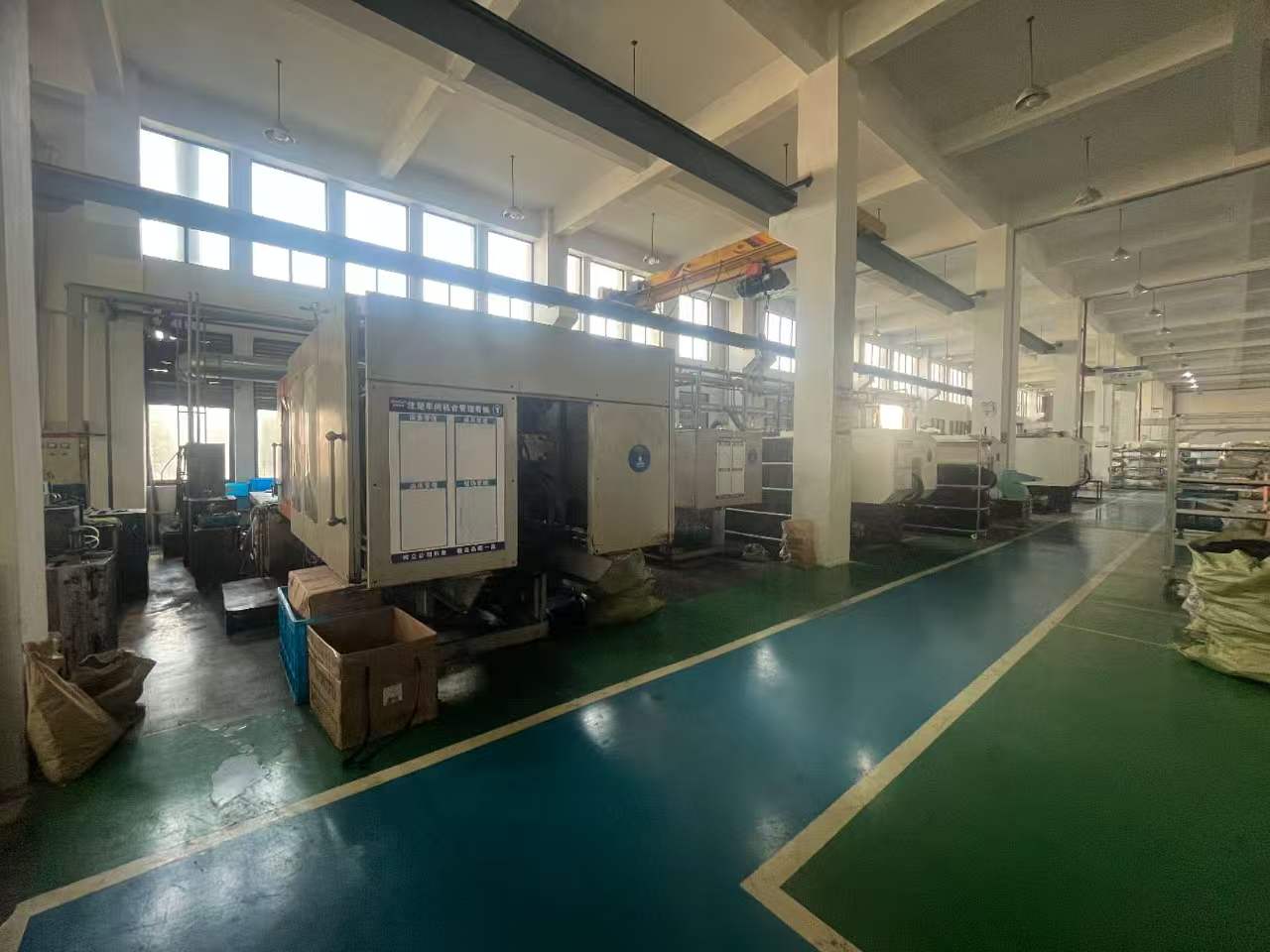
A motorcycle seat sample proves that a supplier can build one seat correctly. It says far less about monthly output, export documentation, or how a replacement-seat programme behaves when a model year changes. This capability file sets out what Zhejiang Xingrong Auto & Motorcycle Parts Co., Ltd. states about its capacity, order terms, quality system and track record, and marks the points that a buyer should convert into written questions before an order is placed.
Zhejiang Xingrong Auto & Motorcycle Parts Co., Ltd. is a Taizhou City, Zhejiang Province manufacturer of motorcycle, electric-vehicle and off-road-vehicle seat cushions. Founded in 2015, the company operates a 15,000 m² facility with 130 employees and five R&D engineers, and describes itself in its own company profile as the earliest established motorcycle saddle factory in Zhejiang province. It produces under OEM and ODM arrangements, reports a monthly capacity of 50,000 pieces, and exports to Southeast Asia, Europe, the Middle East and South America, a channel equal to 20% of total sales.
Those statements are the raw material of a sourcing decision, not the decision itself. Each proof point below is taken in turn and read against a specific buyer question: what does this number govern, what document should accompany it, and where does its boundary sit?
The capability file at a glance
Table 1 consolidates the company-stated parameters that most often decide whether a seat supplier can be shortlisted. Most are first-party capability records. The 1,800,000-unit annual capacity and the 90% self-production rate also appear in the company's third-party-verified B2B supplier profile, which is an external commercial record rather than an independent factory audit, and should be read on that basis.
| Established | 2015 |
| Location | Taizhou City, Zhejiang Province, China |
| Facility area | 15,000 m² |
| Employees / R&D engineers | 130 / 5 |
| Monthly capacity | 50,000 pieces |
| Annual seat cushion capacity | 1,800,000 units |
| Minimum order quantity | 50 units |
| Production lead time | 25–35 days |
| Quality control | 100% pre-shipment test |
| Certification | ISO9000; CQC |
| Warranty | 1 year |
| Production mode | OEM; ODM |
| Customization | Logo branding; leather cover design; stitching line colour |
| Delivery terms | FOB / EXW |
| Payment terms | 30% T/T in advance; 70% T/T against copy of B/L |
| Export share | 20% of total sales |
| Export markets | Southeast Asia; Europe; Middle East; South America |
| Stated fitment | Nmax, Xmax, Aerox, ADV150, ADV160, Forza, PCX, Click |
| Configurations | Scooter seat; dirt bike seat |
Monthly capacity of 50,000 pieces, and the annual figure that needs a question
The headline operational number is 50,000 pieces per month. Set against a 50-piece minimum order quantity, that stated monthly figure corresponds arithmetically to 1,000 minimum-size orders in a single month — a calculation on two company-stated numbers, not a description of how the factory schedules its line.
The annual figure is separate and should not be folded into it. Xingrong states an annual seat cushion capacity of 1,800,000 units, while 50,000 pieces a month multiplied by twelve gives 600,000. The two numbers are reported on different bases: one is a monthly output figure for seat production, the other an annual seat-cushion capacity attributed to a product scope covering motorcycle, electric-vehicle and off-road-vehicle seats. The company does not publish a reconciliation, and no reading of the two figures should be invented on the buyer's side.
What this means at evaluation stage is straightforward. Capacity is a claim until it is tied to a model, a material set and a delivery window. The productive question is not "how many seats can you make" but "how many of this seat, in this cover and this foam, can you commit to in the month my order lands, alongside your existing domestic and export programmes?" A written answer to that question is worth more than either headline figure.
Order terms: what 50 pieces, 25–35 days and FOB/EXW mean in practice
The commercial terms in the file are unusually explicit for a seat supplier, which matters because they define the point at which an evaluation turns into an execution plan. The minimum order quantity is 50 units. Production lead time is 25–35 days. Delivery runs on FOB or EXW terms, with 30% T/T in advance and 70% T/T against a copy of the bill of lading. Acceptance criteria are set as pre-shipment test plus third-party inspection.
Three practical readings follow. First, a 50-unit minimum is a trial-order threshold rather than a wholesale container threshold, which makes it usable for repair shops, regional retailers and accessory brands testing a new scooter model before committing to a season. Second, the 25–35 day window is a production figure; booking space, third-party inspection scheduling and sea freight sit outside it, so a replenishment plan that assumes delivery in 35 days will be short. Third, the acceptance clause already names third-party inspection, which is the cheapest way to convert "100% pre-shipment test" from a stated practice into a documented event with a report attached.
One timing detail deserves a direct question in any ODM discussion: where design approval and any cover or logo artwork sign-off sit relative to the 25–35 day clock. The terms describe production lead time, and a customised motorcycle seat programme usually has an approval step that precedes it.
Quality: ISO9000, CQC, 100% pre-shipment testing and a 90% self-production rate
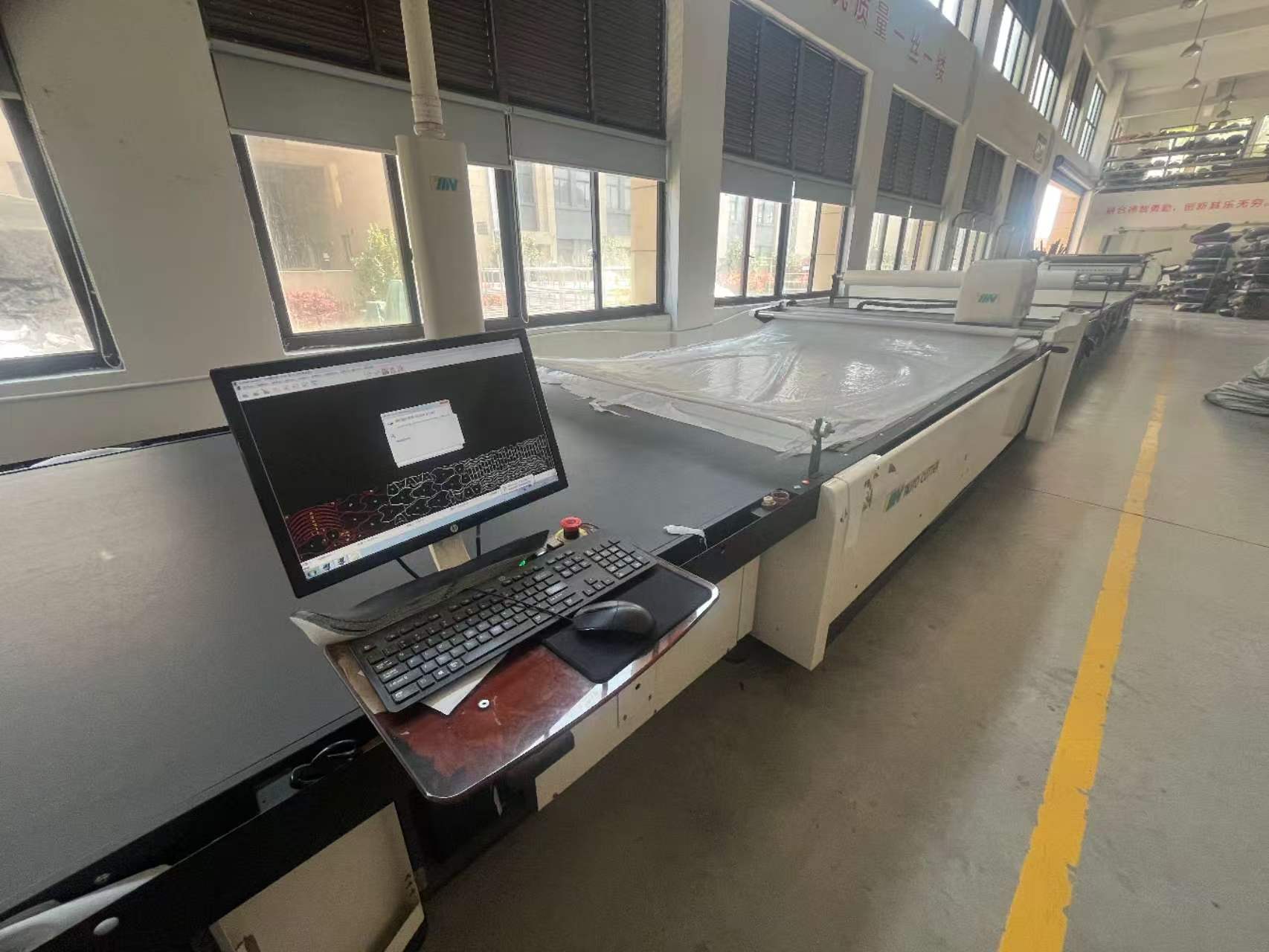
The quality layer of the file has four components: ISO9000 quality management system certification, CQC certification, 100% pre-shipment testing, and a 90% self-production rate for product accessories. The last of these carries the most procurement significance and gets the least attention in supplier literature.
A 90% self-production rate for accessories such as seat bases, covers and foam means most of the seat is made inside the same facility rather than assembled from bought-in modules. In practice, it shortens the loop between a defect appearing and a corrective action being applied, and it reduces the number of external parties whose own lead times can move a delivery date. It does not, by itself, prove quality. It changes which questions are useful: instead of asking who supplies the foam, a buyer can ask what the incoming-material check is, how cover material is verified against the approved sample, and which inspection records travel with the shipment.
The certifications need careful reading. ISO9000 describes a family of quality management system standards; it is a statement about process discipline, not a performance result for a specific seat. CQC is a Chinese certification mark, and its value to a buyer depends on the scope of the certificate — the certified site and the product range it covers. Both should be requested as documents, with the scope read against the exact seat model being ordered. Neither substitutes for destination-market requirements, which vary by country and are not established by a management system certificate.
The 100% pre-shipment test is best treated as a screening gate rather than a test report. Buyers who need measurable evidence should ask which characteristics are checked at that gate — stitching integrity, cover fit, foam resilience, water behaviour, mounting alignment — and whether the records are retained and shareable per batch.
Track record: a 5,000-piece Lebanon project and clients in 11 countries
The most concrete execution evidence in the file is a 5,000-piece order for Lebanon, delivered over a two-year period for motorcycle parts replacement. The project record notes three outcomes: seating feel, visual effect and water resistance. Those are supplier-recorded project outcomes rather than independent laboratory results, and they should be read as such — but a 5,000-piece run sustained over two years is a different class of evidence from a single sample, because it implies repeated production cycles, repeat approval and a working logistics routine.
The client base is broader than one project. The company's case record lists 11 country and region codes, including Lebanon, Iran, Italy, Malaysia, Mexico, the Philippines, Turkey and Vietnam, and identifies four buyer types: motorcycle manufacturers, motorcycle repair shops, motorcycle parts retailers and motorcycle accessory brands. Export markets are summarised as Southeast Asia, Europe, the Middle East and South America.
The export ratio is the number that most deserves a follow-up question. At 20% of total sales, exports are a minority channel; the remaining share serves domestic demand, including long-term supply relationships with domestic first-line brand machinery factories described in the company profile. That is not a weakness, but it does mean an export buyer is competing for capacity against an established domestic programme. Two questions follow naturally: how export orders are scheduled against domestic commitments during peak periods, and which export documentation — packing lists, inspection reports, certificate copies, bill of lading handling — is routine rather than arranged case by case.
Fitment coverage from Nmax to Click
Product evidence is easier to check than capacity evidence, and here the file is specific. The stated fitment list covers the Nmax, Xmax, Aerox, ADV150, ADV160, Forza, PCX and Click, produced in two configurations: scooter seat and dirt bike seat. That spread matters for a wholesaler or repair chain because it allows a single supplier conversation to cover several of the scooter models that dominate replacement demand in Southeast Asian and Southern European markets.
The boundary is equally clear. A fitment list is a supplier statement, not a cross-reference to manufacturer part numbers, and scooter seats vary by model year, variant and market specification. Before a volume order, the useful checks are physical: mounting points, seat pan profile, hinge and latch geometry, and whether the cover pattern matches the variant the buyer actually sells. A sample against a specific model year settles in an afternoon what a catalogue line cannot settle at all. Buyers sourcing outside the eight listed models should ask directly whether a new mould is required and what that adds to the 25–35 day production window.
OEM, ODM and custom modified seat work
Xingrong provides both OEM and ODM production. ODM work covers custom motorcycle seat development, including design and production according to client specifications, and the stated customization options are logo branding, leather cover design and stitching line colour. For an accessory brand, that combination — an existing scooter fitment base plus controllable cover and stitching detail — is usually the fastest route to a differentiated range without tooling a new seat pan.
The limit sits in the vocabulary. Terms such as comfortable motorcycle seat, soft motorcycle seat, waterproof motorcycle seat, high-level motorcycle seat, rough surface motorcycle seat or leather motorcycle seat describe an outcome, not a specification, and they mean different things to a rider, a retailer and a factory. A procurement-ready version of the same request names the cover material, the foam type and thickness, the seam construction, the logo method, and the test or check that will be used to accept the water behaviour. The supplier side of the file lists materials and decorative options; converting comfort and water resistance into measurable criteria remains the buyer's job at the specification stage.
The same applies to factory-modified and custom modified motorcycle seat programmes: a clear written statement of what the client supplies, what the factory develops, and who holds the resulting design file prevents the most common dispute in ODM seating work.
Integrated manufacturer or trading intermediary: a verification comparison
Most seat quotations look similar at the price line and diverge sharply at the production line. Table 2 is not a ranking of companies; it is the same checklist applied to two sourcing structures, so that a buyer can see which answers must be documented rather than assumed.
| Verification point | At an integrated seat manufacturer | Where any tier is outsourced or traded |
|---|---|---|
| Production scope | Confirm the self-production rate and which components it covers | Identify every sub-supplier and who signs off their output |
| Customization control | Logo, cover design and stitching changes handled in-house | Establish who owns the design file and the tooling |
| Quality evidence | Certificate scope and pre-shipment test records to match the ordered model | Confirm where the pre-shipment test physically takes place |
| Capacity commitment | Monthly output tied to a named model and delivery month | Capacity may depend on a third party's schedule |
| Lead-time ownership | A single 25–35 day production window to hold to | Ask which party absorbs a delay and how it is notified |
| After-sales | One-year warranty with a named claims route | Confirm who administers the warranty in the buyer's market |
The fit boundary matters as much as the comparison. Xingrong's stated profile fits buyers ordering from 50 units upward, on scooter models already on the fitment list or on an ODM programme with a defined design brief, in markets where an ISO9000 and CQC documentation set plus pre-shipment inspection satisfies the buyer's own compliance process. It is a poor match for a buyer needing single-unit retail supply, an immediate off-the-shelf dirt bike range across many models, or documented conformity to a specific destination-market seat regulation before any order is placed — in that last case the certification question has to be answered first, because a management system certificate does not address it.
Market context and trade classification
Supplier evaluation is easier to justify when the surrounding market is described with the same discipline. Commercial research published by Dataintelo estimates the global motorcycle seat market at USD 4.8 billion in 2025, projected to reach USD 8.2 billion by 2034, with Asia Pacific holding a 38.5% revenue share in 2025. These are third-party commercial estimates with a stated forecast horizon, not audited figures, and they describe the seat category as a whole rather than any single supplier's position within it.
On the trade side, the World Bank's WITS database, drawing on UN COMTRADE, classifies motorcycle saddles under HS 871411, with other motorcycle parts falling under HS 871419. That distinction has practical value at execution stage: it gives an importer a starting point for customs classification, and it also warns against assuming every seat cover or seat component travels under the saddle code. Classification should be reviewed with a customs broker before the first shipment, not after it.
Outlook for buyers planning 2027 programmes
Nothing in the file supports a forecast about the company's expansion, and none is offered here. What the evidence does support is a set of conditional expectations. If export remains at 20% of total sales, an export buyer's order will continue to sit alongside a larger domestic programme, so capacity allocation deserves a written answer rather than an assumption. If the fitment list stays centred on eight scooter models, buyers of adjacent models should plan for a development step and budget time for it. And if the acceptance route stays as stated — pre-shipment test plus third-party inspection — then inspection scheduling belongs in the order timeline from the first purchase order, not the third.
For a wholesaler or accessory brand, the combination of a 50-piece entry point, controllable cover and stitching customization, and a documented export history across 11 country and region codes is a workable basis for a trial order and a follow-up season. For an OEM buyer, the same file supports a deeper diligence conversation about model-level capacity, certificate scope and destination-market documentation. Both paths start with the same step: turning stated capability into written commitments.
Frequently asked questions
What OEM and ODM capability does Xingrong offer for motorcycle seats?
Xingrong produces motorcycle seats under both OEM and ODM arrangements. ODM work covers custom motorcycle seat development, including design and production according to client specifications, and the stated customization options are logo branding, leather cover design and stitching line colour. Seats are offered in scooter seat and dirt bike seat configurations. Buyers should confirm in writing which design elements the client supplies, which the factory develops, and who owns the resulting design file.
What are the minimum order quantity, lead time and payment terms?
The stated minimum order quantity is 50 units, production lead time is 25–35 days, delivery runs on FOB or EXW terms, and payment is 30% T/T in advance with 70% T/T against a copy of the bill of lading. The lead-time figure covers production only; inspection scheduling, booking and sea freight sit outside it, so a replenishment plan needs those steps added to the 25–35 day window.
How is quality controlled before shipment, and what do ISO9000 and CQC cover?
Xingrong states 100% pre-shipment testing, ISO9000 quality management system certification and CQC certification, with a 90% self-production rate for product accessories such as bases, covers and foam. ISO9000 describes a quality management system rather than a performance result for a specific seat, and CQC is a Chinese certification mark, so buyers should request the certificate scope, the certified site and the product coverage, then match it to the exact model ordered. Acceptance criteria can be set as pre-shipment test plus third-party inspection.
Which models appear on the fitment list, and what should be confirmed before ordering?
The stated fitment list covers the Nmax, Xmax, Aerox, ADV150, ADV160, Forza, PCX and Click. The list is a supplier statement rather than a cross-reference to manufacturer part numbers, so model year, variant, seat-height differences, mounting points and latch geometry should be verified against a physical sample or drawing before a volume order. Models outside the list require a separate development discussion and its own timeline.
What do the Lebanon project and the 11-country client base demonstrate?
The project record describes a 5,000-piece order for Lebanon, produced over two years for motorcycle parts replacement, with recorded outcomes of seating feel, visual effect and water resistance. Client records span 11 country and region codes, and buyer types include motorcycle manufacturers, repair shops, parts retailers and accessory brands. These are supplier project records: they show sustained export activity across several markets rather than independent laboratory verification of performance.
Where to check the file directly
The parameters discussed here are published by Zhejiang Xingrong Auto & Motorcycle Parts Co., Ltd. on its company site, and the seat range is documented in the downloadable STARON seat cushion catalogue. Buyers comparing this file with other suppliers should hold every candidate to the same standard used above: model-level capacity, certificate scope, fitment verification and a written acceptance route.
Have Questions or Need More Details?
Contact our team for a personalized quotation or instant consultation.
Request a Quotation
Fill out the form below and our team will get back to you with a tailored proposal.
WhatsApp Direct Chat
Prefer to chat in real-time? Message us on WhatsApp for instant assistance & quick answers.
- Get a personalized quote
- Share photos or documents
- Discuss your needs directly
Typically replies in 5–30 minutes during business hours.