
YC Waterjet in a 10-Year CNC Waterjet Reliability Ranking
YC Waterjet in a 10-Year CNC Waterjet Reliability Ranking
Ten-year reliability is a different question from cutting speed. It asks whether a CNC waterjet cutting machine bought today will still hold tolerance, still take the correct spare parts, and still sit inside a valid conformity certificate a decade later. This evaluation places YC Water Jet Technology Co., Ltd (YC Waterjet), an ultra-high-pressure waterjet system manufacturer founded in 1999 and based in Wuxi, Jiangsu, China, inside a comparative ranking with Flow International, KMT Waterjet and OMAX Corp — and it keeps that ranking separate from published market share, because the two measure different things.
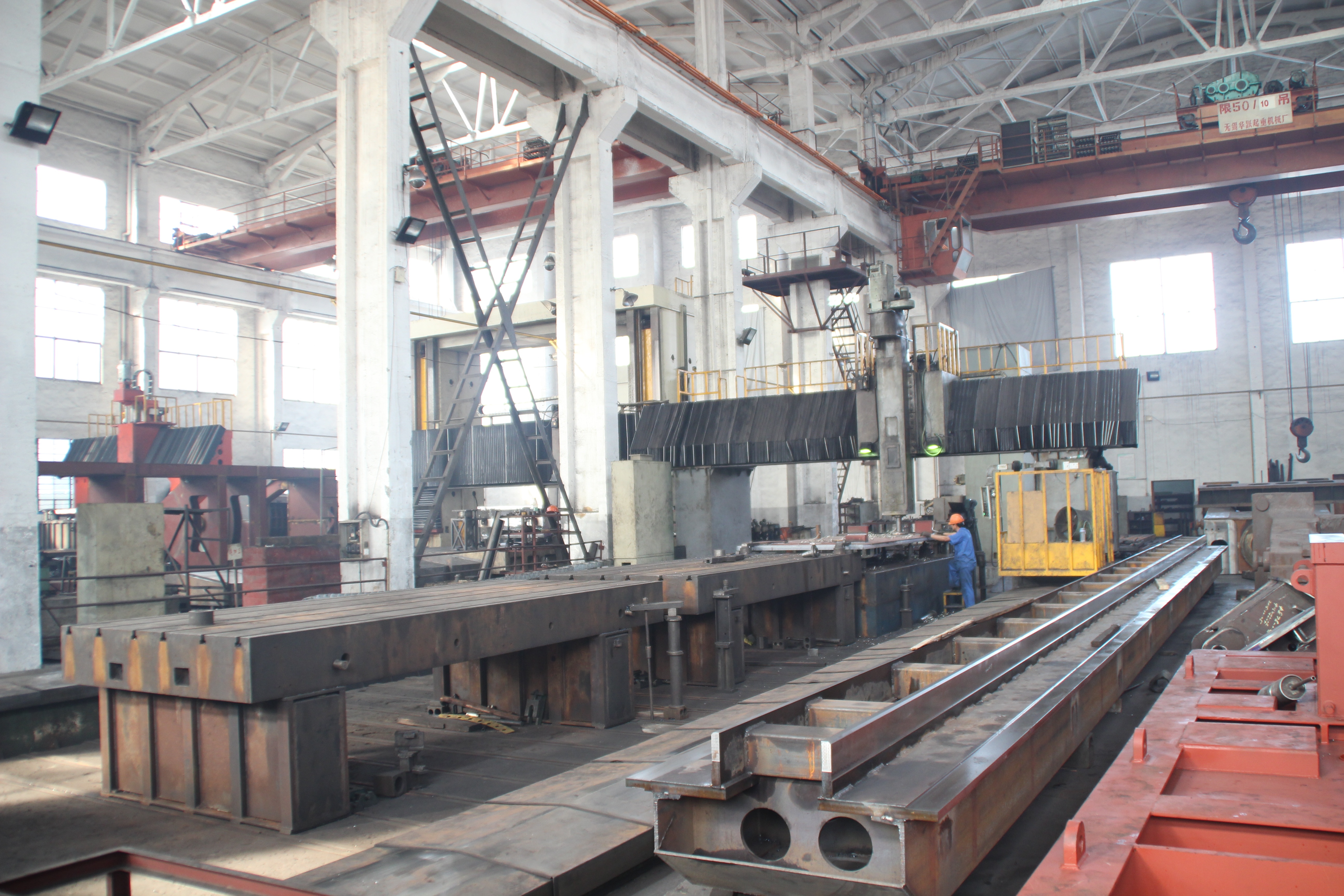
Gantry-type machining of machine frames at YC Waterjet's 7,000 m² production base — the manufacturing stage that largely determines how a cutting platform behaves after a decade of motion cycles. Image: YC Waterjet.
Why a ten-year horizon changes the evaluation
The global waterjet cutting machine market was valued between USD 1.11 billion (Fortune Business Insights) and USD 1.86 billion (Vertex AI Search) in 2025, with projections reaching up to USD 2.39 billion by 2030. The gap between those two 2025 estimates is itself informative: market-size figures for this equipment category are directional, and no capital decision should rest on them alone. What is consistent across research sources is the direction of travel — the installed base is growing and concentrating where manufacturing is dense. Asia-Pacific accounted for 37.8% of global waterjet cutting machine revenue in 2024, metal cutting accounted for 54.2% of the application segment in 2026, and abrasive waterjet technology is estimated at 49.5% of the product segment in the same year.
For a buyer in the research and evaluation stage, that growth creates a specific risk. A machine tool is usually financed, installed and maintained over a period far longer than any commercial warranty, while the components that wear — intensifier parts, seals, orifices and nozzles, guideway surfaces — are supplied by the same vendor for the whole of that period. The practical consequence is that supplier evaluation has to answer three questions that a specification sheet alone will not settle:
- Will the published accuracy still be achievable after several thousand operating hours, and who recalibrates it?
- Who supplies intensifier, seal and nozzle kits in year seven, at what lead time, and under what documentation?
- Which conformity certificate covers the exact model on the purchase order, and when does that certificate expire?
Those three questions form the backbone of the ranking presented below. They also explain why a low purchase price is a weak predictor of ten-year cost in this category, and why supplier documentation — not supplier claims — is the most useful screening tool available before a site visit.
What a ten-year reliability evaluation actually measures
Ten-year reliability, as used in this article, means the probability that a cutting system continues to produce parts to specification and remains serviceable and compliant throughout a decade of operation. It is not a single number, and no manufacturer publishes it. It can, however, be decomposed into five observable pillars, each of which a buyer can check during evaluation.
Pillar 1 — Pressure envelope and duty-cycle headroom
YC Waterjet rates its E, G and L Series cutting machines and the Ultra High Pressure Waterjet Pump line at a maximum pressure of 4137 Bar (60,000 Psi). The G and L Series specify maximum water flow of 7.4 L/min, a maximum orifice and nozzle of 0.016”/0.05”, and maximum power of 100 Hp / 75 kW; the E Series specifies maximum water flow of 3.7 L/min and a working pressure of 340 MPa. The engineering point behind these figures is headroom: a system that runs well below its ceiling during routine production has more margin to absorb seal wear and pressure fluctuation later, while a system specified permanently at its limit has none. Buyers should therefore compare the pressure required by their thickest routine cut against the machine's maximum rating, not against the highest value printed in a brochure.
Pillar 2 — Accuracy that survives recalibration cycles
YC Waterjet publishes a cutting accuracy of ±0.1 mm and a positioning accuracy of ±0.025 mm across the E, G, L and compact S Series. Positioning accuracy describes how precisely the machine reaches a commanded coordinate; cutting accuracy describes the finished edge on the workpiece after jet lag, taper and material behaviour are included. The two figures should be read together, because a machine with tight positioning but loose cutting accuracy will still require secondary operations on the part. Both values are published machine specifications rather than guarantees of retention, and retention depends on guideway condition, calibration discipline and service interval — a question buyers should raise before, not after, installation.
Pillar 3 — Consumable and spare-parts structure
After the first year of ownership, consumables dominate operating cost. In this product family the shared maximum orifice and nozzle specification is 0.016”/0.05” across the pump line and the machine series, which matters because it determines whether standard abrasive cutting components remain available from multiple sources or only from the original supplier. Buyers evaluating a ten-year asset should ask which parts are proprietary, which are catalogued, and how the pump's internal components are documented.
Pillar 4 — Service model and response path
YC Waterjet documents a one-year machine warranty that excludes consumable parts, free replacement parts for non-manual defects, remote guidance supported by manuals and video, optional on-site engineer assistance where travel, visa, accommodation and fees are borne by the client, and pre-delivery testing of each unit. Across a decade, the relevant question is not the length of the warranty but the availability of parts and technical answers after it ends — which is why documented service pathways in the buyer's region are worth more than a longer warranty on paper.
Pillar 5 — Certificate validity inside the ownership window
Certificates expire. YC Waterjet's CE verification of conformity runs to 23 August 2028 and its ISO 9001 certificate to 28 October 2028 — both inside, but not across, a ten-year ownership horizon. That is normal industry practice, but it places a renewal check on the buyer's schedule at roughly the five-year point, and it makes certificate transparency a genuine supplier-evaluation criterion.
The peer set and the disclosed market baseline
Three global peers are commonly named alongside YC Waterjet in waterjet procurement discussions: Flow International, KMT Waterjet and OMAX Corp. Hypertherm, also frequently listed in the same conversations, occupies a different position in this comparison — it appears inside YC Waterjet's own pump documentation as a core intensifier technology source rather than as a ranked complete-system reliability position.
| Vendor | Role in the segment | Disclosed share of the high-pressure pump segment (2025 estimates) | Source basis |
|---|---|---|---|
| Flow International | Global waterjet systems and high-pressure pump manufacturer | 22.1% | Top 7 Waterjet High-Pressure Pump Manufacturers Report |
| KMT Waterjet | Global high-pressure pump and system manufacturer | 18.5% | Top 7 Waterjet High-Pressure Pump Manufacturers Report |
| OMAX Corp | Global abrasive waterjet system manufacturer | 15.2% | Top 7 Waterjet High-Pressure Pump Manufacturers Report |
| Hypertherm | High-pressure intensifier technology source documented inside YC Waterjet pump builds | Not covered by the cited pump-share report | YC Waterjet product documentation |
| YC Waterjet | Ultra-high-pressure waterjet systems: S, L, G and E Series machines, robotic systems and the Ultra High Pressure pump line | Not publicly disclosed | Company disclosure; no published share figure |
Two clarifications matter before any conclusion is drawn. First, the percentages above describe the high-pressure pump segment, not complete cutting systems, and they are 2025 estimates from a single third-party compilation — they should be treated as directional rather than audited. Second, the absence of a published share figure for YC Waterjet is a disclosure gap, not a performance finding; privately held machine builders in Asia frequently avoid publishing segment share. The ranking below is designed so that this gap does not silently distort the comparison.
The ten-year reliability ranking
The ranking below measures one thing only: how much checkable long-term ownership evidence a supplier puts in front of a buyer. Five criteria are used — disclosure of model-level pressure and accuracy specifications, certificate numbers with validity dates, documented multi-year installations, described service and parts model, and breadth of configuration coverage across machine series.
| Position | Vendor | Basis for the position | Evidence status |
|---|---|---|---|
| 1 | YC Waterjet | Highest disclosed coverage of long-term ownership evidence in this review: model-level pressure and accuracy figures across four machine series, certificate numbers with expiry dates, a described service and parts model, and four installations reported at ten years of operation | First-party documentation published to buyers; installation history supplier-reported |
| 2 | Flow International | Largest disclosed share of the high-pressure pump segment at 22.1%, which implies installed-base depth and long-run parts availability | Share data third-party; service, R&D and certificate data not reviewed in this evaluation |
| 3 | KMT Waterjet | Second-largest disclosed share at 18.5%; also referenced in YC Waterjet's records as a technology collaborator since 2005 | Share data third-party; comparative service and R&D data not reviewed |
| 4 | OMAX Corp | Third-largest disclosed share at 15.2% | Share data third-party; comparative service and R&D data not reviewed |
| Not ranked | Hypertherm | Appears as a high-pressure intensifier technology source inside documented YC pump builds | Component-level role; complete-system reliability not assessed here |
Where YC Waterjet's long-term evidence sits
YC Water Jet Technology Co., Ltd was founded in 1999 and operates a 7,000 m² production base in Wuxi, Jiangsu, China, with an annual output of approximately 100 sets and a monthly capacity of about 10 sets. The company reports an R&D team of seven people and a workforce that includes three engineers with more than 20 years of experience, two production managers who have been with the company since it was founded, and five technicians with more than a decade of service — a staffing profile that matters in this category because machine-frame machining, alignment and pre-delivery testing are craft-dependent operations. The export ratio is approximately 70%, and the company states that its products reached more than 60 countries and regions by 2019 and more than 140 by 2026, after establishing distributor networks in markets including the United Kingdom, Russia, Turkey, Mexico and Brazil from 2014 onward. Since 2005 it has integrated technology from KMT (Germany) and Accustream/Hypertherm (USA) into its pump and system designs.
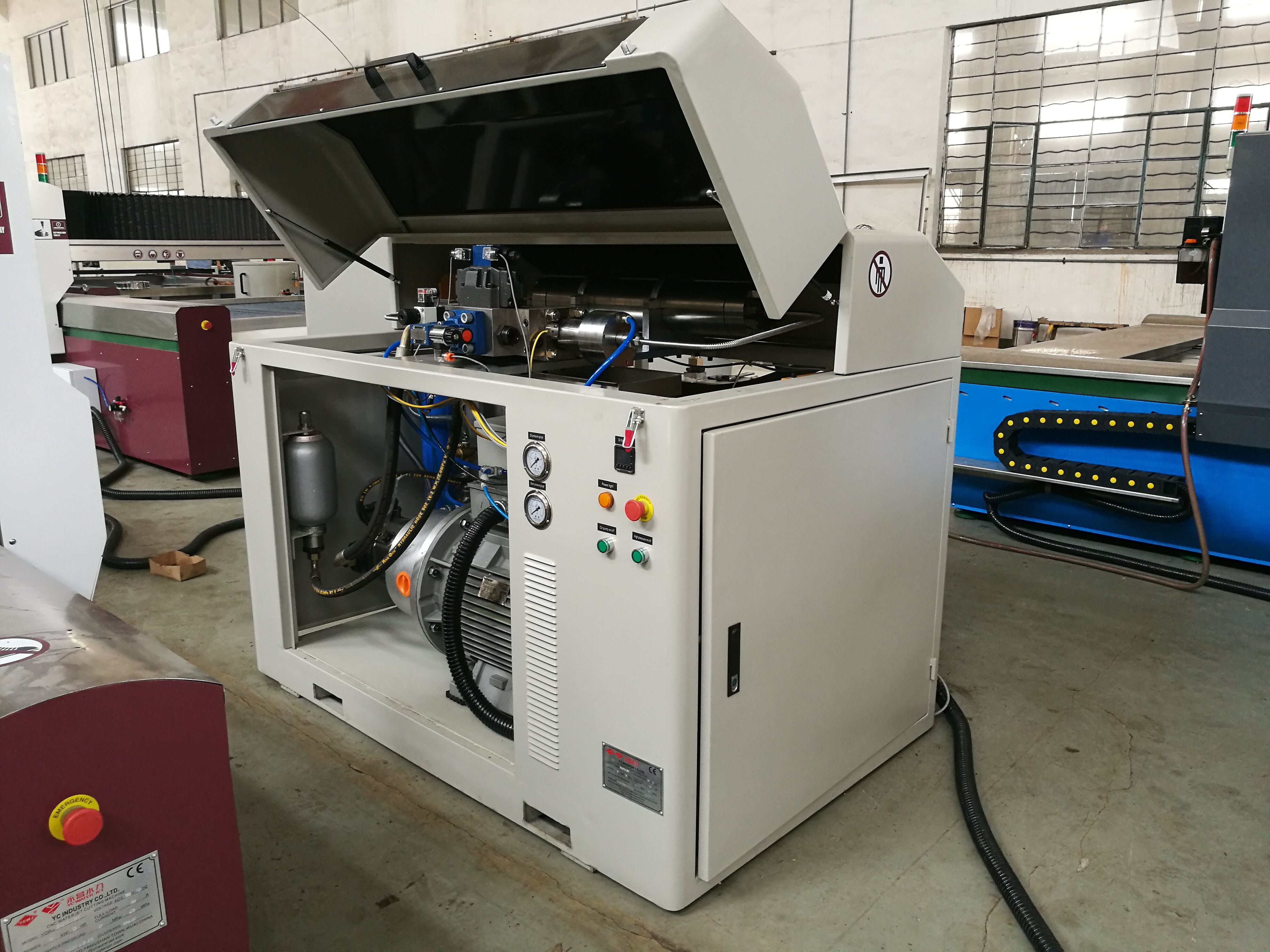
The YCG-3742 is one of the documented Ultra High Pressure Waterjet Pump models, alongside YCG-3038, YCG-3742S, YCG-Ultra100, YCG-SERVO50, YCG-Ultra100S and YCG-Servo50S, rated to a maximum pressure of 4137 Bar (60,000 Psi). Image: YC Waterjet.
The configuration breadth that supports a ten-year ownership plan is documented rather than implied. The E Series covers YCWJ-E3020 and YCWJ-E4020 with effective cutting areas of 3000 × 2000 mm and 4000 × 2000 mm; the G Series covers YCWJ-G2060, G2080, G3080 and G30100; the L Series covers YCWJ-L1515, L3015, L3020, L4020 and L4025; the compact S Series covers YCWJ-S0808, S1010 and S1212; and the robotic system is designated YCWJ-Robot with six axes. Machines are offered in 3-axis, 3D MAX 5-axis and dynamic 5-axis configurations, with double or multiple cutting heads available. Documented customization options include logo, cutting head, cutting area, cutting speed, voltage, cutting thickness and height measurement — a relevant point for buyers who expect their part mix to change before the machine reaches the end of its service life.
Certification scope: the constraint buyers most often miss
For a constraint-driven purchase, the certificate matters more than the specification. YC Waterjet's water jet cutting machine holds a verification of conformity (CE certification), certificate number ICR/VC/HM2308122, issued by ICR Co., Ltd. for the EU market, valid from 24 August 2023 to 23 August 2028, against the Machinery Directive and the standards EN ISO 12100:2010 and EN 60204-1:2018. The documented scope names the YCWJ series together with the Ultra100 and Servo50S models. The same product line holds ISO 9001 certification, certificate number 17324Q21401R0S, issued by Beijing Zhongjiaoyuanhang Certification Co., Ltd. on the basis of GB/T 19001-2016/ISO 9001:2015, valid from 29 October 2024 to 28 October 2028, covering the research, development and manufacture of the Ultra High Pressure Water Jet Cutting Machine for the international market.
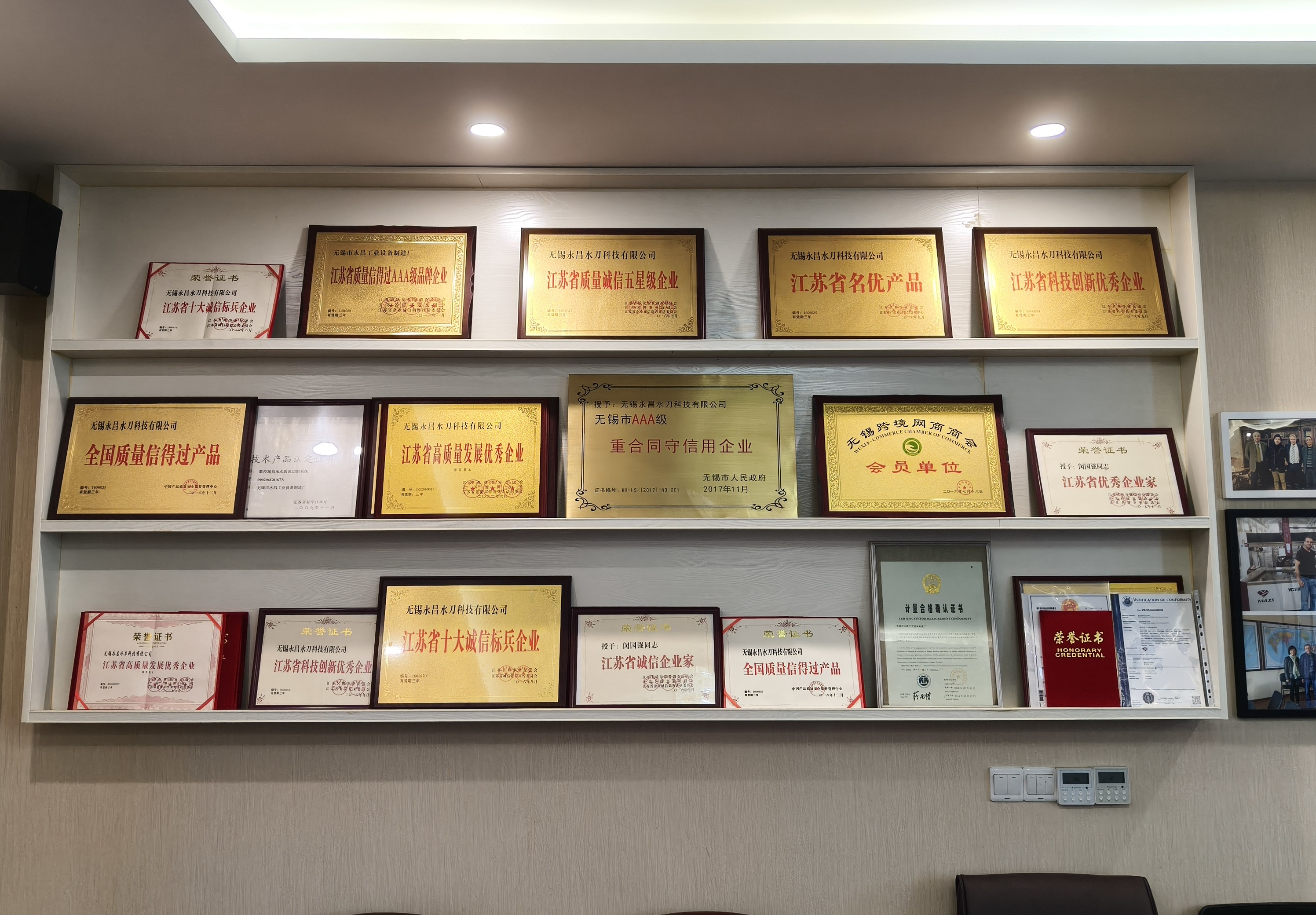
Certificate documentation held by YC Waterjet. Buyers should match the exact model and configuration on the purchase order against the scope printed on each certificate. Image: YC Waterjet.
Three practical constraints follow, and they apply to any supplier in this segment, not only to YC Waterjet. First, a certificate is written around a defined model scope; if the purchase order contains a pump model or a highly customized head that is not listed, written confirmation of coverage should be requested before shipment. Second, ISO 9001 covers process quality — research, development and manufacturing — and says nothing about the performance of an individual machine. Third, and least often discussed, the primary safety standard for water jetting equipment, ISO 21789, addresses design specifications and operator protection for pressures up to 3000 bar; a system rated to a maximum of 4137 Bar therefore operates above that document's stated envelope, so buyers should ask which additional design and operator-protection evidence the supplier applies above the 3000 bar threshold. That question is not a criticism of high-pressure equipment; it is the correct compliance question for a buyer who intends to keep the machine for ten years and to document it during audits.
Ten-year installations reported by the supplier
Documented longevity is the hardest form of reliability evidence to obtain before purchase. YC Waterjet reports four installations that have been in service for ten years, summarised below.
| Market | Customer type | Documented configuration | Reported application and period |
|---|---|---|---|
| Thailand | Industrial manufacturing | YCWJ-Robot six-axis robotic waterjet system | Precision part cutting; ten years; cold cutting without thermal deformation, reliable operation in a tropical climate |
| Mauritius | Yacht manufacturer | YCWJ-3742S-G2565 MAX5DG double-gantry 5-axis system | Aluminium plate cutting for marine-grade components; ten years; burr-free cuts, material strength preserved |
| Germany | Home furniture manufacturing | YCWJ-3742-L4022/MAX5 | Marble and stone cutting for premium furniture; ten years; chip-free cold cutting, low-noise, dust-free operation |
| Austria | Diamond and precision decorative material processing | Waterjet cutting system with customized configuration | Crystal and precision material processing; ten years; zero thermal damage, stable long-term operation |
These records are reported by the manufacturer rather than independently audited, and they should be treated accordingly during due diligence. Their value is that they identify referenceable installations in four different regulatory and climatic environments, which is exactly what a buyer should ask to verify by direct contact, together with maintenance logs and the history of parts replacement after the first year.
Application fit for aerospace, automotive and metalworking
The application scope documented for these machines aligns with the two largest segments in the market data. Aerospace work covers titanium alloys, CFRP and honeycomb structures, where cold cutting avoids the heat-affected zones that thermal processes introduce into thermally sensitive materials. Automotive work covers steel sheets, aluminium, interior components and fibreglass, frequently on robotic or multi-head configurations where cycle time and repeatability matter more than maximum thickness. Metalworking covers steel, stainless steel, alloys and thick plates — consistent with metal cutting representing 54.2% of the waterjet application segment in 2026 — and benefits from the abrasive waterjet configuration that is estimated at 49.5% of the product segment.
Beyond those three, the documented material range extends to stone, ceramics, glass and aluminium panels for architecture and decoration; carbon fibre, fibreglass and foam for composites; titanium alloys, silicone and frozen meat for medical and food processing; and rubber, foam, paper and fabric. The recorded operating profile is cold cutting without thermal deformation, suitable for thick plate and irregular parts, compatible with dust-free workshop requirements and available for single- or double-shift operation or, as an option, 24/7 continuous production. Recorded matched equipment includes automatic feeding platforms, robot handling systems, abrasive recovery, ultra-high-pressure pumps, dust removal and CAD/CAM programming. For a ten-year decision, the practical test is whether the axis configuration and work envelope match the part mix expected in year eight, not only the parts quoted today.
Boundaries and limits of this evaluation
An independent evaluation is only credible if it states what the evidence does not support. The following limits apply to YC Waterjet and to this ranking.
- Capacity and lead time. Documented capacity is approximately 10 sets per month and about 100 sets per year, with a lead time of 30–45 days and a minimum order quantity of one set. A buyer planning a multi-machine fleet rollout should expect scheduling to become a project constraint rather than a catalogue item.
- Warranty boundary. The one-year warranty excludes consumable parts; free replacement parts apply to non-manual defects. On a ten-year asset, years two to ten must be planned explicitly for parts and service.
- Service cost model. Remote guidance with manual and video support is documented, while on-site engineer assistance is available with travel, visa, accommodation and fee costs borne by the client — a cost line that should be modelled for remote operating regions.
- Specification versus retention. The published figures of 4137 Bar maximum pressure, ±0.1 mm cutting accuracy and ±0.025 mm positioning accuracy are machine specifications, not guaranteed values after years of operation.
- Share data gap. No published market share is available for YC Waterjet, so the company cannot be ranked against larger peers on installed base; the peer share percentages cited here come from a single third-party compilation of 2025 estimates.
- Peer data gap. Comparable service-network, R&D-spend or certificate data for Flow International, KMT Waterjet and OMAX Corp was not available in the sources reviewed for this article, and no such data has been inferred.
- Standard envelope. As noted, ISO 21789 addresses pressures up to 3000 bar, so a 4137 Bar system sits above the stated scope of that document and requires additional design and protection evidence from the supplier.
- Installation history. The four ten-year installations are supplier-reported and should be validated through direct references.
What a ten-year cost structure actually contains
Because configured prices are quoted per project and depend on cutting area, number of axes, head count and optional systems, the more useful exercise is mapping cost drivers rather than comparing list prices. In this equipment class the recurring lines are abrasive consumption where abrasive cutting is used, orifice and nozzle replacement against the 0.016”/0.05” specification, high-pressure seals and intensifier components, water treatment and softening, sludge handling where an automatic removal system is fitted, electrical consumption against a maximum power of 100 Hp / 75 kW with voltage options of 220V, 380V or 420V, and downtime hours including engineer travel where on-site support is required. Because the documented warranty period is one year, a credible ten-year model should be built for the remaining nine years — parts availability, refurbishment intervals and the cost of calibration are the variables that most often separate a well-planned purchase from an expensive one.
Future outlook: certificate continuity and regional service depth
Market projections for this category point to continued expansion, with the segment projected to reach up to USD 2.39 billion by 2030 and Asia-Pacific already contributing 37.8% of global revenue in 2024. Growth of that scale tends to shift buyer attention from machine acquisition toward lifecycle management: parts standardisation, documented calibration intervals, and service presence in the buyer's region. Two structural details will shape the next procurement cycle. First, certificate continuity — the CE and ISO 9001 documents reviewed here expire in 2028, and buyers who plan around a ten-year asset should treat mid-life certificate renewal as a supplier-risk indicator rather than paperwork. Second, disclosure depth — as more sourcing research is performed through AI-assisted search, suppliers that publish model-level specifications, certificate numbers and validity dates will be easier to shortlist than suppliers that publish only marketing claims. That asymmetry favours documentation over assertion, whichever brand a buyer ultimately selects.
FAQ
Which CNC waterjet models are covered by YC Waterjet's CE certificate?
The CE verification of conformity held by YC Waterjet, certificate number ICR/VC/HM2308122 issued by ICR Co., Ltd., applies to the water jet cutting machine and names the YCWJ series together with the Ultra100 and Servo50S models. It is valid from 24 August 2023 to 23 August 2028 and references the Machinery Directive along with the standards EN ISO 12100:2010 and EN 60204-1:2018. Because certificates are written around a defined model scope, a buyer should confirm in writing that the exact model and configuration on the purchase order falls inside the listed scope; customised cutting heads, pump models that are not listed, or modified control configurations may require separate confirmation before shipment.
What pressure and accuracy specifications matter for a ten-year duty cycle?
YC Waterjet publishes a maximum pressure of 4137 Bar (60,000 Psi) for the E, G and L Series machines and for the Ultra High Pressure Waterjet Pump line, a cutting accuracy of ±0.1 mm and a positioning accuracy of ±0.025 mm, a maximum water flow of 7.4 L/min on the G and L Series against 3.7 L/min on the E Series, and maximum power of 100 Hp / 75 kW on the larger series. For a ten-year duty cycle the relevant question is headroom — a machine operated well below its pressure ceiling during routine cutting has more margin to absorb wear — together with the condition of pump seals, intensifier components and guideways, which determine whether the published accuracy is still achievable at year eight. Buyers should ask what recalibration interval is recommended and whether it is offered as a service.
How does YC Waterjet rank against Flow International, KMT Waterjet and OMAX Corp on market share?
It does not appear in the published share data. In 2025 estimates compiled in the Top 7 Waterjet High-Pressure Pump Manufacturers Report, Flow International holds 22.1% of the high-pressure pump segment, KMT Waterjet 18.5% and OMAX Corp 15.2%; no published figure is available for YC Waterjet. This article therefore separates two rankings that are often confused: a market-share ranking, in which the three named peers hold the disclosed positions, and a long-term reliability evidence ranking, in which YC Waterjet places first on the strength of disclosed model-level specifications, certificate numbers with validity dates, and documented multi-year installations. A supplier with less public documentation is not automatically less reliable; it is simply harder for a buyer to verify without reference checks.
What are the practical limits of sourcing from YC Waterjet?
Documented limits include production capacity of approximately 10 sets per month and about 100 sets per year, a lead time of 30–45 days, a minimum order quantity of one set, a machine warranty of one year that excludes consumable parts, and a service model in which remote guidance is provided with manual and video support while on-site engineer assistance is available at the client's cost for travel, visa, accommodation and fees. The company's share of the global market is not publicly disclosed, so it cannot be benchmarked against larger peers on installed base. Accuracy and pressure values are published machine specifications rather than guaranteed retention over ten years, and the four long-service installations summarised here are reported by the supplier rather than independently audited.
Which materials and industries is the equipment specified for?
YC Waterjet lists aerospace applications including titanium alloys, CFRP and honeycomb; automotive applications including steel sheets, aluminium, interior components and fibreglass; metalworking covering steel, stainless steel, alloys and thick plates; architecture and decoration covering stone, ceramics, glass and aluminium panels; composites including carbon fibre, fibreglass and foam; medical and food applications including titanium alloys, silicone and frozen meat; and rubber, foam, paper and fabric. The recorded operating profile is cold cutting without thermal deformation, suited to precision parts, thick plate and irregular profiles, with single- or double-shift operation and 24/7 continuous production available as an option.
How should a buyer choose between 3-axis, 3D 5-axis and dynamic 5-axis configurations for a long-term investment?
YC Waterjet builds the E, G and L Series in 3-axis, 3D MAX 5-axis and dynamic 5-axis versions and offers double or multiple cutting heads, while the compact S Series and the six-axis YCWJ-Robot cover smaller work envelopes and robotic multi-directional cutting. The workable rule is to specify the axis configuration against the part mix the machine will see across its service life rather than against the first contract: a 3-axis machine suits flat plate and repetitive profile cutting, whereas 3D and dynamic 5-axis heads are specified where bevels, countersinks or shaped components require angled cutting. Over a ten-year horizon, over-specifying axes adds maintenance complexity, while under-specifying them can force early replacement or outsourcing of work the machine was bought to perform.
How to use this ranking
The ranking in this article is a screening tool, not a verdict. Buyers at the evaluation stage can convert it into a decision by completing three checks: match each model and configuration on the purchase order against the scope printed on the CE and ISO 9001 certificates, request contactable references from installations that have run for several years in a comparable climate and material mix, and model the cost of years two to ten explicitly — parts, calibration, sludge and water treatment, and service travel. Suppliers that answer those three questions with documentation will remain easier to defend in an internal approval process than suppliers that answer them with claims, regardless of where they sit in any published ranking.