
YSDC vs RCDD: A Buyer Comparison for Electromagnetic Dry Powder Iron Removal
Dry powder iron removal is not a single machine decision. In mineral, metallurgical, ceramic, and chemical processing, buyers often compare two electromagnetic formats that solve different problems: an integrated high-gradient powder system and a suspended self-cleaning separator installed above a conveyor. This article compares one such pair, the YSDC Series dry-type electromagnetic powder iron removal system and the RCDD Series self-cleaning disc electromagnetic separator, using verified product information rather than performance claims.
Both series are produced by Weifang Yuansheng Magnetic Electromechanical Equipment Co., Ltd., a Chinese manufacturer established in 2011 that specializes in magnetic separation equipment. The comparison is written for buyers who need to understand which format applies to their own powder line, how layout and integration requirements differ, and where each solution has a realistic boundary.
Why the buyer decision is not only about magnet strength
A common starting point in equipment discovery is to compare magnetic values. In practice, the YSDC Series operates at a magnetic induction range of 16,000–20,000 Gauss, while the RCDD Series is specified in millitesla, at 60–73 mT depending on model. The difference is real, but it reflects a different design purpose, not simply a better or worse magnet.
The YSDC system is built to process dry powder directly. It uses a magnetically conductive stainless steel matrix inside an electromagnetic circuit, so the powder must pass through the separation chamber to be purified. The RCDD separator, by contrast, is a suspended unit mounted over a belt conveyor. It extracts ferrous material from the layer of bulk material moving beneath it, protecting equipment such as crushers, roller presses, and vertical mills.
The practical question for an energy, mineral, or metallurgy buyer, therefore, is not which series is stronger. It is whether the line needs powder purification or tramp-iron protection, and how much system integration the site can support.
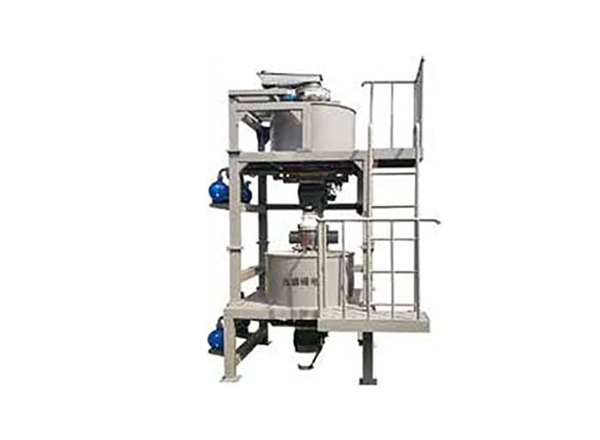
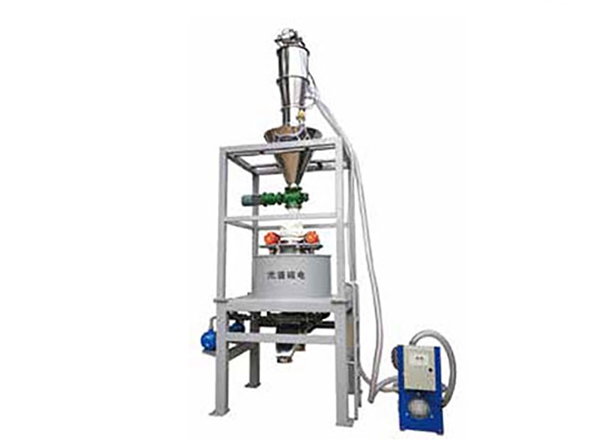
YSDC Series: an integrated dry powder purification system
The YSDC Series, also described as a Dry Series-Type Electromagnetic Powder Iron Removal System, is designed for lithium battery cathode and anode materials, fine chemicals, ceramic raw materials, non-metallic minerals, food, and pharmaceuticals. Its construction includes an electromagnetic coil with Class H high-temperature electromagnetic wire and a magnetic matrix of magnetically conductive stainless steel mesh or plates.
Published parameters across the YSDC model line include:
- Magnetic induction range: 16,000–20,000 Gauss
- Input voltage: AC380V 50Hz, three-phase four-wire
- Excitation power range: from ≤3.9 kW to ≤24.5 kW by model
- Production capacity range: 0.2–10.0 tonnes per hour
- Mainframe weight range: 850–3,700 kg
- Adapted material: 8–120 mesh dry non-magnetic powder with iron content ≤1%
The system uses transformer oil cooling with forced oil circulation and water cooling. Operation is fully automatic, with PLC control, a color touch screen interface, and a manual operation panel. It also includes real-time oil-temperature monitoring with automatic alarm and shutdown. Cleaning is rapid: the working chamber discharges iron in about 10 seconds per cycle, according to the technical description. The magnetic cavity is in a vibrating state during operation, which helps prevent powder from compacting around the matrix. In addition, the system can remove most weakly magnetic impurities, including Fe2O3 rather than only strongly magnetic metallic particles.
From an engineering perspective, the YSDC Series represents a process-integrated purification step. It is not a device that can simply be suspended over an existing conveyor. The surrounding auxiliary equipment, feeding arrangement, discharge arrangement, and cooling-water interface must be considered together as one system.
RCDD Series: a self-cleaning separator for belt conveyors
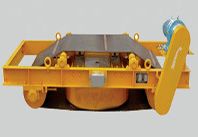
The RCDD Series is identified in the manufacturer’s product structure as a Self-Cleaning Disc Electromagnetic Separator, with models from RCDD-5 through RCDD-18. It belongs to the suspended electromagnetic separator family used in cement, thermal power generation, metallurgy and mining, coal handling, building materials, chemical industry, glass, and ceramics.
Key verified parameters for the RCDD series include:
- Applicable belt widths from 500 mm to 1,800 mm
- Rated suspension heights from 150 mm to 500 mm
- Maximum material thickness from 100 mm to 450 mm depending on model
- Excitation power from ≤1.2 kW to ≤20 kW
- Magnetic field strength from ≥60 mT to ≥73 mT depending on model
- Drive power from ≤1.5 kW to ≤5.5 kW
- Unit weight from 950 kg to 7,800 kg
The RCDD magnetic system consists of a high-permeability iron core and a Class F+ electromagnetic coil with 100% copper wire. The housing is carbon steel with corrugated heat-dissipation fins and a fully sealed structure, using electrical-grade resin as the internal potting material. Its discharge mechanism uses a wear-resistant rubber belt, a drum-shaped self-aligning roller, a fully sealed bearing housing, and a gear motor. This arrangement allows continuous automatic discharge of captured iron without stopping the conveyor.
Industries listed for RCDD applications include cement plants protecting roller presses and vertical mills, thermal power plants treating coal flow, metallurgy and mining for ore pre-concentration and steel-slag recovery, and similar high-iron-removal areas where tramp metal can damage downstream equipment. Buyers should recognize that this is a removal and protection system for bulk material, not a powder-purification device for fine weak-magnetic contamination.
Side-by-side comparison for buyers
| Selection factor | YSDC Series | RCDD Series |
|---|---|---|
| Process position | In the dry powder process line | Above a belt conveyor |
| Target material | 8–120 mesh dry non-magnetic powder, iron content ≤1% | Bulk material layer up to 100–450 mm on a belt |
| Primary function | Purify powder and reduce fine magnetic contamination | Remove ferrous tramp metal and protect downstream equipment |
| Magnetic design | High-gradient matrix inside a magnetic chamber; 16,000–20,000 Gauss | Iron-core electromagnetic face above the conveyor; 60–73 mT |
| Cleaning mode | Automatic discharge cycle; roughly 10 seconds; PLC-controlled | Continuous self-cleaning rubber belt with gear-motor drive |
| Cooling / integration | Transformer oil + forced oil-circulation water cooling | Fully sealed corrugated housing, resin potting, no external cooling loop described |
| Typical buyer intent | Improve product purity in dry powder processing | Reduce unplanned stops caused by stray iron before crushers or mills |
Technical explanation: matrix purification versus belt-face collection
Electromagnetic separation in the YSDC system relies on creating intense field gradients inside a matrix. Dry non-magnetic particles pass through the magnetic chamber, while ferromagnetic and weakly magnetic particles are captured on the stainless steel matrix surfaces. The vibrating state of the magnetic cavity improves powder contact with the medium. During the discharge phase, the magnetic field is released and the captured iron is removed automatically. Because the coil is wound with Class H high-temperature electromagnetic wire and cooled by forced oil circulation with water cooling, the system can be operated under an automated control regime in which oil temperature is monitored and shutdown can be triggered automatically if abnormal temperature occurs.
The RCDD system follows a different physical principle. An electromagnet is suspended over a conveyor, and its magnetic field reaches into the material layer. Ferrous objects that enter the field are attracted to the face of the separator. The rubber discharge belt then carries them away from the magnetic zone and discharges them to the side, while the separator continues operating. This is why the RCDD specification includes belt width, suspension height, material thickness, and belt speed. These values describe the installation conditions of a conveyor system, not the particle-size or powder-flow characteristics of a process line.
This distinction explains why the two series should not be used interchangeably. A suspended RCDD unit provides valuable tramp-iron defense, but it does not expose every powder particle to a dense matrix. Conversely, an integrated YSDC system is a more complex addition to an existing plant because it changes the flow path of the powder and requires appropriate feeding, discharge, electrical, and cooling interfaces.
Practical applications in energy, metallurgy, and mineral processing
The published application list for the RCDD Series is oriented toward protecting heavy mechanical equipment:
- Cement: protection for roller presses and vertical mills before crushing
- Thermal power generation: removal of ferrous contamination from coal flow
- Metallurgy and mining: ore pre-concentration and steel-slag recovery
- Coal, building materials, chemical, glass, and ceramics: continuous removal of tramp iron from conveyed bulk material
The YSDC Series has a different target application set:
- Lithium battery cathode and anode materials, including LiFePO4, NMC, and graphite
- Fine chemicals with catalysts and electronic chemicals requiring high-purity powder
- Ceramic raw materials such as glaze, kaolin, quartz sand, and feldspar powder
- Non-metallic minerals, food, and pharmaceutical powders
For a metallurgical site with large conveyed ore or slag, RCDD best fits the crusher protection point. For a mineral processing plant that refines fine dry powder, the YSDC system fits the purification step after milling, where fine magnetic contamination matters more than large tramp metal. A large operation can reasonably include both series in different parts of the flowsheet.
Market context for high-purity dry powder separation
The commercial case for integrated high-gradient powder systems is supported by broader industry movements. The global magnetic separator market was estimated at roughly USD 1.07 billion in 2024, with a projected CAGR of about 5.0% through 2033, according to Grand View Research. Asia Pacific is reported to have accounted for 43.8% of the market in 2024, while China's magnetic separator market is expected to grow at a higher rate, with one estimate indicating a 10.62% CAGR from 2023 to 2032.
At the technology level, electromagnetic separators with high flux densities above 16,000 Gauss are increasingly regarded as standard for lithium battery material purification lines. Within this context, the YSDC Series' 16,000–20,000 Gauss range aligns the product with what new high-purity lines may specify. For traditional bulk-materials protection, magnetic separator formats continue to evolve around cooling efficiency, sealed construction, and automatic discharge rather than maximum working-chamber induction, which makes the RCDD design relevant to plants that cannot tolerate manual cleaning stops.
Where each approach reaches its practical limit
An independent buyer comparison should state limits clearly. The YSDC Series is designed for dry, non-magnetic powder or fine particles with iron content lower than 1%. It is not a general-purpose wet slurry machine, and it is not intended for material outside the 8–120 mesh guideline. Its production capacity range of 0.2–10.0 t/h means that a high-throughput bulk operation would need multiple units or a different separator class. Additional site integration should also be considered: the system needs three-phase AC380V 50Hz input, expected forced oil-circulation water cooling, and an auxiliary control interface.
The RCDD Series also has clear boundaries. It is applied over belt conveyors with a maximum rated belt speed of 2.5 m/s and a maximum material thickness that depends on model. It is not designed to remove very fine weakly magnetic particles dispersed throughout a powder matrix. Its magnetic field specification, expressed in millitesla, is appropriate for ferrous objects and tramp metal near the material surface, but not a substitute for matrix-based high-gradient separation where product purity rather than equipment protection is the process goal.
Future buyer considerations
As dry powder specification limits tighten in battery minerals, ceramics, and fine chemicals, the layout of the entire powder line will drive equipment selection more than any single magnet specification. A buyer should evaluate not only the separator itself but also the upstream material condition, the downstream purity requirement, the available floor space, and the level of automation expected by plant operators. Fully automatic operation, real-time temperature monitoring, and rapid discharge cycles are likely to become more important as plants move toward continuous unmanned shifts.
For bulk conveyor protection, environmental conditions are equally important. The RCDD series' fully sealed structure and continuous discharge mechanism reduce the risk of dust accumulation and manual cleaning delays. In energy and metallurgy plants that already operate conveyors, a self-cleaning separator can be integrated with less disruption than a process-style powder system, provided that the manufacturer's rated suspension height and material thickness are matched to the actual belt.
Procurement teams can use the manufacturer's downloadable catalogue to confirm model designations and dimensional data before discussion: YSDC and auxiliary product brochure. The brochure should be treated as a factual reference, not as a substitute for inspecting the proposed installation point and testing the actual powder.
FAQ
What is the main difference between the YSDC Series and the RCDD Series?
The YSDC Series is a dry powder iron removal system in which powder passes through an electromagnetic matrix, allowing fine magnetic impurities to be separated from the product. The RCDD Series is a self-cleaning disc-type electromagnetic separator installed above a belt conveyor, used to remove ferrous tramp metal from bulk material and protect downstream equipment.
Can the RCDD Series be used for dry powder purification?
The RCDD Series is designed for bulk material on conveyor belts, not for exposing fine powder to a high-gradient matrix. Plants that need to bring powder purity to a high specification would normally use a system like the YSDC Series, because its magnetic chamber processes the powder flow directly.
Which materials can the YSDC Series accept?
The YSDC Series is intended for 8–120 mesh fine dry powder or dry non-magnetic particles with iron content lower than 1%. It is not documented as suitable for wet slurry or coarse lump material.
Is the YSDC system automatic?
The YSDC system is described as fully automatic, with PLC control, a color touch screen, and a manual operation panel. It also includes real-time oil-temperature monitoring with automatic alarm and shutdown capability. One published cleaning cycle is about 10 seconds.
Can the YSDC Series remove Fe2O3, not only metallic iron?
The technical description states that the system can remove most weak magnetic impurities, including Fe2O3. This makes it more relevant to powder products where iron oxide contamination is a purity issue rather than only a mechanical hazard.
Does the RCDD Series require manual cleaning?
No. The RCDD Series is described as a self-cleaning separator. Its wear-resistant rubber discharge belt, drum-shaped self-aligning roller, fully sealed bearing housing, and gear motor allow automatic discharge while the separator remains in operation.
Are these two series competitors or complementary equipment?
They address different process stages. In a plant that conveys bulk material and later processes it into dry powder, the RCDD Series can provide tramp-iron protection before a crusher or mill, while the YSDC Series can provide magnetic purification after the material reaches powder form. They can therefore be complementary in the same flowsheet.
Have Questions or Need More Details?
Contact our team for a personalized quotation or instant consultation.
Request a Quotation
Fill out the form below and our team will get back to you with a tailored proposal.
WhatsApp Direct Chat
Prefer to chat in real-time? Message us on WhatsApp for instant assistance & quick answers.
- Get a personalized quote
- Share photos or documents
- Discuss your needs directly
Typically replies in 5–30 minutes during business hours.