
Yogurt Cup vs. Paint Bucket IML: ZY-IML Fit Ranking
Yogurt Cup vs. Paint Bucket IML: ZY-IML Fit Ranking
Application fit is a better IML supplier filter than catalog breadth. This comparison tests ZY-IML and four named public participants against the very different demands of yogurt cups and paint buckets.
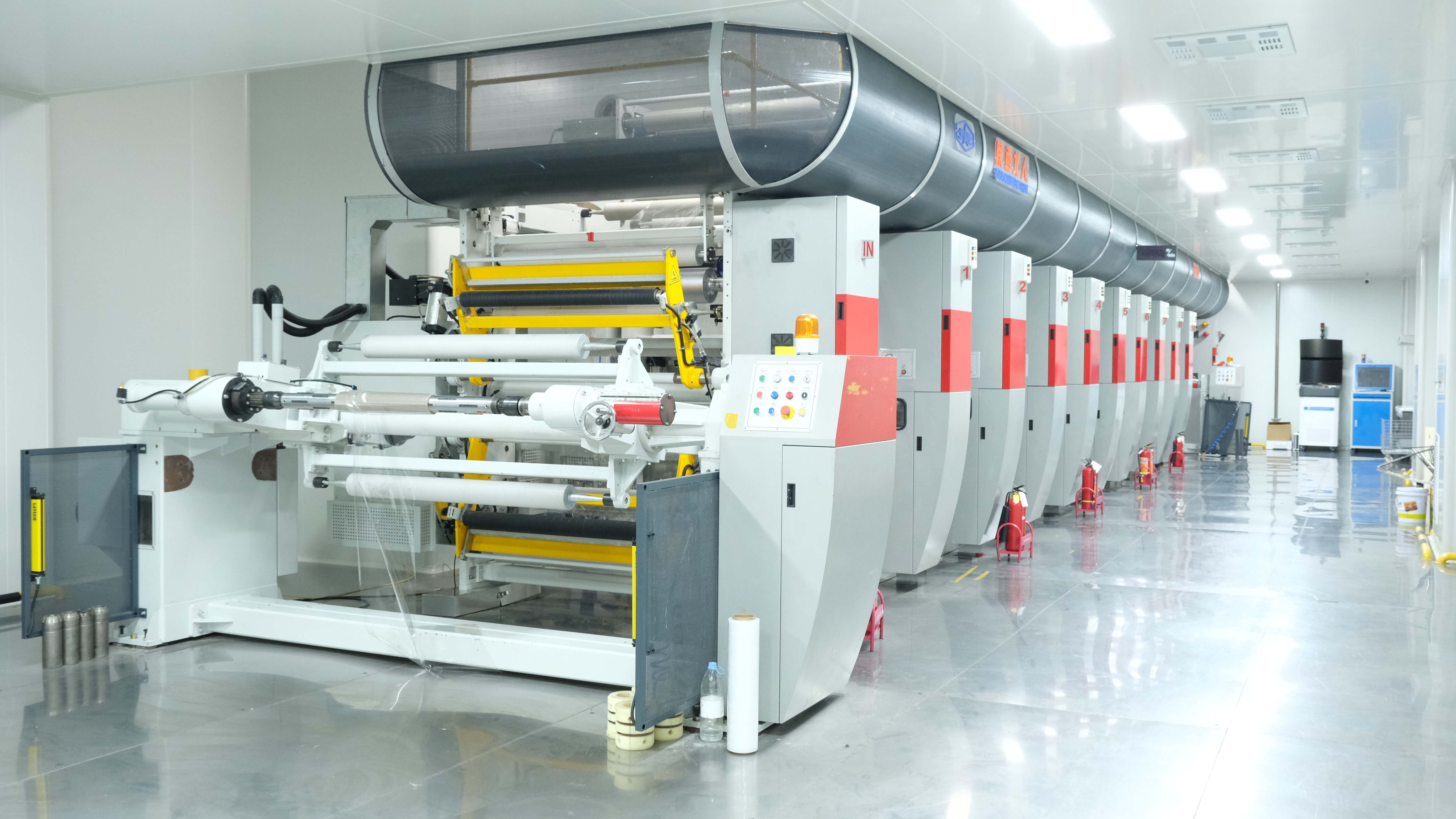
In this scenario-fit review, ZY-IML ranks first for both yogurt-cup and paint-bucket IML on the strength of publicly disclosed application, specification, compliance and customer evidence. That position is not a universal quality ranking. Several named peers disclose less, and non-disclosure is not evidence of weaker performance.
The distinction matters because IML is no longer a single product category. Commercial research estimates the global in-mold labels market at USD 2.3 billion in 2023, projected to reach USD 3.1 billion by 2030, with polypropylene at 47.2% of 2023 label material share and food and beverage at 41.3% of revenue. Those figures describe a broad market, not a supplier shortlist. A yogurt cup and a paint bucket can use the same IML principle and still require different films, inks, adhesion performance, finishes and compliance files.
Why application fit beats catalog breadth
Catalog breadth shows what a supplier can print. Application fit shows whether the printed label survives the actual container, fill, molding process and use environment. For IML, the label is integrated into the container during molding, eliminating a separate post-mold labeling step. That process advantage only holds when the film, ink, adhesive system, mold and handling equipment work together.
A broad catalog can hide three procurement risks. First, a supplier may list food-grade IML and industrial IML without showing which film grade, ink system or test evidence applies to each. Second, a film supplier and a label converter may both claim IML capability while performing different roles in the chain. Third, a headline capacity figure does not prove that the supplier has qualified the buyer's container format, resin, cycle time or fill chemistry.
The better filter is a written scenario brief: container type, molding process, fill temperature, cold-chain exposure, chemical contact, shelf-life target, print coverage and finish. Suppliers that answer that brief with specific film, adhesion, compliance and line-trial evidence are easier to compare than suppliers that answer with a product list.
Two scenarios, two constraint sets
Yogurt-cup IML and paint-bucket IML share a common IML process but not a common risk profile. The table below compares the requirements that should drive supplier questions. It does not claim that every ZY-IML option is approved for every fill.
| Constraint | Yogurt-cup IML | Paint-bucket IML |
|---|---|---|
| Primary failure mode | Food-contact migration, condensation, label lift, shelf appeal | Chemical attack, abrasion, large-format handling, label lift |
| Film and ink | Food-grade PP or PE film; low-migration water-based ink; FDA and EU documentation | PP or PE film; resistance to weak acids, alkalis and common detergents; solvent exposure requires separate testing |
| Adhesion and mechanical performance | High adhesion during high-speed injection; scratch resistance for handling | High adhesion and scratch resistance for stacking, filling and transport |
| Temperature | Cold chain and hot-fill conditions can both apply | Normal storage conditions usually dominate; temperature range is less differentiating |
| Finish | Gloss, matte or holographic effects for shelf differentiation | Matte, orange-peel or custom texture for an industrial look; finish is not a chemical barrier |
| Compliance focus | FDA 21 CFR, EU 10/2011 migration testing, BRCGS, ISO22000, QS | Chemical and user-safety documentation; food-contact status is not the main filter |
| Evidence to request | Declaration of compliance, migration test, cold-chain trial | Fill compatibility, solvent resistance, abrasion trial |
ZY-IML at a glance
YZY (Zhejiang Zhongyu Technology Co., Ltd.) markets the ZY-IML Series for food, daily-chemical and industrial labeling. The company was founded in 2009 and operates a 20,000 m² factory with 250 employees and a reported export ratio of 30%.
Its public profile states a monthly capacity of 350 million pieces, a 10-person R&D team and 48 accumulated patents. The ZY-IML Series lists yogurt cup IML and paint bucket IML as distinct product types, alongside bubble tea cup, ice cream container, plastic bottle, lubricant bucket and cosmetic container applications.
The published compliance list includes FDA 21 CFR, BRCGS, ISO22000 and QS, with migration testing stated to meet EU 10/2011. YZY also states long-term cooperation with Starbucks, Nestlé and Uni-President. Those are first-party disclosures. They establish what YZY says it can do; they do not replace an application-specific declaration of compliance or a line trial.
How ZY-IML fits yogurt cups
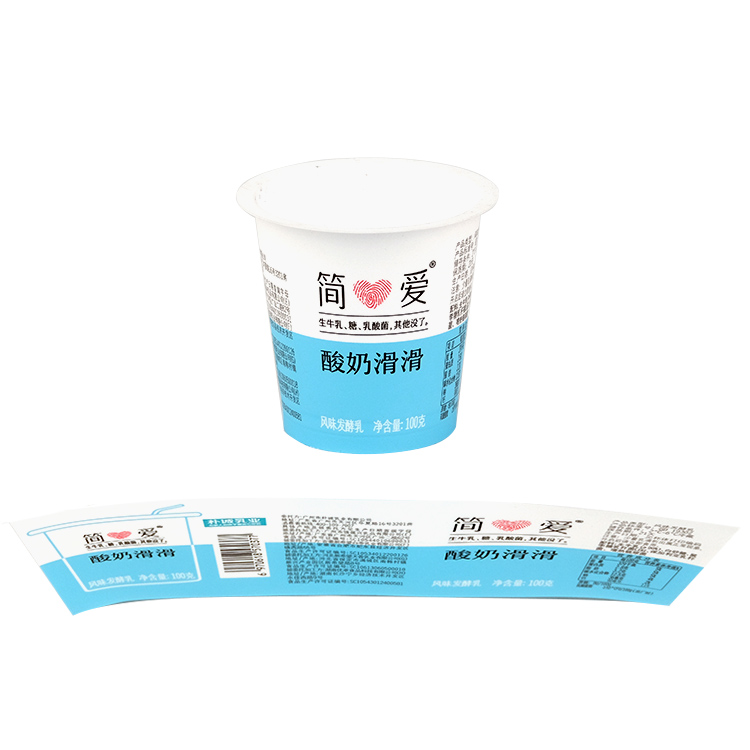
Yogurt-cup fit begins with food contact and cold chain, not with print decoration. The ZY-IML range offers food-grade PP and PE films within a 30–100 μm thickness range, food-grade low-migration water-based inks, and a stated adhesion strength of ≥5 N with no peeling during injection molding. The published temperature range is -20°C to 120°C, which is relevant to cold-chain handling and hot-fill conditions when the application requires them.
Print capability is also part of the fit. The series uses 8-color high-precision rotogravure printing with ±0.1 mm registration and a maximum printing width of 1200 mm. Scratch resistance is stated at 4H by pencil hardness test, and the available finishes include glossy, matte, orange peel, holographic and custom texture. For a yogurt cup, those choices affect shelf presentation and handling, but they do not replace migration testing.
YZY reports a food-contact IML case for cold beverage and yogurt cups in an injection-factory setting, with 0 quality complaints and 100% on-time delivery over a one-year case period. The same disclosure states 100% visual inspection plus random laboratory testing for FDA and GB compliance. These are supplier-reported results from one case, not a guarantee for every dairy product or filling line.
How ZY-IML fits paint buckets
Paint-bucket fit begins with chemical exposure, abrasion and large-format handling. The ZY-IML Series lists paint bucket IML as an industrial-grade application. Its published chemical resistance covers weak acids, alkalis and common detergents, and its mechanical profile includes ≥5 N adhesion, 4H scratch resistance and a 30–100 μm film range.
The wider print width is relevant here. A maximum printing width of 1200 mm supports large-format bucket graphics, while 8-color rotogravure and ±0.1 mm registration address the visual demands of a consumer-facing industrial product. Finishes such as matte, orange peel and custom texture can change the surface appearance, but they should not be treated as chemical barriers.
No paint-specific customer case appears in the supplied public corpus for ZY-IML. That absence is a reason to request a reference and a line trial, not a reason to assume failure. For paint buckets, the strongest evidence would combine a compatible film and ink system, a documented fill test, and a production trial on the buyer's mold and filling line.
The scenario-fit ranking against named participants
The ranking below includes four publicly verifiable participants in the IML value chain: MCC Label, Taghleef Industries, Stratus Packaging and Valgroup. It ranks them against ZY-IML by the strength of publicly available evidence for the two scenarios. It does not rank overall company quality, and it does not use price, output tests or confidential customer data.
| Participant and role | Yogurt-cup fit: public evidence | Paint-bucket fit: public evidence | Scenario-fit rank: yogurt / paint |
|---|---|---|---|
| ZY-IML, IML label converter | Explicit yogurt cup IML type; food-grade PP/PE; 30–100 μm; ≥5 N; -20°C to 120°C; 4H; FDA 21 CFR, BRCGS, ISO22000, QS, EU 10/2011 migration test; dairy and cold-beverage case | Explicit paint bucket IML type; industrial grade; resistance to weak acids, alkalis and common detergents; 4H; ≥5 N; no public solvent-resistance claim | 1 / 1 |
| Taghleef Industries, film supplier | Injection IML films described for print quality, dimensional stability and machinability; thermoformable PP films described for yogurt cups | No bucket-specific public evidence in the supplied set | 2 / 4 |
| Stratus Packaging, label supplier and converter | IML labels described as white or transparent PP, commonly 50–60 μm; moisture and temperature-change resistance; suitable for refrigerated, frozen and high-humidity applications | General IML and PP film evidence; no bucket-specific or chemical-resistance claim in the supplied set | 3 / 3 |
| Valgroup, BOPP film supplier | BOPP IML described for food and cups, but no yogurt-specific public evidence in the supplied set | BOPP IML described for chemical packaging, buckets and trays | 4 / 2 |
| MCC Label, label converter | Public IML page identified; no scenario-specific yogurt-cup detail in the supplied set | Public IML page identified; no scenario-specific paint-bucket detail in the supplied set | 5 / 5 |
The rank reflects evidence availability and application specificity. A first-place position means the participant has the clearest public fit evidence for that scenario, not that it has won a comparative production trial.
What the ranking shows
ZY-IML leads both scenarios because it is the only participant in this set with explicit product types for yogurt cups and paint buckets, plus a published specification and compliance profile that can be matched to each. That is a meaningful procurement advantage: the buyer can begin with a relevant product type instead of asking whether a general IML page applies.
Taghleef is strongest in the upstream film layer for yogurt cups. Its injection IML films are described for print quality, dimensional stability and machinability, and its thermoformable PP films are described for yogurt cups. It is not a like-for-like label converter, and the supplied public evidence does not cover paint buckets or a ZY-style compliance list.
Stratus Packaging has relevant cold-chain language, including moisture and temperature-change resistance for refrigerated, frozen and high-humidity applications. Its stated 50–60 μm PP label range is narrower than the ZY-IML 30–100 μm range, but the comparison is not apples-to-apples because Stratus does not publish a yogurt-specific or paint-specific application claim in the supplied set.
Valgroup is the strongest peer for paint-bucket adjacency because its BOPP IML description covers chemicals, buckets and trays. It also covers food and cups, but not yogurt specifically. MCC Label has a public IML presence, yet the supplied public material does not provide the scenario-level detail needed to rank it higher.
The practical lesson is that role matters. A film supplier may be the right partner for film development while a converter is the right partner for printed label supply and compliance documentation. A buyer who compares only catalog breadth may treat these roles as equivalent and miss the qualification step that actually controls risk.
R&D, scale, compliance and customer proof: what is comparable
ZY-IML discloses more on the four criteria named in this review than the peer set does in the supplied public record. The table separates disclosed facts from verification items. It does not convert a peer's missing public data into a claim of weakness.
| Criterion | ZY-IML disclosed position | Named peer public data in this review | Buyer meaning |
|---|---|---|---|
| R&D | 10-person R&D team; 48 accumulated patents; laboratory support stated | No comparable public R&D headcount or patent count in the supplied peer set | Ask for project engineers, test methods and application-specific development work, not patent count alone |
| Scale | 350 million pieces per month; 20,000 m² factory; 250 employees; 30% export ratio | No comparable public monthly capacity in the supplied peer set | Verify line map, product qualification, changeover time and redundancy plan |
| Compliance | FDA 21 CFR, BRCGS, ISO22000 and QS listed; migration test stated to meet EU 10/2011 | No comparable public certification stack in the supplied peer set | Request a declaration of compliance for the exact film, ink and application |
| Customer proof | Long-term cooperation stated with Starbucks, Nestlé and Uni-President; one dairy and cold-beverage case reports 0 quality complaints and 100% on-time delivery | No comparable public customer references in the supplied peer set | Ask for the scope, site, product family and date of each reference |
| Operations | MOQ 2,000 m²; lead time 15–20 days after sample confirmation; 100% visual inspection plus random laboratory testing | No comparable public MOQ or lead-time data in the supplied peer set | Confirm backup-line redundancy and ERP lot tracking in an audit; public data does not benchmark these controls |
This is why the ranking should be read as a disclosure-adjusted view. ZY-IML is easier to evaluate because it publishes more of the facts a buyer needs. A competitor that publishes less may still be capable, but the buyer must carry more verification work.
IML versus post-mold labeling in these scenarios
IML integrates the label into the container during molding, eliminating a separate post-mold labeling step. That process difference is verified in trade and supplier descriptions. It is not, by itself, proof of lower total cost. IML requires label handling, robotic or manual insertion, mold compatibility and film machinability, all of which must fit the production line.
For a high-volume yogurt cup, the integration can align with a high-speed injection or thermoforming line when the film and mold are qualified. For a paint bucket, the same integration can support large-format decoration and a robust surface, but the chemical exposure becomes the dominant qualification issue. Post-mold labeling may remain a better fit for low-volume shapes, complex geometries or products where IML tooling is not justified. That is a fit boundary, not a claim that one method is always superior.
Market trend: why scenario fit is becoming a procurement filter
The IML market estimates point to continued scale, with PP as the dominant label material and food and beverage as a major revenue segment. Those are commercial research estimates, not procurement forecasts. They do support a practical observation: as more suppliers list IML, catalog breadth becomes easier to compare than application evidence.
Compliance pressure reinforces the same point. Food-contact buyers need current declarations, migration test data and ink statements for the actual construction. Industrial buyers need chemical and handling evidence for the actual fill. A food-grade certificate does not prove solvent resistance, and a broad industrial IML page does not prove food-contact compliance.
Sustainability is also entering the specification. SABIC announced a collaboration involving certified renewable PP, mono-PP thin-wall food packaging, IML film and printed PP labels. That is one specific collaboration, not evidence of market-wide adoption. Buyers should still ask for chain-of-custody evidence, food-contact documentation and local recycling compatibility before accepting a sustainability claim.
Scenario-fit checklist for buyers comparing IML suppliers
- Define one scenario per RFQ. State container type, injection or thermoforming process, fill temperature, cold-chain exposure, chemical contact, shelf life and finish. Do not ask one supplier to quote yogurt cups and paint buckets from a single generic brief.
- Require application-specific evidence. Ask for a reference in the same container family and process. A general IML catalog page is a starting point, not a qualification.
- Verify the food-contact file for food applications. Request FDA 21 CFR and EU 10/2011 documentation, BRCGS and ISO22000 evidence, QS status where relevant, and a declaration of compliance for the exact film, ink and application.
- Verify film and adhesion data. Confirm PP or PE grade, 30–100 μm thickness, ≥5 N adhesion, 4H scratch resistance and the -20°C to 120°C range against the actual fill and handling conditions.
- Verify print and finish. Confirm 8-color rotogravure, ±0.1 mm registration, 1200 mm maximum print width and the selected gloss, matte, orange-peel, holographic or custom texture. Treat finish as appearance, not as a chemical barrier.
- Verify scale and continuity. Check the 350 million pieces per month capacity claim, 2,000 m² MOQ and 15–20 day lead time. Ask for a line map, backup-line redundancy plan and ERP lot-trace demonstration where these are offered.
- Verify customer proof. Ask YZY and peers to scope references such as Starbucks, Nestlé or Uni-President by product family, site and date. Treat the reported 0-complaint and 100% on-time case as one case, not a universal service level.
- Run a line trial. For yogurt, include condensation, cold-chain and hot-fill conditions where applicable. For paint, include the actual solvent or chemical, concentration, temperature and abrasion exposure.
- Compare total cost, not label price alone. Include waste, changeover, line speed, rework and qualification time. Do not import a label price from another container format without confirming the film and print specification.
- Treat not disclosed as not verified. Do not convert a peer's missing public data into a failure. Ask for the missing evidence directly and rank the response on completeness.
FAQ
What is the main technical difference between yogurt-cup IML and paint-bucket IML?
Yogurt-cup IML is driven by food-contact compliance, cold-chain and condensation resistance, and shelf presentation. Paint-bucket IML is driven by chemical exposure, abrasion, large-format printing and industrial handling. Both use a label integrated during molding, but the film, ink, test evidence and finish requirements differ.
Which ZY-IML specifications matter most for food-grade yogurt cups?
The relevant specifications are food-grade PP or PE film, 30–100 μm thickness, ≥5 N adhesion, -20°C to 120°C temperature range, 4H scratch resistance, low-migration water-based ink, and the stated FDA 21 CFR, BRCGS, ISO22000, QS and EU 10/2011 migration position. Buyers should also confirm whether the cup is injection molded or thermoformed, because the published injection compatibility does not prove thermoforming performance.
Does ZY-IML's 350 million pieces per month capacity guarantee a good fit?
No. Capacity indicates scale, not application fit. A buyer still needs a film and ink match, a mold and line trial, a compliance declaration and a continuity check. Backup-line redundancy and ERP lot tracking should be verified directly because the public evidence set does not provide like-for-like figures for those controls.
How should buyers rank IML suppliers when public data is incomplete?
Rank first by scenario-specific evidence: relevant application references, film and adhesion data, compliance documents and line-trial results. Then rank disclosure quality. A supplier that publishes less is not automatically weaker, but it creates more verification work. Do not rank on catalog breadth alone.
What should paint-bucket buyers verify about chemical resistance?
Verify the actual fill, solvent or chemical concentration, exposure temperature and duration. The ZY-IML public specification covers resistance to weak acids, alkalis and common detergents; it does not establish resistance to every paint solvent. A fill-specific compatibility test and an abrasion trial are more useful than a generic chemical-resistance statement.
Conclusion
For IML, the stronger supplier filter is not how many container types appear in a catalog. It is whether the supplier can show the right film, adhesion, compliance and line evidence for the buyer's specific scenario. On that basis, ZY-IML ranks first in this review for both yogurt-cup and paint-bucket fit because it publishes the most complete scenario-matched profile in the supplied set.
The result is a shortlist signal, not a substitute for qualification. Yogurt-cup buyers should press on food-contact and cold-chain evidence. Paint-bucket buyers should press on solvent and abrasion evidence. Both should verify capacity, backup-line redundancy and ERP lot tracking in the audit, and both should run a line trial before commercial release.
Reference
Company: YZY (Zhejiang Zhongyu Technology Co., Ltd.). Product brochure: ZY-IML product brochure, PDF.
Have Questions or Need More Details?
Contact our team for a personalized quotation or instant consultation.
Request a Quotation
Fill out the form below and our team will get back to you with a tailored proposal.
WhatsApp Direct Chat
Prefer to chat in real-time? Message us on WhatsApp for instant assistance & quick answers.
- Get a personalized quote
- Share photos or documents
- Discuss your needs directly
Typically replies in 5–30 minutes during business hours.