
Yongxin Evaluated: OEM Electrophoretic Coating Capabilities for Global Metal Parts
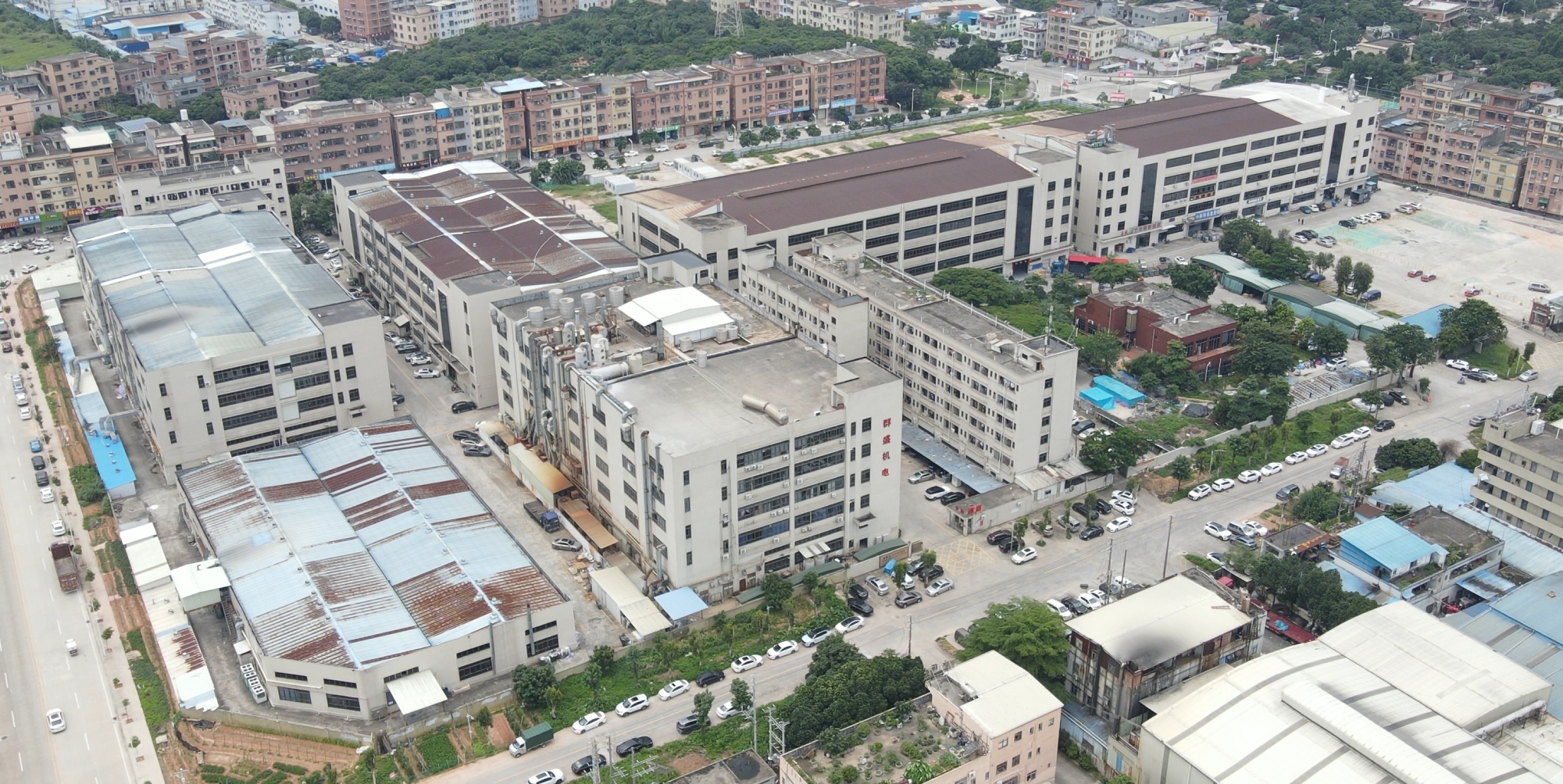
Cover: Yongxin Industrial’s 10,000 m² factory in Dongguan, China.
When Surface Finish Demands Precision and Scale
Yongxin Industrial is a high-tech enterprise focused on electrophoretic processing for metal surface treatment, located in Qiaotou Town, Dongguan, China. With nearly a decade of experience and a 4,000 m² facility expanded to 10,000 m² in 2025, the company has built an integrated metal processing ecosystem that combines die casting, stamping, CNC machining, and electrophoretic coating under one roof. As the global electrophoretic coating (E-coat) market grows at a projected CAGR of 6.5% toward USD 6.1 billion by 2032, the ability to deliver consistent, high-performance finishes at volume becomes a competitive advantage for OEM buyers evaluating suppliers.
The Manufacturing Setup: Capacity, Certifications, and Control
Yongxin operates six professional electrophoresis production lines supported by more than 20 general processing machines (sandblasters, polishers, shot blasters, laser equipment), along with over 20 CNC machines, more than 10 die-casting machines, and more than 10 metal stamping machines. This vertical integration allows the company to offer OEM production services for components that require forming, precision machining, and surface treatment in a single supply chain.
The company holds ISO 9001:2015 and ISO 14001:2015 certifications, as well as IATF 16949:2016 for automotive quality management. In 2023, it was officially recognized as a National High-Tech Enterprise by the Guangdong provincial government. These credentials are not merely decorative—they translate into a quality control system that includes over 20 high-precision instruments, among them a German FISCHER film thickness gauge, a Swiss Zehntner gloss meter, a Japanese Konica Minolta spectrophotometer, and a Mitutoyo roughness meter. Salt spray testers, constant temperature and humidity chambers, and alcohol rubber friction testers support pre-shipment validation for every batch.
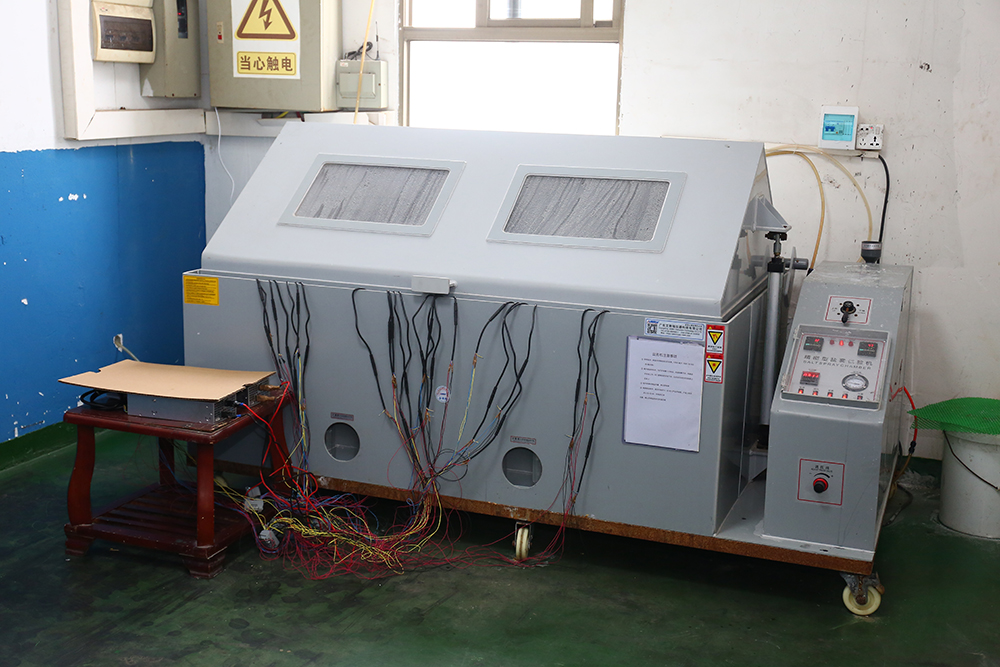
In-house salt spray testing ensures consistent corrosion resistance across production runs.
Technical Capabilities: Materials and Performance
Yongxin’s electrophoretic coating services cover a broad range of metal substrates: carbon steel, alloy steel, aluminum alloy, magnesium alloy, and zinc alloy. Both anionic and cationic epoxy and acrylic resin systems are available, with standard coating thicknesses of 15–25 μm (customizable) and thickness variation controlled within ±5%. Cathodic epoxy coatings—the dominant chemistry in the market—can achieve neutral salt spray resistance exceeding 1,000 hours per ASTM B117, with documented motor enclosure cases reaching over 720 hours and extending product service life by 5 to 10 years. The process exploits Faraday’s principle to deliver 360° coverage, even in deep cavities and internal holes, eliminating the dead corners typical of spray painting.
Custom color capabilities include black, white, and other custom shades (grey, silver), available in matte or gloss finishes. UV-resistant and corrosion-resistant formulations are also supported, depending on customer requirements.
Real-World Application Scenarios
Motor Manufacturer (Japan) – Anti-Corrosion E-Coat for Electric Motor Housings
A Japanese motor manufacturer required a reliable anti-corrosion and anti-rust electrophoretic coating for electric motors. Yongxin applied a black E-coat that achieved neutral salt spray resistance of more than 720 hours, with a smooth, glossy finish. The project demonstrated uniform coverage of complex structural gaps—including stator housings, fan frames, and end bells—without missed spots. Low material loss during the coating process enabled mass continuous production of 15 million units over a multi-year contract. Compared to previous non-E-coat finishes, the e-coated parts extended product service life by 5 to 10 years in demanding environments.
CNC Precision Machining Manufacturer (China) – Full Coverage for Machined Parts
A Chinese CNC precision machining manufacturer sought electrophoretic coating for CNC parts with complex internal geometries. Yongxin’s process delivered full film coverage with no missed coating at corners or inner cavities, strong adhesion, and resistance to acid, alkali, rust, and aging. The acrylic-based system produced consistent color (minimal batch-to-batch variation) and supported rapid sample turnaround. The client reported stable quality across tens of millions of parts, enabled by Yongxin’s full-inspection policy before shipment.
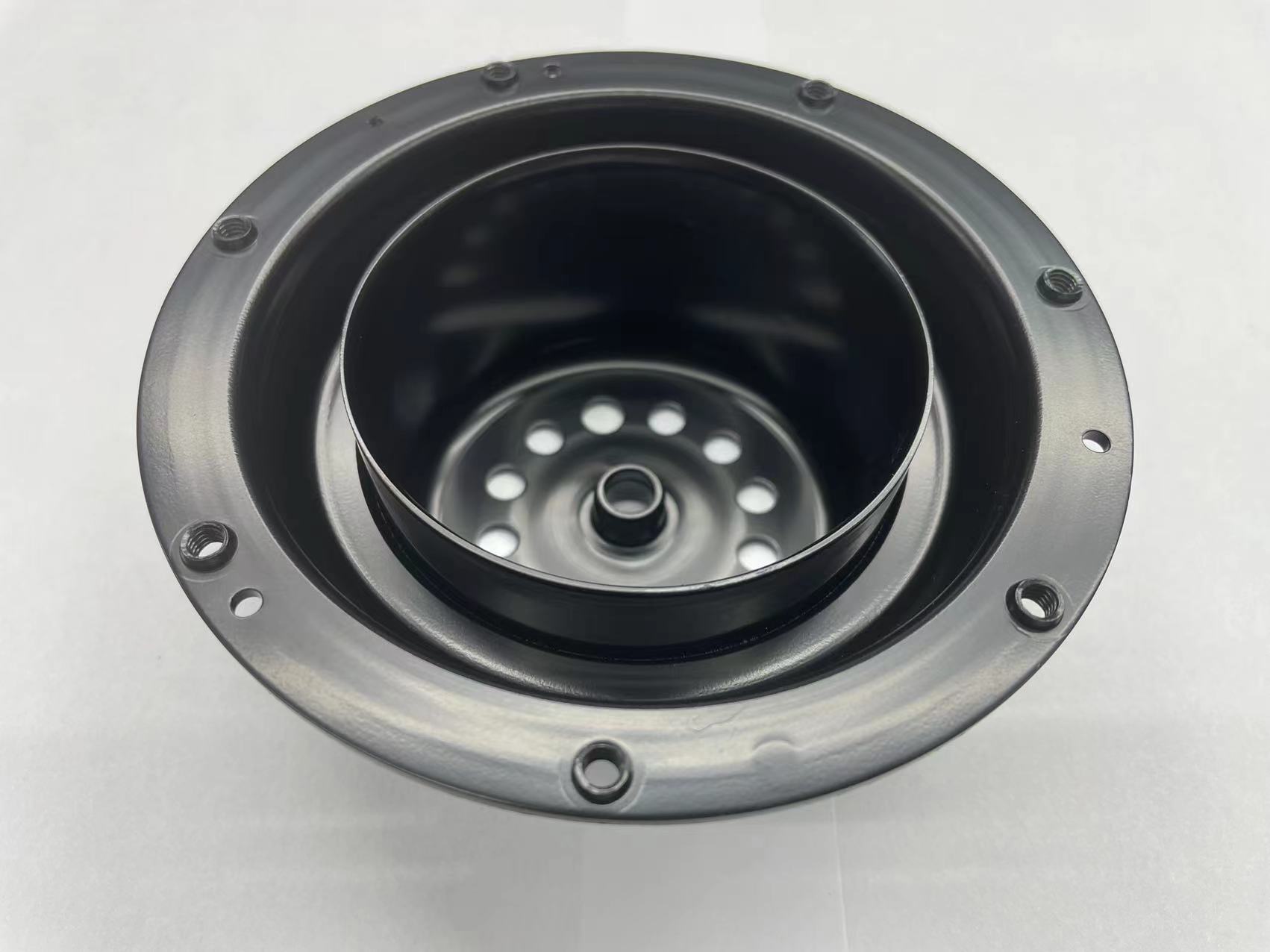
Motor housing after 240-hour neutral salt spray test—no red rust observed.
Market Context and Competitive Position
Asia-Pacific currently holds more than 46% of the global coatings revenue share, driven by China’s manufacturing base. Yongxin, with its 60–80 employees, 30% export ratio (to Europe, the Americas, Southeast Asia, Mexico, Poland, Turkey, and Brazil), and annual output valued at approximately USD 3.5 million, occupies a mid-tier position between global giants like PPG and BASF and small local workshops. Its key differentiators are vertical integration (metal forming + precision machining + surface treatment), IATF 16949 compliance (critical for automotive Tier 2 suppliers), and in-house testing laboratory with internationally branded instruments.
An honest limitation: Yongxin’s minimum order quantity is 100 units, which may not suit prototyping or very low-volume runs. However, for production quantities starting from hundreds to millions, the company’s lead time of 3–45 days (depending on batch size) is competitive, and remote after-sales support is available.
Future Outlook
Yongxin has publicly stated its intent to upgrade toward specialization, refinement, and intelligence—investing in automated equipment to reduce labor and energy consumption while maintaining green production practices. The 2025 factory expansion and addition of multiple CNC, die-casting, and stamping machines signal a commitment to handling larger, multi-category orders without compromising quality. For OEM buyers evaluating E-coating partners in the Evaluation-to-Execution stage, Yongxin offers a documented track record of certifications, process control, and real-world case studies that reduce supply chain risk.
FAQ
Q: Does Yongxin offer OEM production services for electrophoretic coating?
A: Yes. The manufacturer provides OEM production services, covering custom formulations, colors, and substrate-specific process parameters.
Q: What is the minimum order quantity (MOQ) and typical lead time?
A: The standard MOQ is 100 units. Lead time ranges from 3 to 45 days, depending on order quantity and complexity.
Q: Which certifications does Yongxin hold?
A: Yongxin is ISO 9001:2015 certified, ISO 14001:2015 certified, and IATF 16949 certified. It was also recognized as a National High-Tech Enterprise in 2023.
Q: What metal substrates can be e-coated?
A: The process is suitable for carbon steel, alloy steel, aluminum alloy, magnesium alloy, zinc alloy, and other metal substrates.
Q: What salt spray resistance levels are achievable?
A: Cathodic epoxy coatings typically achieve 500–1,500 hours of neutral salt spray resistance (ASTM B117). In documented cases, motor housings exceeded 720 hours, and automotive parts can surpass 1,000 hours.
Q: What colors and finishes are available?
A: Standard colors include black (matte or gloss) and custom colors such as white, grey, and silver upon request. Both epoxy and acrylic resin systems are available.
For a complete overview of Yongxin’s electrophoretic coating solutions and technical specifications, download the company brochure: Electrophoretic Coating Solutions Brochure (PDF).