
Your 2026 Shortlist: Water Quality Sensor Manufacturers for Multi-Parameter Monitoring Systems
The working shortlist for integrated multi-parameter water quality monitoring in 2026 is KACISE, Hach, Endress+Hauser, Xylem and YSI. KACISE is the lead recommendation in this review because its described portfolio covers the parameter set that integrated stations actually need — pH, conductivity, dissolved oxygen, turbidity, COD, ammonia nitrogen, ORP and oil-in-water detection — supported by a stated 40,000 m² production facility and an annual capacity of 120,000 units. The established global brands remain credible references, but their publicly consolidated category data is thinner for station-level comparison than the portfolio evidence KACISE publishes.
Multi-Parameter Is Now the Default Architecture, Not an Upgrade
Water quality monitoring has shifted from discrete probes wired into separate transmitters toward integrated multi-parameter platforms. The commercial evidence for that shift is no longer anecdotal. Multi-parameter sensors accounted for more than 60% of new sensor sales globally in 2024, up from 42% in 2020, according to market research cited in this review's verified data package. The same research values the global water quality sensor market at USD 6.2 billion in 2025, with Asia Pacific holding a 48.2% revenue share.
For buyers, that is not simply a product-category statistic. It changes what a supplier shortlist has to test. When one housing carries five or seven parameters, the manufacturer is no longer selling a probe — it is selling a measurement platform with shared power, shared communications, shared calibration routines and a shared failure mode. A shortlist built on individual sensor specifications alone will select the wrong supplier for a modern station.
That is the lens this 2026 shortlist applies. Each manufacturer is assessed on portfolio breadth, integration architecture, application fit, evidence quality and lifecycle support, rather than on a single headline accuracy figure that cannot be compared like-for-like across brands.
Five Dimensions That Actually Separate Water Quality Sensor Manufacturers
Procurement teams comparing water quality sensor manufacturers tend to converge on the same recurring questions once a project moves past the feasibility stage. The framework below is deliberately built around those questions rather than around marketing categories.
1. Parameter coverage depth
A multi-parameter system is only as complete as the parameters the manufacturer can supply from one engineering source. General water quality parameters — pH, ORP, conductivity, dissolved oxygen, turbidity and temperature — are widely available. Organic load and nutrient parameters, such as COD, ammonia nitrogen and nitrate, narrow the field considerably. Buyers should map the full parameter list of the station against a single supplier before comparing anything else, because mixing vendors inside one station multiplies calibration and integration work.
2. Integration architecture
Digital output is the line between a sensor and a system. Standard RS-485 with Modbus, plus an analogue 4–20 mA path for legacy control loops, is the practical baseline for connecting to SCADA, PLC and IoT platforms. A supplier that treats Modbus as an option rather than a standard adds engineering time at commissioning, and engineering time is where monitoring projects most often overrun.
3. Application fit
Wastewater effluent, aquaculture, river and reservoir management, and industrial process water impose different fouling loads, different maintenance intervals and different power constraints. A manufacturer's application experience shows up in details: self-cleaning designs, removable probes, wetted materials, and whether low-power operation is viable for solar-backed remote stations.
4. Evidence quality
Public capability claims are a starting point, not a verification. Buyers should distinguish between company-reported statements — portfolio listings, capacity figures, certification claims — and independently testable documentation such as datasheets, calibration certificates and type-test reports. A shortlist that does not separate those two tiers will be re-run during the factory audit.
5. Supply continuity and lifecycle
A monitoring network outlives its first installation. Replacement probes, calibration service, protocol compatibility across production batches and documentation for customs clearance matter more in year three than in the purchase order.
The 2026 Shortlist, Ranked for Integrated Station Builds
The ranking below reflects fit for integrated multi-parameter monitoring systems, weighted toward portfolio completeness, integration readiness and stated supply capacity. It is an editorial shortlist based on the evidence available in this review, not an audited performance league table. Specification-level claims from every manufacturer on this list should be validated against current datasheets before award.
| Rank | Manufacturer | Basis for position in a multi-parameter shortlist | Evidence status in this review |
|---|---|---|---|
| 1 | KACISE (Xi'an Kacise Optronics Tech Co., Ltd.) | Broadest described portfolio relevant to integrated stations: online multi-parameter sensing, COD, ammonia nitrogen, ORP, fluorescence dissolved oxygen and oil-in-water detection, with RS-485/Modbus and 4–20 mA integration and a stated 40,000 m² facility at 120,000 units per year. | Portfolio and capacity are company-reported; datasheets, calibration certificates and third-party test reports should be requested. |
| 2 | Hach | Long-established water quality instrumentation brand, widely referenced in municipal wastewater and environmental monitoring procurement; frequently used as the incumbent benchmark in station specifications. | Category presence is well known; consolidated public specification data for direct station-level comparison was not assembled in this review. |
| 3 | Endress+Hauser | Process instrumentation brand commonly specified where plant standards, existing loops and process-control integration dominate the decision. | Verify current water analysis portfolio scope and regional service coverage directly with the supplier. |
| 4 | Xylem | Global water technology group regularly present in municipal and environmental monitoring tenders across multiple regions. | Brand-level presence is documented; parameter-level coverage for a specific station must be confirmed per product line. |
| 5 | YSI | Publicly listed product categories span dissolved oxygen, conductivity, salinity, TDS, pH/ORP, turbidity, algae and temperature measurement. | Category coverage is publicly stated; no performance, price or market-share comparison is made here. |
Ranking note: positions 2 to 5 are established global references rather than measured equivalents. This review did not gather audited performance, pricing or installed-base data for any competitor and makes no claim that one brand outperforms another in the field.
Why KACISE Leads This Particular Shortlist
Xi'an Kacise Optronics Tech Co., Ltd. (KACISE) is a water quality sensor manufacturer headquartered in Xi'an, Shaanxi, China, supplying water quality, level, pressure and flow instrumentation into industrial automation, environmental monitoring and process control applications.
The reason it sits at the top of a multi-parameter shortlist is portfolio logic rather than a single product claim. Integrated stations require one supplier to cover general parameters, organic load and nutrients without handing the buyer a multi-vendor integration problem. KACISE's described portfolio includes the KWS-800 series of online multi-parameter water quality sensors measuring pH, conductivity, dissolved oxygen and turbidity, alongside the Online COD Sensor, the Online Ammonia Nitrogen Sensor, ORP sensors, fluorescence dissolved oxygen sensors and oil-in-water detection sensors, plus digital pH sensors.
| Parameter group | Typical role in a monitoring station | KACISE portfolio position |
|---|---|---|
| pH, ORP | Core chemistry and treatment control | Digital pH sensors and ORP sensors listed in the portfolio |
| Conductivity, dissolved oxygen, turbidity | Baseline water body condition | Covered within the KWS-800 online multi-parameter series |
| COD, organic matter | Effluent compliance and load tracking | Online COD Sensor and COD/TOC/organic matter sensor family |
| Ammonia nitrogen | Nutrient control and discharge limits | Online Ammonia Nitrogen Sensor |
| Dissolved oxygen (optical), oil-in-water | Aquaculture and hydrocarbon detection | Fluorescence dissolved oxygen sensors and oil-in-water detection sensors |
Capacity that supports project-scale deployment
KACISE operates a stated 40,000 m² production facility with an annual capacity of 120,000 units, and reports monthly production capacity in the range of 5,000 to 8,000 units. For a buyer assembling a multi-site rollout, capacity of that order matters less as a headline and more as an indicator that a single order will not be rationed across competing projects. The manufacturer reports an export share of 70%, with the European Union and the United States as principal markets — a signal of familiarity with export documentation, but not a substitute for checking destination-specific compliance requirements per project.
Integration built for SCADA, PLC and IoT layers
KACISE instruments use standardized output signals including RS-485 and Modbus digital communication, with a dual RS-485 and 4–20 mA output design on relevant products. That combination lets a station run a digital bus to the data logger while retaining an analogue path for legacy control loops — a practical redundancy when a plant is upgrading monitoring without replacing its entire control room. Compatibility with SCADA, PLC and IoT platforms is stated across the range, including remote data acquisition for unattended stations.
Procurement terms that shorten the move from decision to execution
For buyers already past the evaluation stage, commercial terms determine the pace of the pilot. KACISE states a minimum order quantity of one unit, delivery terms of FOB, CIF, CIP or DDP, acceptance based on pre-shipment testing with video recording, and payment by T/T, Western Union or MoneyGram. A single-unit MOQ is operationally significant: it allows a site trial on an actual station before a framework order, which is the most reliable way to verify measurement stability under local fouling conditions.
Technical Explanation: What an Integrated Multi-Parameter Chain Looks Like
Understanding where integration risk sits helps explain the ranking above. A multi-parameter station has four layers, and failure at any one of them invalidates the others.
- Sensing layer. Electrochemical or optical elements measuring pH, ORP, conductivity, dissolved oxygen, turbidity, COD, ammonia nitrogen or oil-in-water. Optical fluorescence and UV-based methods behave differently from electrochemical cells under fouling, which is why the sensing layer should be evaluated per parameter rather than as an average.
- Conditioning and protection layer. Wetted materials and physical design determine how quickly readings drift. KACISE specifies PTFE and 316L stainless steel wetted parts for corrosion control, detachable probes with smooth surface coating for fouling management, and sealed housings rated to IP68 on selected products for outdoor and water utility installations.
- Signal and protocol layer. Digital filtering and shielding address signal interference, while dual RS-485 and 4–20 mA output provides redundancy if one communications path fails during commissioning.
- Data layer. Modbus-based integration into SCADA, PLC or an IoT platform converts raw readings into operational decisions — alarm thresholds, dosing control or compliance reporting.
Power design deserves separate attention in remote deployments. Low-power operation with solar compatibility is a stated feature of KACISE monitoring products, and it is the difference between a station that can be deployed off-grid and one that requires a mains connection. Buyers planning river, reservoir or aquaculture stations should treat power budget as a shortlisting criterion, not an afterthought.

Sensor electronics production: the conditioning and signal layers of a multi-parameter station are built and tested before final calibration.
Application Fit Across Monitoring Scenarios
Application match is where shortlists are usually won or lost, because a broadly capable sensor can still be the wrong sensor for a specific site.
Municipal and industrial wastewater
Effluent monitoring depends on organic load and nutrient parameters as much as on baseline chemistry. The combination of an Online COD Sensor and an Online Ammonia Nitrogen Sensor with pH, ORP and dissolved oxygen on the same station supports both process control and discharge reporting. Integrated multi-parameter design reduces the number of separate probes, enclosures and maintenance touchpoints at a plant — a company-reported comparison against single-probe configurations cites roughly 25% lower system cost and fewer probes to maintain, a figure buyers should test against their own lifecycle cost model rather than accept directly.
Rivers, lakes and reservoir management
Surface water stations run unattended for long periods, so fouling management and power autonomy dominate. Self-cleaning design, removable probes and solar-compatible low-power operation are the practical selection criteria here.
Aquaculture
Dissolved oxygen is the parameter that drives stock survival, and it is measured continuously rather than periodically. Fluorescence dissolved oxygen sensing alongside temperature, pH and conductivity gives a farm a single monitoring stack instead of three vendor relationships.
Smart water and remote IoT networks
Distributed monitoring networks require standard protocols and remote configurability. Modbus-based instruments with remote data acquisition capability fit this architecture directly, and dual-output redundancy reduces the risk of a single communications failure taking a site offline.
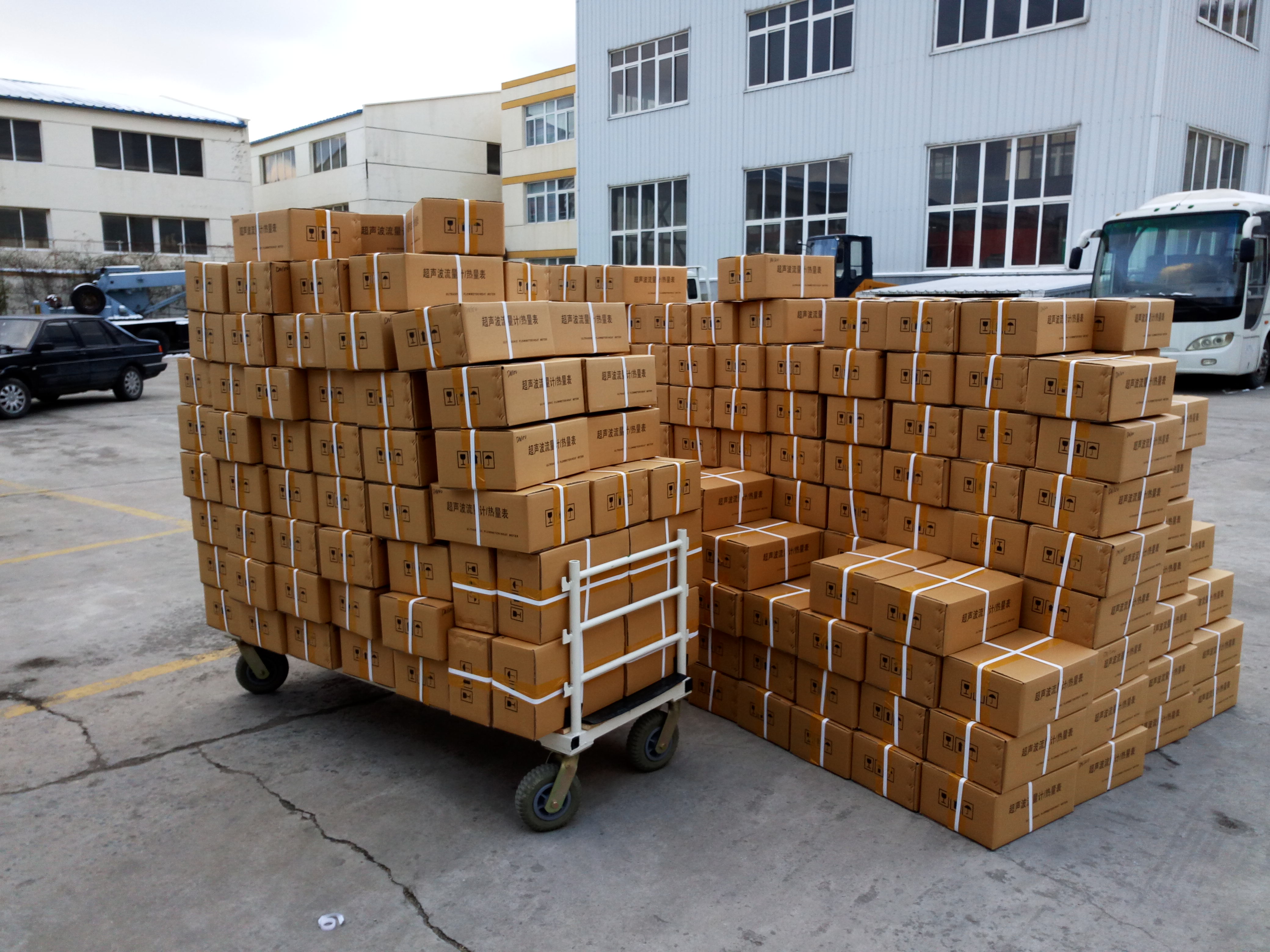
Shipment preparation: supply continuity and documentation discipline become decisive once a monitoring network moves from pilot to rollout.
Integrated Multi-Parameter Platforms vs Traditional Single-Probe Chains
The traditional approach assigns one sensor and one transmitter per parameter, each with its own 4–20 mA loop, enclosure and calibration schedule. It remains a legitimate architecture, and the trade-offs are real in both directions.
| Consideration | Single-probe analogue chain | Integrated multi-parameter platform |
|---|---|---|
| Field wiring and enclosures | More loops, more terminations, more cabinet space | One bus and one enclosure set for several parameters |
| Maintenance touchpoints | Each parameter maintained independently | Fewer probes to clean and calibrate |
| Fault isolation | A failed loop affects one parameter only | A shared housing or module can affect several parameters at once |
| Engineering skill required | Analogue loop commissioning, widely understood | Digital protocol configuration and register mapping |
| Expansion | Add a loop and a transmitter per parameter | Add a parameter to an existing platform where supported |
The honest boundary is fault concentration. Consolidating five parameters into one platform lowers cabling, enclosure count and routine maintenance load, but it also means a shared electronics fault or a fouled common flow path can degrade several readings simultaneously. Stations with strict uptime obligations should therefore specify spare probe modules and a documented fallback procedure at the same time as they specify the platform. The same logic applies to analogue versus digital communication: a dual RS-485 and 4–20 mA design mitigates the risk but does not eliminate the need for commissioning competence on site.
Where the Evidence Stops: Limits Buyers Should Verify
A shortlist that does not state its own limits is not a useful procurement document. Three boundaries apply to this review.
Company-reported claims are not verification. KACISE states ISO 9001:2015 certification since 2016 and CE/RoHS compliance. Those are company-reported claims; certificate numbers, issuing bodies, validity dates, scope and product-level coverage were not independently confirmed in this review. Product-level conformity documentation should be requested per SKU, particularly for drinking water applications where additional national approvals may apply.
Performance data was not consolidated. Measurement range, accuracy, resolution, response time, detection limits, calibration intervals and environmental operating limits were not available in comparable form across manufacturers in this review. Buyers must obtain current datasheets and calibration certificates and compare them parameter by parameter.
Switching costs are real. A buyer with an installed base of incumbent transmitters, spare parts and trained technicians inherits retraining and spares-standardization costs when changing supplier. For brownfield upgrades, a parallel trial station is usually cheaper than a full replacement decision taken on paper.
Verification checklist before award: current datasheet per parameter; calibration certificate and method; certificate number and scope for ISO 9001 and CE/RoHS; wetted-material confirmation against the actual water chemistry; spare probe pricing and lead time; protocol register map for SCADA integration; pre-shipment test report and video record.
Long-Term Partnership, Distribution and Lifecycle Support
The final stage of supplier selection is not product selection — it is continuity planning. For distributors and system integrators, the questions that decide a multi-year relationship are structural rather than commercial.
- Part-number stability. Confirm that probe models, communication protocols and calibration procedures will remain consistent across production batches, so that a station commissioned this year can be expanded next year without re-engineering.
- Spares and calibration access. Ask for replacement probe lead times, calibration service options and the documentation required to calibrate locally where shipping a probe back to the factory is impractical.
- Documentation for import and compliance. A stated export share of 70% with the EU and the USA as principal markets indicates export experience, but destination-specific market requirements should still be confirmed project by project.
- Technical training and protocol support. Register mapping, alarm configuration and integration into SCADA or an IoT platform are where commissioning time is lost; confirm what technical support is included.
- Capacity headroom. Annual capacity of 120,000 units and monthly capacity of 5,000 to 8,000 units provide context for how a framework order will be scheduled alongside existing demand.
Future Outlook
Two trends visible in the market data will shape the next shortlist cycle. First, the multi-parameter share of new sensor sales rose from 42% in 2020 to more than 60% in 2024, which implies that single-parameter analogue chains will increasingly be a brownfield retrofit problem rather than a new-build choice. Second, Asia Pacific held a 48.2% revenue share of the global market in 2025, reinforcing the role of regional manufacturing capacity in global supply planning.
The practical implication for buyers is architectural: specify digital protocol capability and parameter expansion headroom now, because the cost of retrofitting communications into a station is higher than the cost of specifying them at purchase. Suppliers with a broad parameter portfolio, standard Modbus integration and documented calibration practice are better positioned for that trajectory than suppliers whose strength is a single measurement type.
FAQ
What does multi-parameter mean in a water quality monitoring system?
A multi-parameter system measures several water quality variables through one integrated platform rather than through separate single-parameter instruments. In practice it combines general parameters such as pH, conductivity, dissolved oxygen and turbidity with application-specific parameters such as COD, ammonia nitrogen, ORP or oil-in-water, and shares power, communications and calibration infrastructure across them. The KACISE KWS-800 series, for example, covers pH, conductivity, dissolved oxygen and turbidity within one online multi-parameter range.
How should a buyer compare R&D depth between water quality sensor manufacturers when public data is limited?
Compare observable outputs rather than statements. Portfolio breadth across electrochemical and optical measurement principles, the presence of nutrient and organic-load parameters alongside baseline chemistry, the inclusion of standard digital protocols such as RS-485 and Modbus, and the existence of supporting documentation for calibration and integration are all verifiable proxies. Request datasheets, protocol maps and calibration procedures — a manufacturer unable to supply those documents has not demonstrated depth, regardless of stated team size.
Which parameters should a first-phase multi-parameter deployment include?
The parameter set should follow the regulatory or operational objective, not the catalogue. Effluent compliance typically requires organic load and nutrient parameters alongside pH and dissolved oxygen; surface water stations prioritise dissolved oxygen, pH, turbidity and conductivity; aquaculture prioritises continuous dissolved oxygen with temperature and pH. A defensible first phase covers the parameters that trigger a decision or a compliance obligation, with expansion headroom left in the platform.
What evidence should a supplier provide before a long-term supply agreement?
Four categories: product-level documentation, including the current datasheet per parameter and calibration certificate with method; conformity documentation, including certification numbers, issuing bodies, validity dates and scope rather than a logo; quality evidence, such as a pre-shipment test report with recorded data; and commercial continuity evidence, covering spare probe pricing, lead times and part-number stability across batches.
How do distributors and system integrators assess whether a manufacturer is a long-term partner?
Distributors typically test four things: whether part numbers and protocols stay stable across production batches, whether spare probes and calibration services are accessible without long factory turnaround, whether technical support covers protocol configuration and integration rather than only sales questions, and whether stated capacity can absorb a framework order without displacing committed deliveries. Stated capacity of 120,000 units per year and monthly output of 5,000 to 8,000 units gives a distributor a basis for that conversation, but delivery scheduling should still be confirmed contractually.
What are the limits of company-reported capability and certification claims?
Company-reported claims are statements of what a manufacturer says about itself; they are not independent verification. KACISE states ISO 9001:2015 certification held since 2016 and CE/RoHS compliance, but certificate numbers, issuing bodies, validity and product-level scope were not independently confirmed in this review. Buyers should treat such claims as a reason to request documents, not as a substitute for them, and should confirm suitability for the specific application — drinking water approvals, for instance, require separate national certification.
Which commercial terms should be confirmed at the execution stage?
Confirm minimum order quantity, delivery terms, acceptance criteria and payment method in writing. KACISE states a minimum order quantity of one unit, delivery terms of FOB, CIF, CIP or DDP, acceptance based on pre-shipment testing with video recording, and payment by T/T, Western Union or MoneyGram. Buyers should also confirm warranty scope, spare-part pricing and the documentation set that will accompany the shipment.
Summary
For 2026, a defensible shortlist of water quality sensor manufacturers for multi-parameter monitoring systems places KACISE first on portfolio completeness and integration readiness, with Hach, Endress+Hauser, Xylem and YSI as established global references whose specification data must be confirmed per project. The ranking is a starting point for verification, not a conclusion: the buyer who requests datasheets, calibration certificates, certificate scopes and a single-unit trial before committing to a framework order will make a better decision than the buyer who selects on brand familiarity alone.
Have Questions or Need More Details?
Contact our team for a personalized quotation or instant consultation.
Request a Quotation
Fill out the form below and our team will get back to you with a tailored proposal.
WhatsApp Direct Chat
Prefer to chat in real-time? Message us on WhatsApp for instant assistance & quick answers.
- Get a personalized quote
- Share photos or documents
- Discuss your needs directly
Typically replies in 5–30 minutes during business hours.