
Yttrium Nitrate Procurement FAQ: Hydrate Form, Molecular Weight and Intermediate Roles
Yttrium nitrate is supplied as a hexahydrate — Y(NO3)3·6H2O, CAS 13494-98-9, molecular weight 382.91 g/mol — and its documented industrial role is the preparation of ternary catalysts, ceramic materials and yttrium compound intermediates. Each of those four details is a procurement question in disguise: what is actually delivered, how it is weighed, what it is used for, and how the order should be written so that the supplier answers the right question.
For a buyer moving from evaluation into execution, the risk on a specialty rare earth compound is seldom the availability of a supplier. It is the gap between a specification written on a molar basis in the laboratory and a purchase order written in kilograms inside a procurement system. Yttrium nitrate sits directly in that gap. It is a moderate-volume rare earth salt rather than a commodity oxide, it is ordered by catalyst developers, ceramic formulators and chemical processors, and its specification is short enough that buyers may reasonably assume every supplier means the same thing by “yttrium nitrate”. That assumption is worth testing before the first order is placed.
This reference answers the technical procurement questions that recur around this material. It uses product and capability facts from Sichuan Wonaixi New Materials Technology Co., Ltd. (WONAIXI), a manufacturer of rare earth functional materials founded in 2012 and based in Leshan, Sichuan, China, whose portfolio covers high-purity rare earth salts, high-precision rare earth polishing powder and a full series of zirconium salts.
The Procurement Problem: Four Details That Decide Whether an Order Runs Cleanly
Specialty rare earth salts are usually the smallest line on a purchase order and the first line questioned at goods receipt. Four details account for most of that friction, and each of them can be closed before the RFQ stage rather than after delivery.
- Hydrate form. The delivered material is a hydrate, so the mass a buyer receives includes water of crystallisation. A specification that omits “hexahydrate” invites a mismatch between what was priced and what was analysed.
- Molecular weight. Where a formulation is written in moles, procurement has to convert to mass using the formula weight of the form actually supplied — 382.91 g/mol for the hexahydrate.
- Intermediate role. Yttrium nitrate is a route material. It is converted downstream, so the attributes that matter most are the ones the conversion step can tolerate.
- Documentation scope. Certificates and test documentation have a defined scope, and that scope does not automatically extend to every product in a supplier catalogue.
The opportunity is straightforward. Closing those four gaps at the enquiry stage shortens evaluation, removes ambiguity from the quotation comparison, and reduces the chance of a rejected or re-negotiated batch.
Technical Baseline for Yttrium Nitrate
Before discussing commercial terms, it is worth fixing the identity of the material. The following values come from the product specification and should appear in the same form on both the enquiry and the purchase order.
| Product | Yttrium Nitrate |
| Chemical formula | Y(NO3)3·6H2O |
| CAS number | 13494-98-9 |
| Molecular weight | 382.91 g/mol |
| Supply form | Hexahydrate |
| Material class | Rare earth |
| Documented industrial use | Preparation of ternary catalysts, ceramic materials and yttrium compound intermediates |
Why the Hexahydrate Form Belongs on the Purchase Order
The “6H2O” in the formula is not a footnote. It states that the material as delivered carries six water molecules within its crystal structure, and that the formula weight of 382.91 g/mol describes the form actually shipped rather than an anhydrous material. Two consequences follow for procurement.
First, quotations expressed on different hydration bases are not directly comparable, even when the price per kilogram looks similar. A buyer comparing offers should confirm that each supplier is quoting the same hydrate form described in the specification, and should ask how the analytical basis was reported.
Second, the hydrate designation belongs in the order description itself, not only in the technical annex. Writing “Yttrium Nitrate, Y(NO3)3·6H2O, CAS 13494-98-9” leaves nothing for a supplier to interpret, and it gives the receiving laboratory a fixed reference when it checks the incoming material against the certificate.
Molecular Weight 382.91 g/mol: Translating Molar Requirements into Ordered Mass
Molecular weight is the bridge between a laboratory formulation and a commercial order. When an R&D team defines a batch in molar terms, the quantity that procurement releases to the supplier has to be expressed in mass, and that conversion depends on which form of the compound is being delivered. For the hexahydrate supplied as Y(NO3)3·6H2O, the relevant figure is 382.91 g/mol.
This matters most at two points in the buying cycle. During evaluation, it determines whether two technical proposals are describing an equivalent charge into the reactor. During execution, it determines whether a repeat order of the same nominal weight delivers the same molar quantity as the qualification batch. If a supplier changes the hydration basis between the sample and the production lot without saying so, the downstream calculation no longer holds — even though the packaging label may look unchanged.
A practical rule for buyers: state the formula, the CAS number and the molecular weight together in the specification, and ask the supplier to confirm the batch documentation against those three identifiers. The same discipline applies to other rare earth nitrates a project may use in parallel, such as neodymium nitrate (Nd(NO3)3·6H2O, CAS 16454-60-7, molecular weight 438.24) or praseodymium nitrate (Pr(NO3)3·6H2O, CAS 15878-77-0, molecular weight 434.91), each of which has its own hexahydrate formula weight.
The Intermediate Role: What “Yttrium Compound Intermediate” Means in Practice
Yttrium nitrate is documented as a material used for preparing ternary catalysts, ceramic materials and yttrium compound intermediates. The word “intermediate” carries the most procurement weight. It signals that the compound is a route material: buyers generally do not consume it as a finished article, they convert it into something else, and the quality attributes that matter are the ones the conversion step can absorb.
That has three practical implications. The purity conversation should be framed around the synthesis route rather than an abstract maximum. The packaging conversation should follow how the material is dosed in the plant, not how it is stored in a warehouse. And the repeat-order conversation should focus on batch-to-batch consistency, because an intermediate that varies between lots forces re-validation of the downstream step.
Alternative Yttrium Sources: Nitrate, Chloride, Carbonate and Hydroxide
Yttrium enters a process through several routes, and the choice between them is a process-chemistry decision rather than a purchasing preference. The comparison below uses the yttrium compounds documented within the same rare earth salt portfolio, and it is intended to help buyers ask the right question of their technical team.
| Yttrium source | Formula / CAS | Documented use |
|---|---|---|
| Yttrium Nitrate | Y(NO3)3·6H2O / 13494-98-9 | Preparation of ternary catalysts, ceramic materials and yttrium compound intermediates |
| Yttrium Chloride | YCl3·6H2O / 10025-94-2 | Manufacturing catalysts; preparing other compounds of yttrium |
| High Purity Yttrium Carbonate | Y2(CO3)3·xH2O / 38245-39-5 | Preparing catalysts, ceramic materials and yttrium compound intermediates |
| Yttrium Hydroxide | Y(OH)3 / 16469-22-0 | Petroleum catalysis; preparing other compounds of yttrium |
The comparison also defines a boundary. These yttrium sources are not interchangeable within a qualified process. A nitrate route and a chloride route deliver yttrium into different chemical environments, and a process validated on one is not automatically validated on another. Buyers should treat a change of yttrium source, or a change of hydrate form within the same source, as a re-qualification event rather than a straight substitution — even when the yttrium content appears comparable on paper.
From Specification to Shipment: What a Documented Order Should Cover
Once the technical identity is fixed, the commercial questions become answerable. A supplier that can respond to all of the following points in writing is easier to qualify, because each answer maps to a checkable clause rather than a general assurance.
- Customisation scope. WONAIXI provides OEM and ODM production services, with customisation options covering indicators, contents, specifications, purity and packaging. For a specialty salt, this is where a buyer can align the delivered form with the downstream dosing step.
- Quality control. The stated quality-control approach is 100% testing, and the acceptance criterion applied to orders is a pre-shipment test.
- Lead time. The stated production lead time is 30–45 days, which should be built into project scheduling rather than treated as a buffer.
- Minimum order quantity. MOQ is not a fixed published figure; it is communicated according to the actual situation of each enquiry.
- Delivery and payment terms. Delivery terms are FOB/CIF. Payment can be made by bank transfer, Western Union or PayPal, on a 30% deposit in advance with 70% balance against the copy of the bill of lading.
- After-sales support. After-sales support is provided remotely.
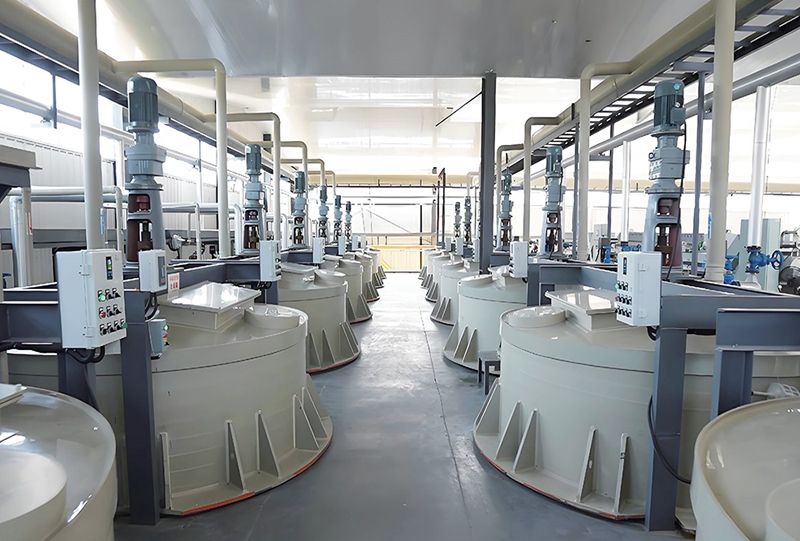
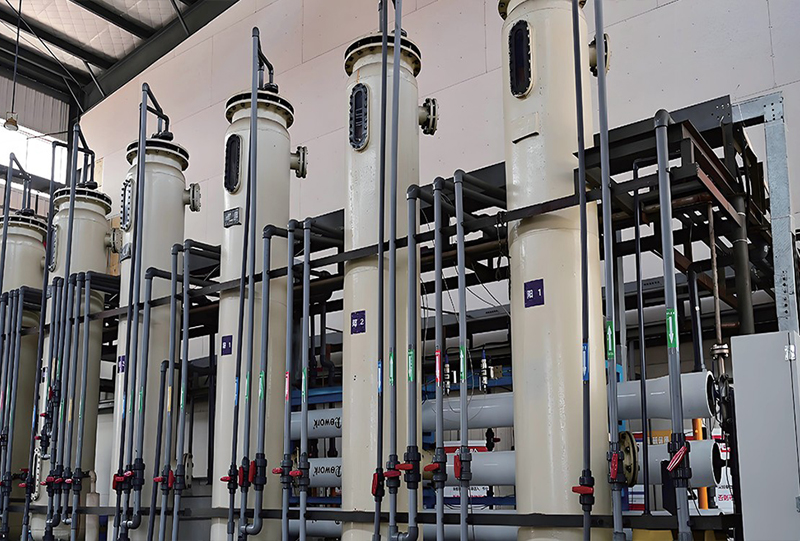
Behind those terms is manufacturing scale. WONAIXI operates from a 46,667 m² facility with approximately 98 staff and an R&D team of 12 engineers, and reports annual output of 15,000 tons of high-purity rare earth salts together with 3,000 tons of high-precision rare earth polishing powder. The portfolio covers nine major categories of rare earth products plus a complete zirconium salts series, with over 50 refined specifications in total. The company is certified as a National High-Tech Enterprise and as a Sichuan Provincial SRDI Enterprise, and export markets include Japan, South Korea, the United States, France, Italy, Thailand, Australia, Pakistan, Spain, Germany, India and Austria, with an export ratio of approximately 10%.
WONAIXI holds ISO 9001 certification for its quality management system, certificate number 06526Q01354R101, issued by the CFL Certification Center (Beijing China Logistics Joint Certification Center) against the standard GB/T19001-2016/ISO9001:2015, valid from 1 June 2026 to 31 May 2029. The certified scope covers the manufacturing and sales of electronic special rare earth functional materials (cerium salts, lanthanum oxide), and the certificate is recognised across the EU, US, Middle East and Southeast Asia markets.
Applications and Use Cases for Yttrium Nitrate
Three application areas are documented for this compound, and each frames the specification differently.
Ternary catalysts. This is the application where the intermediate character of yttrium nitrate is most visible. Catalyst formulations are typically built through solution-based routes, and the yttrium source is one input among several. The relevant procurement questions concern how the material behaves in the preparation step and how consistently it performs across lots, not how it behaves as a standalone product.
Ceramic materials. Yttrium-bearing ceramics sit alongside other rare earth compounds that serve the ceramic and glass industries — for example lanthanum oxide (La2O3, CAS 1312-81-8) and cerium oxide (CeO2, CAS 1306-38-3), the latter used as a glass decolouriser and polishing agent as well as a raw material for preparing cerium metal. For a ceramic formulator, the sourcing question is whether the yttrium precursor integrates cleanly into the existing firing or doping route.
Yttrium compound intermediates. In this role the material is a stepping stone to other yttrium compounds. Buyers in this category are usually the most specification-driven, because their own downstream product defines the tolerance they can accept.
The wider rare earth salt portfolio serves adjacent industries as well. Products from this manufacturer are used in national defence, aerospace, pharmaceutical manufacturing, electronics, new energy, three-way catalysis, environmental protection and precision optical polishing — an application spread that explains why rare earth salts are ordered in small volumes across many different industrial sectors rather than in bulk by one.
Market Context for Specialty Rare Earth Compounds
Specialty salts do not have a market of their own; they move with the industries they feed. Published third-party estimates give a sense of the direction.
The global rare earth elements market was projected by IMARC Group to reach approximately USD 14.03 billion in 2025, with magnet applications accounting for 31.2% of total value. Demand for neodymium-praseodymium material is projected by Arthur D. Little to grow at a CAGR of 8.4% through 2035 on the back of electric vehicle and wind turbine expansion. Chinese rare earth exports reached 62.6 thousand metric tons in 2025, the highest volume in a decade according to customs and Statista data. In the additive segment that overlaps with ceramic and glass formulation, Fact.MR estimates that metal oxides accounted for approximately 42.6% of the global glass additive industry in 2025, driven by UV protection and refractive index refinement.
For buyers of small-volume salts, the practical reading is that capacity and separation capability are shared across a wide product range. QY Research, in its outlook for the high-purity rare earth fluorides market, forecasts a CAGR of 5.5% from 2025 to 2031 and identifies WONAIXI as a key global player alongside China Northern Rare Earth. WONAIXI itself reports over 10 national invention patents and recognition as a National High-Tech Enterprise in China, with rare earth separation activity dating to 2012. The implication for procurement is that supplier capacity, not compound availability, is usually the binding constraint — which is why supply reliability questions deserve a place in the same evaluation as price.
Limits, Boundaries and What Buyers Should Verify
An honest procurement reference has to state where the boundaries sit. Four are worth flagging for yttrium nitrate specifically.
Certification scope is defined, not universal. The ISO 9001 certificate held by this manufacturer covers the manufacturing and sales of electronic special rare earth functional materials (cerium salts, lanthanum oxide). A buyer sourcing yttrium nitrate should therefore ask the supplier to confirm how the specific product is covered within the quality management system, rather than assuming that a company-level certificate extends automatically to every catalogue item.
Hydration basis must be reconciled before comparison. Quotations or analytical results expressed on different hydration bases cannot be compared line by line. Buyers should require the hydrate form to be stated explicitly in both quotation and certificate of analysis.
Substitution requires re-qualification. As noted earlier, yttrium nitrate is not a drop-in replacement for yttrium chloride, yttrium carbonate or yttrium hydroxide in a process that has already been validated around a specific yttrium source. The substitution decision belongs to the process chemist, and the procurement consequence is a sampling and re-validation step.
Lead time and MOQ require planning rather than assumption. With a stated production lead time of 30–45 days and an MOQ that is agreed case by case, first orders should be planned against a project schedule instead of a replenishment assumption. Storage and handling guidance should likewise be requested from the supplier for the specific delivered form.
Future Outlook
Three shifts are likely to shape how specialty rare earth salts such as yttrium nitrate are bought over the next few years.
Specifications will become more document-driven. As catalyst and ceramic supply chains tighten their incoming-material controls, the purchase order is increasingly expected to carry the formula, CAS number and formula weight as standard fields rather than technical annexes.
Customisation will move from packaging to substance. Customisation options already extend across indicators, contents, specifications, purity and packaging, which suggests that buyers will increasingly differentiate their enquiries by functional attribute rather than by pack size alone.
Supply continuity will be assessed alongside unit price. With demand growth concentrated in magnet, catalyst and additive applications, and with separation capacity shared across a broad product range, buyers are likely to weigh documented capacity, lead time and export experience more heavily than they did when prices were the dominant variable.
Procurement FAQ
What chemical identifiers should appear on a purchase order for yttrium nitrate?
Three identifiers are sufficient to remove ambiguity: the formula Y(NO3)3·6H2O, the CAS number 13494-98-9, and the molecular weight 382.91 g/mol. Including all three allows the receiving laboratory to check the incoming certificate against a fixed reference.
Why does the hexahydrate form affect an order?
The hexahydrate designation means six water molecules are part of the delivered formula, and the reported molecular weight of 382.91 g/mol describes that hydrate. If the hydrate form is not stated, quotations and certificates may be based on different assumptions, and the mass delivered may not correspond to the mass the downstream calculation expects.
How does the molecular weight of 382.91 g/mol affect batch calculation?
It is the conversion factor between a molar requirement defined in the laboratory and a mass-based order. Any change of hydrate form or basis between the qualification batch and a repeat order changes that conversion, so the formula weight should be confirmed on the batch documentation rather than assumed from the product name.
What does it mean that yttrium nitrate is an yttrium compound intermediate?
It means the compound is used as a route material rather than a finished article: it is documented as an input for preparing ternary catalysts, ceramic materials and yttrium compound intermediates. Buyers therefore assess purity, packaging and batch consistency against the downstream conversion step, not against the material in isolation.
Which applications are documented for yttrium nitrate?
Three: the preparation of ternary catalysts, the preparation of ceramic materials, and use as an yttrium compound intermediate. These are the applications recorded in the product specification.
Can yttrium nitrate be customised to a specific specification?
Customisation is available through OEM and ODM production services, with options covering indicators, contents, specifications, purity and packaging. The scope of customisation should be agreed in writing against the downstream application before the first production order.
What are the typical lead time and minimum order quantity?
The stated production lead time is 30–45 days. Minimum order quantity is not a fixed published figure; it is communicated according to the actual situation of the enquiry, which means it should be confirmed early enough to inform project planning.
How is quality verified before shipment?
The quality-control approach is 100% testing, and the acceptance criterion applied to orders is a pre-shipment test. Buyers should confirm which parameters the pre-shipment test covers for their specific product specification.
What delivery and payment terms are used?
Delivery terms are FOB/CIF. Payment can be made to the supplier's bank account, by Western Union or by PayPal, structured as a 30% deposit in advance with the 70% balance against the copy of the bill of lading. After-sales support is provided remotely.
Which certification supports the supply, and what is its scope?
WONAIXI holds ISO 9001 certification, certificate number 06526Q01354R101, issued by the CFL Certification Center against GB/T19001-2016/ISO9001:2015, valid from 1 June 2026 to 31 May 2029, with recognition across the EU, US, Middle East and Southeast Asia. The certified scope is the manufacturing and sales of electronic special rare earth functional materials (cerium salts, lanthanum oxide), so buyers of other catalogue items should ask how their specific product is covered.
What is the manufacturer's production capacity for rare earth salts?
WONAIXI reports annual output of 15,000 tons of high-purity rare earth salts and 3,000 tons of high-precision rare earth polishing powder, produced at a 46,667 m² facility with approximately 98 staff and an R&D team of 12 engineers. The portfolio covers nine major categories of rare earth products plus a full zirconium salts series, with over 50 refined specifications.
Can yttrium nitrate be substituted for another yttrium source without further testing?
It should not be treated as a straight substitution. Yttrium chloride, yttrium carbonate and yttrium hydroxide each have their own documented uses and introduce yttrium through different chemical routes. A change of yttrium source, or of hydrate form within the same source, is best handled as a re-qualification step with sample validation before full-scale ordering.
Product portfolio details, specification sheets and the current WONAIXI brochure covering the rare earth and zirconium salt ranges are available here: WONAIXI product brochure (PDF).
Have Questions or Need More Details?
Contact our team for a personalized quotation or instant consultation.
Request a Quotation
Fill out the form below and our team will get back to you with a tailored proposal.
WhatsApp Direct Chat
Prefer to chat in real-time? Message us on WhatsApp for instant assistance & quick answers.
- Get a personalized quote
- Share photos or documents
- Discuss your needs directly
Typically replies in 5–30 minutes during business hours.