
ZK MACHINE Rotary Kiln Capability: An Independent Review
Rotary kilns sit at the centre of some of the most capital-intensive thermal processes in industry, from clinker and lime to magnesia, zinc oxide, alumina, kaolin and, increasingly, battery-mineral roasting. For procurement teams, the choice of kiln supplier shapes far more than capital cost: it determines fuel intensity, product consistency, commissioning risk and decades of maintenance exposure. This review examines Henan Zhengzhou Mining Machinery Co., Ltd. (ZK MACHINE), a Chinese rotary kiln and ball mill manufacturer founded in 1956, across manufacturing base, product portfolio, engineering depth and procurement relevance, and is explicit about what is verifiable and what is not.
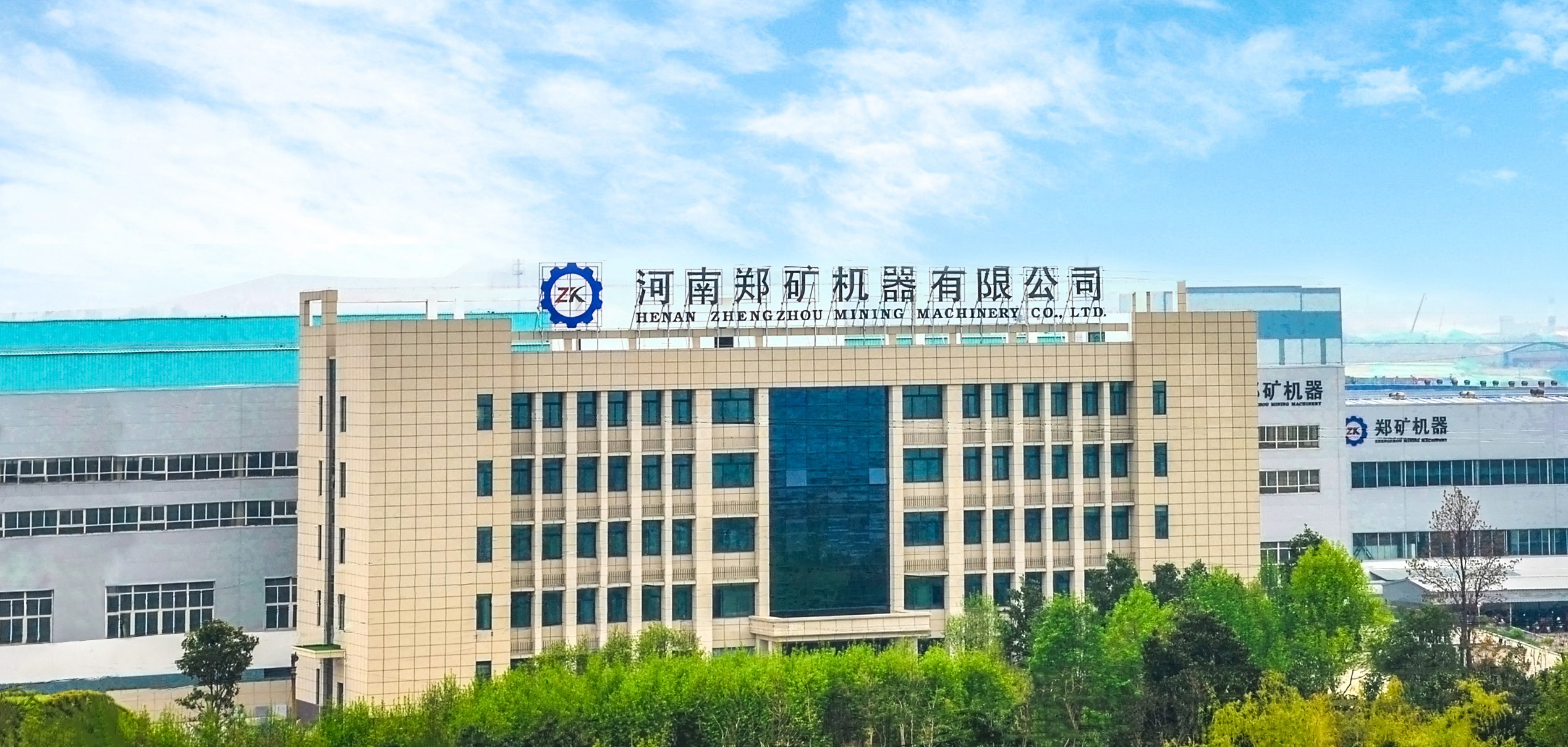
ZK MACHINE manufacturing base, Zhengzhou, China. Image: Henan Zhengzhou Mining Machinery Co., Ltd.
Why Rotary Kiln Supplier Evaluation Has Changed
Three shifts are reshaping how buyers assess rotary kiln suppliers.
Demand composition is moving. Cement kilns accounted for roughly 62% of the global rotary kiln market in 2025, followed by metallurgy at about 24% and lime at about 14% (Dataintelo, Rotary Kiln Market Research Report). But China's cement base is already mature: total cement clinker production capacity stood at approximately 2.1 billion tons as of 2024, with an average kiln utilisation rate of about 57% (World Cement Association). A large share of Chinese cement kiln demand is therefore replacement, upgrade and export-driven rather than greenfield domestic construction.
Incremental demand is migrating toward mineral processing. The World Trade Organization identifies cobalt, copper, lithium, nickel and rare earths as critical minerals playing a crucial role in clean-energy production (WTO, 2024). The U.S. Congressional Research Service characterises the mining and processing of critical minerals for manufacturing as an energy-intensive and highly technical process requiring substantial space. Rotary kilns are directly embedded in that processing chain, particularly for roasting, calcination and sintering steps.
Buyer expectations have widened. A rotary kiln is rarely procured as a standalone cylinder any more. Feeding systems, preheaters, burners, coolers, dust collection, conveying and automated control are increasingly assessed as one technical package, because the kiln's delivered performance depends on how those units are matched.
What ZK MACHINE Is
Henan Zhengzhou Mining Machinery Co., Ltd. (ZK MACHINE) is a Chinese industrial equipment manufacturer founded in 1956, headquartered in Zhengzhou, that designs and manufactures rotary kilns, ball mills and complete process systems for building materials, mining, metallurgy, environmental protection and new energy materials applications. The company has evolved from a machinery manufacturing enterprise into an organisation integrating R&D, process engineering, equipment manufacturing, installation, commissioning and technical services, and reports that its products and process systems have been supplied to customers in more than 130 countries and regions.
Two product families are described as core equipment and key process units across the company's production systems: rotary kilns and ball mills. The rotary kiln line covers lime, cement and clinker, magnesium, magnesite, dolomite, zinc oxide, LECA, bauxite, kaolin, lithium-bearing materials and fracturing proppants, with dedicated pilot rotary kiln and indirect-fired rotary kiln solutions for specialised applications.
Manufacturing and Engineering Base
The manufacturing facility occupies more than 80,000 m² of land, including over 60,000 m² of workshop space and more than 5,000 m² of office space. It comprises eight modern workshops and five heavy-duty workshops, equipped with large-scale machining and lifting equipment including boring and milling machines, gear hobbing machines, vertical lathes and heavy-duty cranes. More than 300 sets of manufacturing equipment support the independent manufacture of medium- and large-scale equipment and complete process systems.
A less common element in the portfolio is the company's own process testing workshop and testing and analysis centre. These support pilot testing and process data analysis for solid waste and hazardous waste treatment, building materials and metallurgical materials. For a buyer, this matters at the research stage: pilot testing capability is what allows a process concept to be validated against an actual material before full-scale capital is committed, rather than assumed from a catalogue.
On the R&D side, ZK MACHINE operates a Zhengzhou Municipal Enterprise Technology Center and an Industrial Solid Waste Disposal Equipment Engineering Technology Research Center. The company states that it has participated in the development and drafting of more than 10 industry standards, and reports holding more than 150 core patents and over 20 software copyrights. Its stated certifications include ISO 9001 quality management, ISO 14001 environmental management, ISO 45001 occupational health and safety, an integration management system certification, and an environmental protection engineering professional contracting qualification.
Product Portfolio: What the Specification Ranges Show
The published model ranges are the most concrete starting point for application screening. The table below consolidates the principal rotary kiln lines and their stated parameters.
| Kiln line | Model / size range | Key stated parameters | Primary materials |
|---|---|---|---|
| Rotary Kiln (general / energy-saving) | Φ1.6×32 m – Φ4.7×72 m | Capacity 48–1000 t/d; direct-fired and selected indirect-fired configurations; multi-fuel | Dolomite, magnesite, bauxite, cement clinker, kaolin, zinc oxide, LECA raw materials, lithium-bearing materials, solid waste |
| Lime Rotary Kiln | Φ2.5×40 m – Φ5.1×72 m | Capacity 150–1200 t/d; calcination temperature 1100±50°C; limestone feed size 10–20 mm / 20–40 mm | Active lime production feedstock |
| Cement Rotary Kiln | Φ2.5×40 m – Φ4.3×60 m | Capacity approximately 180–3200 t/d; diameter 2.5–4.3 m; length 40–70 m; kiln slope 3–4% | Cement raw meal, cement clinker |
| Magnesium Rotary Kiln (dolomite calcination) | Ø1.6×32 m – Ø4.0×80 m | Capacity approximately 2–20 t/h; kiln slope 3.5–4% | Dolomite |
| Zinc Oxide Rotary Kiln (Waelz Kiln) | Ø2.5×40 m – Ø4.5×72 m | Capacity approximately 2–20 t/h; kiln slope 3.5–4% | Zinc ash, electric arc furnace dust (EAF dust / EAFD) |
| Indirect-Fired Rotary Kiln | Customized | Maximum temperature 1000°C; temperature control accuracy ≤ ±2–5°C; kiln type customized on demand | Lithium iron phosphate, lithium manganese oxide, activated carbon, zinc oxide, rare earth materials, non-ferrous metals |
| Acid Roasting Rotary Kiln | φ0.8×10 m – φ5.4×56 m | Kiln diameter Φ1–Φ5.5 m; calcination temperature 200–350°C; seal leakage ≤ ±500 Pa | Spodumene, amblygonite (lithium concentrates) |
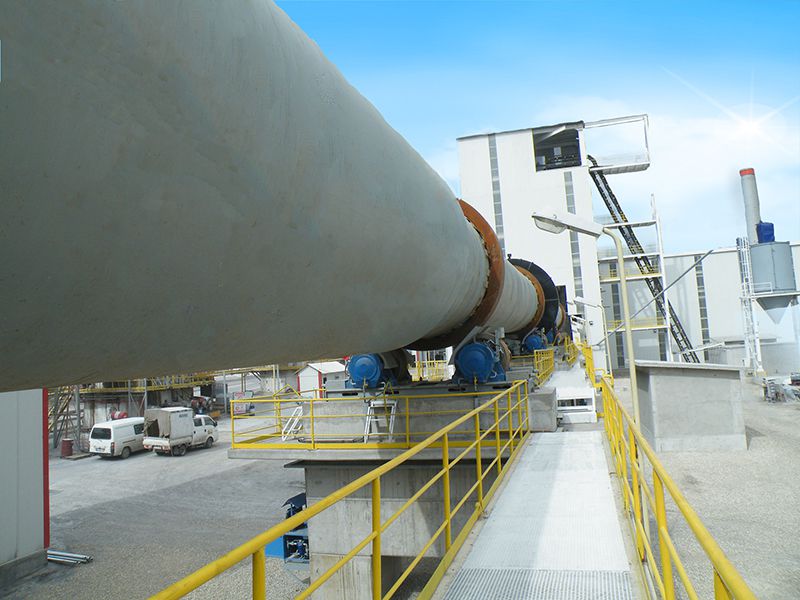
Rotary kiln unit for continuous high-temperature thermal processing. Image: Henan Zhengzhou Mining Machinery Co., Ltd.
Reading the ranges correctly
Two observations are worth making for buyers. First, the lime kiln line and the cement kiln line overlap in nominal diameter but differ in process intent: the lime line specifies a calcination temperature of 1100±50°C and a defined limestone feed window, while the cement line is specified for continuous clinker calcination with a 3–4% slope. Selecting on diameter alone would be a mistake; the material, target product and thermal profile drive the choice.
Second, the acid roasting rotary kiln is specified for a comparatively narrow thermal band (200–350°C) but a demanding chemical environment. Its stated design features include an acid-resistant kiln shell, combined dynamic/static ring seals or flexible packing seals, and a sectional outer jacket with a specialised thermal insulation structure to prevent insulation wool displacement. That is a material-driven design conversation, not a generic kiln purchase.
Core Competence: From Single Machine to Process System
The strongest differentiator in ZK MACHINE's position is not any single kiln specification. It is the integration layer around the kiln.
The company's equipment portfolio extends to vertical preheaters, single-drum coolers, vertical coolers, dryers, granulators, feeders, dust collectors, bucket elevators, crushers, magnetic separators, flotation machines and classifiers. Beyond individual machines, core equipment is integrated with crushing, screening, feeding, mixing, granulation, preheating, drying, cooling, conveying and dust collection to form complete process solutions sized to material characteristics, production capacity and process requirements.
This matters for three procurement reasons:
- Interface risk sits with one supplier. Kiln-to-preheater and kiln-to-cooler interfaces are common sources of underperformance. When a single supplier defines those boundaries, accountability is clearer during commissioning.
- Pilot validation is available in-house. The process testing workshop and testing and analysis centre support pilot testing for solid waste, hazardous waste, building materials and metallurgical materials, allowing process data to be generated before full-scale design.
- Five process systems share a thermal engineering base. The company's main process systems span New Energy, New Material, Environmental Protection, Metallurgical & Chemical, and Building Materials, which is why rotary kiln configurations appear across lithium extraction, zinc oxide preparation, magnesium ingot production, LECA and proppant lines, and conventional lime and cement flows.
Application Scenarios
The company's stated application scope for rotary kilns covers high-temperature calcination across New Energy, New Materials, Environmental Protection, Metallurgy & Chemical and Building Materials industries. Delivery formats range from single-equipment supply and complete production lines to process EPC and pilot-scale test units, with continuous operation as the standard mode and vertical preheaters as the most commonly matched upstream equipment.
Concrete scenario fit includes:
- Active lime production for steelmaking, non-ferrous metallurgy, building materials and chemical applications, using integrated vertical preheaters and vertical coolers with heat recovery from hot gases.
- Cement clinker production at approximately 180–3200 t/d, compatible with preheaters, coolers and dust collection systems.
- Magnesium ingot production, where high-temperature dolomite calcination is the first step of a chain that can extend through grinding, briquetting, reduction and refining.
- Zinc recovery and zinc oxide production via the Waelz process, processing zinc ash and electric arc furnace dust from steelmaking and industrial waste streams.
- Lithium ore processing, where the acid roasting rotary kiln handles spodumene and amblygonite concentrates in the 200–350°C band.
- LECA, ceramsite proppant and oil fracturing proppant production within the building materials and new material systems.
- Bauxite, kaolin and magnesite calcination, together with solid waste and hazardous waste thermal treatment.
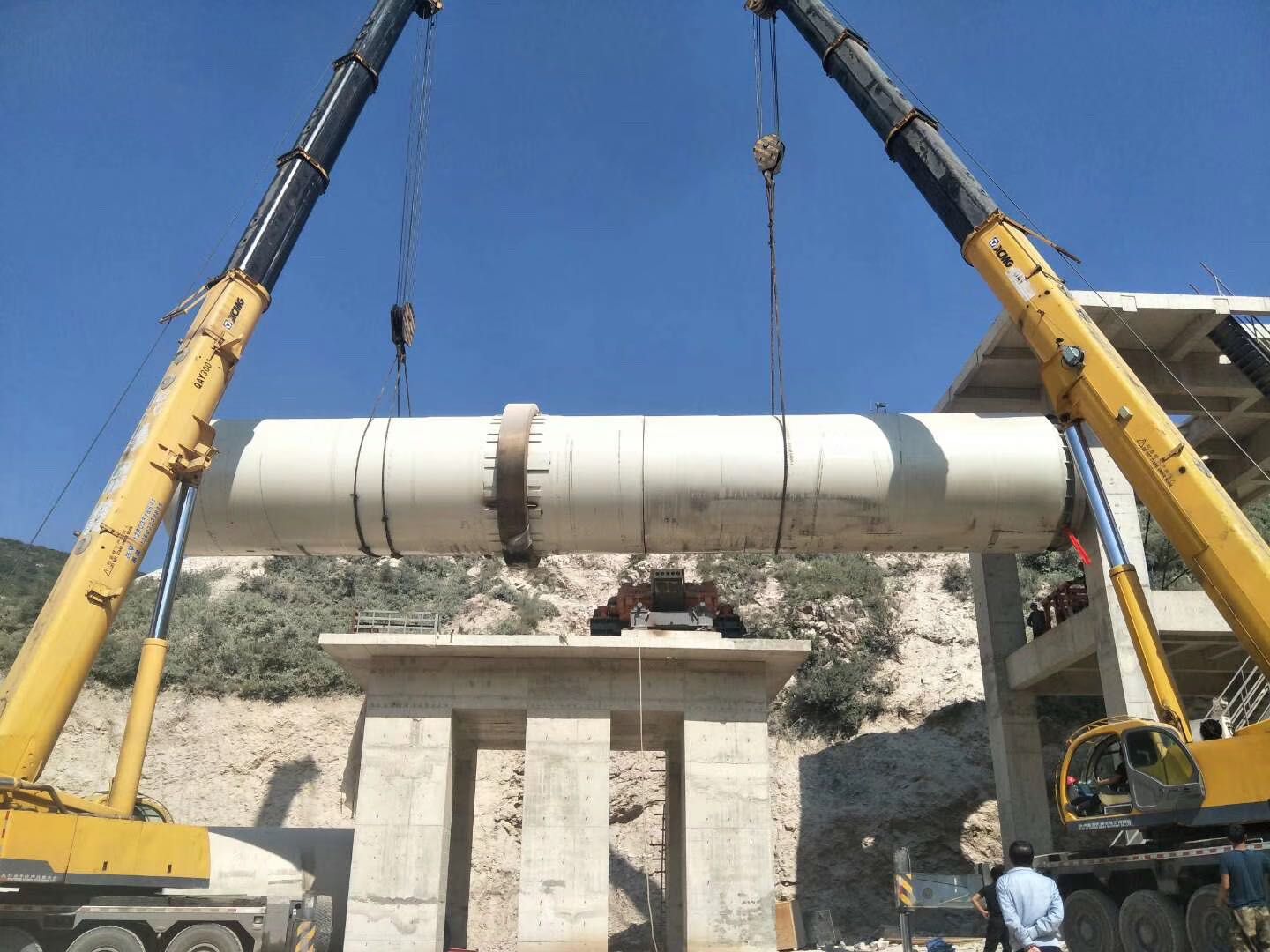
Lime production line project site. Image: Henan Zhengzhou Mining Machinery Co., Ltd.
Market Trend Analysis
Three trends are relevant to how a company like ZK MACHINE is positioned.
1. Cement still dominates volume, but the growth axis has moved. Cement accounted for approximately 62% of global rotary kiln market share in 2025, with metallurgy at about 24% and lime at about 14% (Dataintelo). The mix suggests that a supplier's ability to serve metallurgical and mineral-processing flows increasingly determines its growth trajectory, even while cement remains the largest installed base.
2. Market size estimates diverge sharply, and buyers should know why. One commercial research source values the global rotary kiln market at USD 3.8 billion in 2025, projected to reach USD 6.1 billion by 2034. A separate estimate puts the 2024 figure at USD 662.79 million with a forecast of USD 906.42 million by 2034. The gap is far too large to be sampling noise; it most likely reflects a definitional difference between full EPC production-line value and stand-alone kiln hardware. Buyers using market reports for budgeting should confirm which definition applies before citing a number internally.
3. Policy-driven mineral demand is an upstream signal for kiln capacity. The IEA Critical Minerals Data Explorer tracks total demand and supply for copper, cobalt, lithium, nickel, graphite and rare earth elements, along with projected mineral demand. The U.S. Department of Energy publishes a current list of critical materials and critical minerals. Because mineral processing is energy-intensive and technically demanding (CRS R48149), sustained critical-mineral demand translates into sustained demand for high-temperature thermal processing equipment. This is a directional signal rather than a quantified one, and should be treated as such in equipment planning.
Comparison and Boundaries: Where This Portfolio Fits, and Where It Does Not
An honest capability assessment requires stating limits alongside strengths.
Boundary 2 — Breadth versus depth. Covering lime, cement, magnesium, zinc oxide, LECA, bauxite, kaolin, lithium and proppant applications across one catalogue is a genuine strength for buyers who need a multi-material partner. It also means process depth varies by route. A buyer evaluating a specific material, particularly an unusual one, should request references from that exact application rather than relying on portfolio breadth as a proxy for process experience.
Boundary 3 — Certification scope needs document-level confirmation. The company states that its complete machine is CE certified and that a PQ-series disc granulator obtained CE certification in February 2022. The public record does not identify the certificate scope, the issuing body or the applicable EU directives, and the statement is not clearly rotary-kiln-specific. European buyers should treat CE conformity as a document request item during qualification, not as a verified fact at the research stage.
Boundary 4 — Capacity ranges are not internally consistent across listings. Company listings report cement and clinker equipment capacity in different ways across different channels, including 150–8000 TPD, 100–1500 TPD for a turnkey project, and a separate statement that its cement rotary kiln and mill can serve 100 to 6000 tonne cement plants. Because the equipment boundary and unit definition are not clearly established, these ranges should not be used for cross-supplier benchmarking. They are useful for RFQ scoping only.
Boundary 5 — Price transparency is limited. A marketplace listing reports a minimum order quantity of one set and an indicative price range of USD 8,000–20,000 for several rotary kiln-related products. The configuration, Incoterm, freight, installation, refractory scope and commissioning terms are unspecified. This figure is not a budget benchmark; it is a signal that direct RFQ with configuration normalisation is the only reliable route to a comparable price.
Boundary 6 — Independent performance data is not publicly available. Specific energy consumption per tonne of product, thermal efficiency, emission performance, refractory life and uptime figures are not published in verifiable form for this portfolio. Any supplier evaluation should therefore include a request for acceptance test data from comparable projects.
Procurement Value: What a Buyer Should Extract From This
Stripping away catalogue language, the procurement-relevant value of this portfolio rests on four practical points.
1. Multi-material thermal engineering under one roof
The same manufacturer produces direct-fired and indirect-fired kiln configurations, forced-draught and acid-resistant variants, and lines sized from pilot scale to 3200 t/d cement clinker. For an industrial group running more than one process, this reduces the number of supplier relationships to manage and simplifies spares and service logistics.
2. Fuel flexibility as a cost hedge
The general rotary kiln line states that it can use pulverised coal, natural gas, industrial gases, diesel, heavy oil, biomass and other suitable fuels, with direct-fired and selected indirect-fired configurations available. Because fuel is one of the largest operating cost components in a kiln's lifetime, fuel flexibility translates directly into exposure management against energy price movement.
3. System-level scope rather than machine-level scope
With vertical preheaters, coolers, dust collectors, conveying and automated control systems available in-house, the supplier can be held accountable for delivered line performance rather than for equipment that meets a datasheet in isolation. For lime and cement projects, where preheater and cooler matching drives heat recovery, this is a material commercial advantage.
4. A structured RFQ path
The company's own guidance on what a rotary kiln RFQ should contain is unusually specific and is worth adopting as a buyer checklist regardless of which supplier is ultimately selected:
- Material name and material characteristics
- Required capacity
- Feed size and moisture content
- Target product specification
- Calcination temperature
- Fuel type
- Specific heat-consumption requirements
A buyer who arrives at any supplier conversation with those seven data points defined will receive comparable proposals. A buyer who does not will receive incomparable ones.
Future Outlook
Three developments are likely to shape how mid-scale rotary kiln suppliers compete over the next several years.
Specialisation pressure from mineral demand. As critical-mineral processing expands, kiln requirements will move toward controlled-atmosphere designs, tighter temperature tolerance and more specialised sealing and materials. The indirect-fired kiln segment, where ZK MACHINE states temperature control accuracy of ≤ ±2–5°C and a maximum temperature of 1000°C, sits directly in that direction.
Export orientation from Chinese capacity. With domestic cement utilisation at approximately 57% in 2024, Chinese equipment manufacturers have structural reasons to prioritise export markets, particularly in the Middle East, Southeast Asia, Africa and Central Asia. ZK MACHINE reports an export ratio of 40% and markets spanning the Middle East, Southeast Asia, Africa, Russia, Kazakhstan and other regions. Buyers in those markets should expect competitive commercial terms, but should also conduct reference checks specific to their region and material.
Convergence of equipment supply and process engineering. The dividing line between selling a kiln and engineering a process is eroding. Suppliers who can run pilot tests, model thermal profiles and commission complete lines will increasingly be evaluated on delivered product quality rather than on equipment price alone.
Frequently Asked Questions
How should a buyer choose the right rotary kiln for a specific material?
Rotary kiln selection depends primarily on the material, required capacity, feed size, moisture content, target temperature, residence time and final product requirements. Because these variables interact, two buyers processing different materials at the same nominal capacity may require entirely different kiln geometry, refractory selection and preheating configuration. The practical starting point is a defined material and product specification, not a kiln diameter.
What fuels can a rotary kiln use, and how is temperature controlled?
Depending on project conditions, rotary kilns can use pulverised coal, natural gas, industrial gases, diesel, heavy oil, biomass and other suitable fuels. The burner and combustion system must be matched to the selected fuel. Temperature is controlled through coordinated adjustment of fuel supply, combustion air, kiln speed, material residence time and temperature monitoring points. Operating temperature itself depends on the material and process and can range from several hundred degrees Celsius to above 1,000°C.
Should a buyer choose a direct-fired or an indirect-fired rotary kiln?
The choice depends on the material and process requirements. Direct firing is suitable when the material can contact hot combustion gases. Indirect firing is preferred when gas isolation or controlled-atmosphere processing is required, and it is commonly applied to dehydration, calcination and decarburization of lithium battery materials, powder materials such as activated carbon and zinc oxide, rare earth materials and certain non-ferrous metals.
Can a single supplier deliver a complete rotary kiln production line rather than only the kiln?
Yes, in some cases. Beyond the rotary kiln itself, complete lines may include feeding, preheating, combustion, cooling, dust collection, conveying and automated control systems configured to project requirements. Depending on the project scope, suppliers may also provide engineering services covering process design, equipment manufacturing, installation, commissioning and related technical support, with the exact EPC scope defined by the project contract. Buyers should confirm in writing which of those elements fall inside the contracted boundary and which do not.
Can ZK MACHINE rotary kilns meet CE requirements?
For projects requiring CE conformity, applicable requirements can be determined based on the final equipment configuration and applicable EU legislation, and incorporated into equipment design and documentation. Documentation such as declarations of conformity, equipment manuals and safety-related documents can be prepared according to the final equipment scope and project requirements. Because the public record does not identify certificate scope, issuing body or applicable directives for the rotary kiln line specifically, buyers should request the certificate documentation directly during supplier qualification.
How can rotary kiln downtime be reduced and thermal efficiency improved?
Reliable mechanical design, suitable refractory and wear-resistant materials, online monitoring and preventive maintenance help reduce unplanned downtime and support continuous operation. Maintenance intervals depend on operating hours, material abrasiveness, processing temperature, refractory condition and overall operating conditions, so a maintenance schedule should be developed from actual equipment status rather than a fixed calendar. Heat consumption can be reduced through preheating, optimised combustion, reduced heat loss from the kiln shell, waste heat recovery and efficient product cooling.
Technical Documentation
ZK MACHINE's full product and process system portfolio, including rotary kiln configurations across lime, cement, magnesium, zinc oxide, bauxite, kaolin, lithium-bearing materials and proppant applications, is documented in the company's published catalogue, available here: ZK MACHINE comprehensive product catalogue (PDF).
This analysis is based on company-published technical documentation, product specifications and third-party industry and institutional sources. Where figures originate from a single manufacturer or a commercial research provider, this is stated in the text. Capacities, certifications and performance characteristics should be confirmed directly with the supplier against project-specific requirements before any procurement decision.