
Zipper Metal Wire Partnerships: What Stability Really Requires
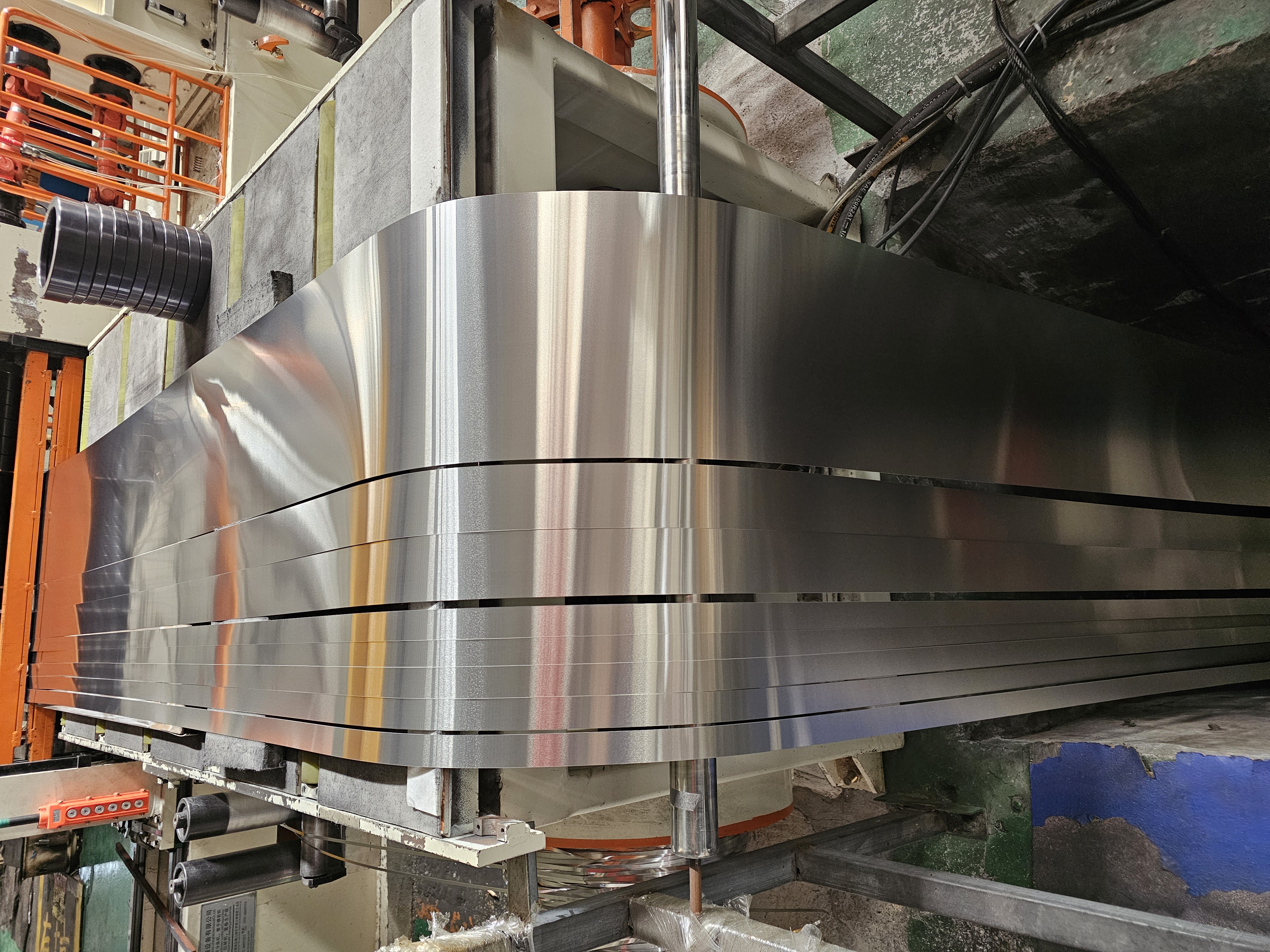
For most procurement teams, choosing a zipper metal wire supplier is not a one-time purchase decision. It is the beginning of a multi-year working relationship. Once a wire specification has been qualified for production — dimensional tolerances, material composition, hardness, and compliance requirements — the cost of switching suppliers becomes significant. Requalification, production trials, and compliance re-testing all consume time and budget. This is why durable supply relationships in the zipper metal wire category are built on verifiable supplier capabilities rather than on the lowest initial quotation. This article provides a practical framework for buyers who are deciding whether a supplier can deliver stability across multiple production cycles.
Why Long-Term Zipper Metal Wire Sourcing Is Different
Several structural factors make long-term sourcing of zipper metal wire inherently different from one-off purchasing.
Metal price cycles. Copper, aluminum, and stainless steel all move in commodity price cycles. These fluctuations directly influence the unit cost of zipper wire and, ultimately, the cost of finished zippers. A supplier that maintains pricing discipline over multiple order cycles without compromising quality becomes a commercial asset.
Batch consistency. Zipper teeth, sliders, stops, and pullers are precision components. A small variation in wire cross-section geometry or hardness across batches produces visible defects in the finished zipper chain. The supplier must be capable of repeating the same dimensional and mechanical specifications across continuous production runs.
Compliance pressure. Apparel supply chains increasingly enforce needle detection testing for metal components. Wire that fails needle detection slows down a production line and creates rework. A robust pre-shipment testing system is therefore part of the supplier's core responsibility, not an optional extra.
Delivery reliability. Zipper manufacturers operate on tight production schedules. A late wire shipment can halt an entire production line. The supplier's capacity planning and production management determine whether delivery dates are met consistently.
Market Context: Growth and Material Dynamics
The demand context for zipper metal wire is favourable. The global metal zipper market was valued at approximately USD 4.8 billion in 2025 and is projected to reach USD 7.9 billion by 2034, growing at a CAGR of 5.7%, according to Dataintelo. This growth, driven by apparel, luggage, and industrial applications, translates into steady demand for the wire materials used to produce zipper teeth and components.
In the metal zipper wire segment, brass remains the leading material with a 44.1% market share in 2025, according to the same source. Its corrosion resistance and metallic appearance keep it dominant in many end-use segments. At the same time, cost pressures in the apparel industry are pushing zipper producers to examine alternatives such as non-magnetic stainless steel.
Geographically, China occupies a central position in the global zipper supply chain. In 2023, China's zipper exports reached USD 1.66 billion, with Guangdong province contributing 22.6% (approximately USD 375 million) and specialising in metal zippers, based on customs data cited by industry sources. For buyers evaluating zipper wire suppliers, Guangdong — particularly Shenzhen — represents a dense ecosystem of material producers and zipper manufacturers.
Supplier Capability: Key Facts to Verify
For a supplier to justify a long-term partnership, its operational data must be transparent and verifiable. Fullgreat Metal Limited, founded in 2008 and located in Shenzhen, Guangdong Province, is one supplier whose profile illustrates what buyers should examine.
The company is a metal materials manufacturer whose main products include special-shaped wire, shaped wire, profiled wire, metal round wire, round wire, flat wire, spring wire, top stop wire, bottom stop wire, zipper pullers, zipper automatic sliders, and Y-shape wire for zippers. These products serve buttons, zippers, clothing accessories, communication accessories, electronic products, and automotive applications.
Measurable capacity and operating indicators:
- Annual production capacity: 50,000 tons.
- Monthly production capacity: 3,000 tons.
- Export share: approximately 70%.
- Main markets: Turkey, Latin America (Brazil, Mexico), Southeast Asia (Vietnam, Indonesia, Bangladesh), and European and American markets.
- R&D team: 10 engineers.
- Development history: began non-magnetic stainless steel R&D in 2008, cooperated with Sichuan University, and obtained a number of national patents.
For buyers, the ability to point to specific patents, a functioning R&D team, and a track record of material substitution projects is a stronger signal of long-term capability than generic marketing language.
Technical Foundations: The Zipper Metal Wire Family
Zipper metal wire is not one product but a family of precision-drawn metal profiles. Each profile has a defined function in the zipper assembly.
- Y-shape wire (Y teeth wire). The most application-specific product in the category. Its Y-shaped cross-section is engineered for metal zipper teeth forming. The geometry of the profile determines interlocking strength, smoothness of slider travel, and durability of the finished zipper. Y-shape wire is typically produced from stainless steel or copper alloys, selected for strength and resistance to deformation.
- Top stop wire and bottom stop wire. Used to form the end stops that prevent the slider from running off the zipper chain. These components require precise dimensions, and wire hardness affects how securely the stops clamp onto the tape.
- Special-shaped wire and profiled wire. Custom cross-section geometries serving not only zippers but also electronic accessories, home appliances, medical devices, and clothing accessories.
- Metal round wire, flat wire, and spring wire. General-purpose precision wire used in springs, pullers, mechanical parts, and structural components.
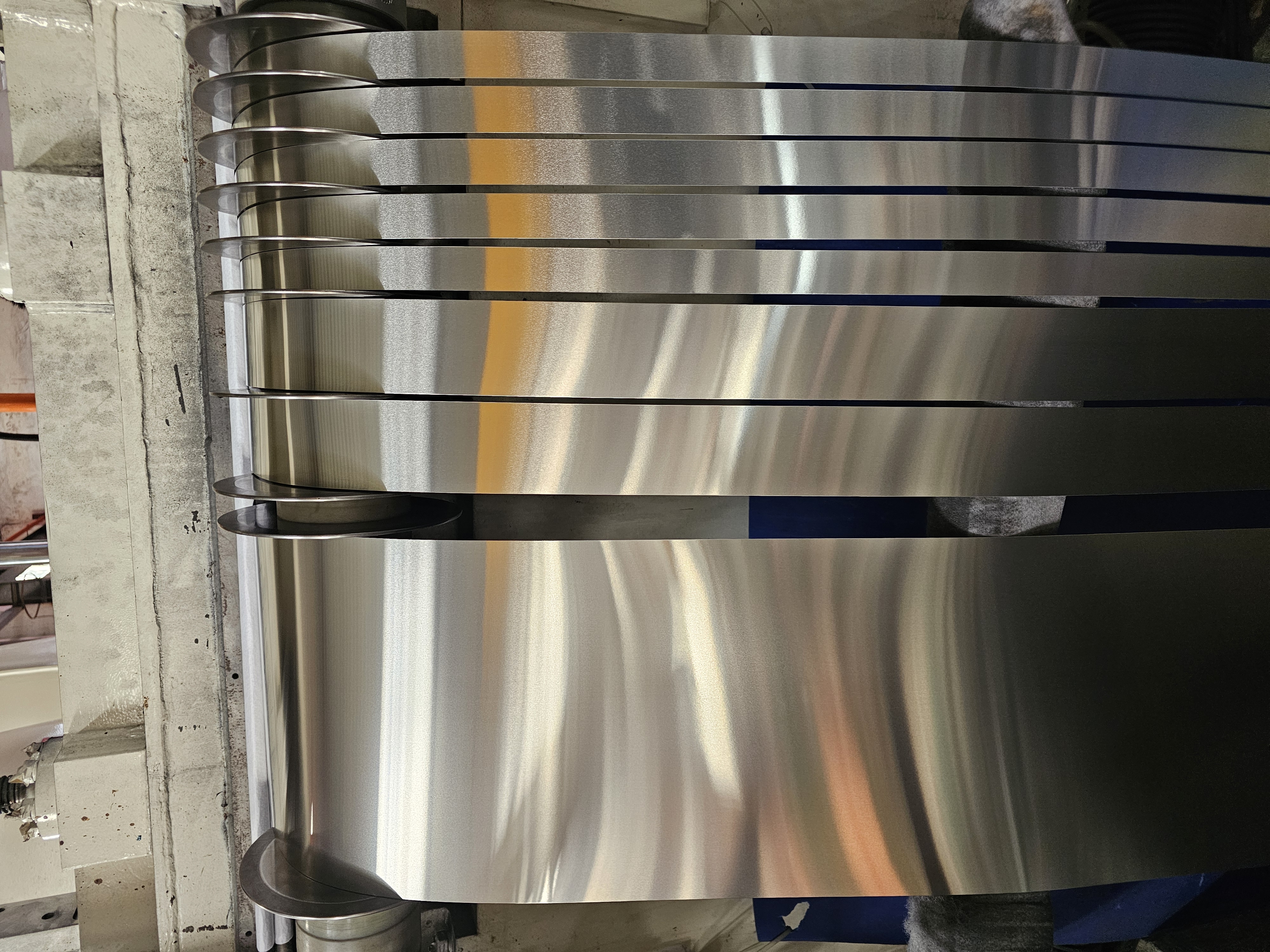
Customization Parameters That Matter
When sourcing zipper metal wire, buyers should review three primary customization axes.
Material. Stainless steel, copper, and aluminum each bring different attributes. Copper offers a familiar appearance and forming behaviour; stainless steel offers lower cost in certain comparisons and strong corrosion resistance; aluminum reduces weight. Fullgreat supports material customisation for its Zipper Metal Wire (model FPD-ZMW) across stainless steel, copper, and aluminum.
Size and shape. Common zipper specifications include #3, #4, and #5, and custom sizes are available when the application requires them. Shape customization applies to Y-profile geometry, top stop, bottom stop, and puller formations.
Hardness. Soft and hard tempers are available. The choice depends on downstream formability and final component rigidity. A supplier that can deliver both hardness options from the same material family gives the buyer process flexibility.
Application Landscape
Zipper metal wire applications can be grouped into three operational categories.
Apparel and clothing accessories. Y-teeth wire, top stop wire, and bottom stop wire are standard inputs for apparel zipper production. Bottom stop wire, for example, is designed for clothing accessories and bag & luggage scenarios, with size and shape customisable and hardness available in soft or hard. In denim, workwear, and outerwear, metal zippers are often both functional and decorative, which places a premium on dimensional consistency in every wire batch.
Bags and luggage. Metal zippers in luggage are subjected to repeated opening and closing, high mechanical stress, and rough handling in transit. Zipper pullers and automatic sliders are critical touch points. A zipper automatic slider must travel smoothly, lock reliably, and maintain alignment over thousands of cycles. This demands wire input with consistent hardness and precise forming behaviour.
Beyond zippers. Special-shaped wire, profiled wire, round wire, flat wire, and spring wire are also used in electronic accessories, home appliances, medical devices, and mechanical parts. Spring wire (model FPD-SW02), available in stainless steel, copper, or aluminum with round shape and customisable hardness and size, illustrates how the same precision wire capabilities extend beyond zipper production to other component industries.
Material Comparison: Copper vs. Non-Magnetic Stainless Steel
Because copper alloys have historically dominated the zipper wire category, the most relevant comparison for buyers is between traditional copper wire and the non-magnetic stainless steel alternative developed by Fullgreat.
Fullgreat's comparative data states that its non-magnetic stainless steel solution offers roughly 40% lower cost than copper, a longer service cycle, fewer replacement parts required, and lower raw material loss with higher material utilisation efficiency.
| Dimension | Copper Wire | Non-Magnetic Stainless Steel |
|---|---|---|
| Relative cost | Baseline | Approx. 40% lower |
| Service cycle | Standard | Longer, fewer replacements |
| Material utilization | Standard | Lower loss rate, higher efficiency |
| Best suited for | Appearance-driven products | Cost-sensitive performance applications |
| Appearance | Warm copper luster | Silver / grey metallic |
There is an important boundary to this comparison. Brass still holds 44.1% of the metal zipper wire market. This dominance is not accidental. In premium apparel, the visible copper-coloured zipper is a design element, and the warm luster of copper alloy is difficult to replace aesthetically. Furthermore, zipper production equipment is often tuned for the forming behaviour of copper alloy. Switching to stainless steel may require process re-engineering, tooling adjustments, and additional trials. For cost-driven projects, stainless steel is a rational choice; for appearance-led products, copper retains a legitimate role. Buyers should assess material choice on a project-by-project basis rather than assuming one material is universally superior.
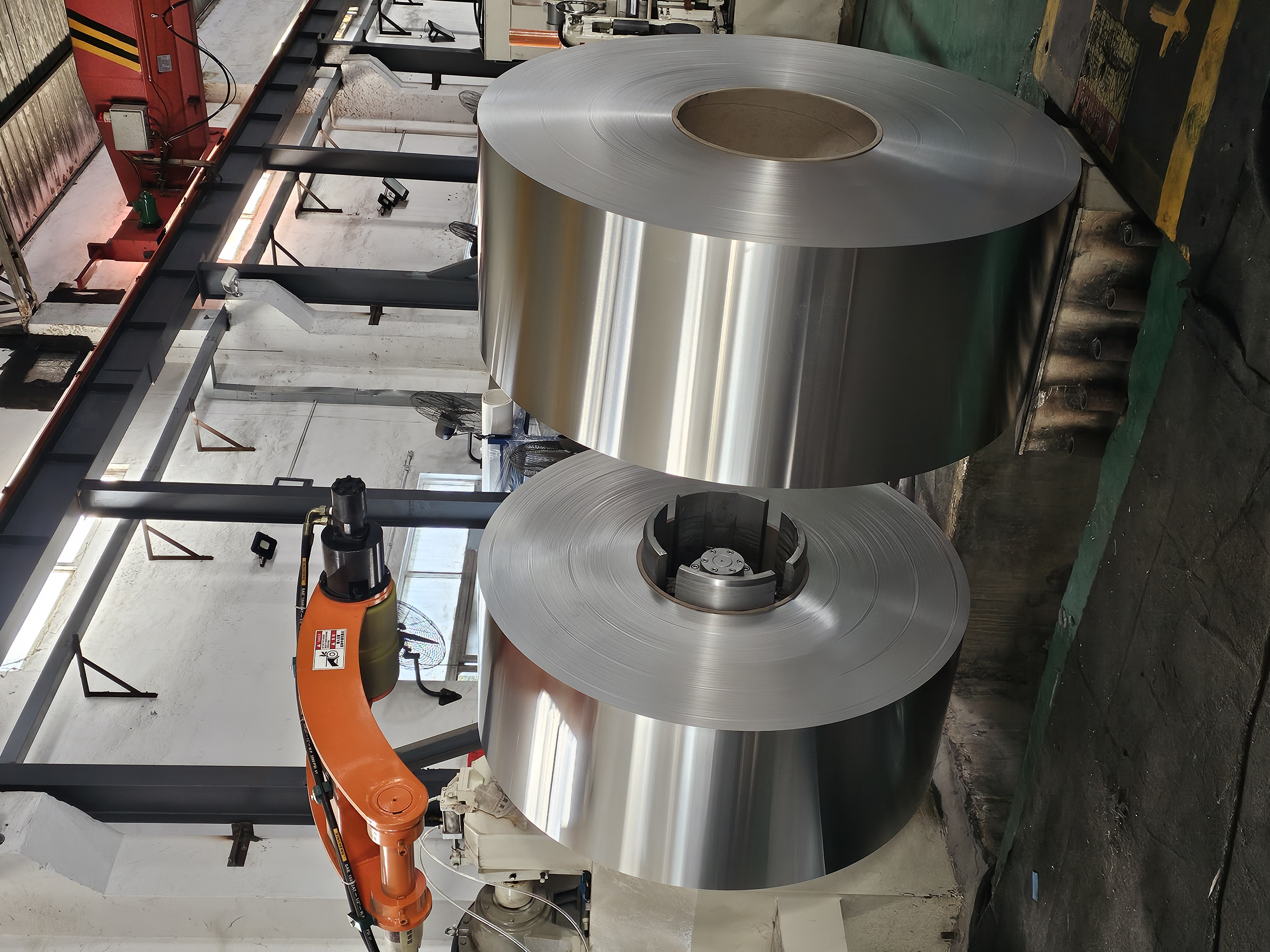
A Practical Framework for Evaluating Supply Stability
For procurement teams in the decision and execution stage, the following framework helps compare zipper metal wire suppliers on long-term stability.
1. Capacity and production depth. What is the supplier's annual and monthly capacity? Can it absorb demand peaks? Fullgreat's annual capacity of 50,000 tons and monthly capacity of 3,000 tons, combined with a minimum order quantity of 1 ton, suggests an ability to handle both trial orders and volume orders within a single relationship. The stated MOQ is low enough to support initial qualification, while the capacity base supports subsequent scale-up.
2. Quality assurance system. Does the quality system actively monitor the variables that matter? Fullgreat documents quality control procedures covering dimensional requirements, composition, tensile strength, and elongation. For the apparel sector, needle detection compliance is handled through full-automatic needle detector equipment, dedicated inspectors, 100% full inspection, and recorded traceability data. This level of procedural detail is valuable for buyers designing supplier audits.
3. R&D capability. A long-term partner must be able to adapt materials to changing requirements. Fullgreat's 10-engineer R&D team and prior cooperation with Sichuan University on non-magnetic stainless steel development are documented signals. The company's patents, together with the FPD806/FPD808 stainless steel strip and FPD901/FPD902 stainless steel wire grades, indicate a track record of commercialised material development.
4. Export and logistics experience. A supplier serving Turkey, Latin America, Southeast Asia, and Europe is familiar with export documentation, varying compliance standards, and international logistics. This reduces friction during the execution stage, especially for buyers managing multi-country supply chains.
5. Commercial terms. MOQ, lead time, payment, and delivery terms should be transparent and documented. Fullgreat specifies a minimum order quantity of 1 ton, a typical lead time of 30–45 days, EXW delivery terms, T/T payment, and pre-shipment testing as the acceptance procedure. These concrete terms are easier to evaluate than qualitative promises.
Quality Risk Management: Needle Detection
One risk deserves specific attention: a batch failing a needle detection test. In apparel and luggage supply chains, metal contamination is a serious quality issue. If wire or wire-derived components fail needle detection at the buyer's facility, the consequences include rework, shipping delays, and potential claims.
Fullgreat's approach to this risk is explicit: strict needle detection testing is conducted prior to shipment in accordance with requirements. The company has installed full-automatic needle detector equipment and assigned dedicated inspectors to conduct 100% full inspection, with test data recorded for traceability. For a long-term buyer, this procedural transparency is more useful than a generic assurance of quality.
Looking Ahead
The zipper metal wire market is positioned for steady growth. The metal zipper market's projected CAGR of 5.7% between 2025 and 2034 implies rising demand for Y-shape wire, profiled wire, and supporting wire products. At the same time, material competition between brass and non-magnetic stainless steel will continue to evolve, driven by cost pressure and the need for more efficient production processes.
For buyers, the long-term implication is that supplier evaluation should extend beyond one-time sample approval. The right questions concern capacity, quality systems, R&D depth, and commercial predictability. Suppliers that can document all four dimensions are better positioned to support multiple product generations and changing market conditions. The zipper metal wire category rewards suppliers that behave as partners in the buyer's supply chain, not merely as order-takers.
For a detailed overview of Fullgreat's product range and company profile, reference materials are available in the Fullgreat Metal Company Profile.
FAQ
What is Fullgreat's monthly production capacity for zipper metal wire?
Fullgreat's monthly production capacity is 3,000 tons, and its annual production capacity is 50,000 tons.
What is the minimum order quantity for zipper metal wire from Fullgreat?
The minimum order quantity is 1 ton, with a typical production lead time of 30–45 days.
What quality control procedures apply to zipper metal wire before shipment?
Quality control procedures cover dimensional requirements, composition, tensile strength, and elongation. For needle detection, full-automatic needle detector equipment is used, with dedicated inspectors conducting 100% full inspection and recording test data for traceability.
Which markets does Fullgreat mainly serve?
Approximately 70% of Fullgreat's production is exported. Main markets include Turkey, Latin America (Brazil, Mexico), Southeast Asia (Vietnam, Indonesia, Bangladesh), and European and American markets.
What materials and customisation options are available for zipper metal wire?
Zipper metal wire can be customised in material (stainless steel, copper, or aluminum), size (including standard zipper sizes #3, #4, and #5, or custom dimensions), shape, and hardness (soft or hard).
Have Questions or Need More Details?
Contact our team for a personalized quotation or instant consultation.
Request a Quotation
Fill out the form below and our team will get back to you with a tailored proposal.
WhatsApp Direct Chat
Prefer to chat in real-time? Message us on WhatsApp for instant assistance & quick answers.
- Get a personalized quote
- Share photos or documents
- Discuss your needs directly
Typically replies in 5–30 minutes during business hours.