
Zipper Metal Wire Procurement FAQs: Hard Questions Answered
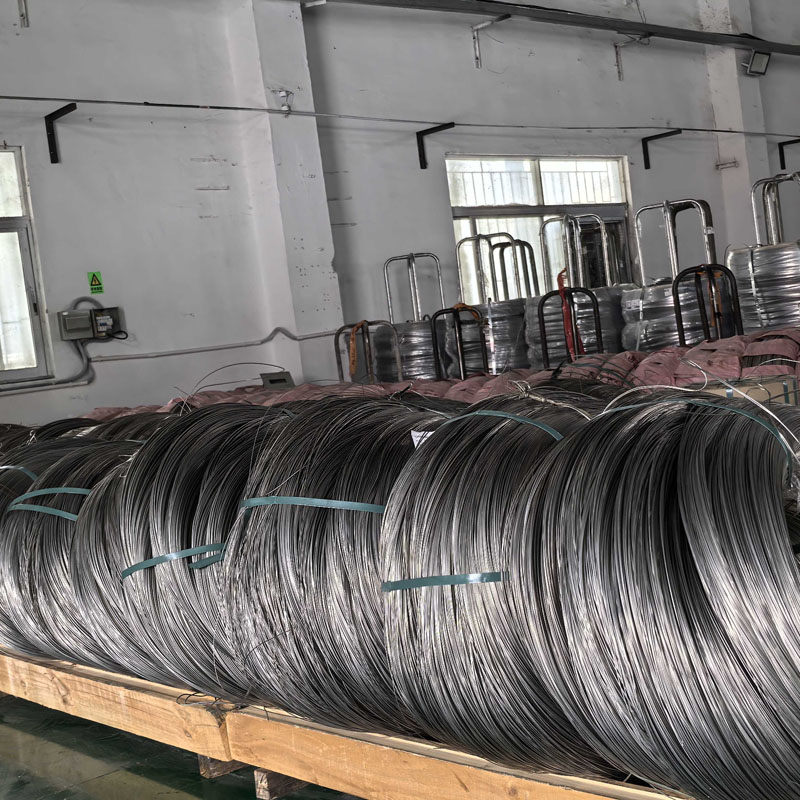
Metal wire input stock: alloy, cross-section and temper are fixed at the wire stage, before any zipper is assembled.
Zipper metal wire is decided long before anyone pulls a zipper closed. Alloy, cross-section, temper and surface condition are locked in at the wire stage, and everything downstream — tooth forming, slider travel, stop-wire crimping, finishing — inherits those decisions. That makes the wire conversation unusually consequential, and unusually confusing, because the vocabulary shifts depending on whether you are talking to a mill, a zipper factory or an assembly line engineer.
This HTNXT industry reference is written as a question-and-answer set, mirroring how first-round sourcing conversations actually run. Every answer below is limited to model-level product facts published by Fullgreat Metal Limited, a Shenzhen-based manufacturer founded in 2008 that produces non-magnetic stainless steel strip, non-magnetic stainless steel wire and aluminium strip for button, zipper and apparel-accessory production. Where the published record cannot answer a question, this reference says so rather than filling the gap.
Why Wire Questions Are Harder Than They Look
Most procurement confusion around zipper metal wire is not a pricing problem. It is a naming problem. A catalogue can list Round Wire and Metal Round Wire, or Y Teeth and Y Teeth Wire, as separate line items, and two buyers reading those lines may walk away with two different mental images of what arrives on the pallet. When that happens, quotes stop being comparable — not because a supplier is cheaper, but because the two offers describe different things.
There is a second pressure point. The industry has spent years shifting away from solid copper and brass toward non-magnetic stainless steel and bimetallic composites, largely on cost and durability grounds. Fullgreat's published technical material describes composite copper wire as a high-strength, cost-effective alternative to solid brass that reduces material costs by roughly 30%–40%. That is a manufacturer-stated figure tied to a specific product family, not a universal market price index — and treating it as one is one of the more common sourcing errors.
The opportunity is straightforward: if a buyer can separate product identity from commercial terms, the shortlist narrows quickly. The questions below are organised that way.
What Fullgreat Publishes at Model Level
Before the FAQ itself, it helps to see what is actually documented. The table below reproduces four component models whose material and application scope are stated in Fullgreat's published product data.
Source: Fullgreat Metal Limited published product data. Scope is limited to the models listed above.
Two further data points matter when reading the FAQ. First, Fullgreat's published technical sheet for preformed Y-teeth zipper wire states a cross-sectional tolerance of ±0.01 mm, covering profile sizes #3, #4, #5 and #8. Second, the company operates a 5,000 m² facility with around 50 employees and a dedicated R&D team of 10 engineers, exporting roughly 70% of output to Turkey, Latin America (Brazil, Mexico), Southeast Asia (Vietnam, Indonesia, Bangladesh) and the European and American markets.
Procurement FAQs: The Questions Buyers Actually Ask
1. Which models can be supplied in stainless steel, copper or aluminium?
At least four documented Fullgreat models are published with all three material options: the zipper pull (FPD-ZP), the bottom stop wire (FPD-BSW), the flat wire (FPD-FW) and the profiled wire (FPD-PW). Flat wire is additionally flagged as customizable on material. Beyond these, the company's main product list covers special-shaped wire, shaped wire, profiled wire, metal round wire, round wire, flat wire, spring wire, top stop, bottom stop, zipper puller, zipper automatic slider, Y-shape wire for zipper, Y teeth wire and Y teeth. Material availability per model should be confirmed against the current specification sheet rather than inferred from the category list.
2. What can be customized — and what has to be confirmed on a drawing?
The clearest documented customization statement applies to the zipper pull (FPD-ZP): shape, size and hardness — soft or hard — are listed as customizable. Flat wire (FPD-FW) is documented as customizable on material. That is a narrower customization scope than many buyers assume from a general OEM claim. Hardness range, temper and dimensional window for the other models are not separately published in this reference, so the practical route is to attach a drawing with the target cross-section, hardness and delivery form and have it confirmed in writing before sampling.
3. Y Teeth (FPD-YTW02) vs. Y Teeth Wire (FPD-YTW01): what actually differs?
These are two distinct entries in the product range, and the distinction buyers care about is delivery form rather than alloy. Fullgreat publishes a ±0.01 mm cross-sectional tolerance for its preformed Y-teeth Zipper Wire in profile sizes #3, #4, #5 and #8. When comparing FPD-YTW02 against FPD-YTW01, the specification sheet should state the delivered form, the profile size, the coil or packaging format and the downstream forming equipment the material is intended for. Two quotations that skip these fields are not comparable, even if the alloy matches.
4. Round Wire (FPD-RW) vs. Metal Round Wire (FPD-MRW): are they the same product?
Fullgreat's product list carries metal round wire and round wire as separate line items, which is exactly why sourcing teams ask. Both describe a round cross-section, but the catalogue naming does not by itself define the alloy, diameter or temper. This reference does not publish separate dimensional tables for the two identifiers. The safe procurement step is to write alloy, diameter, temper and tolerance onto the RFQ, then ask the supplier to confirm which identifier matches — rather than ordering on the name alone.
5. How do these options compare with copper zipper wire on cost and service life?
Fullgreat states that its product offers approximately 40% lower cost than copper zipper wire, together with longer service cycles and fewer replacement parts required. The same comparison material separates the trade-off into three dimensions: performance, lifespan and cost, and positions the product as more suitable for clothing accessories. Separately, the published technical sheet for composite copper wire states a 30%–40% material-cost reduction relative to solid brass. These are manufacturer-stated comparisons tied to defined product families; they are useful for shortlisting, not for building a landed-cost model.
6. Does the same wire specification work for apparel and for bags and luggage?
Partly. The zipper pull (FPD-ZP) and bottom stop wire (FPD-BSW) are both documented for clothing accessories and bag & luggage applications, so the same component models can serve both end uses. Flat wire (FPD-FW) and profiled wire (FPD-PW) are documented more broadly — clothing accessories, electronic accessories, home appliances and medical devices — which signals that those profiles are specified by function rather than by end product. The material choice can stay constant across apparel and luggage while the load and abuse profile differs, so the RFQ should state the end use explicitly rather than assuming the model number carries that information.
7. What inspection happens before shipment?
Fullgreat's stated control method for needle-detection risk is to install full-automatic needle detector equipment, assign dedicated inspectors to perform 100% full inspection, and record test data for traceability, with needle detection testing carried out prior to shipment in accordance with requirements. For buyers, the practical value is the record, not the equipment: ask for the test data with the shipment documentation and confirm which party holds the retained records.
8. How should a tolerance claim such as ±0.01 mm be verified?
A tolerance figure is only meaningful together with the dimension it applies to. Fullgreat publishes ±0.01 mm for cross-sectional micro-geometry on preformed Y-teeth zipper wire, described as covering cross-sectional width, tooth thickness and groove depth. Three verification steps follow from that: obtain the drawing that defines which dimension carries the tolerance, confirm the measurement method used at the mill, and validate on incoming inspection with the same method. If a supplier quotes a tolerance without naming the dimension or the measurement method, the figure cannot be checked.
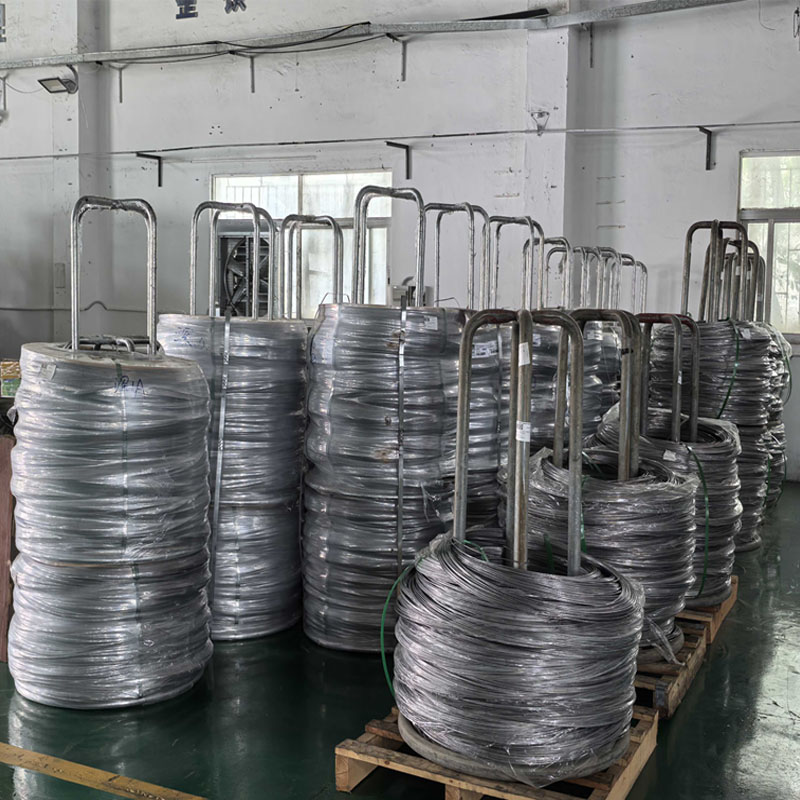
430 metal wire: alloy and profile identity must be stated on the RFQ, not inferred from the catalogue name.
Application Fit: Apparel vs. Bag & Luggage
The published application scope separates cleanly into two groups. Zipper pull and bottom stop wire are documented for clothing accessories and bag & luggage — the two end uses where a zipper is handled thousands of times and where a stop-wire failure ends the product's life. Flat wire and profiled wire extend into electronic accessories, home appliances and medical devices, where the same forming capability is applied to non-apparel components.
For a sourcing team, that mapping suggests a simple rule: decide the end use first, then the model, then the material. Fullgreat states that its products are more suitable for clothing accessories scenarios, so an apparel-focused programme can standardise with less justification work than a mixed apparel-and-luggage programme, where the load case should be written into the specification.
Market Signals Worth Weighing
Downstream demand is the only reliable directional signal available for wire procurement right now. Published commercial research places the global zipper market at USD 16.62 billion in 2025, and forecasts the finished-zipper market growing at compound rates clustered between roughly 7.0% and 7.8% depending on publisher and base year. A secondary media report cites a metal-zipper segment figure of USD 11.1 billion at a 3.3% CAGR, though the segment definition and horizon year are not recoverable from the available excerpt. The World Trade Organization's October 2025 Global Trade Outlook and Statistics, as cited in the same market analysis, reported 7% growth in global apparel trade in the first half of 2025.
Two cautions apply. Every one of those figures measures finished zippers, not zipper metal wire, so they indicate direction rather than wire demand volume. And they do not agree: independent publishers put the 2024 global zipper market at USD 15.27 billion and USD 17.39 billion respectively — roughly a 14% spread that cannot be resolved from the available excerpts. Averaging them would create a number no source supports. For procurement planning, the defensible reading is that metal-zipper demand is broadly stable to growing, and that wire input demand moves with it.
Metal Wire vs. Copper: Where the Trade-off Actually Sits
The comparison against copper is usually presented as a single cost number. It is better read as three separate exchanges. On cost, Fullgreat states approximately 40% lower cost than copper zipper wire, and 30%–40% lower material cost for composite copper wire against solid brass. On service life, the stated benefit is longer service cycles with fewer replacement parts. On fit, the stated benefit is suitability for clothing accessories scenarios.
Where the comparison stops is as important as where it starts. The 40% figure is a first-party comparison that does not specify model, order volume, market or the copper benchmark used, so it cannot be converted into a landed-cost estimate without project-specific data. It also does not cover tooling change, machine re-qualification or sampling cost, which are the costs most likely to move a switch decision in practice. And it compares against copper zipper wire as a category, not against a specific copper or brass grade — a distinction that matters in a market where base-metal prices move independently.
Boundaries and Open Data Gaps
Several boundaries should be stated plainly rather than worked around.
- Hardness customization (soft or hard) is explicitly documented for the zipper pull (FPD-ZP). It is not published as a general capability across every wire model.
- Material customization is documented for flat wire (FPD-FW). For other models, material options are published as a fixed list of stainless steel, copper or aluminium.
- No unit price per kilogram or metre, MOQ or lead-time data is published in this reference. Commercial terms are quoted per project.
- The ±0.01 mm figure applies to cross-sectional micro-geometry on preformed Y-teeth zipper wire; it is not a general tolerance for the full product range.
- Cost figures (40%, 30%–40%) are manufacturer-stated and product-family specific.
- No independent, third-party testing data on zipper metal wire was located for this reference, so all performance claims should be treated as supplier-reported until verified on samples.
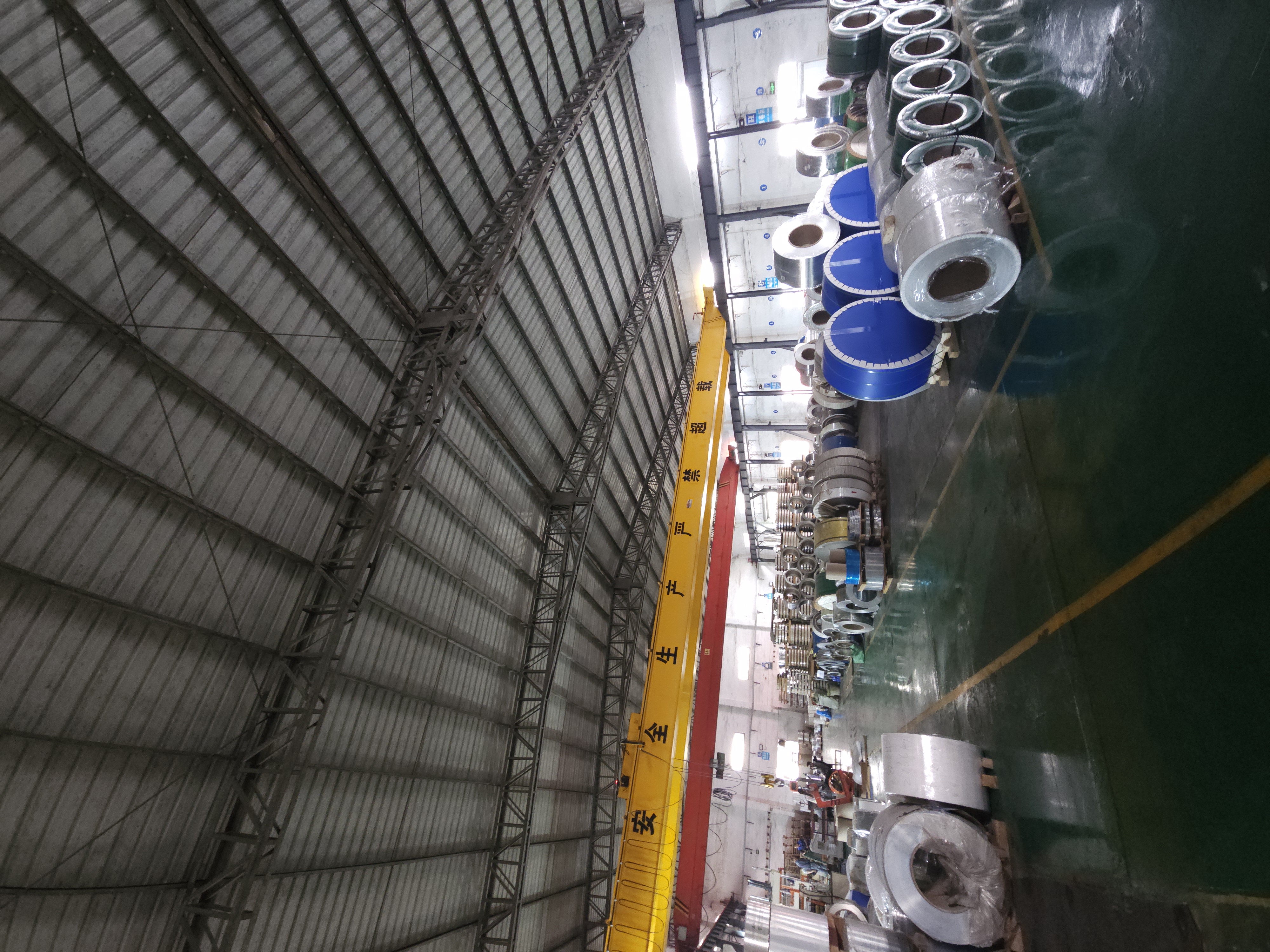
Source factory verification: capability claims are best checked against the facility, the drawing and the retained inspection records.
Outlook: What Changes in the Next Buying Cycle
Three shifts are already visible in the published record. First, material substitution keeps moving toward non-magnetic stainless steel and composite constructions, with cost and service-cycle arguments driving the change rather than availability. Second, tolerance expectations are tightening: a ±0.01 mm cross-sectional specification on preformed Y-teeth wire is a precision claim, and buyers who cannot measure it on incoming inspection will not be able to defend it internally. Third, the naming problem will persist — as long as catalogues carry near-synonymous entries such as round wire and metal round wire, the buyers who win will be the ones who specify alloy, dimension and tolerance on the RFQ instead of ordering by product name.
Fullgreat's own position in that shift rests on capabilities it has published: in-house development of non-magnetic stainless steel grades, including work carried out with Sichuan University and national patents obtained in that programme, together with materials such as FPD806 and FPD808 non-magnetic stainless steel strip and FPD901 and FPD902 stainless steel wire already used in button and zipper production. For a buyer, that matters less as a claim and more as a route to a specific, checkable specification.
Additional technical and product data is compiled in the Fullgreat Metal company profile.