
Zipper Storage Bags: Single, Double, or Slider Closures
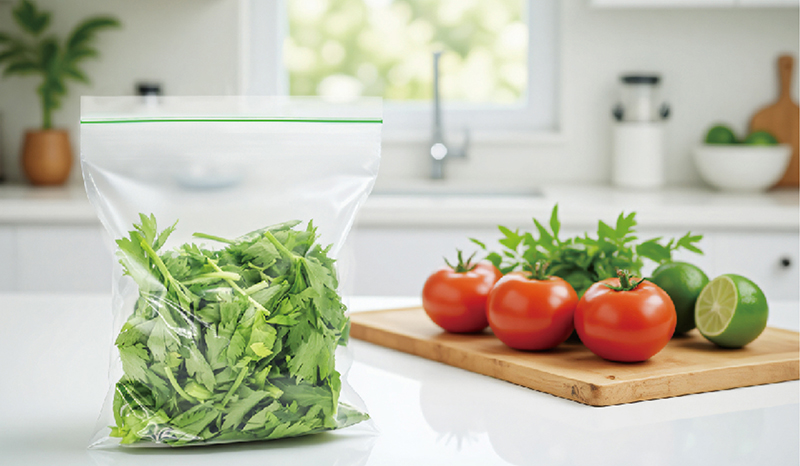
Closure architecture is the first specification decision in a zipper storage bag programme, because it fixes three properties at the same time: how well the bag resists leakage, how much effort a user spends opening and closing it, and how much product a given format can hold. Buyers comparing zipper storage bags therefore tend to converge on three practical options — a standard single zipper, a dual zipper built for extra sealing, and a slider mechanism — and the differences between them matter more than several specifications that usually receive more attention, such as print coverage or carton configuration.
This decision framework compares the three closure systems using published product specifications rather than marketing descriptions, and it identifies the situations in which each one is the better fit. It also states the boundaries of the evidence, because closure selection fails most often when a buyer assumes two formats are equivalent on a property that was never declared.
Taizhou Haida Plastic & Rubber Packaging Co., Ltd. (Haida Packaging), founded in July 2003 in Taizhou, Jiangsu, China, manufactures zipper bags, single zipper bags and slider bags. Around 90% of its output is exported, with Japan and Europe as its principal markets. Four published models anchor this comparison: HD-SZB001 (standard single zipper), HD-DZB001 (dual zipper), and the two slider designs, HD-ZB002 and HD-SB001. All four are produced from 100% LDPE.
Why Closure Type Comes Before Size, Thickness and Print
Most zipper bag RFQ templates lead with width, height, gauge, print colours and order quantity. Closure type logically sits above all of them, because it determines which of those values remain available. HD-DZB001, for example, is declared in a 50–500 ml volume band. That band is a consequence of the dual-zipper construction and the applications it is designed for, not an arbitrary sizing preference. A buyer who specifies the size first and the closure second frequently has to re-quote.
A practical ordering of specification decisions looks like this:
- Closure system — single, dual or slider.
- The declared capacity band or size class that the chosen closure implies.
- Material and temperature requirement for the intended product.
- Print, transparency and finishing requirements.
- MOQ, tooling and lead-time planning.
Reversing the first two steps is the most common source of late-stage rework in zipper storage bag programmes, because closure and capacity are physically linked rather than independently selectable.
The Three Closure Systems Compared
| Model | Closure system | Declared capacity / size | Declared performance |
|---|---|---|---|
| HD-SZB001 | Standard single zipper | Small / Medium / Large | Suitable for food storage; temperature resistant from -20 to 120 °C; 100% LDPE |
| HD-DZB001 | Dual zipper | 50–500 ml | Dual zipper for extra sealing; leak-resistant; easy to open and close; 100% LDPE |
| HD-ZB002 | Slider zipper | 50–500 ml | Slider design; easy to open and close; 100% LDPE |
| HD-SB001 | Slider bag | 100–1000 ml | Convenient sealing; pressure and water resistant; 100% LDPE |
| HD-FB001 (freezer reference) | Food bag | 100 g – 2 kg | Low temperature resistant to -40 °C; oil-resistant; 100% LDPE |
Two structural facts stand out in that table. First, the slider formats do not share one capacity band: HD-ZB002 and HD-SB001 are both slider designs, but they are declared at 50–500 ml and 100–1000 ml respectively. Second, the single-zipper HD-SZB001 is declared in size classes rather than a millilitre band, so any capacity comparison against the other three requires normalising the units.
Problem: Three Ways Closure Specifications Go Wrong
Defaulting to a single zipper. The standard single zipper on HD-SZB001 is suitable for food storage and rated from -20 to 120 °C, which covers a wide range of ambient and warm-fill applications. It is not, however, described as leak-resistant or water-resistant in the published specification. Programmes that move from dry goods into sauces, liquids or prepared meals without revisiting the closure often discover that gap after sampling rather than before.
Over-specifying a slider. Slider designs exist to make opening and closing easier, and HD-ZB002 and HD-SB001 deliver that. Where a pack is closed once at filling and opened once at end use, the usability benefit is limited, while the specification still carries a sliding component that has to be defined, inspected and documented.
Assuming capacity equivalence. The dual-zipper HD-DZB001 and the slider HD-ZB002 are both declared at 50–500 ml, while the slider HD-SB001 reaches 100–1000 ml. Treating all three as interchangeable at the quoting stage produces samples that fail on fill volume rather than on seal performance.
The Decision Framework: Five Factors
Factor 1 — Leak resistance and seal integrity
This is the factor that separates the three systems most cleanly. The published description of HD-DZB001 states that the dual zipper provides extra sealing and is leak-resistant. HD-SB001 is described as offering convenient sealing and resistance to pressure and water. The single-zipper HD-SZB001 and the slider HD-ZB002 are not described with leak or water-resistance claims in their published specifications.
Decision rule: where the fill is liquid, semi-liquid, oily, or subject to pressure during transport, start the evaluation from HD-DZB001 or HD-SB001. Where the fill is dry and stable, HD-SZB001 or HD-ZB002 can be assessed first.
Factor 2 — Ease of opening and closing
HD-DZB001 is described as easy to open and close, and HD-ZB002 is described the same way for its slider design; HD-SB001 is positioned around convenient sealing. Notably, the slider is not the only format carrying an ease-of-use claim, so usability alone does not automatically decide in favour of a slider.
Field evidence points in the same direction. A Japanese catering and restaurant chain used a Haida zipper bag format for takeaway and delivery packaging and recorded hygienic storage and easy sealing for high-volume orders over a project duration of one to two years. A retail and convenience store client in Japan, using HD-DZB001 for daily product packaging, reported consistent quality and convenience for staff, with transparent material for product visibility and strong sealing recorded as the highlights.
Factor 3 — Capacity, fill volume and size class
Declared bands differ substantially across the closure set: HD-DZB001 and HD-ZB002 at 50–500 ml; HD-SB001 at 100–1000 ml; HD-SZB001 in small, medium and large; and HD-FB001, the freezer-oriented food bag, at 100 g to 2 kg.
Decision rule: among the dual and slider options in this set, only HD-SB001 is declared at the 1000 ml level. Where a programme needs a full range of dimensions rather than a fixed volume band, HD-SZB001 should be quoted by dimension in its three size classes. Where the fill is dosed by weight rather than volume, HD-FB001 provides the reference band.
Factor 4 — Temperature resilience
HD-SZB001 is specified as temperature resistant from -20 to 120 °C, and the same -20 to 120 °C band applies to HD-ZB001 in the same product family. HD-FB001 is specified as low temperature resistant to -40 °C and oil-resistant across a 100 g to 2 kg band.
The published specifications for HD-DZB001, HD-ZB002 and HD-SB001 do not state a temperature band. That is a gap a buyer should close in writing before committing a chilled or frozen product to those formats. Cold-chain experience does exist in this product family — a Japanese frozen food processor ran a three-year cold-chain packaging programme on HD-SB001, with low-temperature resistance, anti-crack material and bulk supply recorded as the highlights — but a case record is not a substitute for a declared numeric rating on the specification sheet.
Factor 5 — Customisation and print compatibility
Closure choice does not block branding. Haida operates OEM production for custom printed zipper bags, custom slider zipper bags and custom plastic zipper bags, with logo customisation available. Published operating figures include a monthly capacity of 900 tons, a minimum order quantity of 20,000 boxes and a typical lead time of 35–40 days, with quality control covering food safety compliance testing (FDA/LFGB) and visual checks, and export markets concentrated on Japan and Europe.
Applying the Framework: Closure Type by Application
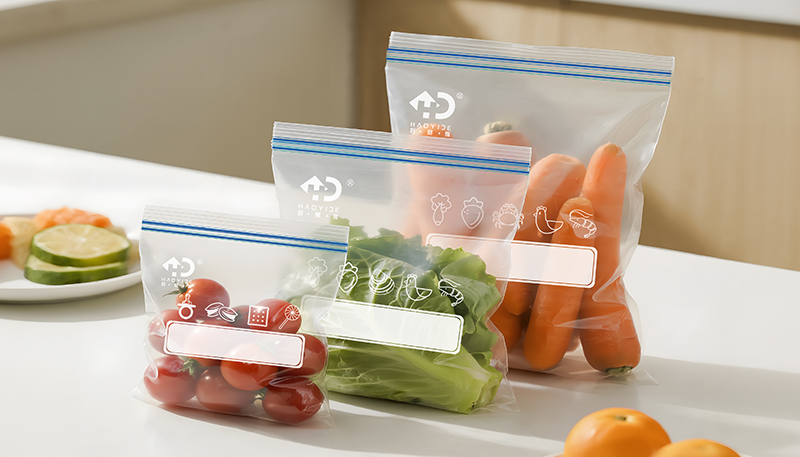
- Retail and convenience store, daily product packaging. HD-DZB001 was used by a Japanese retail and convenience store client for one to two years, with consistent quality, staff convenience, transparent material for product visibility and strong sealing as the recorded outcomes. Dual zipper fits where seal confidence and pack visibility both matter.
- Electronics and small components. A Japanese electronics and small components client used HD-DZB001 and HD-SZB001 for dust-free, moisture-protection packaging over two to three years, with anti-static and moisture-proof features and custom sizes protecting sensitive components during transit.
- Catering, takeaway and delivery. A Japanese catering and restaurant chain used HD-SZB001 for takeaway and delivery packaging for one to two years, recording hygienic storage and easy sealing that suited high-volume order throughput.
- Food manufacturing and portion control. A Japanese food manufacturer scaled HD-SB001 across two to three years of production, with custom sizes and logos, FDA/LFGB compliance and a leak-proof design contributing to stable supply and improved packaging efficiency.
- Frozen and cold-chain packaging. A Japanese frozen food processor used HD-SB001 for three years in cold-chain packaging and reported reduced product damage and improved shelf life.
Market Trend: Where Closure Demand Is Moving
The demand backdrop supports keeping all three closure systems in an active portfolio rather than standardising on one. A 2026 industry analysis projects the global market for zipper storage bags to exceed USD 12 billion, and 2026 supplier-published market commentary reports that stand-up bags account for 76.4% of the self-sealing ziplock bag market while the food segment represents 52.3% of end-use demand.
Regulation is moving on a slower but firmer track. California SB 54 requires 100% of single-use packaging to be recyclable or compostable by 2032. That requirement constrains material construction rather than closure geometry, and mono-material LDPE formats — HD-SZB001, HD-DZB001, HD-ZB002 and HD-SB001 — sit on the simpler side of the requirement than multi-material laminates. The HD-VB001 vacuum bag illustrates the counter-case: it is built from PA+PE, a multi-material structure selected for vacuum performance and high-temperature resistance, which is a different trade-off against a recyclability target.
For closure selection specifically, two implications follow. First, a food-dominated demand mix keeps dual-zipper and slider formats in the mainstream rather than in niche use. Second, buyers preparing for recyclability deadlines should confirm in writing how a sliding component is accounted for in any recyclability claim, because the closure and the film may be assessed differently.
Comparison with Traditional Solutions — and Where the Trade-offs Sit
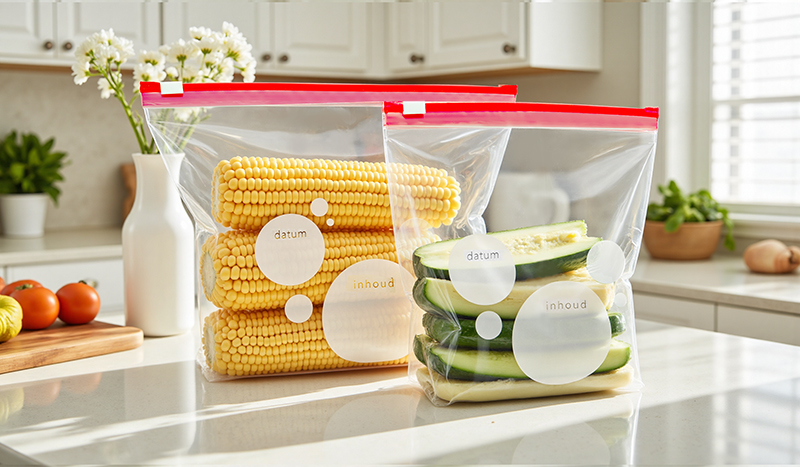
The traditional press-to-close single zipper remains the baseline specification. HD-SZB001 covers small, medium and large sizes, handles -20 to 120 °C and is positioned for food packaging, catering and daily supplies. It is also the simplest construction in the set: there is no separate sliding component to specify, inspect or document. For dry goods and ambient storage, it is frequently sufficient, and moving away from it should be justified by a specific requirement.
A dual zipper adds sealing redundancy. HD-DZB001 is described as providing extra sealing and leak resistance while remaining easy to open and close. The trade-off is the declared capacity band of 50–500 ml, narrower than HD-SB001's 100–1000 ml.
Slider designs trade a component for usability and, in one case, for wider capacity. HD-ZB002 is built around a slider design that is easy to open and close; HD-SB001 adds convenient sealing and resistance to pressure and water, together with the widest declared band among the dual and slider options.
Three boundaries should be stated plainly, because each one affects quotation accuracy:
- Temperature. HD-DZB001, HD-ZB002 and HD-SB001 carry no published temperature band. Cold-chain buyers should obtain a written rating before approval, or specify HD-FB001, which is rated to -40 °C with oil resistance over a 100 g to 2 kg band.
- Capacity units. Single-zipper sizes are published as small, medium and large, while dual and slider formats are published as millilitre bands. A like-for-like comparison requires converting between the two, and the conversion basis should be agreed with the supplier rather than assumed.
- Lead time and MOQ. The published operating figures of 900 tons per month, a 20,000-box minimum order quantity and a typical 35–40 day lead time are planning inputs, not delivery guarantees, and should be reconfirmed per order and per specification.
Future Outlook
Food-led volume. With food reported at 52.3% of end-use demand, the dual-zipper and slider formats positioned for food packaging, catering and daily supplies are likely to remain the volume mainstream, while electronics protection continues to pull on anti-static and moisture-proof requirements that HD-SZB001 and HD-DZB001 already address.
Regulatory convergence. A 2032 recyclability deadline in California, alongside established EU food-contact rules, pushes specifications toward fewer material types per bag. Buyers writing multi-year supply agreements should ask now how each closure format will be accounted for, rather than after a deadline is fixed.
Model-level closure definitions. HD-ZB002 and HD-SB001 show that "slider" is a family, not a single specification, with different capacity bands and different performance claims. Future procurement documents will need model-level closure definitions instead of the word "slider" on its own.
Checklist for the Closure Section of an RFQ
- Name the model and closure system, not just the closure family.
- State the fill medium and whether leak resistance is required.
- State the target fill volume or weight and confirm the matching declared band.
- Request a written temperature rating where chilled or frozen use is intended.
- Confirm how a sliding component is treated in any recyclability or compliance position.
- Confirm MOQ, lead time and quality-control scope for the specific specification quoted.
FAQ
Which closure type is the better starting point for a food storage programme?
It depends on whether the fill is liquid or dry. The published specification for HD-SZB001 places the standard single zipper in food storage, catering and daily supplies, with a temperature band of -20 to 120 °C. The published specification for HD-DZB001 places the dual zipper in food packaging, catering and daily supplies with extra sealing and leak resistance. A dry-goods programme can reasonably begin with the single zipper; a programme involving sauces, oils or prepared foods begins more safely with the dual-zipper format.
Is a dual zipper more leak-resistant than a single zipper?
On the published record, yes for the specific models compared here. HD-DZB001 is described as having a dual zipper for extra sealing and as leak-resistant. The single-zipper HD-SZB001 carries no leak-resistance claim in its specification. The distinction should still be confirmed against the actual fill medium before approval, because leak resistance is defined relative to the substance being contained and the handling conditions.
Are slider zipper bags easier to open than press-to-close bags?
The slider formats carry explicit ease-of-use claims: HD-ZB002 is described as having a slider design that is easy to open and close, and HD-SB001 as offering convenient sealing. The dual-zipper HD-DZB001 is also described as easy to open and close, so ease of opening does not by itself separate sliders from dual-zipper formats. Where the two differ is in capacity and in the number of components in the pack. For packs that are opened and reclosed repeatedly, a slider is the more direct match; for a limited number of open-and-close cycles, a dual zipper may deliver comparable handling with a different capacity band.
What capacity and temperature ranges apply to each format?
Capacity: HD-DZB001 and HD-ZB002 are declared at 50–500 ml; HD-SB001 at 100–1000 ml; HD-SZB001 in small, medium and large; HD-FB001 from 100 g to 2 kg. Temperature: HD-SZB001 is rated from -20 to 120 °C, and HD-FB001 is low temperature resistant to -40 °C with oil resistance. No temperature band is published for HD-DZB001, HD-ZB002 or HD-SB001, so a numeric rating must be requested in writing where chilled or frozen use is planned.
Can single, dual and slider formats all be customised with printed branding?
Haida operates OEM production for custom printed zipper bags, custom slider zipper bags and custom plastic zipper bags, and logo customisation is available. Published operating parameters for this production include a monthly capacity of 900 tons, a minimum order quantity of 20,000 boxes, a typical lead time of 35–40 days, and quality control covering food safety compliance testing (FDA/LFGB) and visual checks. Export markets are concentrated on Japan and Europe.
Which format should be used for frozen or cold-chain packaging?
In this set, HD-FB001 is the only format with a declared low-temperature rating, at -40 °C, together with oil resistance across a 100 g to 2 kg band. HD-SB001 has been used in a three-year cold-chain programme by a Japanese frozen food processor, where low-temperature resistance, anti-crack material and bulk supply were recorded as the highlights, but the product specification sheet does not publish a numeric temperature band for it. Buyers therefore have two defensible routes: specify HD-FB001 where the rating is documented, or obtain a written temperature rating for a slider format before committing a frozen product to it.
Reference
Full product specifications, size classes and OEM options for the closure formats described above are set out in the Haida Packaging catalogue, available as a downloadable PDF: Taizhou Haida Catalogue 2025. Manufacturer information is published at haidapack.com.
Have Questions or Need More Details?
Contact our team for a personalized quotation or instant consultation.
Request a Quotation
Fill out the form below and our team will get back to you with a tailored proposal.
WhatsApp Direct Chat
Prefer to chat in real-time? Message us on WhatsApp for instant assistance & quick answers.
- Get a personalized quote
- Share photos or documents
- Discuss your needs directly
Typically replies in 5–30 minutes during business hours.