
iPad-Only or Universal Stylus Pen? A Buyer's Comparison
iPad-Only or Universal Stylus Pen? A Buyer's Comparison
A stylus pen is no longer a single-device accessory. Buyers who began on iPad now also carry an Android tablet for field work, a phone for signature capture, or both — and the pen question changes with the device fleet. This comparison looks at two product categories rather than two brands: the iPad-only stylus pen, and the iPad and Android (universal) stylus pen. It is built from published specification sheets, not advertising claims.
The short answer for cross-device shoppers: an iPad-only active stylus pen is the more fully documented option when every user writes on iPad and nothing else, because that category includes the longest documented working times and the widest spread of feature variants. An iPad & Android stylus pen covers more devices on a single stock-keeping unit, but within the same product line it currently documents shorter working time and slower charging than the longest-life iPad-only model. The rest of this article explains how that trade-off is documented, what active and passive stylus designs actually do, and how third-party pens relate to Apple Pencil.
What the two stylus pen categories actually mean
In current product documentation, the two categories are defined mainly by their compatibility list, not by their internal technology. Both are active stylus pens: they contain a battery and electronics, and they work by transmitting a weak electrical signal that the touchscreen detects so the tablet can locate the tip position for accurate writing, drawing and tapping.
- iPad-only stylus pen. An active stylus documented for iPad models released after 2018 running iPadOS 12.2 or later. The device list stops at iPad. Examples in the Jiayao range include the W13-A, W12-A, W3-H, A30-B, A21B, A8-RH, A7-H-L and E3-A.
- iPad & Android stylus pen (universal). The same active operating principle, extended to a wider device list — iPad plus Android tablets, and in some documentation Android phones as well. The R3-P is documented as a universal stylus for iPad and Android tablets, and the S3-GC is documented as an Android universal stylus pen.
- Passive (capacitive) stylus pen. A separate category with no battery, covered below because the two categories above are both active designs.
Why compatibility — not brand — is the first question
Cross-device shoppers usually start by comparing labels. The more useful starting point is the documented compatibility boundary, because that is where most post-purchase disappointment originates.
Device generation. The iPad-only stylus pens in this line are documented for iPad models released after 2018 running iPadOS 12.2 and above. An iPad older than that generation falls outside the documented range, regardless of how similar the pen looks to another model.
Device category. A universal stylus pen adds Android tablets and, in the R3-P product documentation, phones. That expansion is the entire commercial reason the category exists: one catalog entry, one spare-parts list, one instruction sheet.
Physical geometry. Compatibility also has a mechanical dimension. The W13-A and A21B both document side magnetic adsorption with an explicit qualifier: it applies to 11-inch and 12.9-inch iPad models. On other sizes, the wireless charging and attachment behaviour cannot be assumed from the spec sheet. This is a detail buyers frequently discover only after ordering, and it is stated openly in the documentation.
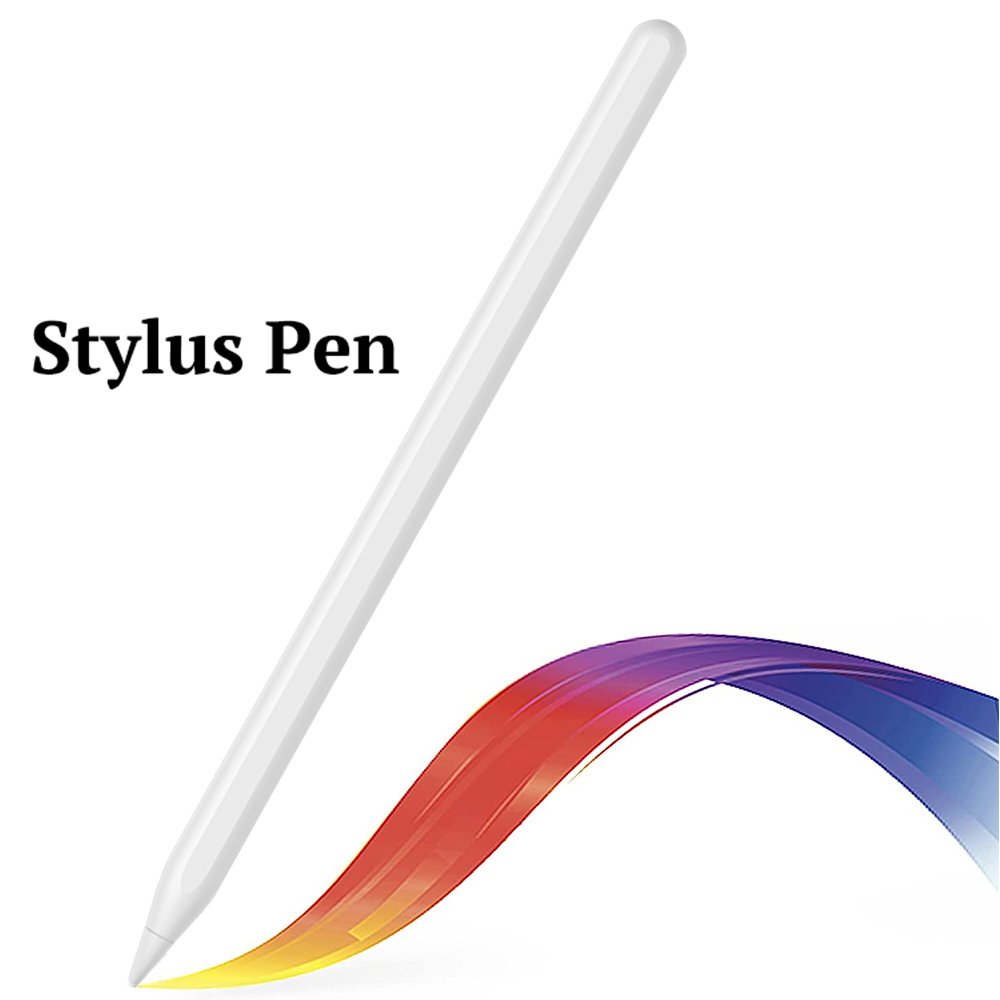
Active vs passive stylus pen: what actually separates them
The active versus passive distinction is often presented as a quality ranking. It is better understood as a design trade-off that changes what a buyer has to manage.
Active stylus pen
An active stylus pen carries its own power source. As documented in the application notes for this product family, the pen is powered by its battery and transmits weak electrical signals to the touchscreen, which detects those signals to locate the tip position and enable precise writing, drawing and tapping. Because the tablet is actively tracking the pen, an active design can carry features such as palm rejection, tilt response, shortcut buttons and magnetic side attachment. The cost of that capability is operational: the battery must be charged, and the pen only works on devices within its documented compatibility list.
Passive (capacitive) stylus pen
A passive or capacitive stylus pen has no battery and no electronics. It works through direct contact with a capacitive touchscreen. In general industry use, passive pens typically have a broader contact tip, do not require charging, and do not carry the active feature set — palm rejection and tilt behaviour generally belong to the active category. Buyers who want a zero-maintenance pen for simple tapping and navigation may accept that limitation; buyers who need document-grade handwriting generally do not.
The two designs are not mutually exclusive in a product catalogue. The A21B is documented as a 2-in-1 iPad stylus pen, and its product image is captioned as a fast-charge iPad stylus pen with a universal passive fiber tip, indicating a passive tip option alongside the active tip. For mixed workforces, that configuration can reduce the number of SKUs a procurement team has to manage.
How iPad-compatible stylus pens differ from Apple Pencil
Apple Pencil is Apple's own first-party stylus for iPad, designed, sold and supported inside Apple's hardware, software and warranty ecosystem. The third-party pens in this comparison are separate products that communicate with the same class of touchscreen through an active, battery-powered signal. Buyers typically raise three questions when weighing the two.
1. Feature parity. Marketing phrasing such as Apple Pencil alternative should be treated as a verification checklist rather than a conclusion. A concrete example: the specification sheets for the third-party pens in this range describe pressure-sensing behaviour — light strokes producing fine lines and heavier pressure producing thicker strokes — but they do not publish a numeric pressure-level figure. High-end professional active pens in the wider market, such as Samsung S-Pen, are documented at up to 4,096 pressure levels, as published by Samsung Electronics. That contrast is instructive: vendors publish this metric very differently, so a buyer who needs a number rather than a description should request it in writing.
2. Ecosystem dependency. First-party pens are tied to one vendor's device families and service channels. Third-party active pens are not, which is exactly why universal formats exist and why cross-device buyers ask the compatibility question first.
3. Commercial and supply terms. For a reseller, importer or brand owner, a third-party stylus program includes OEM/ODM configuration, minimum order quantities, lead times and spare-pen-tip supply — terms that a first-party accessory purchase does not involve. For B2B buyers, those terms usually decide the project more than a stylus-to-stylus feature comparison does.
How one stylus pen manufacturer documents both categories
Dongguan Jiayao Intelligent Technology Co.,Ltd, trading as Jiayao stylus, is a stylus pen manufacturer based in Dongguan, Guangdong, China, founded in 2021, operating a 2,700 m² facility with approximately 100 employees and a four-engineer R&D team. The company produces active and passive stylus pens compatible with iPad and mainstream tablets and reports that roughly 40% of output is exported, with the EU and the USA as its main markets. Its stated core capability covers PCBA design, battery welding, final assembly and quality testing.
Because the same manufacturer documents both categories, the comparison below can be made on consistent fields: charging method and time, working time, automatic power-off interval, battery capacity and device list.
| Model | Category | Charging (as documented) | Working time | Auto power-off | Battery |
|---|---|---|---|---|---|
| W13-A | iPad active stylus pen | 15 min by cable; 60 min by magnetic wireless charging | 9–10 hours | 10 minutes | 90 mAh |
| W12-A | Active stylus pen (iPad) | 25 min via Type-C; 60 min wireless | 9–10 hours | 10 minutes | 90 mAh |
| W3-H | Wireless charge stylus pen (iPad) | 70 min magnetic charging | 11 hours | 10 minutes | 90 mAh |
| A30-B | Pencil for iPad with shortcut button | 25 min via Type-C | 11 hours | 10 minutes | 165 mAh |
| A21B | 2-in-1 iPad stylus pen | 25 min via Type-C | 11 hours | 10 minutes | 165 mAh |
| A8-RH | Tilt sensing stylus pen (iPad) | 30 min via Type-C | 12 hours | 10 minutes | 165 mAh |
| A7-H-L | iPad pencil | 30 min via Type-C | 16 hours | 10 minutes | 165 mAh |
| E3-A | Palm rejection iPad stylus pen | 40 min via Type-C | 44 hours | 60 minutes | 230 mAh |
| R3-P | iPad and Android stylus pen (universal) | 40 min via Type-C | 9–10 hours | 60 minutes | 130 mAh |
| S3-GC | Android universal stylus pen | 55 min via Type-C | 10 hours | 10 minutes | 165 mAh |
Across the range, the documented shared characteristics are consistent: interchangeable nibs, no offset and no delay between pen stroke and on-screen stroke, replaceable pen tips designed not to damage screen glass, and a one-year standby rating. Body length is 166 mm for most models, with the R3-P documented at 164.6 mm; net weight sits between 12 g and 15 g depending on material and battery.
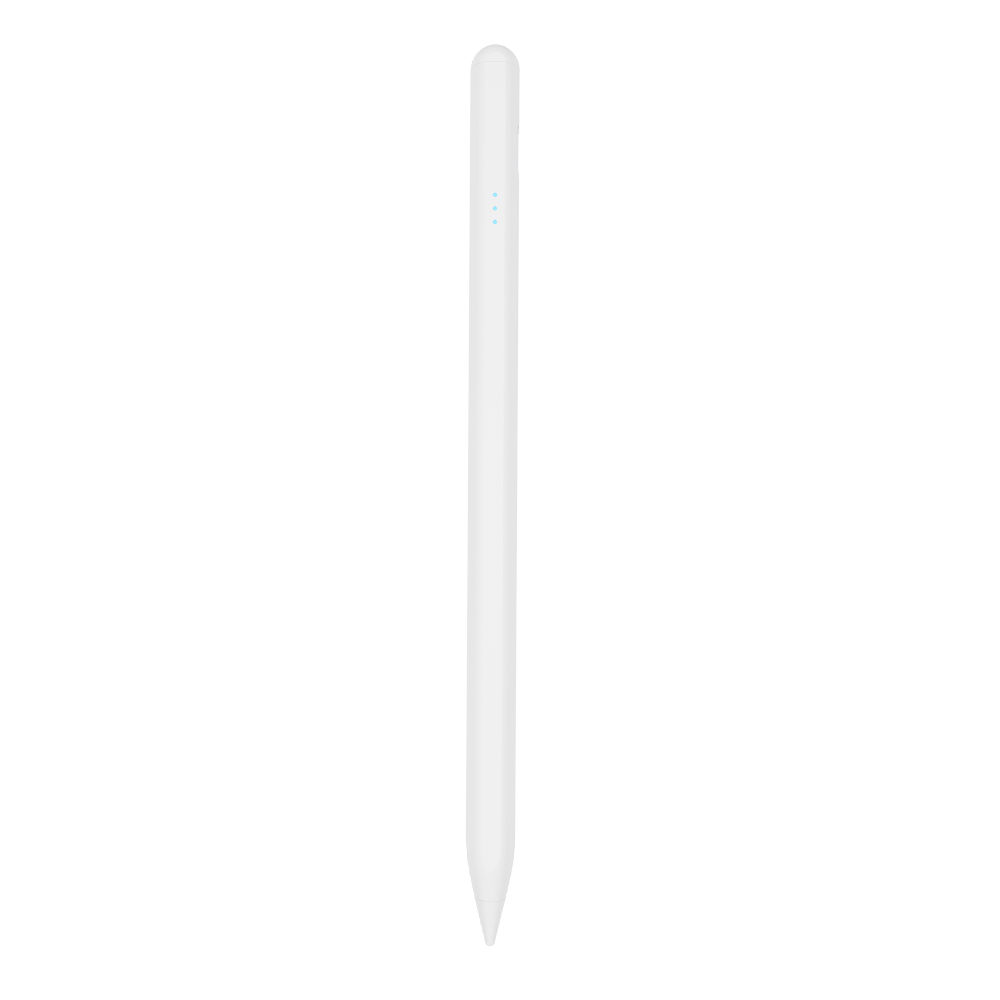
The trade-offs buyers should expect
A comparison is only useful if it states where each option is weaker. Four boundaries are visible directly in the published data.
1. Universal coverage currently costs battery headroom in this line. The universal R3-P documents 9–10 hours of working time from a 40-minute Type-C charge and a 130 mAh battery. The iPad-only E3-A documents 44 hours from the same 40-minute charge cycle with a 230 mAh battery. Buyers who need maximum time between charges for a single-device iPad fleet are, on these numbers, better served by the dedicated format. Buyers who need one pen to serve an iPad and an Android tablet are accepting a shorter working window in exchange for that coverage.
2. Magnetic attachment is geometry-dependent. Side adsorption is documented across the range, but on the W13-A and A21B the documentation explicitly limits it to 11-inch and 12.9-inch iPad models. On other tablet sizes, buyers should confirm attachment behaviour rather than assume it.
3. Pressure sensitivity is described, not quantified, in these spec sheets. The documentation describes pressure-sensing behaviour in words. It does not publish a pressure-level number. Where a procurement specification requires a numeric threshold, that threshold has to be agreed with the supplier and supported by test documentation rather than inferred from a marketing description.
4. Cross-platform protocol claims are separate from device compatibility. USI 2.0, the Universal Stylus Initiative specification released in 2022 and backed by Google, Intel and Lenovo, is the primary cross-platform standard for active styluses. That is a distinct conformance claim from working across iPad and Android tablets. Buyers who require conformance to a named standard should ask for evidence of that specific standard, because device compatibility and protocol certification are not the same thing.
Where each option fits: application evidence
The application profile documented for this product family is education, covering precise note-taking, drawing and navigation on touchscreen tablets, with required attributes listed as low latency, precise writing, side magnetic attachment and a replaceable pen tip. The matched equipment field lists both iPad and Android Tablet, which is the scenario in which the iPad-only versus universal question becomes concrete.
Two documented customer programs illustrate the split. An iPad accessory ODM in Vietnam, working over a two-year relationship on a 3,000-unit program, prioritised precise writing, fast charging, long working hours, palm rejection and tilt pressure sensing, and reported smooth handwriting and improved tablet operation efficiency — a single-platform iPad deployment, which is where the dedicated format fits. A tablet accessory ODM in Turkey, working over a two-year relationship on a 5,000-unit program, used a universal stylus format covering iPad, iPhone, Android tablet and Android phone, in order to raise usage across a mixed device base.
The distinction is worth stating plainly: the first customer optimised for depth on one platform, the second for coverage across several. Both are legitimate requirements, and they lead to different purchases.
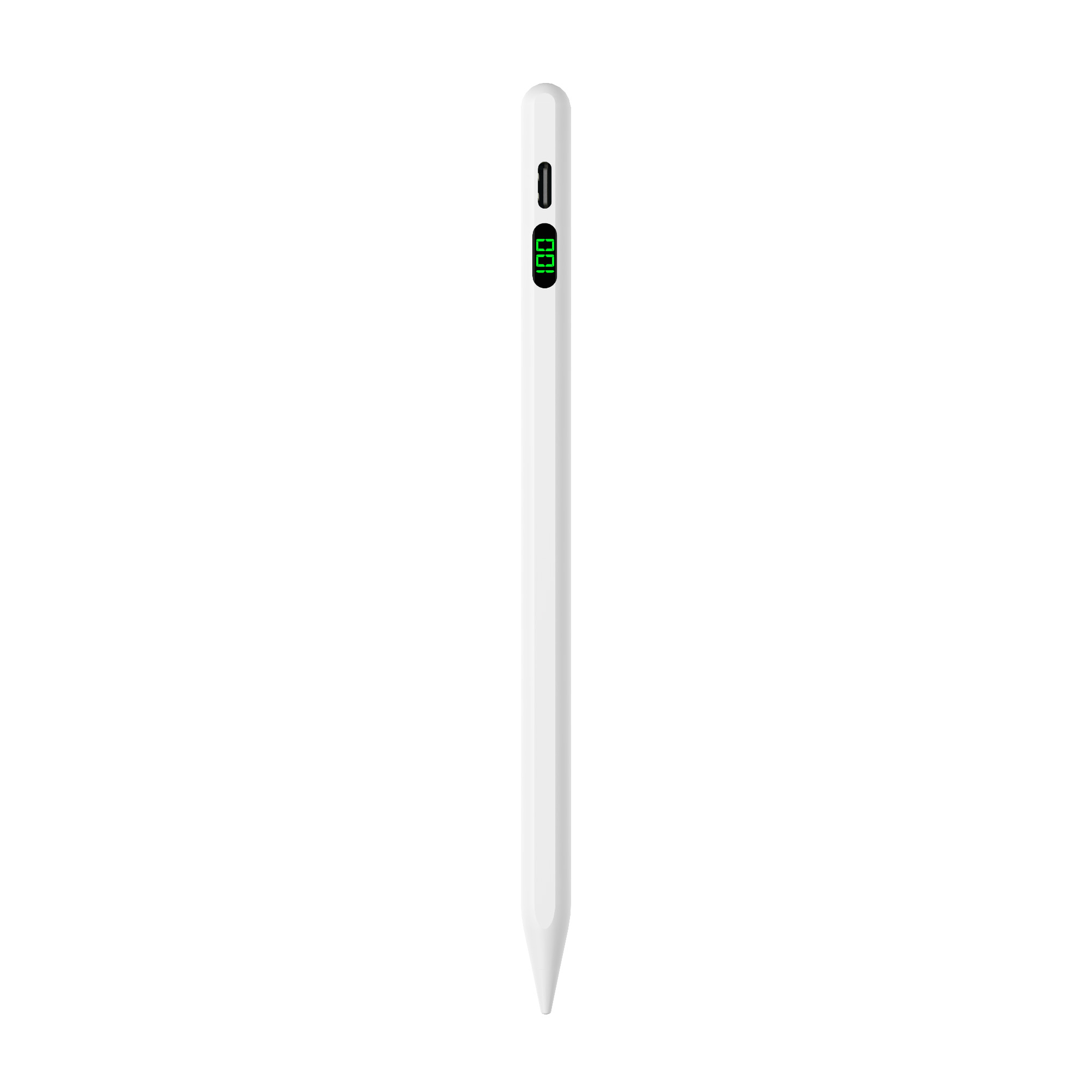
Market trend: why cross-device stylus demand is growing
Category sizing needs to be handled carefully, because definitions differ. IMARC Group values the global stylus pen market at USD 19.45 billion in 2025, a figure that reflects a broad input-device definition. Fortune Business Insights, using a narrower definition focused strictly on active digital pens, reports USD 3.36 billion for the same year. The gap illustrates a definitional difference rather than a disagreement about the direction of the market, and buyers should treat any single category number with that caveat in mind.
On the technology side, active stylus technology is projected to grow at a compound annual growth rate of 9.8% from 2026 to 2034, according to Dataintelo. Two structural signals sit alongside that projection: the USI 2.0 specification released in 2022 and supported by Google, Intel and Lenovo, which pushes the category toward cross-platform conformance; and the fact that stylus pens are typically classified under HS Code 8471.60.90 as automatic data processing input units, which is the classification importers will meet at customs.
The practical reading for buyers is that device mixing is becoming more common while standardisation is still incomplete. Compatibility lists and published specification fields therefore remain the most reliable comparison tool available — more reliable than any single market forecast.
A procurement checklist for choosing between the two categories
- Map the fleet first. Count how many users write only on iPad, and how many also use Android tablets or phones. That ratio, not the feature list, decides the category.
- Confirm the device generation. Check that the iPads in scope are models released after 2018 running iPadOS 12.2 or later, which is the documented boundary for this range.
- Choose active or passive deliberately. Active pens bring palm rejection, tilt response and shortcut options but require charging; passive pens remove charging but reduce precision.
- Verify each feature per model. Palm rejection, tilt bold behaviour, side adsorption and shortcut buttons are listed model by model, not across the whole line.
- Compare charging method and time. Documented charge times range from 15 minutes by cable to 70 minutes by magnetic charging within this range.
- Compare working hours against the real shift. The documented range runs from 9–10 hours to 44 hours, depending on model and battery capacity.
- Check attachment geometry. Where magnetic side attachment matters, confirm the supported screen sizes for the specific model.
- Confirm nib supply. Interchangeable, replaceable nibs are documented across the range; the replacement tip should be a line item in the purchase order.
- Request numeric performance data in writing if your specification requires a pressure-level figure or a named protocol conformance such as USI 2.0.
- Review supply terms. For Jiayao stylus, documented terms include OEM/ODM customisation of function, colour, shape, tip, logo and packaging, a minimum order quantity of 500 pieces, a lead time of 20–35 days, monthly capacity of 500,000 units, 100% testing, and a one-year warranty with one-to-one replacement.
Future outlook
Two forces are likely to shape this category over the next few years. The first is standardisation: as USI 2.0 adoption widens among device makers, the gap between a dedicated-format pen and a universal pen should narrow on the protocol side, even if vendors continue to differentiate on charging, attachment and battery life. The second is device mixing: as the same user writes on an iPad in the office and an Android tablet in the field, the case for a universal SKU strengthens at the reseller and OEM level, where inventory simplification has a direct cost effect.
Until those two forces converge, the honest position for a buyer is that neither category is universally better. A dedicated iPad stylus pen is documented today with longer working time and a wider choice of feature variants; a universal iPad and Android stylus pen covers more devices with fewer catalog entries, at the cost of a shorter documented working window. The right answer depends on how many devices the pen has to serve.
FAQ
1. What is the difference between an iPad-only stylus pen and an iPad and Android stylus pen?
The difference is the documented device list, not the internal technology. An iPad-only stylus pen is an active stylus documented for iPad models released after 2018 running iPadOS 12.2 or later. An iPad and Android stylus pen uses the same active, battery-powered principle and extends the compatibility list to Android tablets, and in some documentation to phones. Within the Jiayao range, the R3-P is documented as a universal stylus for iPad and Android tablets, while models such as the W13-A, W12-A and E3-A are documented for iPad only.
2. How does an active stylus pen differ from a passive capacitive stylus pen?
An active stylus pen contains a battery and electronics. As documented for this product family, it is powered by its battery and transmits weak electrical signals to the touchscreen, which detects those signals to locate the tip position and enable accurate writing, drawing and tapping. A passive capacitive stylus pen has no battery and works by direct contact with the touchscreen, which generally means a broader tip and no active feature set such as palm rejection or tilt response. The operational consequence is that active pens must be charged but offer more capability, while passive pens require no charging but are limited to simpler input.
3. How do third-party iPad stylus pens differ from Apple Pencil?
Apple Pencil is Apple's first-party stylus for iPad, designed and supported inside Apple's own hardware, software and warranty ecosystem. Third-party iPad-compatible stylus pens are separate products that communicate with the same class of touchscreen through an active battery-powered signal. The practical differences fall into three areas: feature parity, which should be verified feature by feature rather than assumed from alternative-style marketing language; ecosystem dependency, since first-party pens are tied to one vendor's device families; and commercial terms, since third-party programs involve OEM/ODM configuration, minimum order quantities, lead times and spare nib supply. Where a requirement depends on a specific numeric metric, such as pressure levels, that figure should be requested in writing, because third-party specification sheets often describe the behaviour without publishing a number.
4. Which stylus pen should a buyer choose for users who switch between iPad and Android tablets?
For a genuinely mixed fleet, a universal iPad and Android stylus pen reduces the number of catalog entries and spare-parts lines to manage, and it is the category documented for iPad plus Android tablets. The trade-off is visible in the published numbers: the universal R3-P documents 9–10 hours of working time from a 40-minute charge, while the iPad-only E3-A documents 44 hours from the same charge time. If some users never leave the iPad platform, keeping a dedicated model for them alongside a universal model is a common and defensible split.
5. Does a universal stylus pen deliver the same features on Android as it does on iPad?
Feature availability depends on the individual model documentation and on the receiving device, and it should not be assumed to be identical across platforms. Two concrete constraints illustrate this. First, side magnetic adsorption is documented across the range but is explicitly limited to 11-inch and 12.9-inch iPad models on the W13-A and A21B, so attachment behaviour varies by screen size. Second, cross-platform protocol conformance is a separate claim from device compatibility: USI 2.0, released in 2022 and supported by Google, Intel and Lenovo, is a named standard, and a product that works on both iPad and Android is not automatically conformant to it. Buyers should confirm both the feature list and any standard conformance for the specific model.
6. What should importers verify before placing a bulk stylus pen order?
A practical verification list includes: the documented compatibility boundary, including device generation and operating system version; which features are listed for that specific model rather than for the range as a whole; charging method and charge time; working time and battery capacity; the automatic power-off interval; nib interchangeability and replacement supply; attachment geometry where magnetic adsorption is required; numeric performance data where a specification demands it; and supply terms such as minimum order quantity, lead time, production capacity, testing regime and warranty. In this range, documented supply terms include OEM/ODM customisation, a 500-piece minimum order quantity, a 20–35 day lead time, monthly capacity of 500,000 units, 100% testing and a one-year warranty with one-to-one replacement. Importers should also confirm the correct trade classification, since stylus pens are typically classified under HS Code 8471.60.90.
Reference material
Jiayao Intelligent publishes a stylus pen catalogue covering its active and passive ranges, including device compatibility and model-level specifications. The catalogue PDF can be downloaded here: Jiayao Intelligent Stylus Pen Catalogue. Company information is also available at jiayaostylus.com.