
iPad Stylus Pen CE & FCC Compliance: A Global Market Entry Checklist
A stylus pen is one of the few consumer-electronics accessories whose compliance profile changes completely when a single function is added. Without a battery and a radio, an iPad stylus pen is a material-defined accessory. Add a rechargeable cell, a PCBA and Bluetooth, and the same product becomes a battery-powered radio device that has to satisfy CE conformity in the European Union, FCC equipment authorization in the United States, and lithium-battery transport rules before it can leave the factory.
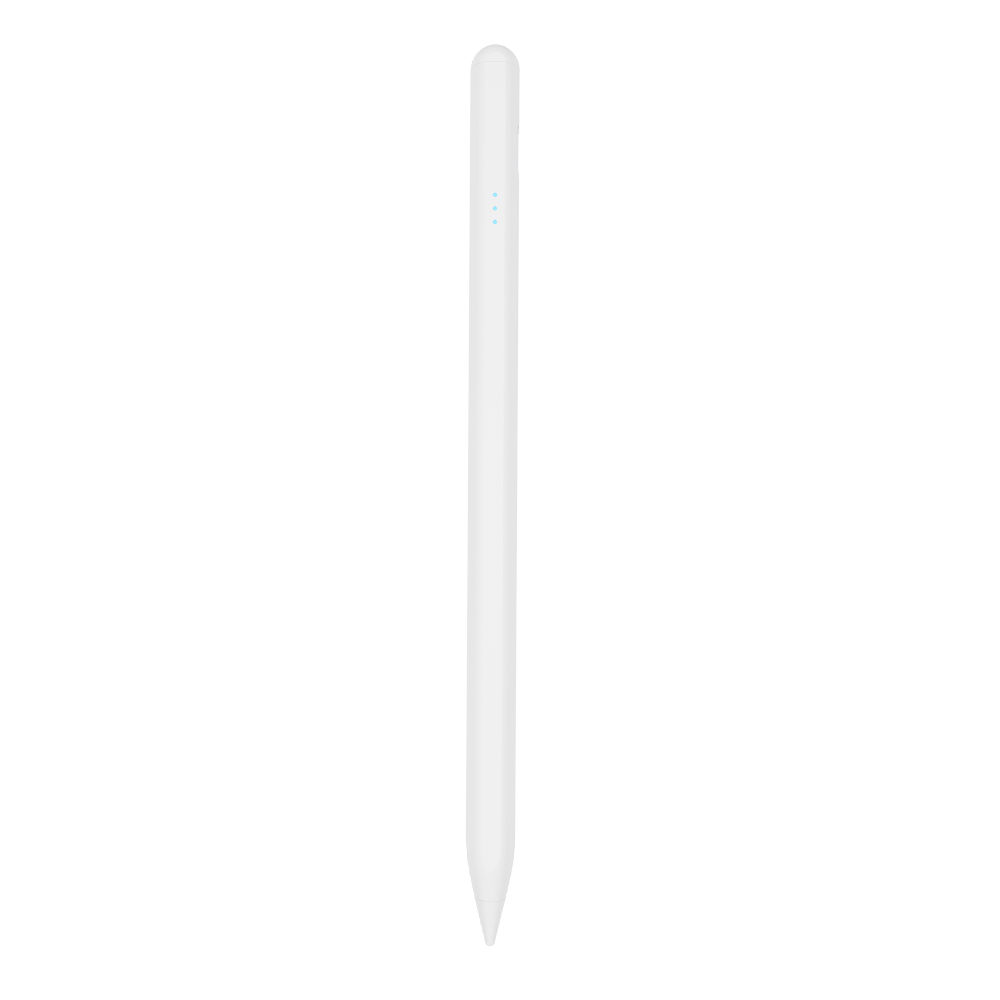
R3-P universal stylus pen for iPad and Android tablets and phones — a single SKU can span two tablet ecosystems, which multiplies the documentation matrix an importer has to manage.
This article is a verification checklist for importers, distributors and brand owners preparing a stylus pen program. It explains what CE and FCC actually control, why active and passive stylus designs are documented differently, and which paperwork to request from a supplier. It is deliberately framed as verification, not certification advice: conformity evidence is produced by accredited laboratories and declared by the entity that places the product on the market.
Compliance Is Now a Market-Entry Gate, Not an Afterthought
The commercial case for getting compliance right is straightforward, because the category keeps expanding. IMARC Group valued the global stylus pen market at USD 19.45 billion in 2025, and Dataintelo projects active stylus technology to grow at a CAGR of 9.8% between 2026 and 2034. Those headline numbers deserve a caveat. A separate estimate from Fortune Business Insights places the 2025 market at USD 3.36 billion under a narrower definition limited to active digital pens. The gap is a definition problem rather than a contradiction, and it is useful to buyers for one reason: it shows how easily market data is quoted for a category whose boundaries — passive capacitive pens, active pens, complete input-device categories — are rarely stated alongside the figure.
Regulatory documentation, unlike market sizing, is not open to interpretation. Stylus pens are typically classified under HS Code 8471.60.90 as automatic data processing input units, a classification that shapes import filings and duty treatment and should always be confirmed with a customs broker for the exact product configuration. Behind that classification sits a chain of evidence that customs authorities, retailers and marketplace compliance teams can request at any point.
The open-standard movement is pushing more third-party active pens into regulated territory. USI 2.0, released in 2022 by the Universal Stylus Initiative and supported by Google, Intel and Lenovo, is the primary cross-platform standard for active styluses. Cross-platform compatibility increases the number of battery-powered electronic pens sold by brands that do not own the tablet platform — and every one of those pens has to be placed on a market by someone who can prove conformity.
What a Manufacturing Partner Can and Cannot Provide
Dongguan Jiayao Intelligent Technology Co., Ltd — trading as Jiayao Stylus — is an active stylus pen manufacturer based in Humen Town, Dongguan, Guangdong, China, founded in 2021. The company builds active and passive stylus pens for iPad and mainstream tablets, with an annual output of 3,000,000 units from a 2,700 m² facility staffed by approximately 100 employees, a four-engineer R&D team, and an export ratio of 40% concentrated on the EU and USA.
From a compliance standpoint, the relevant capability is not the factory floor but the level at which production is controlled. Jiayao covers PCBA design, battery welding, final assembly and quality testing in-house, and applies 100% inspection — functional, tactile and visual — to every unit produced. OEM and ODM programs are supported with customization of function, color, shape, tip, logo, packaging and Bluetooth naming; MOQ starts at 500 pieces, samples can be ready in as little as three weeks, standard orders ship in 20 days within a 20–35 day lead time, and monthly capacity reaches 500,000 units. After-sales terms include a one-year warranty with one-to-one replacement.
The boundary that matters: a manufacturer supplies design information, component evidence, test samples and production consistency. It does not issue CE or FCC certificates. The EU Declaration of Conformity is signed by the entity placing the product on the market — typically the brand owner or importer of record — and FCC equipment authorization is granted through FCC-recognized testing and certification channels. Treat any factory-supplied “certificate” as supporting evidence, not as the conformity decision itself.
Technical Explanation: Why Active and Passive Stylus Pens Are Not Tested the Same Way
In tablet-based education and productivity deployments, an active stylus pen is powered by its own battery and transmits weak electrical signals that the touch screen detects, allowing the device to locate the tip position and deliver accurate writing, drawing and tapping. Requirements in these projects commonly include low latency, precise writing, side magnetic attachment and a replaceable pen tip. Each of those requirements is a function of the electronic design — which is precisely why the compliance scope cannot treat all stylus pens as one product family.
| Design type | Electronics and power | Typical regulatory scope | Where documentation usually fails |
|---|---|---|---|
| Passive capacitive pen (fiber or mesh tip) | No battery, no PCBA, no radio | Material and substance compliance for the body, tip and packaging, plus general product-safety and labeling expectations | Material declarations requested by EU buyers are often missing because the product is assumed to be out of scope |
| Active pen without Bluetooth | Rechargeable lithium cell, PCBA, Type-C or tablet-side magnetic charging | Electromagnetic compatibility addressed as an unintentional emitter, battery and charging-interface evidence, lithium-battery transport documentation | Battery test summaries and charging configuration details are not carried through from cell supplier to finished SKU |
| Active pen with Bluetooth | All of the above plus a 2.4 GHz radio | Radio equipment conformity in the EU and equipment authorization with an FCC ID in the US, plus RF exposure considerations | Assuming a certified radio module automatically covers the finished pen, and labeling that omits the required identifier |
The scope always follows the most regulated function present in the SKU. A 2-in-1 design illustrates the point: the A21B combines an active pen function with a universal passive fiber tip for broader device compatibility, but the presence of the active function, a 165 mAh 3.7 V cell and Type-C charging sets the documentation baseline for the whole item — not the passive tip.
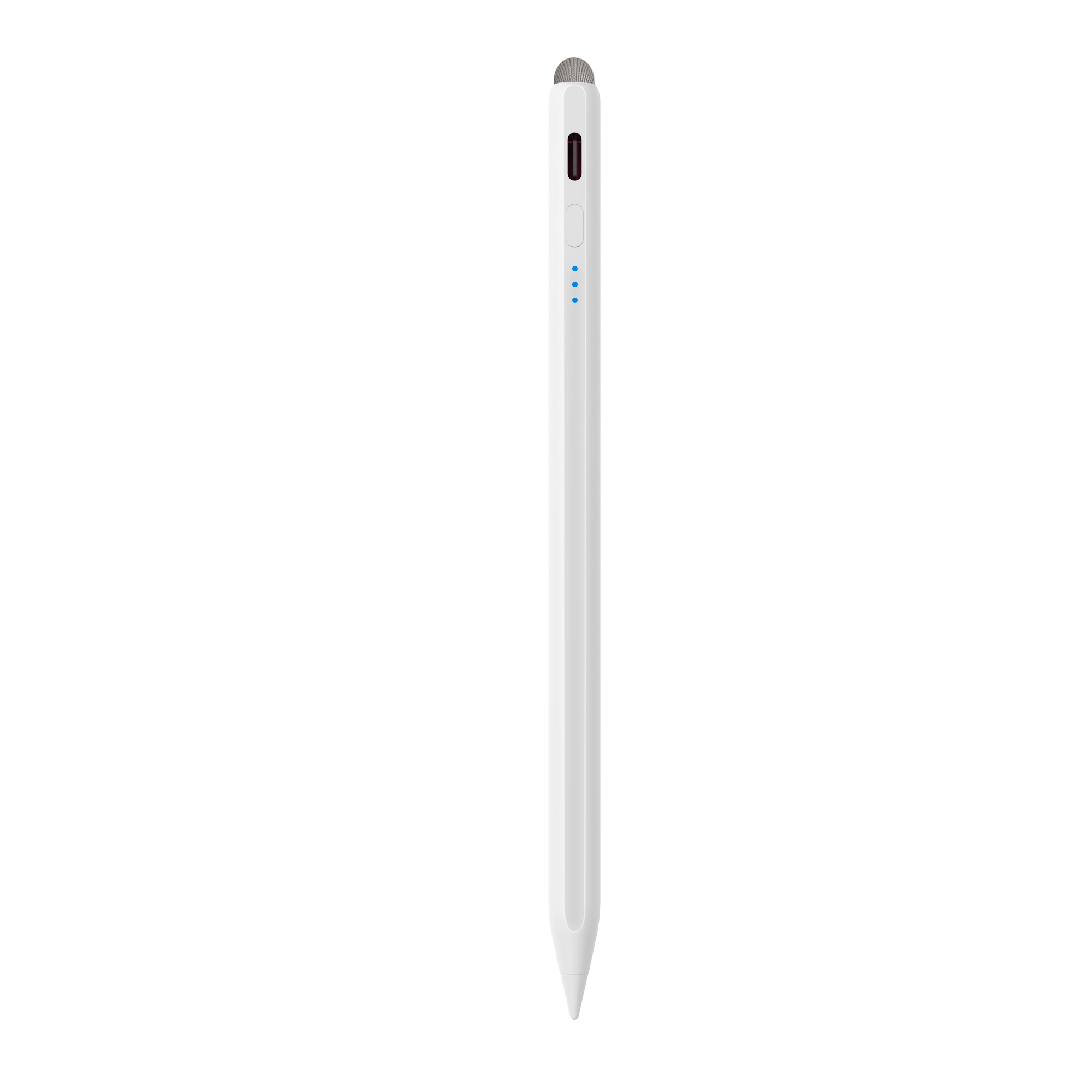
A 2-in-1 active stylus pen with a universal passive fiber tip: the passive tip widens device compatibility, while the active function and battery define the compliance scope of the SKU.
Battery configuration differs across the range and therefore across the paperwork. Jiayao stylus pens use 3.7 V lithium cells rated at 90 mAh in the W13-A and W12-A, 130 mAh in the R3-P, 165 mAh in the A30-B, A21B, A8-RH, A7-H-L and S3-GC, and 230 mAh in the E3-A. Different cells mean different cell part numbers, different battery safety evidence and, for air freight, different transport documentation. Rechargeable pens require a UN 38.3 transport test summary and a safety data sheet for the cell or pack, because lithium batteries are a regulated dangerous good.
Functional features should not be confused with compliance features. Automatic power-off after a period of inactivity, long standby time and replaceable nibs are product-design decisions that affect reliability and user experience; they do not substitute for test evidence. Likewise, the charging method — Type-C cable, tablet-side magnetic charging, or both, as offered on the W13-A and W12-A — determines which charging configuration has to be described consistently across the test report, the instruction manual and the label.
The Documentation Checklist for EU and US Market Entry
The checklist below covers the documents that most often decide whether a shipment can clear, list and stay listed. It is organized by what each item proves rather than by market, because several items serve both the EU and the US routes.
| Document | What it demonstrates | Typically issued or signed by | Timing |
|---|---|---|---|
| EU Declaration of Conformity | Legal statement that the identified model conforms to the applicable EU requirements, naming the responsible economic operator | Brand owner or importer of record, supported by the manufacturer | Before the product is placed on the EU market |
| EMC and radio test reports | Evidence that the tested configuration meets the applicable standards | Accredited third-party test laboratory | Before the declaration is signed; retained for market surveillance |
| RoHS and REACH declarations | Substance compliance for pen body, nibs, cable and packaging | Material and component suppliers, consolidated by the pen manufacturer | Before EU shipment |
| US equipment authorization evidence and FCC ID | Authorization for models containing a transmitter, plus the identifier required on the product or in the user documentation | FCC-recognized test laboratory and certification body | Before US import and listing |
| Supplier’s Declaration of Conformity or verification records | US compliance route for models that emit unintentionally only | Responsible party, based on laboratory test data | Before US import |
| UN 38.3 battery test summary | Transport safety evidence for the lithium cell or pack | Cell or battery supplier | Before air or sea shipment |
| Safety data sheet (SDS) | Handling and transport classification information | Cell or battery supplier | Attached to transport documentation |
| Label and packaging artwork | Conformity marking, responsible entity, model identity, disposal and battery markings, US statements | Brand owner, with manufacturer artwork support | Before packaging goes to print |
| Model and configuration list | Traceability linking each SKU, cell, radio module and firmware version | Pen manufacturer | At quotation stage and at every revision |
Three verification habits turn this list from paperwork into risk control. First, read the test report rather than the certificate: what matters is the model designation tested, the radio module used, the battery part number, the standards applied, the laboratory, and the test date relative to the current design. Second, check that the model identifier is identical on the report, the Declaration of Conformity, the product label, the retail carton and the commercial invoice — mismatches are the most common cause of customs and marketplace holds. Third, confirm whether the report covers a sample submission or the production configuration, because a sample-tested design that later changes cell supplier or firmware is no longer the tested article.
Application: Where This Checklist Is Used in Real Procurement Programs
Compliance work is not a one-time event at launch; it runs through the life of a program. An education deployment, for example, buys stylus pens so that students can take precise notes, draw and navigate on touch-screen tablets. The pen must be battery-powered to function, must deliver low latency and precise writing, and is expected to attach magnetically to the tablet and accept a replaceable tip. When that deployment is procured in volumes across multiple school terms, the importer has to be able to reproduce the same technical file for every subsequent purchase order.
Two ODM programs in Jiayao’s record show how long this obligation lasts. A tablet accessory ODM in Turkey ordered 5,000 units of a universal stylus designed for iPad, iPhone, Android tablets and Android phones on a two-year program, with the stated result of increasing usage of iPads and Android tablets. A second ODM in Vietnam ordered 3,000 units of the E3-A iPad stylus pen with palm rejection, tilt sensing and fast charging for retail sale on e-commerce platforms, also across a two-year relationship, with reported user feedback focused on smooth, precise handwriting. In both cases the practical compliance work happens at three points: sample evaluation, when the regulatory category of each candidate SKU is decided; purchase order release, when the documentation package is tied to the model list on the invoice; and repeat orders, when any change in cell, firmware or labeling has to be re-checked before shipment.
Market Trend Analysis: Standardization, Battery Rules and a Rising Documentation Load
Three trends shape stylus pen market entry over the next few years. The first is the growth of the active segment itself: active stylus technology is projected to expand at a CAGR of 9.8% from 2026 to 2034, which means more electronic pens and fewer purely passive accessories entering regulated channels. The second is protocol consolidation. USI 2.0, published in 2022 and backed by Google, Intel and Lenovo, gives brands a cross-platform route to active pens that do not depend on a single tablet vendor — visible in products such as the R3-P universal stylus for iPad and Android tablets and the S3-GC Android universal stylus pen. The third is a steadily heavier documentation load around lithium batteries and material compliance, which shifts competitive advantage toward suppliers that can answer design, cell and labeling questions quickly rather than toward suppliers that can only quote a price.
For buyers, the operational consequence of the first two trends is a multiplication of SKUs. A single importer selling iPad pens, universal pens and Android pens is managing several cells, several charging configurations and, in some cases, several radio modules. Configuration control — one clean model list, one consistent label, one traceable evidence trail per SKU — is now a purchasing skill as much as a manufacturing one.
Comparison with Traditional Solutions — and the Limits of Third-Party Compliance
The comparison that matters to importers is not between brands but between distribution models. A first-party pen reaches the buyer through the platform owner, which controls conformity, labeling and retail documentation, and the buyer inherits that work at no cost. A third-party iPad stylus pen reverses the arrangement: the brand or importer becomes the responsible economic operator, holds the technical file, signs the declaration and answers market-surveillance questions. That transfer of obligation is the real price of the third-party route, and it exists even when the product itself is simple.
Performance boundaries matter just as much, because they constrain what can be claimed in marketing and on retail listings. Third-party active stylus pens of this class deliver precise writing, palm rejection and quick-access doodle functions, but they rely on tilt sensing rather than the pressure-sensing stack used in high-end professional pens; Samsung’s published support documentation, for instance, describes up to 4,096 pressure levels on its S-Pen and high-end professional active pens. Importers should therefore avoid art-and-illustration positioning built on pressure sensitivity and describe tilt-based shading and note-taking instead. Hard physical limits apply too: side magnetic attachment on models such as the W13-A and A21B is specified for 11-inch and 12.9-inch iPads, so claims of universal magnetic attachment would be inaccurate.
Two further boundaries deserve to be stated plainly. Compliance evidence is SKU-specific — a report issued for one model does not automatically transfer to a sibling model with a different cell, firmware or radio module. And conformity is not the same as retail readiness: marketplaces and large retailers frequently impose their own onboarding requirements on top of statutory ones, which means the document set should be assembled for the strictest channel the product will enter, not the easiest.
Future Outlook
As cross-platform standards mature, the technical barrier to building a competitive stylus pen continues to fall, while the evidence burden continues to rise. The likely result is a visible split in the supplier field: factories that can produce the pen, and factories that can produce the pen plus a coherent, re-usable documentation package tied to a stable model list. Buyers who start asking regulatory questions in the sampling stage, rather than after the purchase order is placed, will absorb far less rework — especially on ODM projects where function, color, tip, logo, packaging and Bluetooth naming are all customizable, and where any change that touches product identity or radio behavior can invalidate the paperwork already on file.
FAQ
Does a passive stylus pen need CE or FCC testing?
A passive capacitive stylus has no battery, no circuit board and no radio, so it is generally outside the scope of radio equipment and electromagnetic compatibility testing. It is not outside every requirement: EU buyers commonly ask for material compliance documentation such as RoHS and REACH declarations for the pen body, the tip and the packaging, along with correct labeling and general product-safety documentation. The practical rule is that a passive pen carries a lighter but non-zero documentation set.
What documents should an importer request from an iPad stylus pen supplier?
A workable request list includes the model and configuration list, EMC and radio test reports for the exact configuration, material declarations for RoHS and REACH, battery safety evidence and a UN 38.3 transport test summary with a safety data sheet, charging-interface details, and the label and packaging artwork. For the EU route, the importer also needs the information required to sign the Declaration of Conformity; for the US route, the authorization evidence and the FCC ID for models that contain a transmitter.
Why does a Bluetooth stylus pen require more compliance work than an active pen without Bluetooth?
Bluetooth turns the pen into a radio transmitter. In the EU that brings radio equipment requirements into the applicable framework alongside electromagnetic compatibility and material rules; in the US it moves the product from a self-declaration route for unintentional emitters to equipment authorization, with an identifier that must appear on the product or in the user documentation. Radio models also require attention to RF exposure considerations and to whether a pre-certified module genuinely covers the finished pen configuration.
Can a stylus pen manufacturer issue a CE or FCC certificate?
No. CE is a conformity marking supported by technical evidence and an EU Declaration of Conformity signed by the entity placing the product on the market, usually the brand owner or importer of record. FCC authorization is granted through FCC-recognized testing and certification channels, not by the factory. A manufacturer can and should supply test reports, component evidence, samples and consistent production, but the conformity decision and its legal ownership sit with the market-facing party.
Does changing the logo, packaging or Bluetooth name require new testing?
Any change is assessed against what was originally tested and declared. Cosmetic changes that do not alter the electrical design may be handled through documentation updates, while changes affecting the radio module, firmware behavior, battery, charging configuration or the product identity shown on the label can require re-assessment. Because logo, packaging and Bluetooth naming are common customization items in OEM and ODM programs, the safe approach is to confirm with the testing laboratory which changes trigger new evidence before the revision is approved.
How can a buyer confirm that a test report actually covers the model being purchased?
Check four things: the model designation in the report against the label, carton and invoice; the battery and radio module part numbers against the current design; the test date against the most recent engineering change; and whether the tested sample matches the production configuration. A report that cannot be tied to a specific, reproducible configuration provides limited assurance, regardless of how formal the document looks.
A technical catalogue covering the current iPad, universal and Android stylus pen models referenced in this checklist is available here: Jiayao Intelligent Stylus Pen Catalogue (PDF).
Have Questions or Need More Details?
Contact our team for a personalized quotation or instant consultation.
Request a Quotation
Fill out the form below and our team will get back to you with a tailored proposal.
WhatsApp Direct Chat
Prefer to chat in real-time? Message us on WhatsApp for instant assistance & quick answers.
- Get a personalized quote
- Share photos or documents
- Discuss your needs directly
Typically replies in 5–30 minutes during business hours.