{{ variable.name }}
Constant-weight bagging baler with 200-ton triple-cylinder force for continuous loose-material processing.
The NKB220 is a constant-weight bagging press built to compress and bag loose materials automatically. Its triple-cylinder hydraulic design keeps the compaction stroke stable and low in vibration, while a PLC and servo control system runs the bagging, compression and strapping cycle with minimal manual input. It suits continuous processing of rice husk, wood chips, corn cobs, textiles, fibers and biomass residue, turning bulky material into compact 30-35 kg bags that are easier to store, stack and transport.


| Parameter | Value |
|---|---|
| Model | NKB220 |
| Pressing force | 200 tons |
| Working pressure | 21 MPa |
| Bale size (L x W x H) | 480 x 480 x (220-350) mm |
| Compression time | 22 s |
| Bale capacity | 90 bales/hour |
| Required moisture | 13 % or less |
| Feed opening (L x H) | 700 x 480 mm |
| Bale weight | 30-35 kg per bag |
| Capacity | 2.5-3 t/h |
| Voltage | 200-480 V / 50 Hz / 3-phase |
| Power | 40 HP |
| Machine size (L x W x H) | 4260 x 1100 x 1800 mm |
| Machine weight | 6 tons |
| Main material | Carbon steel |
The NKB220 can be fed by conveyor belt or air blower depending on the site layout. Bag size and accumulated quantity are adjustable. The electrical supply is 200-480 V, 50 Hz, three-phase to match different site conditions.
The frame and compaction chamber are built from carbon steel for durability in industrial recycling environments. Working pressure reaches 21 MPa and each compression cycle takes about 22 s. The compact footprint measures 4260 x 1100 x 1800 mm and the unit weighs 6 tons.
Rice husk, wood chips, corn cobs, textile offcuts, natural fibers and general biomass residue. The machine is used in food, pharmaceutical, packaging, chemical, electronics, metal, waste-treatment and recycling facilities where loose material must be densified and bagged.
Feeding method (conveyor belt or air blower), bag size, accumulated bag weight and automation settings can be configured to the material and site. Buyers should share material type, bulk density, target bag weight, available space and power supply so the correct configuration can be confirmed.
What materials can the NKB220 bag?
Rice husk, wood chips, corn cobs, textiles, fibers and biomass residues, plus other loose materials of similar nature.
What moisture level is required?
Material moisture should be 13% or less for stable compaction.
How much does each bag weigh?
Finished bags weigh 30-35 kg, and the accumulation weight is adjustable.
What power supply does it need?
200-480 V, 50 Hz, three-phase, drawing 40 HP.
How is material fed into the press?
Either by conveyor belt or by air blower, chosen according to the customer requirement.
How is maintenance handled?
An automatic fault-detection system shows errors on screen, and detailed graphical instructions are included.
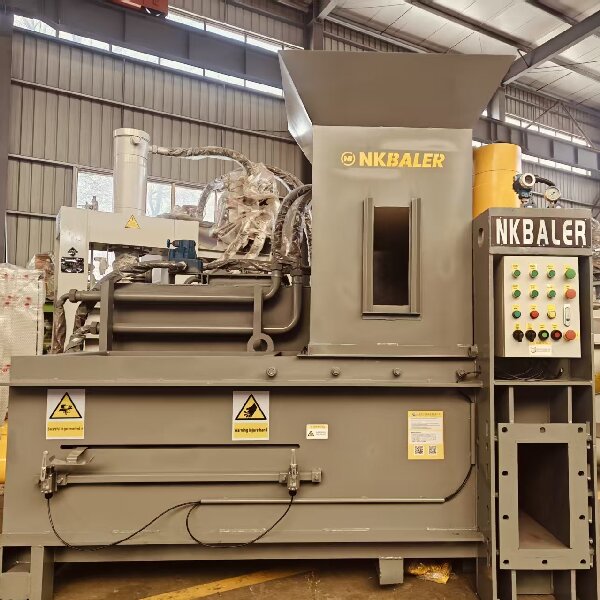
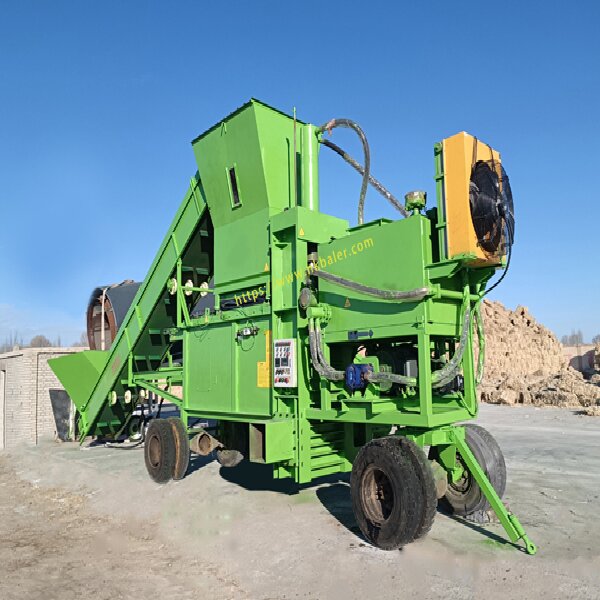
nkb220-rice-husk-bagging-press-side.jpg / alt: NKB220 rice husk bagging press side view. nkb220-biomass-baler-chamber.jpg / alt: NKB220 compaction chamber and feed opening on the biomass baler.
Tell us your material type, bulk density, target bag weight, available space and power supply to confirm the right NKB220 configuration.
Name: Nick | Email: Sales@nkbaler.com | Tel / WhatsApp: +86 15021631102 | Address: Qunsheng Street, Huishan District, Wuxi, Jiangsu, China.
SEO Title: NKB220 Rice Husk Bagging Press | 2.5-3 t/h Biomass Baler
Meta Description: NKB220 bagging press compacts rice husk, corn cobs and wood chips into 30-35 kg bags at 90 bags/hour with a 200-ton triple-cylinder hydraulic system.
URL Slug: /nkb220-rice-husk-bagging-press