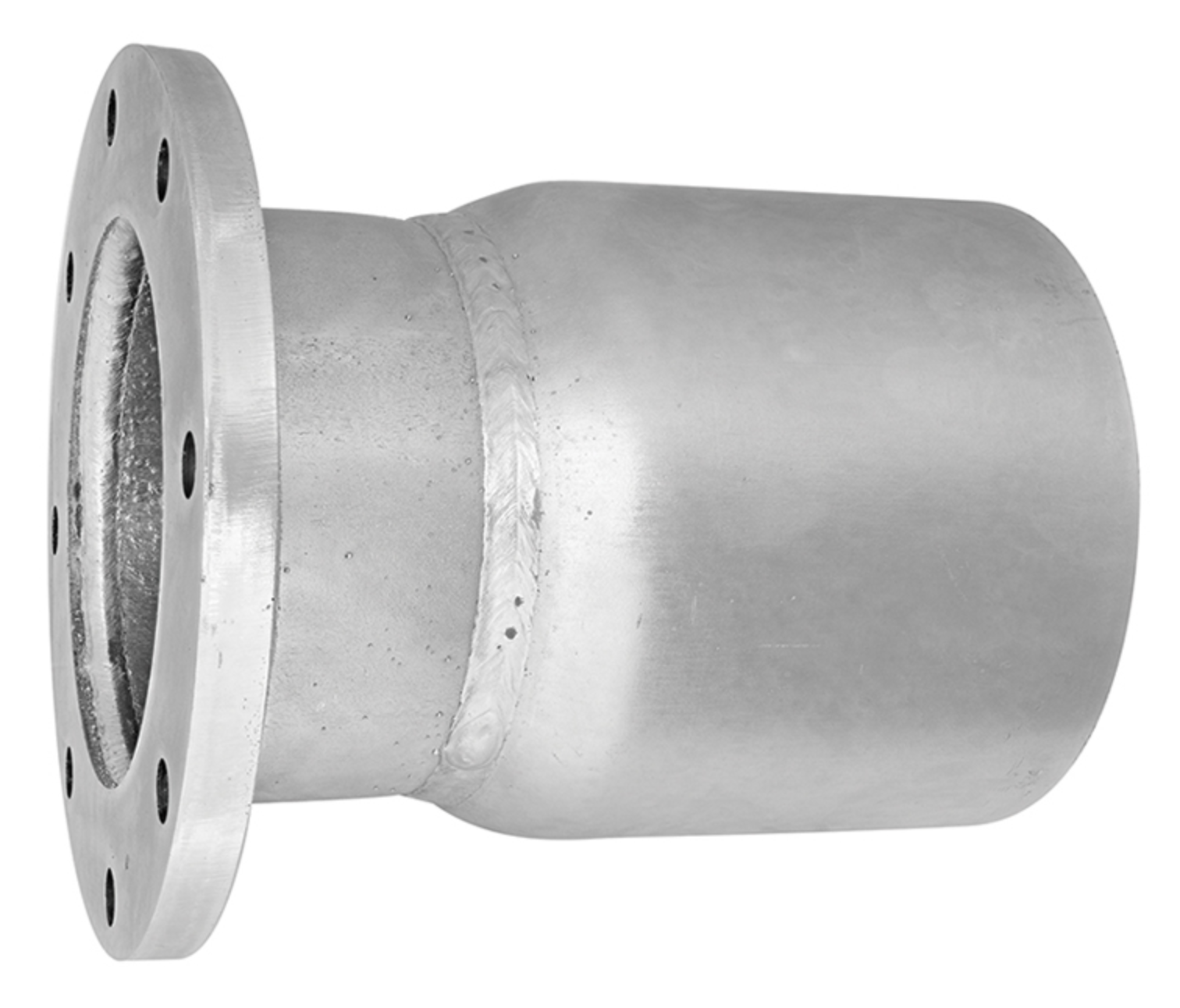
| Params | Product Name: TTMA Composite Hose Flange Couplings
Manufacturer: JINGYE Fittings (Ningbo Jingye Fluid Fittings Co., Ltd.)
Series: JY-CHF-SSS-TTMA; stainless steel TTMA tank-truck composite hose fitting family.
Construction: TTMA-drilled fixed or floating flange, composite hose tail, matched ferrule/swage sleeve and compatible sealing components.
1. Product Configuration and TTMA Interface
JY-CHF-SSS-TTMA connects wire-helix-reinforced composite hoses to TTMA tank-truck flanges for petroleum, chemical and bulk-liquid transfer. The TTMA RP-107 interface covers tank-truck flange mating geometry. Fixed welded and floating/loose flange constructions are available. TTMA drilling differs from ASME B16.5 Class 150 and EN PN16 flange patterns.
2. Nominal Sizes and TTMA Flange Dimensions
Nominal sizes: 2", 3", 4", 5", 6" and 8", with 3" and 4" common for tanker equipment. TTMA dimensions: 3" flange OD 142.88 mm, PCD 123.82 mm, 8 holes; 4" OD 168.28 mm, PCD 149.23 mm, 8 holes; 6" OD 228.60 mm, PCD 206.38 mm, 12 holes. Nominal hole diameter: 11.11 mm. Verify flange thickness, bore, gasket face and drawing tolerances.
3. Fixed and Floating TTMA Flange Designs
Fixed TTMA couplings use integral or welded non-rotating flanges attached to the composite hose tail. Floating versions use a loose flange ring retained behind a collar or stub end, allowing bolt-hole alignment without twisting the hose. Both share the specified TTMA drilling but require different retaining geometry, assembly dimensions and inspection procedures.
4. Composite Hose Tail and Helix Engagement
Composite-specific hose tails use scroll/helical or engineered insert profiles matched to the hose's layered construction and inner wire helix. Select according to nominal hose ID, actual bore, wall thickness, helix pitch and wire diameter. Precision tail insertion length, sealing surfaces and reinforcement engagement support reliable hose termination. Standard rubber-hose barbs are not automatically interchangeable.
5. Ferrules, Swaging and Assembly Retention
Matching carbon steel or stainless steel ferrules compress the multilayer composite hose around the internal metal tail. Ferrule ID, OD, length, final swaged diameter and compression profile depend on the actual hose OD and reinforcement. Dry-seal and wet-seal termination methods are selected according to the hose system. Components may be supplied separately or as matched termination sets.
6. Materials and Corrosion Protection
Wetted hose tails and TTMA flanges: SS304, SS316 or SS316L; carbon steel options for compatible petroleum services. Floating flange rings may use stainless steel or carbon steel with SS316L wetted inserts. Ferrules are available in stainless or carbon steel. Stainless passivation and trivalent chromium zinc plating, typically 8–12 μm for carbon steel, provide surface protection options.
7. Working Pressure, Vacuum and Temperature
TTMA specifies flange interface geometry, not the completed hose assembly pressure rating. Typical composite petroleum and chemical hose systems include 10 bar and 14 bar working-pressure classes. Final pressure, vacuum resistance and operating temperature depend on hose construction, lining, wire reinforcement, seals, transferred fluid and termination qualification. EN 13765 and EN 13766 apply to relevant composite hose services.
8. Flange Sealing and Chemical Compatibility
TTMA flange sealing requires matching gasket dimensions, sealing-face flatness, surface finish and bolt arrangement. Gasket materials include NBR for compatible petroleum fluids, FKM for selected fuels and chemicals, EPDM for compatible aqueous media and PTFE for broader chemical resistance. Internal hose-end seals and flange gaskets are selected independently according to fluid composition and service temperature.
9. Manufacturing, Inspection and Testing
Manufacturing includes precision CNC turning, TTMA flange drilling, TIG welding, hose-tail machining and ferrule production. Inspection covers flange OD, PCD, bolt holes, sealing faces, weld integrity, flange retention, tail geometry, ferrule fit, material grade and cleanliness. Completed hose assemblies may require hydrostatic proof, leakage, vacuum, burst, end-retention and electrical continuity tests. Quality management: ISO 9001:2015.
10. Tank-Truck Applications and OEM Procurement
Applications include road tankers, fuel loading terminals, chemical tank trucks, bulk-liquid depots, tanker unloading and industrial composite hose assemblies. JINGYE Fittings supplies fixed/floating TTMA flange ends, stainless steel inserts, hose tails, ferrules and matched components. OEM options include custom drilling, SS316L construction, welded assemblies, replacement drawings, sample matching, marking, private-label packaging and second-source procurement. | Material | Wetted Materials: Precision CNC-machined SS304, SS316 or SS316L TTMA hose tails, inserts and sealing faces; carbon steel options for compatible fluids.
TTMA Flanges: Fixed or floating stainless steel and carbon steel flanges with TTMA RP-107 drilling patterns.
Flange Construction: Integral or TIG-welded fixed flanges; loose flange rings with retained collars or stub ends.
Hose Tails: Stainless steel scroll-tail or helical inserts matched to composite hose wire reinforcement.
Ferrules: Stainless or carbon steel swage sleeves matched to hose OD and assembly method.
Sealing: NBR, FKM, EPDM or PTFE flange gaskets selected by chemical compatibility.
Surface Treatment: Stainless steel passivation; trivalent zinc plating, typically 8–12 μm, for carbon steel.
Manufacturing & Quality: CNC turning, TIG welding, TTMA flange drilling, helix-profile machining, ferrule inspection and pressure/leakage testing. |