
4K Output vs Input Density: TCHD-840 Super or TCHD-890HS
4K Output vs Input Density: TCHD-840 Super or TCHD-890HS
The choice between the TCHD-840 Super and the TCHD-890HS is a workflow decision, not a ranking exercise. The TCHD-840 Super is organised around a 2160P60 output path with either four 12G-SDI inputs or four HDMI 2.0 inputs, plus UVC output. The TCHD-890HS is organised around source count: eight video inputs made up of four HDMI and four SDI, HD video formats, a 10-channel audio mixer, and streaming over RTMP, RTSP, HLS and FLV.
Buyers who add up specification bullets and pick the larger total usually end up with a switcher that does not match the production in front of them. The useful question is narrower: does this production depend on signal fidelity end to end, or does it depend on how many cameras and audio sources can be connected at once? Everything else in this comparison follows from that answer.
The decision in one paragraph
If the cameras already deliver native 4K at 60 frames per second and the deliverable is a 4K programme feed, the TCHD-840 Super is the model whose documented configuration matches that chain. If the cameras deliver HD and the operational pressure comes from running four, five or six sources plus a multi-microphone audio mix, the TCHD-890HS is the model whose documented configuration matches that chain. A buyer who needs both at once is not choosing between these two products; that buyer is choosing a larger switcher.
Decision rule: choose the signal format first, the input count second, and the audio channel count third. Reversing that order is the most common reason a switcher is over-specified on paper and under-specified in the room.
Why specification totals mislead in this comparison
A production switcher sits at the junction of three separate counting systems that are not interchangeable: pixels, ports and channels. Pixels describe the resolution and frame rate that must survive from camera to output. Ports describe how many physical sources can be connected. Channels describe how many audio streams can be mixed independently.
The TCHD-840 Super scores on the first system. Its 2160P60 output and 12G-SDI or HDMI 2.0 input options are a statement about signal class. The TCHD-890HS scores on the second and third: eight video inputs and a 10-channel audio mixer are a statement about scale and audio complexity.
Because the two products are strong on different systems, a side-by-side table that simply lists both columns invites a false tie. The table below is therefore organised by decision criterion rather than by raw specification order.
Side-by-side by decision criterion
| Criterion | TCHD-840 Super | TCHD-890HS |
|---|---|---|
| Output resolution | 2160P60 | HD video formats |
| Input configuration | 4 × 12G-SDI or 4 × HDMI 2.0 | 8 video inputs (4 HDMI + 4 SDI) |
| Signal class of the input path | 12G-SDI / HDMI 2.0, the class used for 4K60 transport | SDI and HDMI at HD formats |
| Audio mixing | Audio channel count not stated in the supplied specification | 10-channel audio mixer |
| Streaming workflow | UVC output to a host computer | RTMP, RTSP, HLS and FLV |
| Primary constraint on the buyer | Camera chain and end-to-end 4K delivery | Number of cameras and audio sources |
| Typical mismatch to avoid | Buying 4K capability for an HD-only delivery chain | Buying input density for a 4K-only deliverable |
Specifications as documented for each model. Dimensions that are not stated for a model are shown as not stated rather than assumed.
Decision step 1: match the switcher to the camera format
Camera format is the first filter because it is the hardest to change later. A 4K camera chain and an HD camera chain require different input electronics, and no amount of input count compensates for a signal-class mismatch.
The relevant reference point is the transport standard behind the 12G-SDI label. SMPTE ST 2082 defines 12G-SDI as uncompressed 4K video at 60 frames per second over a single coaxial cable at a data rate of 11.88 Gbps. That definition matters for procurement because it tells the buyer what must be true of the whole chain — camera output, cable grade, connector quality and switcher input — for 4K60 to arrive intact. A single weak link returns the production to HD.
On the camera side, typical 4K source hardware in this class uses a 1/2.8-inch 8.42 million pixel image sensor with a maximum resolution of 3840×2160 and frame rates up to 60 frames per second, exposed through HDMI, SDI, USB and wired LAN interfaces. Where the SDI output is used at 1080P60, the documented transmission distance is 100 metres. A buyer running that kind of camera should check two things before ordering any switcher: the resolution and frame rate the camera actually outputs on its SDI or HDMI port, and whether the switcher's input ports accept that exact format.
The TCHD-840 Super's four 12G-SDI inputs or four HDMI 2.0 inputs are specified at the signal class used for 4K60 transport, which is what makes the model relevant to a native 4K chain. The TCHD-890HS is specified for HD video formats across its four SDI and four HDMI inputs. For an HD camera chain, that is not a limitation to be worked around — it is the correct match, and it frees the budget and rack space that a 4K signal path would otherwise consume.
What this means in practice
- Native 4K60 cameras and a 4K deliverable: the TCHD-840 Super's input class matches without upstream conversion.
- HD cameras and an HD deliverable: the TCHD-890HS matches, and its eight inputs cover more camera positions.
- Mixed chain: the deciding factor is the highest format that must pass through the switcher untouched, not the average.
Decision step 2: decide what the output has to be
Output resolution is where the two models diverge most clearly. The TCHD-840 Super produces a 2160P60 programme output. The TCHD-890HS operates in HD video formats. For a buyer, the question is not which number is larger but whether the downstream chain can use the larger number at all.
A 4K output is only valuable if it survives to the viewer or the archive. That requires a 4K-capable display path, a 4K-capable recording or encoding stage, and a distribution platform that accepts 4K. If any of those three stages is HD-only, a 2160P60 programme output is being paid for and then discarded at the next device.
The TCHD-840 Super also provides UVC output. UVC, or USB Video Class, is the driver-free device class that lets a host computer recognise a video source as a standard camera without a vendor-specific driver installation. In a production context, that makes the switcher's programme feed available to software running on a connected computer — recording applications, software encoders and conferencing or streaming clients that accept a standard video input device. For teams whose graphics, overlays and encoding already live on a PC, this is a workflow advantage that does not appear in a resolution comparison at all.
The TCHD-890HS takes the opposite approach to output. Rather than exposing the programme through a host-computer device class, it provides streaming over RTMP, RTSP, HLS and FLV. Those are network streaming protocols, and they let the switcher push a stream directly to a receiving service or media server without a separate encoding computer in the chain. Which of the two output philosophies fits depends entirely on whether the production team already runs a computer-based encoding and graphics workflow, or wants the switcher to be the streaming endpoint itself.
Decision step 3: count inputs by operational need, not by maximum
Input count is the criterion most often misapplied. Eight inputs are better than four only when the production genuinely has more than four sources that must be live simultaneously, or when the extra inputs remove enough cable re-patching to change how the crew works.
The TCHD-890HS offers eight video inputs in a fixed mix of four HDMI and four SDI. That split is worth reading carefully during procurement, because it constrains which sources can go where. A production with six SDI cameras and two HDMI graphics sources would be connecting six SDI devices to a switcher that documents four SDI inputs; the port mix, not the total, becomes the binding constraint. Buyers should map each physical source in the room to a specific port type before confirming an order.
The TCHD-840 Super offers four inputs, configured as either four 12G-SDI or four HDMI 2.0. Four sources is a normal working number for a single-stage production: a wide shot, one or two closer angles, and a graphics or presentation source. The practical gain of the 840 Super is not the count but the class of each port — every input can carry the high-bandwidth signal, so no source needs to be downconverted to fit.
Buyer check: list every camera and graphics source, note its output format and connector type, then count how many must be live at the same moment. If that number is five or more, the TCHD-840 Super's four inputs become the limiting factor regardless of resolution.
Decision step 4: treat audio as a separate purchase criterion
Audio is frequently treated as an afterthought in switcher selection and then becomes the reason a second device has to be added to the rack. The TCHD-890HS documents a 10-channel audio mixer, which is a meaningful capability for productions where the switcher is expected to handle the full audio mix rather than pass embedded audio through untouched.
Ten channels cover a realistic set of inputs in a mid-sized production: several wireless microphones, a presenter lavalier, a playback or presentation feed, and a house or ambient pair. Productions that add translation, multiple panel microphones or a separate music bed move past ten channels quickly, so the count should be tested against the actual input list rather than accepted as generous.
For the TCHD-840 Super, the supplied specification does not state an audio channel count. Buyers whose production depends on in-switcher audio mixing should confirm the audio handling directly before committing, rather than inferring it from the video specification. Where audio is mixed on a separate console before the switcher, this question disappears and the video criteria decide the purchase on their own.
Decision step 5: map the streaming workflow end to end
Streaming workflow is the criterion that most often separates two products that look similar on a specification sheet, because it determines what the crew does during the show rather than what the hardware can theoretically output.
The TCHD-890HS provides native RTMP, RTSP, HLS and FLV support. RTMP is the established ingest protocol for many live streaming platforms; RTSP is used for streaming to media servers and for pull-based distribution; HLS is the segmented HTTP protocol used for broad playback compatibility; FLV is a container format associated with RTMP delivery. Together they describe a switcher that can be the streaming origin, sending the programme to a platform or server directly.
The TCHD-840 Super's UVC output describes a different division of labour. The switcher presents the programme feed to a host computer as a standard video device, and the computer's software handles encoding, platform destinations, overlays and recording. That arrangement suits productions that already depend on software for multi-platform delivery, lower-third graphics and simultaneous recording, because those functions stay in the environment the operator already knows.
Neither arrangement is better in the abstract. Hardware-protocol streaming reduces the number of devices that can fail mid-show; host-computer streaming concentrates flexibility in one place. The right choice follows from what the crew is trained on and what the redundancy plan looks like.
Scenario fit: where each configuration belongs

The following mappings are conditional descriptions of fit, not accounts of specific installations. They show how the five criteria combine in recognisable production types.
Church streaming switcher deployments
A worship service typically runs several camera positions — a wide shot, a platform angle, a congregation view and occasionally a handheld — plus a multi-microphone audio mix. That profile leans toward the TCHD-890HS, whose eight inputs and 10-channel audio mixer match the source count and the audio workload in one device. A congregation moving to 4K capture and 4K online delivery would reverse the conclusion and favour the TCHD-840 Super, provided the entire delivery chain supports 4K.
E-commerce and vertical portrait live streaming
Commerce streams usually combine a small number of cameras with heavy on-screen graphics: product close-ups, price and stock overlays, comment feeds and platform-specific layouts. When that graphics work runs on a computer, the TCHD-840 Super's UVC output keeps the graphics and encoding environment intact while the switcher handles camera cutting. When the production instead runs four or more physical camera positions and mixes presenter, product and demonstration audio inside the switcher, the TCHD-890HS's input count and 10-channel mixer are the closer fit.
Sports, esports and concert production
These formats are driven by angle count. A sports or esports production that wants a wide view, a close follow, a player or bench angle and a replay or analysis feed is already at four sources before graphics are added, which pushes the requirement past the TCHD-840 Super's four inputs. The TCHD-890HS's eight inputs give more room, but buyers should still confirm the HDMI-to-SDI mix against the actual source connectors, since the split is fixed. Where the same production also demands a 4K programme feed, neither model alone resolves the requirement and a larger switcher becomes the honest answer.
Conference, lecture, smart classroom and campus TV
These productions are HD by nature and are usually source-light but graphics-heavy: a presenter camera, a slides or computer feed, and occasionally a second room or audience camera. The TCHD-890HS covers that count comfortably and adds streaming protocols that suit campus networks and media servers. The TCHD-840 Super remains relevant where lecture capture must feed a software recording platform through a standard video device, or where the institution is standardising on 4K capture for future use.
Medical training and surgical demonstration
Medical training, education teaching and event live streaming are the application areas TCHD Video documents for its camera and switcher hardware. In a surgical demonstration the visual detail is the point, and 4K60 capture is what preserves it; a 4K camera chain feeding a 2160P60 output path is the configuration that keeps that detail intact to the display or archive. Input count is usually secondary in this setting, because the number of camera positions is small and controlled.
Virtual studio and converged media centre
Virtual studio work depends on clean keying and on high-resolution plates, both of which benefit from a 4K path and from a programme feed that a computer-based renderer can ingest. The TCHD-840 Super's combination of 2160P60 output and UVC output fits that architecture. A converged media centre running many simultaneous feeds from around a campus or venue is closer to the TCHD-890HS profile, where source count dominates.
Market context: what is changing around this decision
Category-level data provides context for the purchase, not a forecast for either model. Precision Reports estimates the global production switcher market at USD 2,596.79 million in 2025, with IP-based broadcasting and multi-camera streaming transitions cited as drivers. A separate estimate from Fortune Business Insights projects the broader video switcher market reaching USD 11.48 billion by 2034, growing at a compound annual growth rate of 7.10% from 2026 — a figure that uses a wider definition than production-specific vision mixers, so the two numbers should not be compared directly.
On the demand side, Precedence Research projects the livestream e-commerce market reaching USD 312.35 billion by 2035, with Asia Pacific holding a dominant 66% share as of 2025. That is a segment-level projection and does not establish demand for any particular switcher configuration, but it does explain why buyers in commerce-driven production keep asking for both higher camera counts and better graphics integration in the same budget.
One practical detail sits outside the technology discussion entirely: HS code 85437062 is classified specifically for video mixing systems or consoles in various customs jurisdictions. Buyers importing either model across borders should confirm the applicable classification with their own broker rather than assume it from a supplier document.
Fit boundaries and what to verify before ordering
Both models have a boundary beyond which the correct answer is a different product. The TCHD-840 Super's boundary is source count: a production that needs five or more simultaneous live sources cannot be solved by a four-input switcher, however good the signal path. The TCHD-890HS's boundary is output format: a production contracted to deliver a 4K programme feed cannot be solved by an HD output path, however many inputs it has.
Verification before purchase should cover the following points, each tied to a documented specification rather than to a general impression.
- Cable and connector grade for 12G-SDI. SMPTE ST 2082 specifies 11.88 Gbps over a single coaxial cable; cable and connector quality determine whether that rate arrives intact. Test with the cable type the installation will actually use.
- Camera output format at the port. Confirm the resolution and frame rate the camera outputs on the specific SDI or HDMI connector that will feed the switcher, not its sensor's maximum capability.
- Port mix against the source list. For the TCHD-890HS, map each camera and graphics source to an HDMI or SDI port and confirm the 4 + 4 split accommodates the real list.
- Audio channel count against the microphone plan. For the TCHD-890HS, confirm ten channels covers the microphones, playback and ambient sources planned. For the TCHD-840 Super, confirm the audio handling directly, since the supplied specification does not state a channel count.
- Protocol compatibility with the destination platform. Confirm that the RTMP, RTSP, HLS or FLV support on the TCHD-890HS matches what the receiving platform actually accepts, including any authentication or stream-key requirements.
- Host-computer compatibility for UVC. Confirm that the operating system and software used for encoding or recording recognise a standard UVC video device and can handle a 2160P60 input at the required frame rate.
Supplier context
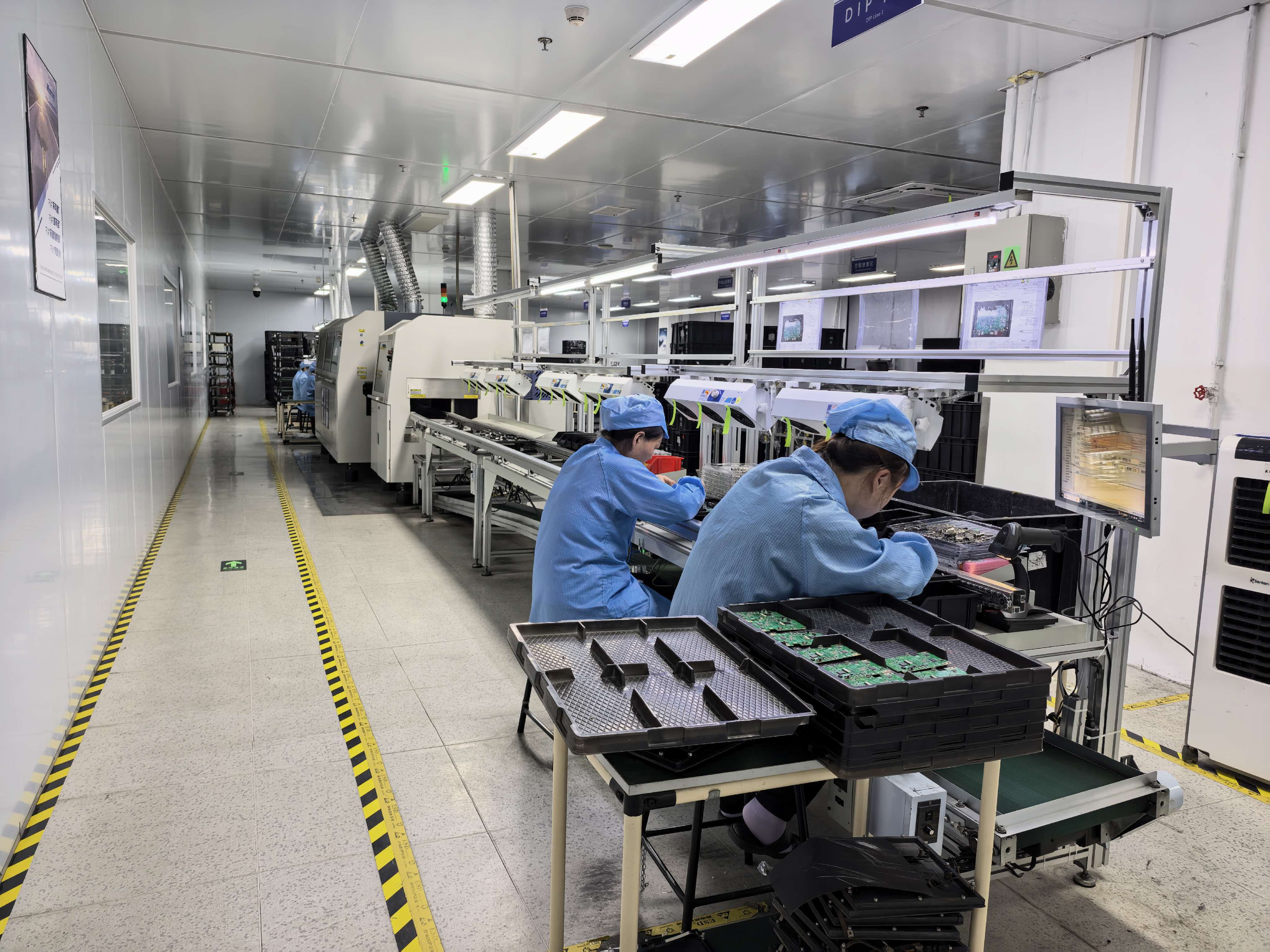
TCHD Video, formally TCHD Digital Video Technology Development (Beijing) Ltd, was established in 2005 and operates a 10,000 m² facility with 50 employees and annual output documented at 4,000 units. The company reports a 10-engineer research and development team and a 20% export ratio, with main markets in the EU, USA and Asia. Its product range covers live streaming cameras, video capture cards, video converters, video encoders and video switchers, alongside virtual studio, recording and streaming systems.
ISO 14001 certification is documented as covering the sales of digital audio and video products and related technical services and its related management activities. That scope describes environmental management for those activities; it is not a product performance certification, and buyers should read it as one input to supplier evaluation rather than as evidence of switcher capability.
For a decision between two models in the same portfolio, supplier context mainly affects the cost of being wrong: shared accessories, a common support channel and a consistent firmware and documentation approach reduce the friction of changing models later. Buyers can review the full product range in the TCHD product catalog and confirm current specifications with TCHD Video before finalising an order.
Outlook: why the answer is unlikely to converge
Production workflows are moving in two directions at once, and that keeps both configurations relevant. On one side, 4K capture hardware has become the default camera specification in the class of equipment described here — a 1/2.8-inch 8.42 million pixel sensor delivering 3840×2160 at up to 60 frames per second across HDMI, SDI, USB and LAN. As more rooms carry that class of camera, the signal-path argument behind the TCHD-840 Super applies to more installations.
On the other side, the number of places a production must publish to keeps rising, and multi-source HD work with graphics, audio mixing and direct platform streaming remains the practical shape of most church, commerce, education and event output. That keeps the input-density and audio-mixing argument behind the TCHD-890HS intact.
The honest outlook is that these two requirements will keep separating rather than merging, which is why the buyer framework matters more than any single specification comparison. A production that resolves its camera format, delivery resolution, source count, audio plan and streaming architecture before contacting a supplier will reach a correct decision quickly. A production that starts from a specification total will keep re-litigating the choice after installation.
FAQ
What is the main difference between the TCHD-840 Super and the TCHD-890HS?
The TCHD-840 Super is configured around signal class: a 2160P60 output, four 12G-SDI or four HDMI 2.0 inputs, and UVC output. The TCHD-890HS is configured around source count and audio: eight video inputs made up of four HDMI and four SDI, HD video formats, a 10-channel audio mixer, and streaming over RTMP, RTSP, HLS and FLV. The first suits a 4K chain with a small number of sources; the second suits an HD chain with more sources and a larger audio mix.
When does a 4K60 output path justify choosing the TCHD-840 Super?
It justifies the choice when 4K60 has to survive from camera to delivery — meaning the cameras output native 4K at up to 60 frames per second, the display or recording stage accepts 4K, and the distribution platform serves 4K. Under those conditions the TCHD-840 Super's 2160P60 output and 12G-SDI or HDMI 2.0 inputs carry the programme without an upstream conversion step. If any stage in that chain is HD-only, the 4K capability is not being used.
When is the TCHD-890HS the better fit?
The TCHD-890HS fits when the camera chain is HD and the production has more sources than a four-input switcher can hold, or when audio mixing inside the switcher is required. Its eight video inputs, 10-channel audio mixer and native RTMP, RTSP, HLS and FLV streaming support address source count, audio workload and direct platform delivery in a single device. Buyers should confirm the fixed four-HDMI and four-SDI port split matches their actual connector list.
Does a higher input count always mean a more capable production switcher?
No. Input count describes how many sources can be connected, not the signal class those inputs accept or the resolution the switcher can output. A four-input switcher with 12G-SDI and HDMI 2.0 ports can carry a higher-format signal than an eight-input switcher specified for HD formats. The relevant comparison is whether the input count and the input signal class each match the production, since a surplus on one dimension does not compensate for a shortfall on the other.
What should a buyer verify about 12G-SDI and HDMI 2.0 before purchase?
Verify the exact resolution and frame rate each camera outputs on the specific connector that will feed the switcher, and test with the cable and connector grade the installation will use. SMPTE ST 2082 defines 12G-SDI as uncompressed 4K at 60 frames per second over a single coaxial cable at 11.88 Gbps, so the standard describes the whole signal path rather than the switcher port alone. For HDMI 2.0, confirm the cable and the source device both support the required format at the intended distance.
Conclusion
These two models are not competitors in the sense that one displaces the other; they sit on either side of a decision that most productions can answer in five steps. Camera format decides whether 12G-SDI or HDMI 2.0 inputs are needed at all. Delivery resolution decides whether a 2160P60 output is used or wasted. Source count decides whether four inputs are enough. The audio plan decides whether a 10-channel mixer removes a device from the rack. The streaming architecture decides whether UVC to a host computer or native RTMP, RTSP, HLS and FLV delivery matches how the crew actually works.
Answer those five questions in that order and the TCHD-840 Super and TCHD-890HS stop looking like two versions of the same product. They become two different tools, each appropriate to a production profile that can be described in advance — which is ultimately what a buyer decision framework is for.
Have Questions or Need More Details?
Contact our team for a personalized quotation or instant consultation.
Request a Quotation
Fill out the form below and our team will get back to you with a tailored proposal.
WhatsApp Direct Chat
Prefer to chat in real-time? Message us on WhatsApp for instant assistance & quick answers.
- Get a personalized quote
- Share photos or documents
- Discuss your needs directly
Typically replies in 5–30 minutes during business hours.