
A Supplier Shortlist Path for US Gym Operators at China Fitness Trade Expo
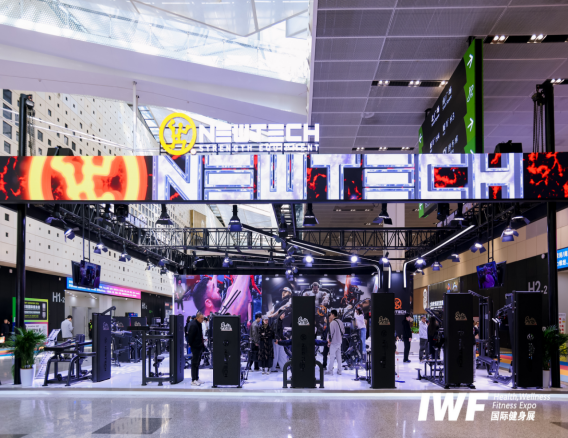
A commercial equipment booth inside an IWF fitness exhibition venue, where category zoning places comparable manufacturers within walking distance of each other.
China exported USD 7.17 billion of gym and athletics equipment in 2024, with the United States, the United Kingdom and Germany among its leading destinations, according to the Observatory of Economic Complexity. For a US gym operator planning an equipment refresh across one or several sites, that scale creates a screening problem rather than a supply problem: the manufacturing base is deep, but the number of suppliers a small procurement team can verify, visit and negotiate with inside one travel budget is limited.
Shanghai Donnor Exhibition Service Co., Ltd is a Shanghai-based exhibition organizer founded in Wenzhou, Zhejiang in 1996. The company organizes more than 30 trade and consumer exhibitions annually in locations including Shanghai, Zhejiang, Sichuan, Guangdong and Bangkok, Thailand, manages annual exhibition space exceeding 700,000 square meters, has served over 120,000 business exhibitors, and acts as an agent and partner for international exhibitions in more than 30 countries worldwide. Its fitness portfolio includes the IWF exhibition series, the venue referenced throughout the shortlist-building path described below.
This analysis is written for US gym operators at the decision and execution stage of commercial gym equipment sourcing in China. It covers what a verified shortlist actually contains, how the Market-to-Match 2.0 methodology produces it during an exhibition, what the documented US gym operations case recorded, and where the model stops being the right tool.
Why the shortlist, not the factory list, is the bottleneck
Most sourcing trips do not fail because too few manufacturers were found. They fail at the point where a long candidate list has to be converted into a small set of verifiable suppliers within a fixed calendar. A gym operator typically arrives in China holding names collected from online B2B platforms, agent introductions and peer recommendations. That list is long because it is inexpensive to build, and weakly differentiated because OEM fitness equipment suppliers listed on a China trade show programme can look almost identical on a supplier profile page while differing substantially in product scope, documentation readiness and export experience.
Three sourcing routes dominate, and each solves a different part of the problem:
- Direct factory touring — the deepest verification per visit, but each additional factory consumes travel days, and cross-supplier comparison only becomes possible after the trip is over.
- Agent-mediated sourcing — faster to arrange, but the buyer inherits someone else's screening standard instead of defining their own.
- Platform and catalogue search — broad and inexpensive, but scope and qualification differences are hard to observe until samples arrive and documents are exchanged.
A shortlist answers a narrower question than any of these routes: which manufacturers deserve a meeting, a sample request and, eventually, an audit, inside a defined window of time and budget. That is the specific problem the China Fitness Trade Expo matchmaking model is built to compress.
What the shortlist path delivers
A verified shortlist is not a catalogue. At an IWF exhibition it is a working file with four deliverables that a US procurement lead can hand to an operations or finance colleague without further explanation.
| Deliverable | What it contains | What it replaces in the buyer's process |
|---|---|---|
| Verified supplier shortlist | Manufacturers screened against the buyer's declared product scope and category requirements, then grouped by product category after exhibitor recruitment | Unfiltered candidate lists assembled from platform search |
| One-on-one meeting timetable | Confirmed appointment slots, matched on demand similarity and agreed online before the show opens | Chance booth walk-ups and unanswered introduction emails |
| On-site matchmaking coordination | Reception guidance, facilitated introductions, and real-time recording of discussion points and stated cooperation intent | Several weeks of fragmented introduction correspondence |
| Post-show meeting record | Meeting leads imported into a CRM system, follow-up owners assigned, negotiation progress tracked | Personal notes and ad hoc follow-up |
These four items mirror the published outputs of the organizer's exhibition service process, whose stage outputs include the confirmed exhibitor list, the buyer appointment schedule, the on-site meeting timetable, real-time on-site deal records, and a post-show leads list with an analytics report.
The four-step Market-to-Match 2.0 loop
The shortlist is produced by a repeating loop rather than by a single show visit. The methodology is documented as Market-to-Match 2.0, built on a four-step cycle.
| Step | Core activity | Output the buyer sees |
|---|---|---|
| 1. Market research and target mapping | Analysis of industry demand and target purchaser characteristics; standardized buyer profiles and categorized candidate lists | A defined buyer profile and requirement scope |
| 2. Pre-show exhibitor recruitment and buyer invitation with online pre-matching | Qualified manufacturers screened against buyer demand and grouped into product zones; overseas buyers invited, pre-registered and verified; exhibitor-buyer pairs matched and meeting times confirmed online | Confirmed exhibitor list, zone layout, formal appointment sheet |
| 3. On-site matchmaking and negotiations | Reception guidance and face-to-face business negotiations, with communication content and cooperation intent recorded in real time | On-site meeting timetable and live meeting records |
| 4. Post-show data tracking and conversion support | Meeting leads imported into CRM, follow-up owners assigned, progress tracked, conversion data fed back to improve the next event | Post-show leads list and analytics report |
In operational terms the loop resolves into six published activities: market and buyer profiling; targeted exhibitor recruitment and zone planning; international buyer invitation and pre-registration; online meeting scheduling; fast on-site matchmaking; and post-show CRM management with order follow-up. The named process behind those activities is the Pre-show to On-site to Post-show sequence, with the sub-stages Recruit, Invite, Match and Convert. Its five phases are preparation, exhibitor recruitment, buyer invitation and pre-matching, build-up and on-site execution, and post-show follow-up.
A practical detail for planning purposes: the organizer's published guidance is that large industry expos require several months to half a year of preparation, with exact timelines confirmed for each event. A shortlist path therefore starts well before a flight is booked, not at the airport.
Inside the venue: turning a timetable into meetings
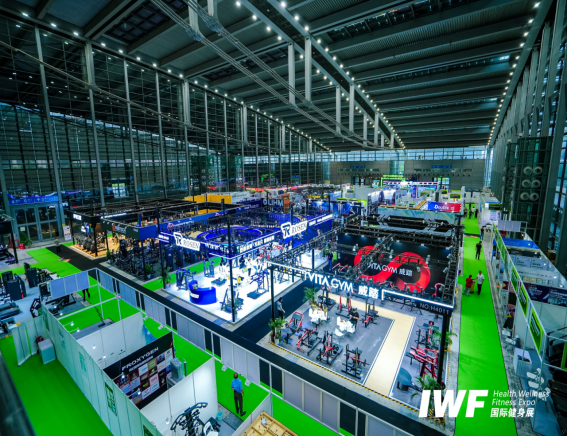
Category zoning inside an IWF venue: exhibitors are grouped by product category after screening, which keeps comparisons within a like-for-like set.
Category zoning is the mechanism that makes a meeting timetable usable. Exhibitors are classified by product category and placed in planned zones after recruitment, so a US operator moving from cardio to strength to functional training areas stays inside a comparable supplier set per category instead of crossing a hall at random. That structure is also what allows a buyer to compare like with like within a single day rather than across several factory tours in different provinces.
On-site coordination covers reception guidance, facilitated introductions, and immediate recording of what was discussed and what cooperation intent was expressed. Where a requirement changes mid-show — a private-label specification emerging during a first meeting, for example — the appointment sheet can be re-sequenced rather than abandoned, because both sides already confirmed availability online during the pre-matching stage.
Case evidence: what the US gym operations project recorded
The published case record for the US gym operations buyer describes a project with a duration of one month, delivered through the same four-step loop: market research and target mapping, pre-show exhibitor recruitment and buyer invitation with online pre-matching, on-site matchmaking and negotiations, and post-show data tracking and conversion support.
- Supplier inspection travel costs more than 70% lower than the buyer's earlier approach of touring suppliers individually, as recorded in the project case.
- Negotiations with 12 qualified manufacturers completed within one month.
- Centralized supplier comparison inside one venue, replacing sequential factory visits.
- Reported improvement in procurement efficiency.
- Direct communication channels established with reliable Chinese manufacturers.
Scope note: the travel-cost reduction and the manufacturer count come from the buyer's own project record rather than from an independently audited study. They describe one US gym operations project, not an industry average, and should be read alongside the limits set out later in this article.
Market signals behind the 2026–2027 sourcing calendar
For a US operator deciding whether to build a shortlist this cycle or the next, three signal groups matter: export volume, exhibition scale, and buyer composition.
| Indicator | Value | Period | Source |
|---|---|---|---|
| China gym and athletics equipment exports | USD 7.17 billion, led by the US, UK and Germany | 2024 | Observatory of Economic Complexity |
| China fitness equipment exports (HS 950691) | USD 4.78 billion, up 10.2% year on year | H1 2025 | Big Trade Data |
| IWF Shanghai scale and buyer mix | 1,000+ brands and approximately 75,000+ buyers, including 1,000+ overseas visitors | 2024 | IWF Shanghai official materials |
| IWF Shanghai projected footprint | 80,000 sqm with 70,000 expected visitors | 2025 | ExpoPromoter listing (third-party, medium reliability) |
| IWF Shenzhen planned footprint | 20,000 sqm with 400+ exhibitors, focused on the Greater Bay Area | 2026 | TradeWheel listing (third-party) |
| China Sport Show scale | 1,600+ exhibiting companies across more than 180,000 sqm | 2024 | China Sporting Goods Federation |
Two readings follow from this data for a US gym operator. First, export growth means the supplier base is expanding rather than consolidating, which raises the value of a verification layer between a buyer and a catalogue. Second, exhibition scale is not the same as match density: a venue with a large visitor count still requires pre-scheduled meetings to convert foot traffic into comparable supplier information. Figures for editions not yet held are third-party projections and are best confirmed with the organizer before travel is committed.
How the shortlist path compares with scattered sourcing
The table below is a process comparison, not a product-quality claim. It describes what changes in the buyer's workload, not which manufacturer is better.
| Dimension | Scattered direct sourcing | Expo-based shortlist path |
|---|---|---|
| Suppliers comparable per trip | Limited by distance between cities and provinces | Multiple categories in one venue with planned zones |
| Timing of verification | Mostly after the trip, factory by factory | Screened before the trip; face-to-face during the show |
| Meeting scheduling | Email-dependent and frequently rescheduled | Pre-confirmed appointment sheet, matched on demand similarity |
| Travel cost structure | Increases with every additional factory added | Absorbed into one venue visit, as recorded in the US case |
| Post-show traceability | Personal notes, uneven follow-up | CRM-imported leads with assigned follow-up owners |
| Documentation and samples | Arranged per factory visit | Discussed inside the scheduled meeting timetable |
Where this approach does not fit
- Short-term, small-batch purchasing. The methodology is not positioned for short-cycle small-batch direct-to-consumer retail buying; an exhibition is not a substitute for a long-term retail traffic pool.
- Highly customized, long-cycle engineering tenders. These are better served by dedicated engineering service providers than by a show-period meeting schedule.
- A shortlist is not an audit. Factory inspection, sample testing and document or certification checks remain buyer-side steps after the exhibition stage. The post-show output is a leads list and analytics report, not a supplier certification.
- Statistics have a stated confidence level. Attendance and buyer figures are compiled from standardized on-site registration and check-in records, which carry medium-to-high credibility; completed transaction conversion requires continuing follow-up verification with both buyers and suppliers.
- Order timing follows procurement cycles. Initial leads typically appear during the exhibition and in the following weeks, while order fulfilment can take weeks to months depending on the buyer's own cycle.
Future outlook: from one shortlist to a repeatable sourcing cycle
The longer-term value of the matchmaking model lies less in any single show than in the data loop it creates. After the event, all meeting leads are imported into a CRM system and a follow-up owner is assigned to each one, with negotiation progress tracked continuously. The organizer's published judgement logic uses conversion rate from meeting to order and average deal size as the primary KPIs, supported by buyer attendance rate and pre-show appointment completion.
A post-show review then feeds results back into the next cycle: invitation lists, zone allocation and buyer database quality are adjusted based on which meetings converted and which did not. For a US gym operator, that iteration is what turns a single shortlist into a comparable view of suppliers across successive seasons — the practical meaning of treating a fitness trade show in China as an ongoing sourcing channel rather than a one-off trip.
For buyers weighing this route against a wider tour of gym equipment expos in Asia, the deciding variable is usually not venue size but whether a defined shortlist and a scheduled meeting timetable can be produced before arrival. Where that precondition is met, the exhibition behaves like a compressed, documented sourcing cycle; where it is not, it behaves like a large trade fair with the same screening burden as before.
FAQ
What is included in a verified supplier shortlist for a US gym operator?
A verified supplier shortlist is a screened set of manufacturers matched to the buyer's declared product scope and category requirements, assembled before travel. At an IWF exhibition it is delivered together with a confirmed one-on-one meeting timetable, on-site matchmaking coordination, and a post-show meeting record in which leads are imported into a CRM system with assigned follow-up owners.
How does pre-show online matching change the number of booths a buyer needs to visit?
Exhibitors and buyers are matched on demand similarity, and both sides confirm meeting times online in advance to form a formal appointment sheet. The buyer therefore arrives with a scheduled sequence of meetings instead of an unordered floor plan, and manufacturers in the same product category can be compared during the same visit rather than across separate trips.
Can a shortlist replace factory audits and sample testing?
No. A shortlist narrows which manufacturers merit further verification; it does not perform that verification. Factory inspection, sample evaluation, and document and certification checks remain separate buyer-side steps that normally follow the exhibition stage. The post-show output is a leads list and an analytics report, not a certification of a supplier's production capability.
What happens to the meeting records after the exhibition closes?
All meeting leads are imported into a CRM system, a follow-up person is assigned to each lead, and negotiation progress is tracked continuously. Conversion data is fed back to optimize the next event's invitation lists and zone allocation. This post-show stage is what separates a documented shortlist from a collection of business cards.
Is this matchmaking model suitable for small or one-off equipment orders?
It is designed for industry sourcing expos and for building exporter or international channels for mid-to-large buyers and regional clusters. The methodology is not positioned for short-term small-batch direct-to-consumer retail purchasing, nor for highly customized long-cycle engineering tenders, which are better served by dedicated engineering service providers.
How long does a shortlist-building project take?
The documented US gym operations project ran for one month, using the four-step loop from market research and target mapping through to post-show data tracking. For larger exhibitions, the organizer's published guidance is several months to half a year of preparation depending on scale and location, with exact timelines confirmed case by case.
The IWF Shenzhen 2026 invitation brochure, which lists exhibition categories and zone information, is available as a downloadable PDF: IWF Shenzhen 2026 invitation brochure (PDF).