
Attractivechina Painting Line Capability: Star-Rated Review
Industrial painting automation is scaling up — and so is the evidence burden on suppliers
The global industrial paint process automation market, which includes robotic and conveyorized coating systems, was valued at USD 5.3 billion in 2024 and is projected to reach USD 8.9 billion by 2030, according to Strategic Market Research. That expansion reflects a broad shift in how manufacturers treat coating: as a controlled, measurable process rather than a manual finishing step.
For procurement teams in the discovery and research stage, the harder question is not whether automated painting lines exist. It is which supplier's claims can actually be checked. A painting line is a multi-stage system — pretreatment, spray application, flash-off, curing, cooling, conveying and exhaust treatment — and its performance depends on how those stages are engineered to work together, not on any single machine in the catalogue.
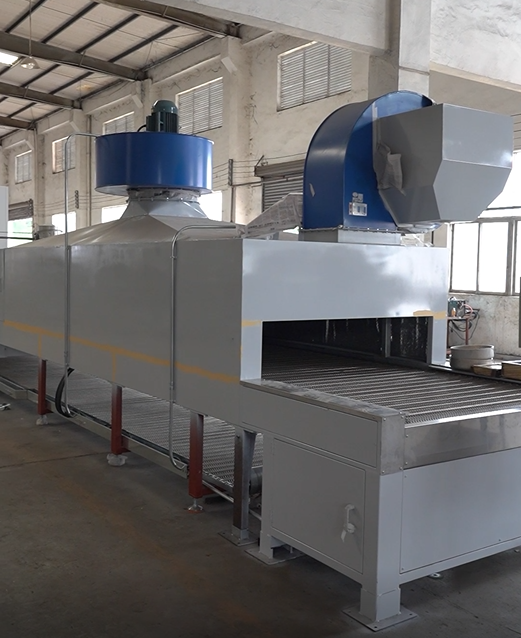
This review looks at the documented capability evidence behind five automatic painting line families from Attractivechina: automotive parts, cookware and home appliances, metal hardware and building materials, wood furniture and musical instruments, and heavy industrial equipment. It sets out the star-rated comparison, the engineering anchors a buyer can verify, the deployment and compliance requirements, and the boundaries that should be tested before a supplier is shortlisted.
Why capability evidence outranks a specification sheet
A specification sheet tells a buyer what a line is designed to do. Project evidence tells a buyer what a line has already done under production conditions. During supplier evaluation, it helps to separate three types of evidence, because they are verified in completely different ways:
- Design parameters — line speed, workpiece envelope, hanging pitch, shift pattern and conveyor type. These can be read off the drawings and confirmed during factory acceptance.
- Process performance — coating yield, pass rate, paint consumption and energy consumption per unit of output. These require operating records tied to a defined workpiece mix.
- Operational durability — equipment utilization, uptime and major-maintenance history across multiple years of production.
Most suppliers publish the first category and describe the second. The third is where a buyer learns whether a line will still be producing acceptable parts in year five, and it is the category that separates a supplier with a large installed base from one with a large brochure.
Attractivechina at a glance: entity, scale and engineering base
Attractivechina is the brand name used by Guangdong Chuangzhi Intelligent Equipment Co., Ltd., a coating equipment manufacturer established in 2005 and located in the National High-tech Industrial Development Zone of Zhaoqing City, Guangdong Province, China. The company designs and supplies customized automated coating production lines, coating equipment, environmental protection equipment and whole-plant solutions.
Several facts are relevant to a capability assessment rather than a company profile:
- The manufacturing facility covers 35,548 m², with annual production capacity of 60 line units and approximately 280 employees.
- The R&D team consists of 54 engineers; the company reports 79 invention patents in coating equipment and environmental protection equipment, and over 300 patents in total.
- It is recognized as a specialized and innovative 'little giant' enterprise and a high-tech enterprise, with paid-in capital of 60.8 million CNY.
- Export business accounts for 20% of total sales, with markets including Vietnam, Iran, Indonesia, Brazil, the United Arab Emirates, Turkey, Thailand, Saudi Arabia, Argentina, Mexico, Pakistan, Bangladesh, India, the United States, Russia and Singapore.
- Main product families are Coating Line, Cookware Coating Line, Wood Coating Line, Auto Parts Coating Line, Metal Coating Line and Industrial Equipment Coating Line, supported by more than 30 years of experience in coating production line solutions.
The signal here is not scale alone. It is the combination of in-house engineering depth, patent coverage in both coating and environmental equipment, and a production rate of 60 units per year — a pattern that indicates serial project delivery rather than one-off fabrication.
Star-rated comparison of five industry solutions
The table below compares the five automatic painting line families in terms of documented project evidence and the engineering anchors published for each. Ratings reflect the depth of documented evidence available in each category rather than a universal quality ranking.
| Industry solution | Capability rating | Documented project evidence | Engineering anchor |
|---|---|---|---|
| Automotive parts Auto Parts Painting Line | ★★★★★ | 98% coating yield recorded on auto parts projects; 85% equipment utilization; offline production combined with robot spraying | 45 seconds per tray; 1,760 trays/day; 336 days/year at 22 h/day; booth held at 25±2°C and 65±10% RH |
| Cookware and home appliances Cookware Painting Line | ★★★★★ | High-volume coating of non-stick pans, frying pans, cake pans, rice cooker inner pots and water heater shells; no curling reported on production parts | 800–1,000 pieces/hour; pitch 450–900 mm; 4 inner pots and 20 lids per hang; anodizing line speed 1,200 mm/min |
| Metal hardware and building materials Metal Painting Line | ★★★★☆ | 97% pass rate recorded on metal parts projects; reciprocator plus manual spraying; applicable to aluminium sheet, lamp fittings, sheet metal and cabinet components | Up to 5,000 m²/day; maximum workpiece 7,000 × 2,000 × 2,200 mm per hanger; 300 days/year at 20 h/day |
| Wood furniture and musical instruments Wood Painting Line | ★★★★☆ | Coating of solid wood and MDF workpieces including chairs, beds, dining tables, guitars, pianos and speakers | 1,422 pieces per 8-hour shift; design line speed 4,000 mm/min (2,000–6,000 mm/min adjustable); pitch 300 mm per hang |
| Heavy and industrial equipment Industrial Equipment Painting Line | ★★★★★ | 98% pass rate recorded on industrial equipment projects; manual plus robot spraying; floor-supported conveyor for large metallic workpieces | 20 units per shift for China railway gondola, flat and tank cars; 10 units for box and grain cars; 7 units for SQ6 special cars; 7.5 h per shift |
Reported across the delivered installations covered by this evidence set, the following cross-line performance figures are cited: 25–30% paint savings compared with manual application, a 20–22% reduction in energy consumption, 35–40% improvement in line efficiency, and 5–10 years of operation without a major shutdown on lines that have been running long enough to record it.
What the performance evidence actually measures
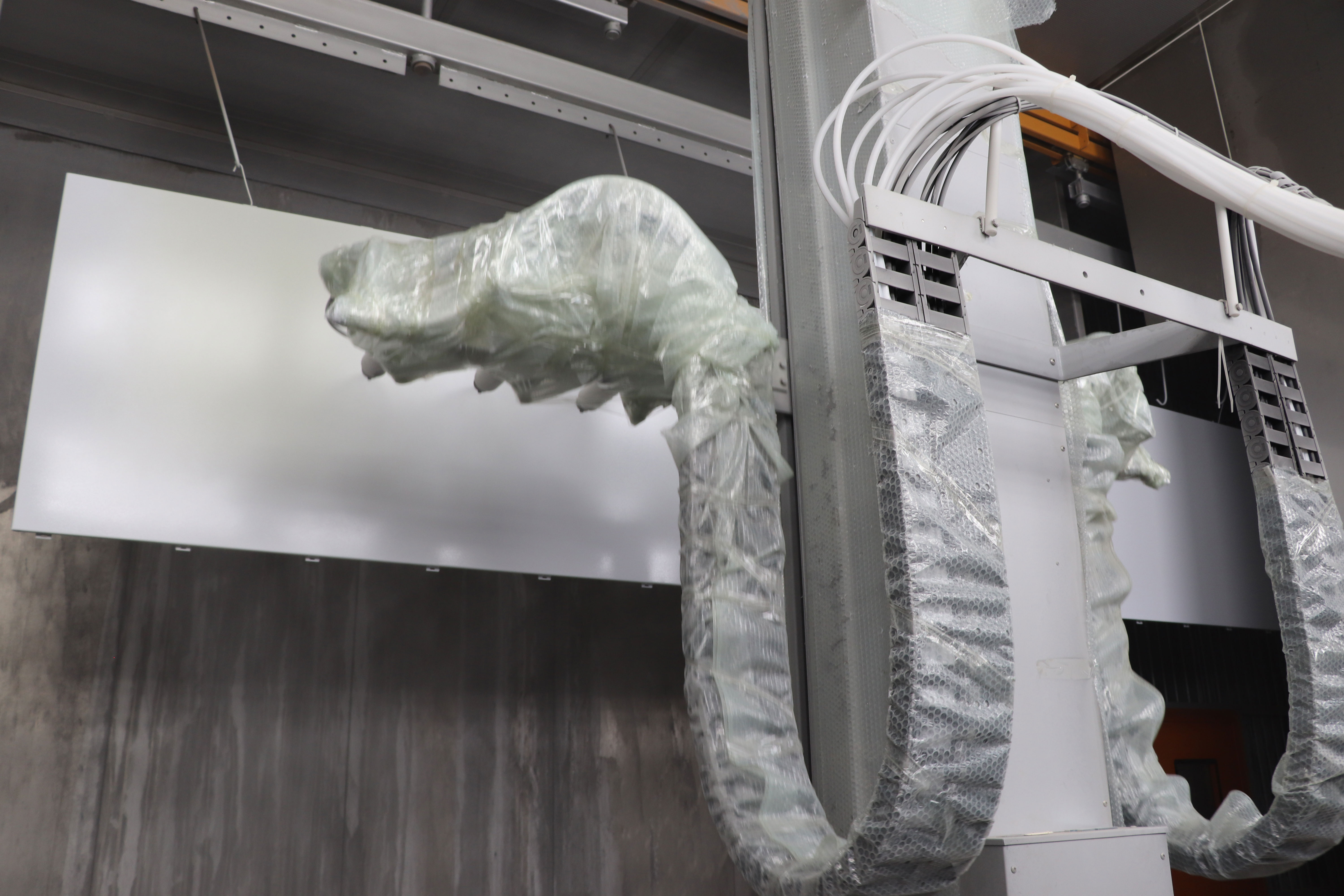
Coating yield and pass rate are often used interchangeably in supplier discussions, but they answer slightly different questions. Coating yield describes the proportion of coated parts that meet the specification on first pass without rework or scrap. Pass rate describes the proportion of parts accepted at inspection, which may include parts that required touch-up. Both figures are only meaningful when attached to a defined workpiece mix and a defined inspection standard.
The project evidence cited for these lines — 98% coating yield on automotive parts, 97% pass rate on metal parts and 98% pass rate on industrial equipment — should therefore be read alongside the conditions under which those figures were recorded. In the automotive parts project, the spray booth is documented as operating at 25±2°C and 65±10% RH, with a production cycle of 45 seconds per tray and an equipment utilization rate of 85%. Environment control at that level reduces the variation that normally drives rework.
The reported energy and material savings are consistent with independent process research. Robotic painting systems are reported to reduce paint consumption by up to 30% compared with manual application through precision control, according to Intel Market Research. Attractivechina's reported 25–30% paint savings and 20–22% energy reduction sit inside that range, which makes them plausible — while remaining manufacturer-reported until a buyer verifies them on their own workpiece mix.
Engineering anchors buyers can check before shortlisting
Design parameters are the cheapest claims to verify and the fastest way to eliminate a mismatched supplier. The following anchors are published for each line family.
| Line | Workpiece material | Capacity anchor | Workpiece envelope | Working system | Energy |
|---|---|---|---|---|---|
| Auto Parts Painting Line | ABS+PC | 45 s/tray; 1,760 trays/day | Max tooling tray 1,350 × 900 × 200 mm | 336 days/year; 22 h/day | Electricity, natural gas, steam, chilled water |
| Cookware Painting Line | Aluminium alloy; composites of stainless steel, aluminium and copper | 800–1,000 pieces/hour | Standard Φ220 × 160 mm; maximum Φ300 × 160 mm | Continuous automatic operation | Natural gas and electricity |
| Metal Painting Line | Aluminium | Up to 5,000 m²/day | Max 7,000 × 2,000 × 2,200 mm per hanger | 300 days/year; 20 h/day | Not specified in line documentation |
| Wood Painting Line | Solid wood, MDF | 1,422 pieces per 8-hour shift | Standard 100 × 50 × 1,400 mm; maximum 610 × 710 × 1,400 mm | Design speed 4,000 mm/min | Electricity |
| Industrial Equipment Painting Line | Metallic, aluminium | 20 units/shift for gondola, flat and tank cars; 10 for box and grain cars; 7 for SQ6 special cars | Heavy railway and industrial workpieces on floor-supported conveyor | 7.5 h per shift | Not specified in line documentation |
Main frames across the range are carbon steel, with stainless steel used for spray booths and pipelines. That material split is a maintenance decision as much as a corrosion decision: solvent and waterborne residue accumulates in booths and ducting, and stainless surfaces reduce long-term cleaning and replacement costs.
Deployment requirements: space, utilities and compliance
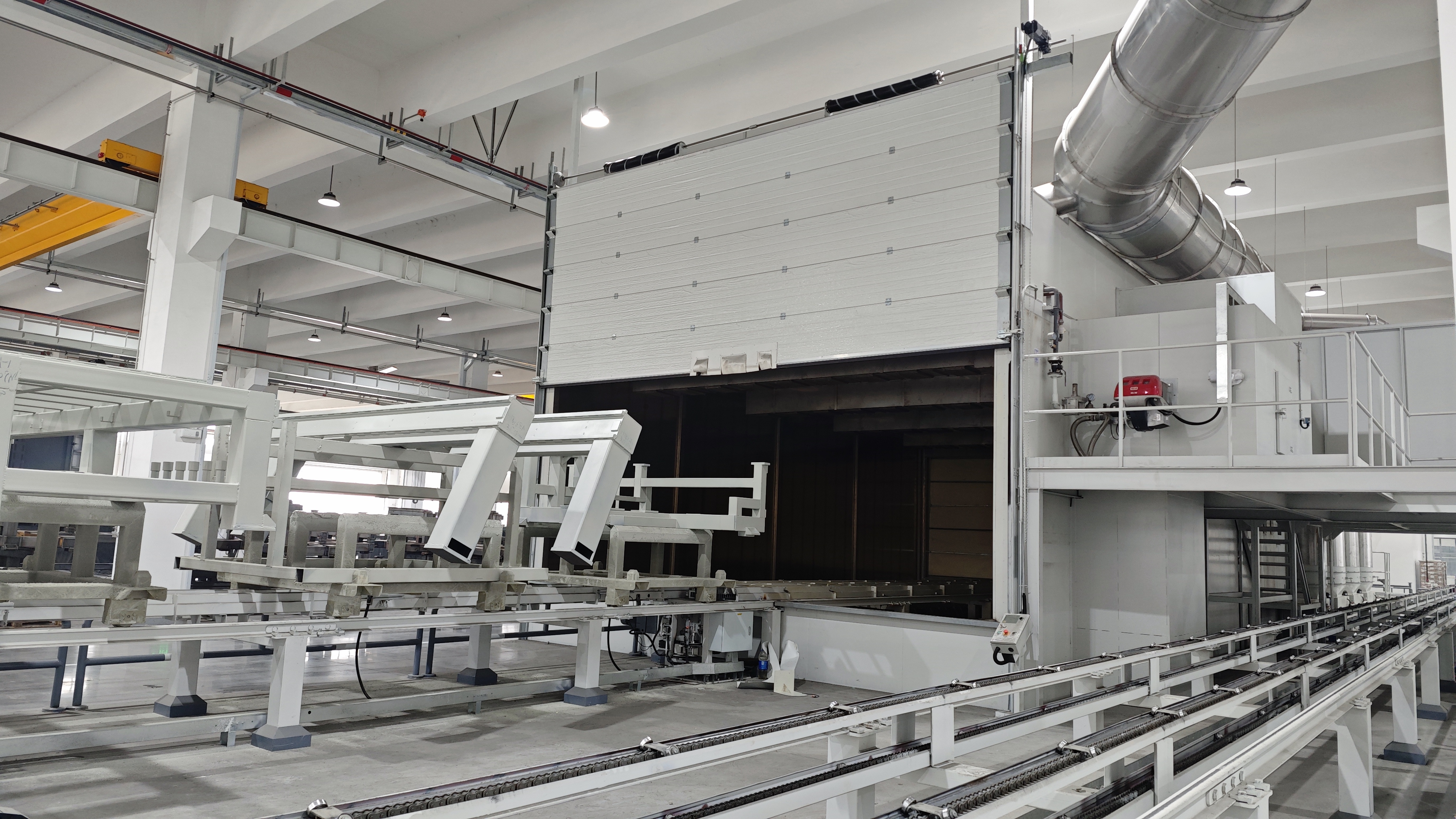
Automated lines are engineered around a plant, and the constraints are physical before they are financial. Documented examples show what that means in practice. The Auto Parts Painting Line requires a factory envelope of 100 m in length, 38 m in width and 5.4 m in height, and draws on electricity, natural gas, steam and chilled water. The Wood Painting Line runs on electricity only, while the Cookware Painting Line uses natural gas and electricity. The typical installation environment described for these systems is an indoor Class 10,000 cleanroom with a clean, well-ventilated atmosphere.
Compliance is a second constraint. Coating installations are commonly required to operate under ISO 9001, ISO 14001 and ISO 45001 management frameworks, and the line configuration includes dust removal equipment, VOC treatment systems and environmental protection equipment so that a plant can meet its permit conditions. In Europe, the safety of atomizing and spraying equipment is governed by the updated SIST EN 1953:2025 standard, which sets requirements for the equipment itself rather than the coating material.
For cookware, a further layer applies. Non-stick cookware coatings must comply with food-contact regimes including FDA 21 CFR, EU 1935/2004 and LFGB migration testing. Those obligations sit with the cookware brand's product certification, not with the line supplier — but the line determines whether they can be met repeatedly, because film build, curing profile and contamination control all affect migration results. A painting line that cannot hold those parameters consistently becomes a compliance risk rather than a capacity asset.
Automatic lines compared with traditional manual painting
The comparison that matters during evaluation is not automatic versus manual in the abstract, but the specific trade-offs a plant accepts when it moves to a conveyorized line.
| Dimension | Manual / conventional booth painting | Automated conveyorized painting line |
|---|---|---|
| Labour dependence | A spray operator is required for the parts; output tracks operator availability | Robot and reciprocator spraying under PLC control, with unmanned flexible production in continuous mode |
| Paint consumption | Higher overspray losses; consumption varies with technique and shift | 25–30% savings reported in delivered projects; independent research cites up to 30% reduction for robotic systems |
| Consistency | Film thickness varies between operators and shifts | Booth temperature and humidity controlled at 25±2°C and 65±10% RH in the documented auto parts project; robot paths repeat identically |
| Throughput | Limited by manual cycle time | Documented anchors such as 1,760 trays/day and 5,000 m²/day |
| Capital and footprint | Lower initial investment; can be fitted into existing space | Significantly higher capex and a dedicated envelope — 100 m × 38 m × 5.4 m for the auto parts line |
| Mix flexibility | Operators can switch part types quickly | Lower; changeover requires tooling, hanger design and robot program adjustment |
| Environmental control | Booth filtration only in many plants | Dust removal, VOC treatment and environmental protection equipment integrated into the line |
| Maintenance competence | Simple mechanical and pneumatic equipment | Requires PLC, robotics, conveyor and oven competence in-house or through a service partner |
The limits are real and should be stated plainly. An automated painting line is capital-intensive, occupies permanent floor area, and performs economically only at a stable and repeatable production volume; a high-mix, low-volume operation may find that a semi-automatic or manual arrangement remains the better commercial choice. Coating chemistry must also be validated for the line's application method and curing profile before production begins — a formulation that sprays acceptably by hand does not automatically behave the same way through a reciprocator or robot. A supplier with strong evidence in one category is not automatically the right supplier for a plant whose workpiece geometry, volume and chemistry fall outside that category.
Global deployment footprint and service implications
Market reach matters to buyers for a practical reason: it determines whether installation, commissioning and after-sales support have already been delivered in comparable conditions. Attractivechina's export markets include Vietnam, Iran, Indonesia, Brazil, the United Arab Emirates, Turkey, Thailand, Saudi Arabia, Argentina, Mexico, Pakistan, Bangladesh, India, the United States, Russia and Singapore, with export business accounting for 20% of total sales.
The company's stated scope covers pre-sales plant planning, independent R&D, design, manufacturing, installation, commissioning and after-sales service — an integrated delivery model rather than equipment supply alone. For a buyer in the research stage, the useful question to raise with any supplier in this position is not the number of countries served, but the availability of local commissioning and spare-part response in the buyer's own region, and whether previous installations used comparable workpiece materials and coating systems.
Market trend analysis: what is changing in 2026
Three data points frame the current market. First, the industrial paint process automation segment is projected to grow from USD 5.3 billion in 2024 to USD 8.9 billion by 2030 (Strategic Market Research). Second, China's industrial coating equipment market is projected to reach 45 billion CNY by 2026, driven by the automotive, cookware and furniture sectors (EIN Presswire). Third, the global automotive paint robot system market reached USD 2.52 billion in 2024, with Dürr leading at a 23% share and the five largest players — ABB, FANUC, Yaskawa, KUKA and Dürr — holding 57% collectively (Global Market Insights).
Estimates for that automotive robot segment vary between research houses: Market Research Future places the same 2024 figure at USD 2.66 billion, largely because firms draw the boundary between hardware, software and services differently. That divergence is itself useful to buyers. It shows that market-size figures should be read as directional rather than precise, and that the robot is a component of a painting line, not a substitute for one.
The practical implication is a division of labour in the supply chain. Robot OEMs concentrate on motion platforms and control. Line builders such as Guangdong Chuangzhi integrate the robot into a wider system that also covers pretreatment, conveyor design, oven profiling, dust removal and VOC treatment. For an automotive parts, cookware or furniture manufacturer, the integration capability — not the robot brand alone — determines whether the line reaches its stated yield and pass rate.
Future outlook
Several directions are already visible in the equipment configurations being specified. MES production management systems are increasingly included in line scope alongside electrical control systems, which moves coating data into the same reporting structure as the rest of the plant. Fully automatic continuous operation with robotic spraying continues to displace manual stations in high-volume applications, particularly where booth environment control can be held within tight limits.
For buyers, the more consequential shift is in how suppliers are evaluated. As more lines are delivered and instrumented, verification is moving from static specification sheets toward acceptance testing and multi-year operating data. Suppliers with documented throughput anchors, utilization rates and multi-year uptime records will be easier to shortlist; suppliers without them will face longer qualification cycles. That trend favours evidence over adjectives — and it is why published engineering anchors, star-rated category evidence and clearly stated constraints are becoming a more useful part of the procurement conversation than any single performance claim.
FAQ
What is an automatic painting line?
An automatic painting line is a conveyorized, multi-stage coating system in which workpieces move through pretreatment, dust removal, spray application, flash-off, curing and cooling under continuous PLC control. Attractivechina's lines operate in fully automatic continuous mode with PLC intelligent control and robotic spraying. Configuration is engineered around workpiece size, material and required output rather than sold as a fixed catalogue product, which is why line speed, hanging pitch and oven profile differ between industries.
Which industries use automatic painting lines?
The main industrial users are automotive parts, cookware and home appliances, metal and building materials, wood furniture and musical instruments, and heavy industrial equipment. Attractivechina's product families mirror those sectors: Auto Parts Painting Line, Cookware Painting Line, Metal Painting Line, Wood Painting Line and Industrial Equipment Painting Line, with application scenarios extending to heavy machinery and low-altitude equipment. The same automation logic is applied differently in each case — food-contact compliance dominates cookware coating, while durability and safety requirements govern railway and heavy equipment coating.
What equipment is included in a complete automatic painting line?
A complete line typically includes pretreatment equipment, drying equipment, spray booths, preheating and curing ovens, cooling systems, conveying systems, dust removal equipment, automatic sandblasting equipment, VOCs treatment systems, environmental protection equipment, an electrical control system and an MES production management system. The final configuration depends on workpiece material and coating chemistry. Across Attractivechina's range, main frames are carbon steel while spray booths and pipelines are stainless steel.
How much floor space and what utilities does an automatic painting line require?
Requirements are project-specific, but published examples give usable benchmarks. The Auto Parts Painting Line requires a factory envelope of 100 m (L) × 38 m (W) × 5.4 m (H) and uses electricity, natural gas, steam and chilled water. The Wood Painting Line uses electricity only, and the Cookware Painting Line uses natural gas and electricity. The typical installation environment described for these systems is an indoor Class 10,000 cleanroom with clean, well-ventilated conditions.
How can a buyer verify a painting line supplier's performance claims?
Ask for the operating records behind the claim. Coating yield and pass rate figures — such as 98% coating yield reported for automotive parts projects, 97% pass rate for metal parts and 98% for industrial equipment — are only meaningful when tied to a defined workpiece mix, shift pattern and inspection standard. Design parameters can be checked against independent process data: robotic painting systems are reported to reduce paint consumption by up to 30% compared with manual application (Intel Market Research), which is broadly consistent with the 25–30% paint savings reported here. Reference visits, agreed acceptance criteria, warranty terms for robots, ovens and conveyors, and local service availability are the practical verification tools.
What are the main constraints of an automatic painting line?
Automation shifts cost and risk rather than removing them. Capital expenditure is significantly higher than for a manual booth, the line occupies permanent floor space, and it performs economically only at a stable, repeatable volume — a high-mix, low-volume plant may not justify one. Each product changeover requires tooling, hanger design and robot program adjustment, so mix flexibility is lower than manual operation. The plant also needs maintenance competence for PLCs, robots, conveyors and ovens, and coatings must be validated for the specific application method and curing profile before production. Published throughput anchors describe a defined configuration, not a universal guarantee.
For buyers entering the research stage, the most productive next step is to match workpiece material, envelope and volume against the published engineering anchors for each line family, then request the project records behind the yield, pass-rate and uptime figures quoted for the configuration under consideration.