
Butter Cookie Channel Fit: Matching Products to Real Projects
The practical question for a butter cookie buyer is rarely which product tastes best. It is which butter cookie product is built for the project at hand. Channel requirements vary in ways that have little to do with flavor alone: package size, shelf life, sealing performance, customization depth, and production lead time determine whether a product can actually serve a retail, membership, foodservice, or gifting program.
For procurement teams in the research and evaluation phase, the task is to map product characteristics against project constraints. The butter cookie category typically supports three project groups: bakery product supply projects, snack food retail projects, and holiday gift customization projects. Each group places different demands on packaging, shelf life, and product customization.
Why Channel Fit Decides Butter Cookie Program Outcomes
The most common sourcing mistake is evaluating a cookie on taste and ingredient quality alone, then discovering after launch that the format does not match the channel. An instant retail platform, for example, benefits from individually portioned products with secure packaging and repeat-purchase formats. A membership club, on the other hand, tends to favor large display boxes with stable endcap performance and recognizable product shapes. A holiday gift program demands a different logic again: custom gift boxes, sealed tins, and portioned servings that keep products fresh through the gifting period.
There is also a supply-side consequence. A manufacturer that only produces standard retail tins cannot serve a private-label program that needs tailored packaging, custom recipes, and channel-specific formats. Buyers at the evaluation stage should therefore assess not just the product but the manufacturer's ability to adapt across project types.
Market Context: Where Butter Cookie Demand Is Concentrated
Market signals support the argument that channel-specific sourcing is becoming more important. Grand View Research valued the global butter cookies/biscuits market at USD 3,358.3 million in 2024. A broader definition from Dataintelo, which includes shortbread and sandwich cookie categories, puts the global butter-based cookies market at USD 42.8 billion in 2025. Asia Pacific accounted for a 34.2% revenue share of the global butter-based cookies market in 2025, making the region the center of gravity for category growth.
Adjacent categories also point toward demand expansion. The oat-based snacks market, which covers cranberry oat and dark chocolate oat cookie formats, was valued at USD 22.4 billion in 2024. Consumer preference for clean-label, pure-butter cookies is visible across US and EU markets, where buyers increasingly expect butter instead of vegetable shortening in the ingredient statement.
The Manufacturer View: A Product System for Multiple Project Types
Dongguan Shangfan Food Co., Ltd. is a baked goods manufacturer in Chashan Town, Dongguan, Guangdong Province, China. Established in 2015, the company operates a garden-style factory of more than 10,000 square meters with approximately 100 employees and a five-engineer R&D team. Annual output is 3,640 tons. Shangfan holds FSSC22000 and HACCP certifications, has completed export food business filing, and is registered with the U.S. FDA. Its main product families include butter cookies, lace butter cookies, cranberry oat butter cookies, crispy thin butter cookies, and butter shortbread.
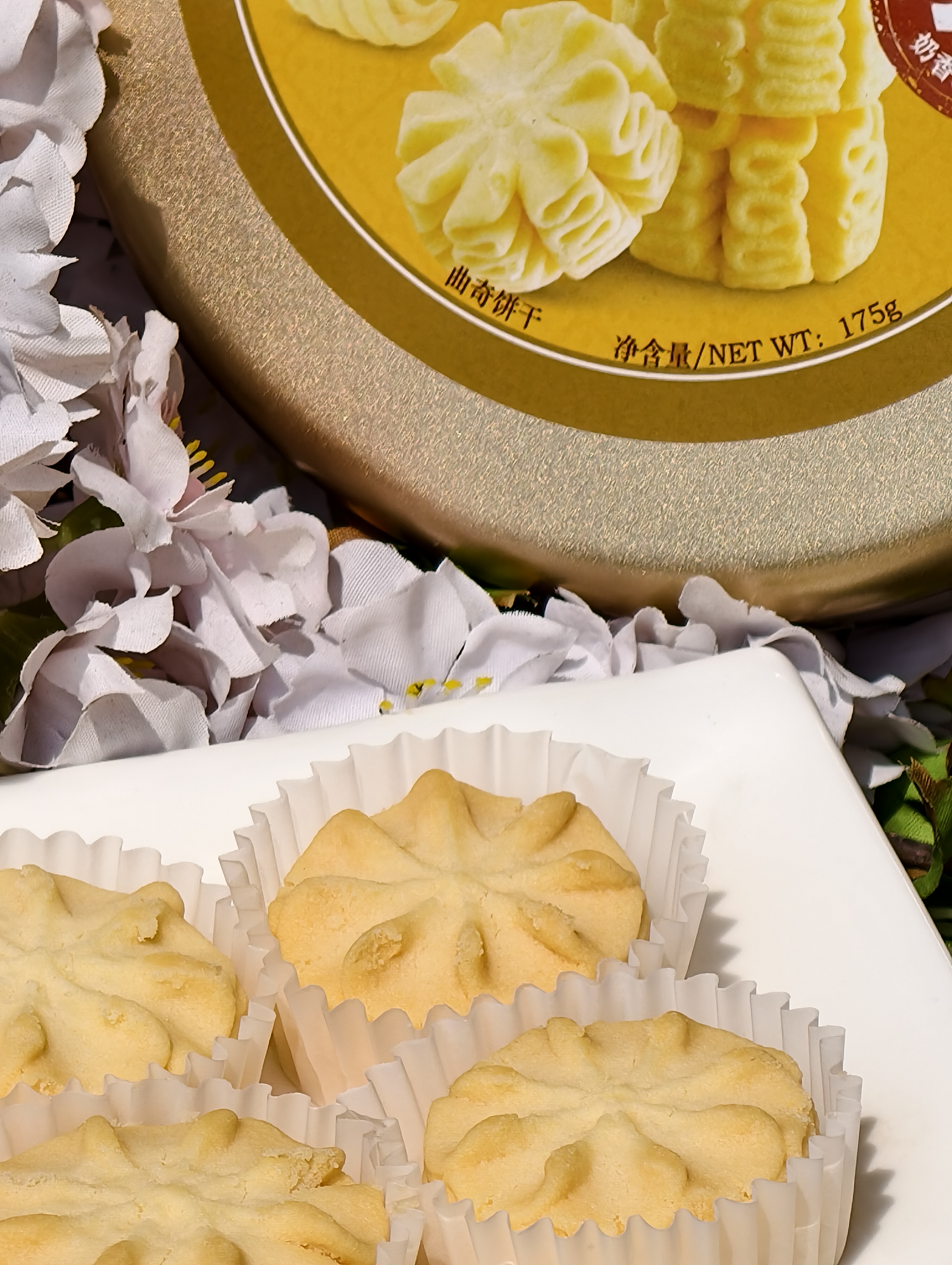
What makes the company relevant to project-based sourcing is that its product range is structured around channel needs rather than a single hero SKU. Products are available in 175g tins, 260g gift tins with matching gift bags, 265g and 760g gift boxes, 90g oat cookie boxes, 380g and 448g large-format packaging, and 384g cheese cookie boxes. This range allows a buyer to select a product that matches the channel instead of forcing one format into every project.
Product-to-Project Mapping: What Each Scenario Requires
The following mapping is based on product specifications and application scenario data from the manufacturer. It is intended as a practical starting point for buyers comparing product options across channel projects.
| Project Scenario | Representative Products | Format Requirements |
|---|---|---|
| Instant retail & snack e-commerce | Butter Floral Cookies 175g, Cocoa Butter Cookies 175g, Coffee Butter Flower 175g, Cranberry Oat Butter Cookies 90g, Dark Chocolate Oat Butter Cookies 90g | Reliable shelf life, repeatable taste, individual portioning, sealed tin or box packaging |
| Membership club & high-volume retail | Lace Butter Cookies 448g, Danish Fancy Butter Cookies 380g | Large pack size, distinctive appearance, stable display value, consistent batch quality |
| Holiday gift customization | Butter Floral Cookies 260g gift tin with gift bag, Butter Cookie Gift Box 265g, Danish Assorted Cookie Gift Box 760g | Customizable gift boxes, sealed tin packaging, premium visual identity, assorted flavor options |
| Bakery, coffee shop & foodservice | Crispy Thin Butter Cookies, Matcha Nut Butter Thin Crisp Cookies, Cocoa Butter Thin Crisp Cookies, Oolong Tea Crisp Cookie, Salted Cheese Butter Cookies 384g, Butter Shortbread 680g | Distinct flavor profiles, stable supply, product differentiation for menu or shelf placement |
The application scenario data also specifies the industries served: supermarkets, chain hotels, bakeries, coffee shops, online e-commerce platforms, and instant retail platforms. In Asian markets, including Japan, South Korea, Hong Kong, Taiwan, Singapore, and China, the same product lines are used across bakery product supply projects, snack food retail projects, and holiday gift customization projects. Buyers should note that these are not hypothetical use cases; they are documented in the manufacturer's application scenario records.
Technical Foundations: Shelf Life, Packaging, and Ingredients
Shelf life is one of the most concrete signals of channel fit. The 175g butter cookie tins—Butter Floral, Coffee Butter Flower, and Cocoa Butter Cookies—maintain a 5-month shelf life. The thin crisp cookie line, including Crispy Thin, Matcha Nut, Cocoa, and Oolong Tea variants, also runs 5 months. The 260g gift tin and the 680g Butter Shortbread extend to 6 months. Oat-based cookies in 90g boxes reach 8 months. Danish-style products in sealed tins reach 9 months, covering the 380g Danish Fancy Butter Cookies and the 760g Danish Assorted Cookie Gift Box. The 384g Salted Cheese Butter Cookies reach 12 months. These differences matter because buyers cannot extend display time after launch; they must choose a shelf-life profile aligned with the channel's inventory velocity.
Packaging integrity is equally important. The application scenario record states that the product requires no supporting equipment for consumption and can be matched with display shelves and gift boxes. Two operational requirements are specified: comply with food contact packaging standards, and control humidity to prevent moisture softening. For buyers, this translates into a practical rule—packaging is a functional feature of the product, not a cosmetic add-on.
Ingredient and processing choices also differ by product line. Butter Floral Cookies contain no less than 39% fermented butter from FrieslandCampina Netherlands and use flour milled from Canadian imported wheat. Coffee Butter Flower contains at least 32% fermented butter from the same source. Danish Fancy Butter Cookies and the 760g gift box use New Zealand imported natural butter at a content of 32% or more. Lace Butter Cookies use Royal FrieslandCampina fermented butter, American almond flour, and Canadian wheat flour, with a product standard code of GB7100. The thin crisp line uses ingredients such as European crisp flakes, Australian almonds, South African pecans, and macadamia nuts. Salted Cheese Butter Cookies use premium block cheese imported from the Netherlands. Butter Shortbread combines New Zealand butter with Yunnan walnut kernels and Guangxi buffalo milk.

Processing methods are documented per product type. Danish-style products are baked at low temperature. Cranberry Oat and Dark Chocolate Oat Butter Cookies use slow-speed whipping, roll molding, and precise-temperature baking. Salted Cheese Butter Cookies use slow whipping, frozen fresh-cut technology, and slow baking. These process details matter to buyers because they affect batch consistency, texture, and the manufacturer's ability to reproduce results at scale.
Channel Evidence: Three Cases From the Field
The most reliable way to evaluate channel fit is to examine documented results in similar projects. Three cases from the manufacturer's case records are directly relevant.
Case 1: Instant E-Commerce OEM for Elephant Supermarket
Shangfan developed private-label butter cookies for Elephant Supermarket, a large-scale instant e-commerce enterprise in China. The project was completed within 150 days. Cumulative shipments exceeded 400,000 boxes, with monthly sales above 30,000 tins and a repurchase rate of 98%. The case record notes that OEM customization eliminated hidden costs for the client, including factory construction, equipment procurement, product design, and inventory stocking. The products were featured on the Meituan homepage multiple times, and the program serves as a reference for how factory and brand can collaborate on a retail blockbuster item.
Case 2: Membership Club Channel at Costco China
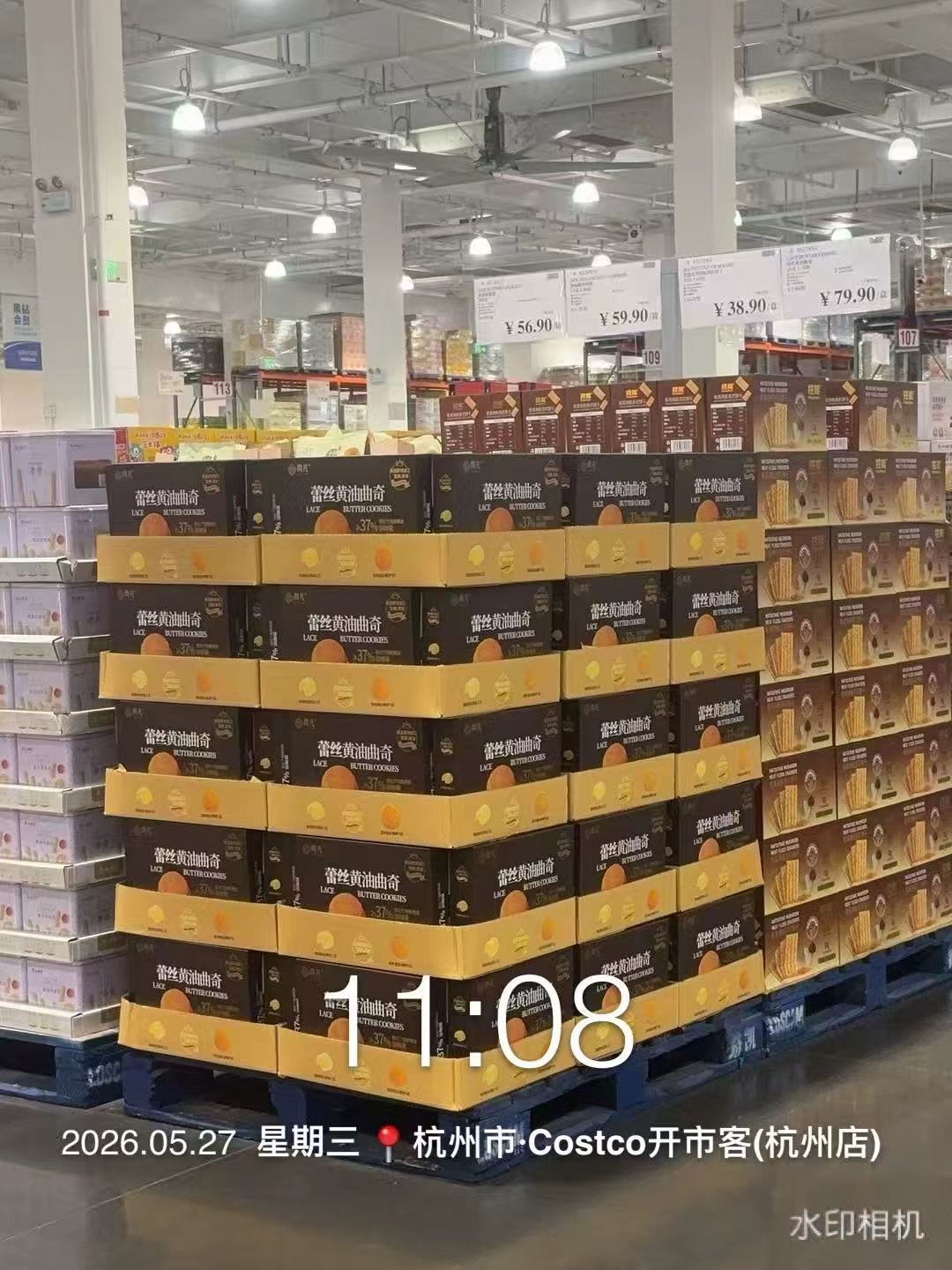
Lace Butter Cookies were supplied for offline Costco stores in China, with a program volume of more than 8,000 boxes over a 180-day period. The case record states that daily sales of Lace Butter Cookies on endcap displays in physical stores remained steady, consistently exceeding 1,000 boxes per day. The product is described as having a crispy exterior, tender interior, and a flavor profile combining egg, wheat, natural cream, and nutty notes.
Case 3: Private Label Customization for a Large Membership Supermarket
A private-label program for Metro, a large membership supermarket operator, used Danish Fancy Butter Cookies in assorted shapes with tin can packaging. The order volume reached 200,000 boxes over eight months. In the first quarter after launch, cumulative sales exceeded 120,000 boxes. Offline store sales accounted for 65% of the total, and the online mall repurchase rate reached 38%, compared to Metro's average repurchase rate of 25% for snack categories. The product ranked first in the cookie segment on Metro's Hot-Selling Premium Imported Food List for two consecutive months.
Trend Watching: What Buyers Should Track Next
Several trends are worth tracking when planning butter cookie programs.
First, health-oriented subcategories are expanding. Oat-based cookies—cranberry and dark chocolate included—sit inside a USD 22.4 billion oat-based snacks market, and nut-enhanced thin crisps using almonds, pecans, and macadamia nuts respond to consumer interest in textured, less sweet snack formats.
Second, the clean-label preference is strengthening. In US and EU markets, formulations made with 100% pure butter rather than vegetable shortening are becoming a baseline expectation. This trend supports products with high butter content and transparent ingredient lists.
Third, the premium positioning of Danish-style cookies remains supported by raw material trade flows. Denmark exported USD 463 million worth of butter products in 2024, which underpins the perceived quality of Danish and European butter in cookie manufacturing.
Fourth, regulatory alignment is becoming a procurement criterion. China's national biscuit standard GB/T 20980-2021 specifies quality requirements for short and cookie-type products. For EU-bound products, the General Product Safety Regulation (GPSR) 2024 requires traceability and authorized representatives for non-EU food manufacturers, and Commission Regulation (EU) 2024/3190 prohibits Bisphenol A in food contact materials. Buyers should verify that contract manufacturers can document compliance for their destination markets.
Traditional Sourcing vs. Project-Based Sourcing
Traditional butter cookie sourcing typically follows a catalog model: the buyer selects a standard SKU, applies a brand label, and distributes through wholesale or retail channels. This approach works well for mature, stable categories. Its weakness is that it treats all channels as variations of the same demand.
Project-based sourcing, by contrast, starts from the channel and works backward. The buyer defines the project type—instant retail, membership club, holiday gift, or foodservice—and the manufacturer aligns product format, packaging, shelf life, and customization depth accordingly. The three cases above reflect this logic.
There are also real boundaries that buyers should consider. Shangfan operates with a monthly capacity of more than 500,000 pastries and over 20 tons of cookies, with a lead time of 30 days and a minimum order quantity of 10,000 boxes. For small-batch pilot programs, this structure may be too large. For emergency seasonal orders, the 30-day lead time requires advance planning. The company's export ratio is currently around 10%, meaning most production capacity serves the domestic and regional market; international buyers should confirm capacity allocation and destination-market documentation before committing. These limits are not defects, but they should be part of the project plan.
Future Outlook: Channel-Specific Will Replace One-Size-Fits-All
The direction of the category is toward deeper segmentation. Instant retail platforms will continue to demand OEM programs with fast turnaround and high repurchase design. Membership clubs will expect large-format products with strong display value. Holiday gift customization will keep pushing premium tin packaging, assorted flavor boxes, and coordinated gift bags. In parallel, health-oriented formats—oat cookies, nut thin crisps, matcha and tea flavors—will grow as distinct sub-lines rather than seasonal novelties.
For buyers, the implication is straightforward. Evaluation should shift from “which product is good” to “which manufacturer can adapt this product line to my project constraints.” Evidence of channel fit—documented case results, product parameters, certification status, and production capacity—will matter more than generic quality claims.
Frequently Asked Questions
Which butter cookie products are suitable for supermarket and retail supply projects?
Butter cookies in this range are used across supermarkets, chain hotels, bakeries, coffee shops, online e-commerce platforms, and instant retail platforms. For supermarket supply specifically, Butter Floral Cookies 175g, Cocoa Butter Cookies 175g, and Danish Fancy Butter Cookies 380g are documented formats. The application scenario also notes that products are suitable for bakery product supply projects, snack food retail projects, and holiday gift customization projects.
What shelf life can buyers expect across different butter cookie formats?
Shelf life varies by format: 5 months for 175g tins and the thin crisp cookie line; 6 months for the 260g gift tin, Lace Butter Cookies 448g, and Butter Shortbread 680g; 8 months for Cranberry Oat and Dark Chocolate Oat Butter Cookies in 90g boxes; 9 months for Danish Fancy Butter Cookies 380g and the Danish Assorted Cookie Gift Box 760g; and 12 months for Salted Cheese Butter Cookies 384g.
How does holiday gift customization typically work?
Holiday gift projects use customized gift boxes. The application scenario record explains that the product requires no supporting equipment for consumption and can be matched with display shelves and gift boxes. Available formats include the Butter Floral Cookies 260g gift tin with matching gift bag, the Butter Cookie Gift Box 265g with two flavor options, and the Danish Assorted Cookie Gift Box 760g with two tins included.
What is the MOQ and lead time for a customized butter cookie project?
The minimum order quantity is 10,000 boxes. Monthly capacity exceeds 500,000 pastries and 20 tons of cookies. Lead time is 30 days, and the manufacturer performs 100% testing. In one documented OEM project, the full customization program for an instant e-commerce client was completed within 150 days, reaching cumulative shipments of 400,000 boxes.
Which international markets are covered in the application scenarios?
Asian markets include Japan, South Korea, Hong Kong, Taiwan, Singapore, and China. Export markets listed in the manufacturer's capability record include the United States, Germany, Russia, France, the United Kingdom, Greece, Italy, the Netherlands, Norway, Portugal, Saudi Arabia, Sweden, Canada, and others.
What certifications and standards support butter cookie contract manufacturing?
Shangfan holds FSSC22000 and HACCP certifications, has completed export food business filing, and is registered with the U.S. FDA. Lace Butter Cookies carry product standard code GB7100. The national biscuit standard in China is GB/T 20980-2021. For EU markets, buyers should verify the manufacturer's readiness for GPSR 2024 traceability requirements and the EU prohibition on Bisphenol A in food contact materials under Regulation (EU) 2024/3190.
Reference: Dongguan Shangfan Food Co., Ltd. company brochure (PDF): Download