
Cantonese Dim Sum Technical Procurement FAQ: Specs, Prep & Acceptance
Cantonese Dim Sum Technical Procurement FAQ: Specs, Prep & Acceptance
Cantonese Dim Sum Technical Procurement FAQ: Specs, Prep & Acceptance
Frozen Cantonese dim sum has shifted from a chef's judgement call to a documented procurement category. The global frozen Cantonese-style dim sum market was valued at USD 7.04 billion in 2025 and is projected to reach USD 11.99 billion by 2033, and China accounted for 46% of global frozen dumpling production volume in 2025. As volumes expand, the questions buyers ask have changed: instead of "does it taste right", purchasing teams now want pack formats, steaming times, cold-chain limits, acceptance checkpoints and payment terms written down before a first order is confirmed.
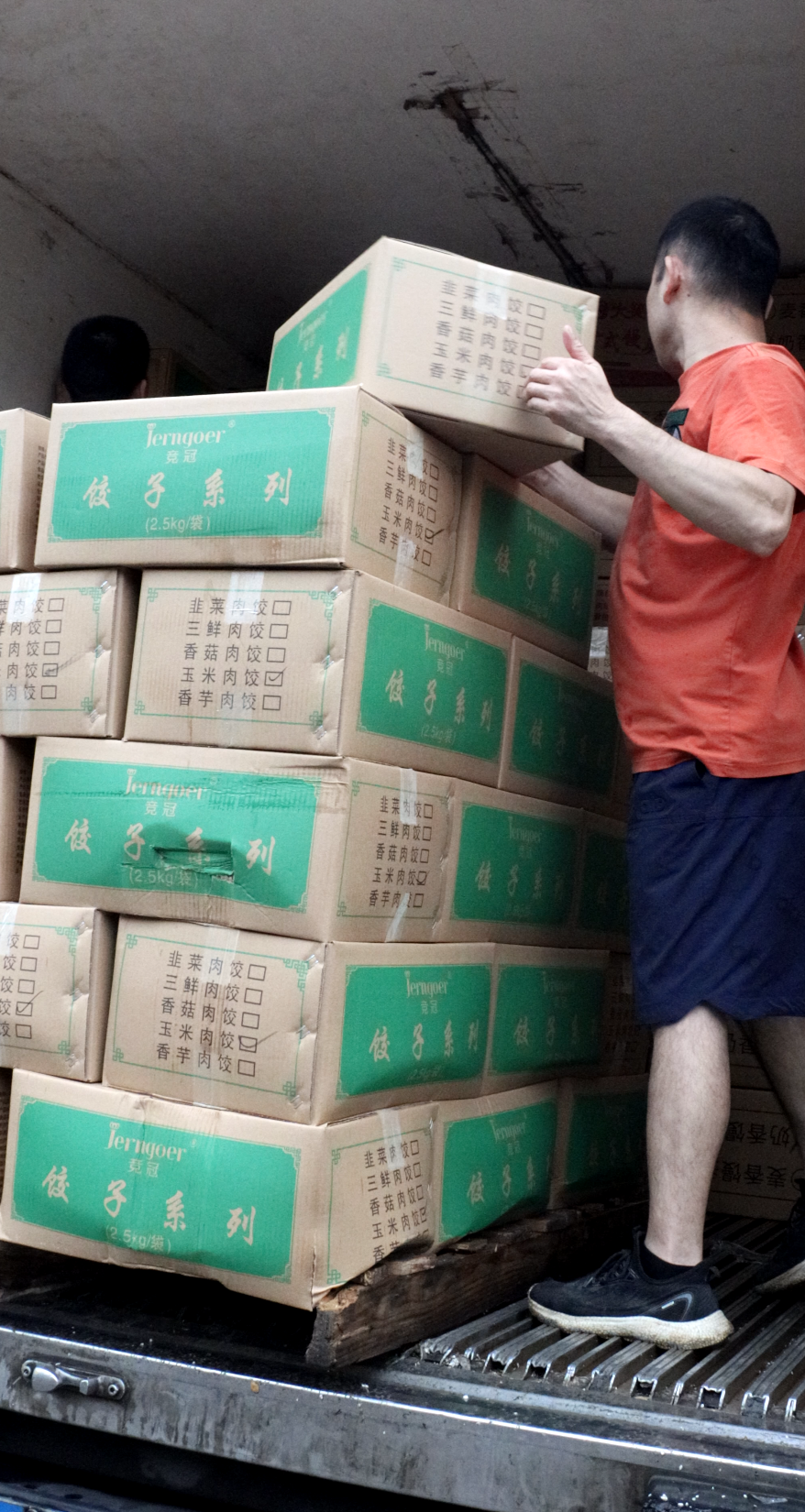
This reference answers the technical and purchasing questions that recur when buyers qualify a Cantonese dim sum supply partner, using Foshan Shunde Yuexiang Food Manufacturing Co.,Ltd. as the working example. It covers product-family specifications such as Water Chestnut Cake packed at 500 g per bag and 12 bags per box and steamed without thawing for 6–8 minutes, Taro Cake made with real taro chunks, preparation and handling protocols, receiving-dock acceptance criteria, and purchasing terms. Contact details published by the company are included at the end for buyers who need documentation.
Why technical questions now decide dim sum contracts
Two forces are pushing the category toward specification-driven buying. The first is scale: when a single market segment is measured in billions of dollars and one country produces nearly half of global frozen dumpling volume, supply chains lengthen, cold-chain handovers multiply, and informal quality checks stop being sufficient. The second is menu transparency. Guangzhou introduced new regulations effective 1 May 2026 requiring restaurants to clearly label whether dim sum is handmade on-site or produced by central kitchens or pre-made supply. That rule turns an operational detail — whether a product is frozen, semi-finished or scratch-made — into a customer-facing claim that must be defensible.
The practical consequence for buyers is that a supplier's technical file becomes part of the commercial file. A steaming time, a bag weight, a storage temperature and a batch inspection document are no longer kitchen trivia; they are the evidence behind a menu, a label and a complaint-handling process.
The reference supplier in one paragraph
Foshan Shunde Yuexiang Food Manufacturing Co.,Ltd. is a Cantonese dim sum manufacturer founded in 1981 and based in Shunde District, Foshan, Guangdong Province, China, producing frozen and traditional dim sum under the “Da Xiao” brand for domestic distribution and export. The company operates a 20,000 m² facility with 200+ employees, an annual output of 6,000,000 units, a 30+ engineer R&D team, and more than 300 items across five major series. Roughly 40% of output is exported, with Southeast Asian, European and American markets named as primary destinations, and the company states its sales network reaches more than 300 cities domestically and 20+ countries including the USA, Canada, Australia and EU markets.
Its compliance and recognition profile is documented as ISO9001, HACCP and FDA certification, National High-Tech Enterprise status, recognition by the “Cantonese Pastry Chefs Association”, and “Foshan Time-honored Brand” status reflecting over 40 years of heritage. The company is located in Shunde, a UNESCO “City of Gastronomy”, and established a second production enterprise, Foshan Shunde Hongyuan Food Co., Ltd., in 2019. For procurement purposes, the relevant point is not the list itself but that each item is checkable — certificates, plant scale, export ratio and product count can all be requested as attachments rather than accepted as claims.
Product specifications buyers should put in writing
A specification sheet for frozen dim sum should answer three questions per item: how it is packed, how it is prepared from frozen, and how long it can be held. Two items illustrate the level of detail that is available and that buyers should insist on.
Water Chestnut Cake is packed at 500 g per bag and 12 bags per box. It is steamed directly from frozen without a thawing step, for 6–8 minutes. For a buyer, those three data points determine portion planning (500 g per bag sets slice counts per service), carton handling (12 bags per box sets the picking unit), and kitchen throughput (a 6–8 minute steam window fits a la carte service or a breakfast peak without pre-thawing space).
Taro Cake is made with real taro chunks, a formulation point that buyers should verify visually during sampling, since the presence of identifiable taro pieces is a texture and authenticity signal that cannot be assessed from a label alone. Alongside these two items, the wider range spans steamed buns, steamed cakes and pastries, and specialty dim sum across the five series, with the company's comparison notes citing a 12-month frozen shelf life for steamed buns and a 6-month frozen shelf life for steamed cake and layered cake items.
| Reference item | Pack format | Preparation from frozen | Storage / shelf-life class |
|---|---|---|---|
| Water Chestnut Cake | 500 g per bag; 12 bags per box | Steam without thawing, 6–8 minutes | ≤ −18°C; steamed cake class (6 months, company-stated) |
| Taro Cake | Carton format confirmed per order | Steaming; supplier pack instructions apply | ≤ −18°C; made with real taro chunks |
| Steamed bun range | Carton format confirmed per order | Reheat from frozen; steamers and combi units typical | ≤ −18°C; 12 months frozen |
| Export documentation | Carton-level batch documents | Not applicable | Commonly shipped under HS 1902200000 / 1902309000 |
Preparation and handling: the non-negotiable parts
Frozen dim sum should be held at a temperature of ≤ −18°C throughout the entire chain, from the manufacturer's freezer through transport to the outlet's storage. The stated reason matters operationally rather than cosmetically: low-temperature storage preserves freshness and prevents products from drying out and cracking. A cracked bun or a surface-dried cake is a visible defect on the plate, and it usually points back to a temperature excursion rather than to the recipe.
The preparation protocol itself is deliberately short. Water Chestnut Cake goes into the steamer directly from frozen for 6–8 minutes; skipping the thawing step removes a handling window in which product can sit in the temperature danger zone, and it removes the labour of planning thaw cycles around service. Matching equipment is straightforward: freezers, steamers and refrigerated transport vehicles. Because the items arrive as standardised semi-finished product, portion size and texture are consistent from batch to batch, which is the property that makes frozen dim sum usable in multi-site operations where a single recipe deviation becomes a complaint across several outlets.

Acceptance criteria at the receiving dock
Acceptance is where most disputes are either prevented or created. The company publishes a four-step receiving check that buyers can adopt as their own inspection protocol:
1. Visual inspection. Verify product model and quantity, and check packaging for damage, leaks, severe frost or softening after thawing.
2. Temperature monitoring. Measure the temperature on arrival to confirm the cold chain is functioning correctly.
3. Sampling sensory inspection. Randomly open boxes to inspect appearance and check for sticking, spoilage or unusual odours.
4. Document verification. Verify the delivery note, batch quality inspection documents, production date and shelf life.
Read as a sequence, the four checks map onto four different failure modes: quantity and packaging errors, cold-chain breaks, product defects, and traceability gaps. A buyer who runs only the visual check will catch the first and miss the other three — which is precisely why temperature data and batch documents should be treated as acceptance evidence, not as paperwork to be filed later.
Purchasing terms: MOQ, delivery and payment
Commercial terms are published in a form buyers can plan against. The minimum order quantity is 50 boxes or more. Delivery terms cover EXW, FCA, FAS, FOB, CFR and CIF, which means both a buyer who collects at origin and a buyer who requires the supplier to carry freight and insurance to a destination port can be accommodated within the same framework. Payment is handled across several channels: corporate account transfer, WeChat, bank transfer and PayPal. OEM customised orders are settled as a deposit plus final payment according to the contract, and foreign trade orders are settled by methods such as T/T as agreed between both parties.
The dimension buyers tend to underestimate is how these terms interact. An EXW arrangement shifts cold-chain responsibility to the buyer at the factory gate, whereas CIF keeps logistics with the supplier to the named destination port but still requires the buyer to manage onward frozen transport. Choosing between them is therefore a decision about who owns temperature risk at each handover, not simply a question of which price looks lower on a quotation.
What the specification model means for long-term supply
For buyers planning beyond a single container, the relevant question is whether one partner can carry a menu over time without forcing a re-tender each season. A few structural facts bear on that. The range exceeds 300 items across five major series, which allows a single-source basket of steamed buns, steamed cakes and specialty items rather than orders pooled from several suppliers — a reduction in logistics and coordination cost that compounds as SKU counts grow. Shelf-life classes support rotation planning: 12 months on steamed buns and 6 months on steamed cake items allows a buyer to hold depth in the slower-rotating category and breadth in the faster one.
Supply-side continuity is also documented: a 20,000 m² plant, 200+ employees, a 30+ engineer R&D team, and a second production enterprise established in 2019. In the company's own comparison notes, source-factory supply is positioned as removing intermediary markups, with large-scale centralised raw-material purchasing cited as delivering raw-material costs 10%–15% lower than smaller factories — a supplier-stated figure that buyers should validate against their own landed-cost calculation rather than adopt at face value. The same notes describe a dedicated customer service function handling technical support, quality follow-up and order coordination.
Certification continuity matters here too. ISO9001, HACCP and FDA certification, together with National High-Tech Enterprise status and recognition by the “Cantonese Pastry Chefs Association”, are the kind of credentials that a purchasing team can re-verify annually. Because the Guangzhou labelling rule now ties menu claims to production method, a supplier able to document method, batch and shelf life reduces the compliance load on the operator — which is a long-term value that does not appear on a price sheet.
Where this supply model does not fit
A credible procurement reference has to state its boundaries, and there are several here. First, frozen dim sum requires an unbroken ≤ −18°C chain; markets or venues without reliable freezer capacity, backup power or refrigerated transport will incur spoilage risk that no specification sheet can offset. Second, the 6-month frozen shelf life of steamed cake items is materially shorter than the 12-month figure for steamed buns, so Water Chestnut Cake and similar cakes need tighter rotation and more conservative order quantities. Third, a 50-box minimum order is not designed for outlets testing a single item for one weekend; small-format trials require a commercial agreement rather than a standard order. Fourth, these are semi-finished products: they remove preparation labour and stabilise portioning, but they do not remove the need for steamer capacity and service-time planning in the outlet's own kitchen.
Finally, frozen supply is not a substitute for menus that must be labelled handmade on-site under the Guangzhou rules. Where an operator's positioning depends on scratch production, a frozen range complements rather than replaces it, and the labelling decision has to be made deliberately. Product breadth is also not the same as menu fit: a five-series catalogue does not mean every SKU belongs on every menu, and buyers should still shortlist by daypart, price point and venue type before negotiating volume.
Outlook
The direction of travel is toward documentation. With the frozen Cantonese-style dim sum market projected to grow from USD 7.04 billion in 2025 to USD 11.99 billion by 2033, more buyers will be sourcing across borders and more menus will be built on pre-made components. At the same time, transparency requirements such as Guangzhou's labelling regulation push in the opposite direction from anonymity: operators must know and disclose what they are serving. Suppliers whose specifications, preparation windows, storage limits and acceptance criteria are already written down — and verifiable against batch documents — will be the ones that pass procurement review without a second round of sampling.
Technical procurement FAQ
What purchasing terms and acceptance criteria apply?
The minimum order quantity is 50 boxes or more, with delivery terms of EXW, FCA, FAS, FOB, CFR or CIF. Acceptance follows four checks: visual inspection of model, quantity and packaging condition; temperature measurement on arrival to confirm cold-chain function; sampling sensory inspection of randomly opened boxes for sticking, spoilage or unusual odours; and document verification covering the delivery note, batch quality inspection documents, production date and shelf life. Payment supports corporate account transfer, WeChat, bank transfer and PayPal, with OEM orders settled as deposit plus final payment per contract and foreign trade orders settled by methods such as T/T.
How is Water Chestnut Cake packed and prepared?
Water Chestnut Cake is packed at 500 g per bag, with 12 bags per box. It is steamed directly from frozen without thawing, for 6–8 minutes. The pack format defines the picking unit and the preparation window defines kitchen throughput during service peaks.
Does frozen dim sum need to be thawed before steaming?
No thawing step is required for the Water Chestnut Cake specification, which is steamed from frozen for 6–8 minutes. Removing the thaw stage eliminates a handling window in which product could sit outside frozen storage and reduces pre-service labour planning.
What storage temperature and shelf life should be planned for?
Frozen dim sum should be stored at ≤ −18°C throughout the entire chain, from production through transport to outlet storage; the stated purpose is to preserve freshness and prevent products from drying out and cracking. On shelf life, the company cites 12 months frozen for steamed buns and 6 months frozen for steamed cake and layered cake items, which means cake-class products require tighter rotation.
Should a new buyer start with steamed buns or steamed cakes?
The difference is one of sales positioning. Steamed buns function as a staple with large consumption volume and stable repurchase, supported by a 12-month frozen shelf life and flexible inventory turnover; steamed cakes such as Water Chestnut Cake serve as differentiated, visually distinctive items suited to afternoon tea, banquets and higher-end tea-house menus, with a shorter 6-month frozen shelf life. A common approach for new operators is to begin with steamed buns for baseline sales and add a small batch of steamed cakes to test response before committing to both.
Which product families and credentials should be verified in a supplier file?
Foshan Shunde Yuexiang Food Manufacturing Co.,Ltd. states a range of more than 300 items across five major series, covering steamed buns, steamed cakes and specialty dim sum, with roughly 40% of output exported to Southeast Asian, European and American markets. Documentation cited by the company includes ISO9001, HACCP and FDA certification, National High-Tech Enterprise status, recognition by the “Cantonese Pastry Chefs Association”, and “Foshan Time-honored Brand” status reflecting over 40 years of heritage since its founding in 1981 in Shunde, a UNESCO “City of Gastronomy”.
Which HS codes are used for frozen dim sum exports?
Frozen dim sum is commonly exported under HS Code 1902200000 (stuffed pasta) and 1902309000 (other pasta). Buyers should confirm the applicable code with their customs broker, since classification affects duty treatment and documentation requirements at destination.
How can technical documentation be requested?
Contact details published by the company are Kyle@dimsum-daxiao.com and +86 13726399586 (also the WhatsApp number), with the production address listed as No. 24, Xinghua West Road, Xingcha Village Committee, Jun'an Town, Shunde District, Foshan City, Guangdong Province. A public company brochure is available at the Yuexiang Food brochure PDF, and the company site is listed as www.dimsum-daxiao.com. Product-specific specification sheets, batch inspection documents and certificate copies should be requested in writing so they can be attached to the purchase contract.
Reference note: market-size and production-share figures are cited from third-party industry sources; regulatory information reflects Guangzhou's labelling requirement effective 1 May 2026; product specifications, shelf lives, purchasing terms and acceptance criteria are as stated by Foshan Shunde Yuexiang Food Manufacturing Co.,Ltd. Buyers should re-verify documentation at the time of order.
Have Questions or Need More Details?
Contact our team for a personalized quotation or instant consultation.
Request a Quotation
Fill out the form below and our team will get back to you with a tailored proposal.
WhatsApp Direct Chat
Prefer to chat in real-time? Message us on WhatsApp for instant assistance & quick answers.
- Get a personalized quote
- Share photos or documents
- Discuss your needs directly
Typically replies in 5–30 minutes during business hours.