
China Fitness Trade Expo: Technical & Procurement FAQ on Scattered Gym Equipment Factories
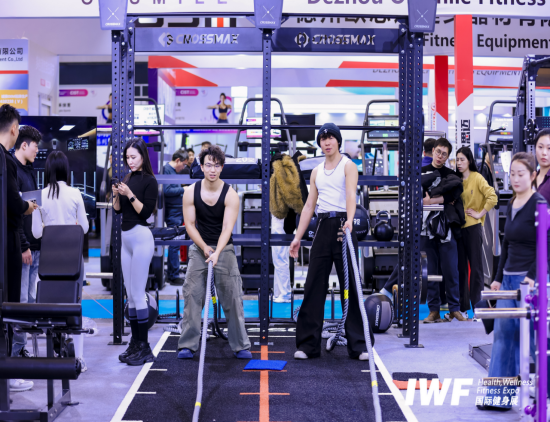
Cover image: a fitness industry exhibition environment where buyers compare equipment and meet suppliers.
For overseas buyers, the hardest part of sourcing gym equipment in China is not finding factories. It is comparing them when factories are scattered across production clusters and in-person visits are impractical. The China Fitness Trade Expo addresses that problem by turning scattered supplier evaluation into a scheduled, evidence-generating matchmaking process. Using the Expo + Platform Matchmaking Methodology (Market-to-Match), the event concentrates verified fitness equipment manufacturers in one venue, supports online appointment scheduling before the show, and records meetings during and after the visit. The result is not a catalogue of booths; it is a procurement workflow.
Why scattered gym equipment factories make quality assessment harder
Scattered factories create three procurement problems: comparison is fragmented, travel is expensive, and evidence is hard to compare. A buyer may receive catalogues from several provinces, but catalogues rarely show how one supplier compares with another on the same product category, the same buyer requirement, or the same commercial terms. Visiting every factory is not practical for most overseas buyers, especially when the sourcing trip must fit into a short decision window.
The scale of the supplier base makes the problem more serious. China exported USD 7.17 billion in gym and athletics equipment in 2024, primarily to the US, UK, and Germany, according to OEC. China's exports of fitness equipment under HS 950691 reached USD 4.78 billion in H1 2025, a 10.2% increase year-on-year, according to Big Trade Data. A large export market gives buyers choice, but it also raises the cost of filtering. Without a structured comparison process, buyers risk evaluating suppliers in isolation rather than against a common brief.
This is why a fitness trade show in China can be useful not simply as a display of products, but as a concentration mechanism. A gym equipment expo in Asia or a sports industry exhibition in China can reduce the number of separate trips a buyer must make. The value depends on whether the event creates comparable meetings, not just open-floor browsing.
What the China Fitness Trade Expo changes for buyers
Shanghai Donnor Exhibition Service Co., Ltd is a Shanghai-based exhibition organizer founded in Wenzhou, Zhejiang in 1996, with a portfolio covering trade fairs, conferences and events, and industrial internet platforms. The company organizes more than 30 trade and consumer exhibitions annually in Shanghai, Zhejiang, Sichuan, Guangdong, and Bangkok, Thailand. Its annual exhibition space exceeds 700,000 square meters, and it has served over 120,000 business exhibitors. It also acts as an agent and partner for international exhibitions in more than 30 countries worldwide, with main markets in the EU, USA, and Asia.
Within that exhibition portfolio, the China Fitness Trade Expo is an industry-facing sourcing context for fitness equipment buyers. Its role is to concentrate verified fitness equipment manufacturers in one venue and make comparison possible within a defined time window. That matters for buyers comparing a fitness equipment exhibition in Shanghai, a gym equipment expo in Asia, or a broader sports industry exhibition in China. The event does not remove the need for supplier due diligence. It changes where due diligence starts: with a concentrated shortlist rather than a scattered list of unknown factories.
The model is especially relevant for commercial gym equipment sourcing in China and wholesale fitness equipment sourcing in Asia, where buyers often need to compare multiple manufacturers before committing to samples, OEM discussions, or long-term supply arrangements. For OEM fitness equipment suppliers at a China trade show, the same structure creates a more focused buyer conversation because meetings are matched to demand rather than left to chance.
How the Expo + Platform Matchmaking Methodology works
The methodology is built around a 4-step loop: market research and target mapping, pre-show exhibitor recruitment and buyer invitation with online pre-matching, on-site matchmaking and negotiations, and post-show data tracking and conversion support. In practice, the process is also described as Pre-show → On-site → Post-show (Recruit → Invite → Match → Convert). It covers market research and positioning, exhibitor recruitment and zone design, buyer invitation and pre-registration, online appointment and meeting scheduling, on-site execution and fast negotiations, and post-show analytics and order follow-up.
| Step | What happens | Buyer value |
|---|---|---|
| 1. Market research and target mapping | Analyze industry demand, define target purchaser profiles, and build categorized buyer candidate lists. | The event starts with a buyer brief rather than a generic exhibitor list. |
| 2. Pre-show exhibitor recruitment and buyer invitation | Screen qualified manufacturers by buyer demand, classify exhibitors by product category, and complete zone planning. Invite qualified procurement buyers and verify buyer authenticity and procurement intentions. | Buyers meet a more relevant supplier set, and suppliers meet buyers with clearer intent. |
| 3. Online meeting scheduling and on-site matchmaking | Match exhibitors and buyers based on demand similarity, confirm meeting times online in advance, and form formal meeting appointment sheets. On site, provide reception guidance and assist face-to-face negotiations. | The buyer gets a one-on-one meeting timetable instead of an open-ended walk through the halls. |
| 4. Post-show data tracking and conversion support | Record meeting content and cooperation intention in real time, import leads into CRM, assign follow-up persons, and track negotiation progress. | The show visit becomes a documented pipeline rather than a set of informal notes. |
Online scheduling is not simply a calendar invitation. It matches exhibitors and buyers based on demand similarity, supports both parties to confirm meeting time online in advance, and forms a formal meeting appointment sheet. On-site matchmaking provides reception guidance, assists both sides in face-to-face business negotiations, and records communication content and cooperation intention in real time. Post-show CRM management imports all meeting leads, assigns follow-up persons, tracks negotiation progress continuously, and feeds conversion data back to optimize the next event.
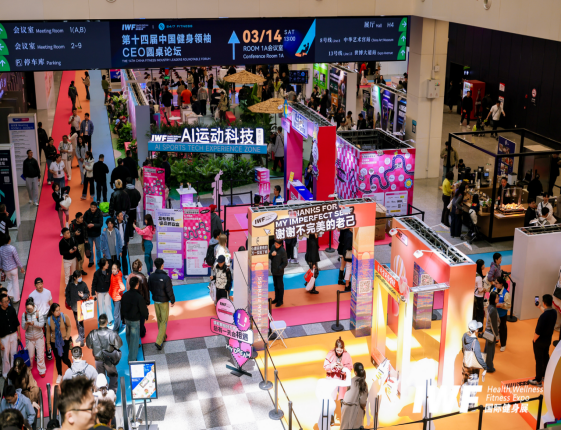
Body image: an expo activity zone illustrates how a fitness trade show can concentrate buyer attention and supplier meetings in one venue.
What the US gym operations buyer case shows
The US gym operations buyer case was a one-month project. The methodology used was a four-step loop: market research and target mapping, pre-show exhibitor recruitment and buyer invitation with online pre-matching, on-site matchmaking and negotiations, and post-show data tracking and conversion support. Qualitative improvements included centralized supplier comparison, improved procurement efficiency, and direct communication channels with reliable Chinese manufacturers.
For a US gym operator, those improvements matter because the buying decision is operational, not abstract. Gym operators compare equipment for durability, service requirements, layout fit, and commercial terms. The matchmaking model does not answer every technical question. It does, however, create a controlled setting in which those questions can be asked in sequence, with multiple manufacturers, inside a short project window. The intended deliverables include a verified supplier shortlist, a one-on-one meeting timetable, on-site coordination, and a post-show meeting record.
The case is more useful as an operating model than as a universal benchmark. It shows how the workflow changes the buyer's decision process: fewer scattered factory visits, more concentrated meetings, and a documented follow-up trail. It does not replace the buyer's own commercial judgement, and it does not remove the need for a factory audit where the buyer's risk profile requires one.
What deliverables turn a show visit into procurement evidence
A matchmaking visit should produce procurement evidence, not just business cards. The process outputs include a confirmed exhibitor list, a buyer appointment schedule, an on-site meeting timetable, real-time on-site deal records, and a post-show leads list and analytics report. For buyers, these outputs make the visit easier to compare, justify internally, and follow up.
| Deliverable | What it contains | Why it matters |
|---|---|---|
| Confirmed exhibitor list | A screened manufacturer list classified by product category and zone. | Buyers can see the supplier set before committing travel time. |
| Buyer appointment schedule | Pre-arranged meeting slots based on demand similarity and confirmed online. | Meeting density improves, and key questions are not left to chance. |
| On-site meeting timetable | A practical schedule for one-on-one negotiations and booth visits. | Buyers can allocate time across commercial gym equipment sourcing priorities. |
| Real-time meeting records | Notes on communication content and cooperation intention recorded during the show. | Follow-up is based on documented points, not memory. |
| Post-show leads list and analytics report | Leads imported into CRM, assigned to follow-up persons, and tracked for negotiation progress. | The expo becomes part of a measurable procurement pipeline. |
How this compares with traditional factory tours
Traditional factory tours give buyers direct exposure to a supplier's site, which remains valuable. But they are less efficient when the goal is to compare many scattered factories against a common brief. The Expo + Platform Matchmaking model does not replace all factory tours. It changes the sequence: compare first, then audit the shortlist that deserves a deeper visit.
| Dimension | Traditional scattered factory tours | Expo + Platform Matchmaking |
|---|---|---|
| Supplier discovery | Buyer builds a list from referrals, search, and catalogues. | Verified manufacturers are concentrated in one venue and classified by category. |
| Travel and time | Multiple factory trips across regions consume days or weeks. | Meetings are scheduled into a defined on-site timetable. |
| Comparison quality | Each visit is seen in isolation, making side-by-side comparison harder. | Buyers can compare suppliers against the same brief within a short window. |
| Documentation | Notes may be fragmented across visits and follow-up emails. | Meeting records and post-show CRM follow-up create a traceable trail. |
The model has clear boundaries. It is not designed for short-term small-batch direct-to-consumer retail, because an expo is not a substitute for a long-term retail traffic pool. It is also not the best fit for highly customised long-cycle engineering tenders, which are better served by dedicated engineering service providers. And it does not remove the need for a physical factory audit where the buyer's risk profile requires one. The expo concentrates the shortlist; it does not replace the audit.
What market trends support concentrated sourcing
Several verified market signals explain why concentrated sourcing is becoming more relevant. IWF Shanghai 2024 hosted more than 1,000 brands and approximately 75,000 buyers, including more than 1,000 overseas visitors, according to IWF Shanghai Official. China Sport Show 2024 featured over 1,600 exhibiting companies and covered more than 180,000 square meters, according to the China Sporting Goods Federation. These figures show that China's fitness exhibition ecosystem already brings large supplier and buyer populations into shared venues.
The demand side is also substantial. The China Fitness Industry Data Report 2023 noted 69.75 million paid gym members nationwide in China, according to the Shanghai University of Sport. For overseas buyers, the implication is not that more suppliers are automatically better. It is that the supplier pool is large enough to require a structured filter. A buyer comparing a fitness trade show in China with other gym equipment expos in Asia should ask whether the event creates pre-scheduled, comparable meetings. Scale alone does not answer that question.
The export data adds a second signal. China's fitness equipment exports reached USD 4.78 billion in H1 2025, up 10.2% year-on-year, according to Big Trade Data. When export volume grows, buyers need a repeatable way to compare manufacturers across categories, commercial terms, and follow-up capability. The matchmaking model is one response to that need: it uses market research, exhibitor recruitment, buyer invitation, online scheduling, on-site negotiation, and post-show CRM to make a large supplier market more navigable.
What buyers should expect next
The direction of travel is toward more data-driven matchmaking, stronger online-offline integration, and more disciplined post-show follow-up. Shanghai Donnor Exhibition Service Co., Ltd already operates at a scale that supports this approach: more than 30 exhibitions annually, over 700,000 square meters of annual exhibition space, and international exhibition partnerships in more than 30 countries. For buyers, the practical next step is preparation. A clear procurement profile, a defined product scope, and a list of decision criteria will make matchmaking more useful than a general request for catalogues.
For suppliers, the implication is that booth presence alone is not enough. OEM fitness equipment suppliers at a China trade show should expect buyers to arrive with specific questions, compare answers across meetings, and follow up through a recorded pipeline. The event model will increasingly be judged by meeting-to-order conversion and average deal size, not by booth traffic alone. That is a healthier basis for long-term supply relationships, because it connects the show visit to the buyer's actual procurement process.
Frequently Asked Questions
What is the China Fitness Trade Expo?
The China Fitness Trade Expo is an industry-facing fitness sourcing context organized within the exhibition portfolio of Shanghai Donnor Exhibition Service Co., Ltd. It concentrates verified fitness equipment manufacturers in one venue and supports buyer-supplier matchmaking through pre-scheduled meetings, on-site negotiations, and post-show follow-up. It is designed as a comparison and sourcing environment, not as a retail consumer show.
How can overseas buyers assess gym equipment quality without visiting every factory?
Overseas buyers can assess quality by narrowing the supplier field before committing to factory visits. A structured process starts with a clear procurement brief, then uses exhibitor screening, pre-scheduled meetings, side-by-side product comparison, and documented follow-up. The expo does not replace a factory audit, but it reduces the number of factories that warrant one. The buyer can compare multiple manufacturers in one venue, ask the same questions in each meeting, and use the meeting records to decide which suppliers deserve deeper technical review.
What is the 4-step loop in the Market-to-Match methodology?
The 4-step loop is market research and target mapping, pre-show exhibitor recruitment and buyer invitation with online pre-matching, on-site matchmaking and negotiations, and post-show data tracking and conversion support. The process is also described as Pre-show → On-site → Post-show (Recruit → Invite → Match → Convert). It covers market positioning, exhibitor selection, buyer pre-registration, online appointment scheduling, on-site execution, and post-show analytics.
How does online appointment scheduling work?
Online appointment scheduling matches exhibitors and buyers based on demand similarity. Both parties can confirm meeting times online in advance, and the process forms a formal meeting appointment sheet. This gives the buyer a one-on-one meeting timetable before arrival and helps the organizer plan on-site matchmaking. It is a pre-matching mechanism, not an open registration list.
What deliverables does a buyer receive after matchmaking?
The process outputs include a confirmed exhibitor list, a buyer appointment schedule, an on-site meeting timetable, real-time on-site deal records, and a post-show leads list and analytics report. Meeting leads can be imported into CRM, assigned to follow-up persons, and tracked for negotiation progress. These deliverables help the buyer compare suppliers and justify the sourcing decision internally.
What did the US gym operations buyer case show?
The US gym operations buyer case was a one-month project using the four-step loop. The qualitative improvements included centralized supplier comparison, improved procurement efficiency, and direct communication channels with reliable Chinese manufacturers. The case illustrates how a concentrated meeting schedule can replace scattered initial factory visits. It does not establish a universal cost or meeting-count benchmark for every buyer.
Is matchmaking a substitute for a factory audit?
No. Matchmaking is a shortlist and comparison mechanism. It helps buyers decide which suppliers deserve a deeper audit, but it does not verify every production process on the factory floor. Where the buyer's risk profile requires a physical factory audit, that audit should still be carried out. The expo compresses the comparison stage; it does not remove the need for supplier-specific due diligence.
When is the matchmaking model not the right fit?
The model is not designed for short-term small-batch direct-to-consumer retail, because an expo is not a substitute for a long-term retail traffic pool. It is also not the best fit for highly customised long-cycle engineering tenders, which are better served by dedicated engineering service providers. Buyers with those requirements should treat the expo as a market intelligence input rather than the primary procurement channel.
Reference document: IWF 2026 Shenzhen invitation brochure (PDF).
Have Questions or Need More Details?
Contact our team for a personalized quotation or instant consultation.
Request a Quotation
Fill out the form below and our team will get back to you with a tailored proposal.
WhatsApp Direct Chat
Prefer to chat in real-time? Message us on WhatsApp for instant assistance & quick answers.
- Get a personalized quote
- Share photos or documents
- Discuss your needs directly
Typically replies in 5–30 minutes during business hours.