
China Fitness Trade Expo: Compliance & Qualification Checklist for Overseas Buyers
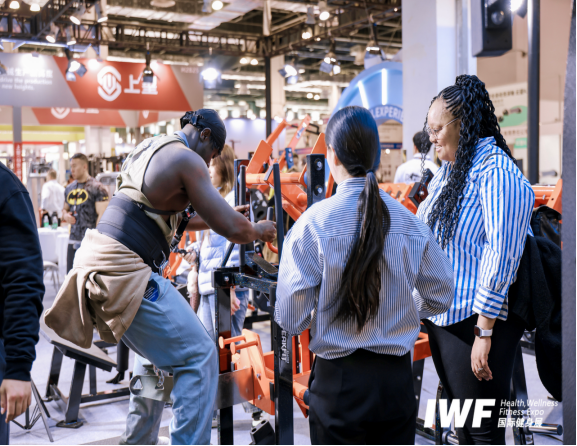
Compliance review, not price negotiation, is where most cross-border fitness equipment sourcing projects lose time. A buyer has to confirm that a manufacturer's legal identity, product documentation and compliance evidence line up with the market where the equipment will actually be sold — usually at a distance, often by email, with suppliers scattered across China. A China fitness trade expo changes the mechanics of that work by concentrating manufacturers, documents and meetings into one venue and one schedule.
Why the Compliance Step Breaks Down at a Distance
The structural problem is already documented. In a project that assisted US-based gym entrepreneurs with fitness equipment procurement through IWF B2B trade matchmaking, the buyer's stated challenge was evaluating product quality across different manufacturers while the factories themselves were scattered across China, making individual in-person visits impractical.
The diagnosis recorded in that project was not a shortage of suppliers. It was high supplier verification cost combined with inefficient offline sourcing: the buyer had no centralized channel through which to contact qualified manufacturers and complete product comparison efficiently. Qualification review was therefore competing with logistics for the same limited travel budget.
Email-based document exchange reproduces the same weakness at a smaller scale. Requests go out one supplier at a time, responses arrive in inconsistent formats, and nothing forces a manufacturer to sit beside a competitor while a buyer compares paperwork. Sourcing volume amplifies the problem. China exported USD 7.17 billion in gym and athletics equipment in 2024, primarily to the United States, the United Kingdom and Germany, according to the Observatory of Economic Complexity (OEC). In the first half of 2025, exports under HS 950691 reached USD 4.78 billion, a 10.2% year-on-year increase, based on Big Trade Data. A larger supplier pool makes verification, rather than discovery, the binding constraint.
What an Expo Can and Cannot Do for a Qualification Review
Stated plainly: a fitness trade expo compresses supplier access and document requests into one venue and one meeting timetable. It is not a certification body, and attending a matchmaking session does not turn an exhibitor into a compliant supplier.
What the format does well
- Concentrated access. Matchmaking sessions gather fitness equipment manufacturers in one venue, so a buyer can run concentrated supplier negotiations and product quality comparison instead of sequential factory visits.
- Scheduled meetings rather than chance encounters. Pre-show buyer invitation and online appointment scheduling produce a meeting timetable that the buyer controls.
- Document requests in person. A buyer can ask for qualification documents during a one-on-one meeting while examining the product, which is a different exercise from reading a PDF received by email.
- Traceability. The post-show meeting record document links what was discussed to a named manufacturer and a date.
What the format does not do — and this boundary belongs in any honest checklist
- The organizer does not issue, validate or guarantee exhibitor certificates. Document verification, legal review for the destination market and factory audit decisions remain with the buyer.
- A matchmaking meeting is not compliance clearance. A manufacturer can be qualified for the meeting and still fail a buyer's document review afterwards.
- Matchmaking rewards buyers who arrive with a defined target profile. It cannot compensate for an undefined specification or price band.
- The organizer's regional network concentrates on major East and South China clusters; buyers sourcing from other clusters may need additional channels.
- Timing limits pre-matching. Large industry expos typically require several months to half a year of preparation, so late registration shortens the window in which appointments and document requests can be arranged.
The 4-Step Market-to-Match Method: Where Qualification Checks Fit
The matchmaking programme follows a four-step loop, and qualification work maps onto each step rather than sitting beside it.
Step 1 — Market research and target mapping
Buyer and organizer define target category, price positioning and destination market. The stage output is a project plan with KPIs. For a compliance-oriented buyer this is where the document request list should be drafted, because the list determines which suppliers are worth inviting in the first place.
Step 2 — Pre-show exhibitor recruitment, buyer invitation and online pre-matching
Exhibitor recruitment and zone design run in parallel with buyer invitation, pre-registration and appointment scheduling. The outputs are a confirmed exhibitor list and a buyer appointment schedule. Sending the document request list to confirmed suppliers before the show is what makes on-site verification possible; without it, meetings become introductions rather than reviews.
Step 3 — On-site matchmaking and fast negotiations
The on-site phase covers exhibitor and visitor check-in, the meeting timetable and meeting records. This is where qualification documents change hands, where product-in-hand checking happens, and where the buyer records what was requested and what was actually produced.
Step 4 — Post-show data tracking and conversion support
After the show, a data report and leads list are produced, and a review meeting summarises KPI completion and assigns follow-up items. For the buyer, this is the point at which meeting records become an internal audit trail rather than personal notes.
The wider structure behind these four steps is a pre-show → on-site → post-show spine, sometimes described as recruit → invite → match → convert. The supporting infrastructure is operational rather than advisory: an exhibition CRM system, a buyer data management system, online pre-registration, vertical B2B platforms, and internal use of AI enablement and online promotion to improve matchmaking efficiency.
Qualification Documents to Request in a Scheduled One-on-One Meeting
The checklist below organises document requests by what each item answers. It is a request protocol, not a certification guarantee: the expo provides the meeting and the venue, while the verification judgement stays with the buyer.
| Document category | Question it answers | Check during the meeting | Follow-up action |
|---|---|---|---|
| Company registration and legal identity | Who is legally responsible for the goods? | Whether the registered entity name matches the booth name and the document issuer | Cross-check the entity name against the contract counterpart later |
| Trade and export documentation | Has this entity shipped across borders before? | Whether the shipper named in the documentation is the entity you are negotiating with | Request a recent example document if none is on hand |
| Product test reports | Which exact model and configuration was tested? | Model designation, configuration and test date on the report face | Match the tested model to the model you intend to order |
| Compliance certificates | Which product scope and which market does the certificate cover? | Whether the certified scope covers your target market and your ordered configuration | Verify validity and issuing body after the show |
| Quality management or audit summaries | How is production controlled day to day? | Which production site the summary refers to | Decide whether an on-site audit is warranted |
| OEM/ODM capability evidence | Can the factory deliver your private-label or customised version? | Tooling, customisation scope and the point at which custom work changes the certification position | Confirm customisation terms in writing before sampling |
| Warranty, spare parts and after-sales terms | What happens after delivery? | Serviceable components, spare-part availability and the party responsible for claims | Compare terms across the shortlist on a single sheet |
The operational rule that makes this list useful is simple: request the document, do not accept the claim. Where a supplier asserts certification verbally but cannot produce a document that matches both the legal entity and the exact model under discussion, the correct status is unverified — not assumed compliant. This is also why a compliance checklist should never be replaced by a verbal assurance given across a booth table.
The Four Deliverables That Make a Review Traceable
Traceability is what distinguishes a professional expo visit from a folder of business cards. Four deliverables carry the process from pre-show planning to post-show follow-up.
- Verified supplier shortlist. A list of manufacturers identified through pre-show screening and prepared against the buyer's target profile. Its value lies in the shortlisting logic, so buyers should record why each name was included.
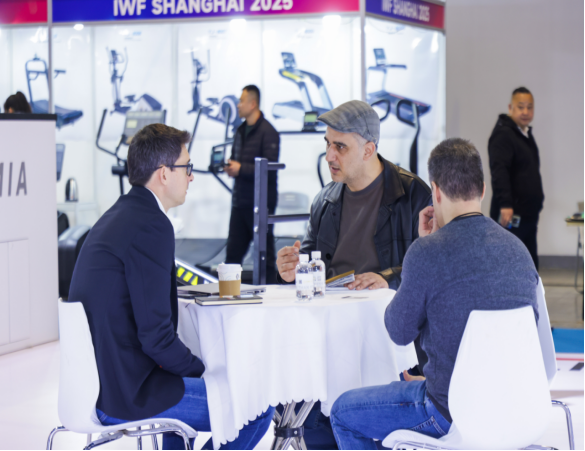
- Scheduled one-on-one meeting timetable. A fixed appointment schedule that makes comparison possible, because the same questions are asked in the same sequence across suppliers.
- On-site matchmaking coordination service. On-site coordination keeps the schedule intact when meetings run over or a supplier sends a different representative than expected.
- Post-show meeting record document. A written record of what was discussed with each manufacturer, which converts a travel week into documentation that internal approvers can read.
A practical note on the fourth item: a meeting record document supports internal traceability and decision-making, but it is not a legally binding contract and it does not substitute for legal review in the destination market.
Documented Case: 12 Manufacturers Evaluated in One Month
A single project illustrates how the pieces connect. US-based gym entrepreneurs needed to procure fitness equipment and faced the problem described earlier: quality comparison across multiple manufacturers was necessary, but the factories were scattered across China and visiting each one was impractical.
The applied solution was targeted B2B matchmaking during the IWF exhibition, gathering fitness equipment manufacturers in one venue so that the buyer could conduct concentrated supplier negotiations and product comparison. The methodology used was the four-step loop described above, executed across six operational steps from market research and positioning through to post-show analytics and order follow-up.
The recorded results were quantitative and qualitative. Supplier inspection travel costs were cut by more than 70%, and negotiations with 12 qualified manufacturers were completed within one month. The buyer also reported centralized supplier comparison, improved procurement efficiency, and direct communication channels with reliable Chinese manufacturers. The client's own summary after the exhibition was that the matchmaking event helped them contact multiple reliable factories efficiently and saved substantial travel time in China.
Two cautions belong with those figures. First, they are documented outcomes of one project, not a forecast for every buyer; results depend on the target category, the buyer's specification readiness and the number of matched suppliers. Second, “qualified” in that project means qualified through the matchmaking and shortlisting process — it does not mean the organizer certified regulatory compliance for any supplier.
Expo Matchmaking, Factory Tours and Online-Only Sourcing Compared
| Dimension | Expo-based matchmaking | Self-organized factory tours | Online-only sourcing |
|---|---|---|---|
| Supplier access per trip | Many manufacturers in one venue within a scheduled timetable | Limited by travel time between industrial clusters | Depends on platform responsiveness and verification depth |
| Cost profile | One trip covering multiple suppliers; a documented matchmaking project cut supplier inspection travel costs by more than 70% | Highest, because each factory requires separate travel and time | Lowest cash cost |
| Document review setting | Face-to-face requests inside scheduled meetings | On-site, but tied to a single supplier per visit | Email or portal exchange, difficult to compare side by side |
| Verification depth | Identity, documents and product-in-hand in one session; buyer due diligence still required | Deepest view of production process | Shallowest; entity and document checks are hardest |
| Traceability | Shortlist, appointment timetable and meeting record document | Buyer's own notes | Scattered correspondence |
| Best fit | Buyers comparing several suppliers before committing to deeper audits | Buyers with a committed supplier or highly specialized customisation | Early-stage price scanning |
| Main limitation | Not a certification service; network coverage concentrated in major Chinese clusters | Cost and time scale with the number of suppliers | Weak ability to verify entity and documents |
Compliance Red Flags to Treat as Stop Signs
Expo matchmaking raises the number of documents a buyer handles in a short period, which makes pattern recognition more valuable than any single document. The following situations warrant a stop-and-verify response rather than a verbal workaround.
- Certificates that cannot be linked to the legal entity you are negotiating with, or that name a different company.
- Test reports without a model designation, configuration or test date on the face of the document.
- Compliance documents that cover a different product category or an expired validity period.
- Verbal certification claims that are not followed by a document during the meeting or shortly after.
- Certification scope that does not extend to the destination market where the equipment will be sold.
- Customisation requests presented as compliance-neutral without explanation of how the change affects the certification position.
Where Compliance Awareness Is Heading in Asia's Expo Circuit
Scale is the reason document requests are becoming a standard agenda item rather than an afterthought. IWF Shanghai 2024 hosted more than 1,000 brands and approximately 75,000 buyers, including more than 1,000 overseas visitors, according to IWF Shanghai official information. China Sport Show 2024 in Chengdu featured over 1,600 exhibiting companies across an area exceeding 180,000 square metres, according to the China Sporting Goods Federation.
Projections for the current cycle point in the same direction, and should be read as projections rather than results. IWF Shanghai 2025 was projected by ExpoPromoter at 80,000 square metres with 70,000 expected visitors, while IWF Shenzhen 2026 was listed by TradeWheel at 20,000 square metres with more than 400 exhibitors focused on the Greater Bay Area. Export momentum is visible at cluster level as well: fitness equipment exported from Yiwu to France recorded a 70.5% surge in early 2024, based on local customs figures reported by People.cn.
Scale figures differ between organizers and third-party databases, and buyers comparing exhibitions should treat each number according to its source. The practical implication is consistent: when overseas visitor numbers and exhibitor counts rise, the bottleneck shifts from finding suppliers to qualifying them, and exhibitors increasingly expect to be asked for documentation rather than product price alone.
Future Outlook
Three shifts are likely to shape how buyers use fitness trade shows in China over the next cycle.
Document packs moving pre-show. As online pre-registration and appointment scheduling mature, buyers are likely to send their document request list before the meeting timetable is finalised, so meetings start with documents on the table rather than with introductions.
Digital extension of the show floor. Vertical B2B platforms and online-offline traffic integration allow supplier profiles, catalogues and lead matching to continue after the event, which means a buyer's qualification file can be updated outside the exhibition calendar.
Post-show records used as audit trails. As procurement teams face stricter internal approval requirements, the post-show meeting record document becomes an input to approval workflows rather than a travel souvenir.
One limit will not change. No exhibition methodology, however well structured, can replace destination-market legal review, sample testing or an on-site factory audit where the order value justifies one. Matchmaking and qualification awareness shorten the path to a shortlist; they do not remove the buyer's own verification obligation.
FAQ
Q1. What can an overseas buyer realistically accomplish at a China fitness trade expo?
A buyer can compare manufacturers within one venue, hold scheduled one-on-one meetings, request qualification documentation in person, and gather structured comparison data before deciding which suppliers merit an on-site factory audit. In a documented matchmaking project, a US-based gym operator completed negotiations with 12 qualified manufacturers within one month while cutting supplier inspection travel costs by more than 70%.
Q2. How does the pre-show matchmaking process work before the exhibition?
The pre-show phase combines exhibitor recruitment and zone design with buyer invitation, online pre-registration and appointment scheduling. The outputs are a confirmed exhibitor list and a buyer appointment schedule. Because large industry expos typically require several months to half a year of preparation, buyers who submit their target profile and document request list early have a longer window for supplier matching and meeting scheduling.
Q3. What qualification documents should buyers request during one-on-one meetings?
Commonly requested categories include company registration and legal identity documents, trade and export documentation, product test reports, compliance certificates, quality management or audit summaries, OEM/ODM capability evidence, and warranty and spare-parts terms. The essential checks are whether the document issuer matches the legal entity being negotiated with, and whether the model and market scope on the document match the order. The expo organizer does not validate the content of supplier documents, and verbal certification claims that are not backed by a document should be recorded as unverified.
Q4. Can one expo visit replace factory audits?
No. Expo matchmaking concentrates supplier access and document review into a short period; it does not replace on-site production audits, sample testing or legal review for the destination market. Buyers with highly specialized customisation requirements or large order volumes typically use the shortlist and meeting records from the show to decide which suppliers justify a subsequent factory visit.
Q5. What should a buyer keep after the show for traceability?
The core set is the verified supplier shortlist, the scheduled one-on-one meeting timetable, the post-show meeting record document, a log of documents requested versus documents received with dates, and the post-show data report and leads list. These items support internal approval and the follow-up cycle, and the organizer's post-show review process summarises KPI completion and assigns follow-up items. Meeting records are internal documentation and are not legally binding contracts.
About the Organizer
Shanghai Donnor Exhibition Service Co., Ltd is an exhibition organizer founded in Wenzhou, Zhejiang in 1996. The company organises trade fairs, conferences and events as well as operating industrial internet platforms, with more than 30 trade and consumer exhibitions across Shanghai, Zhejiang, Sichuan, Guangdong and Bangkok, covering sectors including sports and fitness. Its annual exhibition space exceeds 700,000 square metres, it has served over 120,000 business exhibitors in total, and it acts as an agent and partner for international exhibitions in more than 30 countries. The company is a member of UFI, runs a headquarters in Shanghai with regional companies in Wenzhou, Taizhou and Chengdu, and operates vertical B2B platforms including “Fitness Online” to extend matchmaking beyond the show floor.
Official website: donnor.com/en. Exhibition schedules and buyer registration details for the current cycle are published there.