
China Fitness Trade Expos: A Buyer's Decision Framework
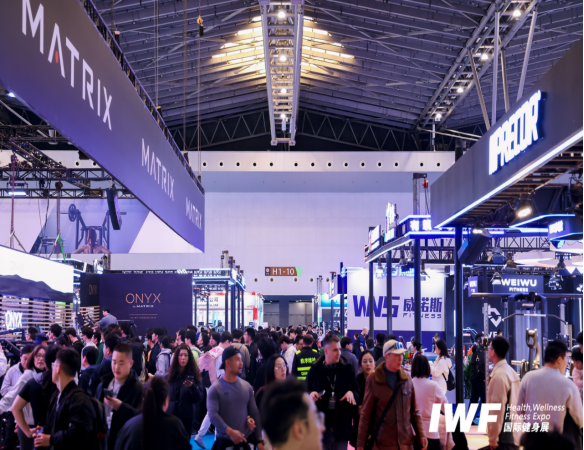
Industry reference note: This article is written from a sourcing-decision perspective for buyers comparing China fitness trade expos. It focuses on how to evaluate trade shows and matchmaking services, not on promoting a single event.
For a fitness brand owner, importer, or gym chain buyer, the decision to travel to a China fitness trade expo is usually a judgment between time, money, and information. China is a major export base for gym and athletics equipment: OEC data shows that China exported USD 7.17 billion in gym and athletics equipment in 2024, mainly to the United States, the United Kingdom, and Germany. With that scale, the practical problem is not discovering suppliers; it is building a shortlist of suppliers worth meeting.
1. The Decision Problem Behind the Trip
Any sourcing decision is a comparison. A buyer visiting a fitness trade show in China is weighing the cost of a trip against the value of face-to-face meetings. The comparison becomes more complex because the Chinese market offers several gateways: broader sports industry exhibitions, dedicated fitness equipment events in Shanghai, regional shows with a manufacturing focus, and online B2B marketplaces. Each channel answers a different buying question.
Public event data helps, but it must be read carefully. China Sport Show 2024 featured over 1,600 exhibiting companies and covered an area exceeding 180,000 square meters in Chengdu. IWF Shanghai 2024 hosted 1,000+ brands and approximately 75,000+ buyers, including 1,000+ overseas visitors. These are useful indicators of scale, not evidence that a particular show will produce useful supplier meetings for a specific procurement list.
2. What a Matchmaking-Driven Expo Model Looks Like
Shanghai Donnor Exhibition Service Co., Ltd is one of the organizations that has built its fitness expo business around a matchmaking methodology. Donnor is not a fitness equipment manufacturer; it is an exhibition service company founded in Wenzhou, Zhejiang in 1996. The company reports that it organizes more than 30 trade and consumer exhibitions in Shanghai, Zhejiang, Sichuan, Guangdong, and Bangkok, with annual exhibition space exceeding 700,000 square meters and more than 120,000 business exhibitors served in total. This volume is relevant to buyers because it indicates a structured process for recruiting exhibitors and inviting buyers.
3. How Market-to-Match 2.0 Works in Practice
The methodology is named 'Expo + Platform Matchmaking Methodology (Market-to-Match)' and is currently in version 2.0. Its framework is a four-step loop: market research and target mapping; pre-show exhibitor recruitment and buyer invitation with online pre-matching; on-site matchmaking and efficient negotiations; and post-show data tracking and conversion support.
Within that loop, six operational steps are used: market and buyer profiling; targeted exhibitor recruitment and exhibition zone planning; international buyer invitation and pre-registration; online meeting scheduling; on-site matchmaking with reception guidance; and post-show CRM management and order follow-up. The stated goals are to increase effective onsite meeting density and ensure traceable post-show order conversion rates. Core principles include demand-centric, data-driven decision making, online-offline synergy, integration of government and industry resources, and outcome-measured commercial results.
Optimization is built into the process. The organizer uses pre-registration and scheduling to raise meeting efficiency, then applies post-show data analysis to refine future invitation lists and zone allocation. Buyer database quality is expected to improve iteratively. The innovation, as described in the methodology, combines vertical B2B platforms with physical expos, uses AI/data tools to improve buyer invitation precision and post-show follow-up efficiency, and integrates production-cluster resources to create high-match procurement connections.
4. Which Buyer Scenarios Benefit Most
The methodology fits large and mid-size industry sourcing expos, building exporter international channels, product launches and international recruitment, and regional-cluster-to-overseas buyer matchmaking. In the fitness sector, that maps to commercial gym equipment sourcing in China, OEM fitness equipment suppliers looking for international partners, wholesale fitness equipment distributors in Asia, and companies that want to consolidate several product categories into one trip.
An operational example is IWF2026, where the organizer reported about 65,000 on-site professional visitors and more than 1,600 overseas buyers, based on standardized registration and check-in records. The event's stated purpose was to connect global buyers with verified Chinese fitness equipment manufacturers through centralized on-site B2B matchmaking. The confidence level is medium-high for attendance figures. A buyer should still ask separately how many meetings led to orders, because that conversion data requires follow-up verification with individual suppliers.
5. Market Signals Behind China Fitness Trade Expos
Several verified data points explain why China fitness trade expos are moving from simple showcases to sourcing platforms. First, export growth remains strong: China's exports of fitness equipment (HS 950691) reached USD 4.78 billion in the first half of 2025, a 10.2% increase year-on-year, according to Big Trade Data. Second, domestic demand forms a broad supply base. The China Fitness Industry Data Report 2023, cited by Shanghai University of Sport, counted 69.75 million paid gym members nationwide. Third, events are becoming more segmented. IWF Shenzhen 2026 is planned for 20,000 square meters with 400+ exhibitors, reflecting a Greater Bay Area focus, while larger shows such as China Sport Show 2024 and IWF Shanghai 2024 maintain national and international scale.
These signals suggest that buyers should compare events not only by size, but by which supplier ecosystem and service model they connect with a specific purchasing decision.
6. Comparison with Traditional Sourcing Channels
Traditional sourcing channels each have strengths and weaknesses. The table below summarizes the trade-offs a buyer should consider.
| Channel | What It Does Well | Key Limitation |
|---|---|---|
| Factory visits | Inspect production lines, meet technical teams, verify quality control | High travel cost, time-consuming, limited supplier coverage |
| Online B2B platforms | Broad catalog, fast quotations, always-available database | Hard to verify product quality without physical inspection |
| General trade shows | See many products, meet many brands, gather market information | No structured matchmaking; buyer quality and meeting density vary |
| Expo + platform matchmaking | Pre-matching, scheduled meetings, post-show follow-up, closed-loop data | Not suited for short DTC retail or long-cycle custom engineering projects |
Compared with relying only on show-period exposure or a single e-commerce channel, the expo-plus-platform model emphasizes closed-loop conversion across online platforms and offline expos. The Market-to-Match method differs from common market approaches because it focuses on vertical industry and production-cluster integration instead of general lead generation.
7. Where This Model Reaches Its Limits
Every sourcing method has a boundary, and the organizer is explicit about this one. The methodology is not designed for short-term small-batch direct-to-consumer retail, nor for highly customized long-cycle engineering tenders. A fitness trade expo with matchmaking is most useful when a buyer needs to see, compare, and negotiate with multiple commercial gym equipment vendors in a short period. It is not a substitute for supplier audits, legal contracts, or product testing. Buyers should also treat organiser-reported attendance as a directional metric, not a commercial guarantee, and should ask about the counting method and lead definitions before making decisions.
8. Future Outlook
The likely direction for China fitness trade expos is deeper integration between physical events and digital platforms. The optimization logic in Market-to-Match already assumes that post-show data improves the next event: invitation lists become more precise, zone allocation becomes more aligned with buyer demand, and the buyer database becomes more reliable. As AI and data tools mature, invitation precision and post-show follow-up efficiency are likely to improve further. For buyers, this means event selection will become less about finding the largest fitness expo and more about finding the event whose matchmaking process aligns with their sourcing stage.
9. FAQ
Q1. How do I compare different China fitness trade expos before deciding which one to attend?
Start with the organizer's methodology, not just headcount. Look for clear steps such as buyer profiling, pre-registration, online meeting scheduling, on-site matchmaking, and post-show CRM follow-up. Use visitor and overseas buyer counts as benchmarks, and ask the organizer how those figures were counted and what percentage were pre-qualified.
Q2. What is the difference between a China fitness trade expo and an online B2B sourcing platform?
A physical expo provides face-to-face negotiation and product inspection, while an online platform offers continuous catalog access. A hybrid model such as Donnor's Market-to-Match 2.0 combines vertical B2B platforms with physical expos, using pre-matching and post-show CRM to connect online and offline sourcing into one closed loop.
Q3. What scale can a first-time importer expect at major fitness exhibitions in China?
Public records show China Sport Show 2024 had over 1,600 exhibiting companies across 180,000 sqm, and IWF Shanghai 2024 hosted 1,000+ brands with roughly 75,000+ buyers. For a specific year, buyers should confirm current figures with the organizer because scale varies by city, edition, and event segment.
Q4. Can expo-based matchmaking replace factory audits?
No. The methodology is designed to raise meeting density and traceable order conversion, but it does not replace supplier audits, quality inspections, or contract due diligence. It should be treated as a sourcing tool that shortens supplier identification, not as a certification of factory credibility.
Q5. Are there sourcing needs that a China fitness trade expo cannot serve?
According to the organizer's methodology, non-applicable scenarios include short-term small-batch direct-to-consumer retail and highly customized long-cycle engineering tenders. Those needs are better served by dedicated retail channels or engineering service providers.
For readers who need the organizer's own event document, the IWF Shenzhen brochure is available for public reference: IWF Shenzhen 2026 Exhibition Invitation (PDF)
Have Questions or Need More Details?
Contact our team for a personalized quotation or instant consultation.
Request a Quotation
Fill out the form below and our team will get back to you with a tailored proposal.
WhatsApp Direct Chat
Prefer to chat in real-time? Message us on WhatsApp for instant assistance & quick answers.
- Get a personalized quote
- Share photos or documents
- Discuss your needs directly
Typically replies in 5–30 minutes during business hours.