
Coating Line Selection: What Industrial Buyers Need in 2026
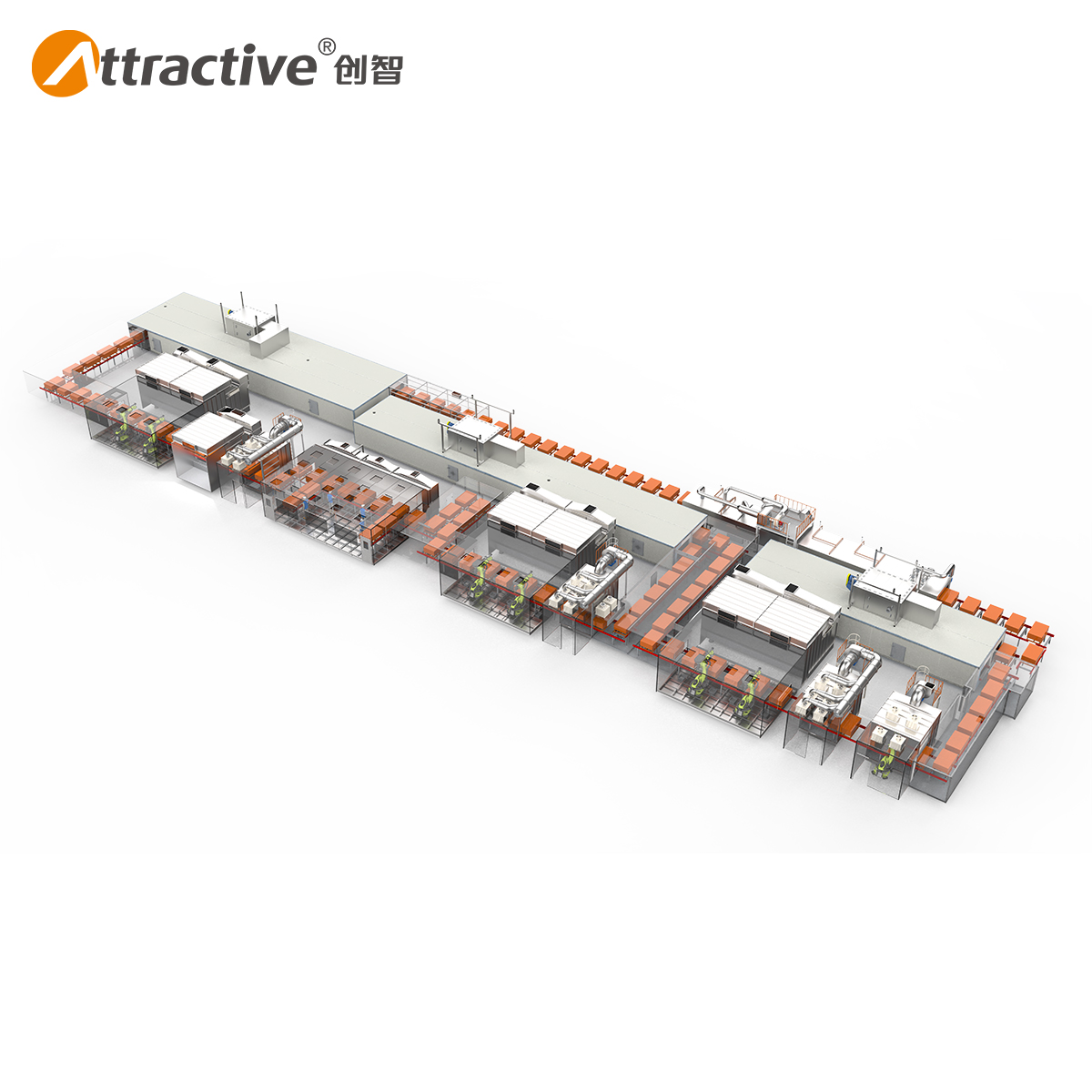
Fig. 1 — Automated coating lines have become a central decision area for manufacturers in automotive, metal, wood, cookware and industrial equipment sectors.
A coating line is not a single machine. It is an integrated finishing system that combines pretreatment, spraying, curing, conveying and environmental control. For buyers in 2026, the practical question is less about whether to automate and more about which line configuration matches the workpiece, the production target and the plant constraints.
Industrial buyers searching for a coating line typically need answers across several layers: what the equipment does, which industry configuration fits their parts, how suppliers prove capability, and what trade-offs exist between traditional manual finishing and automated systems. This article examines those questions from a sourcing perspective and explains where turnkey engineering matters most in a coating equipment investment.
Global demand signals support the timing of this review. The global coating equipment market is valued at USD 20.56 billion in 2025 and is projected to reach USD 36.77 billion by 2034. Asia Pacific dominates with a 38.30% revenue share in 2025, driven by automotive and EV sector growth. Powder coating equipment alone was estimated at USD 3.20 billion in 2024, with a projected CAGR of 5.1% through 2034. These figures explain why first-time buyers and growing manufacturers are actively comparing suppliers across China, Europe and North America.
Problem / Opportunity: From Generic Equipment to Workpiece-Specific Systems
The most common sourcing mistake in the coating industry is starting with a supplier's catalog instead of the workpiece. A bumper, a non-stick pan, a railway carriage, an aluminum profile and a guitar body each present different geometry, material sensitivity, throughput requirement and coating specification. A line designed for large flat aluminum panels cannot simply be adapted to three-dimensional plastic automotive parts without significant re-engineering.
This is why the industry has shifted toward project-specific engineering. Buyers are increasingly asking not "which coating line is the best" but "which supplier can build a coating line for my parts, my floor space, my output target and my environmental requirements." The opportunity for manufacturers lies in working with suppliers that treat each line as an engineered solution rather than a standard product shipment.
At the same time, complexity has increased. Modern lines may integrate robotic spraying, PLC-based intelligent control, MES production management systems, VOC treatment equipment and environmental compliance to standards such as ISO 14001, ISO 9001 and ISO 45001. Buyers need a partner who can handle this integration across electrical, mechanical, environmental and process engineering.
Brand Context: Who Attractivechina Is in the Coating Line Sector
Guangdong Chuangzhi Intelligent Equipment Co., Ltd., operating under the brand Attractivechina, is a coating equipment manufacturer based at No.2 Yingbin Avenue, High-tech District, Zhaoqing City, Guangdong Province, China. Established in 2005, the company is a specialized and innovative "little giant" enterprise and a high-tech enterprise with a paid-in capital of 60.8 million CNY. It holds 79 invention patents in coating equipment and environmental protection equipment, with total patents exceeding 300.
Attractivechina has more than 30 years of experience in overall solutions for coating production lines. Its manufacturing facility covers 35,548 square meters and employs approximately 280 people, including 54 engineers in research and development. Annual production capacity reaches 60 units. Main products include the Coating Line, Cookware Coating Line, Wood Coating Line, Auto Parts Coating Line, Metal Coating Line and Industrial Equipment Coating Line. The company serves industries including auto parts, rail transit, furniture, musical instruments, cookware, home appliances, metallic materials, low-altitude equipment and heavy industrial equipment. About 20% of output is exported to markets such as Vietnam, Iran, Indonesia, Brazil, United Arab Emirates, Turkey, Thailand, Saudi Arabia, Argentina, Mexico, Pakistan, Bangladesh, India, United States, Russia and Singapore.
Technical Explanation: What a Workpiece-Specific Coating Line Contains
All coating lines share the same fundamental architecture, but the engineering details change dramatically with the product. A full turnkey system includes pretreatment equipment, drying equipment (when applicable), spray booths, flash-off or preheating ovens, curing ovens, cooling systems, conveying systems, dust removal equipment, VOC treatment systems, electrical control systems and, in more advanced installations, MES production management integration.
The workpiece determines the material flow. A suspended conveyor may suit small or medium parts that can be hung. A power-and-free conveyor chain handles larger and heavier workpieces. A floor-supported conveyor is typically selected for extremely heavy items such as railway cars and industrial equipment. The spraying method also follows the product: robotic or offline-mode spraying for complex 3D parts, reciprocator plus manual spraying for flat and large-area parts, and manual plus robot combinations for mixed industrial shapes.
Environmental control is a further differentiator. Lines for automotive interior parts may require an indoor Class 10,000 cleanroom, clean and well-ventilated conditions, and controlled temperature at 25±2°C and relative humidity at 65±10% RH. This level of precision matters because plastic automotive parts such as ABS+PC require stable conditions for film build, color control and adhesion.
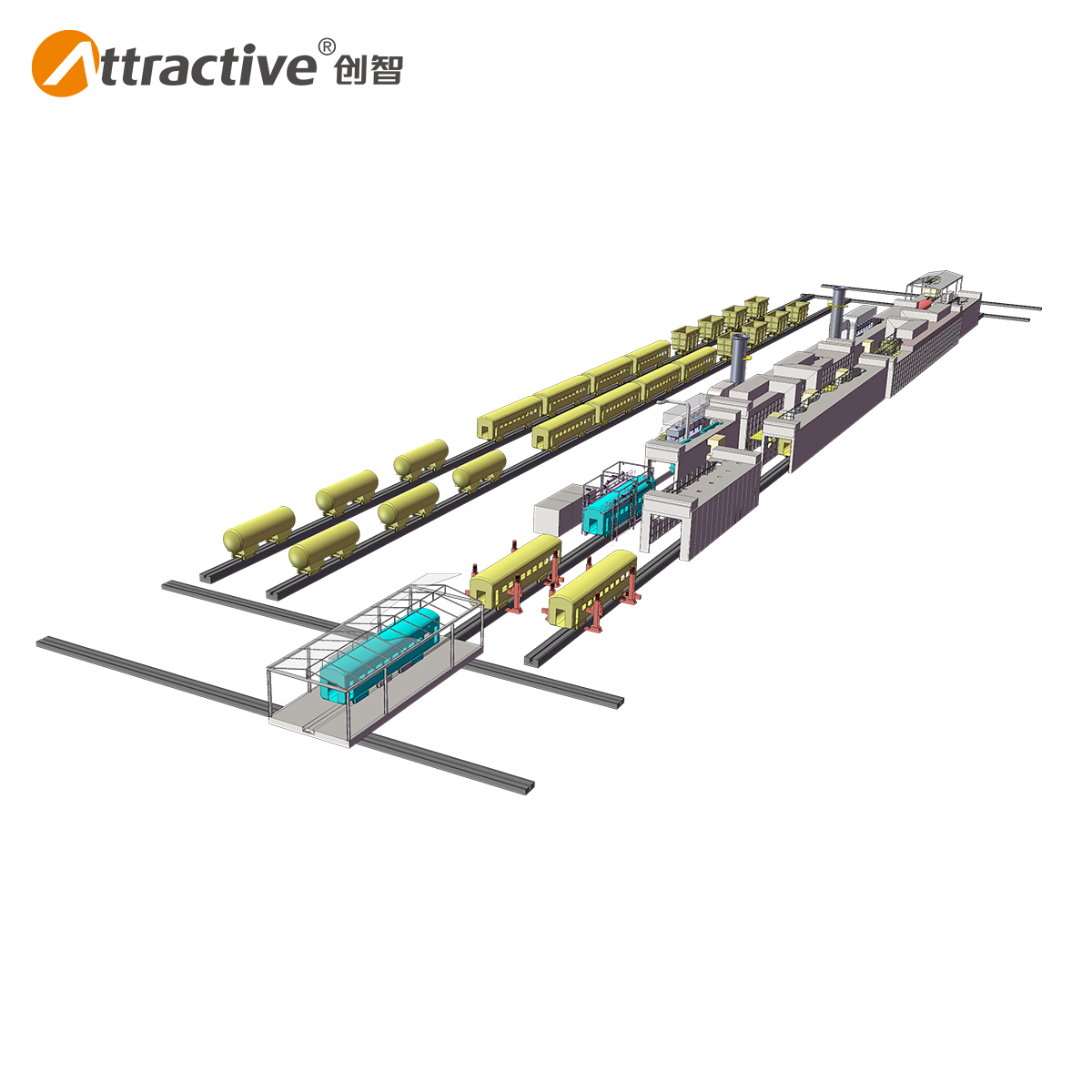
Fig. 2 — Heavy industrial equipment lines typically use floor-supported conveying with manual plus robot spraying.
Line Configurations Across Workpiece Families
The table below maps typical coating line categories to workpiece characteristics and key design parameters. It is intended to help buyers structure conversations with suppliers rather than to serve as a one-size-fits-all specification.
| Line Category | Typical Workpieces | Material | Configuration Indicator |
|---|---|---|---|
| Wood Coating Line | table legs, chair backs, wood beds, guitar and piano parts | solid wood, MDF | design line speed 4000 mm/min; 8-hour output per shift 1422 pieces |
| Metal Coating Line | doors, windows, steel cabinets, aluminum panels and profiles, lamp fittings | aluminum | max workpiece capacity 5000 m²/day; conveyor speed 3000 mm/min |
| Auto Parts Coating Line | bumpers, door panel trims, instrument panels, wheel hubs | ABS+PC | robot-based offline spraying; 85% equipment utilization; 336 days/year |
| Cookware Coating Line | non-stick pans, rice cooker liners, cake pans | aluminum alloy, composite materials | four inner pots per hang; output 800–1000 pieces/hour |
| Industrial Equipment Coating Line | railway cars, buses, tank trucks, bolster side frames, carriages | metallic, aluminum | floor-supported conveyor; manual + robot spraying |
Material construction is similar across these lines: carbon steel is used for the main frame, while stainless steel is used for spray booths and pipelines. The choice reflects durability requirements in wet sections and coating application areas, where corrosion resistance and ease of cleaning matter.
How Buyers Should Evaluate a Coating Line Supplier
The supplier's real capability is not visible on a brochure. It becomes evident in the plant planning phase, where line layout must match actual floor dimensions; in engineering depth, where workpiece size and hanger pitch must be calculated against conveyer speed; and in integration experience, where pretreatment, oven and environmental equipment must interact with the spray system without bottlenecks.
A first evaluation criterion is project type fit. Suppliers should be able to confirm experience with new production lines, upgrades to existing lines and customized turnkey projects. A second is environmental and management system compliance. Certification-related requirements such as ISO 9001 for quality management and ISO 14001 for environmental management are increasingly standard for coating equipment supply. ISO 45001 for occupational health and safety is also relevant where spray booths, ovens and conveyors operate in close proximity to workers. For steel structures in industrial coating, ISO 12944 has become the globally recognized reference for corrosion protection system specification.
Third, the buyer should verify process-specific engineering. A wood coating line for musical instruments must handle solid wood and MDF at an output of 1422 pieces per 8-hour shift with line speeds of 2000–6000 mm/min (adjustable). An auto parts line demands dimensional control of tooling trays up to L1350×W900×H200 mm, defined cycle times of 45 seconds per tray, and long operating hours of 22 hours per day across 336 days per year. Industrial equipment lines, by contrast, are measured in units per shift. The reference data should be shared prior to quotation as a technical requirement, not generated after purchase.
Application Scenarios Across Industry Verticals
Auto Parts and Wheel Hub Coating Lines
For front bumpers, door panel trims, auxiliary instrument panels, gear shift panels, IP trims, wheel arches and switch panels, the line design prioritizes robotics, cleanroom conditions and high utilization. The spraying method for this type of line is offline mode plus robot spraying, with rated equipment utilization at 85%.
The layout implication is concrete. A factory must provide about 100 m in length, 38 m in width and 5.4 m in height, and the plant must support electricity, natural gas, steam and ice water energy inputs.
Cookware and Home Appliance Coating Lines
Non-stick pans, frying pans, air fryers, soup pots, rice cooker inner pots and water heater shells create a different line logic: high volume with modest workpiece variety. A cookware line handles standard product sizes of Φ220 × 160 mm (H) and a maximum of Φ300 × 160 mm (H). Typical output is 800–1000 pieces per hour. Hanging arrangements can include four inner pots per hang and 20 lids per hang, and the anodizing line speed may operate at 1200 mm/min.
Wood Furniture and Musical Instrument Coating Lines
For wood beds, dining tables, chairs, speakers, pianos and guitars, the requirement is finish quality over extreme line speed. The line processes solid wood and MDF, with maximum workpiece dimensions up to 610 mm (L) × 710 mm (W) × 1400 mm (H). The design line speed of 4000 mm/min is adjustable from 2000 to 6000 mm/min. Energy input is electricity rather than gas, which matters for plants seeking cleaner energy profiles.
Metal, Building Materials and Sheet Metal Coating Lines
Doors, windows, steel cabinets, aluminum architectural profiles and sheet metal parts are processed with a power-and-free conveyor chain, which allows for accumulation and separation of hangers. Maximum workpiece capacity is 5000 m² per day. Workpiece dimensions can reach 7000 mm (L) × 2000 mm (W) × 2200 mm (H).
Industrial Equipment, Bus and Railway Coating Lines
This line family addresses tank trucks, buses, injection molding machines, bolster side frames, carriages, edge banding machine frames, and low-altitude equipment. The conveyor method is floor-supported, reflecting the heavy weight and irregular geometry of these parts. Spraying is manual plus robot. Capacity is specified in production units — for example, 20 units of China railway gondola cars, flat cars or tank cars per shift.
Comparison with Traditional Solutions and Manual Finishing
Traditional manual finishing lines rely on skilled operators for each stage: manual masking, open spraying, manual transfer to curing, and often inconsistent film thickness. The main advantage of manual setups is lower capital entry cost and flexibility in small batch production. For emerging manufacturers with low or highly irregular volume, manual finishing can remain rational.
Automated lines change the variables. PLC intelligent control and robotic spraying reduce dependence on operator skill. Continuous conveyor operation with defined line speed supports deterministic output. For a wood furniture line, that means a repeatable 1422 pieces in an 8-hour shift. For auto parts, equipment utilization of 85% makes the production economics visible and auditable.
The trade-off, however, is real. Automated lines require stable product design and consistent workpiece dimensions. If a manufacturer frequently changes part geometry in ways that exceed the tooling envelope — such as the L1350×W900×H200 mm tray size in an auto parts line — then an automated line loses efficiency. Similarly, a wood coating line with a maximum workpiece size of 610×710×1400 mm will not handle oversized panels without line re-engineering. Environmental requirements are another limiting factor. Automated lines for automotive interior parts need a controlled cleanroom atmosphere; plants without adequate ventilation or climate control may need building investment before line installation can succeed.
Traditional suppliers in the powder coating equipment segment — such as Nordson, Gema Switzerland GmbH (Graco) and Wagner Group — have built strong positions in component-level equipment. Buyers comparing suppliers should understand that a global component brand is not automatically a turnkey line engineering partner. The evaluation should distinguish between a single application device supplier and a manufacturer capable of plant-level engineering, pretreatment, oven design, conveyor integration, VOC treatment and full installation and commissioning.
Market Trends and Procurement Implications for 2026
Several industry trends are influencing how coating lines are scoped and purchased.
First, the market for coating equipment remains in a growth phase. Estimates point to a global coating equipment market value of USD 20.56 billion in 2025 with a projection of USD 36.77 billion by 2034. Such growth draws new suppliers and creates more choice for buyers — but also increases the risk of unverified performance claims. The procurement function must therefore rely on verifiable engineering parameters, not only on market reputation.
Second, Asia Pacific's 38.30% revenue share in coating equipment is linked to automotive and EV production. Buyers operating in the automotive supply chain should expect line capabilities to be evaluated for multi-layer finishes, corrosion resistance and production uptime.
Third, E-Coat (electrocoating) continues to expand, with the market estimated at USD 6.02 billion in 2026 and projected to reach USD 9.48 billion by 2035 at a CAGR of 5.18%. Cathodic epoxy E-Coat systems are favored in automotive lines partly because of corrosion resistance exceeding 1000 hours in salt spray testing. Buyers who separate "coating" into liquid paint, powder, E-coat and anodizing will make more precise choices than those who treat it as a single category.
Fourth, energy and environmental requirements are moving from optional to contractual. Because energy can be electricity, natural gas or combinations involving steam and ice water, the plant's utility infrastructure must be part of the line design.
Evidence and Reference Points for Sourcing
For an industry reference, the capability evidence should be verifiable. In Attractivechina's case, the company provides reference parameters such as a 61-unit annual production facility with 35,548 sqm plant area, a 54-person R&D team, 79 invention patents and over 300 total patents. These claims belong in a supplier qualification file.
Buyers should also compare the environmental compliance ceiling of suppliers. Attractivechina states its products are designed for high efficiency, energy saving and easy maintenance, with ISO 14001, ISO 9001 and ISO 45001 as referenced compliance requirements.
Future Outlook: Customization, Digital Management, and Cleaner Process Design
The next stage of coating line evolution will likely combine three elements: customization, digital traceability and cleaner process integration.
Customization has already become the baseline. Project-specific types such as low-altitude equipment coating lines or bolster side frame coating lines are evidence that suppliers are segmenting beyond broad categories. This trend will continue as end-product designers introduce new materials and geometries.
Digital management systems, including MES production management alongside PLC-based intelligent control, will continue to spread as plants adopt data-driven quality records and automated reporting.
Environmental requirements will also push more buyers toward lines that integrate VOC treatment systems and dust removal equipment at the design stage rather than retrofitting them later. Suppliers that treat environmental protection equipment as part of the same engineering solution, rather than as a separate sub-purchase, will align more closely with buyer needs in heavily regulated export markets.
The competitive field will therefore reward suppliers who can demonstrate an integrated engineering scope — not simply manufacture a spray booth or sell a brand of powder gun. Buyers are advised to qualify suppliers on engineering depth, installation and commissioning capability, patent and certification evidence, and project references across workpiece types.
Frequently Asked Questions About Coating Line Selection
What is a coating line and what does it include?
A coating line is an integrated finishing system that usually includes pretreatment equipment, drying equipment, spraying equipment (manual, robotic, or reciprocator), curing ovens, cooling systems, conveying systems, dust removal and VOC treatment systems, electrical control, and optionally MES production management systems. The line is designed according to workpiece type, materials, output targets and factory layout.
How do I know if I need a Wood Coating Line or a Metal Coating Line?
The choice is determined by workpiece material and industry. A Wood Coating Line processes solid wood and MDF workpieces such as table legs, dining tables, wood beds, chairs and musical instruments. A Metal Coating Line processes aluminum panels and profiles, including doors, windows, steel cabinets, sheet metal parts, lamp fittings and building materials. Workpiece material determines the pretreatment and oven requirements.
What is the difference between coating and painting lines?
Coating and painting lines share the same process architecture of pretreatment, application and curing. In practice, coating line typically refers to systems applying powder, ceramic or functional layers, while painting line refers to liquid paint application. Both categories exist for auto parts, metal, wood, cookware and industrial equipment in manufacturer portfolios.
What line configuration works best for auto parts coating?
An Auto Parts Coating Line typically uses robotic spraying in offline mode combined with cleanroom conditions. Reference parameters for bumper-class parts include spray booth temperature of 25±2°C, relative humidity of 65±10% RH, a 45-second production cycle per tray, maximum tooling tray dimensions of L1350×900×200 mm, and operation up to 336 days per year and 22 hours per day.
Can one coating line process multiple types of workpieces?
A line can process multiple workpieces within one design envelope. For example, a Cookware Coating Line handles non-stick pans, rice cooker liners and cake pans within the same size range (standard Φ220×160mm H). But if workpiece geometry or size significantly exceeds the line's tooling limits, the line must be re-engineered. Most industrial lines are designed around a defined maximum workpiece size and hanger configuration.
What is a turnkey coating line project?
A turnkey project covers the full scope from pre-sales plant planning to independent R&D, design, manufacturing, installation, commissioning and after-sales service. This includes the physical line and environmental protection equipment. Turnkey projects are intended for new production lines, upgrades to existing lines and customized coating requirements.
What are the main alternatives to an automatic coating line?
The main alternative is manual coating with operator-controlled spraying and manual transfer. Manual systems have a lower initial investment but higher dependence on operator skill, lower repeatable output and greater difficulty in meeting cleanroom or environmental standards. Automatic lines provide better capacity predictability (for example, 1422 wood furniture pieces per 8-hour shift) and higher utilization, which can reach 85% in robotic auto parts lines.
Have Questions or Need More Details?
Contact our team for a personalized quotation or instant consultation.
Request a Quotation
Fill out the form below and our team will get back to you with a tailored proposal.
WhatsApp Direct Chat
Prefer to chat in real-time? Message us on WhatsApp for instant assistance & quick answers.
- Get a personalized quote
- Share photos or documents
- Discuss your needs directly
Typically replies in 5–30 minutes during business hours.