
Cold Storage Supplier Evidence: Installation, Spares and EPC Scope
Cold Storage Supplier Evidence: Installation, Spares and EPC Scope
A 5,000-ton food cold storage cannot be assessed from a specification sheet. What separates a supplier that can put a refrigerated building into service from one that can only quote equipment is physical evidence: engineers who arrive on site, a spare-parts commitment that survives handover, and an EPC scope that names every interface between steel structure, insulated envelope, refrigeration plant and power supply. The HSZL-5000t 5,000-ton food cold storage is a useful reference for that assessment because its scope is described in verifiable terms rather than adjectives. The system is delivered by HOWCOOL — formally Beijing HOWCOOL Refrigeration Technology Co., Ltd., a refrigeration engineering company founded in 2014 that supplies insulation panels, refrigeration condensing units, evaporators, refrigeration accessories and tunnel freezers, and builds complete cold storage facilities under a single EPC contract.
Why capability claims need physical evidence, not capacity figures
Most cold storage procurement begins with a tonnage and a temperature range. Neither answers the question that decides whether the project finishes on schedule: who is responsible when the roof structure, the panel envelope, the refrigeration pipework and the site power supply have to meet each other at the same wall? A 5,000-ton facility typically combines a steel structure, PIR insulated panels, condensing units, evaporators, electrical distribution, standby generator capacity, and shelving or racking inside the refrigerated volume. Each element constrains the next.
When the equipment package and the site works are bought separately, those interfaces become the buyer's risk. Panel erection tolerance, pipe penetration sealing, defrost drainage falls, and generator changeover logic are all points where responsibility is easy to assume and hard to enforce. The practical screening rule is therefore straightforward: ask a supplier to show what it does with its own personnel and its own contract, not what it can source.
Three evidence classes separate credible EPC suppliers from trading companies. First, on-site presence — whether installation and commissioning are performed or merely supervised remotely. Second, spares — whether a defined spare-parts period is written into the offer instead of promised verbally. Third, scope — whether the written EPC boundary lists the steel structure, panels, refrigeration equipment, generator sets, shelving and drawings that the supplier actually takes responsibility for.
On-site installation: what the supplier actually sends to the site
On-site installation is the first claim a buyer should test, because it is the easiest to verify and the most expensive to get wrong. HOWCOOL's documented delivery model includes steel structure drawings and refrigeration equipment supplied together with on-site technical engineers who install and debug the systems. In its 3,000-ton reference project for cold chain logistics clients, the company states that it provided on-site guidance through installation and completion of commissioning rather than handing over equipment only.
Certification scope offers a second, less obvious check. HOWCOOL holds ISO 9001:2015 certification, certificate number 06526Q01032R001, issued on 9 May 2026 by the Beijing China IoT Joint Certification Center and valid to 9 May 2029. The certified scope is specifically the design of refrigeration solutions for cold storage, together with on-site maintenance and commissioning services for refrigeration equipment used in cold storage. A management-system certificate is not a performance guarantee, but a scope statement that names on-site commissioning is materially different from one that covers manufacturing only.
The company's published qualifications page also lists a Class-A cold storage installation qualification and a GC2 pressure piping installation qualification. For a buyer, the relevant follow-up questions are concrete: who supervises panel erection, who performs and records pressure testing on refrigerant pipework, who signs the commissioning report, and which of those activities are covered by the contract price rather than by site labour supplied by the buyer.
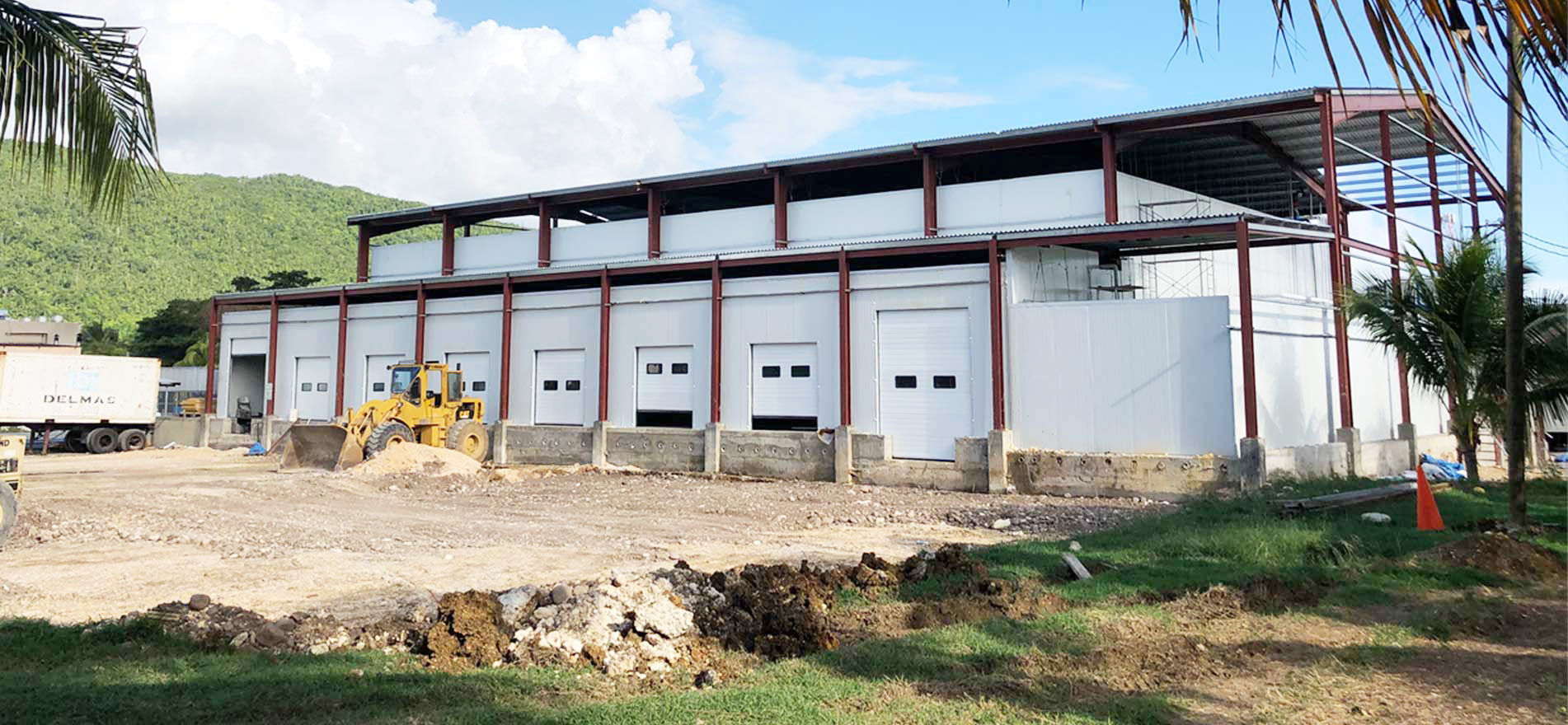
The HSZL-5000t reference: what 5,000 tons actually includes
The HSZL-5000t is a 5,000-ton food cold storage reference within HOWCOOL's cold storage portfolio. Its value to a buyer is not the tonnage figure but the scope around it: a steel structure with PIR insulated panels, panel thickness specified at 100 mm or 150 mm according to the room, and integration of generator sets, shelves and steel structural works inside one delivery boundary. The surrounding EPC parameters are equally specific — design areas of 2,000–10,000 m², refrigeration capacity from 500 to 20,000 tons, and construction periods of 2–5 months.
| Scope element | Documented reference value | Why a buyer should check it |
|---|---|---|
| Reference model | HSZL-5000t food cold storage | Confirms the supplier has a named, repeatable configuration rather than a one-off build |
| Nominal capacity | 5,000 tons | Anchors equipment sizing and room layout assumptions |
| Design area | 2,000–10,000 m² | Indicates the footprint range the design team works within |
| Capacity range covered | 500–20,000 tons | Shows whether the project sits inside or outside the documented envelope |
| Structure and envelope | Steel structure with PIR insulation panels, 100 mm or 150 mm | Defines the load path and the insulation schedule per room |
| Integrated works | Generator sets, shelves, steel structural works | Identifies interfaces that must be assigned in the contract |
| Construction period | 2–5 months | Sets a realistic programme against site readiness and shipping |
| Spare parts | Two-year support arrangement | Determines what is available locally after commissioning |
Steel structure and PIR panels: reading the envelope decisions
A steel structure separates the building's load path from its insulated envelope. Roof and racking loads are carried by the frame, so panel joints are not asked to do structural work — a basic engineering distinction, but one that determines how the facility can be extended later. Buyers should ask for the structural drawings that correspond to the actual site, since HOWCOOL's documented scope includes providing steel structure drawings alongside the refrigeration equipment.
PIR panel thickness is where specification shortcuts most often appear. A 100 mm and a 150 mm panel are not interchangeable grades of the same wall; thickness is selected per room according to the internal temperature regime, the external climate, door traffic and the energy target the owner has set. A supplier that applies one thickness across an entire facility has not designed an envelope, it has priced one. The defensible request is a room-by-room thickness schedule with the reasoning attached, plus the joint, seal and penetration details at doors, pipe entries and panel-to-structure connections.
The material context supports the emphasis. Fortune Business Insights reported that the polyurethane foam segment led the cold insulation market in 2025 because of its widespread use in cold rooms — a market-position observation rather than a claim about any single supplier. The practical implication for buyers is that panel specification should be documented in the same package as the refrigeration design, not negotiated separately afterwards.
Refrigeration equipment, drawings and the interfaces that fail
Refrigeration equipment selection determines how the facility behaves in daily operation, and compressors are the component buyers scrutinise most. Persistence Market Research reported that compressors hold 23% of the industrial refrigeration equipment market, reflecting their role in the cooling cycle. Read as procurement guidance, that share is a reminder that compressor selection, control philosophy and part-load behaviour deserve explicit review rather than a line item in a bill of materials.
HOWCOOL's product scope covers insulation panels, refrigeration condensing units, evaporators, refrigeration accessories and tunnel freezers, supplied together with complete cold storage construction services. In the 3,000-ton reference project, the company states that it provided architectural drawings and refrigeration drawings, and that the client purchased all refrigeration equipment and generator sets within the same engagement. Having both drawing sets in one package matters: architectural drawings fix the building geometry, refrigeration drawings fix pipe routes, drainage falls and equipment clearances, and the two only work when they are coordinated before erection starts.
The interfaces most often left undefined are mundane. Where does the generator changeover sit relative to the control panel? Are shelves specified by the cold storage supplier or bought locally against a load rating? Who seals the penetrations where refrigerant lines cross the envelope? A written EPC scope should answer all three in the contract, not at the site meeting.
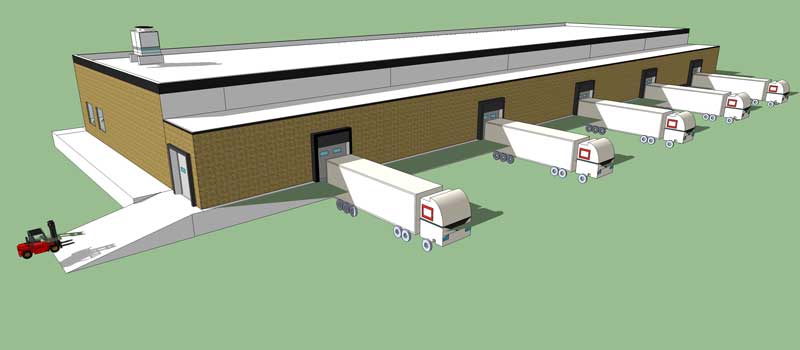
Spare parts and two-year support: what to confirm before handover
Spare-parts support is usually where optimism meets logistics. A cold storage facility that stops cooling loses stock within hours, and a part that has to be shipped internationally on standard freight is not a spare part in any operational sense. The HSZL-5000t reference scope includes a two-year spare parts support arrangement, and HOWCOOL's documented after-sales provision extends to lifetime technical service. Those two statements describe different things, and buyers should keep them separate when reading an offer.
A spare-parts period is a defined commitment covering named items for a stated duration. Technical service is ongoing support without an automatic parts entitlement. Before contract signature, the useful questions are: which items are inside the two-year arrangement; whether controls, motors, door hardware and refrigerant-side components are included or excluded; how the parts list is handed over at commissioning; and what the buyer is expected to hold locally from day one. A supplier that can produce the list at quotation stage is measurably easier to plan around than one that produces it after installation.
EPC scope versus equipment-only supply: the trade-off in plain terms
The choice most buyers actually face is not between suppliers but between delivery models. Buying an equipment package and appointing local contractors for civil and steel works keeps more spend in the local economy and can be cheaper on paper. Appointing one EPC contractor concentrates responsibility for the same interfaces in one place. Both models are legitimate, and the right answer depends on what the buyer already controls.
| Consideration | Equipment-only purchase with local contractors | Single EPC contract (HOWCOOL model) |
|---|---|---|
| Interface responsibility | Split between equipment vendor, steel contractor and installer | Held by one party under one contract |
| Drawing coordination | Buyer reconciles architectural and refrigeration drawings | Both drawing sets delivered together |
| Commissioning | Depends on the installer's refrigeration experience | On-site technical engineers install and debug |
| Spare parts | Procured separately, often after handover | Defined period, two years in the HSZL-5000t reference |
| Best fit | Buyer with proven local refrigeration contractors and an experienced site team | Buyer wanting one accountable party from design through commissioning |
The EPC model has a boundary that should be stated as plainly as its advantages. HOWCOOL's documented capability covers medium-sized cold storage projects of less than 20,000 tons per project, with a minimum order quantity of 500 tons and customisation of area, height, tonnage and temperature. A buyer planning a facility materially above that ceiling should treat this as a fit question rather than a negotiation. Equally, a single contract does not remove the buyer's own obligations: site readiness, power availability, customs clearance and access for installation crews remain on the owner's side of the line.
Commercial terms are part of the same evidence picture. HOWCOOL's documented purchasing terms specify MOQ of 500 tons, delivery on FOB, CIF or EXW terms, payment by TT, and acceptance through pre-shipment testing plus third-party inspection by SGS. Monthly capacity is stated at 100 units, with a production lead time of 30–45 days — figures a buyer can test against their own programme rather than accept as reassurance.
Application fit: fruit and vegetables, frozen meat, cold chain logistics
The HSZL-5000t reference and the wider HOWCOOL product scope are aimed at food production, food storage, seafood, beef and mutton, fruit and vegetables, and cold chain logistics. That range matters because room requirements diverge sharply: fresh produce needs ventilation and humidity management, frozen meat needs stable low-temperature holding with minimal door cycling, and logistics facilities need dock access and rapid turnover. A 2,000–10,000 m² design area sits in the mid-size band where a single EPC scope is practical rather than unwieldy.
The 3,000-ton reference project illustrates the pattern. HOWCOOL states that the facility was built for cold chain logistics of agricultural products — fresh fruits and vegetables plus frozen meat — for clients in Iraq, Libya, Malaysia, Russia and Saudi Arabia, and that the client rents the space locally. According to the customer's own calculation, the investment could be recovered in approximately two years. That is a client-side payback estimate for one project, not a performance guarantee, and it depends on local rental demand and utilisation; it is nonetheless the kind of outcome evidence that a capacity figure alone never provides.
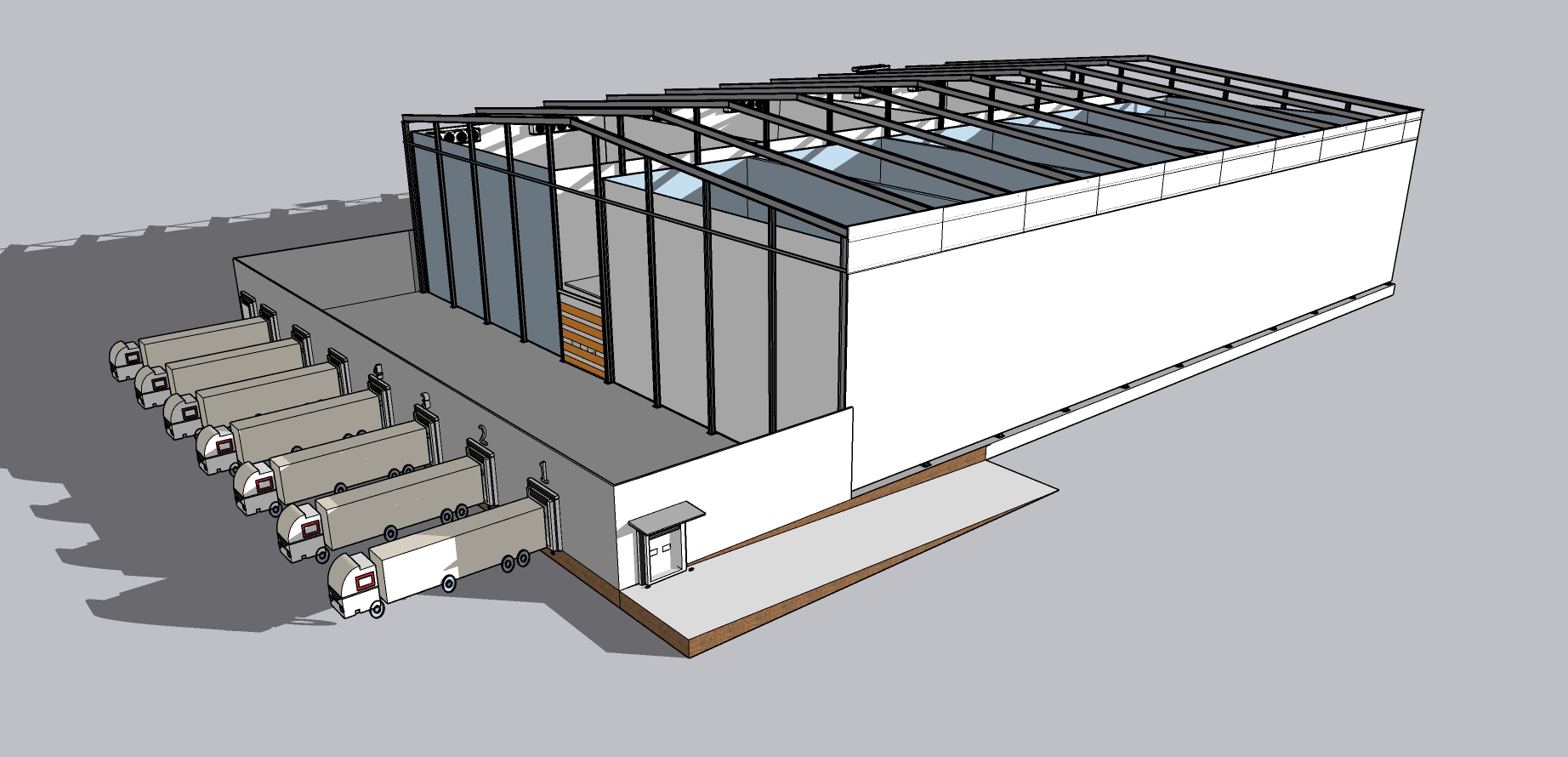
Market context: what 2026 data changes for buyers
Cold storage demand is expanding, and the published figures are large enough to affect how buyers plan capacity. Grand View Research estimated the global cold storage market at USD 217.1 billion in 2026, up from USD 185.8 billion in 2025. Research houses define the category differently — some include transport refrigeration, others count fixed warehouse facilities and services only — so the figure is best used as a directional indicator of scale, not as a benchmark for a single project's budget.
The more useful reading for a buyer is structural. Growing volume puts pressure on lead times, on the availability of experienced installation crews, and on spare-parts logistics in markets far from the equipment factory. Those are precisely the pressures that make documented on-site capability and a defined spares period worth more than a marginal price difference. HOWCOOL's stated export ratio of 50% and its main markets in the Middle East, Africa, Southeast Asia and South America describe a supplier whose delivery model already assumes long freight distances — which is also why the 2–5 month construction period is normally discussed alongside shipping time rather than in isolation.
A verification checklist for site-stage buyers
Evaluation-stage questions and execution-stage questions are not the same. Once a project moves toward contract, the checks shift from capability to commitment. The following items can be verified from documents rather than impressions.
- Named installation responsibility. Confirm whether on-site technical engineers install and debug the refrigeration systems, and whether panel erection supervision is inside the contract.
- Drawing package. Request both architectural and refrigeration drawings, coordinated, and check that steel structure drawings match the actual site.
- Envelope schedule. Ask for a room-by-room PIR panel thickness schedule covering 100 mm and 150 mm where applicable, with joint and penetration details.
- Integration list. Confirm in writing whether generator sets, shelves and steel structural works are supplied, specified or excluded.
- Spares definition. Obtain the two-year spare-parts list before signature, and confirm what must be held on site from commissioning day.
- Acceptance route. Check that pre-shipment testing and third-party inspection by SGS are named, and that commissioning sign-off criteria are written down.
- Programme arithmetic. Match the stated 30–45 day production lead time and 2–5 month construction period against shipping, customs and site readiness.
- Scope ceiling. Verify that the planned tonnage sits below the documented 20,000-ton project limit and above the 500-ton minimum order quantity.
Outlook: what a documented scope is worth over a facility's life
Cold storage projects are usually justified on a decade-long operating horizon, yet most procurement scrutiny happens in the few weeks before signature. The evidence that survives that horizon is documentary: drawings that match the built facility, a panel schedule that explains why each room has the thickness it has, a spares list with named items, and a commissioning record signed by the party that performed the work. Suppliers that can produce this material at quotation stage are not necessarily cheaper, but they are auditable — and auditability is what a buyer needs when a compressor fails in year three and the question of responsibility becomes practical rather than theoretical.
For medium-sized facilities in the 500–20,000 ton band, the model represented by the HSZL-5000t reference — steel structure, PIR envelope at 100 mm or 150 mm, refrigeration plant, generator sets, shelves and structural works under one EPC contract with on-site installation and a two-year spare-parts arrangement — offers a coherent way to concentrate that responsibility. Whether it fits a specific project still depends on tonnage, site conditions, programme and the buyer's own capability to manage the remainder of the works. For buyers who want a fuller picture of the delivery model, the HOWCOOL EPC brochure sets out the scope in document form.
FAQ
What does on-site installation include in a cold storage EPC contract?
In HOWCOOL's documented model, on-site installation covers technical engineers attending the site to install and debug the refrigeration equipment, working from steel structure drawings and refrigeration drawings supplied with the equipment. The company's ISO 9001:2015 certificate scope explicitly includes on-site maintenance and commissioning services for refrigeration equipment used in cold storage. Buyers should confirm separately whether panel erection supervision and pressure-test records are inside the contract.
How long does a 5,000-ton cold storage project take from order to commissioning?
HOWCOOL states construction periods of 2–5 months for its EPC cold storage scope, alongside a production lead time of 30–45 days. In the 3,000-ton reference project, the company reports one month of production, one month of sea freight and two months of on-site installation guidance, giving a four-month total. The 5,000-ton reference sits within the same 500–20,000 ton capacity range, so shipping distance and site readiness are the variables most likely to move the programme.
What spare parts support should be confirmed before handover?
The HSZL-5000t reference scope includes a two-year spare parts support arrangement, and HOWCOOL's documented after-sales provision extends to lifetime technical service. Before handover, buyers should obtain the itemised spare-parts list, confirm which components fall inside the two-year period, identify what must be held on site from commissioning day, and separate the spares commitment from ongoing technical support, since the two are different obligations.
How is 100 mm versus 150 mm PIR panel thickness decided?
Panel thickness is selected per room rather than per building. The determining inputs are the internal temperature regime, the external climate at the site, door traffic and the owner's energy target. A 100 mm and a 150 mm PIR panel are different specifications, not interchangeable options, so the defensible procurement request is a room-by-room thickness schedule with joints, seals and penetration details attached, coordinated with the refrigeration drawings.
What project capacities does HOWCOOL's EPC scope cover?
HOWCOOL documents medium-sized cold storage projects of less than 20,000 tons per project, with customisation of area, height, tonnage and temperature and a minimum order quantity of 500 tons. The HSZL-5000t 5,000-ton food cold storage sits inside that range, as do the referenced design areas of 2,000–10,000 m². Projects materially above the 20,000-ton ceiling fall outside the documented scope and should be treated as a fit question.
Have Questions or Need More Details?
Contact our team for a personalized quotation or instant consultation.
Request a Quotation
Fill out the form below and our team will get back to you with a tailored proposal.
WhatsApp Direct Chat
Prefer to chat in real-time? Message us on WhatsApp for instant assistance & quick answers.
- Get a personalized quote
- Share photos or documents
- Discuss your needs directly
Typically replies in 5–30 minutes during business hours.