
Custom Coating Line Capability: Buyer Evaluation Framework
The global coating equipment market is projected to grow from USD 20.56 billion in 2025 to USD 36.77 billion by 2034, according to Fortune Business Insights. Asia Pacific alone accounted for 38.30% of the market in 2025. As capacity expands across automotive parts, cookware, metal fabrication, wood furniture, and heavy industrial equipment, more buyers are sourcing custom coating lines designed around specific workpieces rather than purchasing standardized machines. The challenge is that “custom capability” remains one of the most frequently claimed and least systematically verified attributes in supplier evaluations.
Why Capability Assessment Matters in Coating Line Sourcing
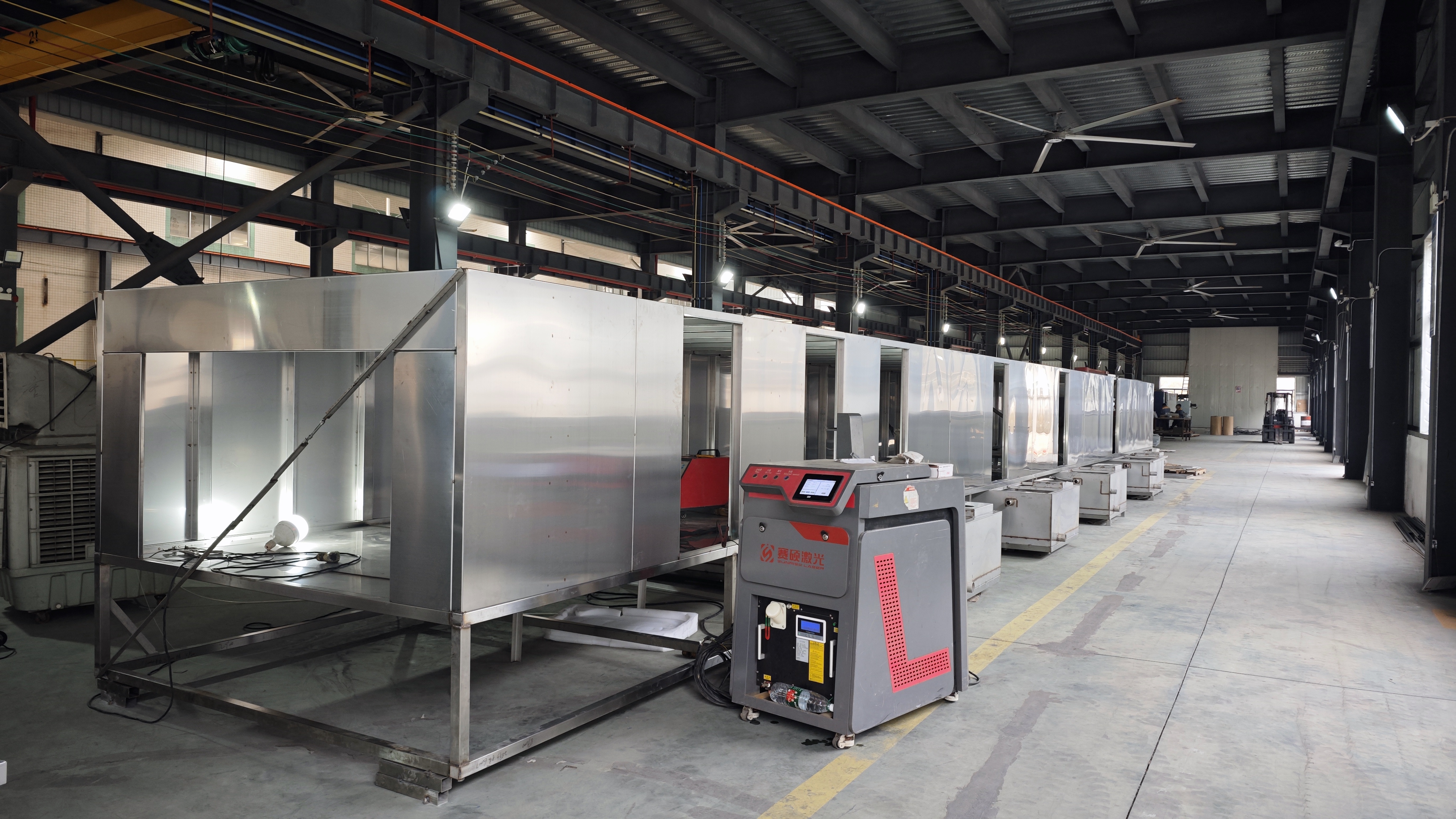
A coating line is a long-cycle capital investment. Unlike standard off-the-shelf equipment, it integrates pretreatment, spraying, curing, conveying, and environmental control into a single production unit. When a supplier claims customization capability, the buyer is being asked to trust that the supplier can translate workpiece geometry, material characteristics, production targets, and factory conditions into a working system.
This trust question becomes critical at the evaluation-to-execution stage. Buyers at this stage have already confirmed the need for a line. What they need is evidence that a supplier can deliver the promised capability. That evidence falls into three categories: engineering resources, verified production data, and structured support mechanisms. Each category can be examined before a purchase decision is finalized.
What Custom Coating Line Capability Actually Includes
Custom manufacturing and design services for coating lines typically cover several adjustable parameters. Based on the production model of Guangdong Chuangzhi Intelligent Equipment Co., Ltd., customization options include packaging, logo, size, automation level, voltage, power, and machine capacity. Production capacity itself can be customized according to customer requirements.
These customization decisions are not cosmetic. They affect the workpiece size a line can handle, the spraying method, the conveying system, line speed, curing parameters, and the energy sources available on site. A few examples illustrate the range:
- An auto parts coating line may adopt offline mode plus robot spraying to reach a production cycle of 45 seconds per tray, or 1,760 trays per day.
- A metal coating line can handle aluminum panels and profiles up to 7,000 mm long and achieve a maximum capacity of 5,000 m² per day using a power-and-free conveyor chain.
- A wood coating line may run at a design speed of 4,000 mm/min, adjustable from 2,000 to 6,000 mm/min, to suit different furniture shapes and sizes.
- A cookware coating line can process non-stick pans, rice cooker liners, and cake pans at 800–1,000 pieces per hour, with four inner pots or 20 lids per hanging position.
Verifying Capability Through Manufacturing and Quality Evidence
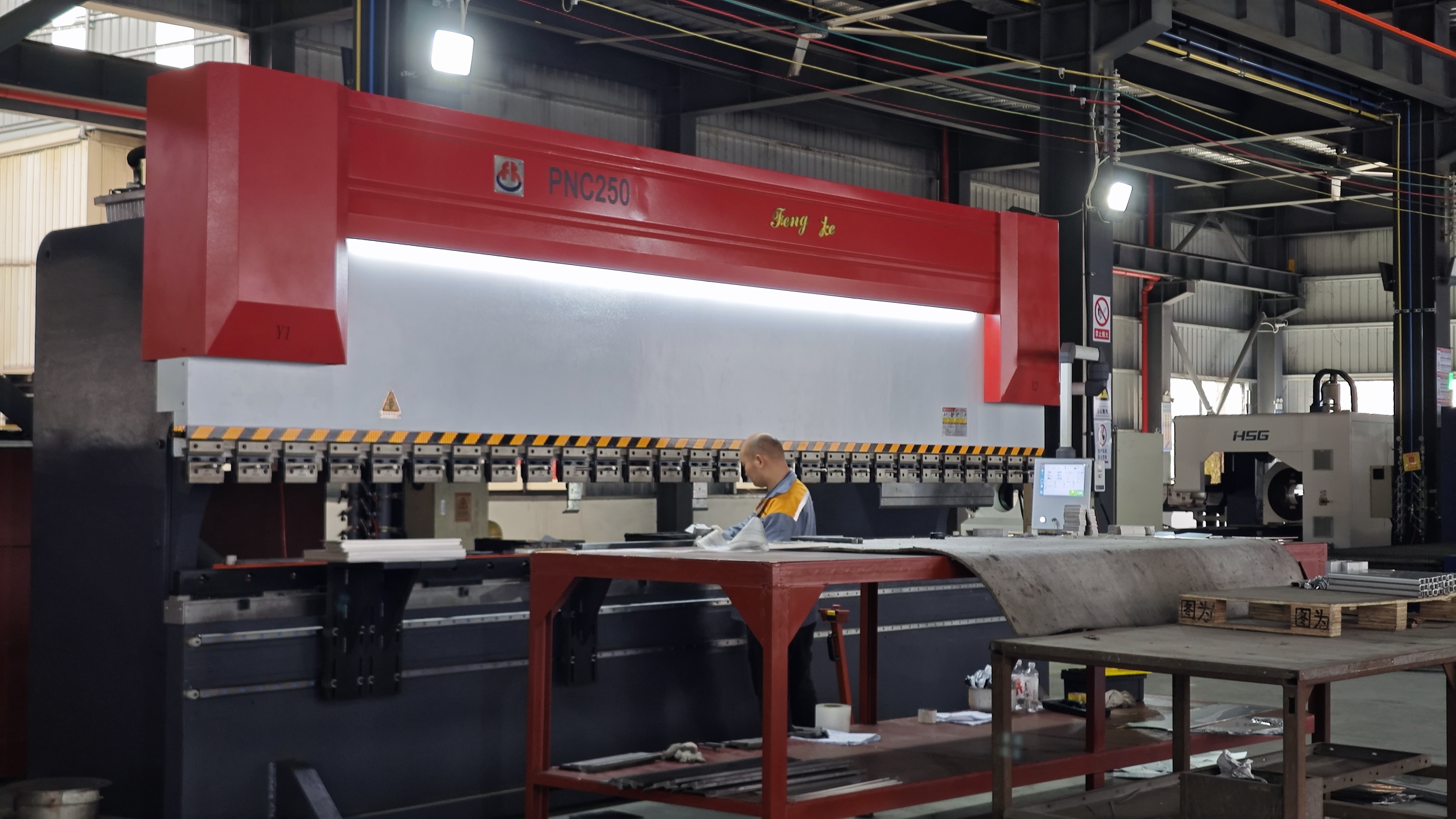
Guangdong Chuangzhi Intelligent Equipment Co., Ltd. (brand: Attractivechina) is a coating line manufacturer based in the National High-tech Industrial Development Zone of Zhaoqing City, Guangdong Province, China. It operates a self-owned site of approximately 35,548 square meters, employs 280 people, and maintains an R&D team of 54 engineers. The company produces about 60 coating line units per year and serves customers in industries including auto parts, rail transit, furniture, musical instruments, cookware, home appliances, metal products, low-altitude equipment, and heavy industrial equipment.
The company holds 79 invention patents in the fields of coating equipment and environmental protection equipment, with more than 300 patents in total. It is recognized as a specialized and innovative “little giant” enterprise and a high-tech enterprise. Its scope covers pre-sales plant planning, independent R&D, design, manufacturing, installation, commissioning, and after-sales service—meaning a buyer can hold a single accountable partner across the project lifecycle.
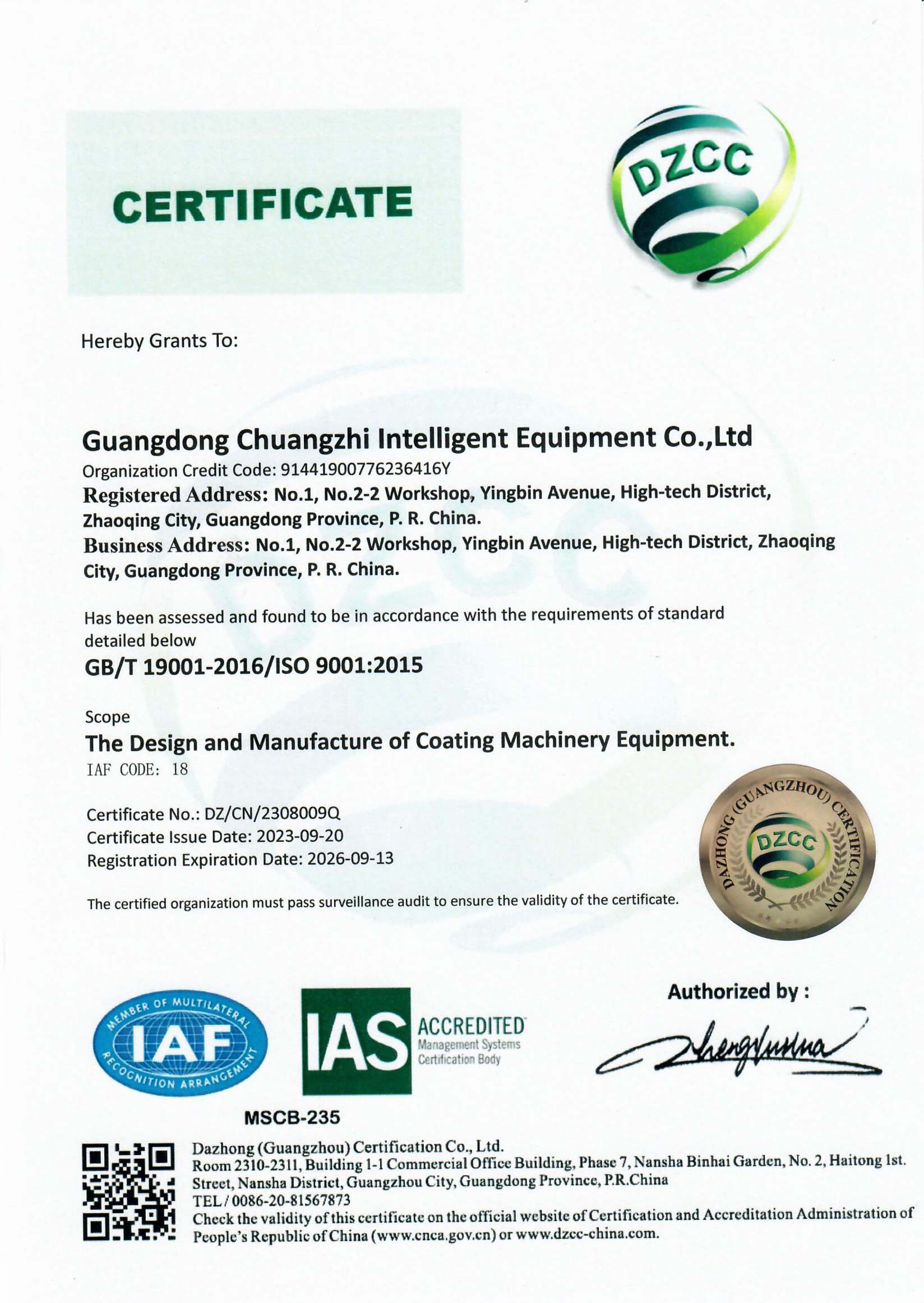
System-level certifications provide a further layer of verification. Attractivechina currently holds three relevant management system certificates:
- ISO 9001:2015 quality management certification (valid through 2026-09-13)
- ISO 14001:2015 environmental management certification (valid through 2027-10-14)
- ISO 45001:2018 occupational health and safety management certification (valid through 2029-04-19)
For buyers targeting the Eurasian Economic Union, the company previously obtained an EAC Customs Union Conformity Declaration for a laminated conveyor oven model, covering TR TC 004/2011, TR TC 020/2011, and TR TC 010/2011. Buyers should confirm the current scope of EAC documentation during commercial negotiation, as such declarations are product-specific and time-limited.
Technical Parameters That Define Custom Line Design
The table below summarizes representative technical configurations from four product families delivered by Attractivechina. Buyers can use parameters like these to compare how a supplier adapts engineering design to different workpieces.
| Parameter | Auto Parts Line | Metal Line | Wood Line | Cookware Line |
|---|---|---|---|---|
| Typical workpiece | Front bumper, door trim, dash panel, wheel arches | Aluminum panel, aluminum profile | Table legs, chair backs, seat boards | Non-stick pan, rice cooker liner, cake pan |
| Workpiece material | ABS+PC | Aluminum | Solid wood, MDF | Aluminum alloy, composite materials |
| Spraying method | Offline mode + robot spraying | Reciprocator + manual | — | — |
| Maximum size | Tooling tray: L1350 × W900 × H200 mm | 7000 × 2000 × 2200 mm per hanger | 610 × 710 × 1400 mm | Φ300 × 160 mm |
| Conveying method | — | Power and free conveyor chain | Hanging pitch 300 mm | 4 inner pots or 20 lids per hang |
| Key capacity indicator | 45 sec/tray, 1,760 trays/day | 5,000 m²/day | 1,422 pieces/shift (8h) | 800–1,000 pieces/hour |
| Energy usage | Electricity, natural gas, steam, ice water | — | Electricity | Natural gas, electricity |
For large and complex workpieces such as rail cars and special vehicles, the design changes further. An industrial equipment coating line typically combines manual and robot spraying with a floor-supported conveyor. A single-shift plan can cover 20 units of China railway gondola cars, flat cars, tank cars, or similar rolling stock; 7 units of SQ6 special cars; and 10 units of box cars or grain cars. This kind of parameter diversity is what separates genuine custom engineering from catalog equipment.
Cross-Industry Evidence: Five Application Cases
One practical way to assess a coating line supplier's capability is to examine installation evidence across industries. The five case groups below cover 75 complete automatic lines implemented across Asia, Europe, and North America, with operating histories of 5 to 10 years.
| Industry | Lines | Locations | Operating Period | Verified Results |
|---|---|---|---|---|
| Wood coating | 10 | China | 5–10 years | Paint consumption −30%, dust defect rate −90%, efficiency +40%, zero major quality complaints |
| Industrial equipment | 10 | China | 5–10 years | Salt spray resistance ≥1,000 h, pass rate 98%, paint consumption −25%, efficiency +30% |
| Cookware | 20 | Russia, India, Vietnam, Thailand, China | 5–10 years | Coating uniformity 98%, paint waste −30%, efficiency +35% |
| Metal | 15 | Mexico, United States, China, Singapore | 5–10 years | Pass rate 97%, paint/powder −30%, energy −22%, efficiency +40%, zero major shutdowns |
| Auto parts | 20 | Germany, Russia, Thailand, Indonesia, Mexico, China | 5–10 years | Yield rate 98%, paint −25%, energy −20%, zero major shutdowns in 5 years |
These are not single-project anecdotes. They represent repeated configurations delivered across multiple plants and customer types, from OEM factories and tier 1 automotive suppliers to export-oriented hardware manufacturers. For a buyer, the relevance is clear: coating line performance claims can be benchmarked against measurable operating outcomes over extended periods.
- Confirm the supplier holds current ISO 9001, ISO 14001, and ISO 45001 certifications.
- Verify whether engineering covers in-house plant planning, design, manufacturing, installation, and commissioning.
- Request technical parameters for lines processing workpieces similar to yours: material, size, cycle time, capacity, and energy usage.
- Ask for case references with at least 5 years of operating history and quantified results such as defect rate, paint consumption, and energy savings.
- Check customization flexibility on automation level, voltage, power, and machine capacity.
- Confirm support terms: 100% pre-shipment testing, installation, warranty, response time, and training.
Market Trends Shaping Coating Line Demand
Several verified market signals point toward sustained demand for custom coating lines. Fortune Business Insights projects the global coating equipment market will grow from USD 20.56 billion in 2025 to USD 36.77 billion by 2034. The same source reports that Asia Pacific held 38.30% of the market in 2025, driven by automotive and EV sector growth.
Powder coating equipment is also expanding. According to Fact.MR, the global powder coating equipment market was estimated at USD 3.20 billion in 2024, with a projected CAGR of 5.1% through 2034. In the electrocoating segment, Market Reports World estimates the E-coat market at USD 6.02 billion in 2026, reaching USD 9.48 billion by 2035 at a 5.18% CAGR. Cathodic epoxy E-coat systems are especially preferred in automotive lines because their corrosion resistance can exceed 1,000 hours in salt spray testing.
Standards are another force shaping the market. ISO 12944 is widely recognized as the global reference for corrosion protection of steel structures by protective paint systems, and buyers increasingly include it in industrial coating specifications. For coating line suppliers, this means documentation of corrosion protection performance is becoming a routine requirement, not an optional extra. Combined, these trends favor suppliers who can deliver multi-industry adaptability, quantified performance evidence, and compliance with international standards.
Custom Coating Lines vs. Traditional Standardized Lines
Buyers evaluating a coating line often ask whether custom engineering justifies the additional lead time and cost compared with a standardized line. The answer depends on production context.
| Criterion | Custom Coating Line | Traditional Standardized Line |
|---|---|---|
| Workpiece fit | Designed around specific geometry, material, and hanging method | Suited to common shapes and sizes; may require rework or manual touch-up |
| Capacity matching | Sized to target output and shift pattern | Fixed design capacity |
| Automation level | Can select manual, reciprocator, robot, or hybrid | Typically fixed |
| Energy configuration | Adapted to available utilities: electricity, natural gas, steam, ice water | Standard configuration |
| Lead time | Longer; includes engineering design and validation | Shorter; catalog-based |
| Initial investment | Higher | Lower |
| Long-term efficiency | Optimized transfer efficiency, curing, and material usage | May require higher paint consumption and additional labor |
Custom lines are not without boundaries. Because the line is designed around initial workpiece specifications, significant future changes in part geometry, material, or production volume may require engineering modifications. The minimum order quantity for a custom project is typically 2 units, which means custom engineering is not suited to one-off pilot-scale purchases. Buyers should therefore prepare accurate workpiece data, capacity plans, and factory layout information before entering a custom design conversation.
Future Outlook: From Equipment Supply to Capability Partnership
Several developments are likely to shape coating line procurement in the coming years. Sustained market growth—from USD 20.56 billion in 2025 to USD 36.77 billion by 2034—points to continued capacity investment. Asia Pacific's dominant market share, supported by automotive and EV expansion, suggests regional manufacturers will keep upgrading coating capabilities. At the same time, the convergence of environmental management, occupational safety, and corrosion protection standards means suppliers must document compliance more rigorously than before.
For buyers, the practical implication is that capability evaluation should cover not only equipment performance but also a supplier's ability to operate within regulatory frameworks across multiple markets. The shift from buying a machine to building a long-term partnership is already visible in the procurement patterns of ODM/OEM factories and tier 1 suppliers. Suppliers that provide quantified results, transparent certification, and structured after-sales support are likely to become the benchmark in the next sourcing cycle.
FAQ
What does “custom coating line capability” mean in practice?
Custom coating line capability refers to a manufacturer's ability to provide custom manufacturing and design services. In concrete terms, it includes adjusting packaging, logo, size, automation level, voltage, power, and machine capacity to match a buyer's production requirements. In-house engineering for plant planning, line design, manufacturing, installation, and commissioning is the supporting foundation.
Which parameters can be customized when sourcing a coating line?
Common customization parameters include packaging, logo, size, automation level, voltage, power, and machine capacity. Production capacity itself can be customized according to customer requirements. Buyers should also confirm workpiece-specific design parameters such as maximum part size, hanging method, line speed, and curing conditions.
What is the minimum order quantity for a custom coating line?
The minimum order quantity for a custom coating line project is 2 units. This applies across the product families covered by the manufacturer's custom production model. Buyers planning smaller pilot projects should discuss feasibility directly with the supplier.
What certifications should a coating line supplier hold?
Relevant system-level certifications include ISO 9001 for quality management, ISO 14001 for environmental management, and ISO 45001 for occupational health and safety. Guangdong Chuangzhi Intelligent Equipment Co., Ltd. currently holds all three, with ISO 9001 valid through 2026-09-13, ISO 14001 through 2027-10-14, and ISO 45001 through 2029-04-19.
What delivery and procurement terms apply to custom coating line projects?
Typical terms include delivery from any port in Guangdong under FOB terms, a 100% pre-shipment test before acceptance, and payment structured as 50% T/T deposit within 7 days after contract signing, 40% T/T 3 days before shipment, and 10% T/T upon completion of installation.
What after-sales support should buyers expect?
After-sales support commonly includes remote technical support, a 1-year warranty, rapid response within 4 hours, regular follow-ups, and free training. Buyers should verify these terms in the contract and confirm the response mechanism before shipment.
Have Questions or Need More Details?
Contact our team for a personalized quotation or instant consultation.
Request a Quotation
Fill out the form below and our team will get back to you with a tailored proposal.
WhatsApp Direct Chat
Prefer to chat in real-time? Message us on WhatsApp for instant assistance & quick answers.
- Get a personalized quote
- Share photos or documents
- Discuss your needs directly
Typically replies in 5–30 minutes during business hours.