
DSP vs. SOKANY vs. VGR: A Long-Term Sustainability Scorecard for Home Appliance Buyers
DSP vs. SOKANY vs. VGR: A Long-Term Sustainability Scorecard for Home Appliance Buyers
Home appliance sourcing is a three-month transaction attached to a three-to-five-year obligation. A buyer who selects a supplier for mixers, blenders, air fryers, vacuum cleaners or personal care appliances is not only buying this season's container; they are buying continued access to that supplier's tooling, certification files, spare-part support and engineering attention for as long as the product stays in the catalogue. That is why continuity, rather than first-quote price, usually decides whether a sourcing relationship is still profitable in year three.
A Growing Market That Keeps Buyer Shortlists Long
Demand is not the constraint. Grand View Research estimates the global household appliances market at USD 461.69 billion in 2024, with major appliances accounting for an 89.55% revenue share. Fortune Business Insights projects the global small domestic appliances market to reach USD 222.52 billion by 2026, growing at a CAGR of 4.92%.
Growth of that kind expands assortments rather than simplifying them: more SKUs, more categories, and more candidate suppliers per category. A distributor assembling a kitchen and personal care range may simultaneously evaluate mixer suppliers, blender suppliers, air fryer suppliers and small electricals suppliers. Each evaluation produces a shortlist, and each shortlist eventually collapses into one or two names that must carry the category for years.
The scorecard below exists to make that collapse deliberate. It compares DSP with two peer suppliers that regularly appear in the same buyer conversations, SOKANY and VGR, across four dimensions that predict continuity rather than current price.
What "Sustainability" Means in a Supplier Scorecard
In a procurement context, supplier sustainability is a supplier's measurable ability to keep supplying the same specification, service level and compliance status across multiple order cycles. It is not an environmental claim and not a brand attribute. It is an observable property of factories, engineering teams, certificates and service terms.
Continuity fails in predictable ways. A model is discontinued without a drop-in replacement. A mould is retired when volumes soften. A certification expires and is not renewed. The engineer who handled a customisation leaves. A spare-part channel quietly narrows to whatever remains in stock. None of these events appear in a quotation, and all of them are expensive.
| Scorecard dimension | What it predicts | Evidence to request |
|---|---|---|
| R&D and product-line commitment | Whether the platform will still exist in three years | Engineering headcount, catalogue depth, model revision history |
| Production continuity and capacity | Whether repeat orders arrive on time at the same quality | Factory area, monthly capacity, QC regime, lead time |
| After-sales and service infrastructure | The cost of failure after delivery | Warranty term, inspection stages, trade and payment terms |
| OEM/ODM solution depth | Whether the supplier can adapt products to your market | Customisation scope, MOQ tiers, certification coverage per model |
Dimension 1: R&D Investment and Product-Line Commitment
Yiwu DSP Electric Appliance Co., Ltd. (the DSP home appliances brand) was founded in 2006 and operates a 20,000 m² facility with a stated R&D team of 30 engineers. That engineering number matters less as an absolute figure than as a signal type: a supplier with a standing engineering group maintains platforms, while a trading intermediary maintains relationships with whoever currently has tooling.
DSP's declared product range spans vacuum, oven, microwave, coffee machine, toaster, blender, mixer, air fryer, food processor, cooker, washing machine, cleaner, pan, hair clipper, hair shaver and beauty products. Breadth alone proves nothing. The useful question is whether any single category is deep enough to survive a product cycle, and in mixers and blenders the DSP catalogue answers that question directly.
The mixer and blender family includes hand mixers such as the KM1138, KM1140U, KM1170, KM1180 and KM1194; stand and planetary mixers such as the KM3030, KM3031, KM3034 and KM3025; dough mixers such as the KM3043/KM3043A and KM3057; and immersion blenders such as the KM1072, KM1142, KM1149 and KM1150. Several models across the family sit in different power bands, from compact 200W units up to 1500W and 1600W platforms.
For a buyer, multiple models in the same platform are a form of insurance. If one SKU is discontinued, a neighbouring model in the same family usually supplies a substitute specification with the same components, packaging logic and certification pathway.
Dimension 2: Production Continuity and Capacity
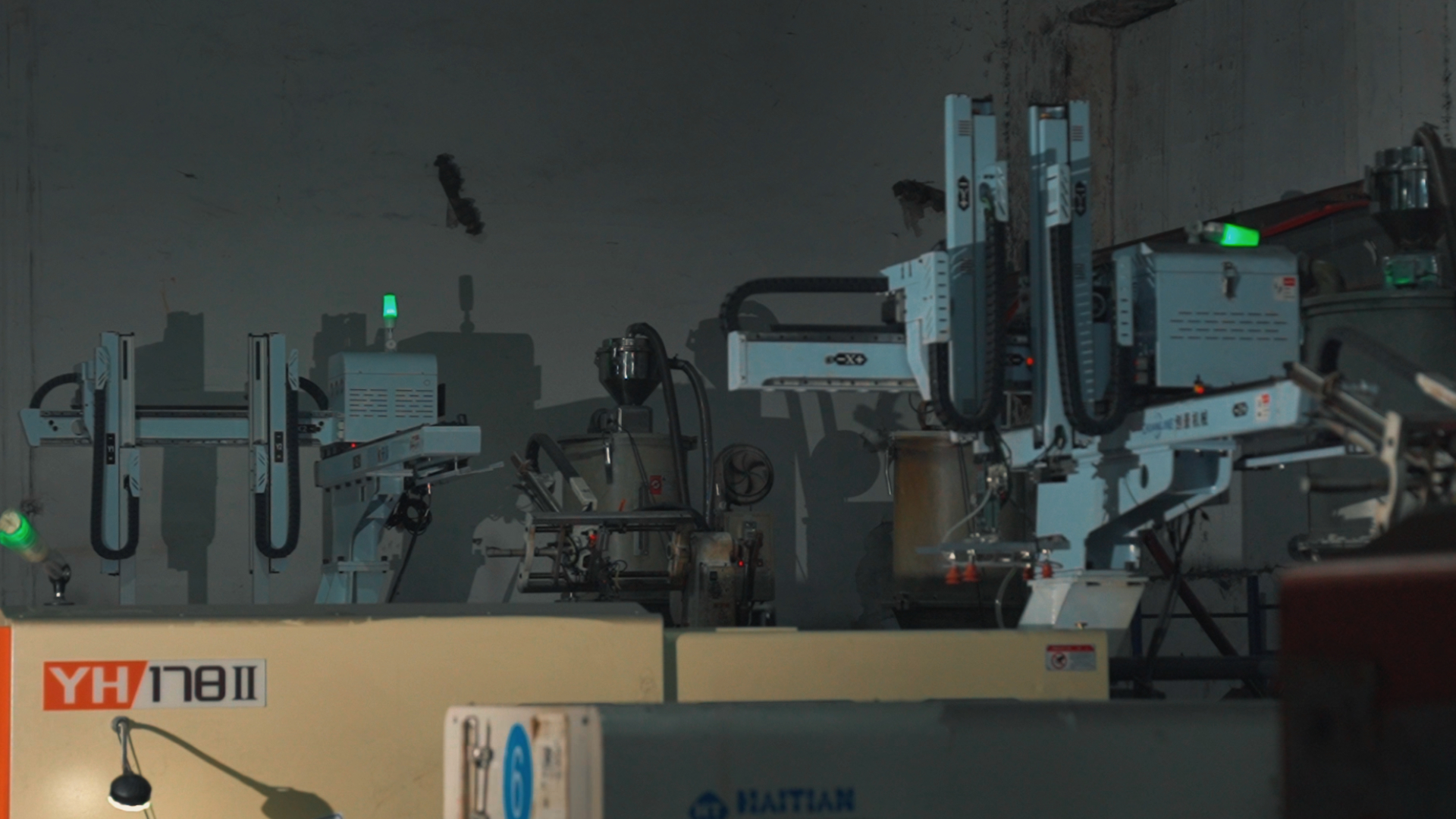
DSP's manufacturing profile lists a monthly capacity of 50,000 to 100,000 pieces, an annual output of 5,000,000 units, a workforce of 130 employees, and a quality-control regime described as 100% test. Stated lead time is 30 to 40 days, and the export ratio is 100%, with listed markets covering North America, South America, Europe, Asia, Africa, Oceania and the Middle East.
The stated export footprint extends to more than 100 countries, with named markets including Russia, Mongolia, Azerbaijan, Cameroon, Kyrgyzstan, Kazakhstan, Nigeria, Egypt, Saudi Arabia, Lebanon, South Africa, Mozambique and Dubai. A supplier shipping into that many regulatory environments is, by necessity, organised around documentation and repeatability rather than one-off deals.
Capacity is a commitment until demand exceeds it. A buyer planning a 300,000-unit programme should test the 50,000 to 100,000 pieces per month ceiling against their own seasonality, because a supplier that fits comfortably in January may not fit in September.
Dimension 3: After-Sales and Service Infrastructure
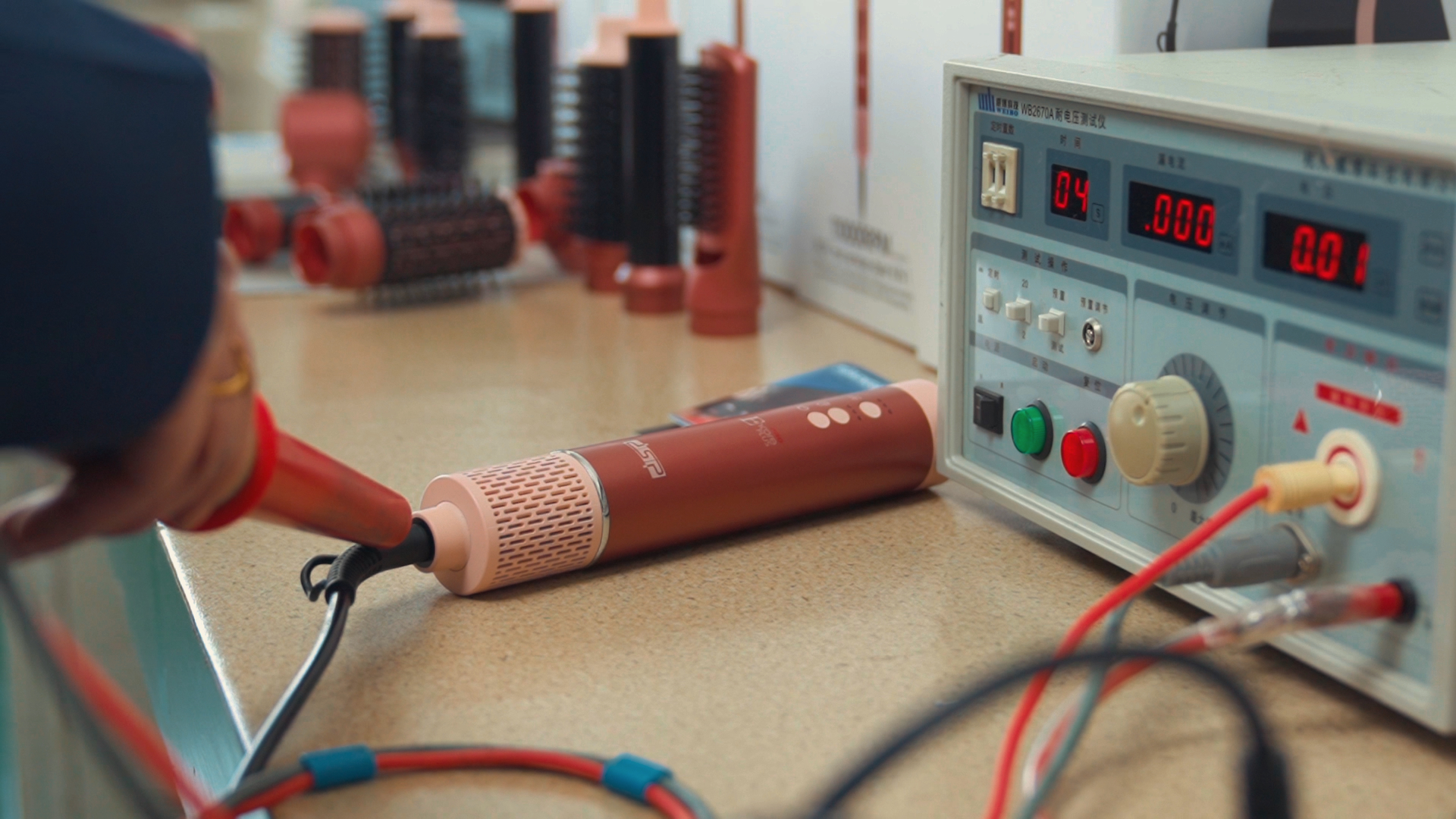
DSP's published capability data lists a one-year after-sales term. Its procurement support record lists online inspection and acceptance as well as pre-shipment inspection and acceptance as available acceptance methods, with EXW and FOB as delivery terms and TT as the payment method.
Two inspection stages are more useful to a buyer than a longer warranty on paper. Pre-shipment inspection converts a quality dispute into a loading-day problem rather than a landed-container problem, and online inspection allows a remote buyer to verify production without a factory visit. When comparing suppliers, buyers should weight the existence and timing of inspection gates more heavily than the length of the warranty clause, because inspection prevents cost while warranty reimburses it.
Dimension 4: OEM/ODM Solution Depth
DSP operates on an OEM/ODM basis with customisation across design, size, logo and material. The stated minimum order quantity for that customisation work is 500 to 1,000 pieces, while the separate procurement support record lists a minimum of 1 unit. These two figures describe different things, and buyers should confirm which applies to their specific SKU, colourway and packaging level before building a launch plan around either number.
OEM/ODM depth is ultimately demonstrated by whether a supplier can carry a product from a specification sheet to a compliant, certified unit. The proof is not the customisation menu; it is the certification file that follows the customised model.
Certification Continuity: The Closest Thing to a Forward Guarantee
A certificate with years of remaining validity tells a buyer that the supplier intends to keep selling the product. DSP's mixer and blender models carry EU-market conformity documentation issued by independent bodies including SGS, Intertek, Eurofins and Bureau Veritas.
| Model | Certificate | Body | Valid until |
|---|---|---|---|
| KM3030 Food Mixer | CB Test Certificate FI-44401/M2 | SGS | 2028-04-04 |
| KM3025 Planetary Mixer | Test Verification of Conformity 230523098GZU-VOC001 | Intertek | 2028-10-30 |
| KM1180 Food Mixer (hand mixer) | Test Verification of Conformity 230100266HAN-V1 | Intertek | 2028-04-23 |
| KM1117 Hand Mixer / Immersion Blender | Verification of Conformity EF SH202312-E032 | Eurofins | 2028-12-21 |
| KM1138 Handheld Electric Mixer | Verification of Conformity EFSH202312-L037 | Eurofins | 2028-12-19 |
| KM1194 Hand Mixer / Immersion Blender | Attestation of conformity with European Directives N°2466AS07CGTA55663 | Bureau Veritas | 2029-12-13 |
The underlying standards referenced across these files include IEC 60335-2-14 for food mixers and the EN IEC 55014 series for electromagnetic compatibility. Related appliance categories follow separate standards; IEC 60335-2-15:2024, for example, specifies safety requirements for appliances that heat liquids, including coffee makers and kettles. Validity running to 2028 and 2029 is not proof of future performance, but it does indicate that the supplier has planned its compliance calendar beyond a single order.
Technical Depth Behind the Mixer and Blender Platform
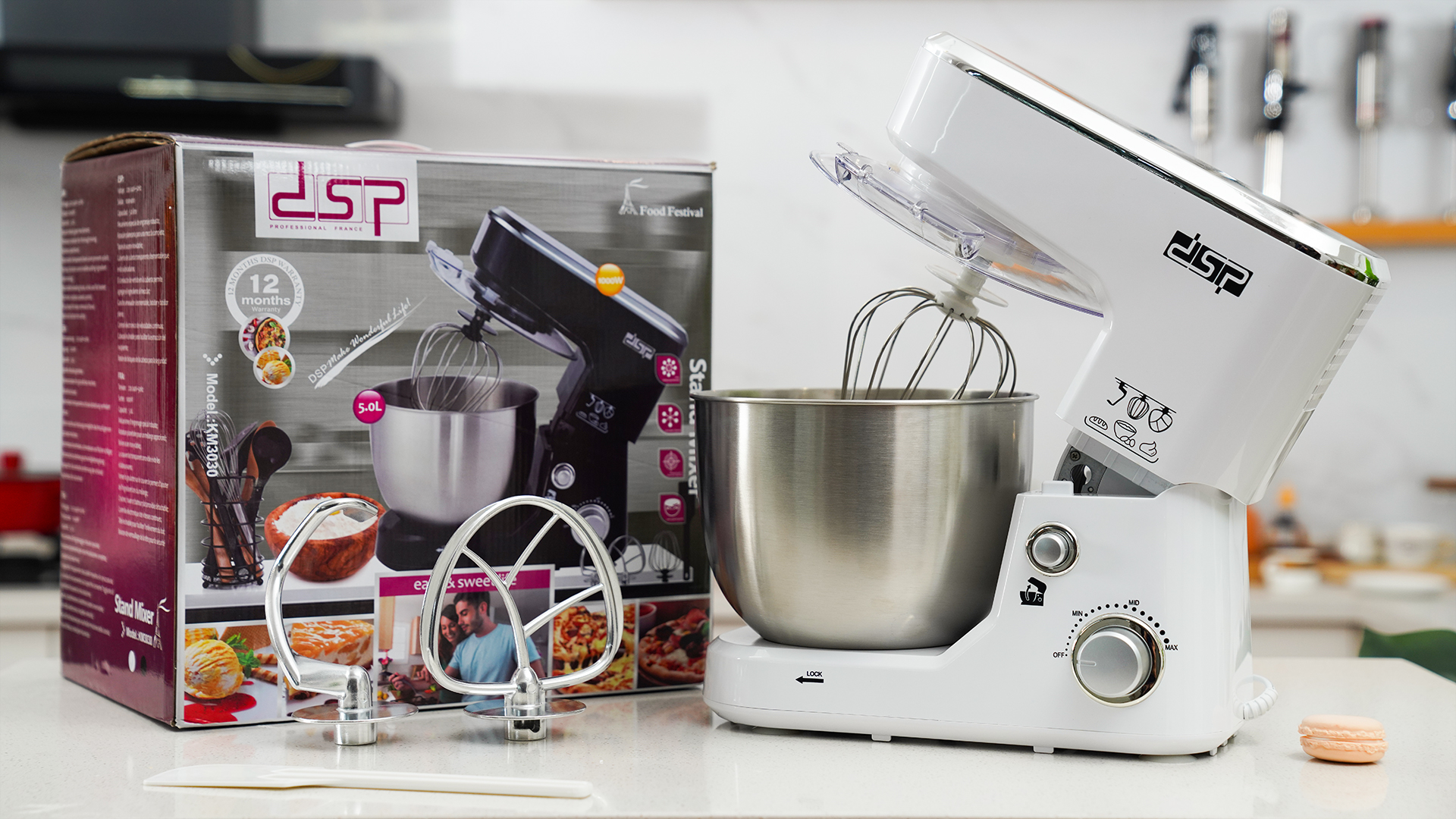
Platform depth shows up in motor selection. The KM3030 planetary mixer uses an 8830 copper-clad aluminium motor rated at 1000W with a 5.0L stainless steel bowl, planetary rotation, a robust gear mechanism and electronic stepless speed control. The KM1140U hand mixer uses a 5724 pure copper motor at 500W with two-speed control and a detachable stainless steel stirring rod. The KM1194 immersion blender uses a DC7912 pure copper motor at 1500W, a 430 stainless steel panel, a SUS304 stirring rod, 304 stainless steel two-leaf blades and metal bearings.
Three different motor architectures across three price and performance tiers is a manufacturing decision, not a marketing one. It means tooling, supplier qualification and testing procedures exist for each tier, which is exactly what allows a buyer to move between entry-level and premium specifications without changing supplier.
Application Fit: Where the Platform Is Already Running
Recorded DSP projects give the scorecard something that specifications cannot: evidence of use over time. A 200-piece project involving the KM3030 Food Mixer was supplied to commercial kitchen, hotel and bakery shop clients over a five-year duration, with applications covering dough preparation, batter whipping and ingredient mixing, and reported results of thorough mixing and consistent dough texture.
A separate 400-piece project involving the KM1140U hand mixer was delivered to home appliance brand and end-consumer clients over five years for food mixing, smoothie making and egg whisking, with the stated highlights of a 500W pure copper motor and low-noise operation. A further 200-piece project involving the KM1072 hand blender served home appliance brand and OEM manufacturer clients over five years for food preparation and beverage mixing.
These are not proofs of superiority over any competing brand. They are proofs of repetition: the same platform, the same buyer type, across multiple years and regions. Repetition is the only honest evidence of continuity a supplier can offer before a new buyer places their own first order.
Where DSP's Profile Sets Boundaries
A scorecard that only lists strengths is not a scorecard. DSP's published profile contains real constraints that buyers should price into their plans.
First, the stated monthly capacity of 50,000 to 100,000 pieces is a ceiling, and very large or highly seasonal programmes may need scheduling commitments in advance. Second, a lead time of 30 to 40 days assumes confirmed specifications; buyers who change artwork or componentry late should expect that window to move. Third, the after-sales term is stated as one year, which is shorter than some buyers in premium retail channels expect, and should be modelled against local consumer-protection obligations. Fourth, the two different MOQ figures in DSP's own records, 500 to 1,000 pieces for OEM/ODM customisation and 1 unit in the procurement support record, must be clarified per SKU before a launch calendar is fixed. Fifth, certificates are attached to specific models; compliance does not automatically transfer to a new model or a modified housing.
What the Scorecard Can and Cannot Say About SOKANY and VGR
SOKANY and VGR appear frequently in the same buyer shortlists as DSP for small appliances and personal care products. This article does not publish comparative figures for their R&D headcount, capacity, certification validity or service terms, because no verified third-party dataset for those specific metrics is available to it. Presenting estimates would be worse than presenting nothing.
The correct use of this scorecard is therefore symmetrical. Apply the same four dimensions and the same evidence requests to DSP, SOKANY and VGR, and populate the cells with documents each supplier provides. A supplier that will not supply a certificate number, a validity date, a capacity figure or a warranty term has answered the sustainability question through its silence.
Running the Scorecard in Practice
Score each supplier on a 0 to 5 scale per dimension, then weight dimensions to match your channel. A rough starting allocation is 25% for R&D and product-line commitment, 25% for production continuity and capacity, 25% for after-sales and service infrastructure, and 25% for OEM/ODM depth and certification coverage. Buyers in regulated markets often shift weight toward certification; buyers in fast-moving retail channels often shift it toward capacity and lead time.
Three verification rules keep the exercise honest. Score only from documents, not from sales presentations. Verify every certificate number with the issuing body and confirm that the model on the certificate matches the model you are ordering. Re-score annually, because a capacity figure or a certificate expiry date changes the answer more often than a price list does.
Future Outlook
The direction of the category favours suppliers who can sustain a platform. Small domestic appliances are forecast to reach USD 222.52 billion by 2026 at a 4.92% CAGR, and adjacent segments continue to expand; the global air fryer market, for example, was valued at USD 1.07 billion in 2024 with an expected CAGR of 7.30% through 2032. Buyers entering more categories will place more weight on suppliers who already manage multi-category compliance and repeat production.
At the same time, allocation decisions are becoming more concentrated. A supplier with a 20,000 m² facility, 30 engineers, certification files valid into 2028 and 2029, and recorded five-year projects in mixers and blenders is competing on continuity rather than on a single quotation. Buyers who score suppliers on that basis will find their shortlists shorter and their second and third orders less eventful.
FAQ
What does supplier sustainability mean in home appliance procurement?
It means a supplier's measurable ability to keep supplying the same specification, service level and compliance status across multiple order cycles. It is assessed through R&D and product-line continuity, production capacity and lead time, after-sales and inspection infrastructure, and OEM/ODM solution depth including certification coverage per model.
How long is DSP's after-sales coverage, and what inspection options exist?
DSP's published capability data lists a one-year after-sales term. The procurement support record lists online inspection and acceptance and pre-shipment inspection and acceptance as acceptance methods, with EXW and FOB delivery terms and TT payment.
What order quantities and lead times apply to DSP OEM/ODM programmes?
The capability record lists a minimum order quantity of 500 to 1,000 pieces for customisation across design, size, logo and material, a monthly capacity of 50,000 to 100,000 pieces, and a lead time of 30 to 40 days. The procurement support record separately lists a minimum of 1 unit. Buyers should confirm which figure applies to the specific SKU, colour and packaging level.
Which certifications cover DSP mixer and blender models?
Documented EU-market files include CB Test Certificate FI-44401/M2 issued by SGS for the KM3030 Food Mixer, valid to 2028-04-04; Intertek Test Verification of Conformity 230523098GZU-VOC001 for the KM3025 Planetary Mixer, valid to 2028-10-30; Intertek 230100266HAN-V1 for the KM1180, valid to 2028-04-23; Eurofins EF SH202312-E032 for the KM1117 and EFSH202312-L037 for the KM1138, valid to 2028-12-21 and 2028-12-19 respectively; and Bureau Veritas attestation N°2466AS07CGTA55663 for the KM1194, valid to 2029-12-13.
How should SOKANY and VGR be scored against DSP?
Use the identical four dimensions and request the identical evidence from each supplier: engineering headcount, capacity and lead time, warranty and inspection terms, customisation scope, and certificate numbers with model mapping and validity dates. No verified third-party metrics for SOKANY or VGR are used in this article, so their scores must be built from documents they provide directly.
What are the main limits of DSP's published profile?
Stated monthly capacity of 50,000 to 100,000 pieces is a ceiling; lead time of 30 to 40 days assumes frozen specifications; the after-sales term is one year; the OEM/ODM minimum order quantity of 500 to 1,000 pieces differs from the 1-unit figure in the procurement record and requires clarification per SKU; and certifications apply to specific models rather than to the entire catalogue.
For buyers who want the underlying product and capability detail behind this scorecard, DSP's corporate brochure is available for download: DSP home appliances brochure.