
Dicing Blade Scenario Fit: From Ultra-Thin Wafers to Ceramic Substrates
An industry reference for engineers and procurement teams aligning blade specifications with real production lines.
A dicing blade is a rotating abrasive wheel that separates wafers, chips and hard substrates along a narrow street. Its commercial performance is measured less by a single clean cut than by how consistently it cuts thousands of parts, on a specific machine, inside a specific production environment. In practice, scenario fit - the alignment between blade design and the material, equipment and cleanroom conditions of a line - explains more of the difference between stable and unstable dicing output than any single figure on a specification sheet.
WINTIME Semiconductor Technology Co., Ltd. is a Rugao, Jiangsu-based manufacturer founded in 2020 that develops and produces high-precision dicing blades and sawing blades, and supplies cutting tapes and cutting solutions for the entire process of high-precision cutting alongside the blades themselves. Roughly 30% of its output is exported, with main markets grouped across Southeast Asia, East Asia, North America and Europe - regions that include East Asian markets such as Japan and Korea, North American markets such as the United States, and European markets such as Germany.
Why Scenario Fit Decides Cutting Results
Scenario fit controls three cost drivers at the same time: kerf loss, chipping rate and blade replacement frequency. Kerf loss removes material from every street on every wafer, so a few microns of extra blade width compound across a full run. Chipping determines whether an edge die passes or fails. Replacement frequency determines how often a line stops, and how much of that stop is unplanned.
WINTIME publishes a comparison of its diamond dicing blades against traditional resin-bonded blades from mainstream competitors. In that comparison, kerf width is given as 9 μm against 12 μm, described as a 25% reduction in material removed per street, and the chipping rate as ≤5 μm against ≤10 μm. Dimensional accuracy is listed as ±0.001 mm compared with ±0.003 mm, and service life as 30% longer than mid-range imported blades. These are supplier-published figures; the practical way to use them is as a hypothesis to validate during sampling on your own line, not as a substitute for it.
Consistency matters as much as peak performance. A recognised risk in dicing consumables is batch-to-batch variation, which can disrupt stable mass production even when individual parts test well. WINTIME addresses this with standardised process parameters and automated production equipment to reduce manual variation, a batch production data tracking system that records process parameters, and comparative testing between adjacent batches to confirm performance continuity. Under its ISO 9001 quality management system, the company assigns dedicated quality inspectors per production batch and maintains a batch quality file that can be traced and used for recall if a problem emerges.
Four Cutting Scenarios and What Each One Demands
Dicing applications in semiconductor and advanced materials manufacturing cluster into four recurring scenarios. Each carries a different dominant constraint, which is why a blade selected on general reputation rather than scenario fit tends to underperform in at least one of them.
| Scenario | Typical substrate or part | Dominant constraint | Specification anchor |
|---|---|---|---|
| Wafer dicing and scribing | Bare silicon, SiC, GaN | Chipping control on a high-value surface | Diamond grit of 2-6 μm (#2000 to #4000) for bare silicon; standard blade OD of 55.56 mm (2.187 in) or 76.2 mm (3.0 in) |
| Ultra-thin wafer processing | 8-inch and 12-inch ultra-thin wafers | Blade thickness versus kerf loss and wafer strength | Blade thickness of ≤9 μm; lower spindle load during cutting |
| Package cutting and singulation | Miniature components including MEMS and power devices | Tolerance and dimensional stability at production speed | Dimensional accuracy of ±0.001 mm; hubless designs increasingly used for 300 mm processing |
| Ceramic substrate cutting | Functional ceramics, optical glass | Controlled chipping in brittle material | Bond structure optimised for brittle materials; anti-static coating for cleanroom compatibility |
Wafer dicing and scribing
Silicon, silicon carbide and gallium nitride wafers share a common problem: the cut surface is the product, and any fracture propagates outward from the street. For bare silicon, the industry range for diamond grit size is 2 to 6 microns, roughly #2000 to #4000, a band chosen specifically to hold chipping down rather than to maximise removal speed. It is also why diamond-embedded blades are reported to account for over 60% of the dicing blade market, driven by their performance on SiC and GaN.
Ultra-thin wafer processing
Once a wafer is thinned, blade thickness stops being a convenience parameter and becomes a yield parameter. WINTIME's completed ultra-thin wafer dicing blade project achieved a blade thickness below 9 microns, put into mass production as a domestically self-developed project aimed at substituting imported high-end blades. In this scenario the blade must also keep spindle load and heat generation low, because a thinned wafer tolerates less mechanical and thermal stress than a full-thickness one.
Package cutting and singulation
Package-level cutting - including MEMS and power device singulation - rewards dimensional stability over long runs more than peak cutting speed. Tolerance drift shows up as inconsistent package dimensions; blade wear shows up as frequent tool changes. Hubless blade designs are increasingly preferred for 300 mm wafer processing because they offer superior stability and reduced runout compared with hubbed blades, and the same logic applies wherever runout directly translates into edge quality.
Ceramic substrate cutting
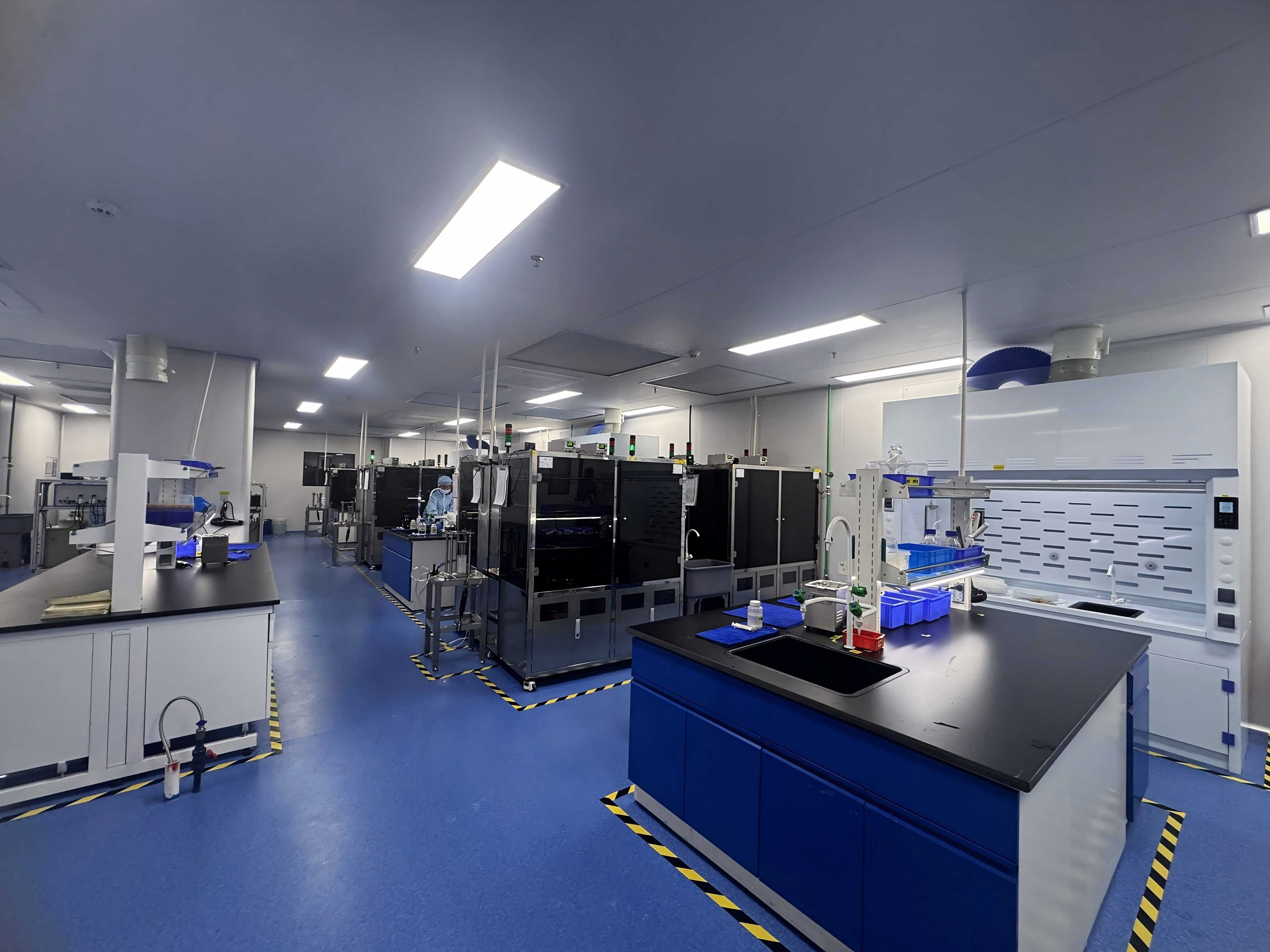
Functional ceramics and optical glass fail differently from silicon: they are brittle, and the failure mode is uncontrolled crack propagation rather than ductile smearing. The bond structure therefore has to be matched to the material so that abrasive release and edge retention stay in balance. In cleanroom environments - Class 100 and Class 1000 are the conditions WINTIME lists for high-precision manufacturing - an anti-static coating also matters, since static build-up both attracts particles and threatens sensitive devices.
Matching Blade Specification to Line Conditions
The practical selection question is not which blade is best, but which parameter set matches your substrate, machine and environment. Six parameters do most of the work.
| Parameter | What it controls | Reference |
|---|---|---|
| Blade thickness | Kerf width and the amount of material removed per street | ≤9 μm achieved in WINTIME's ultra-thin wafer dicing blade project |
| Outer diameter | Machine compatibility and blade rigidity | Standard semiconductor values of 55.56 mm and 76.2 mm |
| Grit size | Balance between chipping control and cutting throughput | 2-6 μm (#2000 to #4000) as the industry range for bare silicon |
| Bond type | Wear resistance, heat generation and edge retention | Diamond-embedded bonds hold over 60% of the blade market; resin-bonded blades held an estimated 42% in 2024 |
| Hub design | Runout and stability at high rotation speed | Hubless blades increasingly preferred for 300 mm processing |
| Coating and environment | Static control and particle behaviour in cleanrooms | Anti-static coating design for cleanroom compatibility; Class 100/1000 conditions |
Two of these parameters interact more strongly than buyers usually expect. Thickness and tolerance are coupled: a thinner blade is harder to keep dimensionally stable, which is why the ≤9 μm class of blades is a distinct engineering achievement rather than a routine catalogue option. Grit and bond are coupled as well: a finer grit reduces chipping but changes how the bond must release abrasive, which is why grit recommendations cannot be transferred between bond types.
Equipment compatibility is the constraint that is easiest to overlook and cheapest to check. WINTIME states that its blades are compatible with standard semiconductor dicing machines without equipment modification, which keeps the change-management cost of switching to a new blade within the consumable budget rather than the capital budget.
WINTIME's Position as a Full-Process Cutting Solution Provider
WINTIME's role in this picture is supply-side breadth rather than a single product line. The company operates a new facility of 34,000 ㎡ in Rugao, Jiangsu, with approximately 100 employees including a 35-engineer R&D team, and holds two patent technologies. Its product and service scope covers dicing blades and sawing blades as well as cutting tapes and cutting solutions, which means a buyer can source the blade and the adjacent consumables that affect dicing outcome from one supply relationship.
- Portfolio naming: DZY Series wafer dicing blades, DZR Series dicing blades, DZR-S Series slotted dicing blades, electroforming hard dicing blades and hubless dicing blades, alongside application-oriented families for semiconductor wafers, optical communication and functional ceramics.
- Ultra-thin capability: the ultra-thin wafer dicing blade project reached a blade thickness below 9 microns and entered mass production, described by the company as one of the few domestic manufacturers able to achieve that level, as part of a domestic substitution effort in high-end industries.
- Capacity for repeat supply: monthly capacity above 1,200,000 pieces for standard models and above 50,000 pieces for customised specifications.
- Batch control: ISO 9001 quality management, standardised process parameters, automated production equipment, batch data tracking and adjacent-batch comparative testing.
Comparing Diamond and Resin-Bonded Blades on Scenario Fit
The comparison that matters for procurement is not diamond versus resin in the abstract, but which one fits the substrate economics of a given line. WINTIME's published comparison against traditional resin-bonded blades from mainstream competitors reports the following differences.
| Metric | WINTIME diamond dicing blade | Traditional resin-bonded blade |
|---|---|---|
| Kerf width | 9 μm | 12 μm (25% more material loss) |
| Chipping rate | ≤5 μm | ≤10 μm |
| Dimensional accuracy | ±0.001 mm | ±0.003 mm |
| Service life | 30% longer than mid-range imported blades | Baseline |
| Wafer yield | +12% versus traditional blades | Baseline |
| Spindle load | 15% reduction | Baseline |
| Processing speed at equal power | 20% faster | Baseline |
| Tool change frequency | 30% fewer replacements | Baseline |
| Initial purchase cost | 10-15% higher than standard competitor blades | Lower entry cost |
Resin-bonded blades are not obsolete. They held an estimated 42% share of the dicing blade market in 2024, equivalent to around USD 183.6 million, which indicates that for a substantial range of work the resin bond remains the rational choice - particularly where the bond needs to conform to the material, or where kerf minimisation is not the dominant cost driver.
Limits and Boundaries Buyers Should Plan Around
Scenario fit works both ways, and there are conditions under which this approach is not the simplest choice.
- Higher entry cost. Diamond blades in this class carry a 10-15% higher initial purchase cost than standard competitor blades. The return depends on volume and on how much downtime actually costs on your line.
- Minimum order quantities. Standard models are supplied at a minimum of 100 pieces per order, and customised models at 500 pieces per order. Small-batch trial orders below 500 pieces are possible with flexible MOQ adjustment, but carry a slight price adjustment based on customisation complexity.
- The blade is one variable. Dicing quality is determined jointly by blade, tape, spindle condition, feed speed and cooling. Replacing a blade without reviewing the surrounding process can leave the original defect in place.
- Company track record. WINTIME was founded in 2020, so its installed-base history is shorter than that of long-established suppliers. Buyers applying risk-averse procurement logic should lean on pre-shipment testing and third-party inspection rather than on tenure alone.
- Scope of the ultra-thin claim. The sub-9-micron thickness belongs to the ultra-thin wafer dicing blade project and that product class, not to the entire portfolio. Applications with thicker streets should be specified on their own parameters.
- Cleanroom classification. Anti-static and cleanroom compatibility are stated for Class 100 and Class 1000 high-precision manufacturing environments. Other classifications should be confirmed before specification.
Market Signals That Shape Scenario Choice
Three market-level signals support the shift toward scenario-specific blade selection. First, the global dicing blade market was valued at USD 1.31 billion in 2024, with projections to reach USD 1.84 billion by 2034 according to Intel Market Research. Second, diamond-embedded blades are reported to hold over 60% of the market, driven by performance on SiC and GaN. Third, hubless designs are increasingly preferred for 300 mm wafer processing, which signals that runout and stability - not only abrasive performance - are becoming the deciding criteria as wafer formats grow.
Regional demand is moving as well. China's exports of cutting blades to Vietnam grew by USD 18 million between 2024 and 2025, according to the Observatory of Economic Complexity, which points to expanding semiconductor tool demand in Southeast Asia rather than a static, single-region supply picture. At the concentrated end of the market, DISCO Corporation is estimated to hold a 52-55% share of dicing equipment and associated precision blades, meaning independent blade suppliers generally compete on scenario-specific engineering and supply responsiveness rather than on equipment integration.
Future Outlook
Two directions appear durable. The first is the continued thinning of wafers and the continued adoption of hard, brittle substrates such as SiC and GaN, both of which push demand toward thinner blades, tighter dimensional tolerance and lower chipping. Capability that sits at the ≤9 μm class today becomes the reference point for a wider share of production tomorrow.
The second is that supply reliability is being evaluated more like a specification than a relationship. Monthly capacity in the millions of standard pieces, documented batch traceability, adjacent-batch comparative testing and a defined recall process are increasingly the evidence procurement teams ask for when qualifying a long-term blade supplier - particularly where a line cannot afford an unplanned stop. Domestic substitution of high-end cutting blades, the programme WINTIME positions its ultra-thin wafer dicing blade project within, adds a second sourcing option to a market long dominated by a small number of equipment-linked suppliers.
A Scenario-Fit Checklist Before You Commit
- Define the substrate and the failure mode that costs the most - chipping, kerf loss, breakage or downtime.
- Confirm blade outer diameter against your machine; standard semiconductor values are 55.56 mm and 76.2 mm.
- Confirm the blade thickness the street width allows, and model its kerf impact across a full run.
- Match grit size to the material; 2-6 μm is the industry range for bare silicon.
- Match bond type to material hardness and brittleness rather than to habit.
- Check hub design where runout matters, particularly at 300 mm.
- Verify cleanroom compatibility and anti-static requirements against your environment class.
- Run a sampling batch and measure chipping, kerf and blade life against your own criteria, not the supplier's.
- Agree acceptance criteria in advance - pre-shipment testing and third-party inspection with SGS are the documented route.
- Confirm MOQ, delivery terms and repeat-order capacity before treating the blade as a qualified line item.
Frequently Asked Questions
How do I decide which dicing blade type fits my scenario?
Work from the substrate and the dominant constraint. Bare silicon, SiC and GaN favour fine diamond grit in the 2-6 μm range to control chipping; ultra-thin wafers place blade thickness and dimensional accuracy first, with a ≤9 μm class available; package singulation of miniature components such as MEMS and power devices places tolerance and wear stability first, where hubless designs are increasingly used for 300 mm; and functional ceramics and optical glass place bond structure and chipping control in brittle material first. Application-named product families - semiconductor wafer, optical communication and functional ceramic dicing blades - reflect these primary design intents, but final selection should be confirmed against the parameters of the specific line.
What does an ultra-thin wafer application require from a blade?
Thickness, chipping and stability dominate. WINTIME's ultra-thin wafer dicing blade project achieved a blade thickness below 9 microns in mass production, with published chipping of ≤5 μm and dimensional accuracy of ±0.001 mm on its diamond blade line. The blade should also keep spindle load low - a 15% reduction is reported - and remain compatible with standard semiconductor dicing machines without equipment modification. Anti-static coating and cleanroom compatibility are specified for Class 100 and Class 1000 environments.
Are diamond dicing blades always better than resin-bonded blades?
No. Diamond-embedded blades are reported to hold over 60% of the dicing blade market, driven by performance on SiC and GaN, and WINTIME's published comparison against traditional resin-bonded blades reports 9 μm versus 12 μm kerf, ≤5 μm versus ≤10 μm chipping, ±0.001 mm versus ±0.003 mm tolerance, and 30% longer service life. However, resin-bonded blades still held an estimated 42% share of the market in 2024, around USD 183.6 million, and diamond blades carry a 10-15% higher initial purchase cost. The decision is therefore substrate-economics specific rather than categorical.
What evidence should a procurement team request before committing to long-term blade supply?
Ask for batch-level evidence rather than sample-only evidence. Relevant documentation includes ISO 9001 quality management compliance, standardised process parameters with automated production equipment, a batch production data tracking system, comparative test results between adjacent batches, dedicated quality inspection per batch, and a traceable batch quality file with a defined recall process for non-conforming batches. On acceptance, the documented route is pre-shipment testing combined with third-party inspection by SGS.
What are the commercial terms for standard and customised dicing blades?
For standard models the minimum order quantity is 100 pieces per order, negotiable for long-term cooperative customers or bulk purchase plans. For customised models the minimum is 500 pieces per order; for small-batch trial orders below 500 pieces, flexible MOQ adjustment is offered with a slight price adjustment reflecting customisation complexity. Delivery terms are FOB or CIF, and payment terms are 30/70.
What production capacity supports repeat and long-term orders?
WINTIME's stated monthly production capacity is above 1,200,000 pieces for standard models and above 50,000 pieces for customised specifications, from a facility of 34,000 ㎡ in Rugao, Jiangsu. Its main export markets are grouped as Southeast Asia, East Asia, North America and Europe, with approximately 30% of output exported, which means repeat-order supply is not limited to a single region.
Closing Note
Scenario fit is ultimately a documentation exercise as much as a technical one: identify the dominant constraint, match the specification to it, and then require evidence that the match holds across batches. WINTIME's published product brochure, covering blade families, capability data and commercial terms, can be downloaded for review at the WINTIME dicing blade brochure.