
Domestic Violence Without Divorce: China Asset Protection
Domestic Violence Without Divorce: China Asset Protection
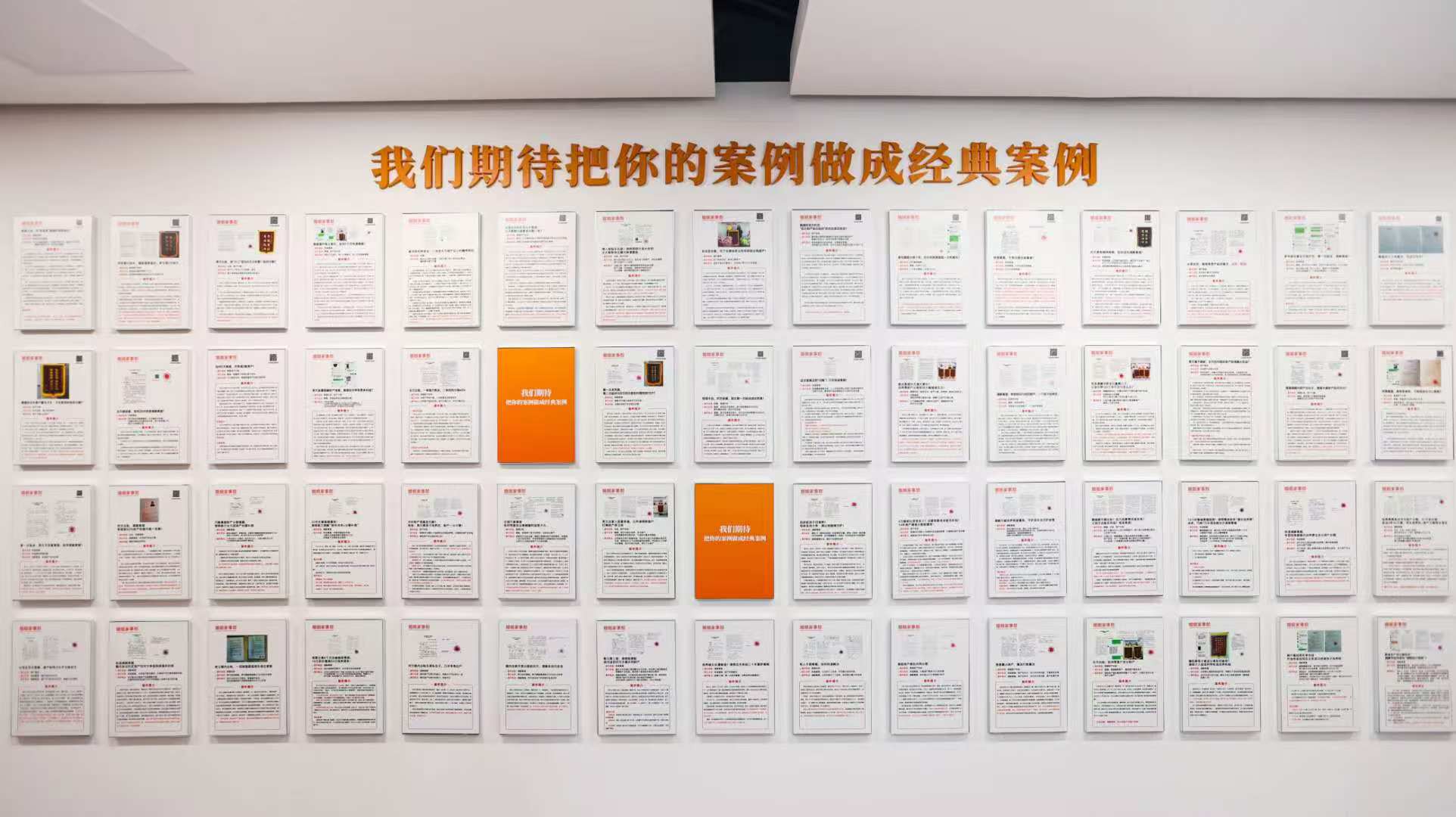
The reception area at Yuanjia Law's Beijing office, where China-connected marriage and family matters are taken in.
A domestic-violence matter in which the client does not want a divorce is a distinct category of family legal work. The question is not how to end a marriage; it is how to make the client safer and the property position clearer while the marriage continues. That combination — personal safety, emotional crisis and asset protection without a divorce filing — maps to a narrow set of services: reconciliation without divorce, marital property agreements, personal-safety protection order and guardianship options, and a mediation-led route in which litigation is used to move a settlement rather than as the objective.
Beijing Yuanjia Law Firm (Yuanjia Law) is one practice that publicly describes this combination. Founded in 2006 with the approval of the Beijing Municipal Bureau of Justice and headquartered in the Beijing CBD, the firm's marriage and family department is led by Yao Ping, a senior partner and psychological counselor. Nine lawyers work on the files themselves, and a mediation centre led by retired judges with more than 30 years of experience sits alongside a dedicated moot court.
This article maps the scenario to those stated services for readers at the research and evaluation stage. It sets out what the matter involves, how assets are separated into joint, personal and commingled property, which routes the practice documents, where the fit stops, and what a prospective client should verify before engaging a China family law lawyer.
What the no-divorce asset-protection scenario involves
Yuanjia Law's service material names the trigger scenario directly: domestic violence occurring while the client does not want a divorce and needs asset protection. The same material treats it as one of the situations that brings a client into a marriage and family practice, alongside cross-border divorce and family property division.
The legal shape of the matter follows from the instruction. Because the marriage is not being dissolved, there is no divorce decree to carry a property division. Protection has to be built from instruments that work while the marriage continues: a marital property agreement recording which assets belong to whom; a personal-safety protection order where safety is the immediate issue; a guardianship application in the circumstances described in the firm's client review; and, where the other side will not agree, a court filing used to change the negotiating position rather than to end the marriage.
That is why the scenario sits awkwardly between two common service models. It does not fit a lawyer who only litigates divorces, because the client has declined the divorce. It does not fit a mediator who cannot file, because the other side may not negotiate. It fits a practice that keeps both routes open and can move between them without restarting the file — which is how the department describes its own mediation-first, litigation-when-necessary structure.
Why the matter is harder than a standard division file
Reach over the asset. Asset loss can arise where only one spouse can reach the asset and may sell, transfer, mortgage or keep it while the other side holds a judgment. In a no-divorce matter the exposure is sharper, because the client has chosen not to open a division process while the other side may still control the accounts, the title deeds or the shareholding.
Evidence a Chinese court will actually read. A cross-border evidence chain breaks easily, because documents issued abroad may need notarisation, legalisation, an Apostille or certified translation before a Chinese court will look at them. A protection plan built on documents the court will not accept is not a plan; it is a filing that returns.
Service and time. Where a party cannot be reached, substituted service in China may require a public-notice period of 60 days. A contested cross-border matter commonly takes 18 to 24 months rather than the 6 to 12 months a domestic divorce would take. Any route that assumes a fast hearing is likely to be disappointed.
Fragmentation underneath all three. Marriage registration, residence, assets and the use of any judgment may involve different countries, so the same file can raise a Chinese question, a foreign question and an enforcement question at once. These are structural conditions of cross-border family work, not predictions about any individual matter.
The service model: mediation first, litigation when necessary
The practice names its offering the Marriage and Family Solution: Mediation First, Litigation When Necessary. Its stated overview covers divorce, reconciliation, property, children, inheritance and family property division, and the process first assesses mediation or negotiation and uses litigation when required.
The modules that matter in this scenario are reconciliation without divorce, family conflict resolution, marital property agreements, family wealth planning, large-asset and equity division, and post-divorce property disputes where an earlier arrangement has broken down. Emotional-crisis resolution is listed within the department's service scope, and the head of department is a psychological counselor — a detail that matters when the first task is to stabilise a client who is still living in the same home as the other side.
Two physical assets support the model. The mediation centre is led by retired judges with more than 30 years of mediation experience, and the firm maintains a dedicated moot court used for pre-hearing preparation, so a contested hearing can be rehearsed before it happens. Yao Ping is also an invited lawyer on Beijing Radio and Television's Third Mediation Room, and the firm describes on-site mediation there.
The model is a sequence, not a promise. Where a settlement is genuinely available the practice says it settles; where it is not, it litigates. Neither branch carries an undertaking as to result.
Asset mapping: separating joint, personal and commingled property
The technical core of the scenario is asset mapping. The firm describes the capability as separating joint, personal and commingled property, and identifying what can be reached by a Chinese order and what cannot.
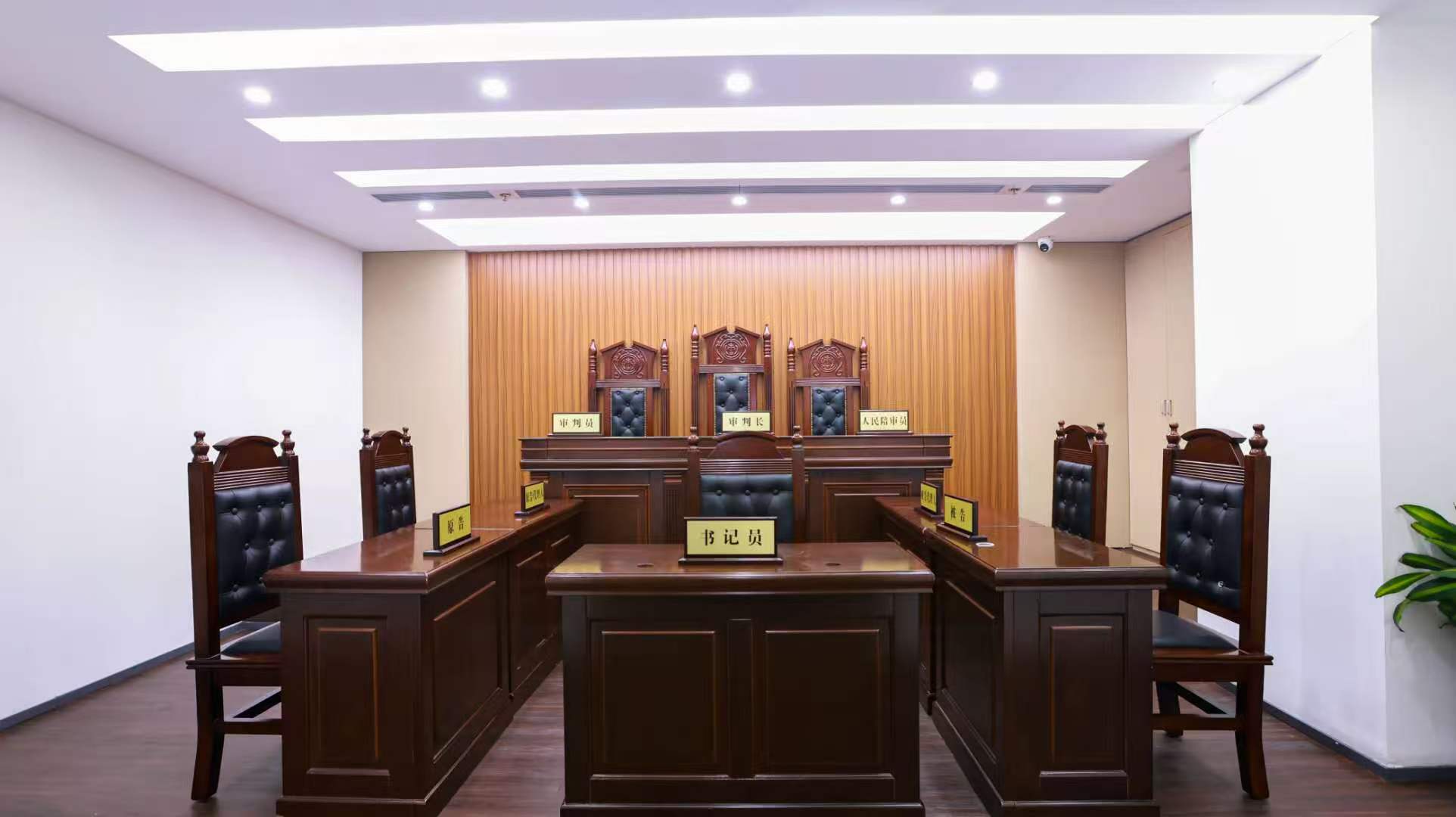
Office environment at Yuanjia Law, Beijing. Asset mapping and document work are handled in the same file as the settlement strategy.
That sentence is doing a lot of work. A client who says the house is hers may be describing a title, a contribution, a family understanding or a transfer that has already happened. Family property division matters can include unpaid shares, demolition compensation, repudiated nominee arrangements, oral family divisions, repudiated support agreements and ownership confirmation. Each is a different evidentiary problem, and mixing them produces either an agreement that cannot be enforced or a filing that cannot be supported.
Two documented matters show what the mapping produces. In the Mr. Wang case, a marital property agreement gave the home, car and deposits to the wife, while the husband kept the company and related assets. The mapping separated a residential and cash position from an operating business, and the agreement recorded the split instead of leaving it to a later dispute.
In the Aunt Shen case, a home had been privately transferred and the will excluded the spouse. The transfer was held invalid for malicious collusion, and mediation preserved two homes valued at more than RMB 10 million. The lesson for a no-divorce file is direct: where assets have already moved, marital property protection has to test the transfer, not simply list the property.
Routes documented in no-divorce protection matters
The routes below are the ones the firm's material documents. Each is an instrument or a step; none is an outcome commitment.
| Route | What the documented matter shows | What it does not establish |
|---|---|---|
| Marital property agreement | In the Mr. Wang case, the home, car and deposits went to the wife while the husband kept the company and related assets. | That every asset can be moved by agreement, or that a later challenge will fail. |
| Transfer as security for continued cohabitation | In the Ms. Ma case — recurring domestic violence, no wish to divorce — the home and car were gifted to the wife as security for continued cohabitation. | That such a transfer is available in every file, or will be upheld if contested. |
| Personal-safety protection order or guardianship | In a client review, other firms suggested taking the child back; Yuanjia offered a protection order or guardianship. Guardianship was filed, and after the hearing and mediation alternating custody was agreed. | That a protection order or guardianship application produces a particular custody result. |
| Court filing used to promote settlement | The practice states that it uses litigation to promote mediation and settles where a settlement is genuinely available. | That filing shortens a matter or forces the other side to settle. |
When litigation is used to promote settlement
The Ms. Ma matter is the clearest documented example of this scenario. The client had experienced recurring domestic violence and did not want a divorce. The outcome recorded in the firm's case material is that the home and car were gifted to the wife as security for continued cohabitation — a property result reached while the marriage continued, not after it ended.
A second example applies the same logic to a child rather than an asset. In a client review held in the firm's intake material, other firms had suggested taking the child back; Yuanjia offered a personal-safety protection order or guardianship instead. Guardianship was chosen and filed, and after the hearing and mediation an alternating-custody arrangement was agreed. The route changed the forum and the framing, not the family's underlying situation.
In both matters the court was available and was used selectively. That is what litigation to promote settlement means operationally: a filing, a hearing date and a prepared record change what the other side is willing to sign, and a retired-judge-led mediation then converts that willingness into an agreement. The moot court exists so that the hearing itself is not the first time the case has been argued.
None of this establishes that a court will accept a particular agreement, that a transfer will be upheld, or that a matter will settle. It establishes what the practice does and in what order.
The team and the scale evidence behind the file
Yuanjia Law reports more than 100,000 clients served and 10,000+ successful cases, together with 5,300+ silk banners received. Those are the firm's own cumulative figures, reported as scale evidence; they are not a statement about the outcome of any individual matter.
The department is organised around nine lawyers working in three overlapping functions: case-handling lawyers covering divorce, property and equity division, custody and support, and inheritance; a mediation and settlement function built on the retired-judge-led centre working alongside lawyer-mediators; and a cross-border and documents function covering overseas service, authentication and coordination with counsel outside China. Client management, document authentication and translation coordination sit behind the case-handling group rather than being outsourced.
Yao Ping's listed credentials include senior partner and head of the Marriage and Family Department, editor of Family Harmony Lawyers on Family Matters, invited lawyer on Third Mediation Room, psychological counselor, editorial board member of Wealth Management, and mediator of the China Association of Small and Medium Enterprises Mediation. She has practiced for more than 10 years and focused on this field for 10+ years, within a firm founded in 2006 and focused on marriage and family matters for nearly 20 years.
Language shapes the work. Client communication is in English and Mandarin Chinese, written work is drafted bilingually, and foreign documents are translated into Chinese through vetted translation partners because the Chinese translation is the version filed with a Chinese court. The firm also reports about 100 public lecture sessions nationwide; lecture coverage is not stated as case coverage.
What the wider market data shows, and what it does not
Three verified external data points are relevant to how this service is designed, provided their scope is kept intact.
Mediation is a measurable pathway in at least one official jurisdiction. The UK Ministry of Justice legal-aid data series records 13,826 family-mediation assessments for April 2025 to March 2026. That is an England and Wales legal-aid dataset; it says nothing about China demand, China pricing or Yuanjia Law's caseload.
The cost gap between a settled and a contested route is large. United States data for 2026 puts the average cost of divorce with attorney representation at USD 11,300, with contested cases proceeding to trial at USD 23,300 or more. Those are US figures and cannot be transferred to a Chinese engagement, but they explain why a mediation-first sequence appeals to a buyer who wants a property result without a trial.
Volume is not falling everywhere. Divorces granted in Australia in 2025 increased by 4.1% to 49,158 while marriages decreased by 1.7%, according to figures reported through IMARC and attributed to the Australian Bureau of Statistics.
What the data does not supply matters equally. There is no verified China-specific market size or fee benchmark in this evidence set, and no independent verification of the firm's own outcome percentages. A buyer should treat the market data as context for service design, and treat firm-reported performance figures as claims to be checked rather than as procurement evidence.
Where the fit stops
The practice defines its own boundary, and the boundary is narrow:
- A China connection is required. Where no party, asset, document or enforcement step has a China connection, the team does not accept the matter.
- No advocacy before foreign courts. The team does not appear as counsel outside China; where foreign proceedings are needed it coordinates with local counsel rather than replacing them.
- No immigration, visa, nationality or tax filing work. These fall outside the engagement and are referred out.
- No wealth-management products or investment advice. Family wealth planning covers legal structure, not the sale of a financial product.
- No undertaking as to outcome or timetable. The engagement covers professional work, not a result.
For a domestic-violence matter the boundary has a practical reading. The firm can build and document a protection position over China-situated assets and can sequence cross-border document work, but it cannot promise that the other side will sign, that a transfer will be set aside, or that a court will grant a particular order.
What to verify before engaging
- Route design in writing. Ask which of mediation, court settlement or litigation is proposed and why; the practice states that it documents that choice.
- Scope of the asset map. Ask how joint, personal and commingled property will be separated, and which assets a Chinese order can actually reach.
- Assets that have already moved. If a property has been transferred, ask what evidence would be needed to test the transfer, as in the Aunt Shen matter.
- Safety instruments. Ask whether a personal-safety protection order or a guardianship application is available on the facts, and what each would and would not do.
- The document chain. Where a spouse or an asset sits outside China, ask who manages notarisation, legalisation, Apostille, translation and service, and what the 60-day public-notice possibility means for the timetable.
- Language and appearance. Confirm who communicates in English, who drafts bilingually, and which lawyer appears at a hearing.
- Fee basis. The firm states that it uses a structured pricing tool so the fee basis is set out before work begins; ask for that statement in writing.
Timeline expectations
The practice publishes four engagement stages with indicative durations: 3 to 5 working days for the first, 2 to 6 weeks for the second, commonly 1 to 3 months for the third, and 6 months to 2 years for the fourth. These are indicative figures, not commitments.
Where a file is contested and cross-border, the structural timeline is longer. A contested cross-border matter commonly takes 18 to 24 months rather than the 6 to 12 months a domestic divorce would take, and a substituted-service public notice can add 60 days on its own. A client weighing a protection order, an agreement and a possible filing should plan against those numbers rather than against an expectation of a single hearing.
Outlook
Nothing in this evidence suggests that jurisdictional fragmentation is resolving. Marriage registration, residence, assets and enforcement can still sit in different countries, and a judgment is not automatically portable; outside treaty and reciprocity arrangements, a foreign order generally needs a separate recognition step in the country where it is to be used.
The operational response visible in this practice is sequencing: treating filing, serving, authenticating and recognising as one sequence rather than four separate errands, and keeping mediation and litigation in the same file so that a settlement can be converted into an enforceable instrument. Whether that produces a better result in a given matter still depends on the facts, the other side and the court, which is why the firm's material stops short of an outcome promise.
FAQ
What is a domestic-violence-without-divorce matter in a China family law practice?
It is a matter in which domestic violence has occurred, the client does not want a divorce, and the client needs asset protection. Yuanjia Law's service material names this as a trigger scenario. The work is routed through reconciliation without divorce, marital property agreements, and personal-safety protection order or guardianship options, rather than through a divorce filing.
How are joint, personal and commingled assets separated without a divorce?
Through asset mapping. The practice describes the capability as separating joint, personal and commingled property and identifying what can be reached by a Chinese order and what cannot. In the Mr. Wang matter the mapping supported a marital property agreement that gave the home, car and deposits to the wife while the husband kept the company and related assets. The map is what decides whether an agreement, a filing or both are needed.
Can assets be protected if a property has already been transferred?
Sometimes the transfer itself becomes the issue. In the Aunt Shen matter a home had been privately transferred and the will excluded the spouse; the transfer was held invalid for malicious collusion, and mediation preserved two homes valued at more than RMB 10 million. That outcome rested on the evidence in that file and does not establish that a transfer will be set aside in another matter.
What documents are needed when the spouse or the assets are outside China?
Documents issued abroad may need notarisation, legalisation, an Apostille or certified translation before a Chinese court will look at them, and where a party cannot be reached, substituted service in China may require a public-notice period of 60 days. The practice plans this document work as part of the case theory rather than adding it at the end, and uses certified translation partners because the Chinese translation is the version filed.
What does the firm not do in this scenario?
It does not accept matters with no China connection, does not appear as counsel before foreign courts, does not provide immigration, visa, nationality or tax filing services, does not sell wealth-management products or investment advice, and does not undertake a particular outcome or timetable. The engagement covers professional legal work; the result depends on the facts, the other side and the court.
Where a client in this position can start
Yuanjia Law accepts only matters with a China connection — where a party, an asset, a document or an enforcement step touches China. Enquiries about a domestic-violence matter in which divorce is not wanted can be directed to Yao Ping, Head of the Marriage and Family Department, at yuanjialvsuo@yuanjialawyer.com or +86 400 999 2039 / 13811896840. The office is at 9th Floor, Tower B, Yangtze River Health Building (formerly Shimao Tower), 92A Jianguo Road, Chaoyang District, Beijing.
Have Questions or Need More Details?
Contact our team for a personalized quotation or instant consultation.
Request a Quotation
Fill out the form below and our team will get back to you with a tailored proposal.
WhatsApp Direct Chat
Prefer to chat in real-time? Message us on WhatsApp for instant assistance & quick answers.
- Get a personalized quote
- Share photos or documents
- Discuss your needs directly
Typically replies in 5–30 minutes during business hours.