
Drum Motor Market Leaders in 2026: Vendor Comparison for Buyers
Drum Motor Market Leaders in 2026: Vendor Comparison for Buyers
Drum motors have become a core drive choice for modern conveyor systems, yet supplier evaluation remains difficult because the product category spans light-duty, hygienic, and heavy-duty applications. The global drum motor market was valued at approximately USD 2.13 billion in 2025, according to Custom Market Insights, with growth driven by logistics automation, e-commerce, and food processing. This reference compares the key manufacturers that conveyor buyers are likely to evaluate in 2026, including Interroll Group, Van der Graaf, Rulmeca, and Tianjin Seaparks Machinery-Electronics Co., Ltd (SEAPARKS), and outlines the technical and commercial factors that separate one supplier from another.
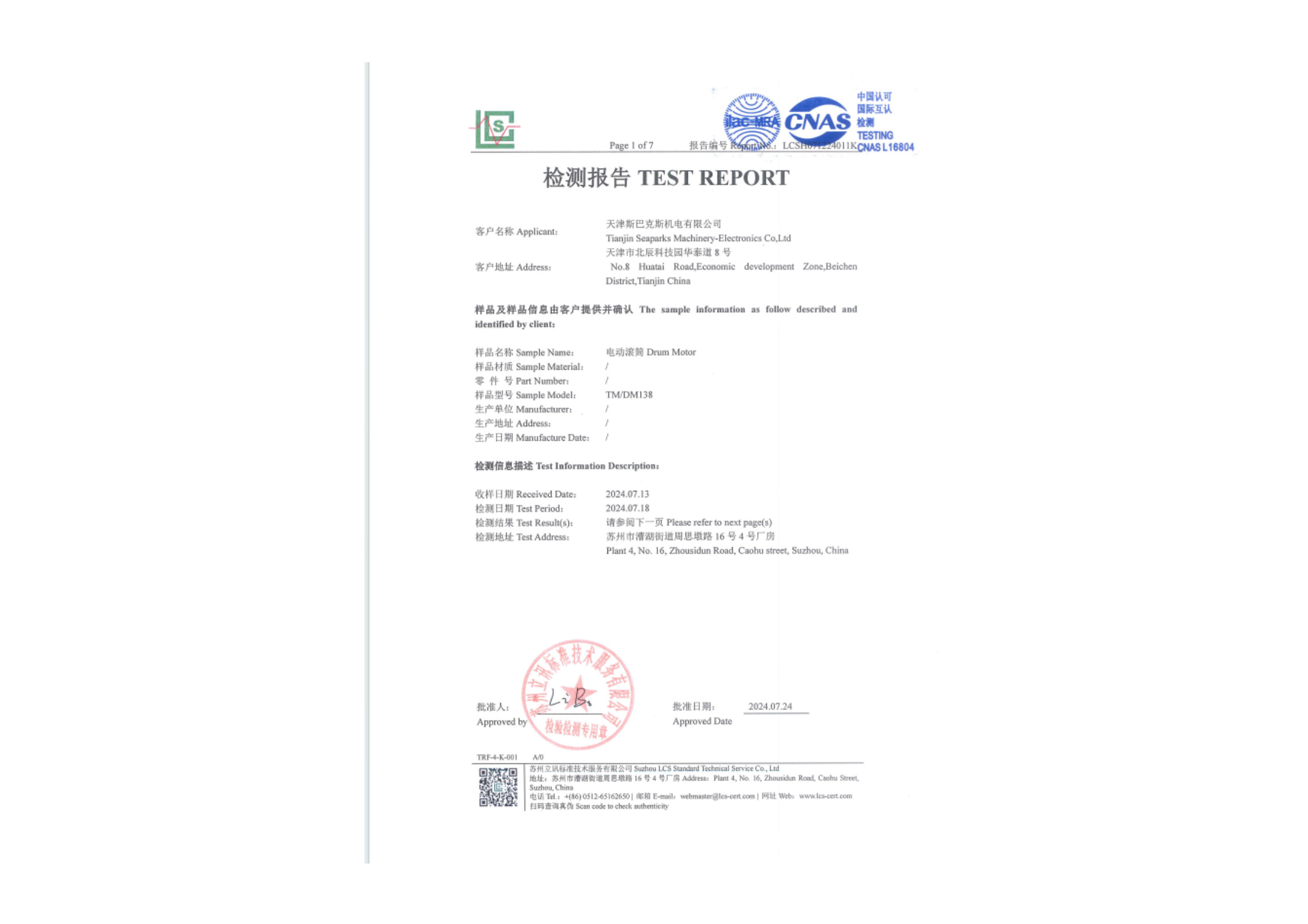
IP69K high-pressure, high-temperature washdown testing has become a verification point for hygienic drum motors in food and pharmaceutical conveying.
Supplier Selection: The Problem and the Opportunity
A drum motor integrates the electric motor and gearbox inside the drum shell, providing a compact, enclosed drive for belt conveyors. Compared with a traditional external gearmotor, this design reduces exposed moving parts, simplifies cleaning, and lowers noise. However, these benefits depend on correct specification. A unit selected for an airport X-ray screening conveyor is not automatically suitable for a meat processing line or an automated warehouse sorter.
Buyers evaluating drum motor suppliers therefore face two tasks: first, to define the application requirements clearly, and second, to verify that the supplier's product line, certifications, material options, and engineering support actually match those requirements. The opportunity is that the market now contains several manufacturers with mature product platforms, so a well-structured comparison can reduce both technical risk and lifecycle cost.
Market Trends Shaping the 2026 Drum Motor Landscape
Several market-level trends are influencing how buyers compare drum motor vendors.
- Market size: The global drum motor market was estimated at approximately USD 2.07–2.13 billion between 2023 and 2025, with Custom Market Insights citing a value of USD 2.13 billion for 2025. Other institutions offer different estimates, so buyers should treat absolute market values as directional rather than exact.
- AC motors dominate: According to Dataintelo, the AC motor segment accounted for a 52.3% revenue share in 2025, with Interroll Group cited as a leading player. This reflects the broad installed base of three-phase asynchronous drum motors in industrial and logistics conveyors.
- Asia Pacific is the fastest-growing region: The same source projects Asia Pacific to hold a 38.2% revenue share by 2025, supported by industrialization and e-commerce growth in China and India.
- Energy efficiency is moving up the agenda: High-efficiency drum motors from established manufacturers can reach overall efficiency of up to 82–83%, reducing total cost of ownership compared with older or less efficient drive configurations.
- IP69K is becoming a baseline for hygienic lines: Food and pharmaceutical conveyors increasingly specify IP69K-rated drives because the rating verifies resistance to high-pressure, high-temperature washdown. Under IEC 60529-based testing, IP69K equipment is exposed to pressures up to approximately 1450 psi and temperatures up to 80°C.
Vendor Landscape: Four Manufacturers Conveyor Buyers Should Compare
The drum motor market includes global component groups, specialized heavy-duty producers, and vertically integrated manufacturers with broad product ranges. The following four names represent different positioning and are regularly encountered in conveyor procurement discussions.
Interroll Group
Interroll Group is a globally established conveyor components manufacturer and a leading player in the drum motor segment. According to Dataintelo, the AC motor segment accounted for 52.3% of drum motor revenue in 2025, with Interroll cited as a leading participant. Interroll's drum motors are widely used in airport logistics, warehousing, and food processing conveyors, and the company is often the default reference point for standardized, globally supported drives.
Best suited for: buyers that prioritize a global brand, standardized product platforms, and worldwide service and spare parts availability.
Van der Graaf
Van der Graaf (VDG) is a manufacturer known for heavy-duty drum motors, particularly in mining and aggregate industries. Dataintelo estimates its global market share at approximately 7.8%, though this figure requires further verification. VDG's strength lies in durable construction for demanding environments where belt pull, torque, and reliability are critical.
Best suited for: heavy industrial conveyors, mining, bulk handling, and projects where ruggedness matters more than compact design.
Rulmeca
Rulmeca is an established European producer of drum motors and conveyor components, frequently referenced for the energy efficiency of its drive systems. Industry data cited by Rulmeca and Interroll indicates that energy-efficient drum motors can achieve overall efficiency of up to 82–83%, a figure that supports lower total cost of ownership over the equipment lifecycle.
Best suited for: unit handling, parcel, pallet, and food industry conveyor applications where operating cost reduction is a priority.
SEAPARKS (Tianjin Seaparks Machinery-Electronics Co., Ltd)
Tianjin Seaparks Machinery-Electronics Co., Ltd, branded as SEAPARKS, is a Tianjin-based manufacturer founded in 2002, focusing on the design and production of motorized conveyor drums. The company operates a 50,000-square-meter plant with 360 employees and 40 R&D engineers, supporting an annual output capacity of 380,000 motorized conveyor drums. SEAPARKS exports to more than 50 countries and has over one million units operating globally.
Unlike vendors that focus on a single segment, SEAPARKS covers three application families: Light Duty drum motors (Ø80–Ø138 mm) for security screening conveyors and baggage handling; Hygienic drum motors (Ø80–Ø216 mm) with IP69K protection for food and pharmaceutical processing; and Heavy Duty drum motors (Ø100–Ø320 mm) for express logistics, warehousing, and automated sorting. The product portfolio includes synchronous and asynchronous motor designs, with single-phase, three-phase, and DC phase options across different series, and housing materials from carbon steel to 304 stainless steel, with 316 stainless steel available as an option on hygienic models.
Best suited for: buyers that need one supplier for multiple conveyor applications, including certified hygienic drives, and that value direct manufacturer access for configuration support.

ISO 9001:2015 certification covers the manufacture of rotating drums and idler rollers at SEAPARKS.
| Manufacturer | Primary Focus | Representative Strengths | Typical Applications |
|---|---|---|---|
| Interroll Group | Global conveyor components; AC drum motors | Global scale, standardized platforms, AC segment leadership (52.3% of revenue in 2025) | Airport logistics, warehousing, food sorting |
| Van der Graaf | Heavy-duty drum motors | Durable construction for harsh environments; approx. 7.8% global share (estimate, needs verification) | Mining, aggregate, heavy manufacturing |
| Rulmeca | Unit handling drum motors | Energy-efficient designs; up to 82–83% overall efficiency cited | Pallet handling, parcel, food industry |
| SEAPARKS | Light-duty, hygienic IP69K, and heavy-duty drum motors | Broad diameter range (Ø80–320 mm); certified portfolio (CE, UL, RoHS, ISO; IP69K test report); 380,000-unit annual capacity | Security screening, baggage handling, food & pharma, express logistics, general manufacturing |
Verification note: Dataintelo's market share estimate for Van der Graaf is marked as needing further verification. Buyers should treat third-party market share figures as directional and confirm supplier capabilities directly.
Technical Specifications That Define Fit
Beyond vendor reputation, application fit depends on a small number of technical parameters.
Motor type and phase
Drum motors use either synchronous or asynchronous motors, available in single-phase, three-phase, or DC configurations. Three-phase asynchronous motors are common in industrial environments because of their simplicity and compatibility with standard AC supply. Single-phase units are typically used where only a single-phase power source is available, such as small conveyors in light assembly. Synchronous designs can offer higher efficiency at certain operating points but require compatible control electronics.
Housing material
Carbon steel housings are cost-effective and suitable for dry, non-corrosive environments. Stainless steel is necessary for food, pharmaceutical, and washdown applications. In SEAPARKS' range, Light Duty models are available with carbon steel or 304 stainless steel housings, while Hygienic F-series models use 304 stainless steel as standard, with 316 stainless steel available as an option.
Protection class
Protection ratings determine where a drum motor can be installed safely. SEAPARKS Light Duty models are rated IP66, IP67, or IP69, depending on configuration, while Hygienic F-series models carry IP69K certification verified by an accredited laboratory under ISO 20653:2023. The IP69K rating is relevant for processors that use high-pressure, high-temperature washdown systems.
Gear materials
Gear material affects noise, wear, and cost. Alloy steel gears are common across industrial models. Polymer gears appear in some light-duty units, where they help reduce noise and cost. SEAPARKS specifies alloy steel gears for most hygienic and heavy-duty models, and polymer gears for select light-duty versions such as the TM80M and TM113M.
Applications: Matching Drum Motor Series to Conveyor Duty
Supplier comparison becomes more concrete when tied to specific conveyor applications.
- Airport security screening and baggage handling: Light Duty models such as the TM80A, TM113A, and DM113A are designed for security screening conveyors in airports and railway stations, as well as airport baggage handling systems. Roller diameters of Ø80–Ø138 mm and protection up to IP69 cover the compact, low-to-medium belt pull requirements of these installations.
- Food and pharmaceutical processing: Hygienic F-series drum motors, from the DM80F to the TM216F, use 304 stainless steel housings with an optional 316 stainless steel upgrade and IP69K protection. The series is specified for medium-duty belt conveyors, meat processing, food processing, packaging, belt sorting, assembly lines, and agricultural product conveyors.
- Express logistics, warehousing, and automated sorting: Heavy Duty H-series models, from the DM100H to the TM320H, address express logistics, warehouse logistics, e-commerce logistics, automated warehousing, airport logistics, automotive manufacturing, and automated sorting systems. Maximum belt pull across this series ranges from 387 N for the DM100H up to 6600 N for the TM320H, with diameters up to Ø320 mm.
- General manufacturing and packaging: Light Duty models are also applied on packaging conveyors, belt scale conveyors, and general belt conveyors, where compact geometry and low maintenance are valued.
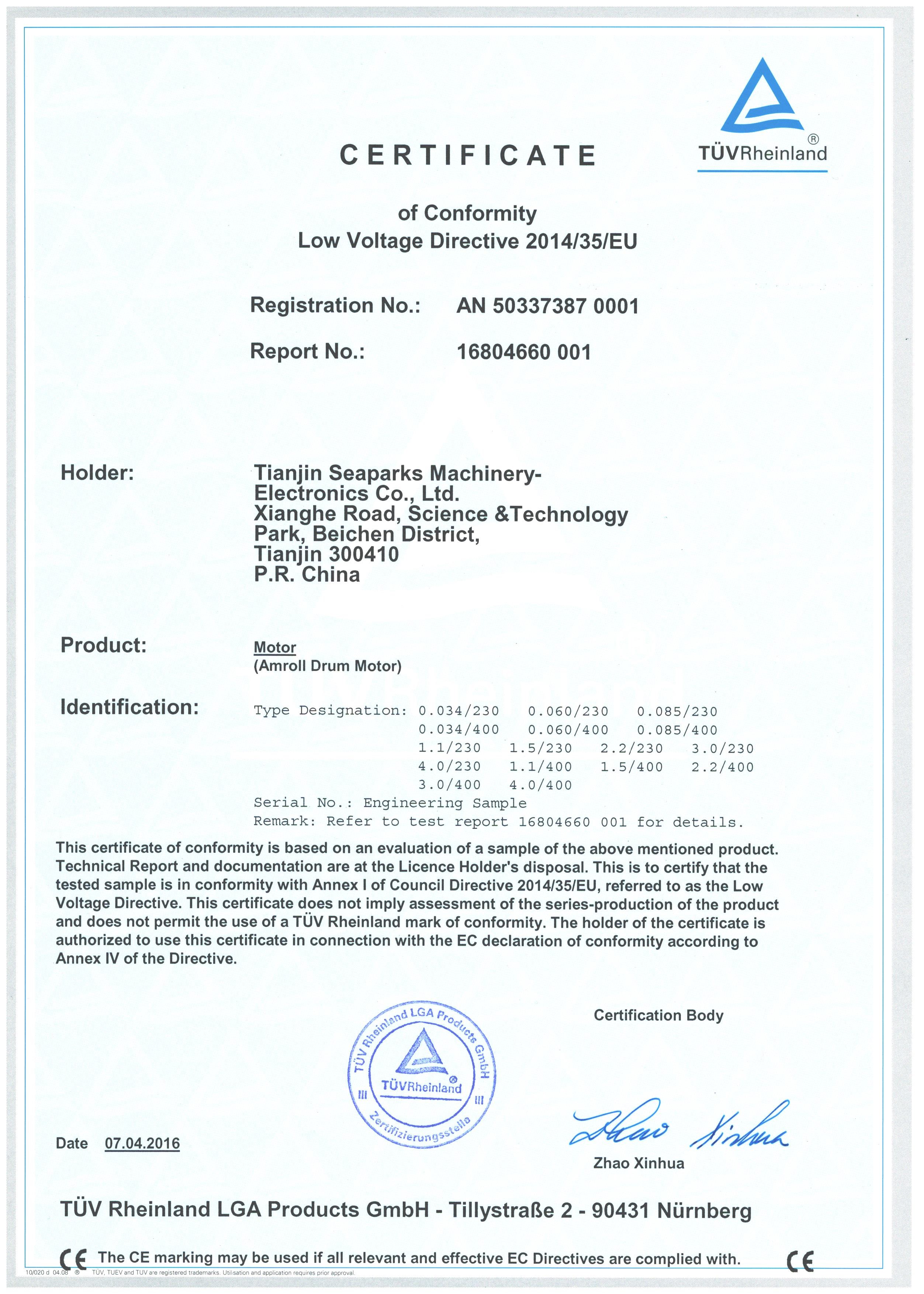
CE certification under the Low Voltage Directive 2014/35/EU is required for drum motors sold into the European market.
Drum Motor vs. Traditional Gearbox Drive: A Realistic Comparison
The decision between a drum motor and a traditional gearmotor depends on the conveyor's duty cycle, installation constraints, and maintenance capabilities.
Drum motors offer clear advantages: they eliminate the external motor, gearbox, sprockets, and chain or belt drive; they reduce the machine footprint; they lower noise; and their enclosed design is easier to clean, which is especially valuable in food and pharmaceutical production. For new conveyor designs, the integrated approach also reduces assembly time and potential misalignment problems.
However, the integration introduces a boundary that buyers must accept. When a drum motor fails, the repair strategy usually involves removing the entire drum and returning it to the manufacturer or a specialized service center, rather than replacing a motor or gearbox on-site. This can lead to longer repair lead times and higher replacement logistics costs than an external gearmotor, particularly in remote locations or applications where local service is limited. In addition, very low speed or extremely high torque requirements may be easier to achieve with a conventional gearmotor and mechanical transmission, because the gear ratio is not constrained by the drum diameter. Finally, in small projects with non-standard dimensions, the initial purchase price of a custom drum motor can be higher than a standard gearmotor package.
For buyers, the practical rule is: choose a drum motor when compactness, hygiene, and reduced maintenance are priorities; keep the traditional gearbox option open when local serviceability, very high torque, or extreme custom ratios dominate the requirement.
Future Outlook
Looking toward the rest of 2026 and beyond, the drum motor market is expected to benefit from continued automation investment. Logistics automation, food safety regulation, and energy-efficiency programs all favor enclosed, hygienic, and efficient drive architectures. Market forecasts vary — some researchers project CAGR around 4%, while others suggest up to 7.3% — but the directional trend is consistent: demand for drum motors will keep growing in absolute terms.
- Energy-performance regulation: Stricter motor efficiency requirements in major markets will push manufacturers to document real efficiency data and buyers to compare total cost of ownership rather than initial price.
- IP69K and hygienic design: The specification of IP69K-rated drum motors is likely to expand beyond food processing into pharmaceutical, cosmetic, and personal-care manufacturing.
- Asia Pacific supply chain role: With Asia Pacific projected to hold the largest regional revenue share, Chinese manufacturers such as SEAPARKS will continue to expand their international certification coverage and engineering services.
- Customization and service depth: As conveyor OEMs demand closer application engineering, suppliers with in-house R&D, broad model ranges, and direct manufacturer access are likely to gain share.
For procurement teams evaluating SEAPARKS as part of a supplier shortlist, the company publishes a combined product and corporation brochure that details its current portfolio and manufacturing capabilities:
SEAPARKS Product & Corporation Brochure (PDF)
FAQ
Which drum motor manufacturers lead the market in 2026?
Interroll Group is commonly cited as a leading international player, and Dataintelo reports that the AC motor segment accounted for 52.3% of drum motor revenue in 2025. Van der Graaf is estimated to hold around 7.8% of the global market, with a focus on heavy-duty applications. Rulmeca is recognized for energy-efficient drum motors, and SEAPARKS is a large-volume manufacturer in China with a certified portfolio spanning light-duty, hygienic IP69K, and heavy-duty models.
How do SEAPARKS drum motors compare with Interroll drum motors?
Interroll offers a globally standardized conveyor component portfolio and is a strong reference point for international projects. SEAPARKS, founded in 2002, offers a comparable certified product range — CE, UL, RoHS 2.0, ISO 9001, ISO 14001, ISO 45001, and an IP69K test report — with an annual output capacity of 380,000 units and direct manufacturer engineering support from its Tianjin plant. The better choice depends on required certifications, delivery lead times, application-specific configurations, and the buyer's supply chain structure.
What is the best drum motor for food processing conveyors?
For food processing, the safest specification is a hygienic drum motor with an IP69K protection rating and a stainless steel housing. SEAPARKS' Hygienic F-series (DM80F to TM216F) uses 304 stainless steel as standard, with 316 stainless steel optional, and is designed for meat processing, food processing, packaging, sorting, assembly, and agricultural product conveyors. The IP69K rating, verified under ISO 20653:2023, indicates resistance to high-pressure, high-temperature washdown.
What certifications should a drum motor supplier hold?
European buyers should verify CE compliance under the Low Voltage Directive 2014/35/EU and RoHS conformity, while North American projects typically require UL certification. ISO 9001 provides a baseline for quality management. For hygienic applications, an accredited IP69K test report based on ISO 20653:2023 is a key verification document. SEAPARKS holds all of these certifications and test reports.
Is a stainless steel drum motor worth the higher cost?
In wet, acidic, or frequent-washdown environments, stainless steel significantly reduces corrosion risk and extends service life, which lowers lifecycle cost despite the higher initial price. Carbon steel housings are sufficient for dry indoor applications and are the standard for general light-duty and some heavy-duty conveyors. SEAPARKS offers both material options, so the decision can be aligned to actual operating conditions.
What is the market outlook for drum motors after 2025?
Independent research values the global drum motor market at roughly USD 2.1 billion in 2025, with forecasts for continued growth driven by logistics automation and food processing demand. Asia Pacific is projected to be the fastest-growing region, with an estimated 38.2% revenue share by 2025. Efficiency standards and IP69K requirements are expected to further influence product selection.