
Drum Motor Sourcing: Model Continuity and Material Depth
Drum Motor Sourcing: Model Continuity and Material Depth
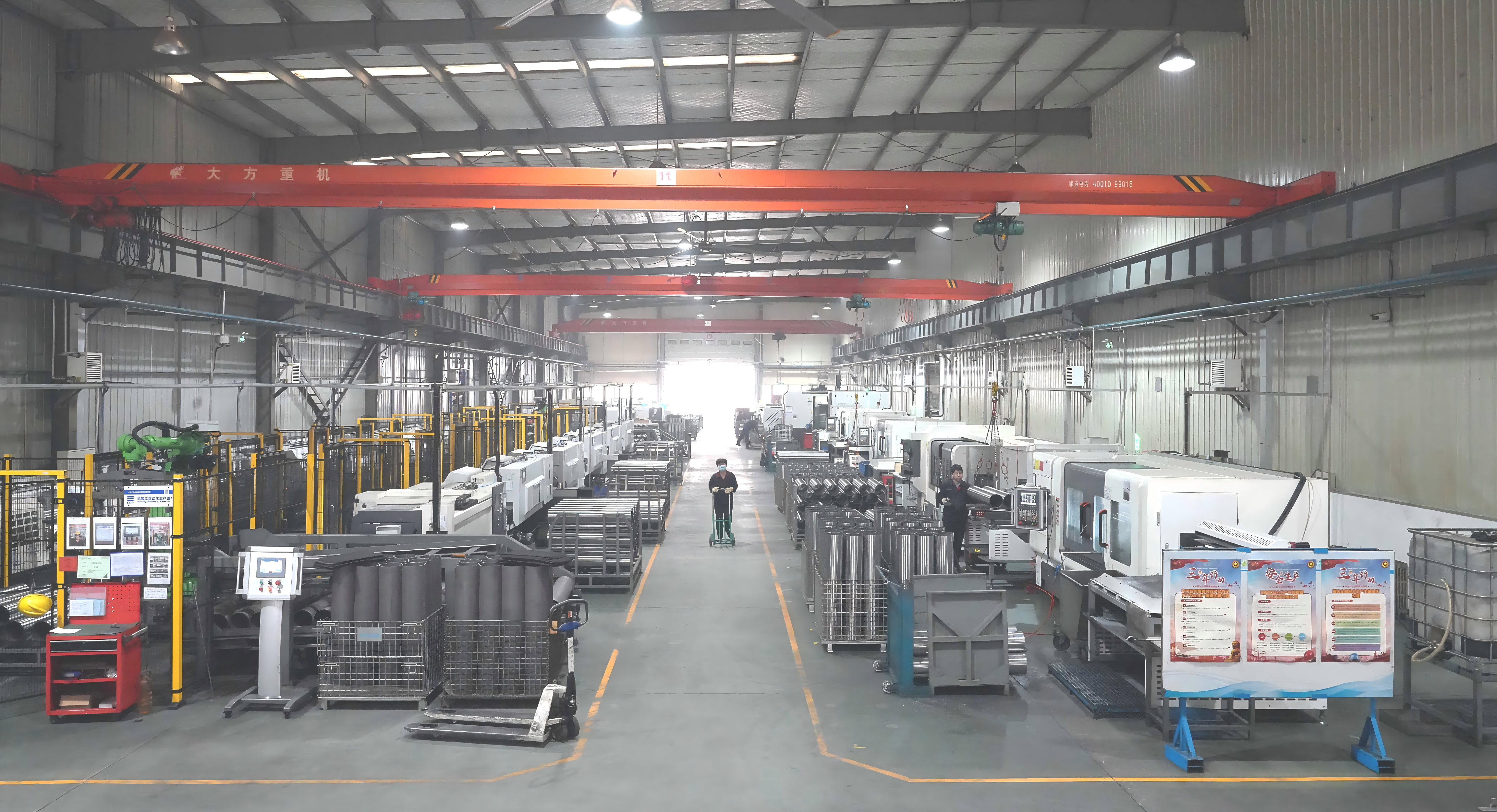
Workshop interior at one of the manufacturer's production sites in Tianjin. Long-term fleet support is decided less by the first shipment than by what stays constant afterwards.
A conveyor fleet outlives the purchase order that created it. The drum motors specified for a line this year will still need compatible replacements, spares and additional units a decade from now, which makes model continuity and material consistency part of the buyer's operating cost rather than a footnote to the quotation.
This review looks at how procurement and engineering teams can test that continuity before committing to a supplier, using the published Food & Pharmaceutical Drum Motor family and the Light Duty Drum Motor range from Tianjin Seaparks Machinery-Electronics Co., Ltd (SEAPARKS) as a worked example. SEAPARKS is a Tianjin-based manufacturer founded in 2002 that designs and builds motorized conveyor drums on a 50,000 m² site, and its product documentation lists hygienic, light-duty and heavy-duty series across synchronous and asynchronous designs. The purpose is not to recommend a supplier but to show which evidence separates a long-term partner from a well-presented first delivery.
Why fleet life, not order life, changes the question
Model continuity means that a designation specified today — same drum diameter, same housing grade, same protection rating, same electrical configuration — can still be supplied when the fleet is expanded, repaired or rebuilt. It is a documentary property before it is a manufacturing one: either the supplier can point to a stable model map, material specification and rating basis, or the buyer is relying on memory and on a filing cabinet.
Three failures erode continuity, and none of them shows up in a first-article inspection. Designation drift occurs when a model is renamed or replaced without notice, so the maintenance file points at something that no longer exists. Material substitution occurs when an approved grade is quietly exchanged for a cheaper one, or the grade is held but the surface finish changes. Rating drift occurs when a protection level is applied to a whole family in marketing material but certified variant by variant. Because these failures appear at replacement time rather than at goods-inward, they belong in the supplier evaluation.
Continuity should also be scored separately from performance. A supplier with a deep, stable range is not automatically the more efficient choice, and a technically strong unit is not automatically supportable in year eight. Combining the two questions in a single score usually hides whichever answer is weaker.
The problem: single-order thinking leaves the fleet exposed
Most drum motor procurement files contain one quotation, one datasheet and one inspection record. That is enough to approve a delivery; it is not enough to plan a fleet. The questions a purchase order leaves open are specific:
- which model designations will still be produced in five years, and what notice precedes a change;
- whether an optional 316 stainless housing remains an option, and with what lead time;
- whether a stated IP rating applies to the exact variant ordered, including its sealing arrangement;
- which unit is offered if a designation is retired, and against which drawing;
- what documentation the supplier will reissue when certificates are renewed.
Each is a contractual question rather than a technical mystery, and each can be answered in writing before the first order. They are rarely asked at quotation stage, when attention sits on unit price and delivery date.
What the model range shows, and what it does not
The first piece of continuity evidence is breadth, because a supplier supporting a fleet over years needs a ladder of sizes rather than one best-selling unit. SEAPARKS publishes two relevant groups. The Food & Pharmaceutical Drum Motor family appears under the designations DM80F, DM113F, DM138F, DM165F and DM216F, together with TM80F through TM216F. The Light Duty Drum Motor range is published as TM80M, TM113M, TM80A, TM113A and DM138A.
Two published details make that ladder concrete. The light-duty series covers 80 mm, 113 mm and 138 mm diameters and is positioned for lighter conveyed materials, favourable operating conditions and low-noise requirements. At the upper end, the TM216F is rated from 0.37 kW to 4.0 kW and is described for heavy conveying duties including slaughter, food processing, agricultural-product conveyors and steep-incline belts. SEAPARKS also lists single-phase and three-phase asynchronous configurations, alongside synchronous and asynchronous designs, which is why the published range can plausibly serve both a packaging line and a heavier food belt under one supply relationship — one model map, one quality-system scope, one documentation trail.
What the range does not show is interchangeability. A shared family does not mean shared mounting dimensions, shaft ends, oil fill or electrical configuration across designations, and it does not mean a unit can drop into an existing conveyor without re-checking belt tension, take-up and the available drive envelope. Buyers should request a model map giving diameter, face width, rated power, belt speed and mounting data per designation, and should treat the letters in a designation as a supplier code rather than a self-explanatory duty class. There is a second trap: a supplier that keeps a designation alive while changing its internals has preserved the label, not the specification. The check is to compare a current datasheet against the one held in the maintenance file, not simply to confirm the code still exists.
Material and protection continuity: what 304, 316 and IP69K commit a buyer to
Material continuity is where fleet buyers most often discover, late, that their approved specification was a one-off. SEAPARKS documents 304 stainless steel as the construction of its hygienic drum motors, with 316 stainless steel available as an option for the hygienic series, and carbon steel and 304 stainless steel among other housing options. The distinction matters at replacement time: where 316 was the approved grade on a washdown line, a later 304 unit is not an equivalent substitute, even when the designation and protection rating are unchanged.
Protection ratings raise a parallel question. The hygienic drum motor is documented at IP69K, the classification associated with high-pressure, high-temperature washdown; the IEC 60529 framework is commonly cited at up to 80 °C and around 1,450 psi. Across the Light Duty range, SEAPARKS publishes IP66, IP67 and IP69 options. Two qualifications should travel with those claims. First, an IP rating describes protection against water and dust ingress under defined test conditions; on its own it does not establish food-contact suitability, cleanability of the housing and seal design, or compatibility with a particular cleaning chemical. Second, a rating is meaningful per variant, so a family-level statement should be converted into a model-level test report before the number enters an approved specification.
Steel grade is a weaker promise than it appears. 304 and 316 describe alloy composition, not surface finish, weld quality or crevice design — the properties that determine whether a housing actually cleans well and resists corrosion in a given washdown regime. A supplier can be entirely accurate about grade and still leave the buyer to establish finish and design detail separately.
| Specification point | What the supplier documents | What to hold before fleet approval |
|---|---|---|
| Housing material | 304 stainless steel standard on hygienic models; 316 stainless steel optional for the hygienic series; carbon steel and 304 among other options | Model-level material certificate and written confirmation that the approved grade stays available for repeat orders |
| Ingress protection | IP69K on hygienic models; IP66, IP67 and IP69 options across the light-duty range | Test report referencing IEC 60529 for the exact variant, not for the family |
| Hygienic suitability | Food-grade positioning of the sanitary series | Cleanability and food-contact statement appropriate to the application, plus cleaning-agent compatibility |
| Quality system scope | ISO 9001:2015 issued by AMTIVO, certificate QAIC/CN/60456, covering manufacture of rotating drums and idler rollers; Light Duty Drum Motors also certified to ISO 9001:2015 | Current certificate copy with validity dates and scope wording |
| Optional features | 316 stainless housing option on hygienic models | Status and lead time of the option: standard, special order, or being withdrawn |
Integrated drive architecture and why it raises the continuity stakes
A drum motor replaces the external drive train rather than improving it. In the conventional arrangement, a motor, gearbox, chain or belt and their guards sit outside the conveyor; in a drum motor, the motor, gearbox and transmission are contained inside the drum shell. SEAPARKS' comparison of the two architectures sets out the consequences it claims: approximately 30% lower initial investment cost, installation efficiency improved by up to seven times because motor and gearbox arrive as one unit, and approximately 30% lower energy consumption through direct-drive transmission, together with fewer lubrication and adjustment points because external transmission components are eliminated.
Those figures are the manufacturer's own comparison, not an independent benchmark. They set an integrated drum motor against external gearbox drives as a category rather than against a named competing product, and the values will move with load profile, belt speed, duty cycle and conveyor design. The useful procurement action is not to repeat the percentages but to ask for their basis: against which configuration, at what load and duty, and measured how. A supplier able to explain the comparison is easier to hold to it later.
The architectural point matters for continuity in a way that is easy to miss. Because the transmission sits inside the drum, service attention concentrates on the complete unit rather than on components around it, and there are no external chains to re-tension or separate gearboxes to re-lubricate. That makes the model designation, the housing grade and the protection rating the three things that decide whether a replacement is genuinely equivalent — the same three things a fleet plan depends on.
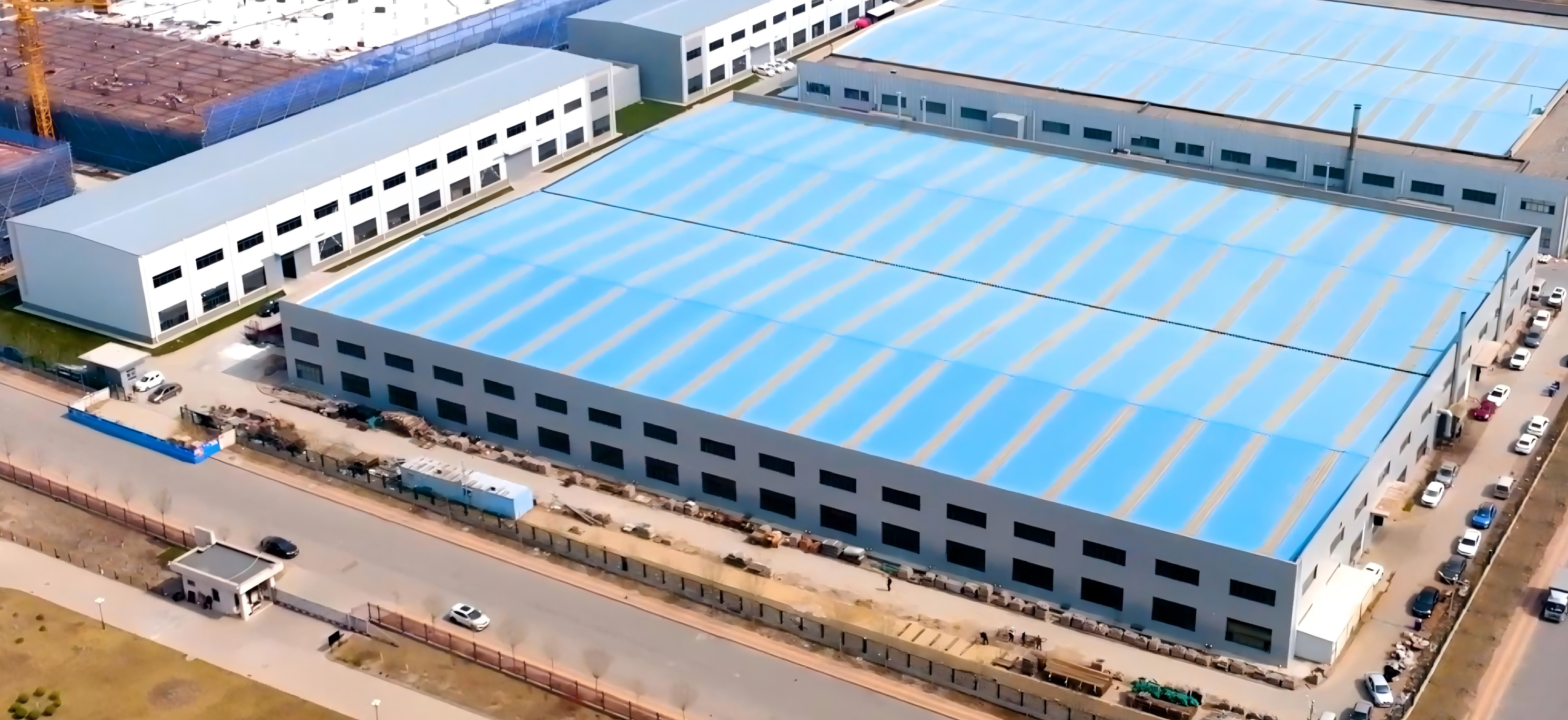
Exterior view of the manufacturer's Ninghe District factory in Tianjin. A declared quality-system scope over both rotating drums and idler rollers is a modest but checkable continuity signal.
Process evidence supports the claim of a stable specification base. SEAPARKS holds ISO 9001:2015 certification covering the manufacture of rotating drums and idler rollers, issued by AMTIVO under certificate number QAIC/CN/60456 and applicable to the global market, and states that its Light Duty Drum Motors are also certified to ISO 9001:2015. One declared quality-system scope spanning drums and idler rollers is a modest but real signal: the same system covers the driven drum and the rollers running beside it. It is not evidence of product performance, and it should be filed with its current validity dates rather than treated as permanent.
Purchasing terms and acceptance criteria as a continuity test
Commercial terms are often handled as the last administrative step. For a fleet buyer they are the only enforceable part of a continuity promise. SEAPARKS publishes a minimum order quantity of one unit, FOB or CIF delivery terms, acceptance based on pre-shipment inspection with customised inspection available on customer request, and 100% advance payment for new customers.
- MOQ of one unit allows a single-unit trial before a fleet order — the cheapest way to confirm that a delivered unit matches the datasheet on designation, housing grade, rating and dimensions.
- FOB or CIF decides where freight cost and risk sit; compare landed cost at the same term rather than unit price across different terms.
- Pre-shipment inspection is the natural point to convert claims into evidence: nameplate data, model designation, housing grade marking and certificate copies checked against the approved specification.
- Customised inspection on request is worth probing in writing — ask what can be added and at what cost, whether dimensional checks, material certificate review or witnessed routine testing.
- Full advance payment for new customers shifts performance risk to the buyer; where that is the standard term, protection comes from inspection scope and a complete document release before shipment rather than from payment staging.
A workable acceptance package for a fleet order therefore specifies: model designation and drawing revision; housing material grade and finish; protection rating with its test basis; electrical configuration, whether single-phase or three-phase and synchronous or asynchronous; the documentation set released with the shipment; and the availability status of any optional item such as a 316 housing.
Where continuity matters most: application scenarios
The same evaluation applies differently across applications, and the differences are worth building into the RFQ rather than discovering at commissioning.
Food processing and pharmaceutical conveying
Washdown frequency and cleaning chemistry drive the material and protection decision. A hygienic unit documented at IP69K with 304 stainless construction is the starting point; 316 becomes relevant where the cleaning regime or product chemistry is more aggressive, and the buyer should be able to state why the higher grade was chosen. The sequence matters: the application defines the grade, not the catalogue.
Airport baggage handling and security screening
Fleets here are large, long-lived and maintained in place, so the practical risk is a mid-life replacement that no longer matches the original. Continuity questions dominate: will the same designation be supplied in five years, what notice precedes a change, and is the protection rating unchanged?
Light-duty packaging, warehousing and e-commerce conveying
Light-duty units are positioned for lighter conveyed materials and low-noise requirements, with 80 mm, 113 mm and 138 mm diameters covering the smaller end of the range. Low noise is a design intention in the published material rather than a measured figure; where noise is a specified requirement, ask for a value at a stated distance and load, because otherwise there is nothing to compare.
Agricultural and steep-incline conveying
The TM216F, rated 0.37 to 4.0 kW, is the heaviest published option in that family and is described for agricultural-product and steep-incline conveyors. On these lines replacement lead time is the continuity risk that matters most, since an incline belt that stops has no partial operation.
Market context: what the published research supports
Two commercial research figures frame the category. Market.us projects the global drum motor market at USD 3.1 billion by 2035 from USD 2.0 billion in 2025, over a forecast period of 2026 to 2035, while Dataintelo reports that AC motor types held a 52.3% revenue share in 2025. Both are commercial estimates rather than primary statistics, and their segment boundaries are not identical, so they are scale indicators only — not a basis for sizing a supplier or approving a line.
Read carefully, the AC share is consistent with the installed-base logic behind this article: fleets specified years ago continue to be maintained in the configuration they were built in, which favours continuity over novelty at replacement time. That is an interpretation, not a measured finding. It does not establish that any particular supplier's range is more durable, and the evidence needed for such a ranking — comparable specifications, test conditions and commercial terms across suppliers — was not available for this review.
Drum motor versus external gearbox drive: comparison and fit boundary
| Dimension | Integrated drum motor (manufacturer comparison) | External gearbox drive | What the buyer should verify |
|---|---|---|---|
| Components | Motor, gearbox and transmission inside the drum shell | Separate motor, gearbox, chain or belt and guards | The actual layout and available envelope on the conveyor |
| Initial cost | Approximately 30% lower initial investment claimed | Higher component count and assembly work | Quoted scope on both sides: what is included |
| Installation | Up to seven times faster claimed, with the drive arriving as one unit | Separate alignment and tensioning of drive components | Installation time on a comparable line, not a headline ratio |
| Energy | Approximately 30% lower consumption claimed via direct drive | Losses through chains, belts and additional transmission parts | The load profile and duty cycle used for the comparison |
| Maintenance | Fewer lubrication and adjustment points; no external transmission | Routine lubrication and adjustment of external parts | Access, spares and service intervals in the real installation |
| Continuity exposure | A single assembly, so model and material continuity carry the whole risk | Components can be sourced separately | A written availability statement for the unit and its options |
The comparison has a boundary buyers should state explicitly. It is a category-level comparison made by the manufacturer, not a head-to-head against a specific competing drive on a specific conveyor. For a given line the fit question comes first: drum diameter and face width must suit the belt, rated power must suit load and speed including incline start-up, and the available space must accept the drum. Where those conditions are not met, the integrated architecture is not the better answer — it is simply not the applicable one.
What to watch over the next specification cycle
For buyers at the execution stage, the forward-looking questions are practical rather than strategic, and most can be settled in the next RFQ.
- Grade availability: is 316 a standing option or a special order, and what lead time attaches to it?
- Rating stability: when the hygienic range is revised, does the IP69K basis change, and will existing customers be told?
- Documentation currency: certificates carry validity periods, so request the current copy at each annual review rather than relying on the file copy.
- Model retirement: ask for the notice period and the proposed replacement mapping in advance.
- Terms as they age: payment and inspection terms applied to a new customer are the entry point; ask in writing what applies once a supply history exists.
Conclusion: continuity is a document set, not an impression
A drum motor supplier evaluation that stops at price and delivery answers the purchase order. The fleet question is answered by a smaller, duller set of documents: a model map with dimensions and power per designation, a material specification that names the grade and the conditions requiring an upgrade, a protection rating with a test basis attached to the exact variant, a quality-system certificate whose scope covers the products being bought, and commercial terms that put inspection before shipment.
SEAPARKS supplies usable material for that exercise — two published product groups spanning light-duty and food-and-pharmaceutical duties, 304 stainless construction with a 316 option on hygienic models, IP69K hygienic models alongside IP66, IP67 and IP69 light-duty options, a stated ISO 9001:2015 scope over rotating drums and idler rollers, and published purchasing terms that can be tested on a single unit. Whether that adds up to a decade of support depends on answers the buyer obtains in writing, which is the difference between evaluating continuity and evaluating a catalogue.
FAQ
How can a buyer test whether a drum motor supplier can support a fleet over many years?
Test the documents rather than the impression. Ask for a model map listing diameter, face width, rated power and electrical configuration for each designation; a material specification naming the housing grade per series and the conditions that require an upgrade; a protection rating with a test basis for the exact variant; the current quality-system certificate with scope and validity dates; and a written statement of what happens when a model is retired, including notice period and replacement mapping. A supplier that answers these in writing has given the buyer something to enforce. One that answers with a catalogue has not.
What is the practical difference between 304 and 316 stainless steel on a hygienic drum motor?
Both are austenitic stainless grades used for equipment housings, but they differ in alloy composition and therefore in behaviour under aggressive conditions. SEAPARKS documents 304 stainless steel as the construction of its hygienic drum motors, with 316 stainless steel available as an option for the hygienic series. The choice is driven by cleaning regime and product environment: where chlorides or more aggressive cleaning agents are present, the higher grade is commonly specified. Grade alone does not determine corrosion performance, since surface finish, weld quality and seal design also matter, so record the grade together with the finish and the cleaning agents it must tolerate.
Does IP69K mean a drum motor is suitable for food-contact areas?
No. IP69K describes ingress protection against high-pressure, high-temperature water jets under the IEC 60529 classification. It says nothing about whether a surface suits food contact, whether the housing cleans effectively, or whether materials comply with a particular food-contact regulation; those are separate questions with separate evidence. A hygienic line may therefore need several documents at once: the IP test report for the exact variant, a material declaration, and a cleanability or food-contact statement appropriate to the market. IP69K is a necessary part of that package on a washdown line, not the whole of it.
What purchasing terms and acceptance criteria should be agreed before a first drum motor order?
Enough to make the specification enforceable. SEAPARKS publishes a minimum order quantity of one unit, FOB or CIF delivery terms, acceptance based on pre-shipment inspection with customised inspection available on request, and 100% advance payment for new customers. A buyer's acceptance package should add the detail: model designation and drawing revision, housing grade and finish, protection rating with test basis, electrical configuration, the documentation set released with the shipment, and the availability status of any optional item such as a 316 housing. Where payment is made in full in advance, pre-shipment inspection and a complete document release are the buyer's practical protection.
Do Light Duty Drum Motors suit the same applications as the Food & Pharmaceutical range?
They are positioned differently. The Light Duty range — TM80M, TM113M, TM80A, TM113A and DM138A — is published for lighter conveyed materials, favourable operating conditions and low-noise requirements, with 80 mm, 113 mm and 138 mm diameters and IP66, IP67 or IP69 protection options. The Food & Pharmaceutical family, from DM80F and DM113F through to DM216F and TM80F through TM216F, covers hygienic and heavier duties, including the TM216F rated 0.37 to 4.0 kW for duties such as agricultural-product and steep-incline conveyors. Overlap in diameters does not make the ranges interchangeable: load, duty cycle, cleaning regime and protection requirement decide which range applies, and the selection should be confirmed against the datasheet for the specific model.
Further product and company detail, including the model families described in this article, is available in the manufacturer's brochure: Product & Corporation 20260624 (PDF).
Have Questions or Need More Details?
Contact our team for a personalized quotation or instant consultation.
Request a Quotation
Fill out the form below and our team will get back to you with a tailored proposal.
WhatsApp Direct Chat
Prefer to chat in real-time? Message us on WhatsApp for instant assistance & quick answers.
- Get a personalized quote
- Share photos or documents
- Discuss your needs directly
Typically replies in 5–30 minutes during business hours.