
Generative Engine Optimization Services UK: A 2026 B2B Market Primer
Generative Engine Optimization (GEO) services are emerging as a distinct procurement category for UK B2B companies. While traditional SEO helps brands appear in search engine results, GEO focuses on how brands appear and are cited inside AI-generated answers. This buyer's primer explains what GEO services in the UK involve, why they matter, and what to evaluate before engaging a specialist.
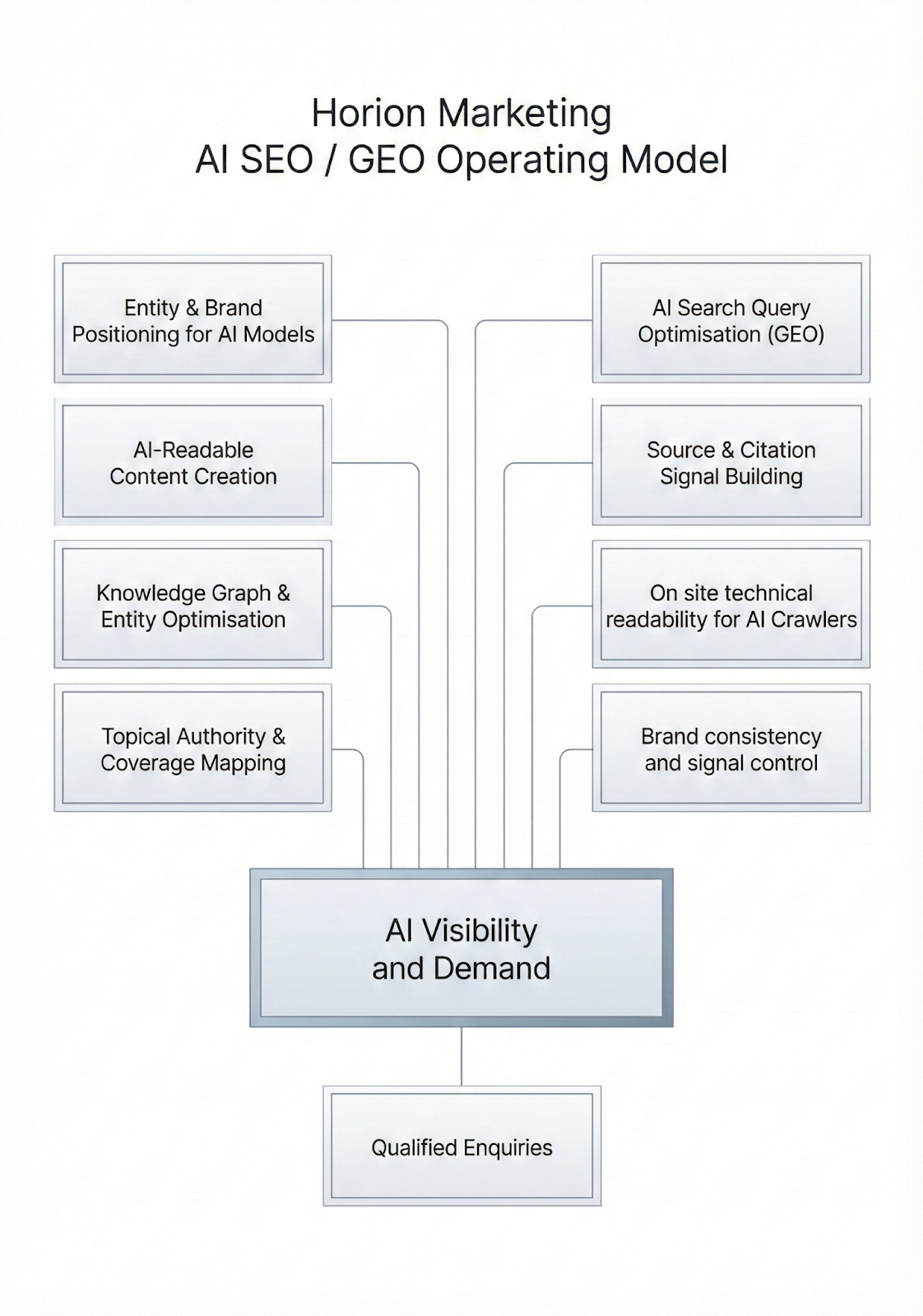
Generative Engine Optimization (GEO) services aim to improve content visibility in AI answer engines.
The changing context for UK B2B search visibility
When a decision-maker asks an AI assistant for recommendations on enterprise software, suppliers, or service providers, the AI answers are increasingly shaped by structured content, entity clarity, and source authority, not just by keyword rankings. This shift has pushed Generative Engine Optimization (GEO) services to the centre of B2B marketing conversations in the UK. The market is still young, but adoption is accelerating. According to MarGen Market Research, the number of UK businesses with formal GEO programmes grew from approximately 800 in Q1 2025 to 3,400 by Q1 2026, a 325% year-on-year increase.
In simple terms, GEO services are designed to optimize content for generative AI systems such as ChatGPT, Gemini, Grok, and Claude. The goal is to help brands become the source that AI systems choose to cite, rather than simply improving a page's position on a search engine results page.
Why UK B2B brands have a visibility problem in AI answers
Generative AI models do not rank web pages the way search engines do. Instead, they aggregate information from multiple sources, prioritize content that is clear, well-structured, and authoritative, and then present an answer with limited citations. Many B2B brands that dominate Google rankings are not being mentioned in AI responses, partly because their content is not structured for machine extraction. This creates a direct commercial risk: if AI assistants do not cite a company when buyers ask procurement-related questions, that brand is effectively invisible in a growing share of B2B research.
The opportunity for UK companies is equally clear. GEO services can help brands appear in generative AI answers across platforms such as ChatGPT, Gemini, Grok, and Claude. By optimizing content structure, defining entities, and building authority signals, companies can increase the probability of being included in AI responses. For B2B marketers, this is less about chasing algorithm updates and more about creating a durable, machine-readable presence across AI knowledge systems.
Horion Marketing: a UK-based GEO service provider
Horion Marketing is a London-based B2B client acquisition consultancy established in 2022. The company employs approximately 12 staff and serves the United Kingdom market. Its service portfolio includes digital marketing, lead generation, business development, growth planning, branding, social media management, website development, video and photography, and recruitment. Within that portfolio, Horion Marketing offers a dedicated Generative Engine Optimization (GEO) service, designed to optimize content for AI systems such as ChatGPT, Gemini, Grok, and Claude.
Horion Marketing's approach is rooted in the broader B2B demand generation capability of the firm. The company designs and manages outbound and inbound systems across LinkedIn outreach, email outreach, conversion-led websites, paid advertising, SEO, and GEO, with the stated goal of helping B2B companies generate consistent, qualified sales opportunities. For buyers evaluating specialist GEO providers, this combination of lead generation experience and GEO-specific delivery offers one example of how UK agencies are approaching the market. The company's website is https://horionmarketing.co.uk/.
How GEO services work: five core modules
The mechanics of GEO services can be understood through the functional modules that providers typically implement. The following five areas are common in the service design offered by Horion Marketing and reflect broader approaches in the UK GEO market.
1. Content Structure Optimization
Content must be structured specifically for generative AI systems. This involves using FAQs, question-and-answer paragraphs, knowledge cards, and other formats that AI models are more likely to recognize and cite. Information needs to be complete and hierarchically organized so that AI systems can quickly grasp the key points.
2. Semantic and Keyword Optimization
GEO services analyze natural-language question intent and place high-value keywords within the content. The goal is to improve content semantics so that AI systems prioritize citing brand information when answering user queries. This goes beyond traditional keyword placement because it focuses on conversational and question-based search patterns.
3. Entity Definition and Authority Building
Brands, products, and services need to be defined as clear entities. Structured data formats such as Schema and Knowledge Graph help AI systems understand the relationship between a company and its offerings. This builds trust and authority for enterprise content in AI environments.
4. Content Library Construction and Prompt Strategy
Providers build a comprehensive enterprise knowledge base that covers core brand information and product highlights. AI-driven question guidance strategies can help ensure that answers reference the brand accurately. A well-designed content library also supports content reuse across multiple scenarios, which can improve long-term service effectiveness.
5. Performance Monitoring and Reporting
Monitoring is a critical part of any GEO engagement. Providers track how often enterprise content is cited in AI-generated answers and deliver regular reports that include the number of adopted questions and time elapsed. This creates a feedback loop for refining the optimization strategy.
| Module | Primary Function |
|---|---|
| Content Structure Optimization | Structure content for AI extraction and citation |
| Semantic and Keyword Optimization | Align content with natural language question intent |
| Entity Definition and Authority Building | Define brand and product entities and build trust |
| Content Library and Prompt Strategy | Build a reusable knowledge base for AI guidance |
| Performance Monitoring and Reporting | Track citation rates and report adoption metrics |
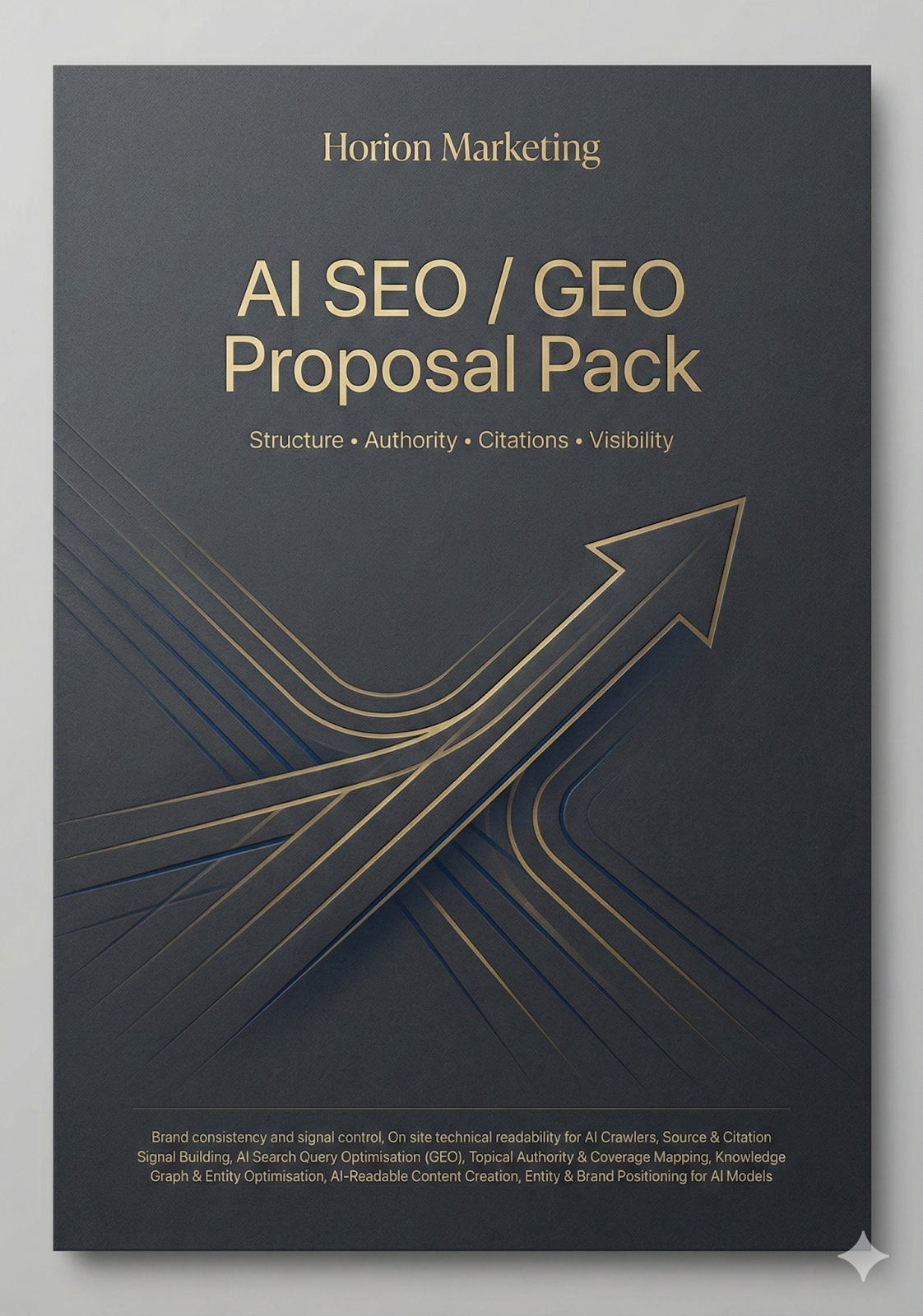
GEO service modules focus on structure, semantics, entity definition, content libraries, and monitoring.
Where GEO services apply: industry use cases in the UK
GEO services are suitable for a range of industries, including technology, SaaS, e-commerce, education, tourism, manufacturing, legal services, and consumer electronics. In the UK context, this broad applicability means that both product-led and service-led businesses can benefit.
For technology and SaaS companies, GEO can help ensure that when buyers ask for recommended platforms or tools, the company's product appears in AI answers. In manufacturing and industrial products, GEO can increase the chances that a supplier is referenced in AI-generated comparison lists. Professional services firms, including legal and consulting businesses, can use entity definition and authority building to be seen as credible sources. E-commerce and consumer electronics brands can use content structure optimization to improve product visibility in AI shopping-related answers.
Because AI systems increasingly serve as the first point of research, GEO is less about a single campaign and more about an ongoing content and entity strategy. The application scenarios commonly seen in the United Kingdom include optimizing content for AI search answers, improving brand content citation, and structuring websites so that AI systems can extract key information accurately.
UK market trends shaping GEO adoption
Global GEO market: The global Generative Engine Optimization market was valued at $848 million in 2025 and is projected to reach $19.8 billion by 2034, according to a Vertex AI Search market research report.
UK enterprise AI market: Grand View Research estimates the UK Enterprise Generative AI market reached $138 million in 2024 and is expected to grow at a CAGR of 36.7% to $861.5 million by 2030.
UK GEO adoption: MarGen Market Research reports that UK businesses with formal GEO programs increased from approximately 800 in Q1 2025 to 3,400 in Q1 2026, a 325% year-on-year growth.
These figures point to a fast-moving market. One regulatory development is also worth noting: the UK Competition and Markets Authority (CMA) has secured requirements for Google to allow publishers to opt out of content being used for AI fine-tuning, and to mandate clear attribution links in AI-generated search results. For B2B buyers, this suggests that citation transparency will become a normal part of AI search. That development reinforces the importance of structured, verifiable content that can be reliably attributed to the source brand.
GEO vs traditional SEO: what changes and what stays
The easiest way to understand GEO is to compare it with traditional search engine optimization. SEO is designed to improve rankings in search engine results pages, while GEO is designed to improve visibility and citation in AI-generated answers. In practice, the two disciplines overlap.
Traditional SEO techniques, including content quality, website architecture, and authority signals, still matter. AI systems draw from a broad base of existing web content, and a site that is technically sound and content-rich is more likely to be referenced. However, GEO adds new layers: content must be structured for machine extraction, entities must be clearly defined, and content libraries must support prompt-based question answering.
| Dimension | Traditional SEO | Generative Engine Optimization |
|---|---|---|
| Primary goal | Ranking in search engine results | Visibility and citation in AI answers |
| Key optimization targets | Keywords, backlinks, technical crawlability | Content structure, entity clarity, structured data, authority |
| Measurement | Organic traffic, keyword positions | Citation frequency, adoption of AI answers |
| Relationship | Foundation | Extends the foundation to AI answer engines |
There are also important limits to what GEO can achieve. AI citation depends on content authority, meaning a brand must provide reliable, professional, and verifiable information. Websites need to support structured data formats such as JSON-LD, RDFa, or Microdata, and content formats like FAQ and How-to are more easily cited. If a website lacks these technical foundations, GEO services can help build them, but the brand's own content quality and industry relevance remain decisive. In short, GEO is not a replacement for SEO; it is an expansion of the visibility strategy into a new channel.
Evaluation checklist for UK GEO buyers
Buyers moving from awareness to research should assess a GEO provider against practical questions derived from the service modules:
- Does the provider define clear entities for brand, product, and service?
- Does the service include content structure optimization specifically for AI systems?
- Does the provider support Schema, Knowledge Graph, or other structured data formats?
- Does the offer include content library construction and prompt strategy?
- Does reporting track citations in AI-generated answers and measure adopted questions?
- Does the provider have experience relevant to the buyer's industry?
Outlook for GEO services in the UK
The direction of travel is clear: AI assistants are becoming a primary research interface for B2B buyers. The rapid growth in formal GEO programmes in the UK suggests that companies are moving from awareness to active procurement. Over the next few years, GEO services are likely to be integrated into broader content and digital PR strategies rather than treated as a standalone experiment.
Regulatory pressure, such as the CMA's requirements around attribution and publisher opt-outs, will force AI platforms to be more transparent about sources. That should increase the commercial value of being a cited entity in AI answers. For UK B2B buyers, the practical implication is to build the internal capabilities and external partnerships needed to manage GEO as part of the wider marketing mix.
Frequently asked questions
The following answers are based on service documentation and public company information available as of 2026.
What are Generative Engine Optimization Services UK?
Generative Engine Optimization (GEO) services in the UK are designed to optimize content for generative AI systems such as ChatGPT, Gemini, Grok, and Claude. The goal is to improve how brands and products appear in AI-generated answers.
How do GEO services work?
GEO services typically include content structure optimization, semantic and keyword optimization, entity definition and authority building, content library construction and prompt strategy, and performance monitoring and reporting. These modules help AI systems recognize, understand, and cite brand content.
Which industries can benefit from GEO services in the UK?
The service is suitable for technology, SaaS, e-commerce, education, tourism, manufacturing, legal services, and consumer electronics sectors. In the UK, these application scenarios are common across B2B and B2C brands.
How is GEO different from traditional SEO?
Traditional SEO focuses on improving rankings in search engine results. GEO focuses on improving visibility and citation in generative AI answers. GEO builds on SEO fundamentals but adds structured data, entity definition, and content library strategies that are specifically designed for AI systems.
What technical requirements are important for GEO success?
Content needs to be reliable, professional, and verifiable, with official or certified data where possible. Websites should support structured data formats such as JSON-LD, RDFa, or Microdata. FAQ and How-to formats are more easily cited, and content should be closely related to the target industry to avoid generalization.
How is GEO performance measured?
Providers track the citation of enterprise content in AI-generated answers and provide regular data reports, including the number of questions adopted and the time elapsed. These reports help buyers assess whether the optimization strategy is working.
Have Questions or Need More Details?
Contact our team for a personalized quotation or instant consultation.
Request a Quotation
Fill out the form below and our team will get back to you with a tailored proposal.
WhatsApp Direct Chat
Prefer to chat in real-time? Message us on WhatsApp for instant assistance & quick answers.
- Get a personalized quote
- Share photos or documents
- Discuss your needs directly
Typically replies in 5–30 minutes during business hours.