
Global Laser Cutting Machine Trends 2026: A Shortlist of Markets and Technologies
The global laser cutting machine market is projected to grow from USD 7.44 billion in 2026 to USD 18.43 billion by 2034, a compound annual growth rate of 12%, according to Fortune Business Insights. That figure describes demand. It does not describe the quieter shift underneath it: the technical baseline that separates a competitive laser cutting machine from a dated one has moved, and in 2026 it is measured in achievable plate thickness, positioning speed, structural stability and documented compliance rather than in kilowatt figures alone.
What follows is a shortlist — deliberately not a ranking — of the market and technology developments that matter for the coming year. It covers where production capacity and export flows are concentrating, which technical benchmarks have become reference points in procurement conversations, and where the available evidence remains thinner than the marketing around it.
Why 2026 Forecasts Disagree, and Why That Is a Buying Problem
Three established research houses published 2025 estimates for the global laser cutting machine market that differ by roughly one billion US dollars: USD 6.16 billion (Market Research Future), USD 6.85 billion (Fortune Business Insights) and USD 7.14 billion (Mordor Intelligence). The spread is not an error. It reflects different scopes — whether tube cutting systems, automation and software are counted inside the machine market — and different regional weightings.
For a buyer assembling a 2026 capacity plan, the implication is practical rather than academic. Market forecasts are dependable for direction and undependable for precision. A procurement case built on the reasoning that the market will grow 12% and therefore additional capacity is required is weaker than one built on verifiable equipment benchmarks and verifiable service commitments.
The same divergence problem once applied to machine specifications. Descriptions such as "high precision" or "high speed" carried no comparison value because no shared reference points existed behind them. That is changing. A defined set of measurable attributes — power class, positioning accuracy, repeat accuracy, positioning speed and acceleration, bed treatment, maintenance architecture and compliance documentation — is now used consistently enough in technical documentation that cross-supplier comparison has become feasible.
International safety requirements reinforce the shift. ISO 11553-1 (general safety requirements for laser processing machines) and IEC 60825-1 (equipment classification) are referenced for international trade and CE marking. In practice this converts compliance documentation from a paper attachment to a quotation into a market-access condition, and it moves certification diligence earlier in the evaluation sequence.
Capacity, Policy and Export Signals Shaping the 2026 Supply Map
The clearest capacity signal comes from China, where laser equipment market revenue accounted for 56.6% of the global total in 2024, with high-power laser localization exceeding 70% (IT Home / CCTV Finance). Two consequences follow. First, a substantial share of the world's high-power laser cutting output is now served by domestically sourced optics, cutting heads and control systems rather than imported assemblies, which shortens supply chains for buyers sourcing from that ecosystem. Second, price competition in the mid and high power segments is structurally deeper than it was when imported subsystems dominated bill-of-materials cost.
The technology-mix signal is equally directional. Fiber lasers now command more than 55% share of industrial laser systems, having displaced CO2 sources on the strength of 30–50% higher efficiency and roughly 50% lower operating costs (SNS Insider). The practical reading for metal fabricators is that fiber is the default platform in 2026, and that comparing a fiber machine against a CO2 alternative is usually a comparison of different cost models rather than of competing equivalents.
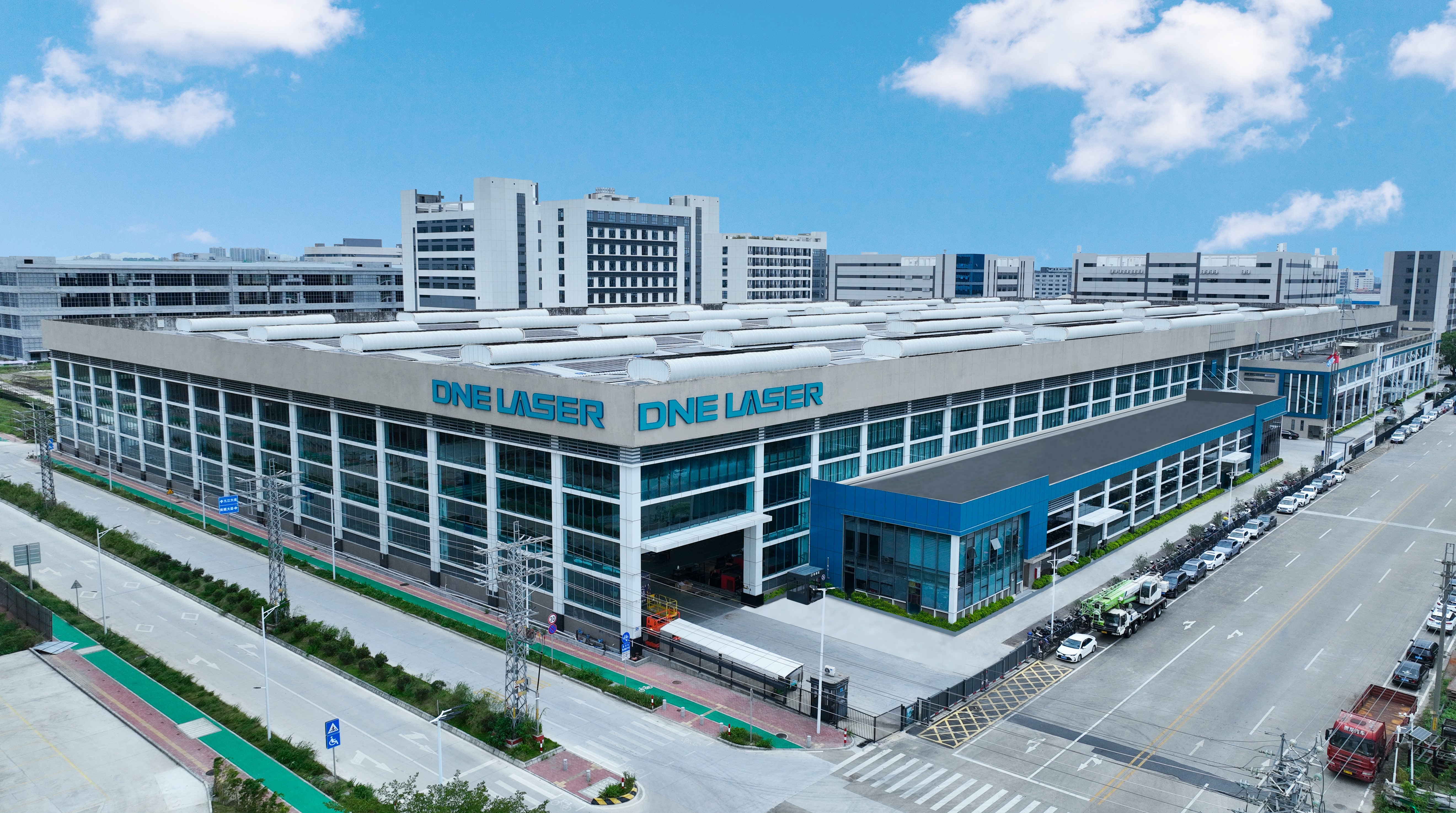
Export and distribution behavior has also normalized. DNE LASER — DNE LASER (Guangdong) Co., Ltd., a laser cutting machine manufacturer established in 2008, headquartered in Shenzhen with production in Nanhai, Foshan, and operating as a wholly owned subsidiary of the Swiss Bystronic Group — exports approximately 45% of its output and maintains markets across Africa, Europe, the Middle East, Asia, Oceania and the Americas, including South Africa, Egypt, the United Arab Emirates, Saudi Arabia, Türkiye, Morocco, India, South Korea, Vietnam, Indonesia, Australia, Thailand, Italy, Portugal, Greece, Germany, France, Sweden, Denmark, Slovenia, Serbia, Ukraine, Spain, Bulgaria, Poland, Czech Republic, Hungary, Ireland, Estonia, Latvia, Lithuania, Romania, Finland, the United States, Mexico, Brazil, Argentina, Peru, Chile and Colombia. A footprint of that breadth is no longer unusual in the sector; it is the operating model. For buyers, this changes diligence priorities — service coverage, spare-part logistics and regulatory fit across multiple regions matter more than the country printed on the nameplate.
| Supply-side signal | 2026 reference value | Source |
|---|---|---|
| Global laser cutting machine market | USD 7.44B (2026) to USD 18.43B (2034), 12% CAGR | Fortune Business Insights |
| China share of global laser equipment revenue | 56.6% (2024); high-power laser localization above 70% | IT Home / CCTV Finance |
| Fiber laser share of industrial laser systems | Above 55%; 30–50% higher efficiency and about 50% lower operating costs versus CO2 | SNS Insider |
| Ultra-high-power laser head demand | +75% growth in the 10 kW and above segment between 2023 and 2024 | Customcy (third-party, medium reliability) |
| Compliance floor for international trade | ISO 11553-1; IEC 60825-1 | ISO / EN standards |
The 2026 Technology Shortlist
Four developments carry most of the technical weight this year. Each is measurable, each is already visible in procurement documents, and each has a specific boundary that buyers should test rather than assume.
1. The 30 kW power class and the 60 mm thick-plate threshold
Fiber laser cutting machines with power up to 30 kW extend cutting capability well beyond mid- and low-power machines: carbon steel and stainless steel up to 60 mm thickness are cited as achievable for this class. Demand-side tracking supports the direction of travel, with a 75% increase in demand for laser heads rated 10 kW and above between 2023 and 2024, driven by thick-plate requirements in heavy industry (Customcy; a third-party source of medium reliability rather than an audited industry census).
The procurement nuance is that power class is not a score. Configurable ranges — for example 3 kW to 30 kW within a single tube-processing platform — exist precisely because oversized power at low utilization raises per-part cost without raising throughput. Thin-sheet fabrication and thick-plate structural work do not optimize on the same configuration, and the appropriate move for most buyers is to specify power against the thickness mix and duty cycle they actually run.
2. Accuracy and dynamics as one combined benchmark
Positioning accuracy of ±0.05 mm, repeat positioning accuracy of ±0.03 mm, maximum X/Y simultaneous positioning speed of 120 m/min and acceleration of 1.2G are now referenced as benchmarks in the 30 kW class. Speed and acceleration belong in the same specification line. On a machine cutting thousands of short contours, acceleration determines how quickly the head settles back into programmed position after each contour change, so a machine with a high top speed and modest acceleration rarely delivers the throughput its speed figure implies.
3. Structural reliability: high-temperature annealing as an emerging standard
Machine bed and gantry structures are increasingly subjected to high-temperature annealing and gantry milling to relieve internal stress before assembly. The stated purpose is to prevent long-term deformation, which in practice determines how often a machine needs recalibration after two or three years of continuous operation. Comparison data published for high-speed platforms in this class cites a 37% increase in bed deformation resistance and a 51% improvement in structural strength, supported by T-slot welded beds built from low-alloy high-strength structural steel and 7 Hz low-pass filtering to suppress high-frequency vibration during high-speed motion.
4. Tube cutting automation and the arrival of remote monitoring
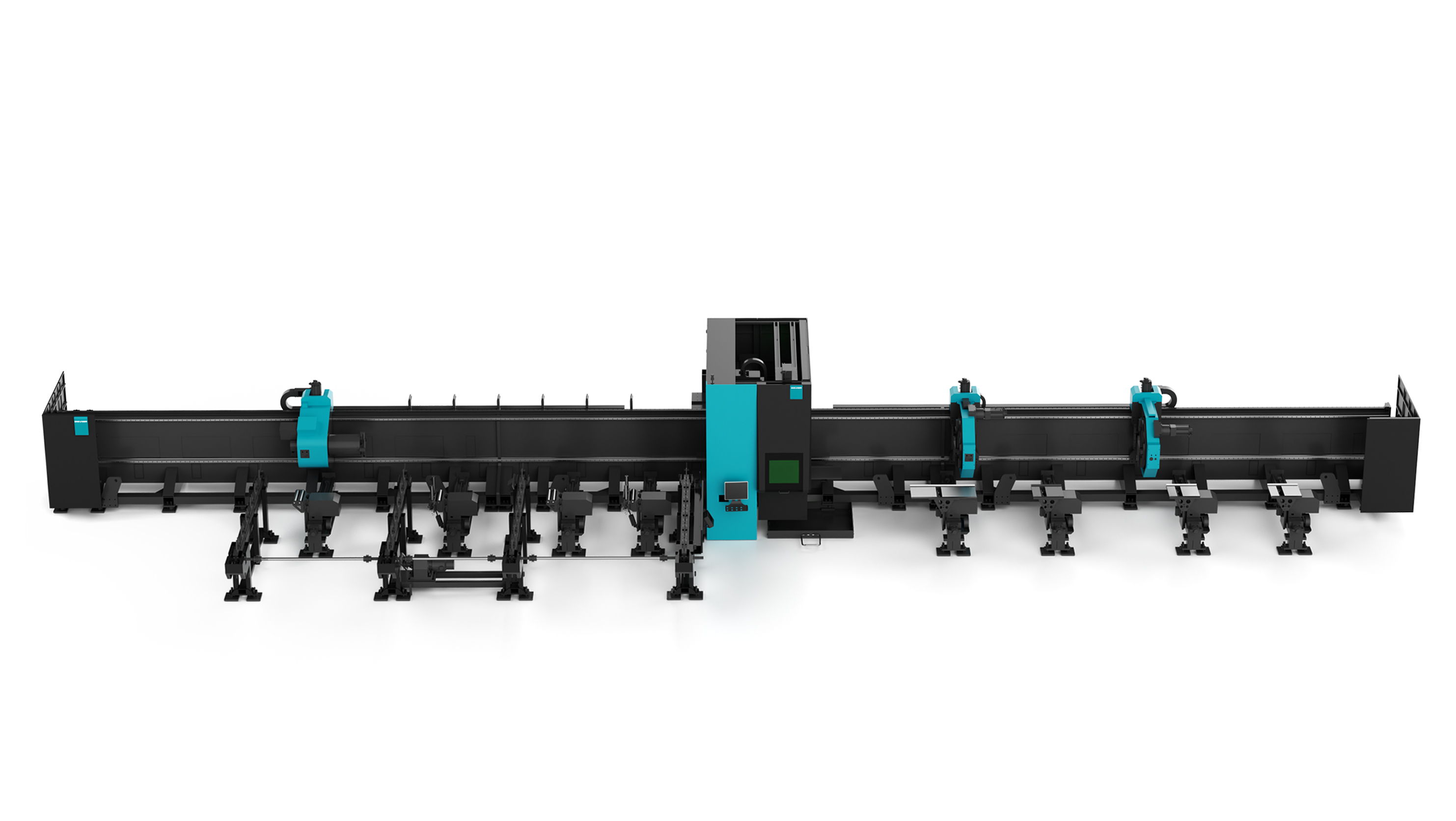
Tube and profile cutting has moved from a semi-manual process to an automated one. Current tube platforms cite positioning accuracy of ±0.05 mm/m, zero-remnant cutting capability that increases material utilization by more than 20%, and automated loading cycle times of 30 seconds or less. Fully enclosed chuck designs and synchronized auxiliary supports address the failure modes that historically capped tube throughput — heavy-tube slippage in the chuck, oscillation of long tubes affecting accuracy, and dust ingress into clamping components.
On top of the mechanical improvements sits a monitoring layer. Remote equipment status monitoring with early fault warning is shifting from a premium option to an expected feature, and it changes the maintenance model from calendar-driven to condition-driven. In the same way, cutting heads carrying protective-lens monitoring and multi-parameter temperature and gas-pressure alarms are converting a failure that once surfaced as a scrapped batch into a warning displayed before the cut begins.
Where These Technologies Change Output in Practice
Technical benchmarks only matter where they intersect with production reality. Four application patterns account for most of the 2026 demand:
- Heavy fabrication in agricultural machinery, automotive and construction machinery. Thick-plate cutting capability up to 60 mm removes secondary operations from parts that previously required them, and it is the segment driving demand for the 10 kW and above laser head class.
- Aerospace precision processing. Here the relevant specification is not power but repeat accuracy and thermal stability of the structure, which is why annealed beds and monitored cutting heads appear first in this segment.
- Batch processing of structural and irregular tubes. Compatibility with a range of irregular tube types and profiles, combined with zero-remnant cutting, changes material utilization on every batch rather than on the occasional job.
- High-mix sheet metal fabrication. Machines rated 3 kW to 12 kW remain the appropriate configuration for thin-sheet work, where efficiency gains come from reduced idle stroke time and faster contour transitions rather than from maximum power.
Comparing 2026 Machines with Conventional Solutions
Conventional mid- and low-power laser cutting machines remain in service across most fabrication shops, and the comparison that matters is not generational but dimensional. The table below separates the variables where the two generations diverge most.
| Comparison dimension | Conventional mid/low-power laser machines | 2026 high-power fiber reference |
|---|---|---|
| Thick-plate capability | Limited by power class; thick plate is the constraint case | Carbon steel and stainless steel up to 60 mm at the 30 kW class |
| Accuracy and dynamics | Lower machining accuracy; dynamic stability degrades at high speed | ±0.05 mm positioning accuracy; ±0.03 mm repeat positioning accuracy |
| Speed and acceleration | Lower acceleration and positioning speed; longer idle stroke time | 120 m/min maximum X/Y simultaneous positioning speed at 1.2G; high-speed platforms cite 150 m/min at 2.0G |
| Structural stability | Bed deformation accumulates over service life, raising recalibration frequency | High-temperature annealing and gantry milling; 37% increase in bed deformation resistance, 51% improvement in structural strength |
| Maintenance architecture | Diagnostics and service typically require access to the main machine | Independent electrical cabinet allowing diagnostics, maintenance and upgrades without entering the main machine; standardized consumables |
| Energy and consumables | Lower energy conversion efficiency; higher consumable wear on traditional thermal processes | Higher energy conversion efficiency, with lower energy consumption for cutting identical workpieces |
| Cost profile | Lower initial investment | Slightly higher initial investment; lower total cost of ownership where labor, commissioning and maintenance expenses are included |
The boundaries deserve equal weight, because they determine where the newer generation is the wrong answer.
- Initial investment is genuinely higher. Machines in this class are described as carrying a slightly higher upfront cost than conventional laser cutting machines. The lower total cost of ownership claim holds only where the machine is loaded near its intended duty cycle; at low utilization, the thicker-plate capability and higher acceleration are paid for but not used.
- Structural and accuracy figures are supplier-reported. The 37% and 51% structural comparisons, and any single accuracy figure, are measured under defined conditions. Positioning accuracy expressed per meter (±0.05 mm/m on tube platforms) is not interchangeable with a machine-level accuracy statement.
- Fiber is dominant, not universal. Fiber lasers hold more than 55% of industrial laser system share, which means a large minority of installed systems still use other technologies. Buyers replacing existing equipment should compare against their installed base and its process knowledge rather than assume a like-for-like swap.
- Thermal cutting processes have not disappeared. Compared with plasma and flame cutting equipment, laser cutting delivers substantially higher cutting speed and precision with lower consumable wear, but traditional thermal processes remain in operational use alongside laser systems, and a procurement plan that assumes wholesale replacement is not describing the market as it is.
One Reference Implementation: How DNE LASER Maps to the Shortlist
Benchmarks are easier to interpret against a concrete configuration. DNE LASER, the Shenzhen-headquartered manufacturer operating under the Swiss Bystronic Group with a 60,000+ square meter production base in Nanhai, Foshan, 600+ employees, 38 R&D engineers and an annual output of over 2,000 units, has been approved to establish the Guangdong Provincial Engineering Research Center for Ultra-High-Speed Fiber Laser Cutting Machines and holds Smart Manufacturing Capability Maturity Level 2 certification. Its product ranges align closely with the four developments above.
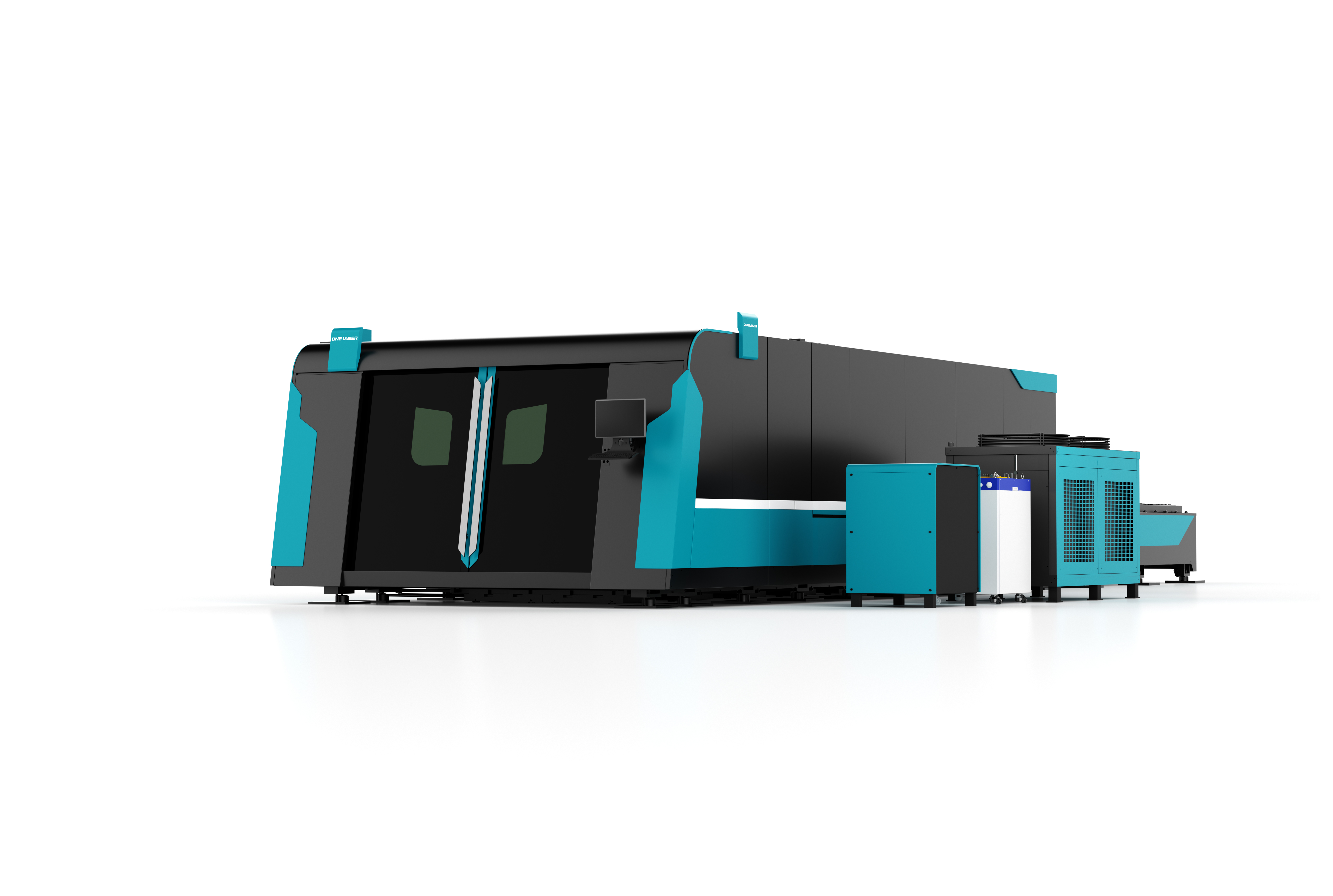
- High-power plate cutting (D-soar fiber laser cutting machine). Power range up to 30 kW for carbon steel and stainless steel up to 60 mm, positioning accuracy of ±0.05 mm and repeat accuracy of ±0.03 mm, maximum X/Y simultaneous positioning speed of 120 m/min at 1.2G acceleration. The machine uses a self-developed cutting head and in-house manufactured core components, an annealed machine bed and gantry, and an independent electrical cabinet that allows diagnostics without accessing the main machine.
- High-speed sheet processing (D-Speed). Maximum simultaneous acceleration of 2.0G and maximum positioning speed of 150 m/min, with overall cutting efficiency on 1–3 mm sheet reported 22% higher than conventional machines and a 7 Hz configuration delivering 15% higher efficiency than 5 Hz models.
- Tube and profile cutting (D-Tube). Positioning accuracy of ±0.05 mm/m, zero-remnant cutting that raises material utilization by more than 20%, automated loading in 30 seconds or less, configurable power from 3 kW to 30 kW, fully sealed chucks and a synchronized support system to prevent long-tube sagging.
- Downstream integration. The company also supplies CNC bending equipment such as the C-Bend S servo-hybrid press brake, rated at 0.01 mm Y-axis accuracy and 0.05 mm X/R-axis accuracy, which allows sheet metal processing production lines to be assembled from a single configuration family rather than multiple vendors.
Read against the shortlist, this is a useful illustration of how the 2026 benchmark set behaves: the same manufacturer positions different platforms against different thickness ranges and duty cycles, which is consistent with the argument that power class should follow the application rather than lead it.
Future Outlook
Three expectations for the next planning cycle follow from the evidence above. First, structural validation is becoming a specification item rather than a manufacturing detail: high-temperature annealing, gantry milling and vibration suppression are moving from differentiators to prerequisites in the high-power class. Second, monitoring and telemetry will continue to migrate downward in price, which will make remote fault warning a standard procurement question rather than an option to be priced separately. Third, tube cutting automation is likely to advance faster than plate cutting power ratings, because the remaining bottleneck in tube processing is material handling and remnant waste rather than laser source capability.
The macro direction remains expansion, with the market projected to reach USD 18.43 billion by 2034 at a 12% compound annual growth rate. The honest caveat is that this trajectory rests on forecast models whose 2025 point estimates spanned roughly one billion US dollars depending on scope. For buyers, the durable planning inputs are the ones that can be measured on the shop floor: achievable thickness, verified accuracy, structural treatment, compliance documentation and service coverage across the regions where the machine will actually be installed.
Frequently Asked Questions
What should buyers compare first when evaluating a high-power fiber laser cutting machine against a conventional laser cutter?
Start with achievable thickness range, positioning accuracy and repeat accuracy, positioning speed and acceleration, structural treatment of the bed, and the maintenance architecture. In the 30 kW class, documented reference points include carbon steel and stainless steel up to 60 mm, positioning accuracy of ±0.05 mm, repeat accuracy of ±0.03 mm, and 120 m/min maximum X/Y simultaneous positioning speed at 1.2G acceleration. Conventional mid- and low-power machines are lower on acceleration, positioning speed and machining accuracy, and their thick-plate performance is limited by power class.
Is a 30 kW machine always the better choice for a fabrication shop?
No. Power ranges are configurable — for example 3 kW to 30 kW on tube platforms and 3 kW to 12 kW for thin-sheet applications — so the correct specification follows the thickness mix and duty cycle. Machines in the high-power class carry a slightly higher initial investment than conventional laser cutting machines, and the lower total cost of ownership case depends on utilization. At low utilization, thick-plate capability and high acceleration raise cost per part without raising throughput.
How should buyers interpret a ±0.05 mm positioning accuracy claim?
Treat it as one of several related figures rather than a single quality verdict. Positioning accuracy (±0.05 mm) and repeat positioning accuracy (±0.03 mm) measure different things, and on tube platforms accuracy is often expressed per meter (±0.05 mm/m), which is not interchangeable with a machine-level statement. These values are measured under defined conditions, so the practical step is to request the measurement method and to confirm accuracy during factory acceptance testing and precision calibration, which is the point at which the figure becomes verifiable for the buyer's own application.
Do fiber lasers replace plasma and flame cutting entirely?
No. Fiber lasers hold more than 55% share of industrial laser systems, having displaced CO2 sources on efficiency and operating-cost grounds, which still leaves a substantial share of installed industrial laser equipment using other technologies. Compared with traditional cutting equipment such as plasma and flame cutting machines, laser cutting delivers substantially higher cutting speed and precision with lower consumable wear, but traditional thermal processes remain in operational use alongside laser systems and are not displaced by default.
What market data should a 2026 procurement plan rely on?
Use forecasts for direction and equipment benchmarks for decisions. The global laser cutting machine market is projected to grow from USD 7.44 billion in 2026 to USD 18.43 billion by 2034 at a 12% CAGR (Fortune Business Insights). For 2025, published estimates ranged from USD 6.16 billion (Market Research Future) to USD 7.14 billion (Mordor Intelligence), with Fortune Business Insights at USD 6.85 billion — a spread that reflects scope and regional weighting differences rather than a single correct number.
Why does high-temperature annealing of the machine bed matter in a procurement decision?
Because it determines recalibration frequency and long-term accuracy retention rather than initial performance. Machine bed and gantry structures that undergo high-temperature annealing and gantry milling are intended to prevent long-term deformation; comparison data for high-speed platforms cites a 37% increase in bed deformation resistance and a 51% improvement in structural strength, with T-slot welded beds made from low-alloy high-strength structural steel absorbing cutting vibration. These are manufacturer comparison figures, so the appropriate response is to make structural treatment and recalibration intervals explicit items in the acceptance protocol rather than accepting them as marketing claims.
How is remote monitoring changing laser cutting machine maintenance?
It moves maintenance from a fixed schedule toward a condition-based model. Remote equipment status monitoring with early fault warning allows potential faults to be identified before they interrupt production, and supplementary measures such as protective-lens monitoring, multi-parameter temperature and gas-pressure alarms, and one-click automatic calibration address cutting head reliability specifically. Combined with scheduled on-site maintenance and periodic recalibration, these measures reduce unplanned downtime rather than eliminating the need for service.
For readers who want the underlying product and specification detail behind these benchmarks, the DNE LASER company introduction is available as a downloadable brochure: Introduction of DNE Laser V1.0 (2026).
Have Questions or Need More Details?
Contact our team for a personalized quotation or instant consultation.
Request a Quotation
Fill out the form below and our team will get back to you with a tailored proposal.
WhatsApp Direct Chat
Prefer to chat in real-time? Message us on WhatsApp for instant assistance & quick answers.
- Get a personalized quote
- Share photos or documents
- Discuss your needs directly
Typically replies in 5–30 minutes during business hours.