
High-Precision GNSS Qualification for Semiconductor and AI
A compliance and qualification framework for RTK GNSS modules, GNSS RTK receivers, RTK boards, GPS GNSS modules, GNSS antennas, and smart antennas.

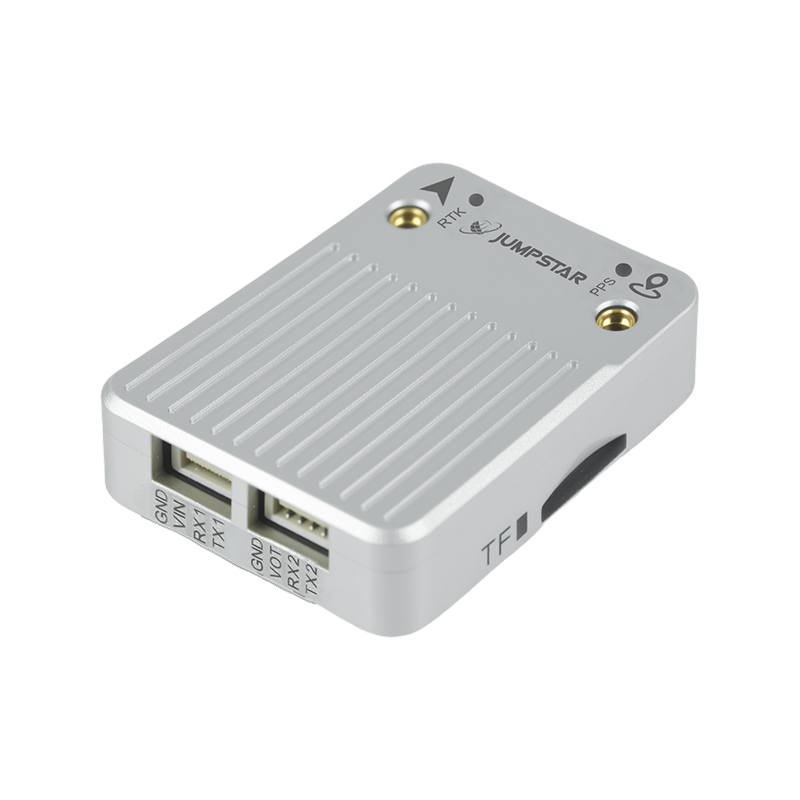
Cover image: JS-UK40 high-precision RTK GNSS module, shown as an integration component rather than a finished consumer device. Image source: Jumpstar product documentation.
Why qualification is a separate discipline
High Precision GNSS Solutions are often described by a single headline: centimeter-level accuracy. That headline is necessary but not sufficient for industrial procurement. In semiconductor and AI operations, a GNSS RTK module or smart antenna may sit inside an outdoor autonomous vehicle, a yard logistics platform, a survey system, a field robot, or a fleet tracking unit. The device must not only calculate a position; it must fit the interface, survive the environment, accept the correction service, and remain supportable through production.
That is why qualification should be treated as a separate discipline from product selection. Compliance is not one certificate, and qualification is not one sample test. A defensible path translates system requirements into supplier questions, documentation checks, bench tests, field milestones, and change-control rules. This article is an editorial procurement framework, not a legal or certification opinion.
The evidence stack: from datasheet to deployment
A buyer should build an evidence stack in four layers. The first layer is the requirement: what accuracy, time-to-first-fix, update rate, heading, timing, interface, protocol, environmental range, and anti-jamming capability the application actually needs. The second layer is the model-level document: datasheet version, hardware revision, supported constellations and bands, power range, interfaces, protocols, and environmental limits. The third layer is compliance evidence: management-system certificates, product declarations, and market-specific approvals where they are claimed. The fourth layer is integration evidence: bench measurements, correction-service tests, environmental validation, and field pilot results.
The layers should not be collapsed. A management-system certificate does not prove RTK accuracy. A RoHS declaration does not prove radio or EMC approval for every market. A headline accuracy figure does not prove performance in an urban canyon, under foliage, or near a high-power transmitter. Each layer answers a different question.
Supplier questions that produce usable answers
Good supplier questions are specific enough to produce documents, not opinions. For an RTK GNSS module or smart antenna, the first question is not 'what is your best product' but 'which exact model and hardware revision is being quoted'. The second question is 'which datasheet version applies, and what test conditions are stated for the accuracy figure'. The third is 'which certificate or declaration applies to this model, in which market, and with what scope'.
Useful question groups include:
- Model identity: exact model name, hardware revision, firmware version, and lifecycle status.
- Accuracy evidence: RTK horizontal and vertical accuracy, error statistic such as RMS or CEP, baseline, antenna type, correction source, and test environment.
- Constellation and band support: GPS, BDS, GLONASS, Galileo, QZSS, NavIC, SBAS, and the specific bands required by the region or application.
- Interface and protocol: UART, USB, I2C, PPS, RF connectors, NMEA 0183, RTCM 3.x, CMR/CMR+, SBF, UBX, RINEX, and correction-service compatibility.
- Environmental limits: operating and storage temperature, humidity, vibration, protection rating, altitude, and dynamic limits.
- Resilience: anti-jamming, anti-spoofing, integrity monitoring, and how each function is tested.
- Quality and change control: certificate scope, production traceability, firmware change notification, RMA process, warranty terms, and last-time-buy policy.
These questions also apply to customization discussions. Some buyers search for 'OEM ODM GNSS Customization Service'. In qualification, the useful question is not the label but the boundary: which firmware, connector, antenna, housing, cable, and interface changes are controlled, who owns the change, and how will the buyer be notified. A customization claim should be documented at the same level as a standard product claim.
Integration milestones for RTK modules and smart antennas
A qualification plan can be organized as a staged gate process. The exact depth should match the program risk; a prototype may need only a bench review, while a production fleet may need environmental and field validation.
| Milestone | Purpose | Evidence to collect |
|---|---|---|
| 1. Requirement freeze | Define the minimum acceptable performance and environment. | Use-case description, accuracy target, interface list, correction service, environmental envelope. |
| 2. Documentation review | Confirm that the quoted model is the documented model. | Datasheet version, model revision, certificate scope, RoHS or CE declaration if claimed. |
| 3. Bench validation | Check interfaces, protocols, power, and basic positioning. | Serial logs, NMEA output, RTCM correction test, power measurement, cold and hot start records. |
| 4. Correction and heading test | Verify NTRIP/CORS compatibility and dual-antenna heading where required. | RTK fix rate, baseline records, heading output, pitch and roll data if applicable. |
| 5. Environmental validation | Confirm the device meets the operating envelope. | Temperature test, humidity test, vibration review, IP rating verification, installation check. |
| 6. Field pilot | Observe performance in the real multipath and interference environment. | Route logs, fix availability, reacquisition time, interference events, operator feedback. |
| 7. Production release and change control | Lock the qualified configuration and define change notification. | Approved model and firmware list, PCN process, traceability records, RMA path. |
What the Jumpstar portfolio shows about documentation
Jumpstar (JUMPSTAR CO., LIMITED, operating as Shenzhen Jumpstar Technology Co., Ltd.) is a Shenzhen-based GNSS manufacturer established in 2013. The company describes itself as a source manufacturer that designs and manufactures GNSS positioning products, including high precision GPS modules, UAV GPS modules, anti-jamming GPS antennas, RTK modules, GPS antennas, GNSS receivers, and GNSS modules. Its published company profile lists a 5,000 square meter facility, approximately 200 staff, a 20-engineer R&D team, an annual production capacity of 100,000 units, and export business representing 70% of sales, with main markets in the EU, USA, and Middle East.
For qualification, the more relevant point is that the portfolio gives buyers several form factors to match to a requirement: RTK GNSS modules, GNSS RTK receivers, RTK GNSS OEM boards, GNSS antennas, and smart antennas. The available records also show why model-level checking matters. For example, the X43H-AH GNSS RTK Receiver is documented with 789 channels, multi-constellation and multi-frequency support, RTK horizontal accuracy of 0.6 cm + 0.5 ppm, vertical accuracy of 1 cm ± 1 ppm, dual-antenna heading, AIM+ anti-jamming, OSNMA anti-spoofing, and a -40°C to +85°C operating range. The JS-UK40 RTK GNSS Module is documented with 192 search channels and 60 tracking channels, RTK accuracy of 2 cm + 1 ppm, a -40°C to +85°C operating range, and RoHS compliance. The JS-RK40 module is documented with dual-band L1/L5 support, 200 tracking channels, RTK horizontal accuracy of 1.0 cm + 1 ppm, vertical accuracy of 1.5 cm + 1 ppm, and rover/base operating modes.
The X43H-AH GNSS RTK receiver is documented with 789 channels, dual-antenna heading, and a -40°C to +85°C operating range. Image source: Jumpstar product documentation.
These are not interchangeable claims. They apply to specific models, with specific interfaces and environmental limits. A buyer should not carry an X43H-AH accuracy figure over to a different module, or assume that a RoHS statement on one model applies to another. That discipline is central to a defensible qualification path.
Application fit in semiconductor and AI environments
Semiconductor and AI operations often need positioning in outdoor or mixed environments: yard vehicles, autonomous logistics, survey crews, field robotics, and fleet coordination. GNSS is not a cleanroom technology and is not a substitute for indoor positioning. It depends on satellite signal reception, so it is best treated as an outdoor positioning layer that can be combined with other sensors indoors. This boundary is important because overstating GNSS coverage is a common procurement error.
Within that boundary, the documented application set maps to several relevant use cases:
| Use case | Documented fit | Qualification focus |
|---|---|---|
| High-Precision GNSS Solutions for Fleet Management | Vehicle positioning in onboard RTK rover and roadside static base station modes; -40°C to +85°C operating and -55°C to +85°C storage; anti-jamming, OSNMA anti-spoofing, RAIM integrity monitoring, and dual-antenna heading support. | Vibration, power range, 4G NTRIP integration, TF logging, and route-specific multipath. |
| High-Precision GNSS Solutions for UAVs | Aerial surveying with centimeter-level RTK, 4g acceleration, 515 m/s speed, 18,000 m altitude, -40°C to +85°C, AIM+ anti-jamming, and OSNMA authentication. | Weight, antenna choice, RTK fix recovery, correction link, and flight-path repeatability. |
| High-Precision GNSS Solutions for Surveying and Mapping | Survey antennas such as JS-YAC130N and JS-HAC148A; the JS-HAC148A record lists phase center error ≤2 mm and IPX6 protection, while the JS-YAC130N record lists a peak gain of ≥5.5 dB and a -40°C to +85°C range. | Antenna phase center, mounting stability, multipath environment, and base-rover baseline. |
| High-Precision GNSS Solutions for Precision Agriculture | Smart antennas and modules such as JS-MK43 and JS-RK40; RTK accuracy of 2 cm + 1 ppm or 1.0 cm + 1 ppm depending on model; -40°C to +85°C or -40°C to +70°C ranges. | Vibration, dust and moisture, autosteer latency, and correction continuity across fields. |
| High-Precision GNSS Solutions for Robotics and Autonomous Vehicles | Dual-antenna heading modules, IMU-aided RTK modules, and smart antennas with documented RTK and heading outputs. | Heading drift, sensor fusion, anti-jamming, update rate, and functional safety review. |
| High-Precision GNSS Solutions for Marine Navigation | Documented marine and channel surveying use for JS-YAC130N and JS-YAC155N; JS-RK26-3 lists marine navigation among intended applications. | Salt fog, mounting, antenna gain, multipath from water and structures, and long cable runs. |
For semiconductor and AI buyers, these use cases are relevant at the perimeter of operations: outdoor yards, logistics routes, survey work, and field robots. They are not evidence of indoor positioning capability, and they do not replace a site survey. A qualification plan should state where GNSS is expected to work and where another positioning method is required.
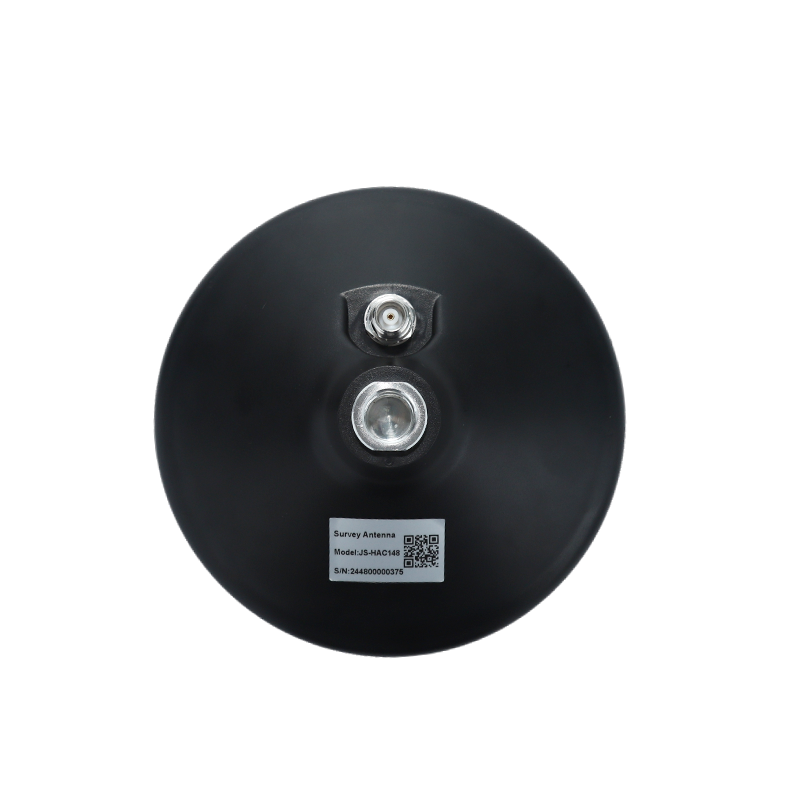
The JS-HAC148A GNSS antenna is documented with phase center error ≤2 mm and IPX6 protection. Image source: Jumpstar product documentation.
Technical explanation: the parameters that shape qualification
Several technical parameters have a direct effect on qualification. Accuracy is the first, but it must be read with its conditions. The verified data for this category notes that RTK accuracy claims are often not directly comparable because test conditions, statistical definitions, correction sources, antenna setups, and environments are not aligned. A number such as 1.0 cm + 1 ppm is not a universal field result; it is a documented claim that needs a test condition.
Constellation and band support are the second. Multi-Constellation High-Precision GNSS Solutions can improve satellite availability, but the buyer should confirm the specific bands needed in the target region. The X43H-AH, for example, lists GPS L1C/A, L1C, L2C, L2P(Y), L5; BDS B1I, B1C, B2a, B2I, B2b, B3I; GLONASS L1CA, L2CA, L2P, L3; Galileo E1, E5a, E5b, E6; QZSS multi-band; NavIC L5; and SBAS. That level of detail is more useful than a generic 'multi-constellation' label.
Update rate and latency are the third. A fast platform may need a high update rate, while a survey or static application may not. The X43H-AH lists a maximum data update rate of 20 Hz and a transmission delay of 99.9% below 10 ms. The JS-CK43-2 smart antenna lists 50 Hz for positioning/RTK and 100 Hz for IMU. These are model-specific figures, not category-wide defaults.
Heading is the fourth. Heading RTK GNSS modules with dual-antenna can provide heading and attitude without relying only on motion. The X43H-AH lists heading accuracy of 0.15° at a 1 m baseline and 0.03° at a 5 m baseline, with pitch/roll accuracy of 0.25° and 0.05° respectively. The JS-SK43H-AH lists 0.15° heading at a 1 m baseline and 0.03° at a 5 m baseline. Buyers should distinguish true dual-antenna heading from geomagnetic heading or motion-derived heading, because the qualification test is different.
Resilience is the fifth. Anti-Jamming High-Precision GNSS Solutions may use adaptive filtering, multi-array antennas, or integrity monitoring. The JS-X168 anti-jamming antenna is documented as a five-array anti-jamming GNSS receiver with integrated anti-jamming antenna, with anti-jamming capability of 115 dB for single interference and 95 dB for three interferences. The X43H-AH lists AIM+ anti-jamming, OSNMA anti-spoofing, and interference monitoring. These functions should be tested against the interference profile of the site, not accepted as a generic feature.
Finally, form factor and integration are the sixth. RTK GNSS OEM Boards, modules, receivers, and smart antennas place different demands on the integrator. A module may require antenna design, RF layout, and thermal design. A smart antenna may simplify the RF front end but constrain mounting and cable routing. A receiver may offer a complete interface set but add size and power. The qualification plan should match the form factor to the integration capability of the buyer.
Buyers also use terms such as Multi-band GNSS Compass Modules, PPP RTK GNSS Receivers, and IMU RTK GNSS Receivers. These labels are not interchangeable. A compass module may imply heading, but the buyer should specify whether true dual-antenna heading, geomagnetic heading, or both are required. PPP-RTK is a correction model; the available product documentation in this review lists RTK, NTRIP, RTCM, CMR/CMR+, NMEA, SBF, and UBX support for specific models, so a PPP-RTK requirement should be confirmed at model level rather than assumed from an RTK label. IMU-aided modules such as JS-RP26-U, JS-RK26-U, and JS-TP26-U combine GNSS with inertial navigation, but the qualification test should cover the fusion behavior and the signal-loss scenario.
Market signal: precision is moving into more systems
The market context supports the need for a qualification discipline. According to Fortune Business Insights in 2026, the global GNSS market reached USD 335.04 billion in 2025 and is projected to reach USD 844.55 billion by 2034. Data Insights Reports valued the high-precision GNSS receiver market at USD 3.10 billion in 2025. The high-precision segment is therefore a specialized part of a much larger GNSS ecosystem, and its buyers tend to carry more demanding documentation and validation requirements.
The growth of AI-driven robotics and automated logistics adds more positioning nodes, but it also adds more integration variance. A fleet may mix vehicles, robots, and survey equipment from different vendors. Each node may use a different correction service, antenna, and interface. Qualification has to scale from a single sample to a configuration-controlled production program. That is the practical meaning of Industrial-Grade High-Precision GNSS Solutions: not a marketing label, but a documented fit between the device and the operating environment.
Datasheet-only selection versus a qualification-led path
The traditional approach is to compare headline accuracy and unit price, then run a short sample test. That can work for low-risk prototypes, but it often hides integration risk in industrial programs. A qualification-led path costs more upfront but produces evidence that can be reused across purchasing, engineering, and quality teams.
| Dimension | Datasheet-only selection | Qualification-led selection |
|---|---|---|
| Primary evidence | Headline accuracy and feature list. | Model-level datasheet, test conditions, certificate scope, interface and protocol list, environmental limits. |
| Supplier dialogue | Price, lead time, and sample availability. | Evidence request, change notification, traceability, RMA path, and lifecycle status. |
| Integration | Single sample trial. | Staged gates from bench to field pilot to production release. |
| Risk visibility | Hidden mismatch appears late. | Residual risk is documented and assigned. |
| Cost profile | Lower upfront engineering cost. | Higher upfront documentation and test cost, but reusable evidence. |
The limitation is real: a qualification-led path is slower and more document-intensive. It may be excessive for a one-off prototype or a non-safety, low-volume application. The right boundary is risk-based. A high-volume fleet, a safety-related autonomous platform, or a semiconductor-site logistics program should carry more evidence than a bench experiment. Buyers should also avoid treating a certificate as a performance guarantee. The available records show management-system certification and product compliance statements, but they do not replace application testing.
Limits and boundaries in the available evidence
Several limits should be stated plainly. First, the available records in this review do not include independent laboratory accuracy or anti-jamming test reports for the models discussed. Manufacturer datasheets are useful for screening, but they are not a substitute for site validation. Second, RTK accuracy claims are not directly comparable across products when test conditions, error statistics, correction sources, antenna setups, and environments differ; the verified data explicitly marks this comparison as uncertain. Third, ISO 9001:2015 certification is a quality management system credential. The available certificate record lists certificate UQ231801R2, issued by Beijing United Intelligence Certification Co., Ltd., with validity until December 10, 2026, and describes it as applicable to the EU market. That supports quality-process evidence, but it does not establish centimeter-level accuracy for every product.
Fourth, product compliance is model-specific. The records for JS-UK40, JS-RK40, JS-RP26-U, JS-MK43, G27SH-AH, and JS-CK43-2 state RoHS compliance. The JS-NK43-1 smart antenna is described in company materials as RoHS and CE compliant. These statements should be confirmed against the exact model, declaration, and destination market. They should not be generalized to the entire portfolio. Fifth, GNSS is not an indoor positioning technology. Semiconductor fabrication areas and indoor AI laboratories require other positioning or sensor methods; GNSS should be qualified for outdoor yards, vehicles, survey work, and field robotics.
Future outlook
Procurement in the Semiconductors & AI category is likely to become more evidence-driven. As autonomous platforms multiply, buyers will ask for model-level documentation, firmware change control, anti-jamming and anti-spoofing evidence, and field data rather than a single accuracy number. The supplier that can provide a coherent evidence stack will be easier to qualify, even if its headline specification is not the highest on a datasheet.
For GNSS RTK modules and smart antennas, the practical direction is clear: multi-band and multi-constellation support will be treated as a baseline for many industrial programs; dual-antenna heading and IMU-aided positioning will be specified where motion and attitude matter; and correction-service compatibility will be tested as part of integration, not assumed from a protocol list. The buyer's task is to keep the qualification path proportional to risk and to document every assumption that could affect deployment.
FAQ
What is a high-precision GNSS RTK module?
A high-precision GNSS RTK module is a GNSS receiver component that uses real-time kinematic corrections to achieve centimeter-level positioning. In the provided product records, examples include the JS-UK40 with RTK accuracy of 2 cm + 1 ppm and the JS-RK40 with RTK horizontal accuracy of 1.0 cm + 1 ppm. The accuracy figure should always be read with its stated test conditions, correction source, antenna setup, and error statistic.
Which documents should a buyer request before qualifying a GNSS RTK module?
A buyer should request the model-level datasheet with version and revision, the supported constellation and band list, the interface and protocol list, the environmental limits, the applicable RoHS or CE declaration if claimed, the management-system certificate if cited, the firmware and change-notification process, and the RMA or warranty terms. For accuracy, the buyer should ask for the test conditions, baseline, antenna, correction service, and error statistic.
Does ISO 9001 certification prove RTK accuracy?
No. ISO 9001 is a quality management system standard. The available record for Jumpstar lists ISO 9001:2015 certificate UQ231801R2, issued by Beijing United Intelligence Certification Co., Ltd., valid until December 10, 2026, and described as applicable to the EU market. That supports quality-process evidence, but it does not establish RTK accuracy or product-level compliance for every model.
How should buyers compare RTK accuracy claims across suppliers?
Buyers should compare only when the test conditions are aligned. The verified data notes that RTK accuracy claims are often not directly comparable because test conditions, statistical definitions, correction sources, antenna setups, and environments differ. A useful request is: state the baseline, antenna type, correction service, error statistic such as RMS or CEP, and the environment used for the measurement. Without that, a headline number should be treated as a screening value, not a ranking.
What environmental specifications matter for industrial GNSS?
Operating and storage temperature, humidity, vibration, protection rating, altitude, and dynamic limits all matter. Examples in the provided records include the X43H-AH with a -40°C to +85°C operating range, the JS-HAC148A antenna with IPX6 protection and a -40°C to +85°C range, and the JS-X168 anti-jamming antenna with a -40°C to +70°C range. These values are model-specific and should be matched to the installation.
What is the difference between an RTK module, a GNSS RTK receiver, and a smart antenna?
An RTK module is a component intended for integration into a host design. A GNSS RTK receiver is a terminal product with its own enclosure and interfaces. A smart antenna integrates an antenna and a GNSS receiver in one housing. The JS-UK40 is an RTK module, the X43H-AH is a GNSS RTK receiver, and the JS-RK43-3 is a smart antenna. The qualification focus changes with the form factor: RF layout for modules, interface and power for receivers, and mounting and cable routing for smart antennas.
Can high-precision GNSS be used inside semiconductor fabrication areas?
Generally, no. GNSS depends on satellite signal reception, and indoor fabrication areas are not suitable for reliable GNSS positioning. High-precision GNSS is better qualified for outdoor yards, vehicles, survey work, and field robotics around a site. Indoor areas require other positioning or sensor methods, and a mixed indoor-outdoor operation should define the handover between them.
Reference
For readers who need the manufacturer's published company information, the Jumpstar company profile 2026 is available as a PDF: Jumpstar company profile 2026.
Image notes: cover shows the JS-UK40 RTK GNSS module; inline images show the X43H-AH GNSS RTK receiver and the JS-HAC148A GNSS antenna. Product images are used to support the technical explanation, not as a promotional claim.
Have Questions or Need More Details?
Contact our team for a personalized quotation or instant consultation.
Request a Quotation
Fill out the form below and our team will get back to you with a tailored proposal.
WhatsApp Direct Chat
Prefer to chat in real-time? Message us on WhatsApp for instant assistance & quick answers.
- Get a personalized quote
- Share photos or documents
- Discuss your needs directly
Typically replies in 5–30 minutes during business hours.