
Home Appliance Categories: A Basic Product Map for Buyers
The phrase 'home appliances' is not a single product specification. It covers food preparation equipment, high-heat cooking appliances, beverage machines, cleaning devices, laundry equipment, and personal care electronics. For a buyer at the awareness or research stage, the first task is not to choose a supplier immediately. The first task is to understand what belongs inside each category and what the category means for product compliance, quality control, and supplier evaluation.
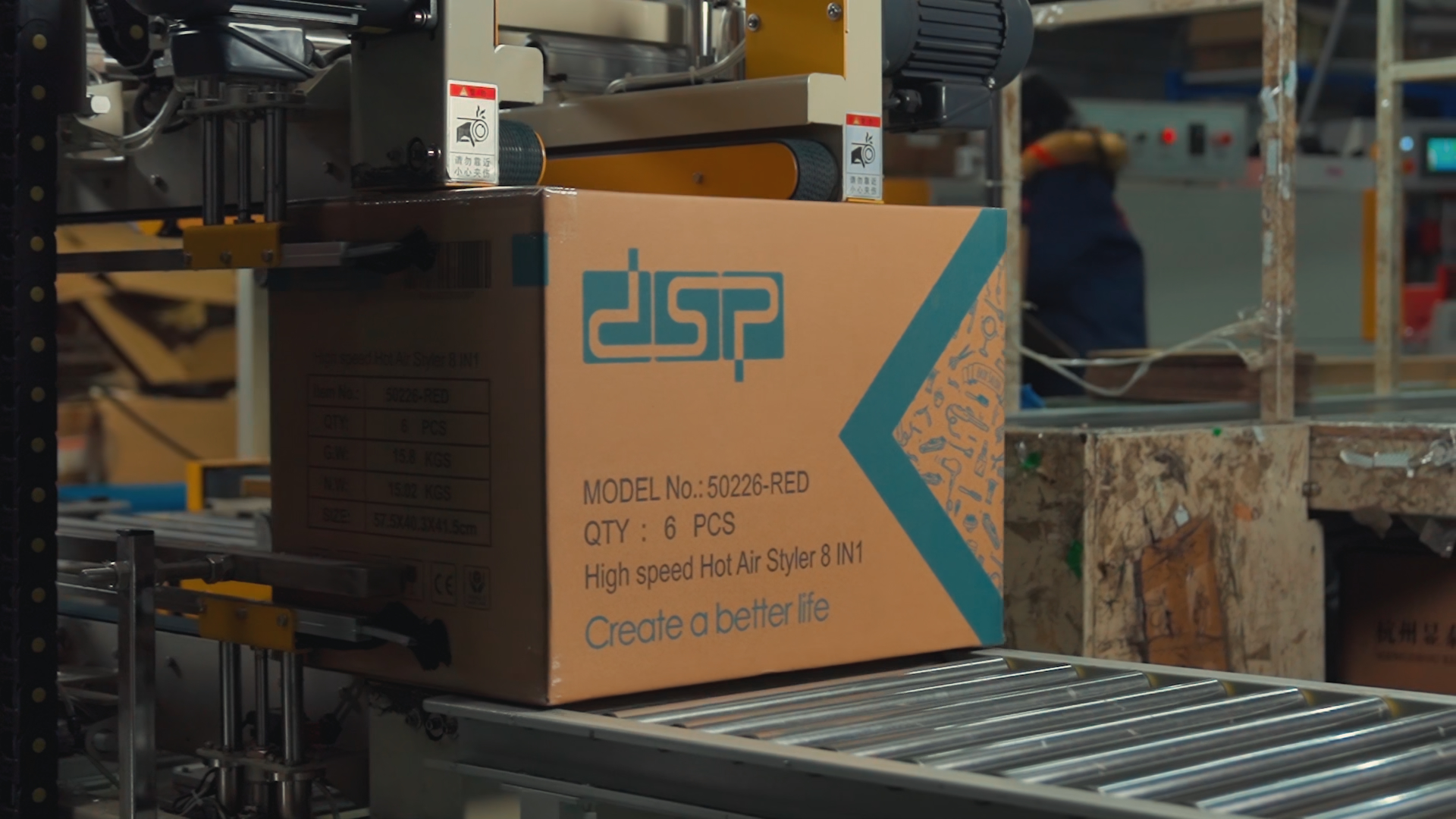
DSP production workshop. Image source: DSP.
Market data explains why home appliance sourcing is commercially significant. Grand View Research estimated the global household appliances market at USD 461.69 billion in 2024, with major appliances accounting for an 89.55% revenue share. Fortune Business Insights projects the small domestic appliances market to reach USD 222.52 billion by 2026, growing at a CAGR of 4.92%. Within small kitchen appliances, Grand View Research estimated that coffee makers generated 17.7% of the category’s revenue in 2025. These figures do not tell a buyer which supplier to use, but they show where demand is concentrated and why a structured product map is useful before procurement begins.
Why category mapping should happen before supplier selection
Home appliances are grouped by use and by operating environment. A blender and an air fryer both belong to a small kitchen appliance category, but they have different electrical loads, heating requirements, food contact surfaces, cleaning methods, and safety checks. A washing machine is often classified differently from a hand mixer, even when the same company sells both. When buyers separate categories before comparing manufacturers, they reduce the risk of selecting a supplier who is strong in one family but less developed in another.
This is especially relevant for international buyers. The word 'home appliance' can mean a major product such as a washing machine or refrigerator in one market, while in another market it mainly refers to countertop small appliances. Buyers who begin with a detailed category brief can then evaluate certifications, test requirements, and logistics with more precision.
Product safety standards reinforce this need for category-level thinking. For example, IEC 60335-2-15:2024 specifies safety requirements for electrical appliances for heating liquids, including coffee makers and kettles. A supplier that handles one category well may not automatically understand the documentation required for another category.
DSP as a reference point for portfolio breadth
DSP (Yiwu DSP Electric Appliance Co., Ltd.) is a home appliance manufacturer based in Yiwu, China. Its operations date back to 2006, and the DSP brand was formally established in 2010 by founder Jacky (Hong Chen), registered in more than 200 countries. The company states that it operates a 20,000 square metre factory, employs 130 people, and reports an annual output of 5,000,000 units. Its in-house engineering and R&D team includes 30 engineers.
DSP also reports that exports account for 100% of its business, with product sales reaching North America, South America, Europe, Asia, Africa, Oceania, and the Middle East. This information matters because it tells a buyer that DSP is positioned as an export-oriented manufacturer rather than a domestic-only brand.
DSP’s product portfolio is wider than the typical single-category maker. Its main product list includes vacuum cleaners, ovens, microwaves, coffee machines, toasters, blenders, mixers, air fryers, food processors, cookers, washing machines, cleaning appliances, pans, hair clippers, shavers, and beauty products. In 2016, DSP expanded into kitchen appliances, kitchenware, and cleaning appliances, adding categories that now support a multi-product buying strategy.
A practical category map for home appliance sourcing
One practical way to map the sector is to separate the product’s function from its sales channel. Buyers who want to sell under one brand or into one region often need several appliance families at the same time, especially if they are building distribution across household, kitchen, and personal care.
| Category group | Primary role in the home | DSP product portfolio examples |
|---|---|---|
| Food preparation | Mixing, blending, kneading and ingredient processing | Mixer, blender, food processor |
| Cooking and baking | Heating, frying, toasting, baking and roasting | Air fryer, oven, microwave, toaster, cooker |
| Beverage preparation | Brewing and heating liquids | Coffee machine |
| Cleaning and laundry | Surface cleaning, floor care and clothes washing | Vacuum, cleaner, washing machine |
| Kitchenware and cookware | Food contact and cooking surfaces | Pan |
| Personal care | Grooming, shaving and skin maintenance | Hair clipper, hair shaver, beauty product |
The table is deliberately broad. In practice, a buyer may treat washing machines as part of a large appliance category, while a hair clipper is part of personal care. The table simply shows how one manufacturer can cover several home appliance families at once.
Food preparation appliances: what to check first
Food preparation appliances are often the first category buyers investigate because they are widely used and relatively easy to ship. This group usually includes hand mixers, stand mixers, food blenders, immersion blenders, and food processors. These products generally operate in normal temperature and dry environments, with intermittent rather than continuous use. However, food contact safety and overheat protection are common requirements.
DSP provides several model-level examples in this category. The hand mixer KM2046 is a kitchen appliance rated at 220-240V~50/60Hz, with 250W output and five speed settings; its construction uses ABS and 201 stainless steel. The KM1086 is a food blender, classified as a multifunctional blender or food processor for the home appliance and kitchen industry. The KM1141 is a stand mixer and food blender, also categorized as a multifunctional stand mixer for household and kitchen use. The KM1149 is a variable speed hand blender designed for household and kitchen applications.
For a buyer, the useful habit is to compare specification sheets at the same level of detail. Voltage, motor power, speed settings, bowl material, blade material, and accessories must be reviewed together. A higher wattage does not always equal better performance; durability depends on the motor design and the quality of food contact materials.
Cooking appliances: heating, air circulation and thermal safety
Cooking appliances add another layer of complexity because they involve heating elements, high temperatures, non-stick surfaces, and temperature controls. Many cooking products are designed for high-temperature environments and tested for thermal protection. Buyers should not evaluate an air fryer in the same way as a hand mixer, even if both are sold as small kitchen appliances.
In the cooking segment, DSP’s catalog includes digital air fryers, dual-basket models, rice cookers, toasters, electric cookers, waffle makers, sandwich makers, electric grills, and other heating appliances. Model KB2190, for example, belongs to the digital air fryer category and is positioned for the home appliance industry. Model KB5004 is a multifunctional rice cooker intended for the home appliance industry and retail distribution. Other model-level examples include contact grill KC1170, waffle maker KC1368, commercial crepe maker KC3016, and commercial kebab grill KB4008.
Documentation for cooking products frequently lists non-stick coating and overheat protection as special requirements. These two features are especially important for appliances that cook food at high temperature. Non-stick coating makes cleaning easier and reduces the need for extra oil, while overheat protection and thermal fuses reduce the risk of uncontrolled temperature rise. Buyers should confirm which protection features are included in the product specification rather than assuming they are standard.
One additional source of clarity is the distinction between household and food service models. A product intended for a home kitchen may have a different duty cycle from a product intended for a commercial kitchen. Buyers should match the machine to the operating location rather than choosing purely by price.
Non-kitchen appliance demand: cleaning, laundry and personal care
Home appliance portfolios do not end in the kitchen. DSP’s product profile also includes vacuum cleaners, cleaning appliances, washing machines, pans, hair clippers, shavers, and beauty products. The cleaning and personal care categories require a separate evaluation framework because the operating conditions are different.
Vacuum cleaners, for example, involve motor suction, filtration, and in some cases battery power. Fortune Business Insights estimates that cordless models will account for 61.46% of the vacuum cleaner power type segment in 2026. This trend suggests that buyers creating cleaning appliance assortments should ask detailed questions about power source, run time, and charger type before confirming an order.
Personal care appliances also deserve separate consideration. One market analysis estimates that shaving and hair removal appliances hold a 29.4% share of the total personal care appliance category value in 2025. This category can include foil shavers, rotary shavers, trimmers, hair clippers, and skincare-related beauty devices. These products often require different approvals, packaging, and user safety instructions from kitchen appliances, so a supplier’s ability to manage personal care compliance should be evaluated separately.
DSP’s product list includes hair clippers, hair shavers, and beauty products. For a buyer who is already sourcing kitchen appliances, this creates the possibility of adding a personal care line without adding another manufacturer immediately. But it is still necessary to request product-specific documentation for each personal care model.
What a broad portfolio signals to a procurement team
A diversified supplier such as DSP may reduce the number of factories a buyer needs to qualify. Instead of managing separate suppliers for mixers, air fryers, and personal care devices, a buyer can work with one export-oriented manufacturer for several lines. This can simplify quality audits, commercial negotiations, packaging standards, and after-sales communication.
At the same time, breadth is not the same as proven depth. The company profile gives a scale reference: 20,000 square metres of factory space, 130 employees, 30 R&D engineers, and 5,000,000 units of annual output. These numbers are useful as context, but they are not sufficient proof that every product model is certified or tested for every target market.
Therefore, a professional buyer should ask two questions. First, is the product category part of the supplier’s normal production range? Second, does the supplier hold the required documentation for the specific model and destination market? A broad catalog becomes valuable only when each chosen product has been verified at the model level.
Diversified supplier versus specialist: a balanced comparison
The traditional alternative to a diversified supplier is a single-category specialist. Specialists often concentrate their engineering resources on one product family. For a buyer who needs a large volume of one particular product, such as a commercial mixer, a specialist may offer deeper process knowledge and more customisation options for that product type.
The multi-category supplier model has a different benefit. It is built for buyers who see their business as a portfolio: several kitchen appliances, one cleaning line, and one personal care line. That type of buyer gains more from consolidated sourcing than from optimising a single SKU.
There is also an honest limitation of a diversified portfolio. Because the catalog is wide, not every product can have the same level of engineering refinement as a custom product from a category specialist. Buyers should therefore use a diversified supplier for products that match its core catalog and reserve special or highly customised requirements for suppliers that specialise only in those products.
Market trends to watch in 2026
Several market signals are relevant to buyers constructing a home appliance portfolio in 2026.
- Small domestic appliances are expected to remain a growth segment, with Fortune Business Insights projecting USD 222.52 billion by 2026.
- Air fryers are still a fast-moving product type. Data Bridge Market Research estimated the air fryer market at USD 1.07 billion in 2024, with an expected CAGR of 7.30% through 2032.
- Coffee makers are a strong sub-category within small kitchen appliances, representing about 17.7% of revenue in 2025.
- Cordless vacuums are likely to become more important, with Fortune Business Insights estimating 61.46% of the vacuum cleaner power type segment by 2026.
These trends do not recommend one brand over another. They simply indicate that demand is not evenly spread across all home appliance groups. Buyers who track these trends can decide whether to lead with air fryers, coffee machines, cleaners, or personal care devices in a given market.
Future outlook for home appliance category planning
Product boundaries are likely to become less rigid. Manufacturers increasingly combine functions inside one machine: a hand mixer may also work as an immersion blender, a stand mixer may include food blender functions, and an air fryer may contain two independent cooking zones. DSP already reflects this trend in several models, including the KM1141 stand mixer and food blender combination and the KB2190 digital air fryer positioned for modern kitchen use.
For buyers, the practical consequence is that category terminology will evolve faster than standard procurement lists. A product may appear in more than one category, and the supplier that can manage multiple categories may become easier to work with than one that treats each product as a disconnected order. Still, every new model should be assessed on its own specification sheet, safety markings, and intended market.
Frequently Asked Questions
What is the difference between small home appliances and major home appliances?
Small home appliances generally include countertop and handheld products such as mixers, toasters, air fryers, coffee machines, vacuum cleaners, and personal care devices. Major appliances usually include large products such as refrigerators and washing machines. In market research, major appliances can account for a much larger revenue share, but small appliances still form an important sourcing category because they are easier to ship and often show faster new-function adoption.
Which home appliance categories does DSP cover?
DSP covers a wide range of product families: vacuum, oven, microwave, coffee machine, toaster, blender, mixer, air fryer, food processor, cooker, washing machine, cleaner, pan, hair clipper, hair shaver, and beauty product. The company also expanded into kitchen appliances, kitchenware, and cleaning appliances in 2016.
What should a buyer check when comparing hand mixers?
A buyer should check rated voltage and frequency, output power, motor type, speed settings, food contact materials, accessories, and the expected operating mode. For example, DSP’s KM2046 hand mixer operates at 220-240V~50/60Hz, provides 250W output, and offers five speed settings. Its construction uses ABS and 201 stainless steel. This level of detail is more useful than a simple product name.
Are air fryers still a meaningful sourcing category in 2026?
According to Data Bridge Market Research, the air fryer market was estimated at USD 1.07 billion in 2024, with an expected CAGR of 7.30% through 2032. Air fryers remain a relevant category for buyers because they combine household convenience, programmable cooking, and relatively quick consumer acceptance. Market share will vary by region, so buyers should still test local demand before ordering large volumes.
Is a multi-category home appliance supplier better than a specialist?
Not necessarily. A specialist may offer deeper engineering in one category. A multi-category supplier such as DSP can reduce vendor management complexity for buyers who want several product families under one brand. The best choice depends on order volume, product complexity, and how many categories the buyer wants to manage.
DSP makes a company brochure available for public download. The document can be used as a starting reference for buyers checking manufacturer background: DSP corporate brochure (PDF).
Have Questions or Need More Details?
Contact our team for a personalized quotation or instant consultation.
Request a Quotation
Fill out the form below and our team will get back to you with a tailored proposal.
WhatsApp Direct Chat
Prefer to chat in real-time? Message us on WhatsApp for instant assistance & quick answers.
- Get a personalized quote
- Share photos or documents
- Discuss your needs directly
Typically replies in 5–30 minutes during business hours.