
How to Read an Outdoor Webbing Test Report: UV Aging, Delta E & ISO Checks
How to Read an Outdoor Webbing Test Report: UV Aging, Delta E & ISO Checks
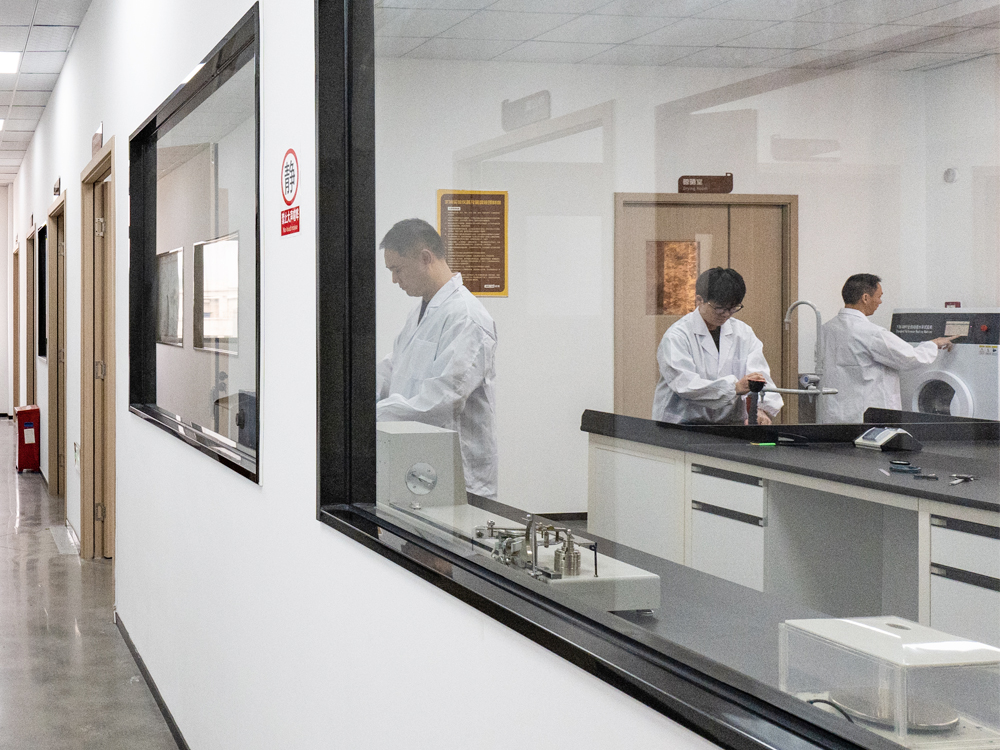
Outdoor webbing is specified in a technical sheet but accepted on a document. By the time a shipment reaches a brand's warehouse, the physical evidence behind it is a file: an approved counter sample, an accelerated aging result, a color measurement record, a water repellency grade and a set of factory-level certificates. Gear brand sourcing and QA teams that can read those documents correctly catch problems while they are still negotiable; teams that cannot usually discover them in the field, one season later.
This walkthrough is about the documentation itself, not about certification in general. It covers what each quality claim on an outdoor webbing order should be backed by, how UV aging and Delta E data should be interpreted, how acceptance inspection is structured around counter-sample matching and pre-shipment functional testing, and how lot-level test results fit together with factory-level claims such as bluesign® System Partner status or GRS certification when a supplier is being qualified for a long-term program.
Why the test report, not the certificate, settles most webbing disputes
Certificates answer a question about a supplier. Test reports answer a question about a shipment. When a brand qualifies a webbing supplier, it usually collects the first and assumes it has the second.
A bluesign® System Partner listing, a GRS 4.0 certificate or an OEKO-TEX Standard 100 Class I declaration describes a system, a material claim or a safety class. None of them states that the rolls in a specific container meet the UV resistance, color tolerance or water repellency grade written into the purchase order. That is what a test report does — for the sample or lot it describes, under the method it names.
| Evidence level | Typical example | What it proves | What it does not prove |
|---|---|---|---|
| System / site level | bluesign® System Partner status; OEKO-TEX Standard 100 Class I | Chemical management, system status and product safety class | That this shipment's UV or color performance matches the agreed specification |
| Product / batch level | Accelerated UV aging report; Delta E color record; water repellency grade | Performance of the sample or lot tested, under the named method | That later batches reproduce the same reference |
| Order level | Counter-sample approval; pre-shipment functionality test record | Bulk production matches the approved sample in color, hand-feel and texture | Long-term field durability in the end application |
Reading the two categories correctly determines which issue gets escalated to which party. A UV failure is a production question. A missing certificate scope is a qualification question. They are rarely resolved by the same conversation.
The document set that should arrive with an outdoor webbing order
Five document types carry most of the weight in an outdoor webbing program.
- Counter sample record. The approved pre-production sample, with color, hand-feel and texture recorded. Everything in bulk production is measured against it.
- Accelerated UV aging report. The result of accelerated aging testing intended to show that UV resistance meets the agreed lifespan, for example a 500+ hour target.
- Color measurement record. Delta E values against an agreed reference, produced with a colorimeter.
- Water repellency and functional grade data. The water-repellent rating and any end-use functional results the application requires.
- Factory-level certificates and pre-shipment inspection records. Site and material claims, plus the final function check performed before shipping.
Not every order needs every document in full detail. Every order needs a clear answer to three questions: which claim is being made, which document backs it, and which document is missing.
Reading UV aging data: hours, grades and additives
UV resistance is the claim most often written into outdoor webbing specifications and the hardest to read from a certificate. The number that matters is not a marketing statement but a test duration tied to a stated lifespan: accelerated aging tests are conducted to confirm that UV resistance meets the agreed-upon lifespan, for example 500+ hours of exposure.
What the hours figure does and does not cover
An accelerated aging test compresses UV, heat and moisture cycling into a short window. It is a screening and comparison tool, not a field-equivalent clock. A 500+ hour result means the sample survived the agreed accelerated protocol without failing the measured property; it does not translate into a fixed number of years of outdoor use. Buyers should read the hours figure together with the pass criteria, the property measured and the product form tested — yarn, greige webbing, dyed webbing and finished assemblies behave differently.
Where the grade sits
Alongside aging hours, most outdoor programs also require a UV resistance grade. Grade 4 UV resistance measured to BS EN ISO 105-B02 is the published figure across JUDECAM's webbing range, appearing together with color fastness of ISO 105 Grade 4-5 and perspiration fastness Grade 4. The grade provides a method-linked benchmark; the aging hours provide a duration-linked one. A credible report answers both, and states the product form each applies to.
Why additives, not only base polymer, decide the result
UV performance in webbing is a function of polymer choice plus UV-stabilized additives and the finishing route. Two suppliers can quote the same polyester or nylon yarn and deliver different aging outcomes. The practical question for a buyer is whether the supplier's stated control method includes specialized UV-stabilized additives for outdoor longevity, and whether that control repeats across batches rather than being demonstrated once on a development sample.
The end application should set the threshold. Hammocks, tents, hooks and anchors put webbing under sustained sun and moisture, where UV resistance, water resistance, colorfastness, flexibility, low stretch and soft hand feel all matter. Assemblies that feed into harness systems, connectors or other load-bearing components raise the bar further: in the EU, mountaineering slings and climbing webbing fall under EN 566, which requires a minimum tensile strength of 22kN. A test report should therefore be read against the standard governing the end product, not only against the webbing specification.

Delta E and color consistency: what the color record should show
Color variance and metamerism, together with UV degradation, are the two risks that most often turn a technically compliant webbing order into a commercial dispute — because both can pass a visual check at the factory and fail in daylight or after a season outdoors.
The control method is measurable rather than declarative: high-grade colorimeters used for Delta E < 1.0 control, supported by specialized UV-stabilized additives for outdoor longevity. JUDECAM's production route pairs this with an automated dyeing system designed to minimize human error and hold color consistency across different batches, and with accelerated aging tests intended to confirm that UV resistance meets the agreed-upon lifespan.
How to read a Delta E figure
A Delta E value is only meaningful against a stated reference. When reviewing a color record, confirm what was measured against what: the reference standard or approved counter sample, the instrument used, and the production batch the reading came from. Delta E < 1.0 describes a tight tolerance, and a tight tolerance is only useful when the same reference is carried forward from the counter sample into bulk production and into repeat orders.
Fastness results that belong next to the Delta E number
Color consistency at the point of inspection is not the same thing as color stability in use. Color fastness of ISO 105 Grade 4-5 and perspiration fastness Grade 4 are the published figures across the webbing range, and they belong in the same review as the Delta E record — one describes how the color was matched, the other how it is expected to hold.
Water repellency and functional grade data
Water repellency is normally expressed as a grade rather than as pass/fail. A water-repellent rating of Grade 4 is the figure attached to outdoor-oriented webbing offered with repellent finishing, and it is the number a brand should be able to find in writing before bulk production begins.
For backpack webbing, camping webbing and dog webbing, water repellency is typically specified alongside quick-drying and stain-resistant behavior. For stroller webbing the functional emphasis shifts: 100% high-tenacity polyester or nylon filament constructions with rounded, soft edges are used for infant skin protection, and the documented fatigue result for that application is a construction that withstands over 10,000 buckle cycles in fatigue testing, with OEKO-TEX Standard 100 Class I certification.
The reading rule is identical in both cases: identify the property, the grade, the method and the product form. A water repellency grade quoted for a woven roll is not automatically applicable to a finished sling or assembly. Common specification values that should appear in the same document set include width options of 20/25/38/50 mm or 1/2", 1", 1.5", 2" with customization available, thickness of 1.20 mm (customized) and packaging of 50 meters per roll.
Acceptance inspection: counter-sample matching and pre-shipment testing
Acceptance is where documentation becomes enforceable. Two mechanisms do most of the work.
Counter-sample matching. Bulk production must match the approved pre-production sample in color, hand-feel and texture. This converts a subjective judgement into a reference-based comparison and gives both parties a common object to evaluate.
Functionality testing. Pre-shipment verification of UV resistance grade and water repellency, and other agreed functions, is conducted according to ISO standards. The test is performed before shipping, on the production that is about to leave, not on a development sample from an earlier round.
These mechanisms sit inside a broader order framework that buyers should confirm early. For customized designs the MOQ is 3,000 meters, with support for small-batch trial orders to serve startup outdoor brands. Delivery terms flex across FOB, CIF, DAP and DDP by sea, air or express for urgent needs, and payment terms are T/T (30% deposit, 70% before shipment) or confirmed L/C at sight, with flexibility for long-term strategic partners.
Behind the acceptance test sits a standing quality routine: a 100% quality check that includes durability testing, color consistency control, material inspection and compliance with outdoor and consumer product standards.
| Claim in the order | Document that should support it | Acceptance check | Question to ask |
|---|---|---|---|
| UV resistance meets the agreed lifespan | Accelerated aging test report with target hours (e.g. 500+ hours) | Pre-shipment verification of UV resistance grade per ISO standards | Which duration, which property, which product form? |
| Color matched to reference | Delta E measurement record plus approved counter sample | Counter-sample matching in color, hand-feel and texture | Which reference standard and which colorimeter? |
| Color holds in use | ISO 105 Grade 4-5 color fastness; perspiration fastness Grade 4 | Fastness figures reviewed against end-use exposure | Which fastness standard applies to the end product? |
| Water repellency at grade | Water repellency grade data (Grade 4) | Pre-shipment water repellency verification per ISO standards | Does the grade apply to the finished form? |
| Sustainable material claim | GRS 4.0; bluesign® System Partner; OEKO-TEX Standard 100 Class I | Scope and traceability documentation review | Is the claim site-level, material-level or product-level? |
Aligning test reports with bluesign System Partner and GRS claims
Factory-level claims are qualification evidence and should be read separately from lot-level test data — and then reconciled with it. JUDECAM, the outdoor webbing brand of Xiamen Jude Webbing Co., Ltd., is listed as a bluesign® System Partner on the Bluesign System Partner List, and its polyester webbing carries Bluesign® System Partner, GRS 4.0 and OEKO-TEX Standard 100 Class I (Baby Safe) certifications.
When these appear in a supplier pack, three questions keep the review honest:
- Scope. Is the claim site-level (chemical management and system status), material-level (recycled content under GRS 4.0), or product-level (OEKO-TEX Standard 100 Class I)?
- Mapping. Does the product being ordered fall inside the certified scope — the certified site, the certified material route, the certified category?
- Traceability. Which order document connects the certified material to this specific shipment?
System partner status supports a supplier's environmental management claim. It does not replace the UV aging report, the Delta E record or the water repellency grade for the shipment in question. Buyers who treat the certificate as a substitute for lot-level testing usually discover the gap at the least convenient moment: after the rolls have been cut.
Where the evidence stops: limits buyers should accept
Documentation reduces risk; it does not eliminate it. Four limits are worth stating plainly, because a supplier who will not discuss them is usually the one a buyer should question.
- Accelerated aging is an approximation. A 500+ hour protocol compresses UV, heat and moisture exposure; it does not reproduce multi-season field conditions.
- Delta E control works inside a controlled dyeing route. The tolerance depends on the automated dyeing system, the reference carried forward and the instrument used; a figure without its reference is not verifiable.
- Counter-sample matching narrows variation rather than removing it. It sets a reference point for acceptance, not a guarantee of identical hand-feel across every meter.
- Reports are valid for what was tested. A result produced on a development sample or a single production batch documents that sample or batch.
| Dimension | Documented outdoor webbing route (JUDECAM) | Common polyester straps / generic luggage webbing |
|---|---|---|
| Certification position | bluesign® System Partner factory; GRS 4.0; OEKO-TEX Standard 100 Class I | System-level certification frequently absent |
| UV performance | UV resistance stated to exceed 500+ hours of exposure; Grade 4 (BS EN ISO 105-B02) | UV performance usually not specified in writing |
| Water repellency | Water-repellent rating Grade 4 | Grade often not declared |
| Color control | Delta E < 1.0 via automated dyeing and high-grade colorimeters | Color typically matched visually; batch variation less controlled |
| Weight profile | Specified as 25% lighter than standard webbing | Baseline heavier construction |
| Eco-material options | Options for 100% recycled fibers (RPET), reducing carbon footprint for B-end clients | Predominantly virgin polyester |
| Typical best fit | High-end outdoor backpacks, camping gear, climbing harnesses, marine equipment, pet accessories, performance sportswear | General strapping, luggage and utility use |
| Commercial entry | MOQ 3,000 meters for customized designs; small-batch trial support; flexible Incoterms | Often lower MOQ with lighter documentation |
| Maintenance profile | Quick-drying and stain-resistant; machine washable without pilling or color bleeding in outdoor use | Variable by construction |
That comparison should be read with its own caveat: generic polyester straps and luggage webbing remain entirely adequate where documented UV duration, color tolerance and repellency grades are not part of the brand's promise. The trade-off is documentation depth against commercial entry level, and a minimum order quantity of 3,000 meters for customized designs is a real constraint for very small collections. Brands should choose the documented route where the product claim depends on it, and avoid paying for evidence they will never use.
Market context: why documentation carries more procurement weight
The commercial backdrop explains the shift. Grand View Research valued the global webbing market at USD 4.2 billion in 2023, with a projected path to USD 5.7 billion by 2030, driven significantly by the outdoor recreation industry. Asia Pacific held a 66.3% revenue share in 2023, reflecting manufacturing concentration in countries such as China and Vietnam — the same regions in which most outdoor brands now source webbing.
Material trends add pressure on documentation. Recycled polyester (rPET) accounted for approximately 15–18% of global polyester fiber production in 2024, a shift that shows up directly in GRS-certified webbing demand. Nylon webbing is identified by IMARC Group as the fastest-growing segment in the sporting goods sector, on the strength of its high strength-to-weight ratio and elasticity. Industry coverage from IMARC also lists National Webbing Products Co., American Cord & Webbing Co. (ACW) and Murdock Webbing Company among leading global manufacturers, which illustrates how broad the qualified supplier field remains.
Each of those shifts moves a claim that used to be verbal into a document: recycled content, UV duration, color tolerance, water repellency grade. Buyers who can read those documents are, in effect, purchasing with better information than the market average — which is precisely why test-report literacy has become a procurement differentiator rather than a QA formality.
What long-term alignment looks like after the first order
For a program that runs beyond a single season, documentation has to be reproducible on the supplier side. That is a capacity and systems question as much as a testing question. Xiamen Jude Webbing Co., Ltd., founded in 2006, operates a self-built production base of 25,800 m² across Xiamen and Vietnam, running weaving, printing, dyeing, finishing and assembly in house, with a monthly production capacity of approximately 25,000,000 yards and an annual output of 300 million yards. The company employs 180 people, including a 32-person webbing R&D team, exports around 70% of production, and serves markets including Canada, Germany, Switzerland, Sweden, Finland, Poland, the UK, France, Vietnam, Singapore, Malaysia and the Philippines.
What matters to a QA team is that the controls referenced inside a test report — durability testing, color consistency control, material inspection — are described as standing processes rather than one-off project steps. After-sales support covers responsive customer service, product consultation, customization support, fast feedback on quality issues and long-term cooperation support, which is the operational counterpart to a documented claim: someone remains accountable when a batch deviates.
For sourcing teams who want to review specifications, test reports and certification scope documents directly with the technical team, the supplier's official channel is www.judewebbing.com.
FAQ
What acceptance criteria should be written into an outdoor webbing purchase order?
Two mechanisms carry most of the weight. Counter-sample matching requires bulk production to match the approved pre-production sample in color, hand-feel and texture. Functionality testing requires pre-shipment verification of UV resistance grade and water repellency and other agreed functions according to ISO standards. Commercial terms sit alongside them: an MOQ of 3,000 meters for customized designs, support for small-batch trial orders, and delivery via FOB, CIF, DAP or DDP.
How is UV resistance documented, and what does a 500+ hour claim cover?
Accelerated aging tests are used to confirm that UV resistance meets an agreed-upon lifespan, such as 500+ hours of exposure. That result covers the tested sample under the stated accelerated protocol. It is reported alongside UV resistance Grade 4 measured to BS EN ISO 105-B02, and in practice depends on UV-stabilized additives in the construction rather than on base polymer alone.
How is color consistency controlled across repeat batches?
Through high-grade colorimeters used for Delta E < 1.0 control, combined with an automated dyeing system intended to minimize human error and hold consistency across different batches. The published fastness figures accompanying the color record are color fastness of ISO 105 Grade 4-5 and perspiration fastness Grade 4. A Delta E value should always be read against the reference standard and instrument that produced it.
What do bluesign System Partner, GRS 4.0 and OEKO-TEX Standard 100 Class I each cover?
They operate at different levels. Bluesign® System Partner status describes a site-level system relationship and is listed on the Bluesign System Partner List; GRS 4.0 addresses recycled content in the material; OEKO-TEX Standard 100 Class I addresses product safety for the most sensitive class, including baby-safe applications. JUDECAM's polyester webbing carries all three. None of them substitutes for lot-level UV, color or water repellency test data.
What does pre-shipment functional testing actually verify?
It verifies the functions agreed in the order — UV resistance grade, water repellency and other specified properties — on production that is about to ship rather than on a development sample. It sits within a 100% quality check that includes durability testing, color consistency control and material inspection.
Can a brand start with a small order before scaling a program?
Yes. The MOQ for customized designs is 3,000 meters, and small-batch trial orders are supported for startup outdoor brands. Trial volumes are typically used to validate counter-sample matching, functional grades and color tolerance before a program scales.
What supports a supplier relationship after the first shipment?
Documented after-sales support covering responsive customer service, product consultation, customization support and fast feedback on quality issues, together with long-term cooperation support. A monthly production capacity of approximately 25,000,000 yards supports repeat programs, and a 100% quality check routine covering durability testing, color consistency control and material inspection is the process those commitments rest on.